-
-
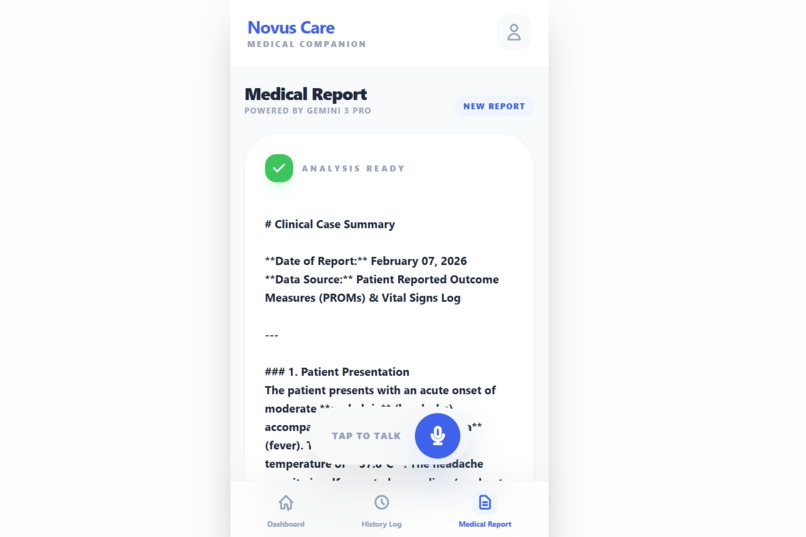
Auto Summary
-
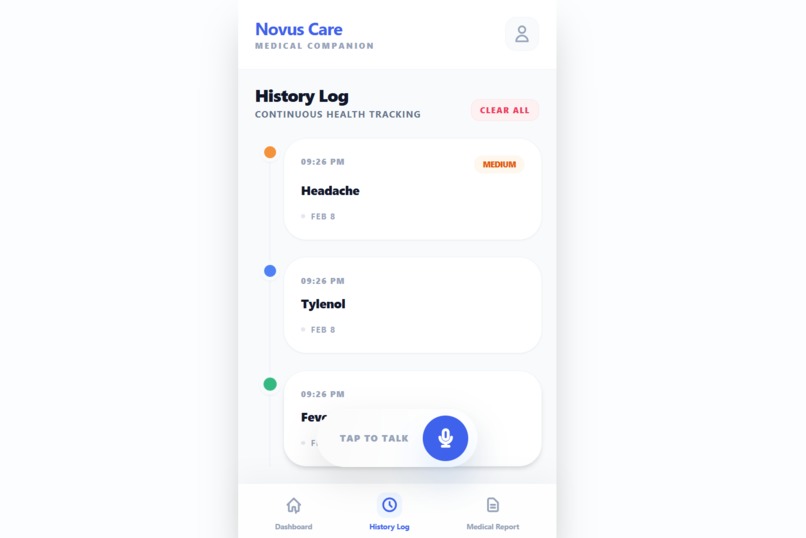
Medical Log
-
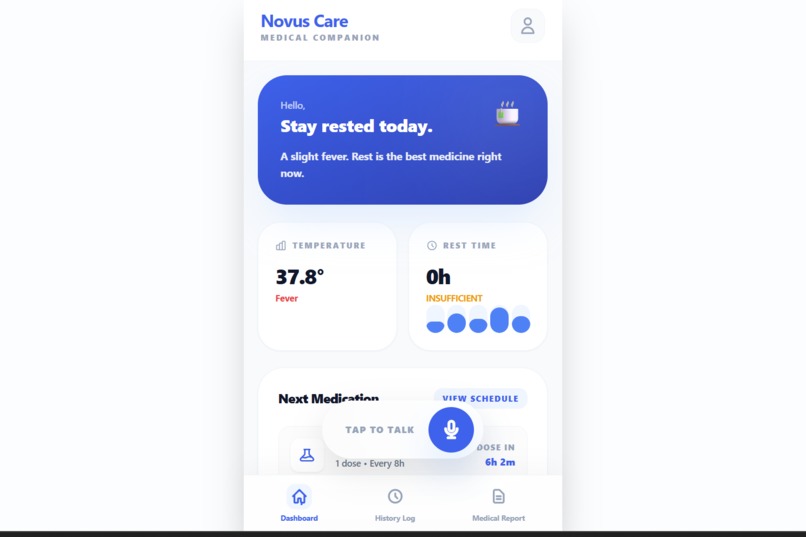
Home Page
Inspiration
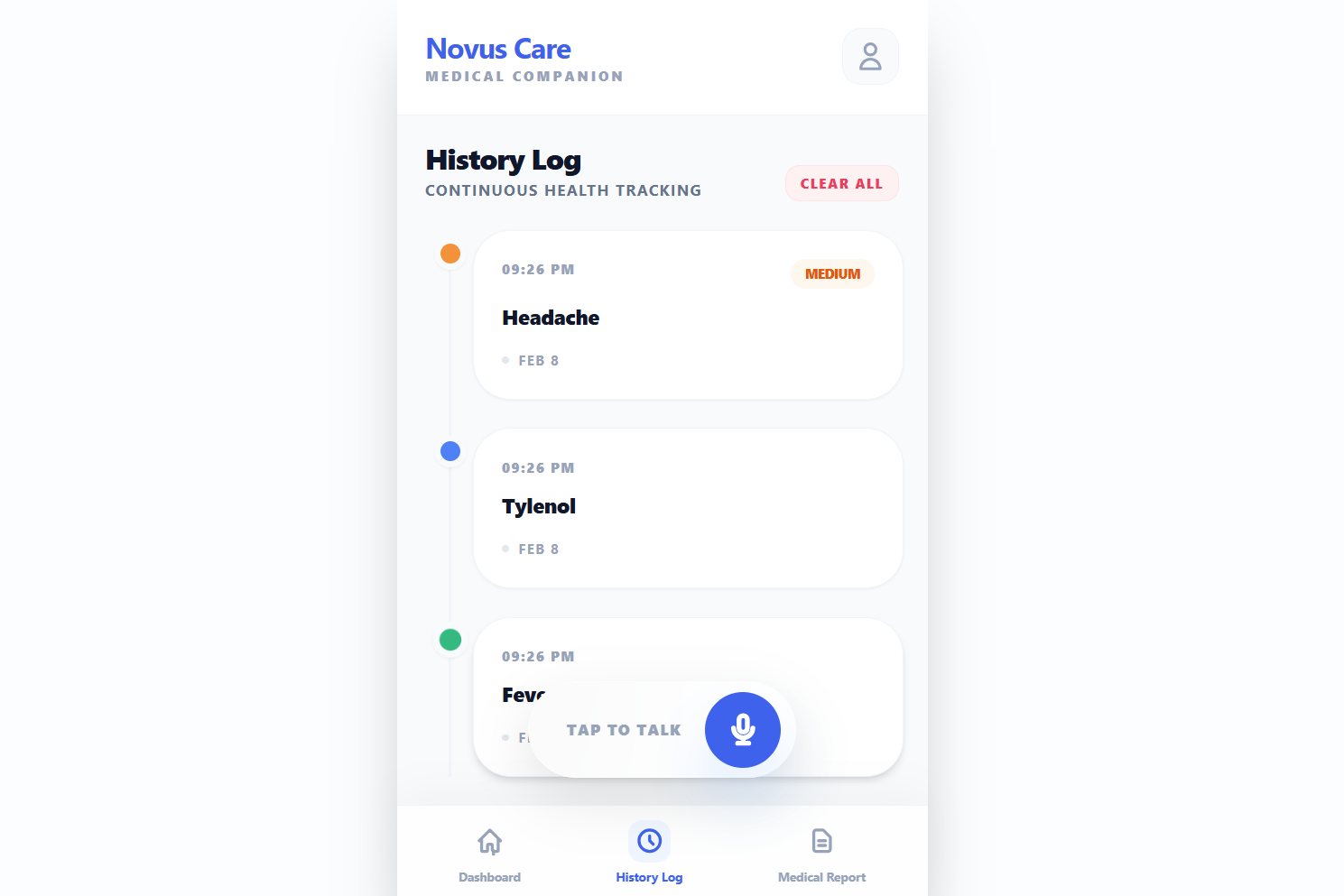
The inspiration for Novus Care came from a deeply personal and vulnerable moment. I remember being sick at home, completely alone. In that state, I found myself in a difficult tug-of-war: I didn't want to bother others or be a "burden" to my friends, yet I was struggling to keep a clear record of my fluctuating symptoms and medication timings. As my condition dragged on, a new anxiety set in—the lack of confidence that if I finally went to see a doctor, I wouldn't be able to describe my journey or the progression of my illness accurately. I realized then that while most healing happens at home, the data from that critical period is usually lost in messy, plain-language notes or fuzzy memories. Doctors cannot quickly process these informal logs, leading to wasted consultation time and potential miscommunication. I built Novus Care to bridge this gap, ensuring that no one has to feel "lost in translation" when it comes to their own health recovery.
What it does
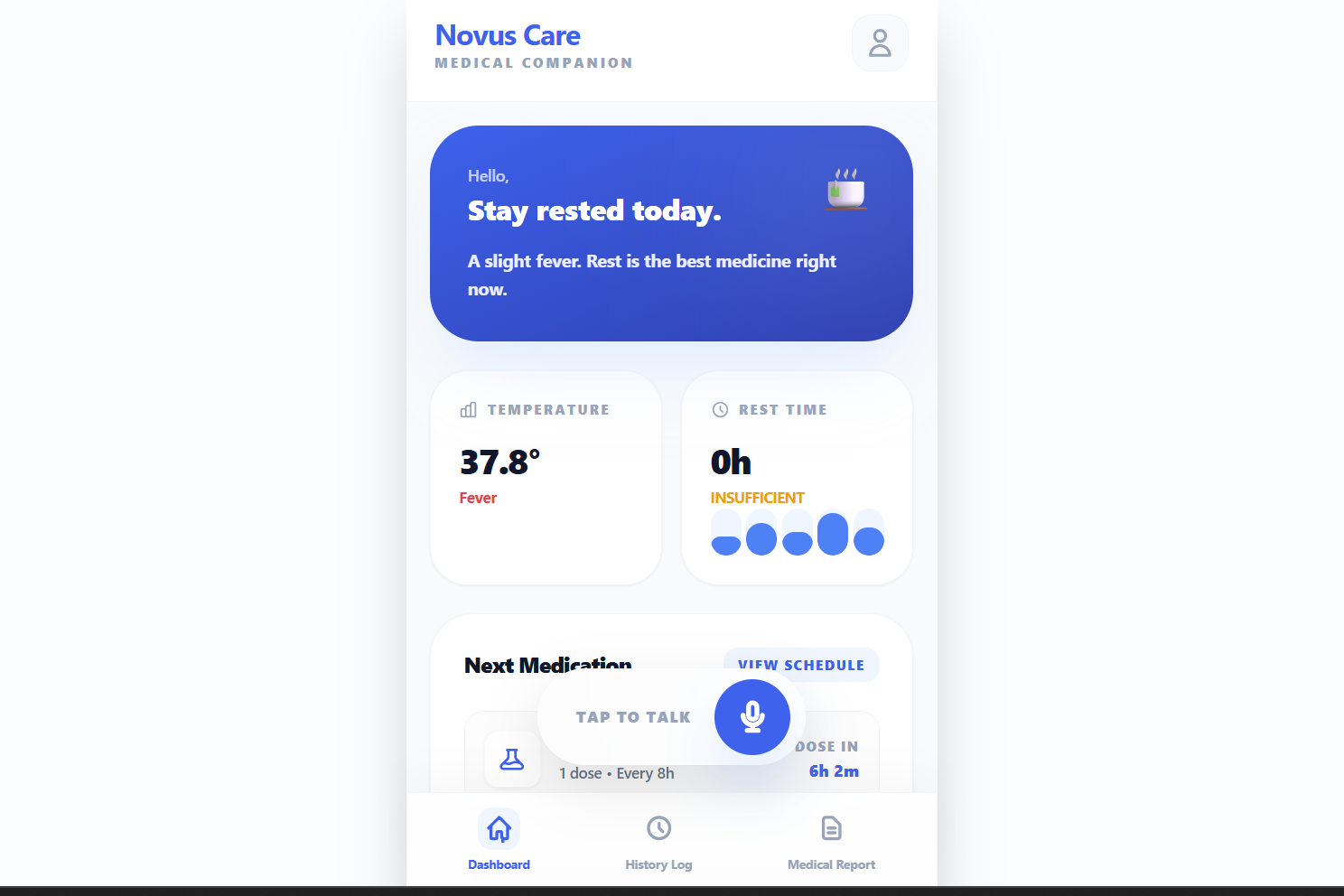
Novus Care is an AI-powered recovery assistant that professionalizes the home healing process. By allowing users to log their symptoms and medications in everyday language, the app acts as a clinical bridge:
- Semantic Translation: It transforms "my head feels like it's throbbing and I'm dizzy" into clinical-grade, bilingual medical summaries.
- Home Recovery Support: It organizes raw data into professional trajectories, helping me provide users with a sense of security as they monitor their own recovery progress.
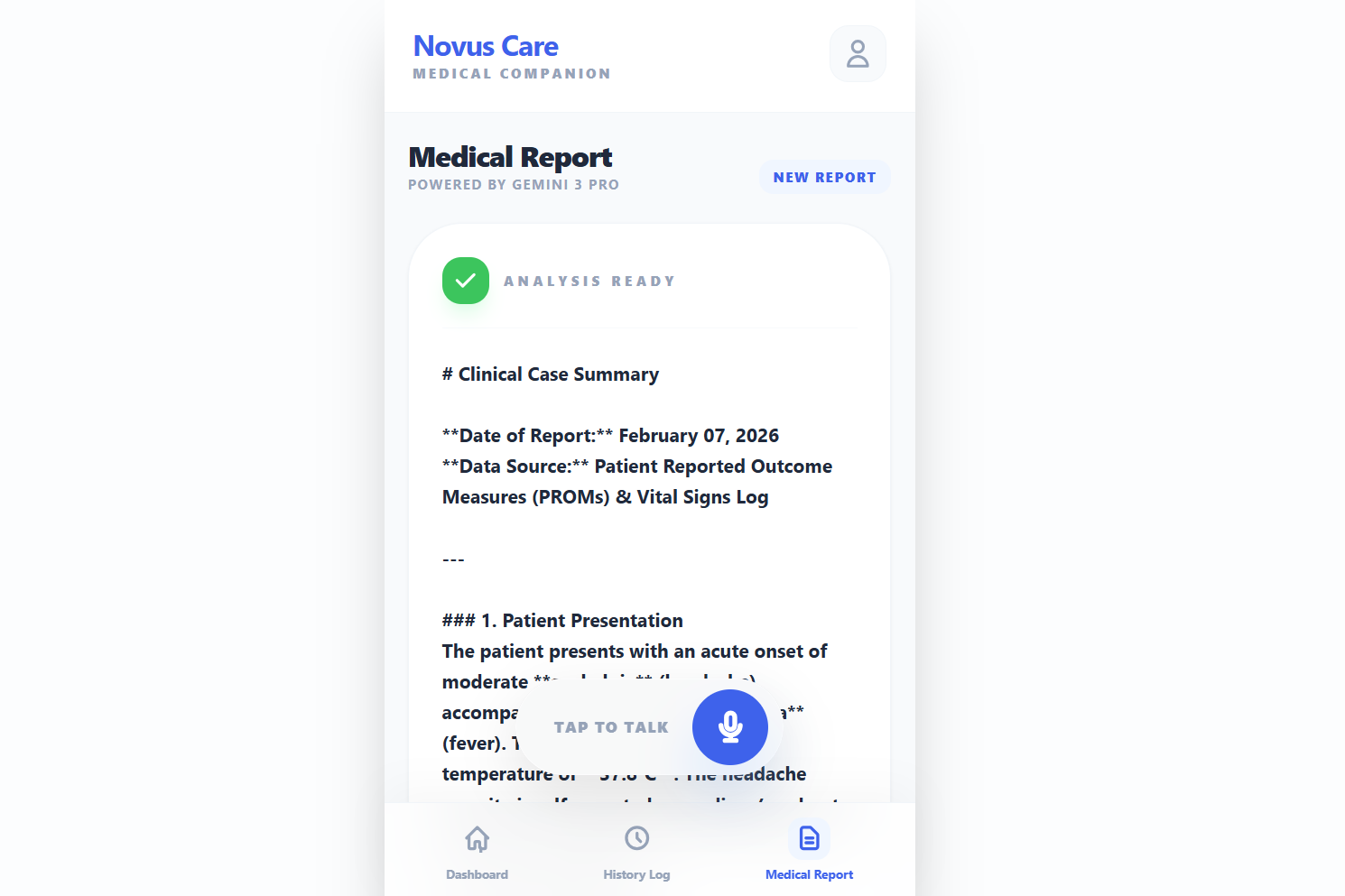
- Precision Communication: It generates "physician-ready" reports that break language barriers in the exam room, ensuring the doctor receives accurate data immediately.
How I built it
I developed a responsive React-based mobile interface designed for high-stress medical situations, focusing on a "clean-to-clinical" UI.
- Core AI Engine: I utilized Google AI Studio to architect and refine the specialized prompting layers that map natural language to standard clinical terminology.
- Vibe Coding Approach: As someone without a deep coding background, I built this entire project through "Vibe Coding"—leveraging large language models to translate my product vision into functional code through iterative natural language instructions.
- State Management: I built a bilingual state management system to ensure that regardless of the user's input language, the output remains professional and formatted for a medical setting.
- Safety Guards: I implemented a strict logic gate to ensure the AI functions as a translator and organizer rather than a diagnostic tool.
Challenges I ran into
The biggest challenge was undoubtedly the "Vibe Coding" process itself. Since I don't come from a traditional programming background, I had to rely entirely on my intuition and natural language to direct the AI. This made the iterative testing and adjustment phase particularly intense.
I spent countless hours in Google AI Studio, "massaging" the AI's behavior to ensure that a user’s subjective description (like "sharp pain" vs. "dull ache") was captured with clinical accuracy without the AI "hallucinating" a diagnosis. It was a constant battle of trial and error—adjusting the "vibe" of the prompts until the technical output matched the high stakes of a medical context. Ensuring a stable, launch-ready MVP required hundreds of micro-adjustments to code I was seeing for the first time.
Accomplishments that I'm proud of
I am incredibly proud of my Bilingual Logic Engine. It allows a user to input data in their mother tongue and output a report that speaks the universal "professional language" of medicine. Additionally, I successfully moved from a complex concept to a functional MVP (Minimum Viable Product), proving that with the right "vibe" and clear intent, a non-technical founder can launch a high-impact product.
What I learned
I learned that in digital health, intent and structure are just as vital as code. By forcing plain-language inputs into a structured clinical format, I didn't just translate words—I translated meaning. I also learned the power of the modern "AI-native" workflow: you don't need to be a syntax expert to build something meaningful, but you do need to be a master of your product's logic and the user's pain points.
What's next for Novus Care
- Interactive Resource Mapping: I plan to integrate a map interface to provide users with better instructions on where to go, offering localized resource suggestions based on their recorded symptoms.
- Recovery Comparison: Integrating a feature to help users see if their symptom trajectory $\Delta T$ matches typical recovery patterns for common illnesses.
- Offline First: Implementing local storage to ensure users can log symptoms and access professional records even without an active internet connection.
- Direct Export: Allowing one-click PDF exports that users can send directly to their healthcare provider's portal.
Built With
- aistudio

Log in or sign up for Devpost to join the conversation.