-
-

01-landing-hero-dark-en
-
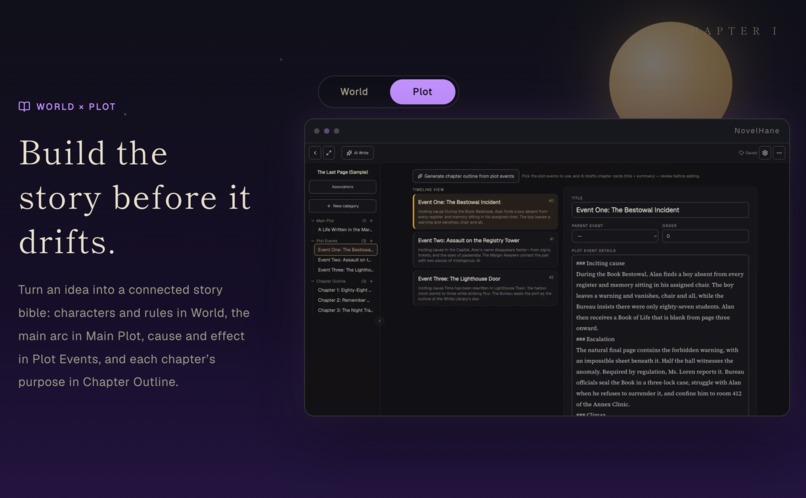
02-landing-world-plot-dark-en
-
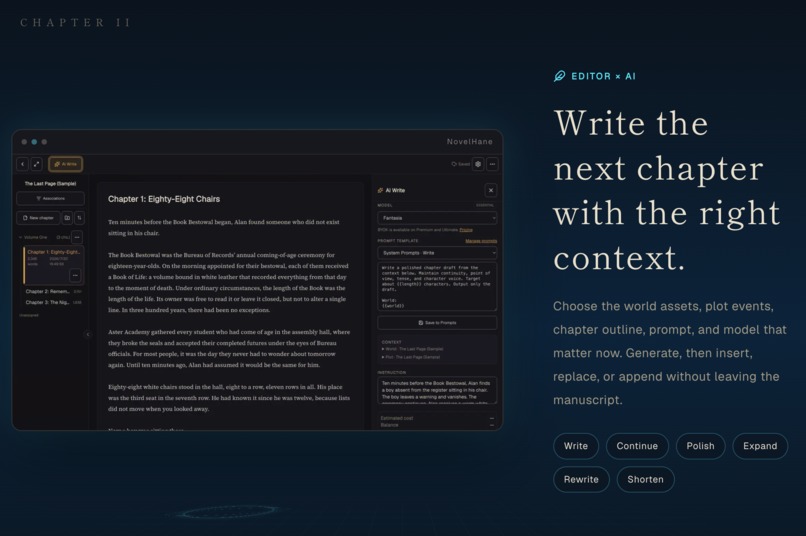
03-landing-writing-ai-dark-en
-
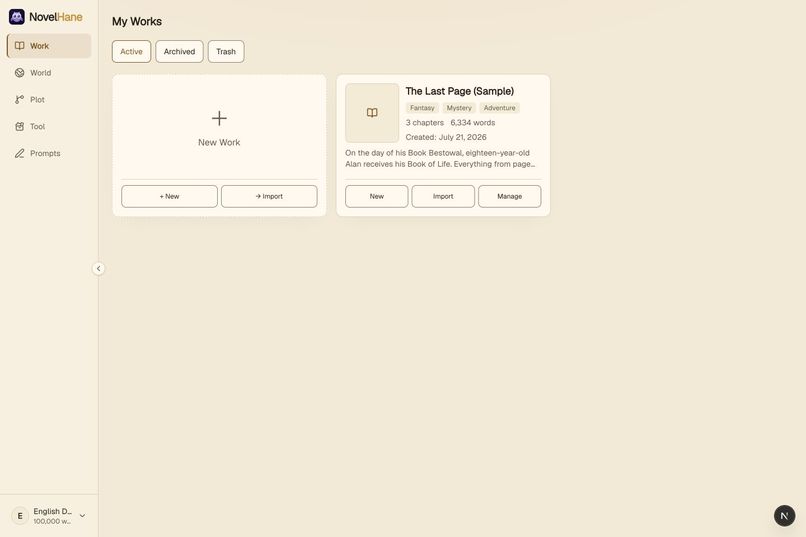
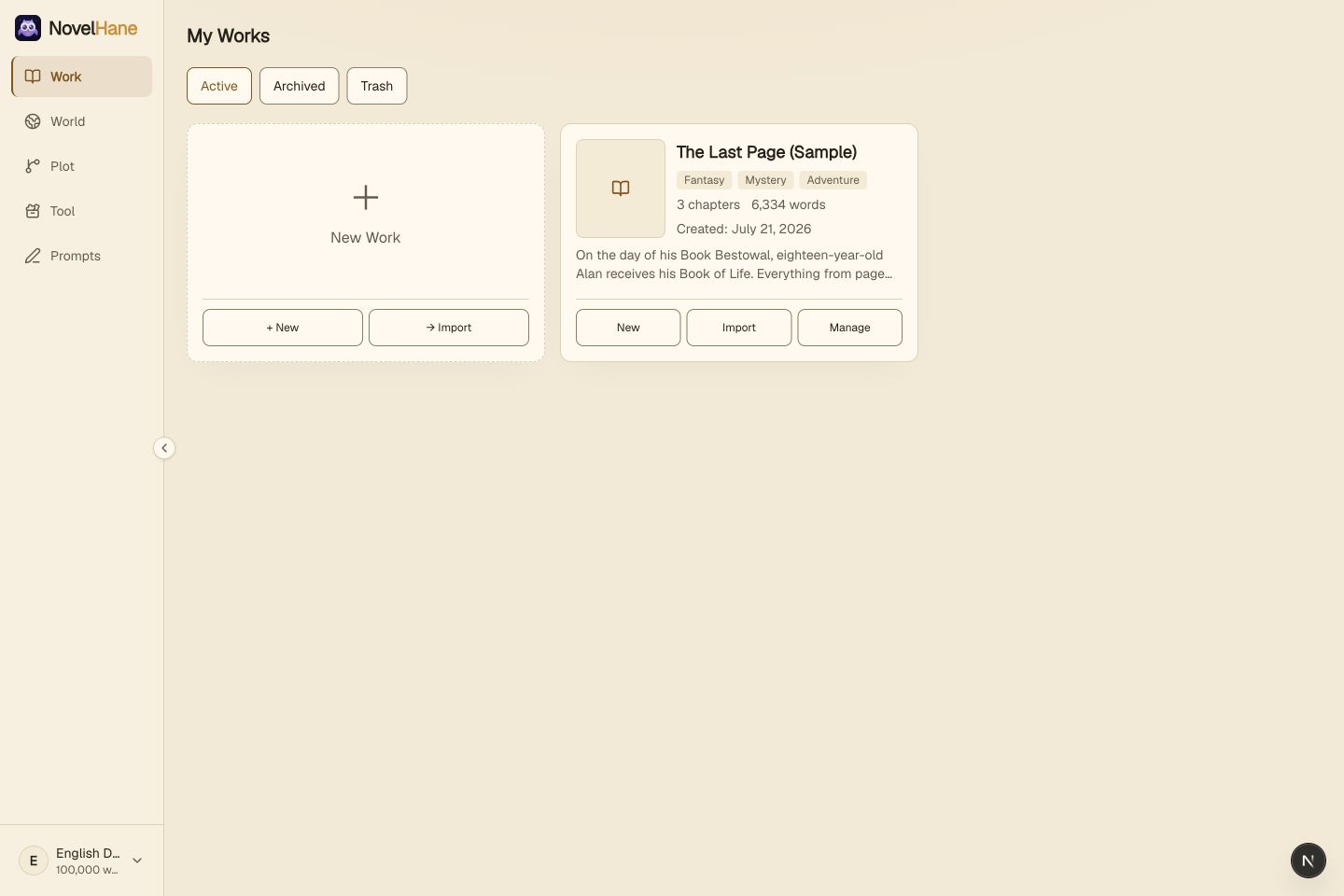
04-works-dashboard-light-en
-
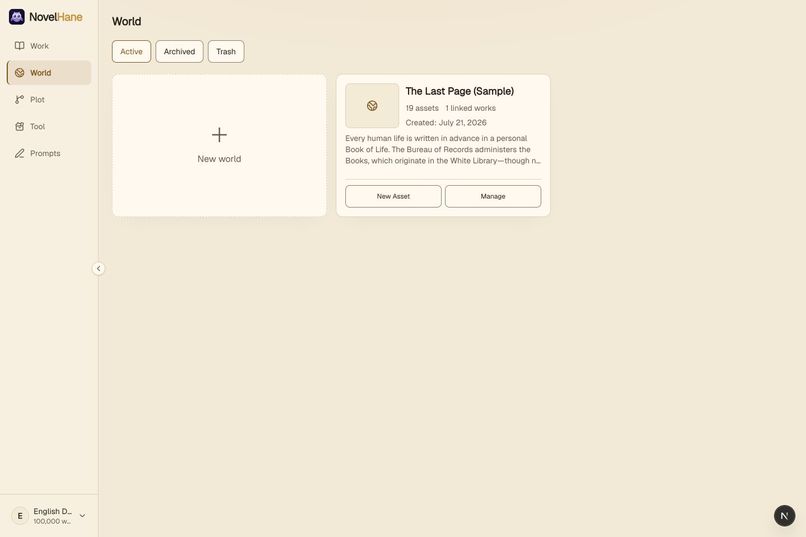
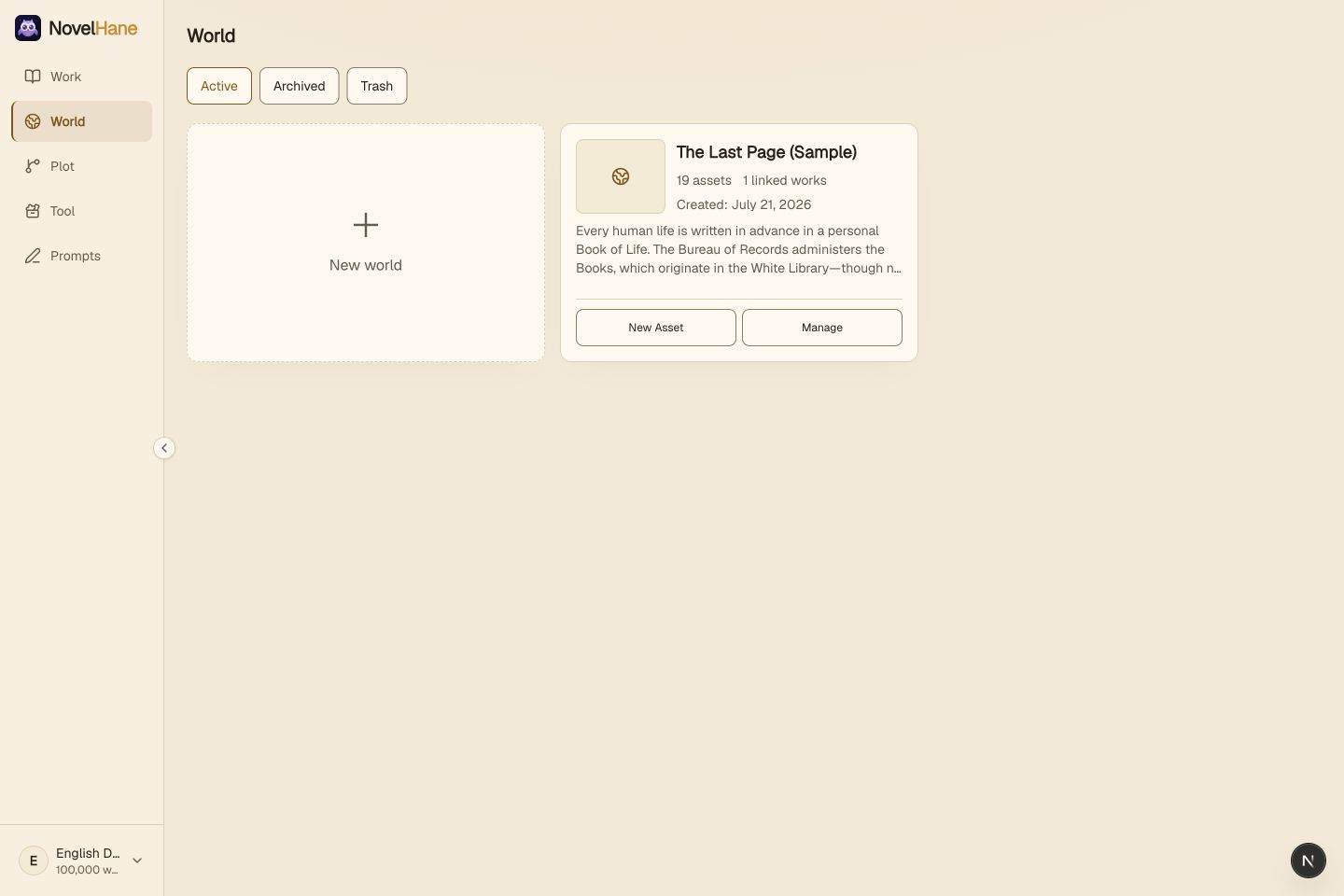
05-world-library-light-en
-
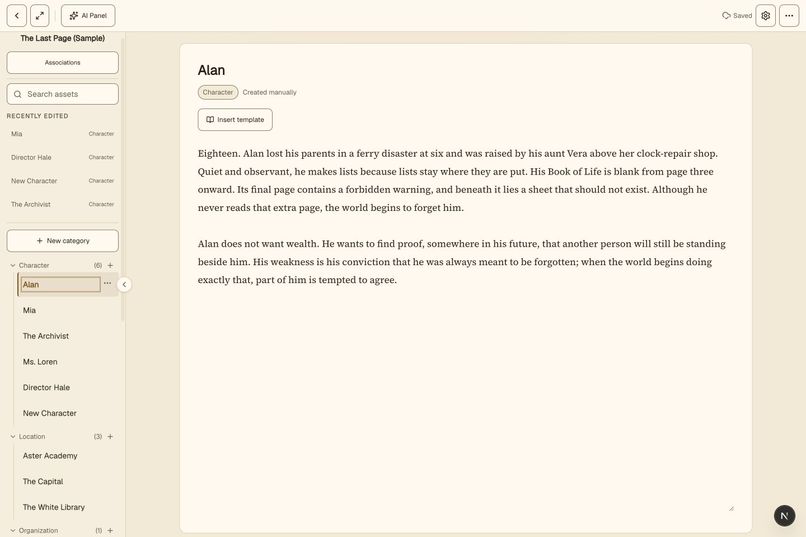
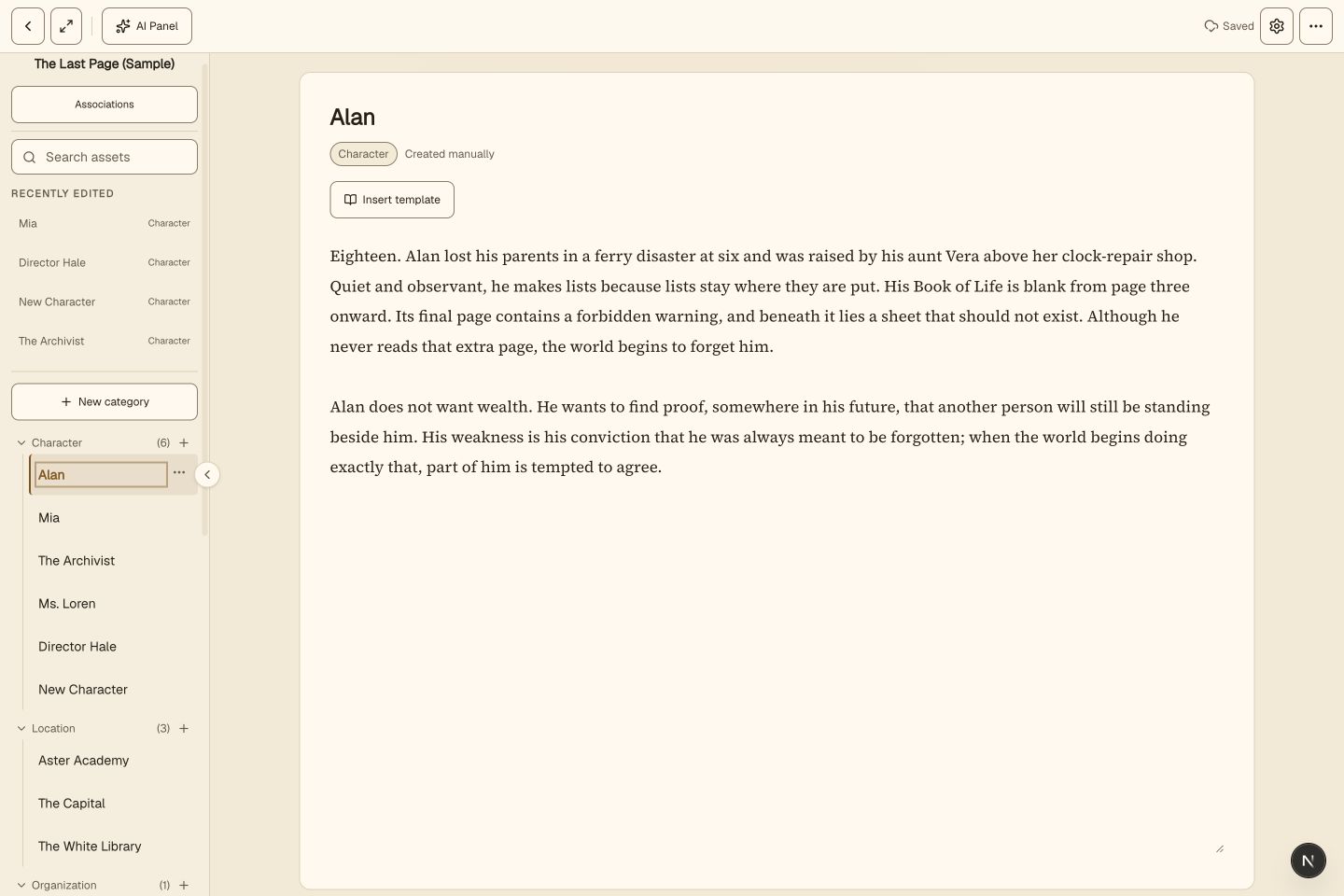
06-world-detail-assets-light-en
-
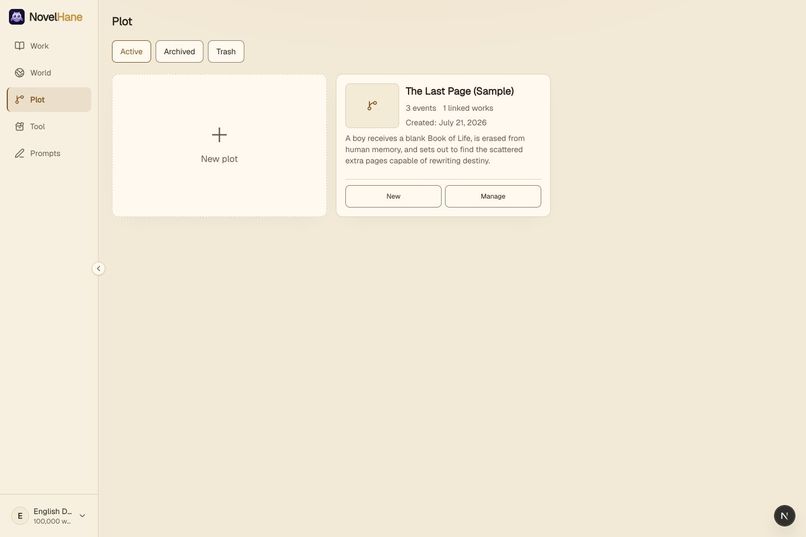
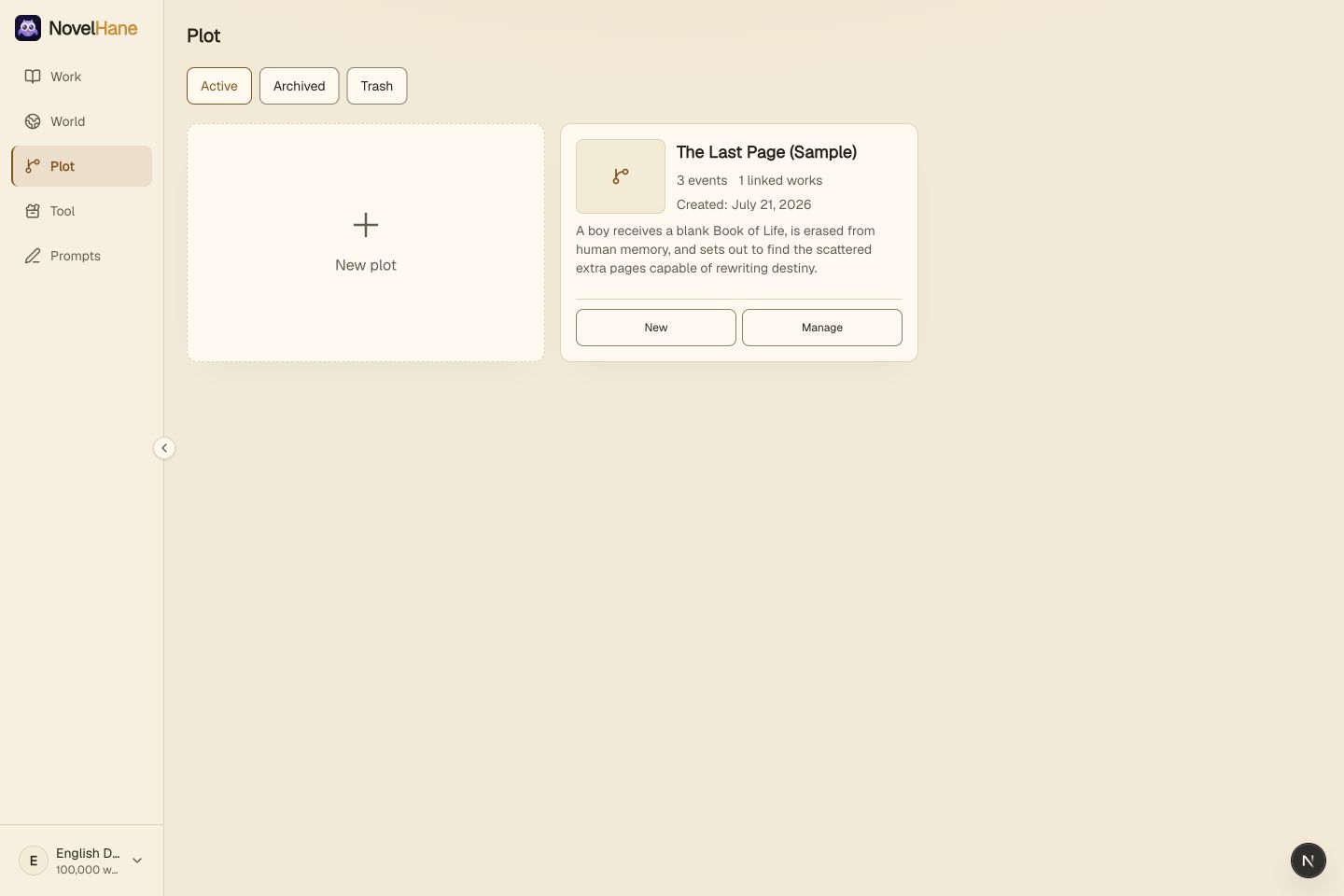
07-plot-library-light-en
-
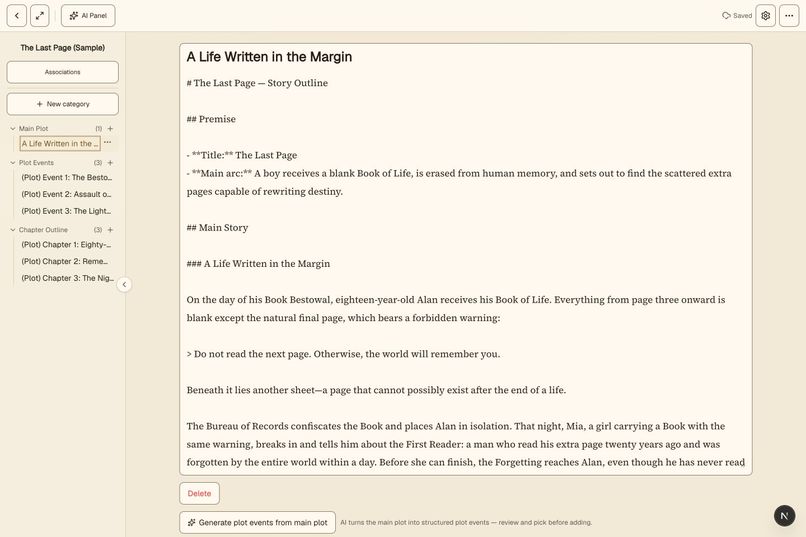
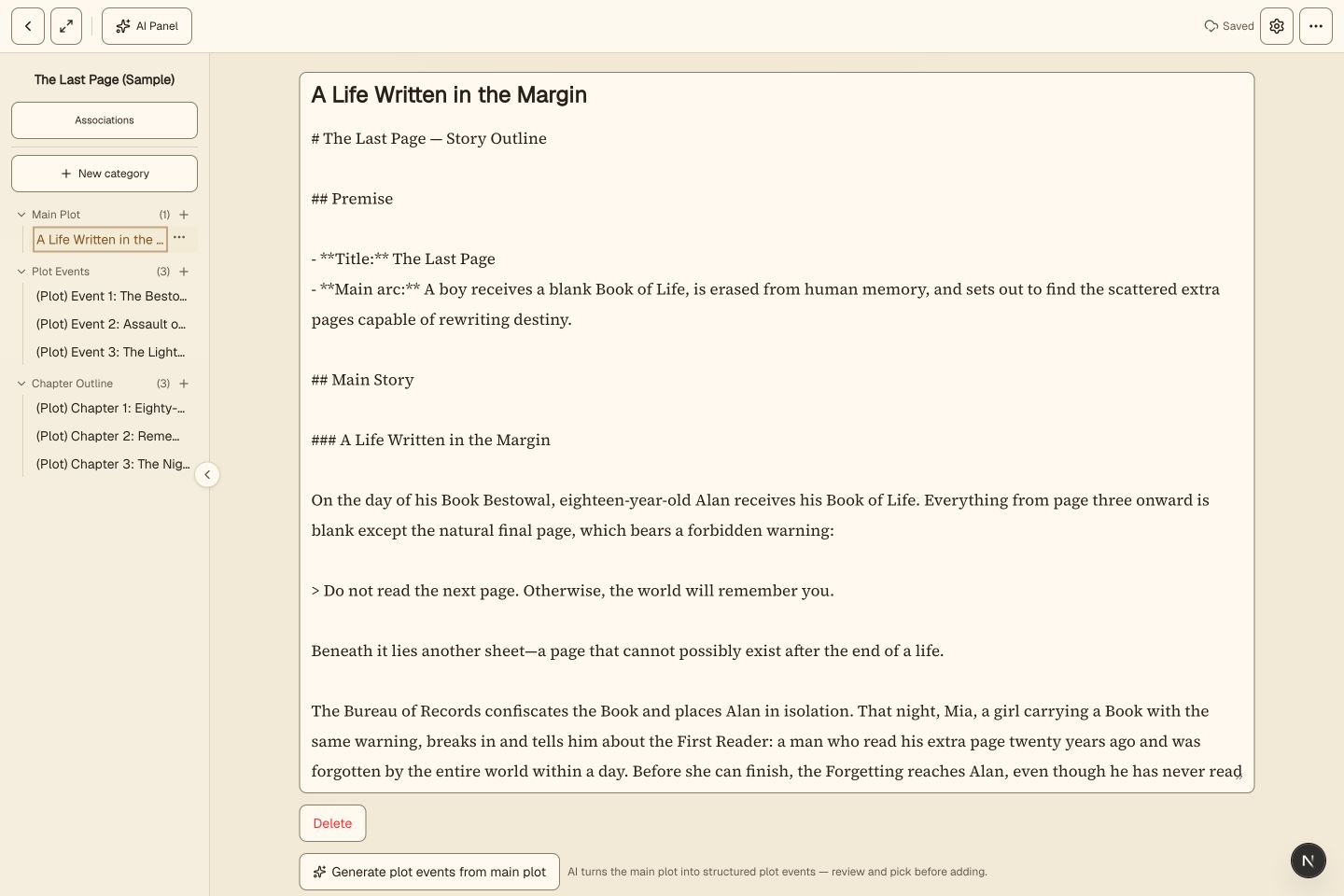
08-main-plot-overview-light-en
-
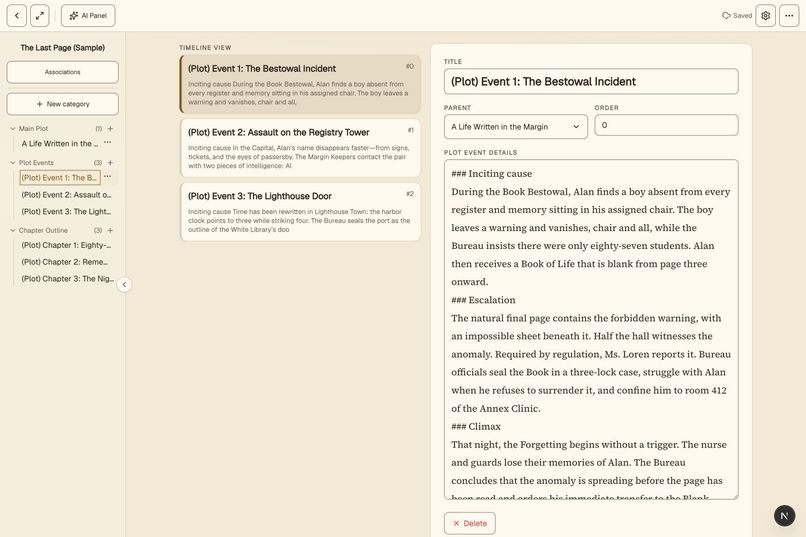
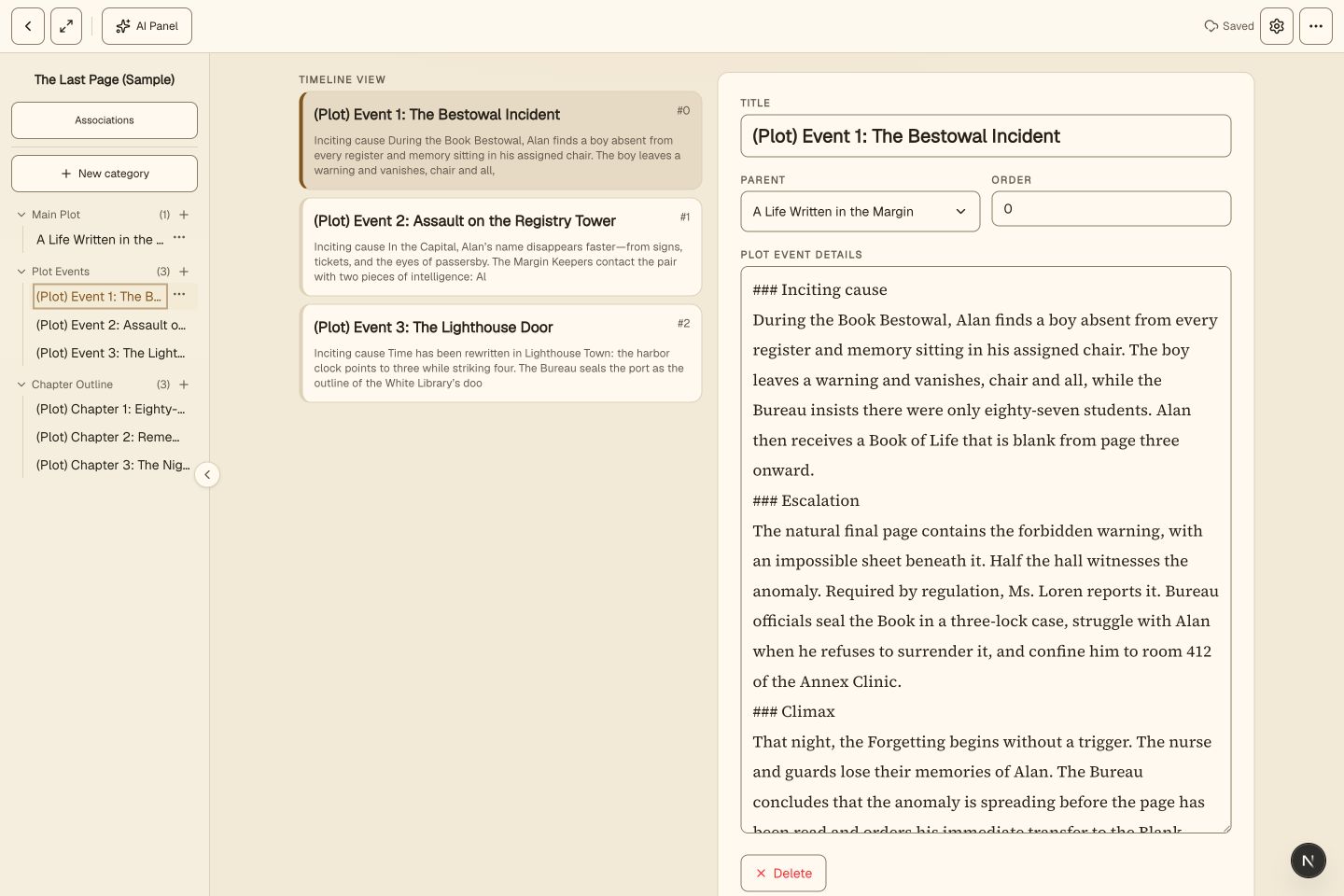
09-events-timeline-light-en
-
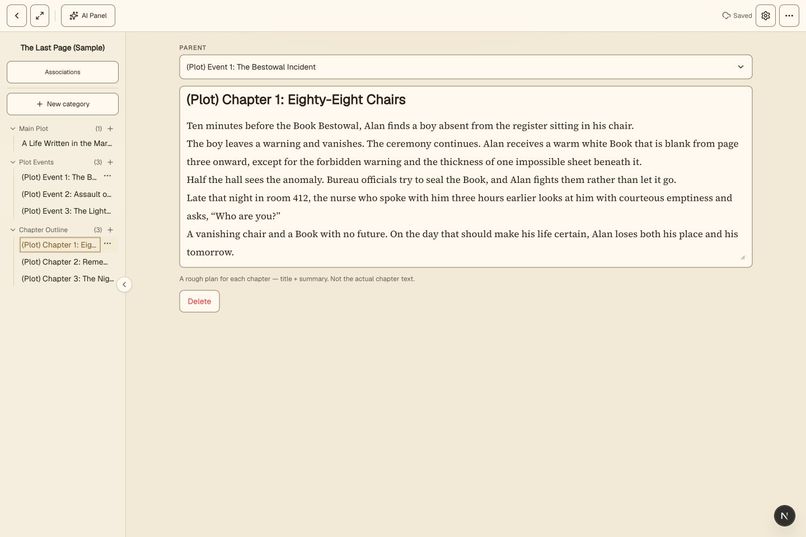
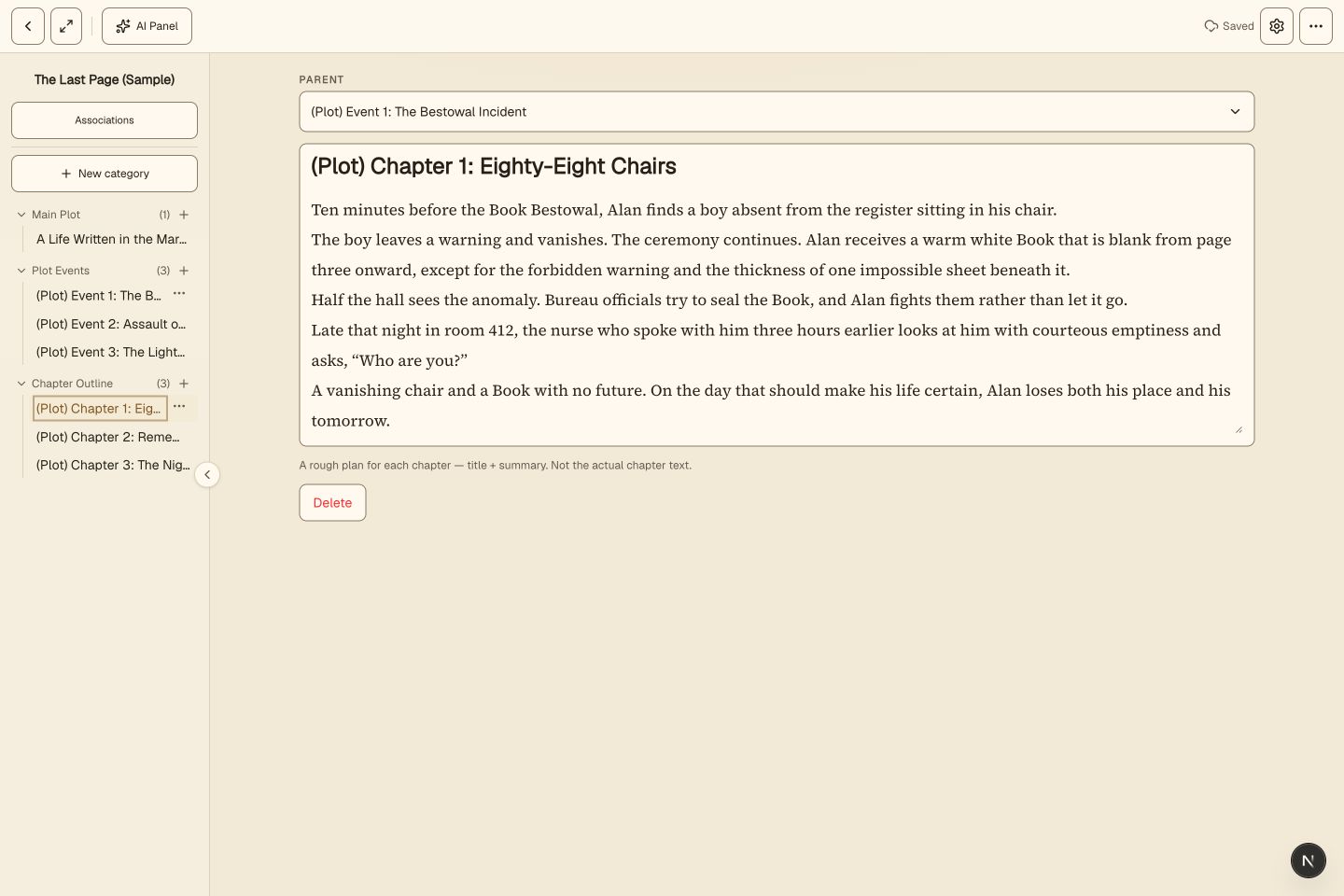
10-chapter-outline-light-en
-
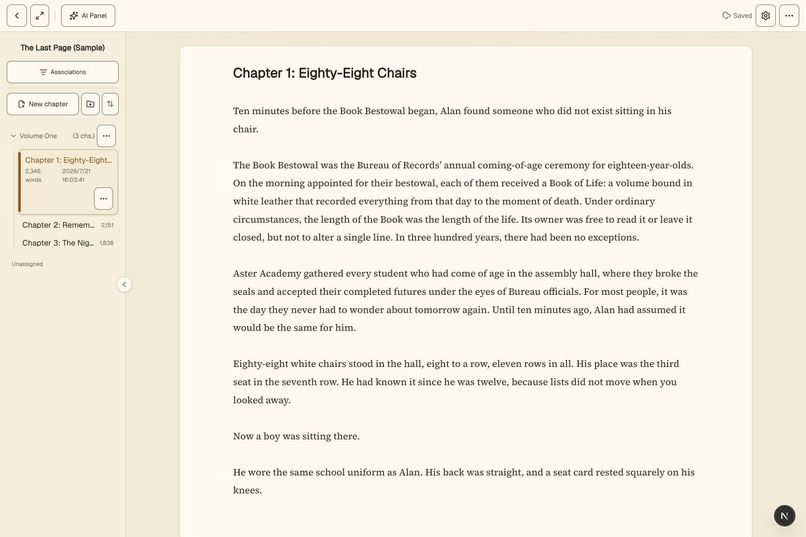
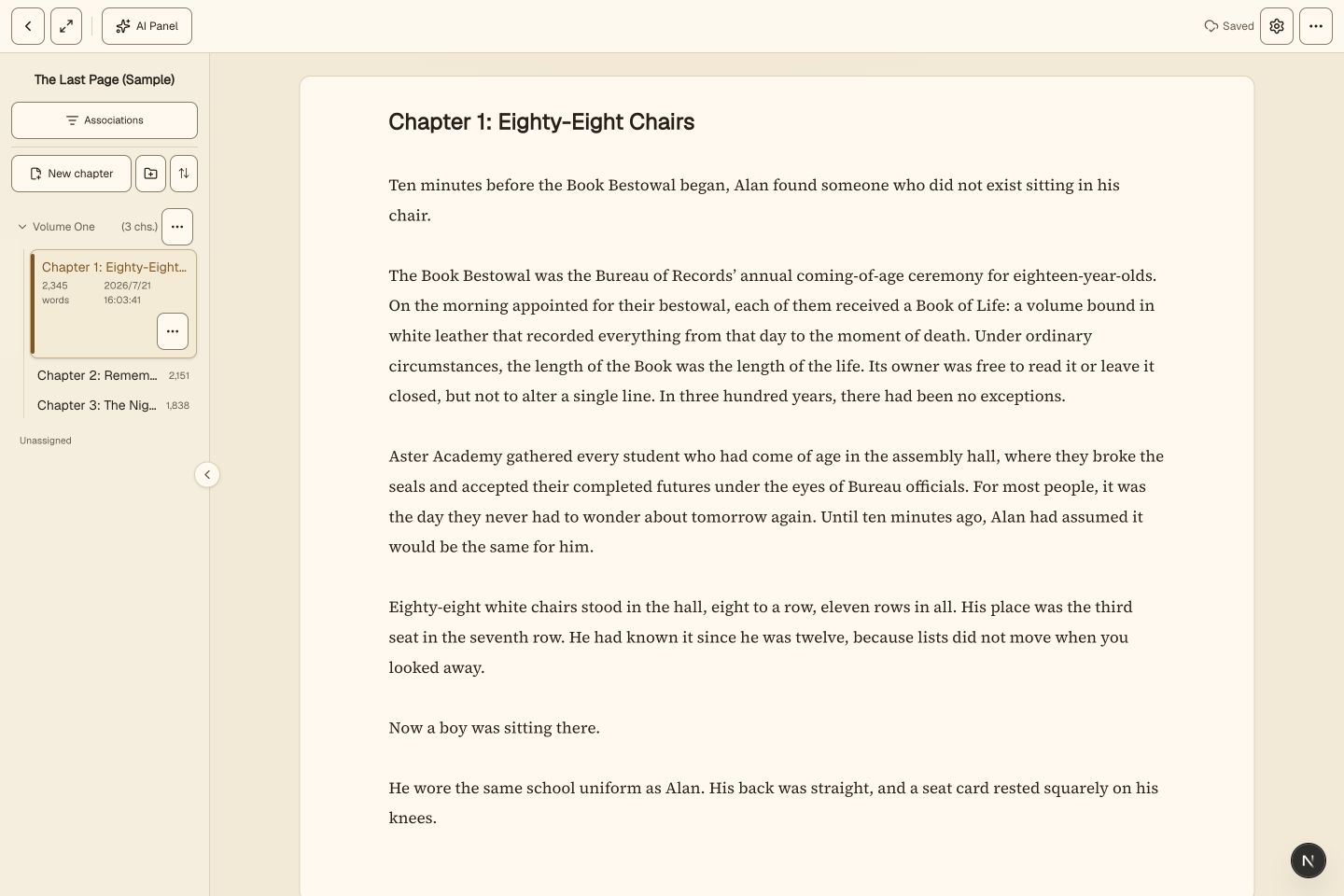
11-chapter-list-light-en
-
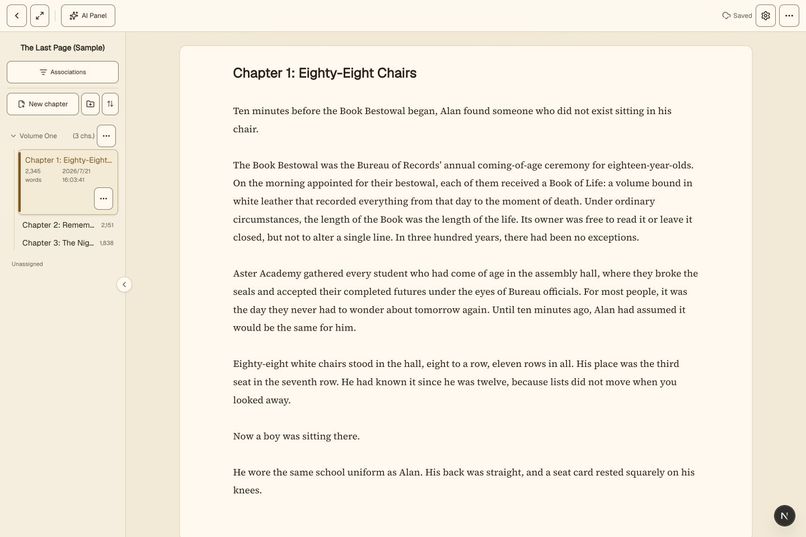
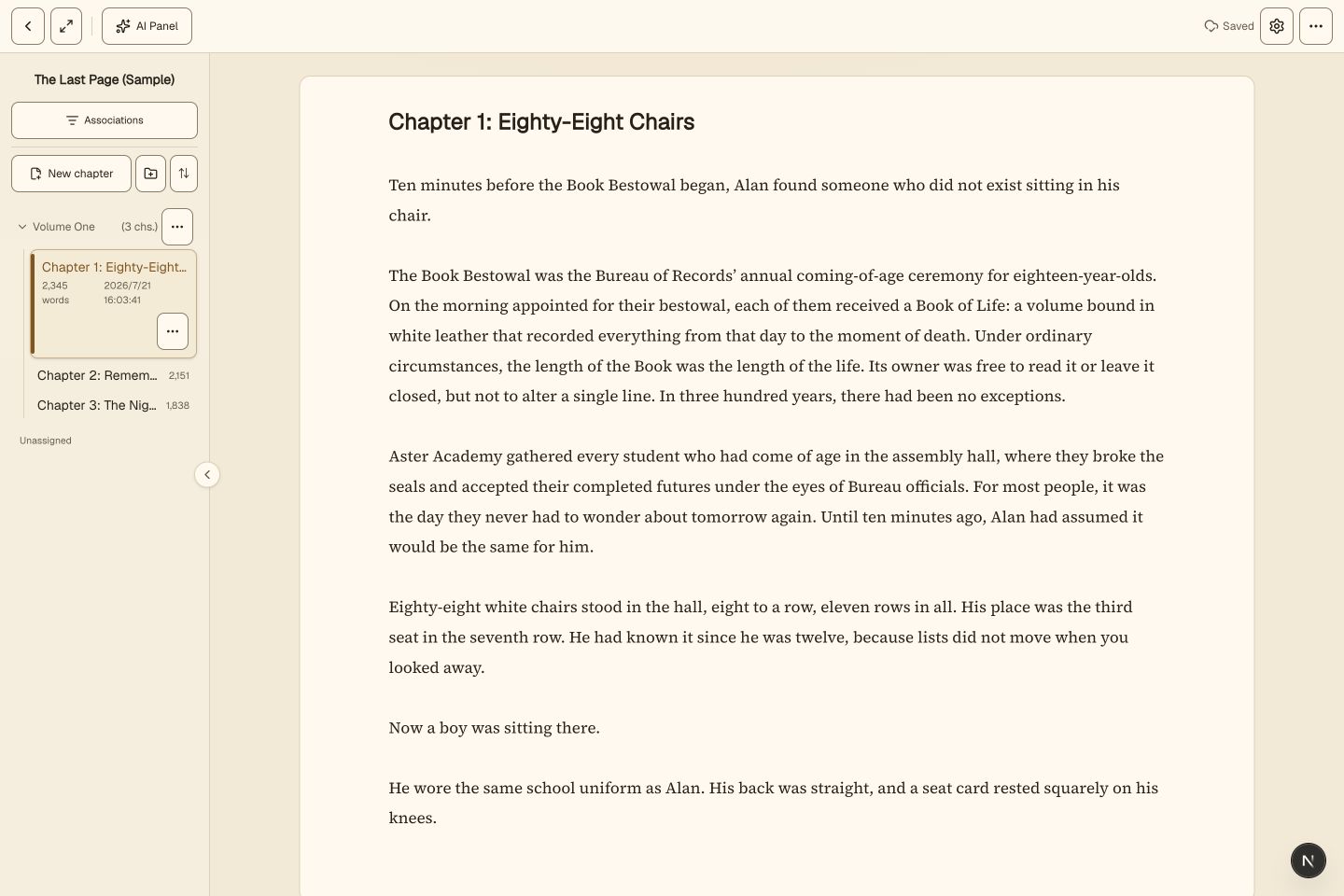
12-chapter-editor-light-en
-
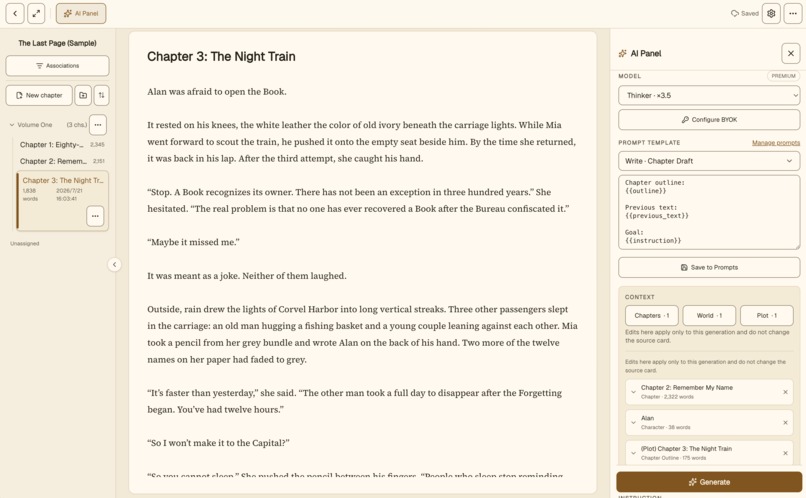
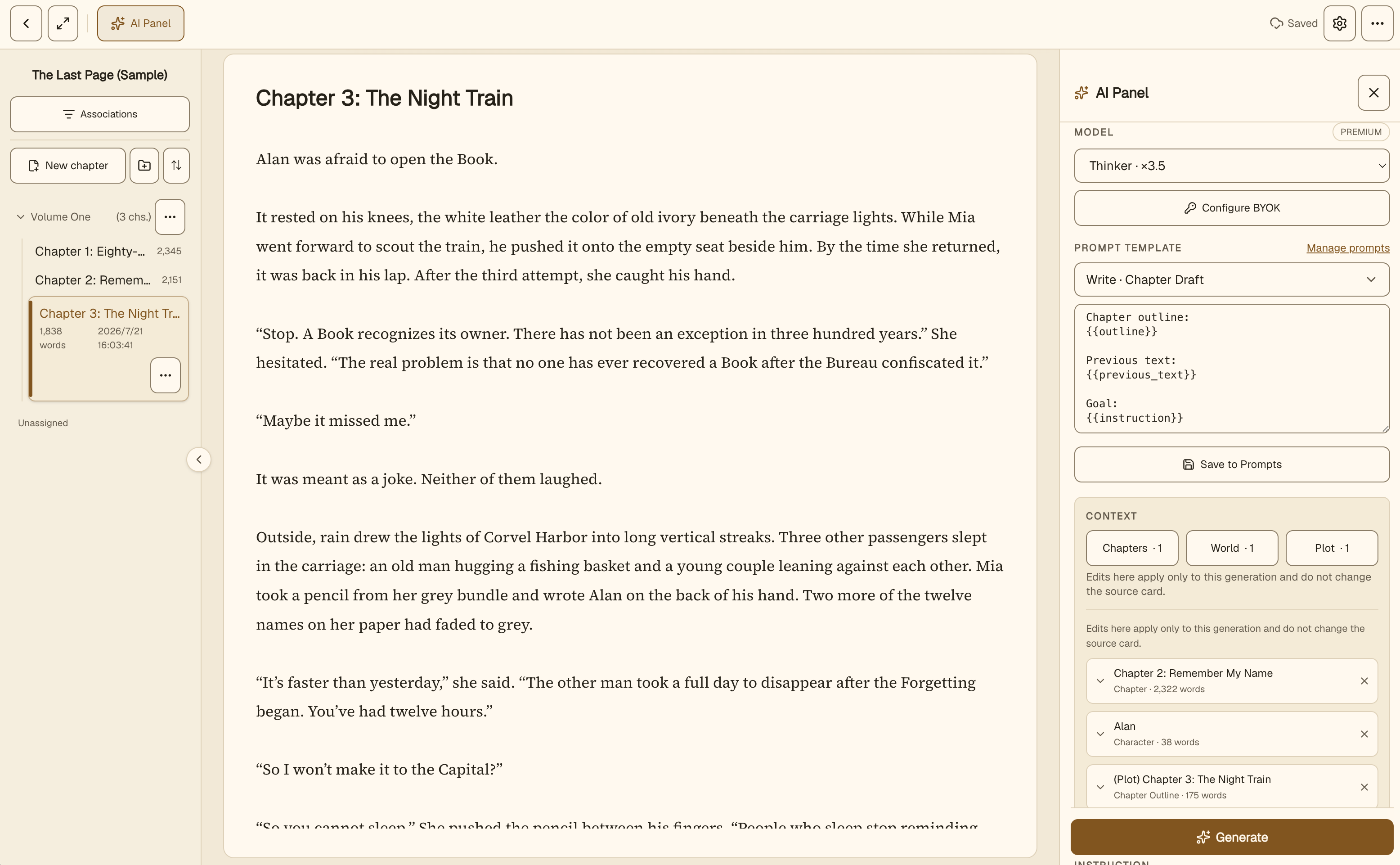
13-ai-context-panel-light-en
-
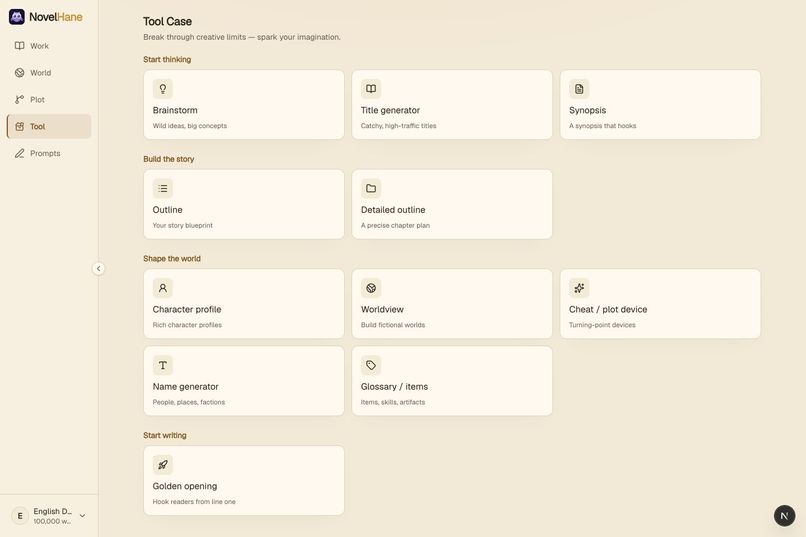
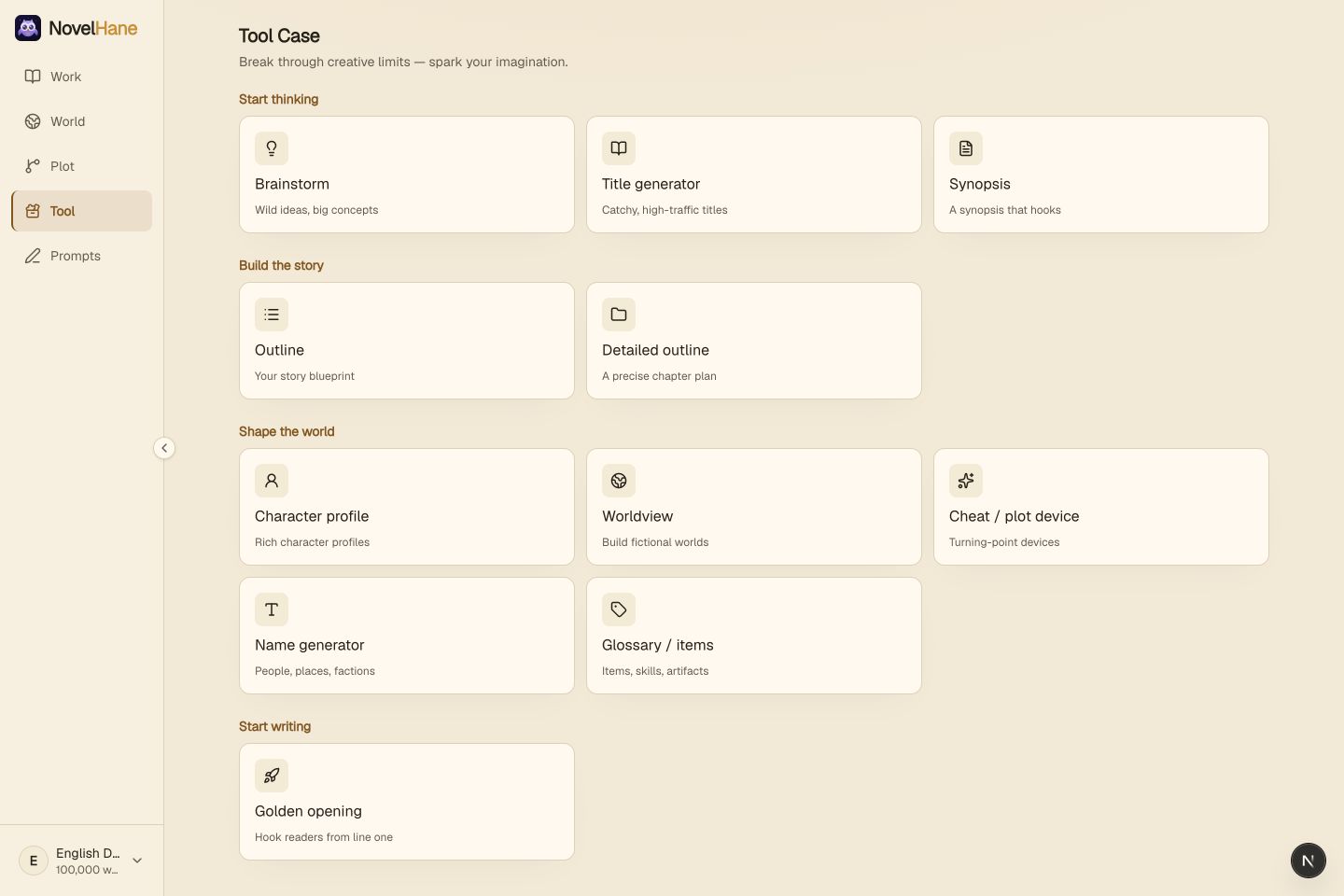
14-creative-toolbox-light-en
-
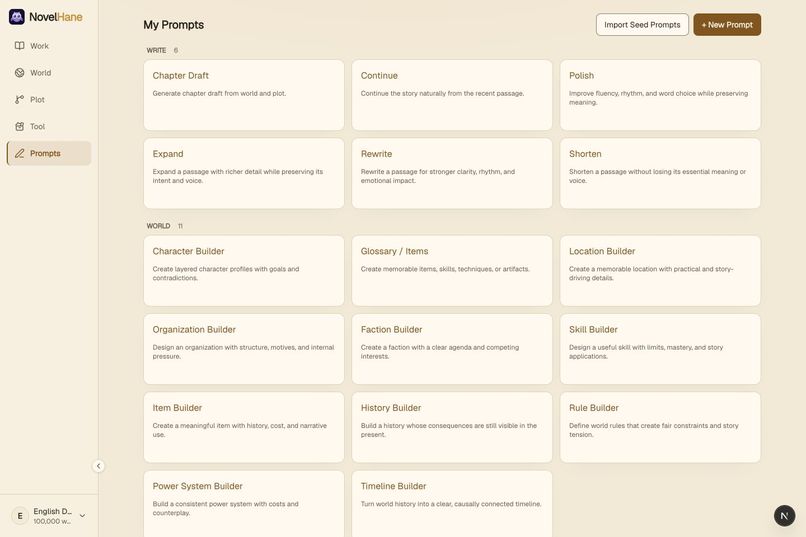
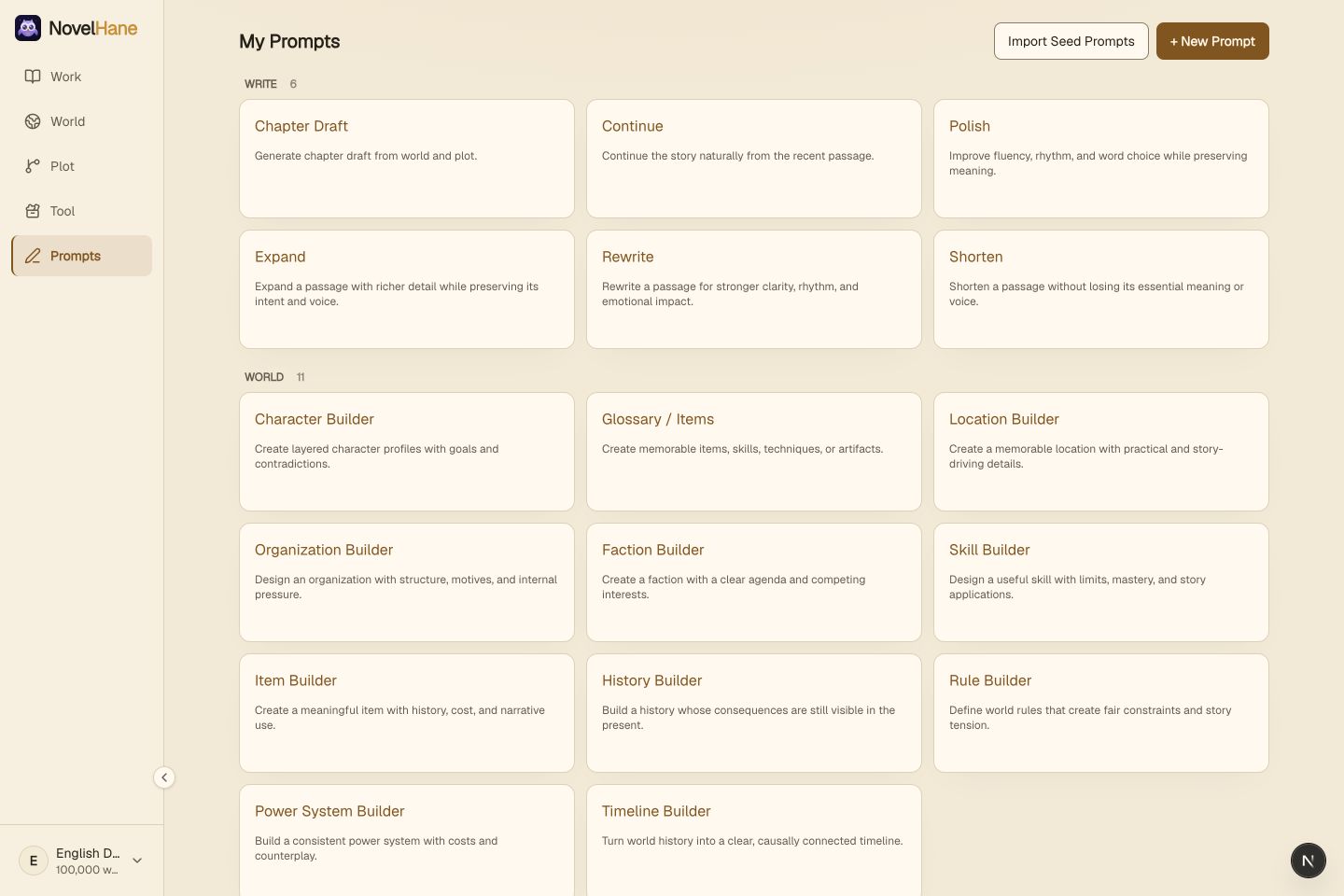
15-prompt-management-light-en

Inspiration
I am an AI researcher who also enjoys writing fiction. After trying many AI-assisted writing tools, I found that most were designed to generate isolated passages. They could improve a paragraph, but they did not match the way I wanted to build a long story: first establishing a world, then developing a plot from that world, and finally turning the plot into connected chapters.
I wanted a writing environment where characters, abilities, organizations, locations, rules, events, chapter outlines, and previous writing could remain available as persistent story context instead of disappearing into chat history.
I initially built NovelHane for my own writing workflow, with the longer-term goal of helping creators who work in a similar way.
“Hane” means “wing” in Japanese. I hope NovelHane can give writers wings and help them move from an initial idea to a coherent long-form work more efficiently.
What it does
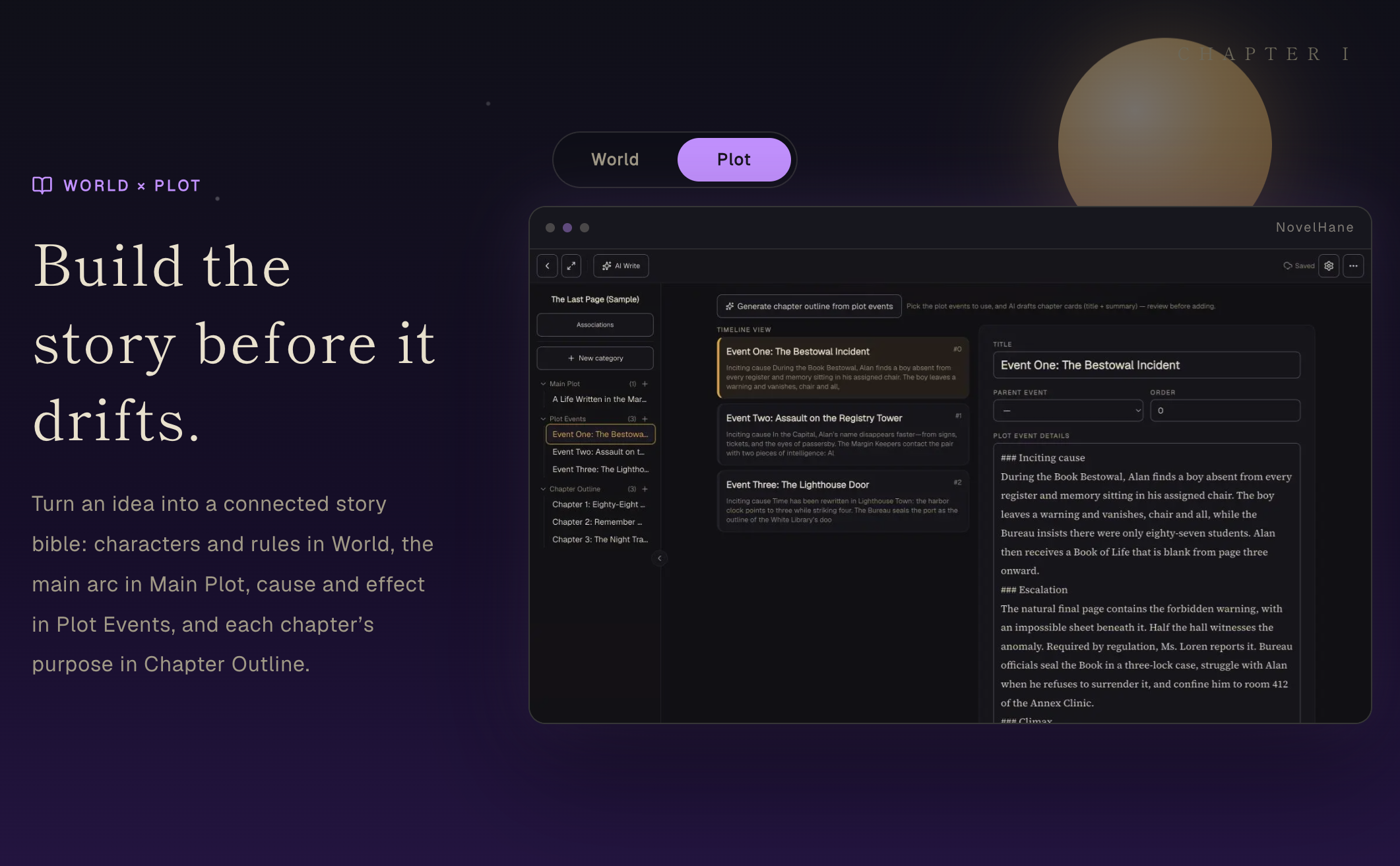
NovelHane is an AI long-form fiction studio that organizes the creative process into three connected areas: World, Plot, and Chapters.
The workflow follows a natural progression:
Worldbuilding (characters, skills, organizations, locations, and rules) → Plot planning (main plot, events, and chapter outlines) → Chapter writing (manuscript)
Writers can build structured worldbuilding assets, develop a plot based on that world, generate events and chapter outlines, and then write manuscript chapters using the selected story context.
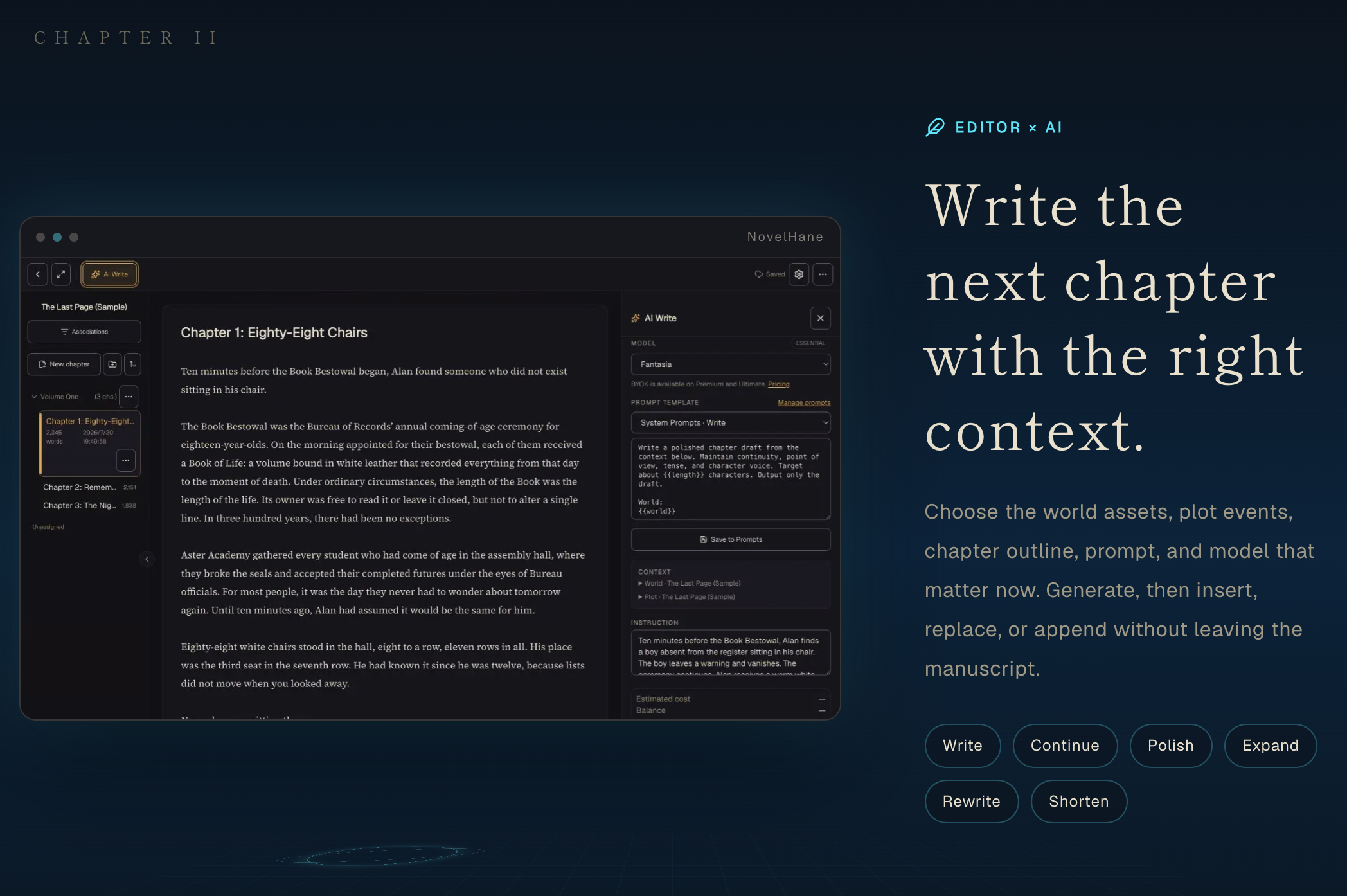
Inside the editor, AI can generate a chapter draft, continue from recent manuscript text, or rewrite, expand, shorten, and polish a selected passage.
Before each generation, the writer chooses which worldbuilding and plot assets should be included. NovelHane assembles that information into bounded context, streams the generated result into the AI Panel, and saves it as a generation record. The manuscript is never changed automatically. The writer reviews the result and explicitly chooses whether to Insert, Replace, Append, or Copy it.
How I built it
I built NovelHane with Next.js, React, TypeScript, Tailwind CSS, Prisma, PostgreSQL, and a server-side OpenAI-compatible generation pipeline.
The application stores worlds, plots, events, chapter outlines, and chapters as connected, editable data instead of hiding them inside a single chat history. This allows each part of the story to be reviewed, updated, or regenerated independently while preserving its relationship to the rest of the work.
For every AI generation, the server:
- Loads the writer-selected worldbuilding assets, plot, event, chapter outline, and manuscript context.
- Assembles the context according to the selected prompt.
- Checks it against a bounded, language-aware context budget.
- Resolves the configured model without exposing provider credentials or real model identifiers to the browser.
- Streams the response to the editor over SSE.
- Persists the output as a generation record.
- Waits for the writer to decide whether the result should change the manuscript.
I used GPT-5.6 SOL High in Plan mode for requirements discussion, product decisions, architecture, UX design, and implementation planning. Since this was my first React project, SOL High helped me understand React and Next.js best practices, choose appropriate component and data boundaries, and identify likely implementation problems before coding began.
After the plan was agreed, I switched to GPT-5.6 LUNA High for focused execution. LUNA High implemented the planned pages, React components, API routes, Prisma data flows, authentication, autosave behavior, styling, and AI workflows.
I also used GPT-5.6 SOL High for literary creation. I first created the sample world and plot, then refined my instructions against that context to produce the first three chapters.
Codex accelerated the implementation and verification loop. It edited the project, ran engineering checks, started the local application when visual inspection was required, captured screenshots, and reviewed the rendered UI after changes. This helped identify layout, spacing, theme, loading-state, and interaction problems close to the changes that introduced them.
I also used Codex skills during development:
- The
stitch-designskill helped refine visual hierarchy, spacing, typography, and interaction patterns. - The
Ask Mattskill helped keep implementation aligned with the approved plan, product scope, and architectural decisions.
Challenges I ran into
The first challenge was building a React application without prior React project experience. A feature could involve components, server routes, database state, autosave behavior, localization, and styling at the same time. I addressed this by using SOL High to make architectural decisions before implementation, then using LUNA High to execute a defined plan. This reduced rework and made changes easier to verify.
Long-form fiction created a different challenge: the model needs enough story information to remain consistent, but including everything in every request would make generation expensive and difficult to control. I addressed this with writer-selected assets, recent manuscript context, and bounded context limits for English and Japanese. This gives the model relevant information without treating the entire project as one unlimited prompt.
Another challenge was representing creative flexibility with structured data. A single chat history could not express the relationships between characters, world rules, plot events, chapter outlines, and manuscript chapters. I therefore modeled them as connected entities that can be edited and regenerated independently.
UI and UX were also challenging because the underlying workflow is hierarchical. Showing every relationship at once would make the product feel like a database interface rather than a writing environment. I used consistent navigation, structured cards, readable typography, a focused editor layout, and a dedicated AI Panel to keep the relationships visible without overwhelming the writer. Screenshot-based verification through Codex helped me refine both dark and light themes and the English and Japanese interfaces.
Model usage was a practical constraint during Build Week. The limited budget encouraged me to reserve SOL High for architecture, difficult decisions, and planning, then use LUNA High for focused implementation. This planning-first workflow reduced unnecessary iterations, rework, and model costs.
Accomplishments I'm proud of
I am proud that NovelHane provides a complete creative workflow rather than only a text-generation demo:
- Build a structured world with characters, skills, organizations, locations, and rules.
- Develop a plot from that world, including events and chapter outlines.
- Turn those outlines into chapters that form the manuscript.
- Continue, revise, or polish the manuscript with selected story context.
- Review every AI result before deciding whether to apply it.
The included sample, The Last Page, follows Alan after he receives a Book of Fate with a blank future and discovers that the world is beginning to forget him. Its first major event unfolds across three connected chapters, each with its own narrative tension while remaining grounded in the same world and plot.
I am also proud of the UI and UX. The information architecture helps writers move naturally from worldbuilding to plot development and manuscript writing. Structured cards, consistent navigation, readable typography, bilingual support, dark and light themes, and the dedicated AI Panel make a complex workflow easier to understand and operate.
AI collaboration is transparent and deliberate. Generated text never changes the manuscript automatically. Writers can review the result first and then choose to Insert, Replace, Append, or Copy it.
Finally, API credentials and real model identifiers remain behind server-side configuration, generation results are persisted, context size is bounded, and the writer retains control over every change to the manuscript.
What I learned
I learned that long-form AI writing is not only a prompting problem. It is also a data-modeling, context-engineering, and UX problem. Output quality depends on how story information is structured, which assets are selected, how recent manuscript text is included, and whether the writer can review and control the result.
I also learned that AI-assisted development works best as a verifiable loop: discuss the problem, make explicit decisions, create a plan, implement it, run engineering checks, and inspect the real interface.
Finally, I learned that writer control is not merely a safeguard. Reviewable and reversible AI actions are an essential part of the creative experience.
What's next for NovelHane
My next step is to develop NovelHane into a SaaS product for writers with similar creative workflows.
The main priorities are:
- Better long-form consistency checks, summaries, and story-memory tools.
- A richer manuscript editor with version history and revision tracking.
- A stable public deployment with production authentication, subscriptions, and infrastructure.
My long-term goal is to make NovelHane a reliable creative partner that helps writers turn structured worldbuilding and plot planning into a complete, coherent manuscript.
Built With
- api
- cloudflare
- codex
- css
- docker
- events
- gpt-5.6
- next.js
- node.js
- openai
- postgresql
- prisma
- react
- server-sent
- tailwind
- typescript


Log in or sign up for Devpost to join the conversation.