-
-
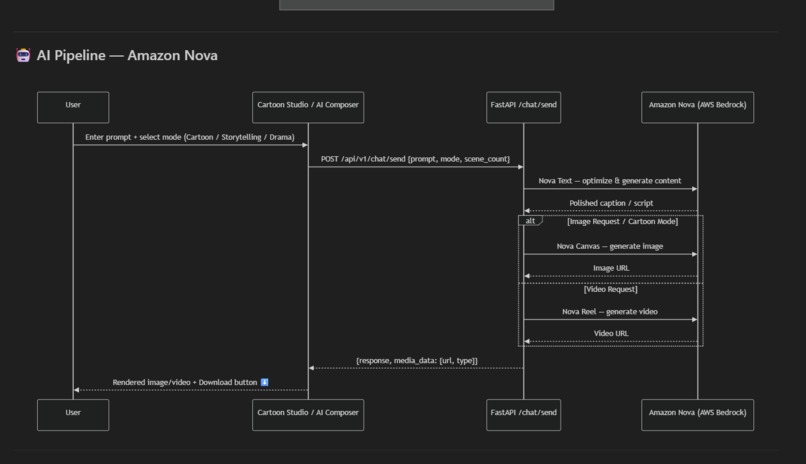
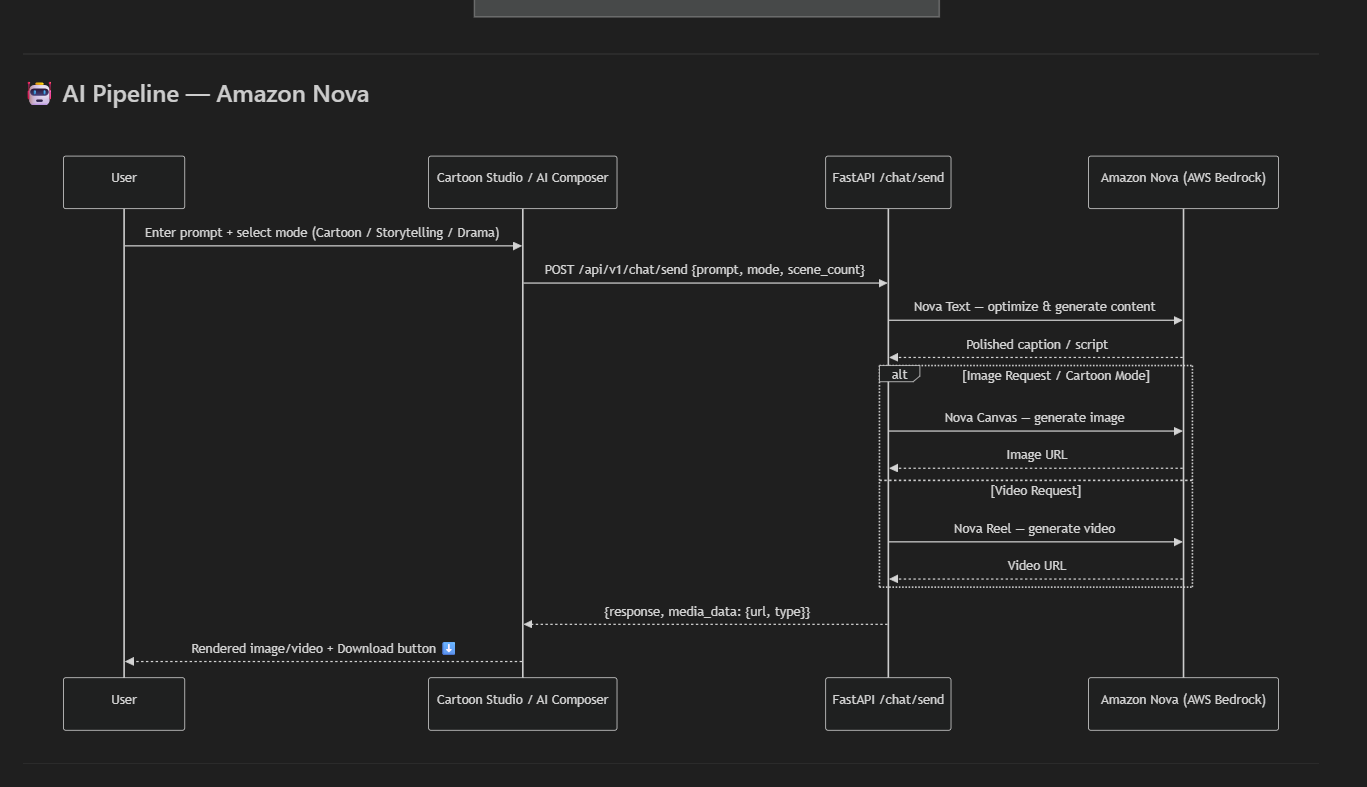
Pipeline
-
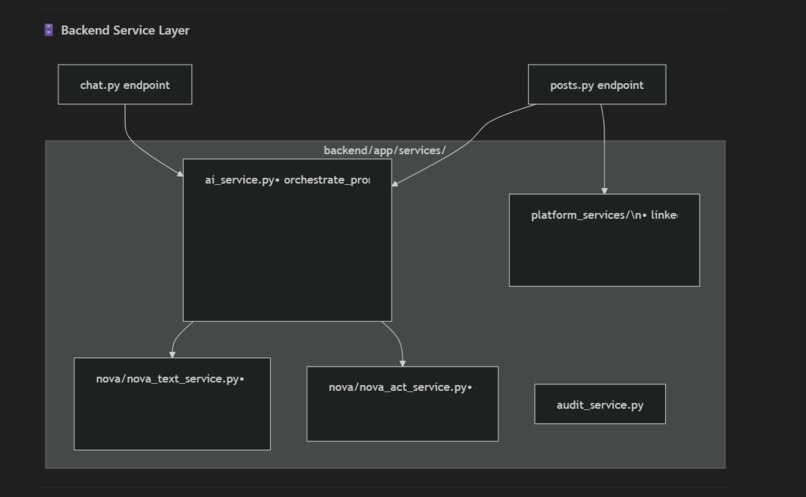
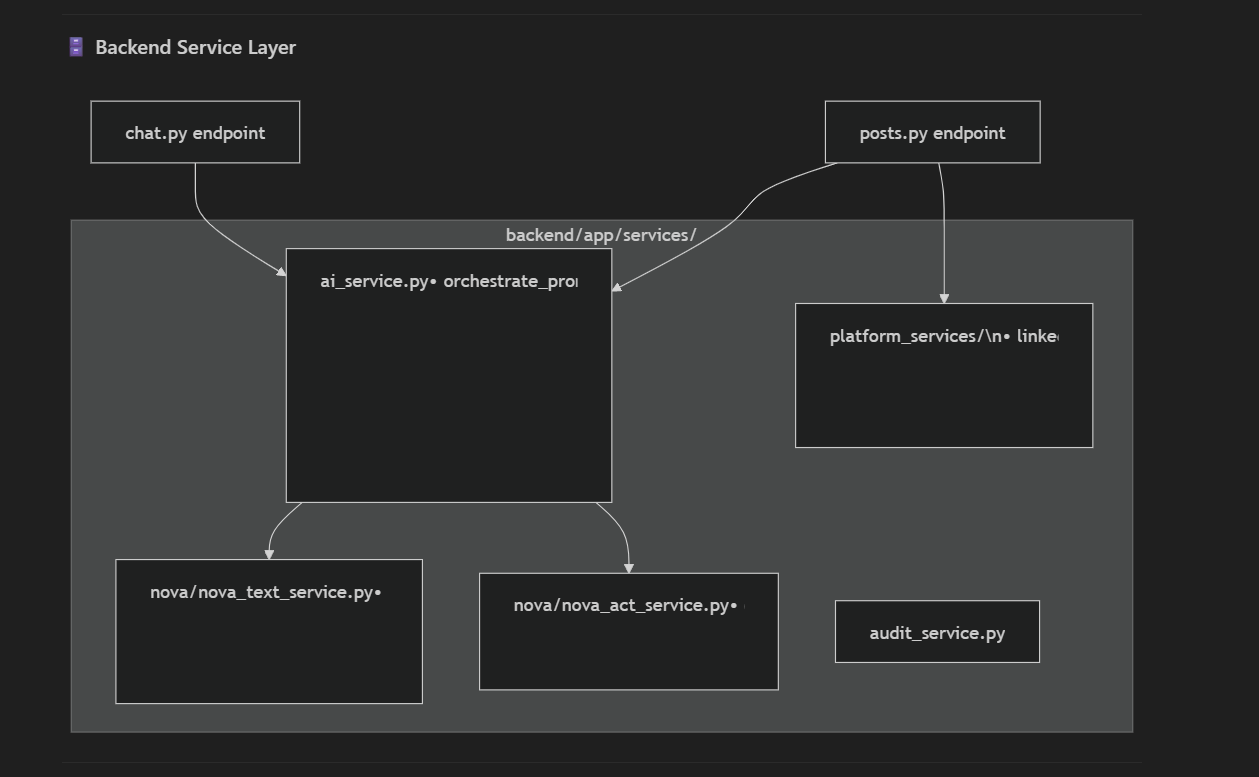
backend page
-
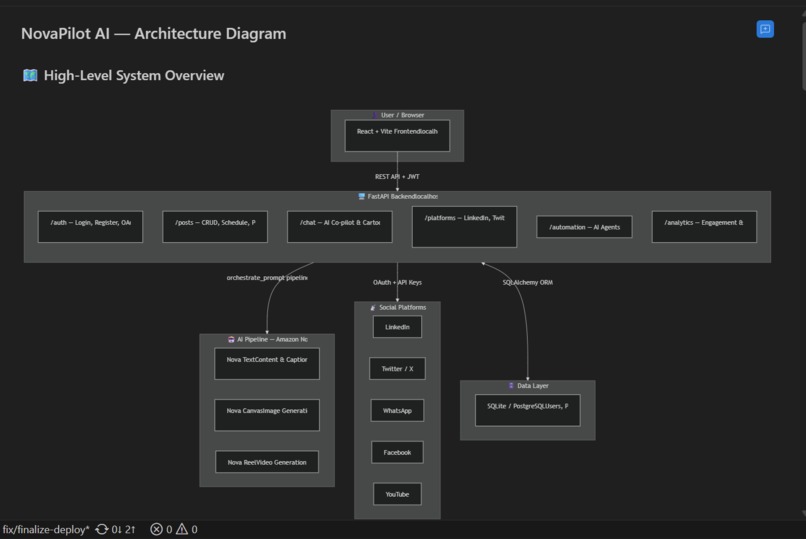
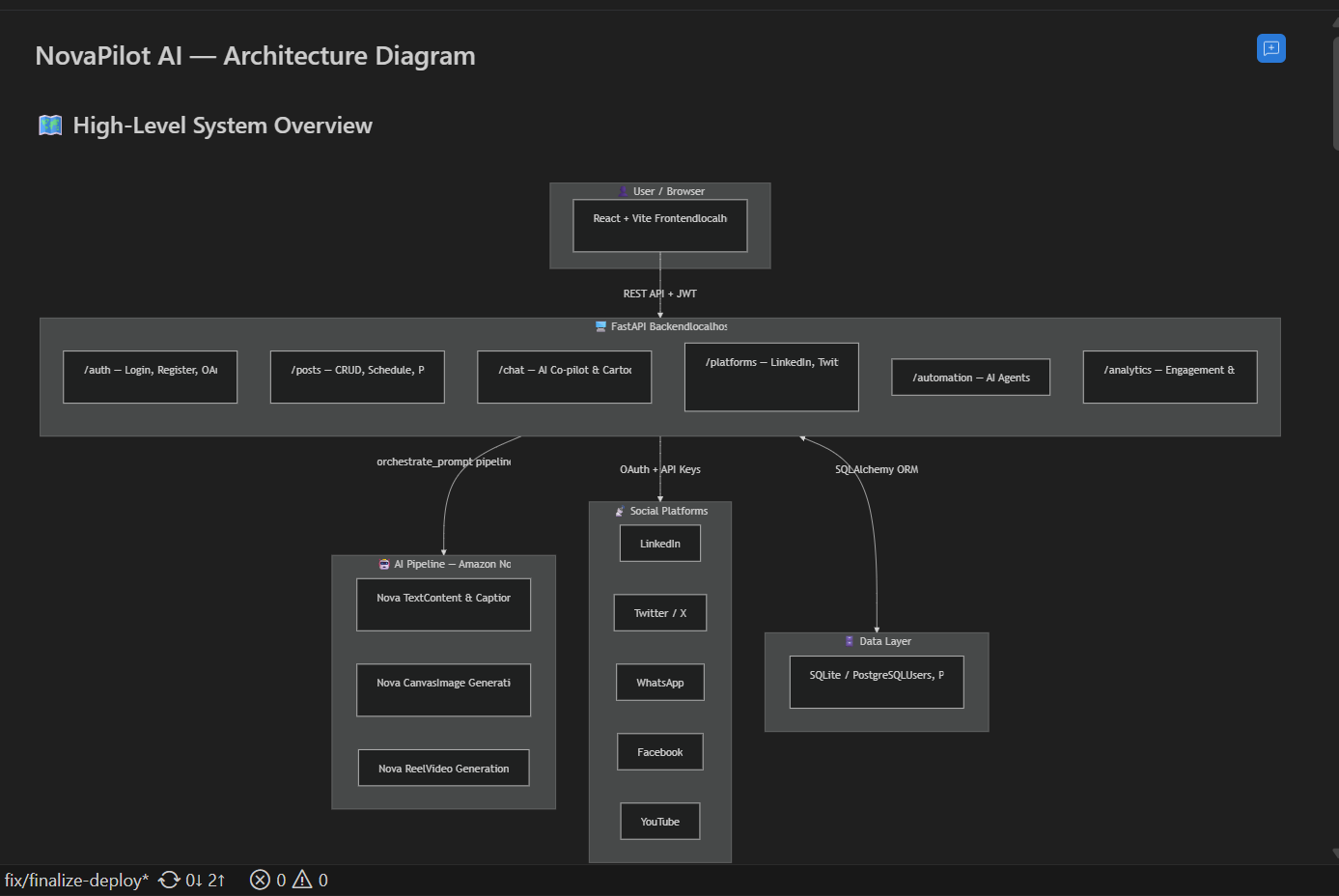
architecture
-
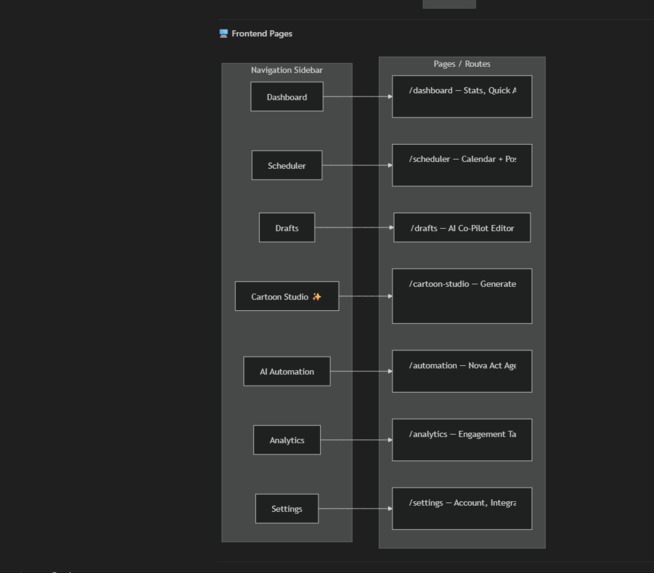
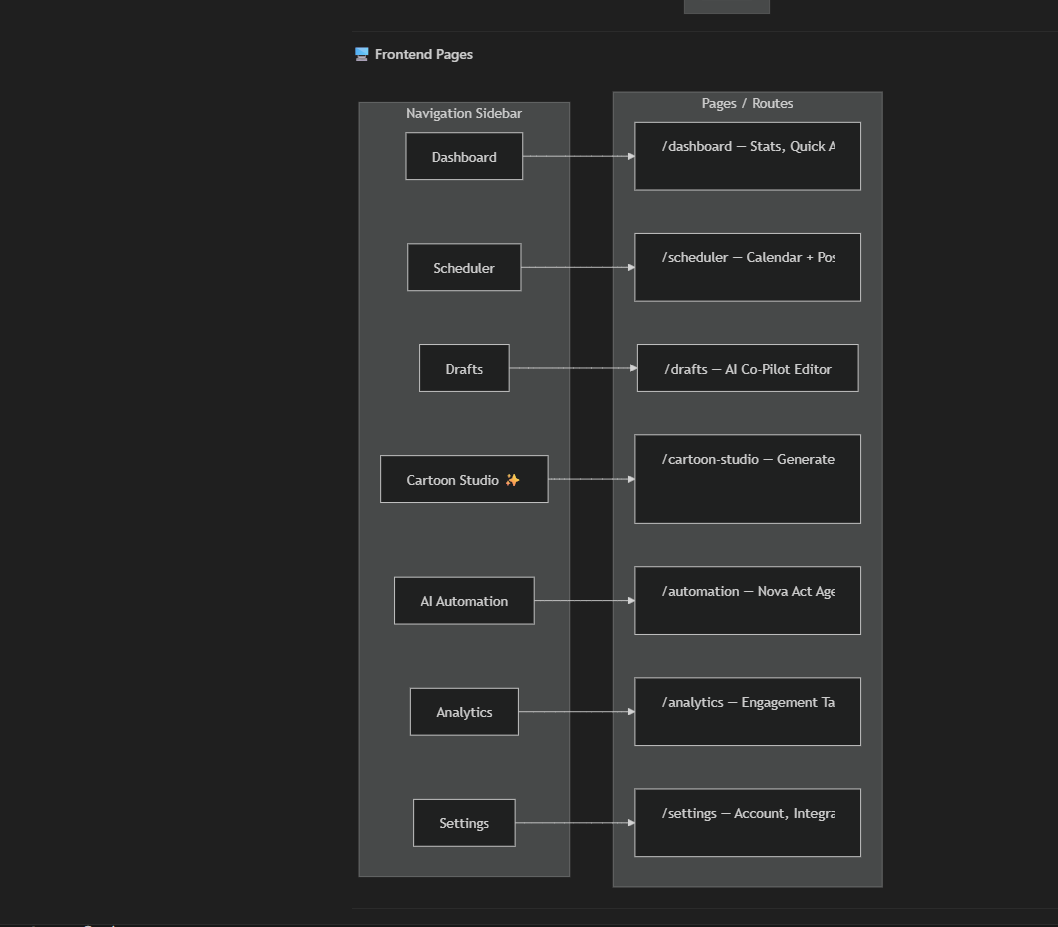
frontend
-
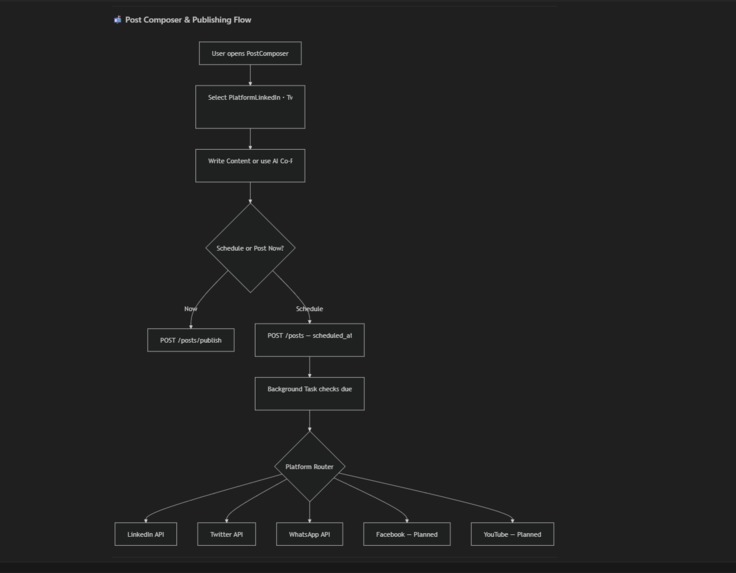
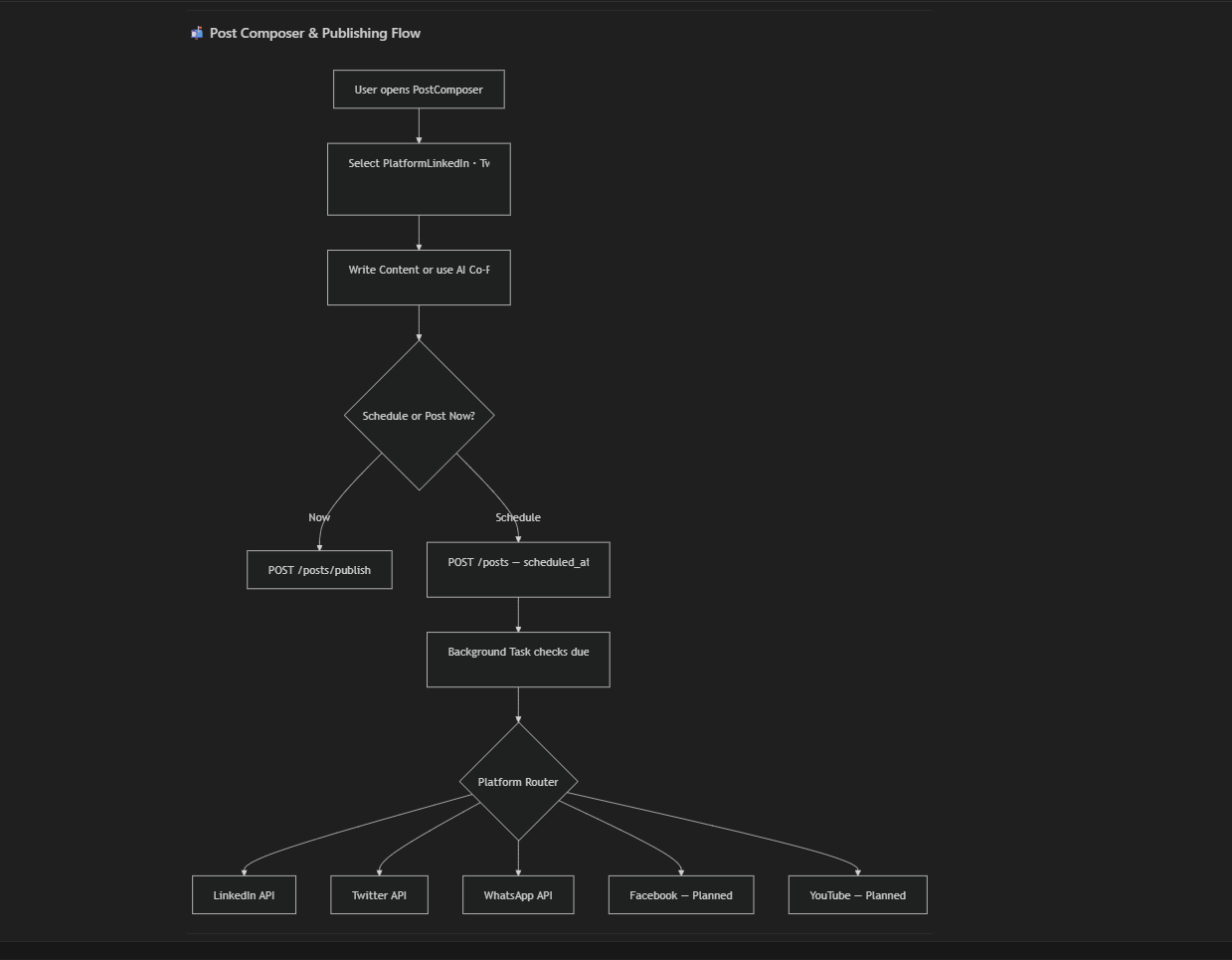
post Composer
-
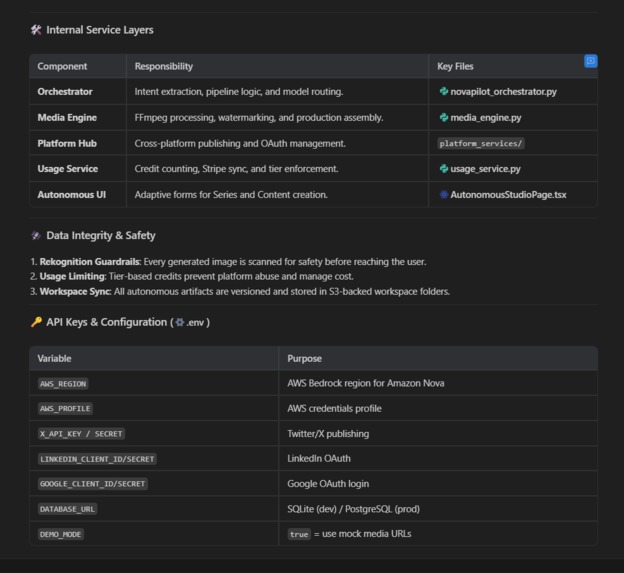
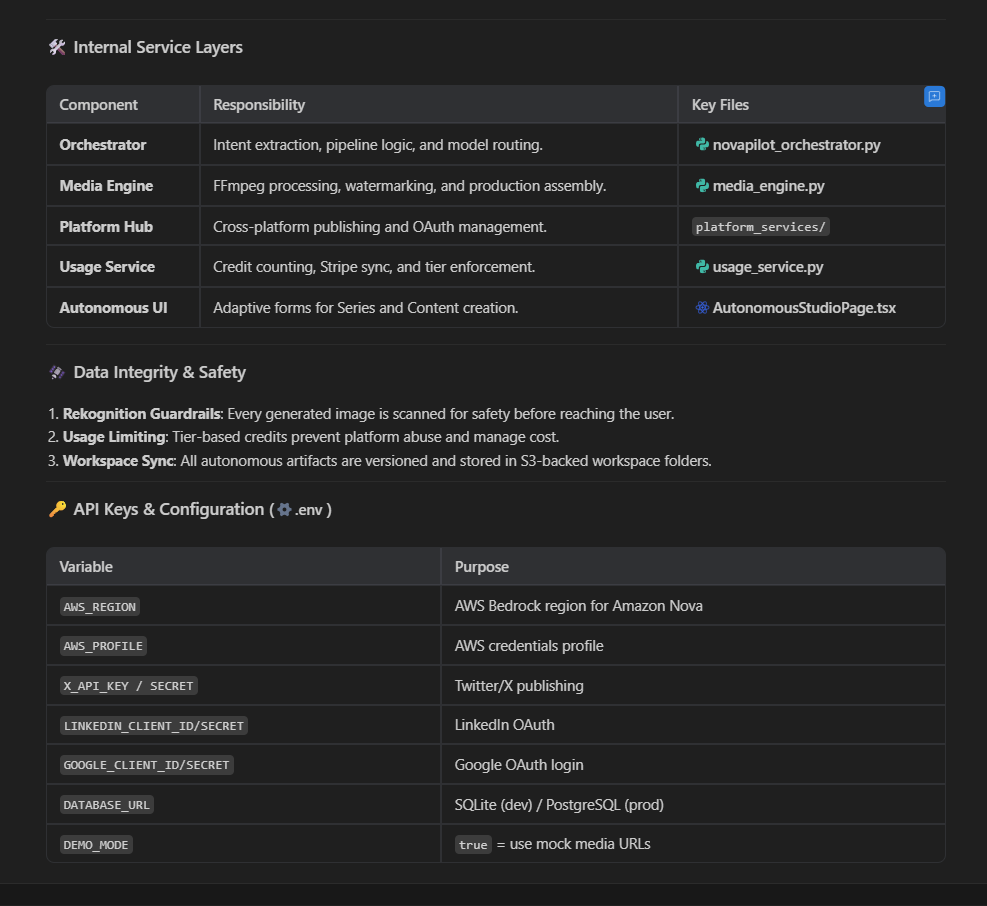
Internal layer
-
-
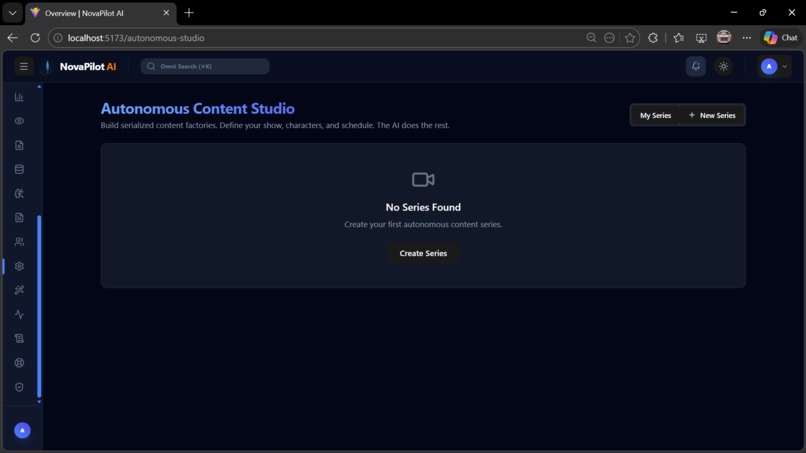
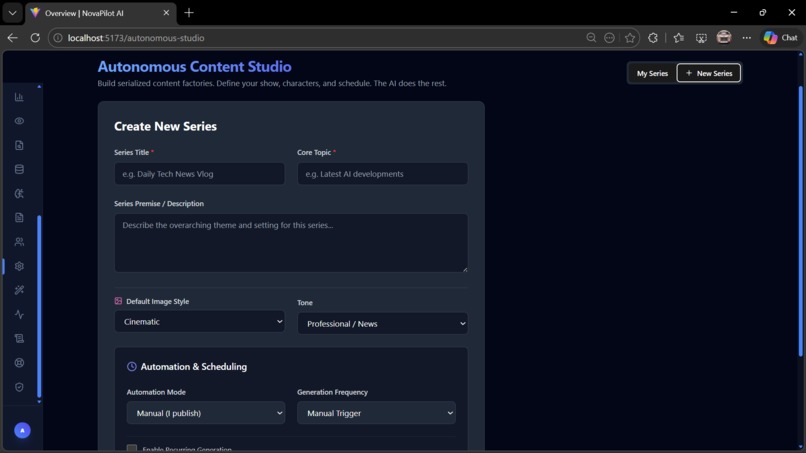
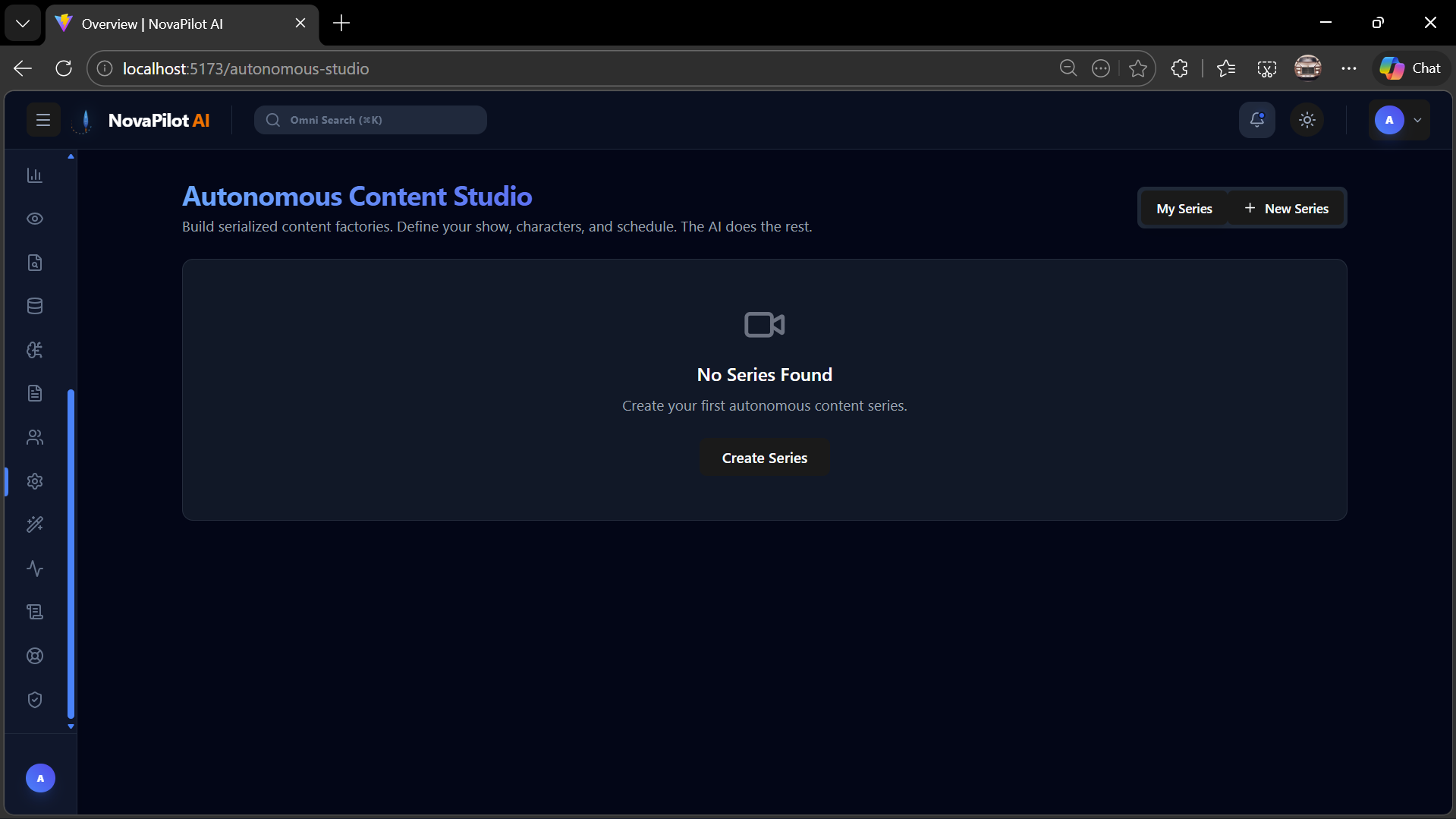
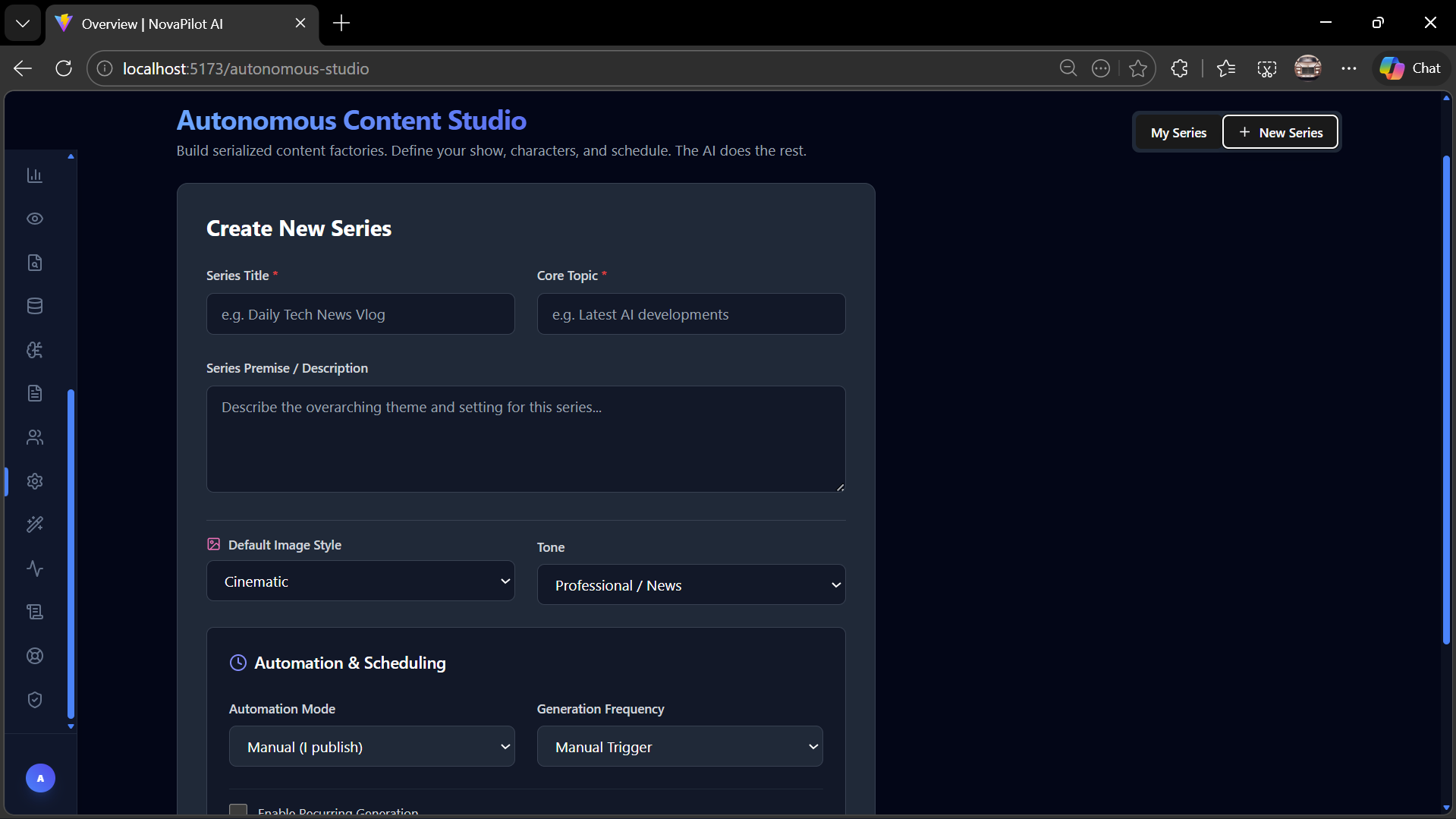
Autonomous Content Studio
-
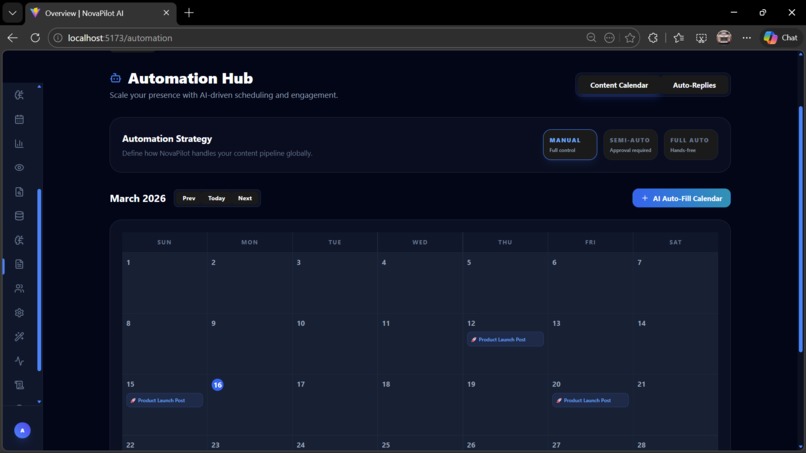
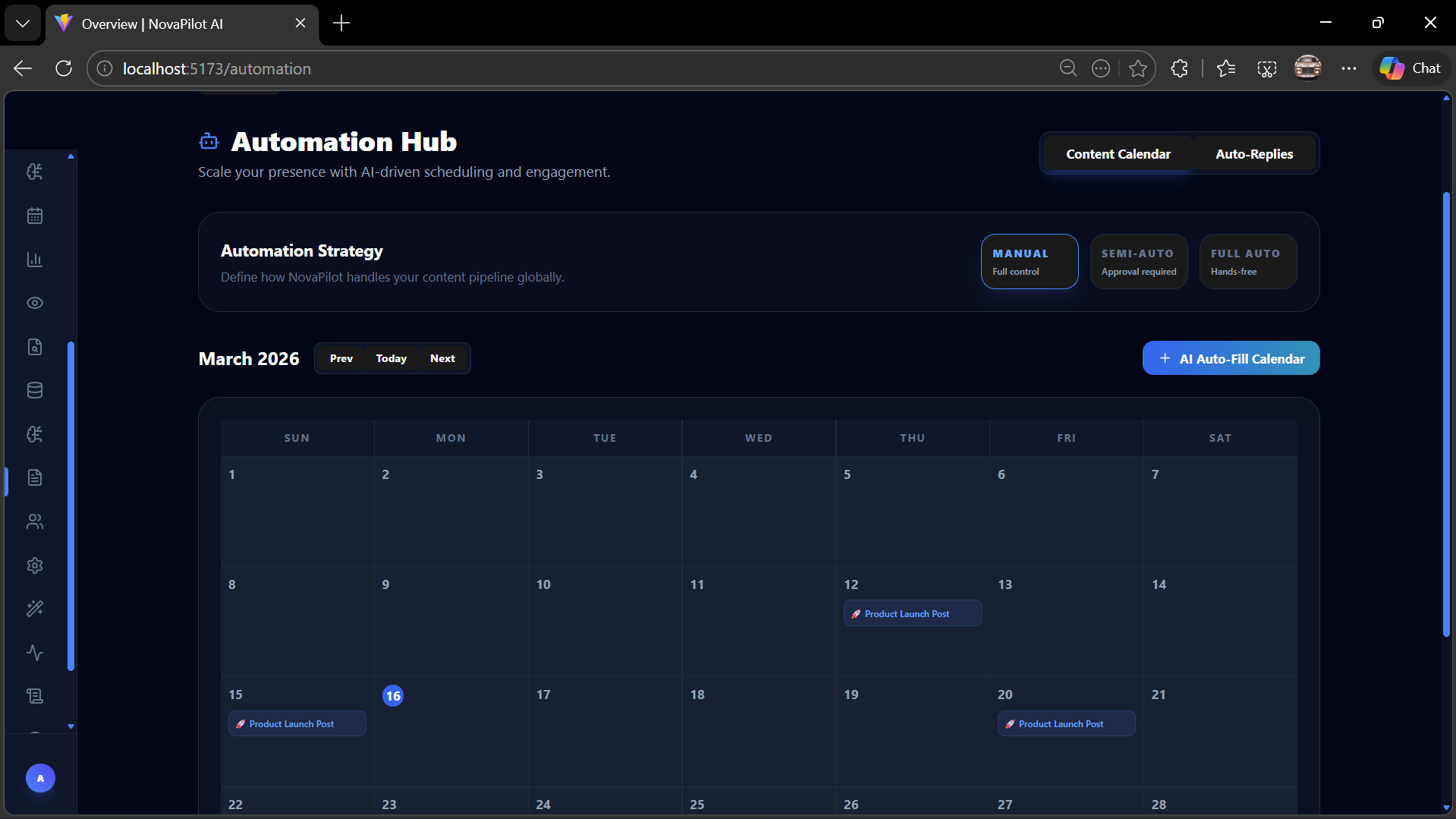
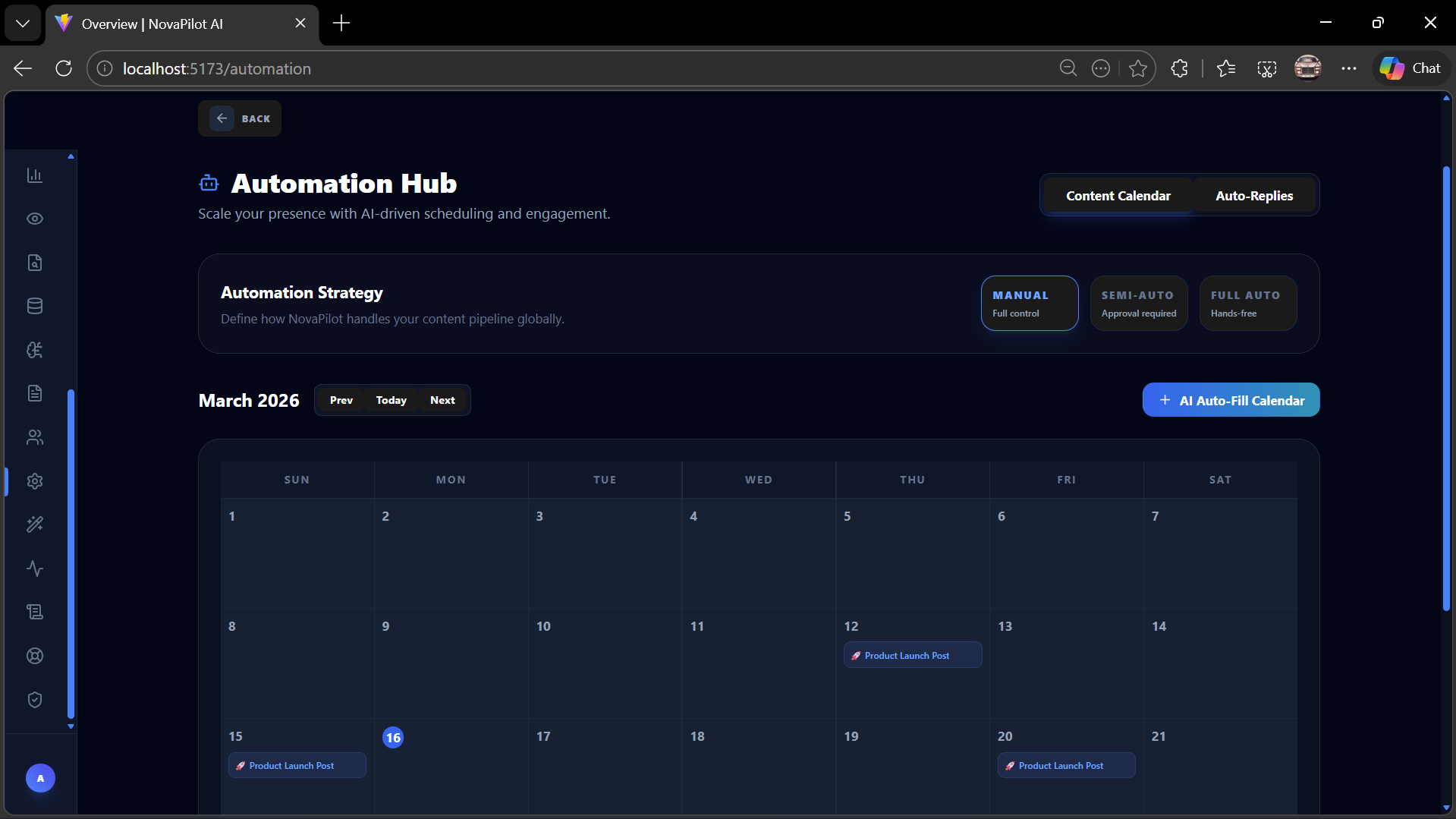
Content Scheduler
-
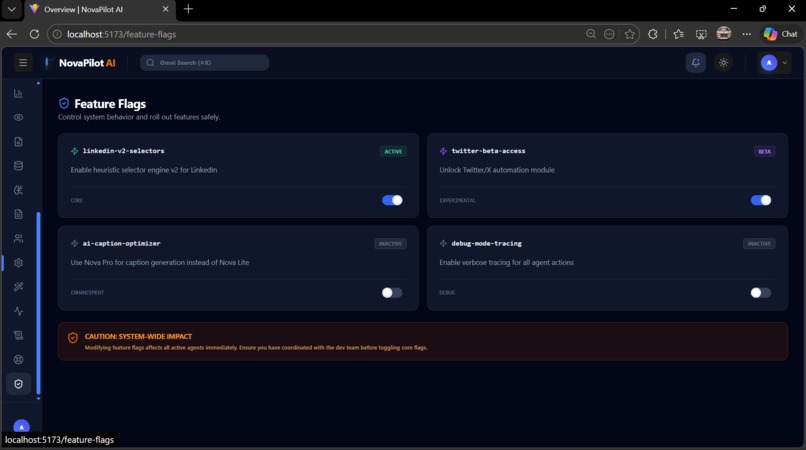
-
-
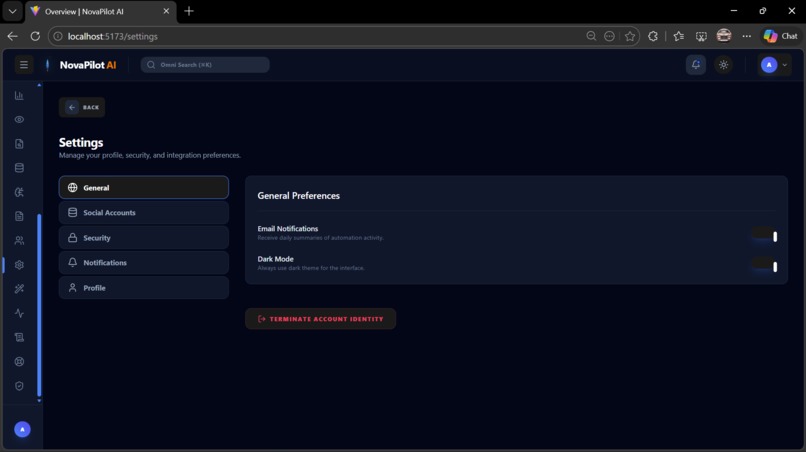
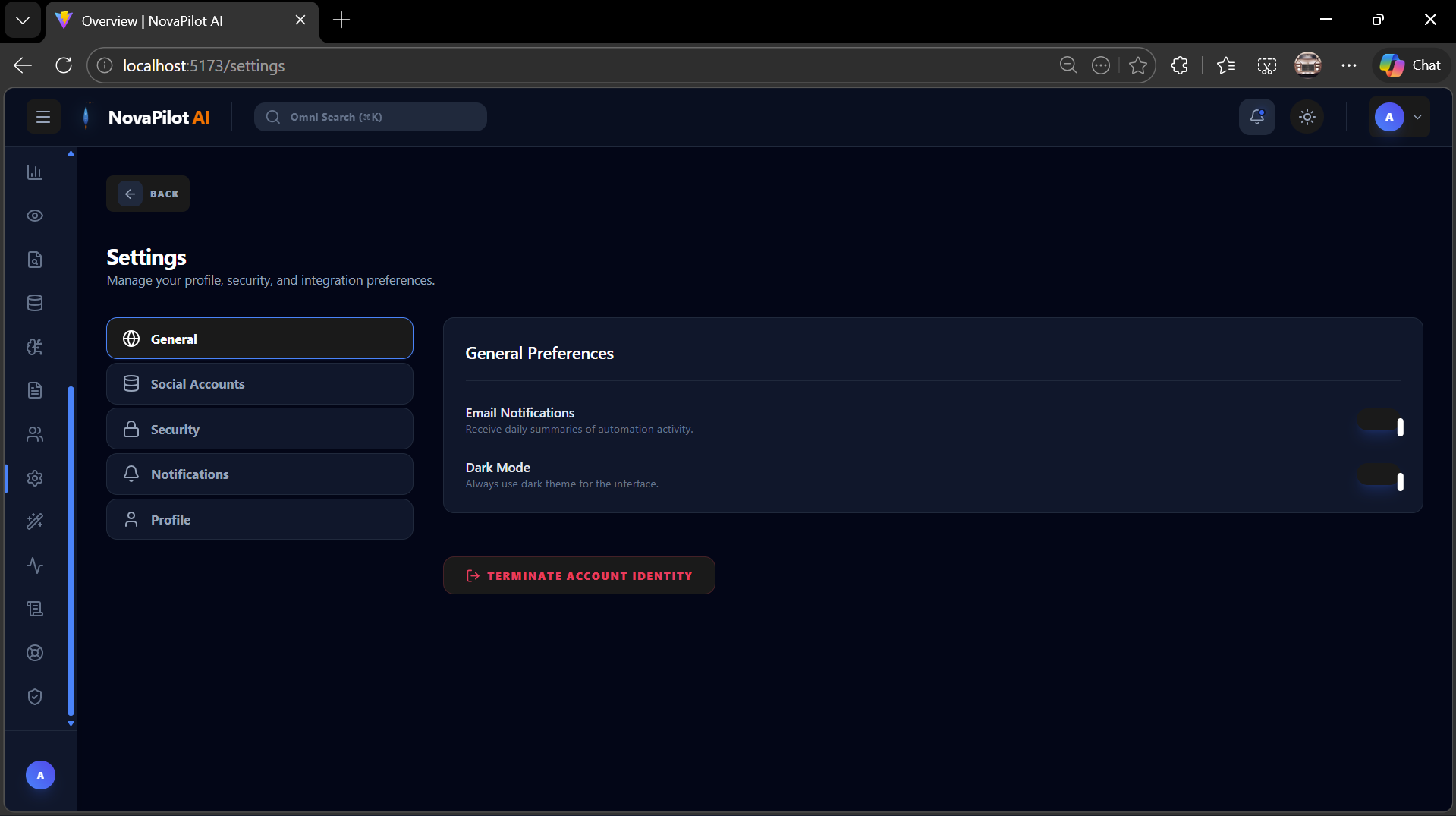
settings
-
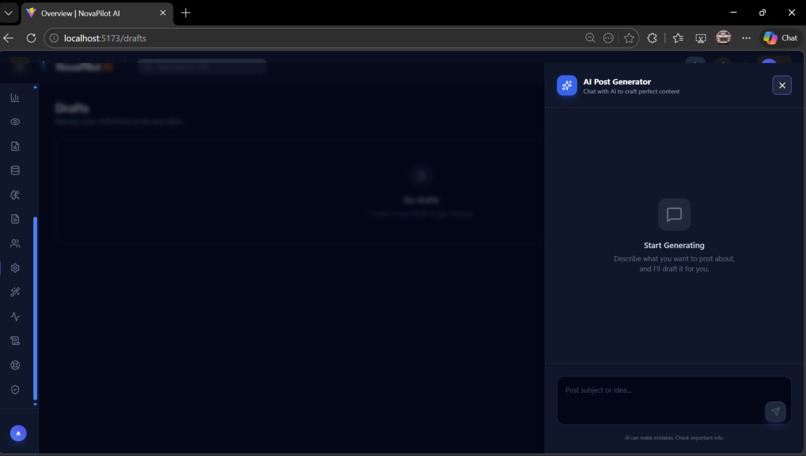
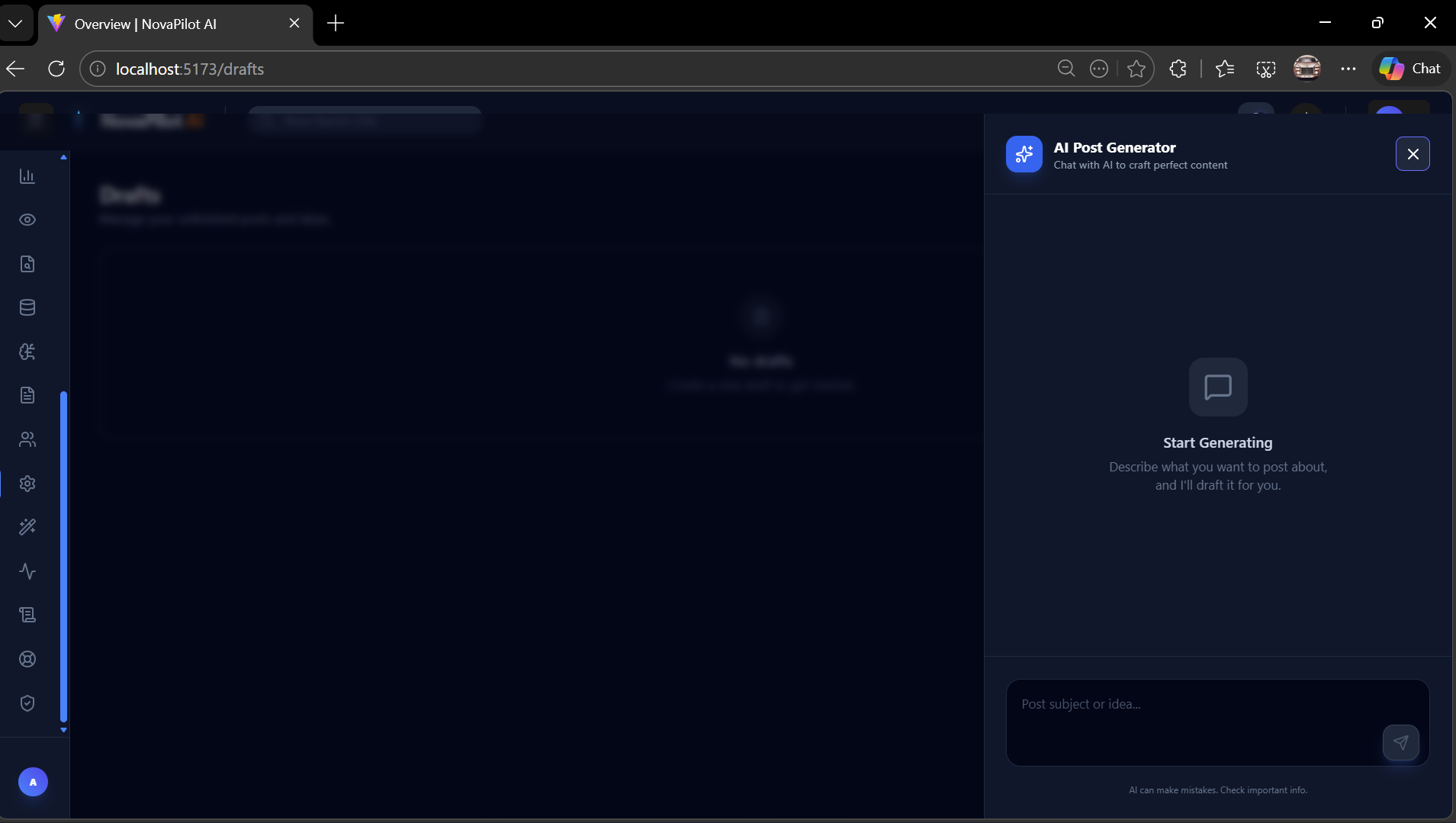
AI Generator
-
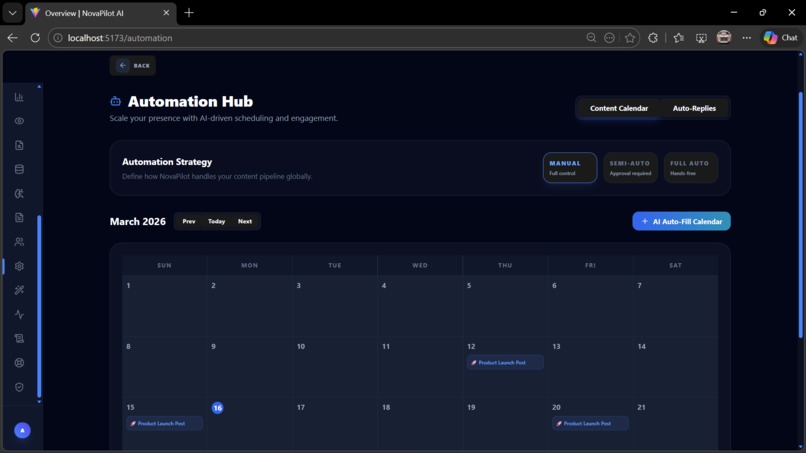
Scheduler
-
-
-
-
-
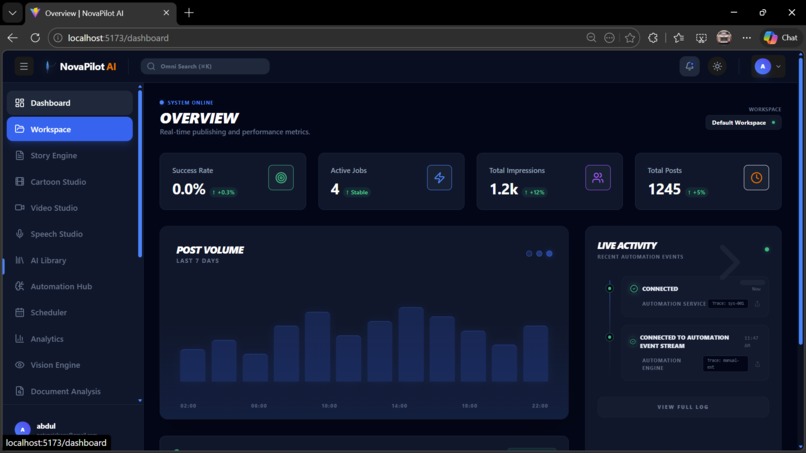
Dashboard
-
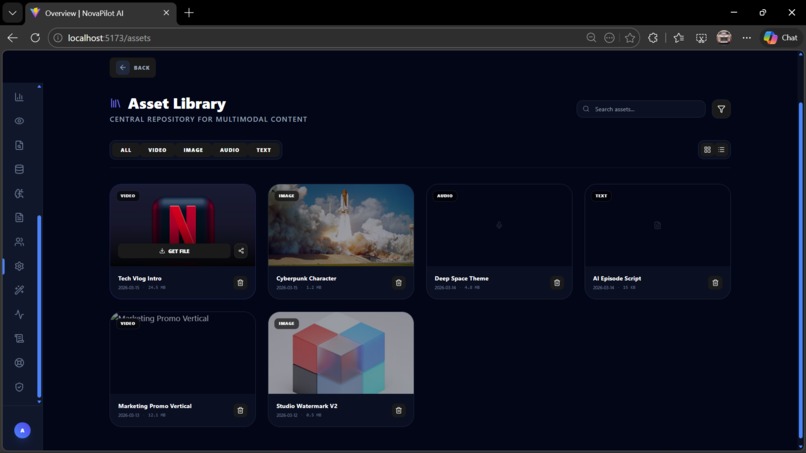
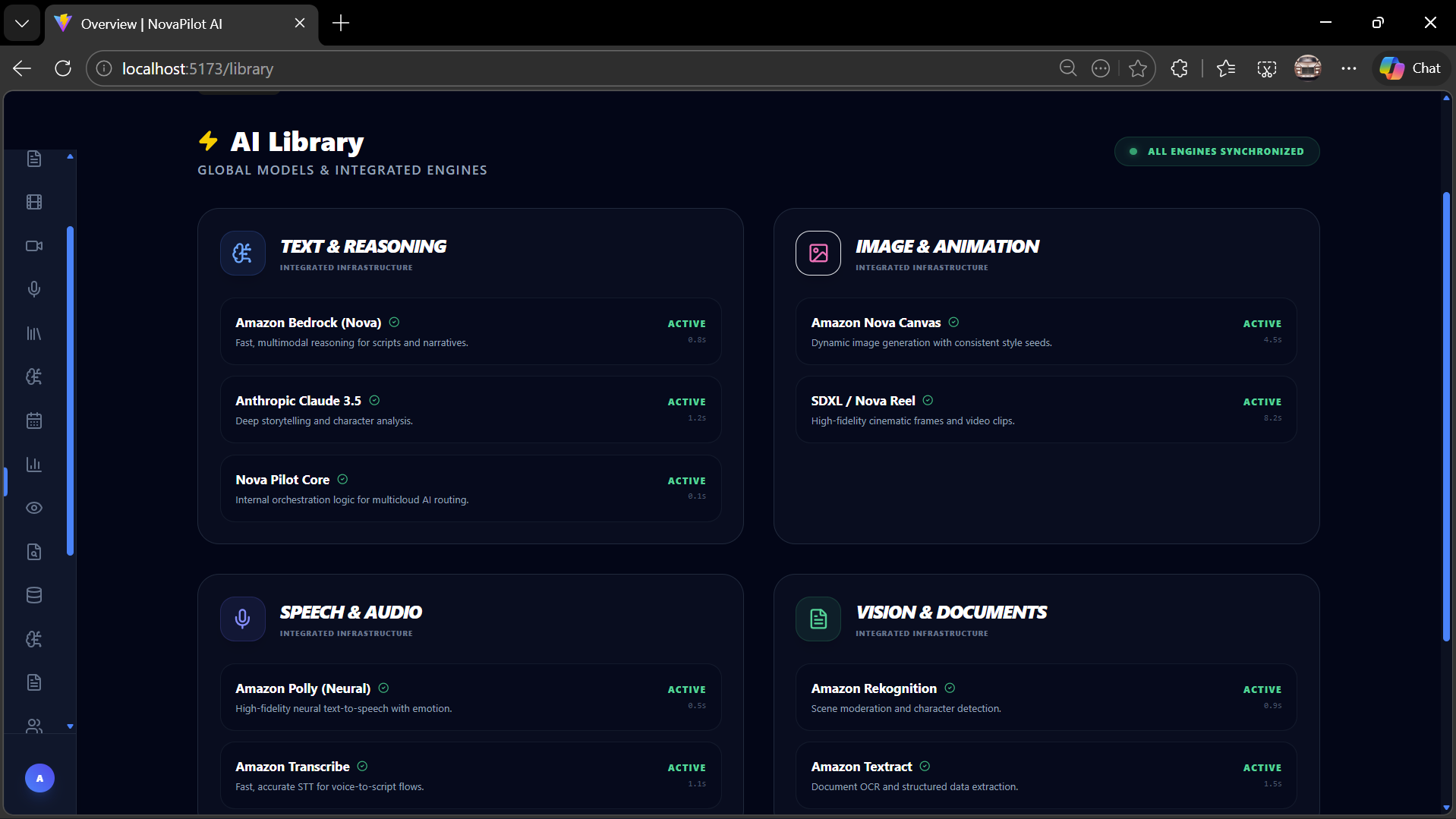
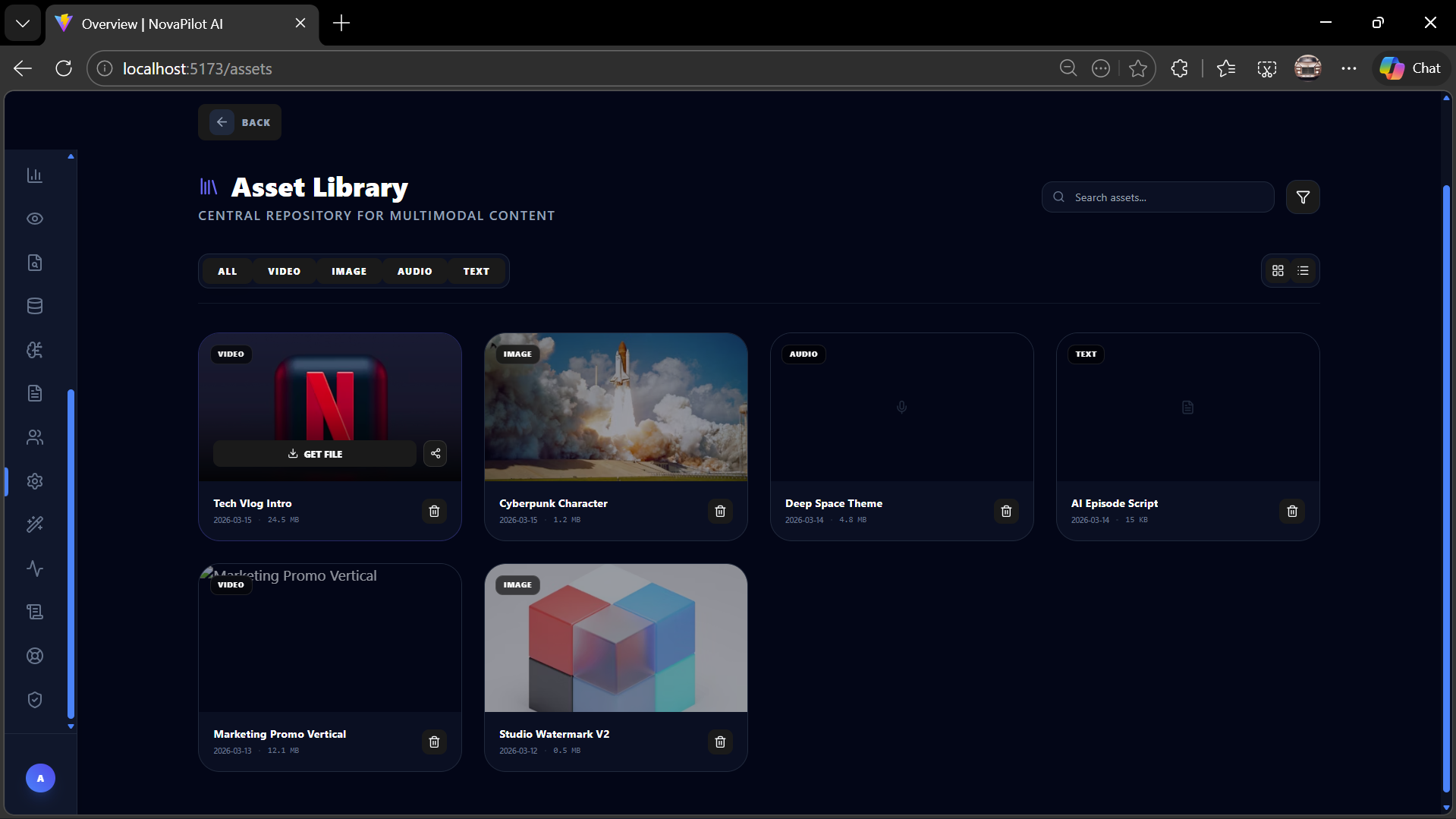
Asset library
-
-
-
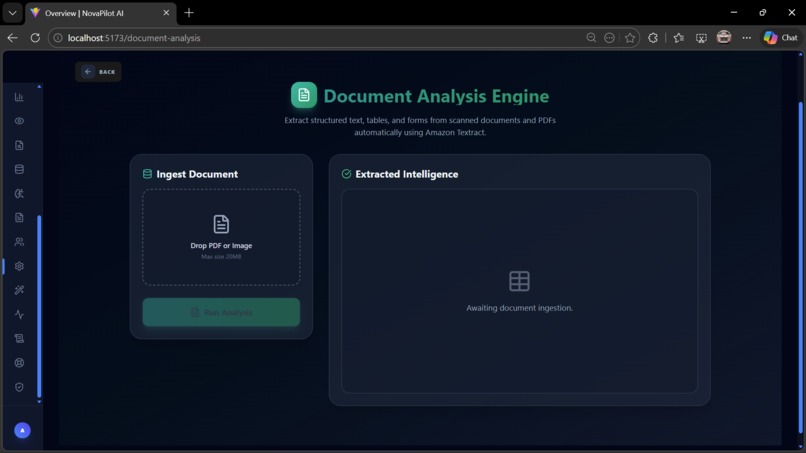
Visual Analytics
-
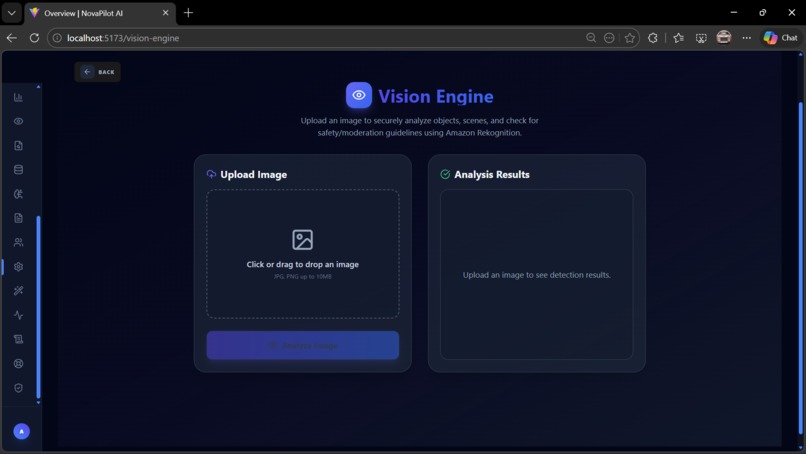
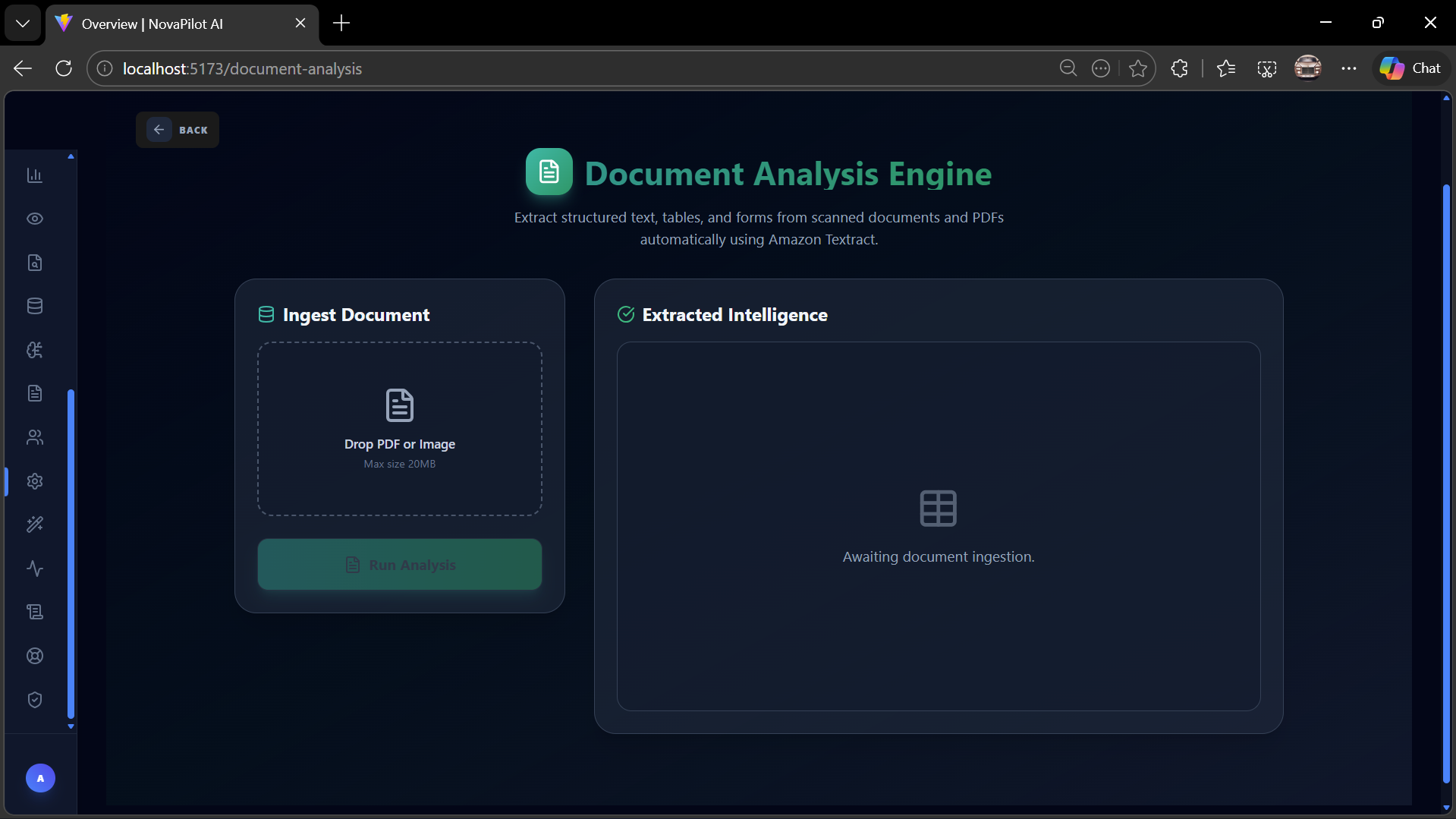
Document Analytics
-
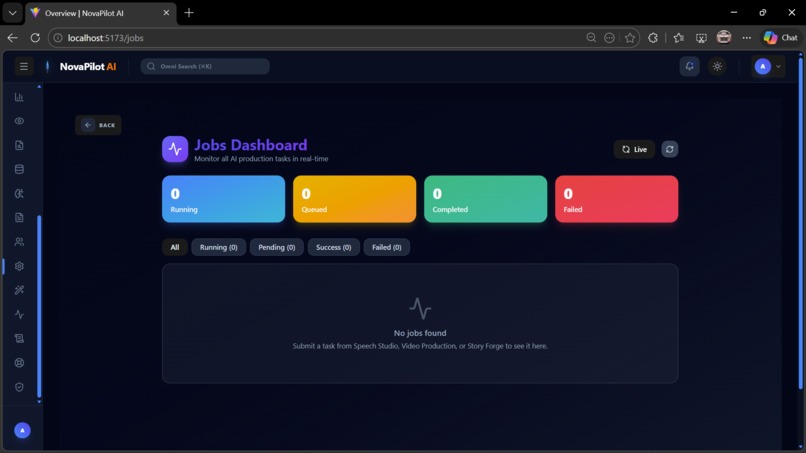
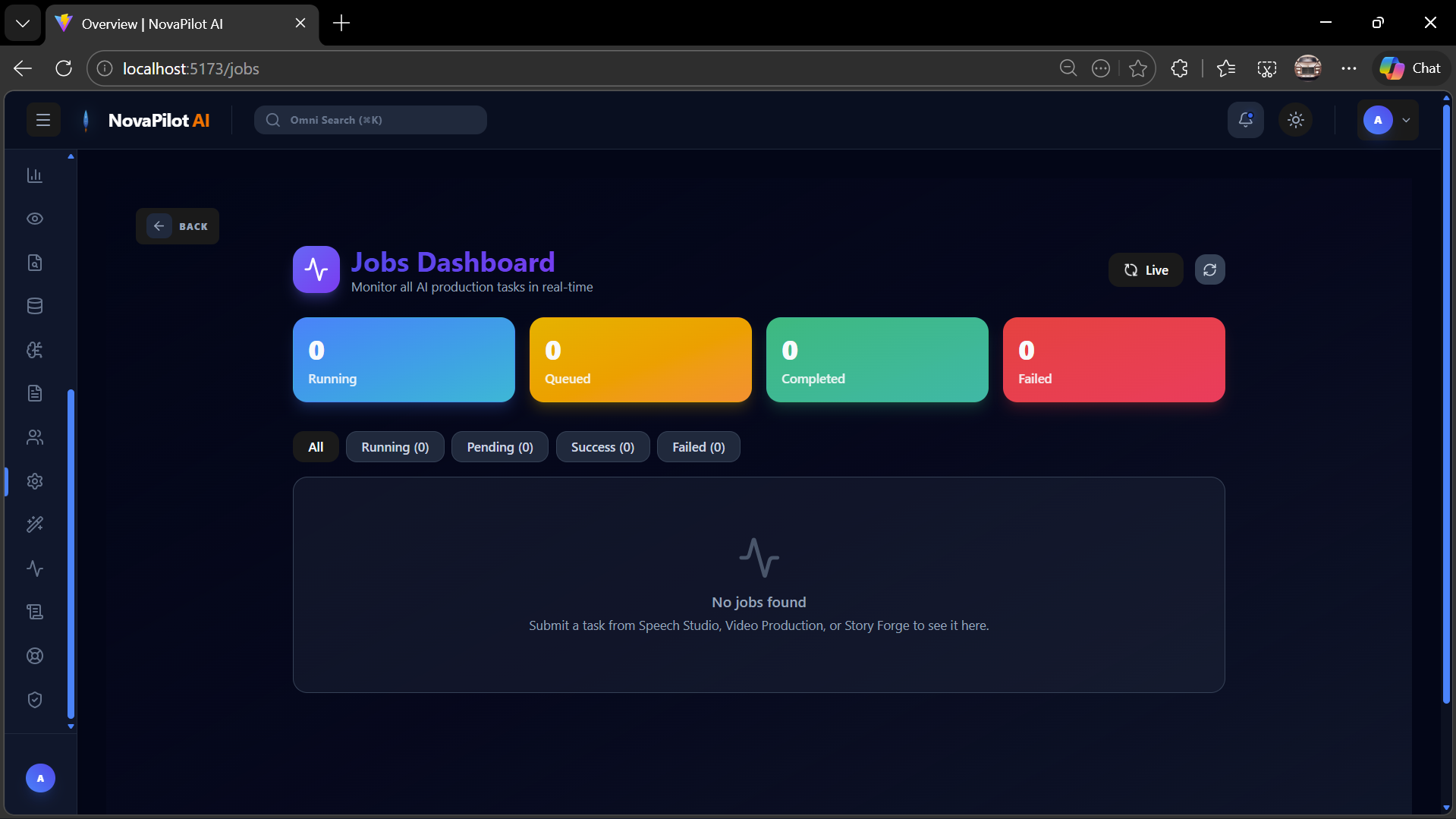
Job Dashborad
-
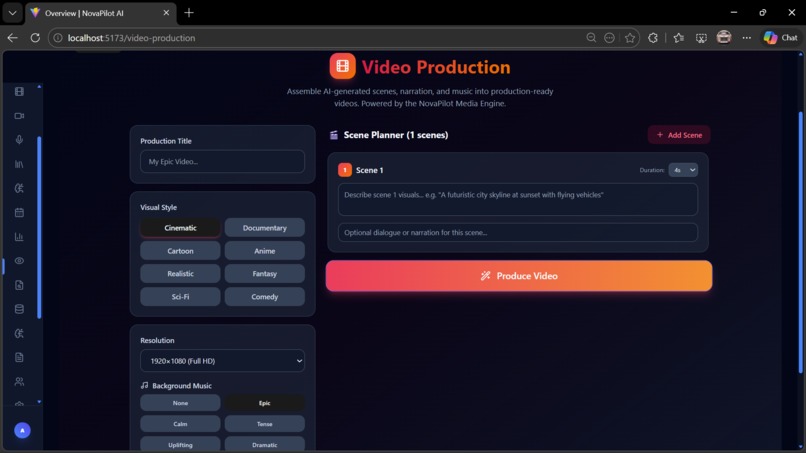
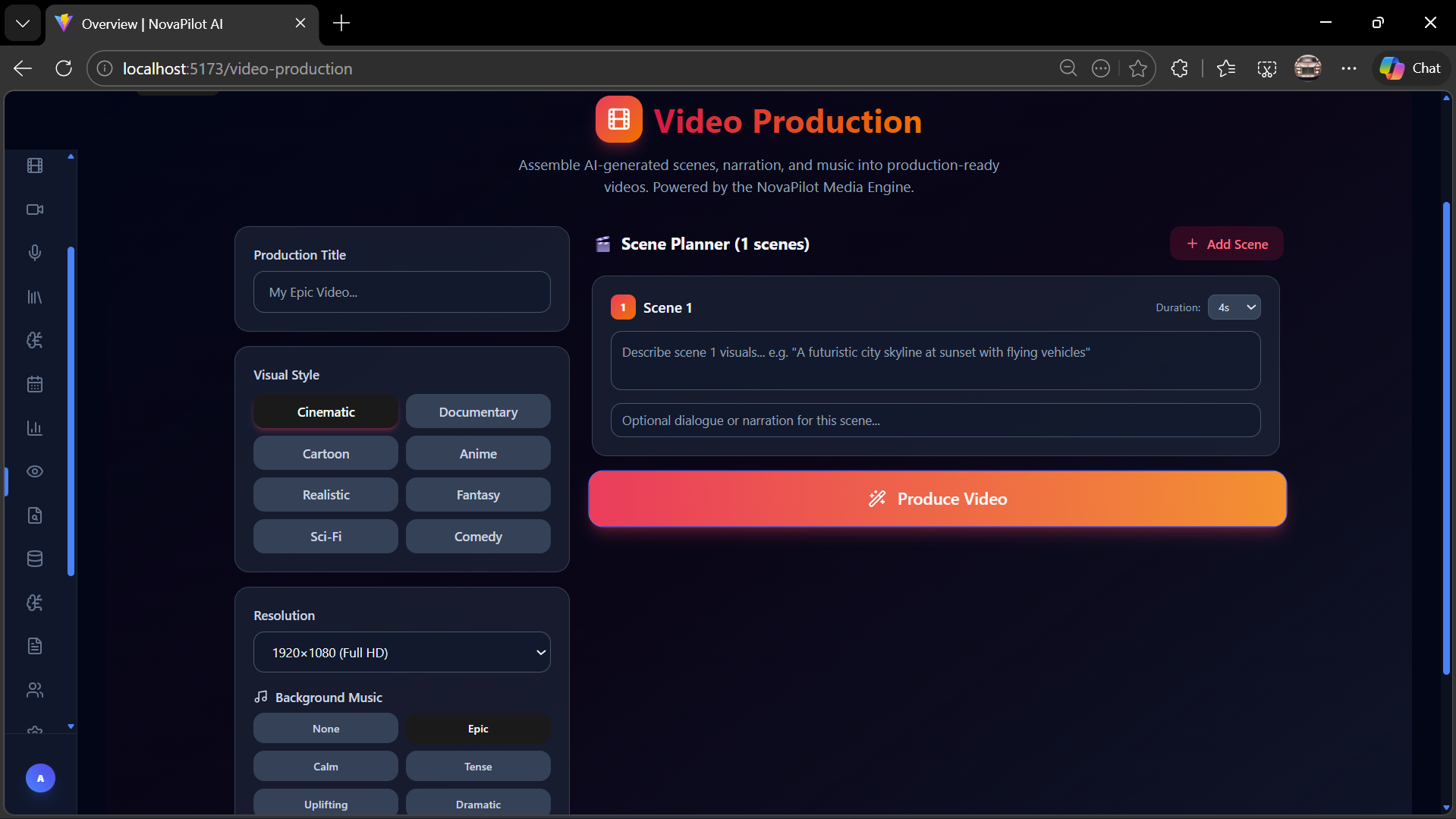
Video Studio
-
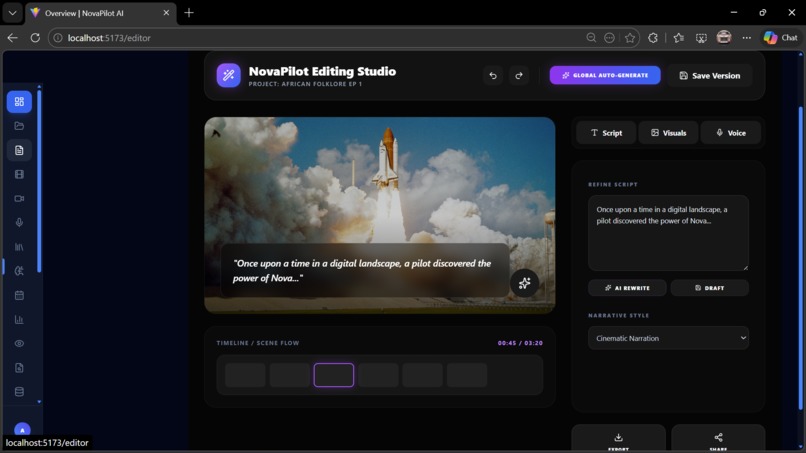
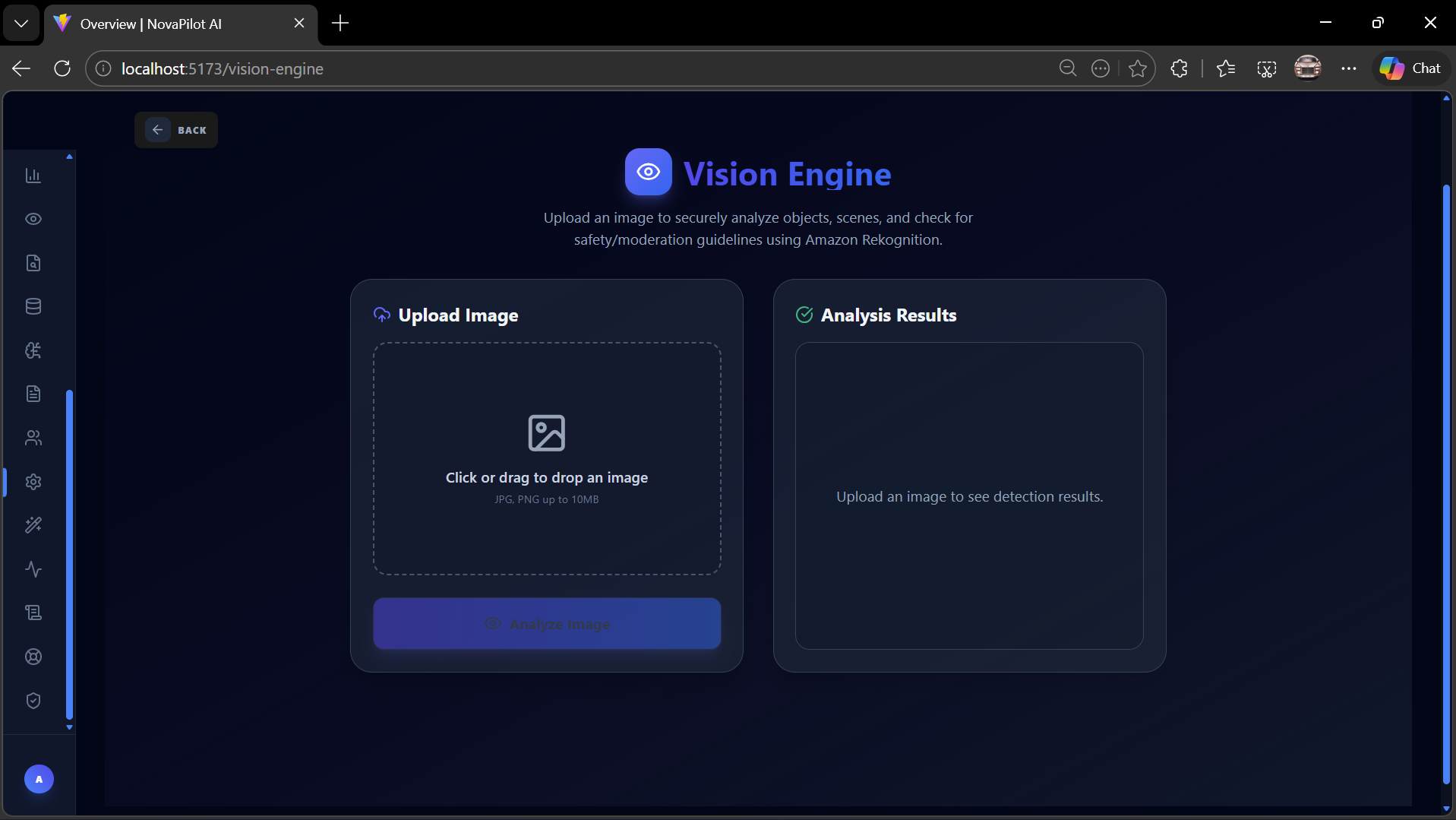
Story Engine
-
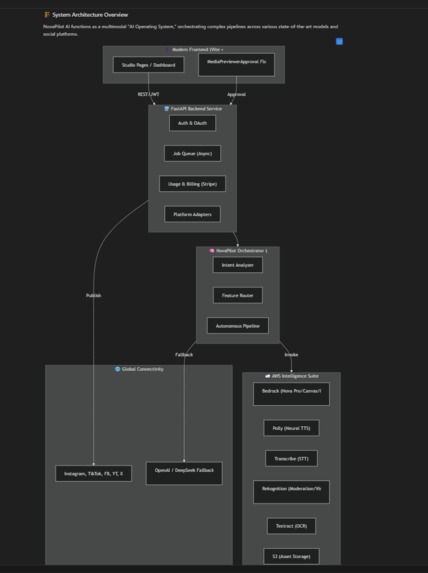
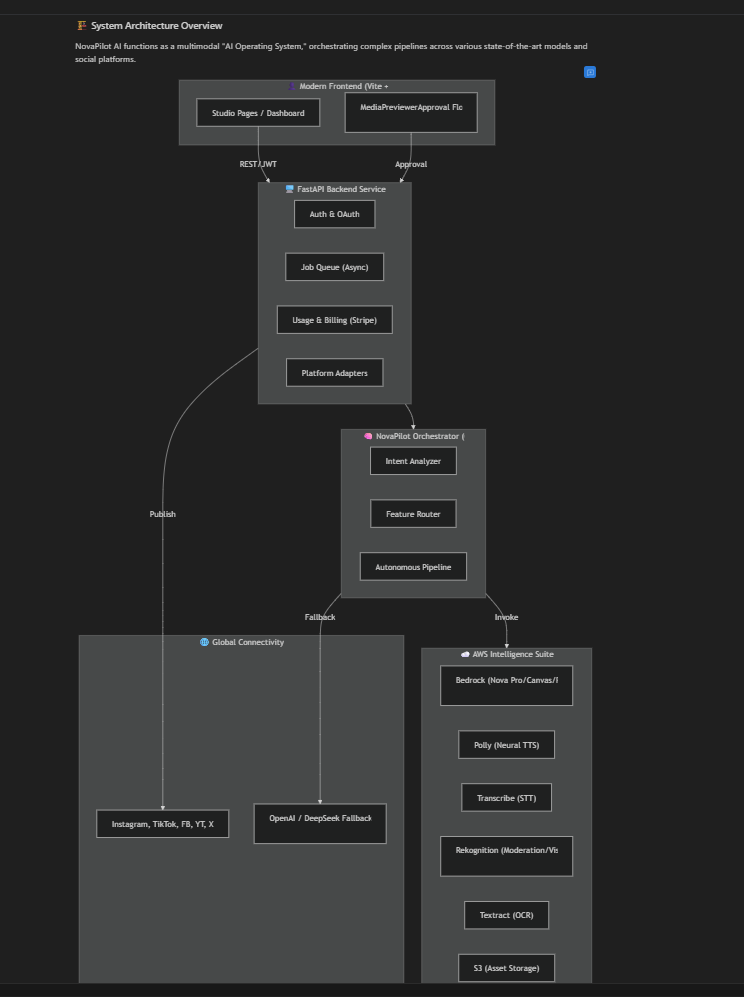
system Arch
-
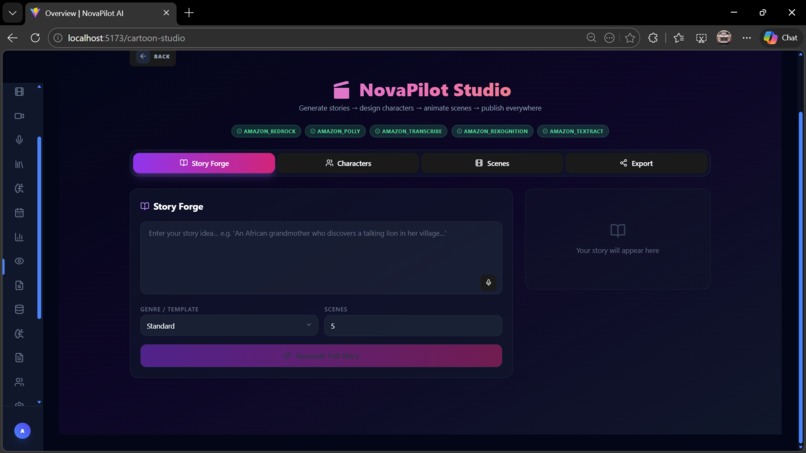
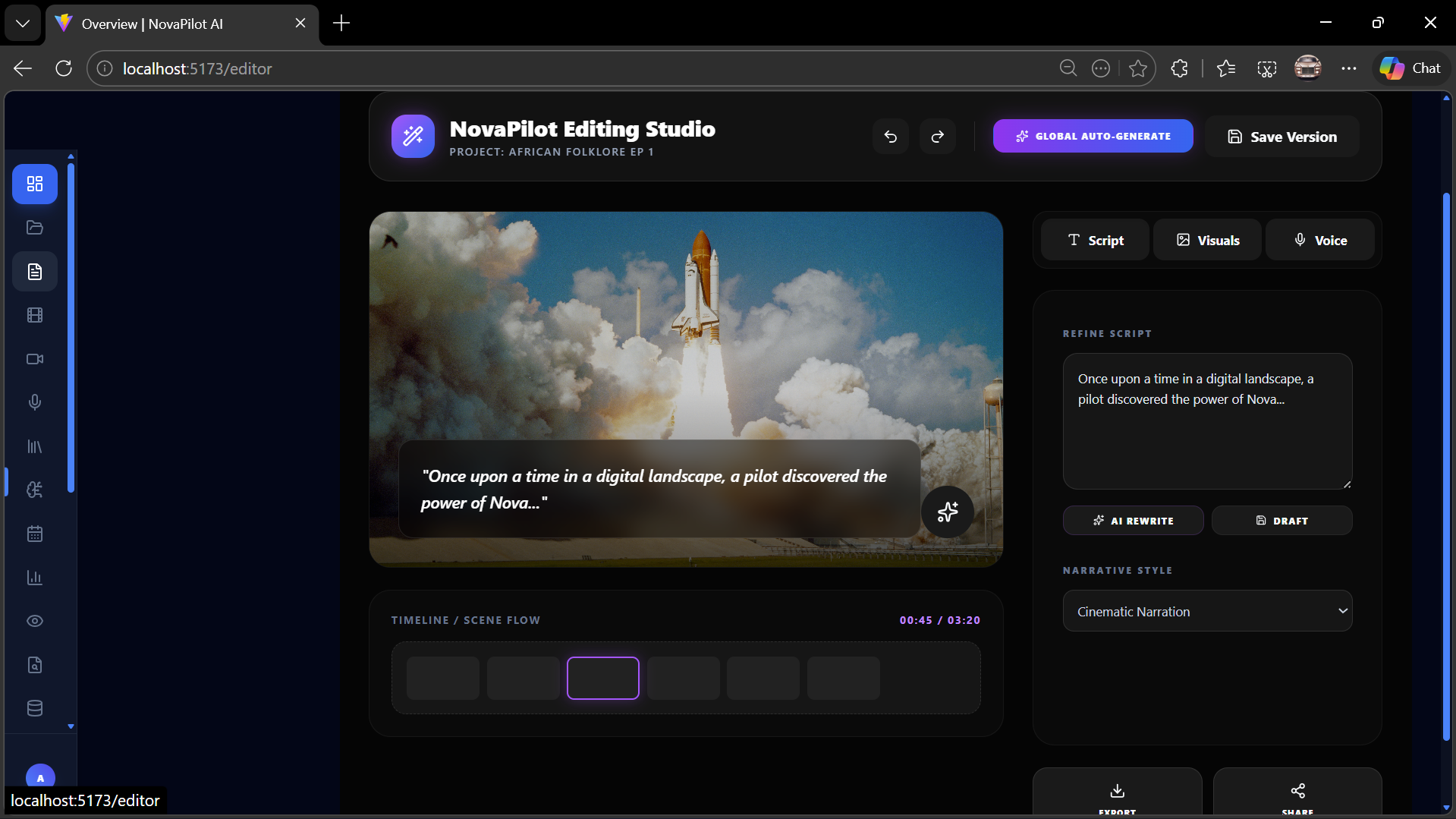
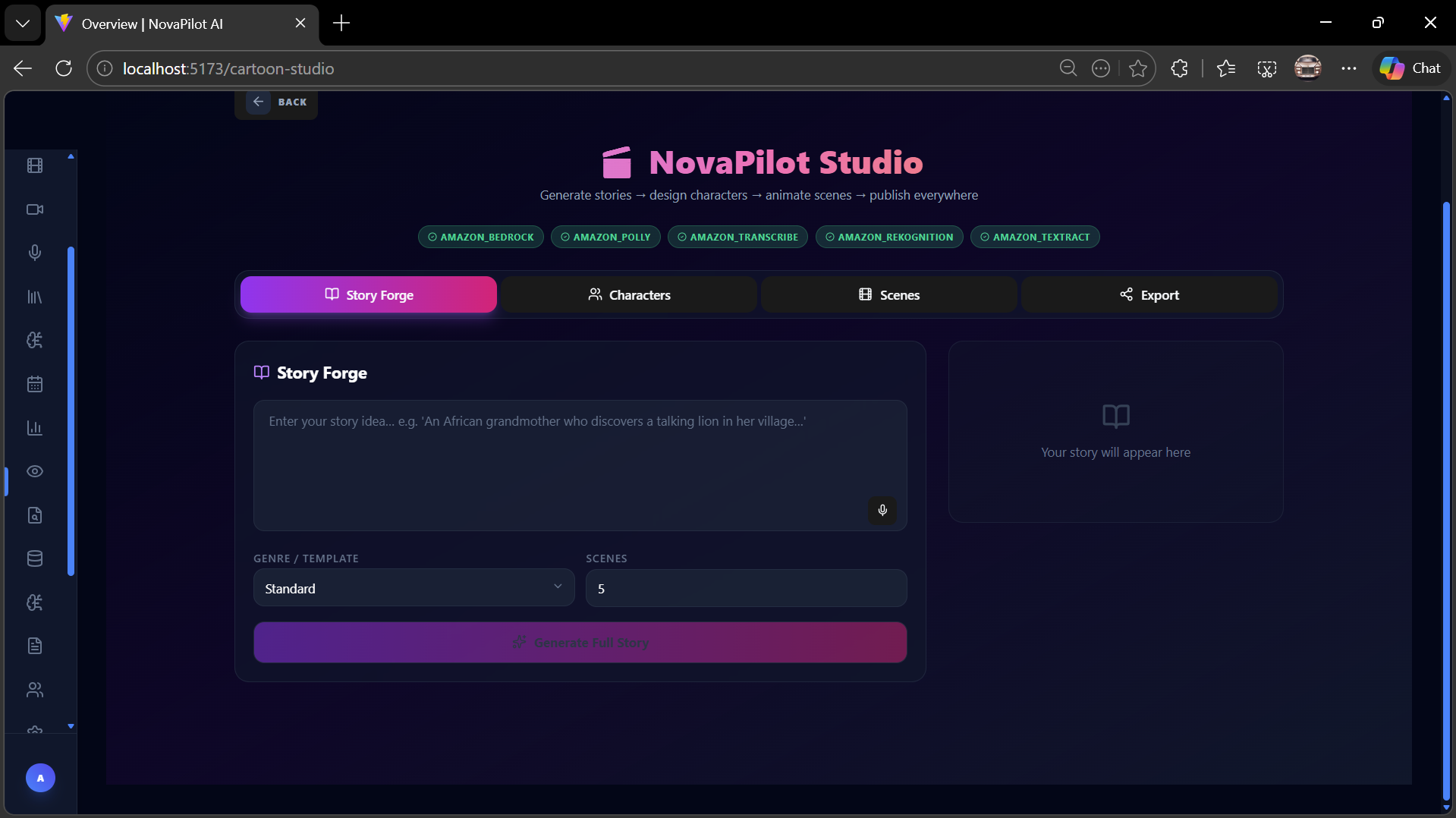
Cartoon Studio
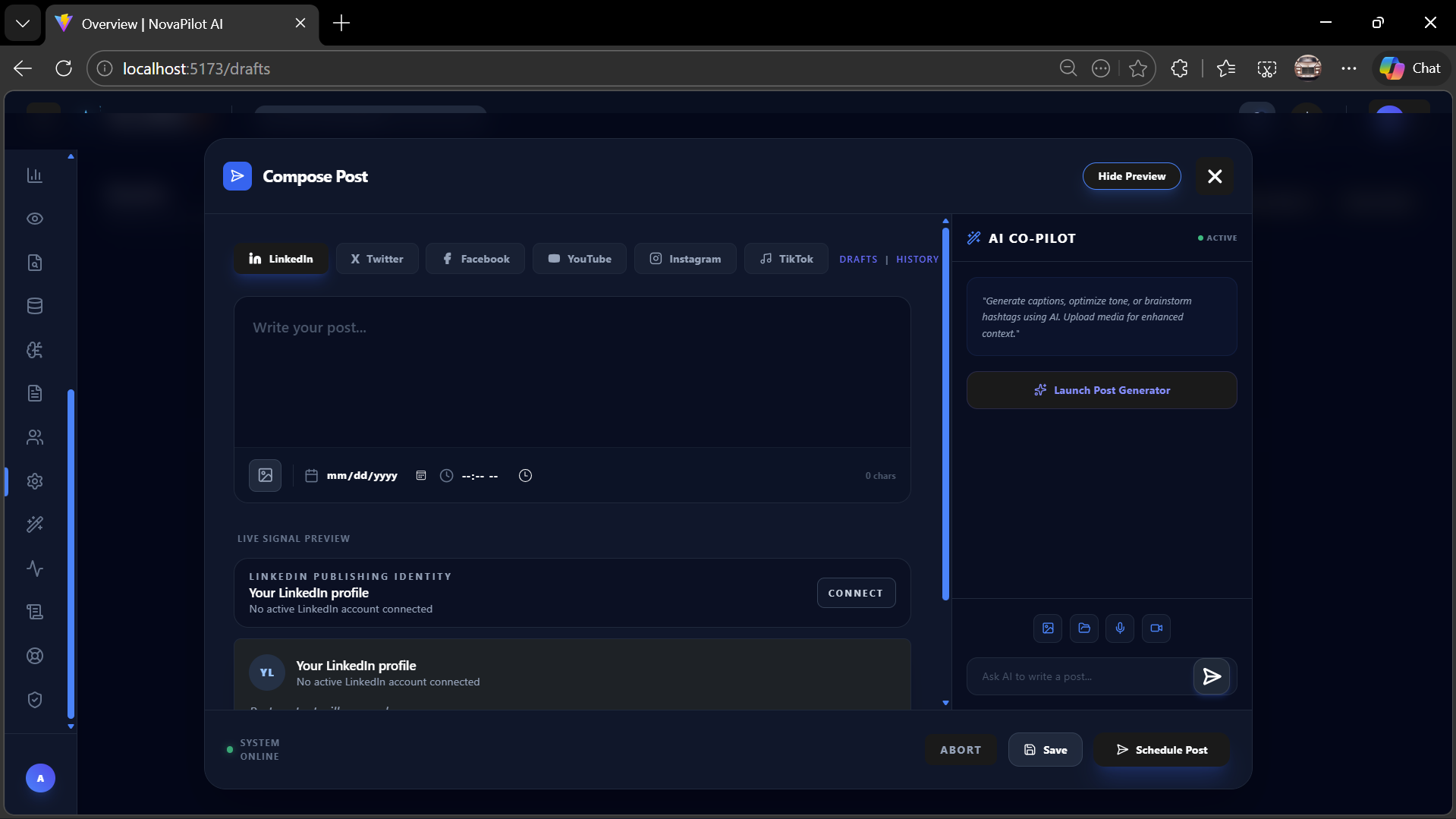
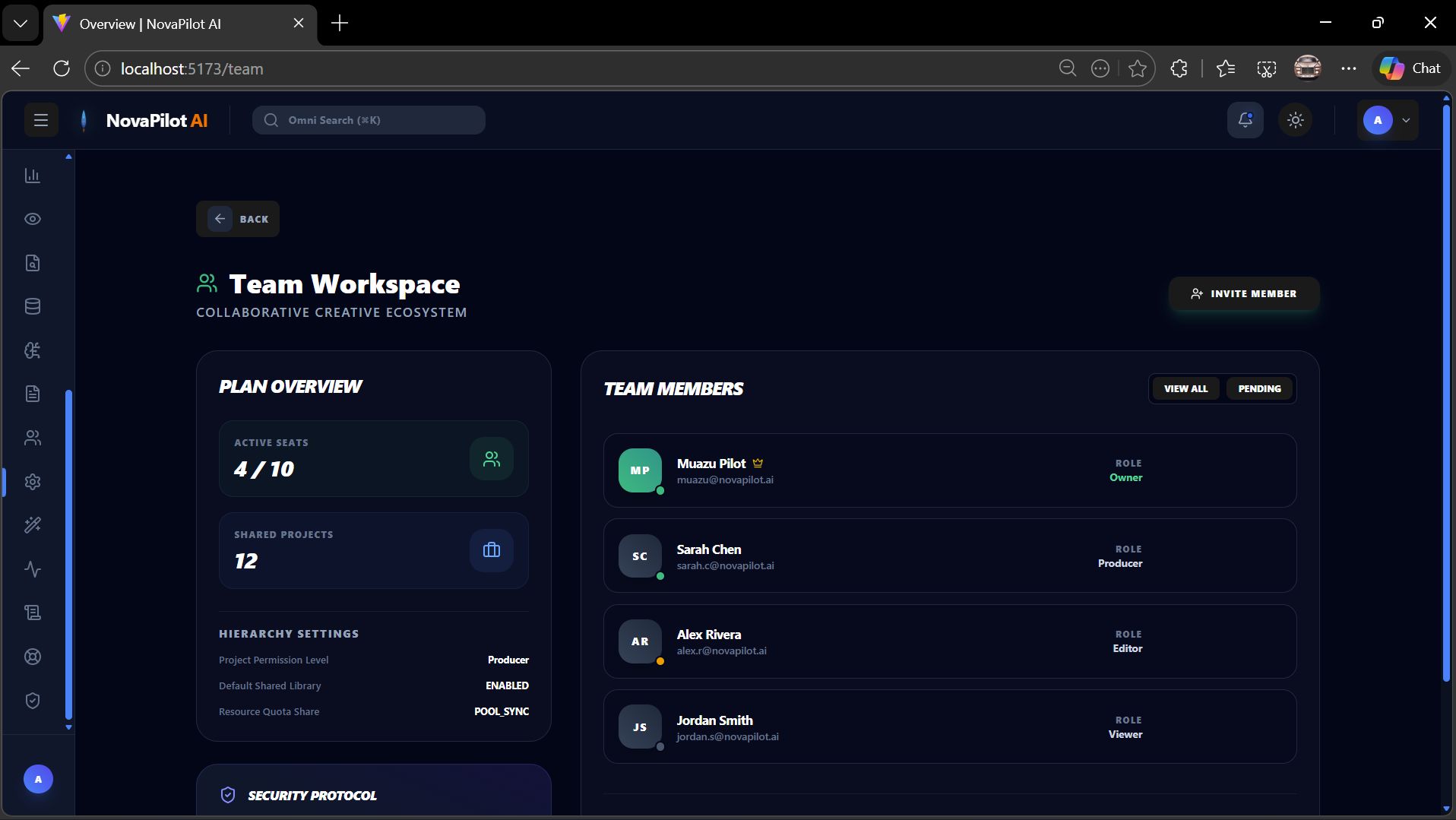
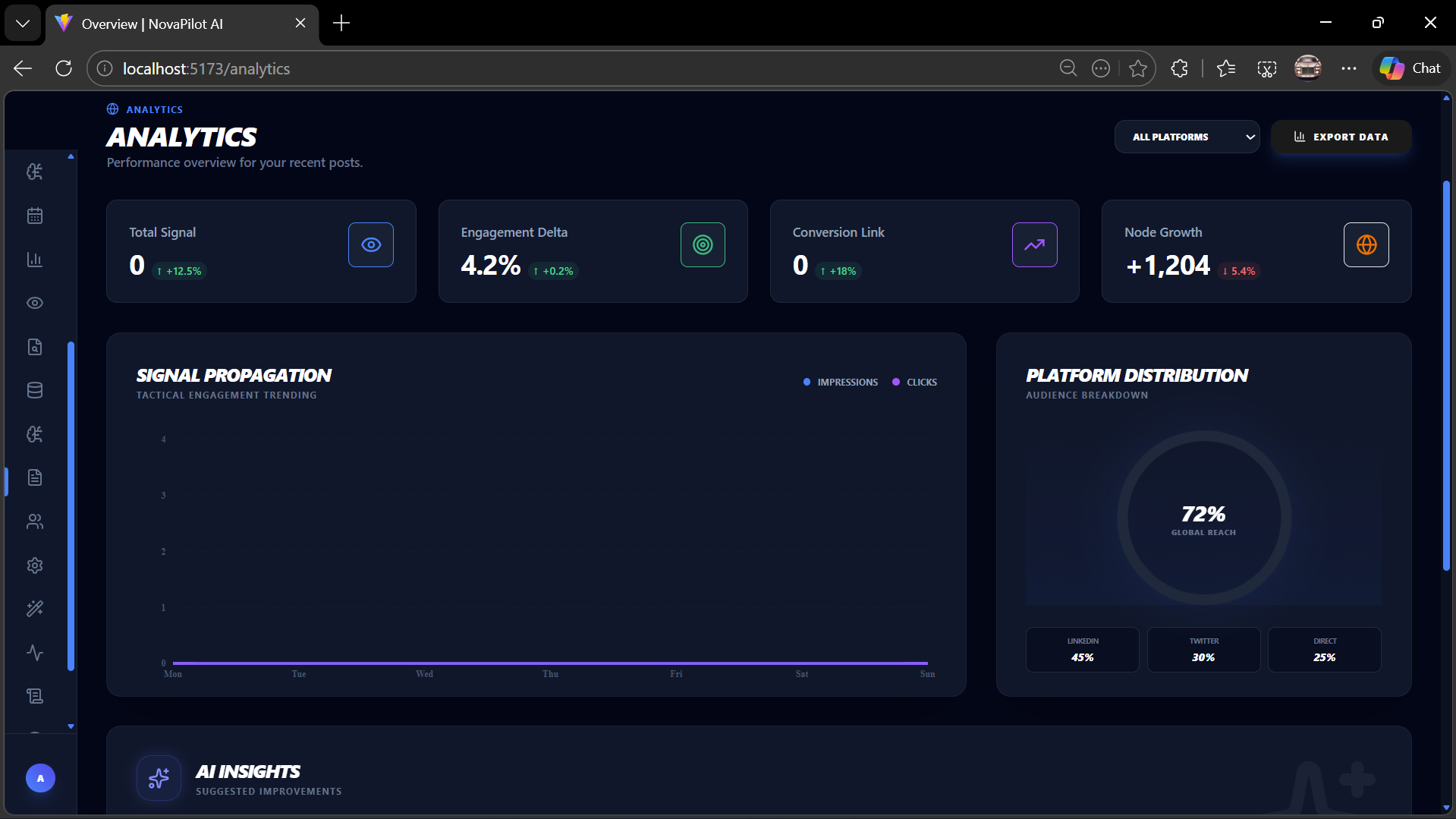
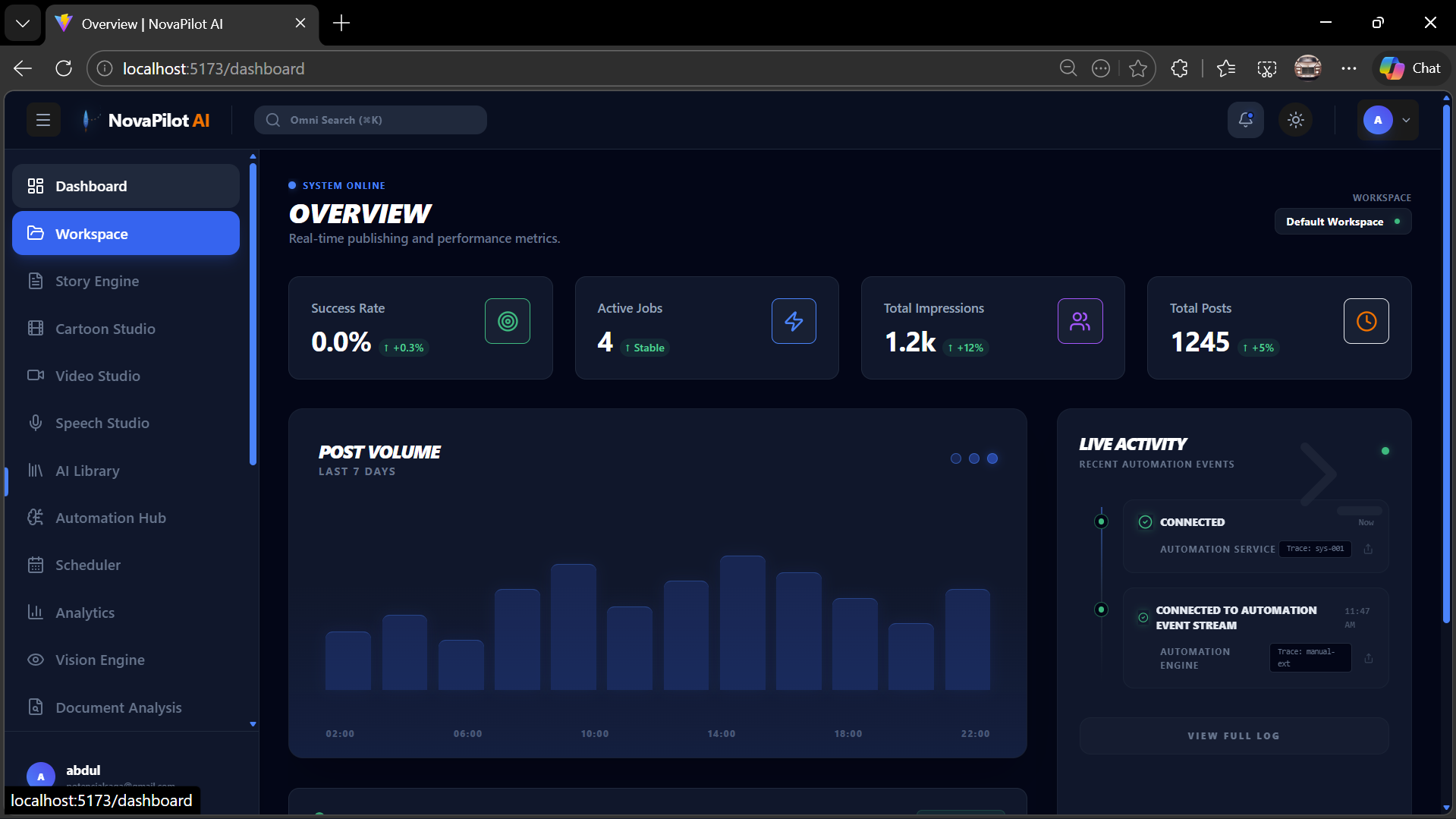
Inspiration Every content creator and social media manager faces the same invisible enemy time. Ideation, drafting, scheduling, publishing, analyzing each platform has different rules, different audiences, and different optimal rhythms. What if a single intelligent co-pilot could handle all of it? That question was the seed. I wanted to build something that felt less like a tool and more like a creative partner one that could understand context, generate rich visuals, write compelling narratives, and handle the logistics of publishing across every major social channel, all from one place. The name came naturally: NovaPilot a nod to Amazon's Nova family of AI models, and the idea of an AI that pilots your social presence alongside you.
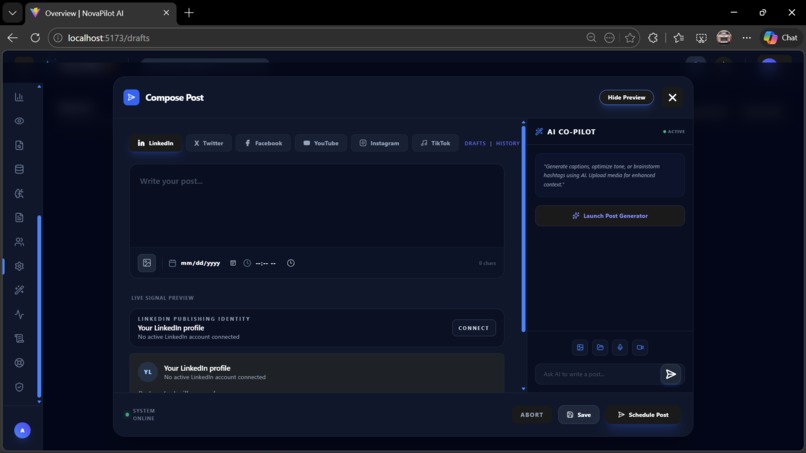
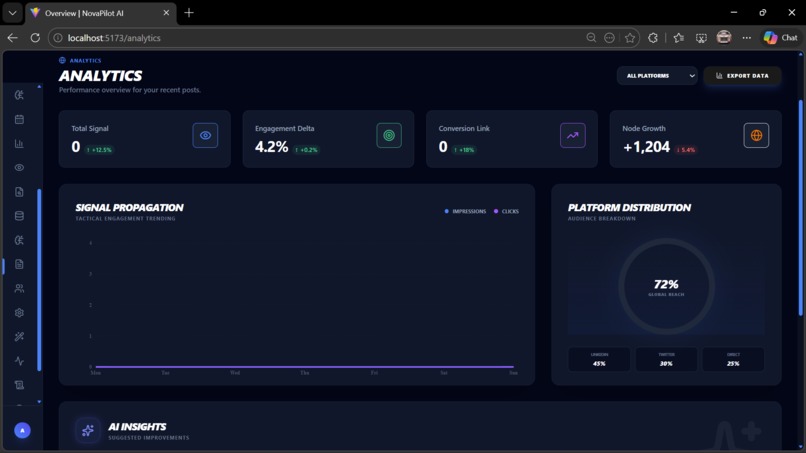
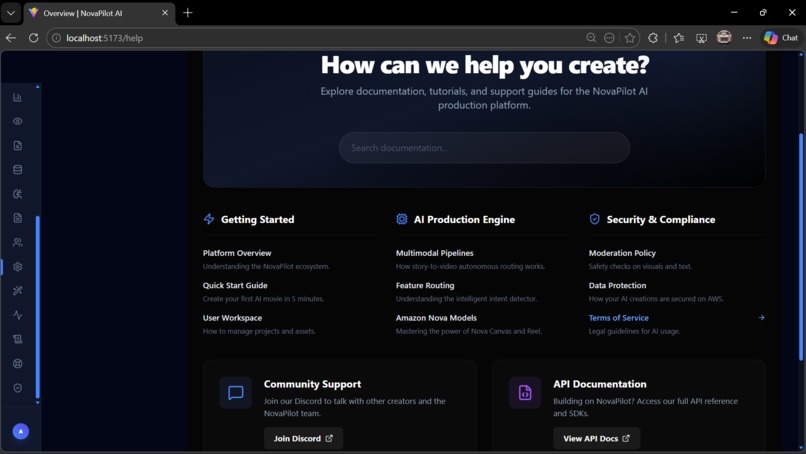
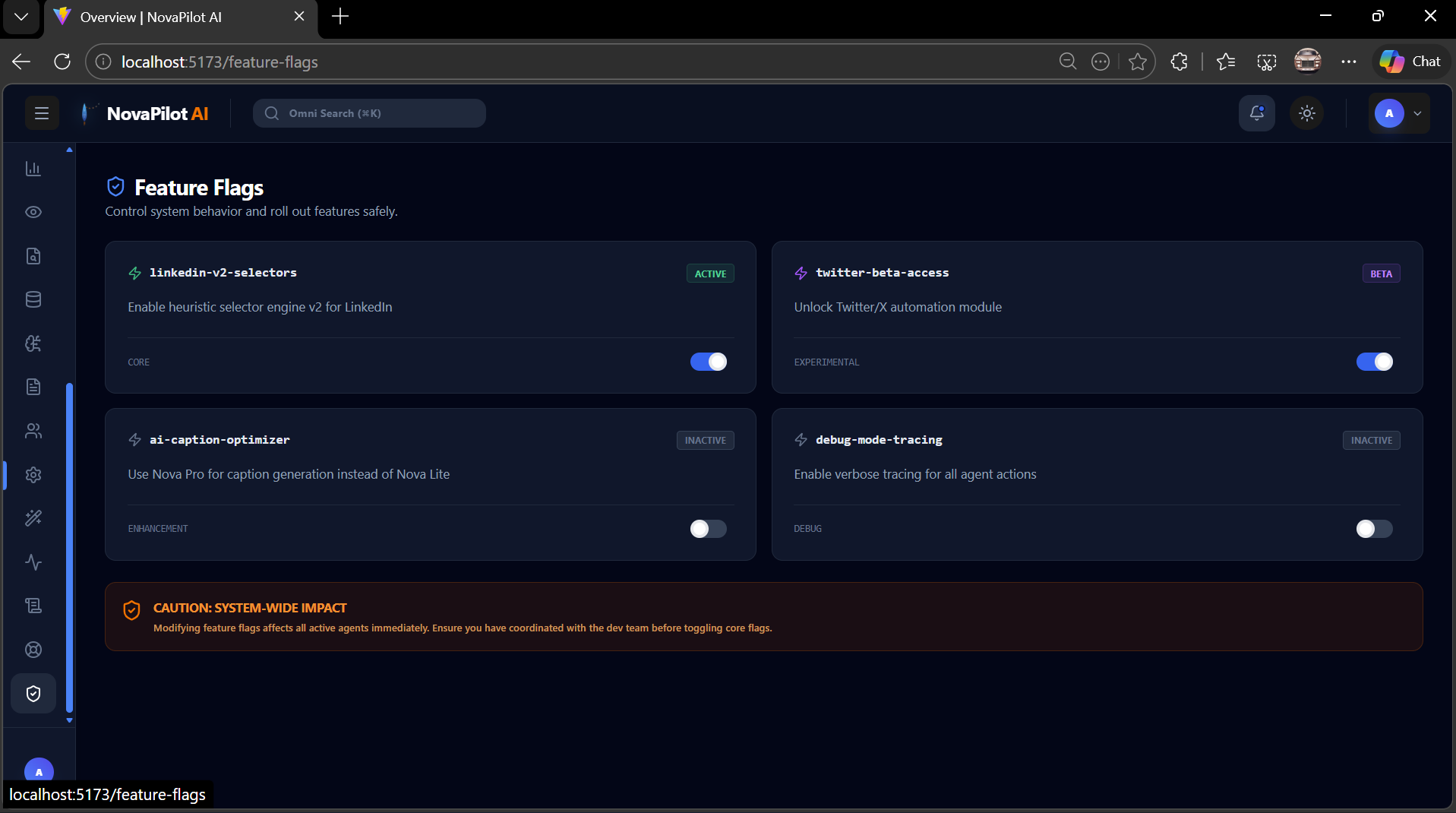
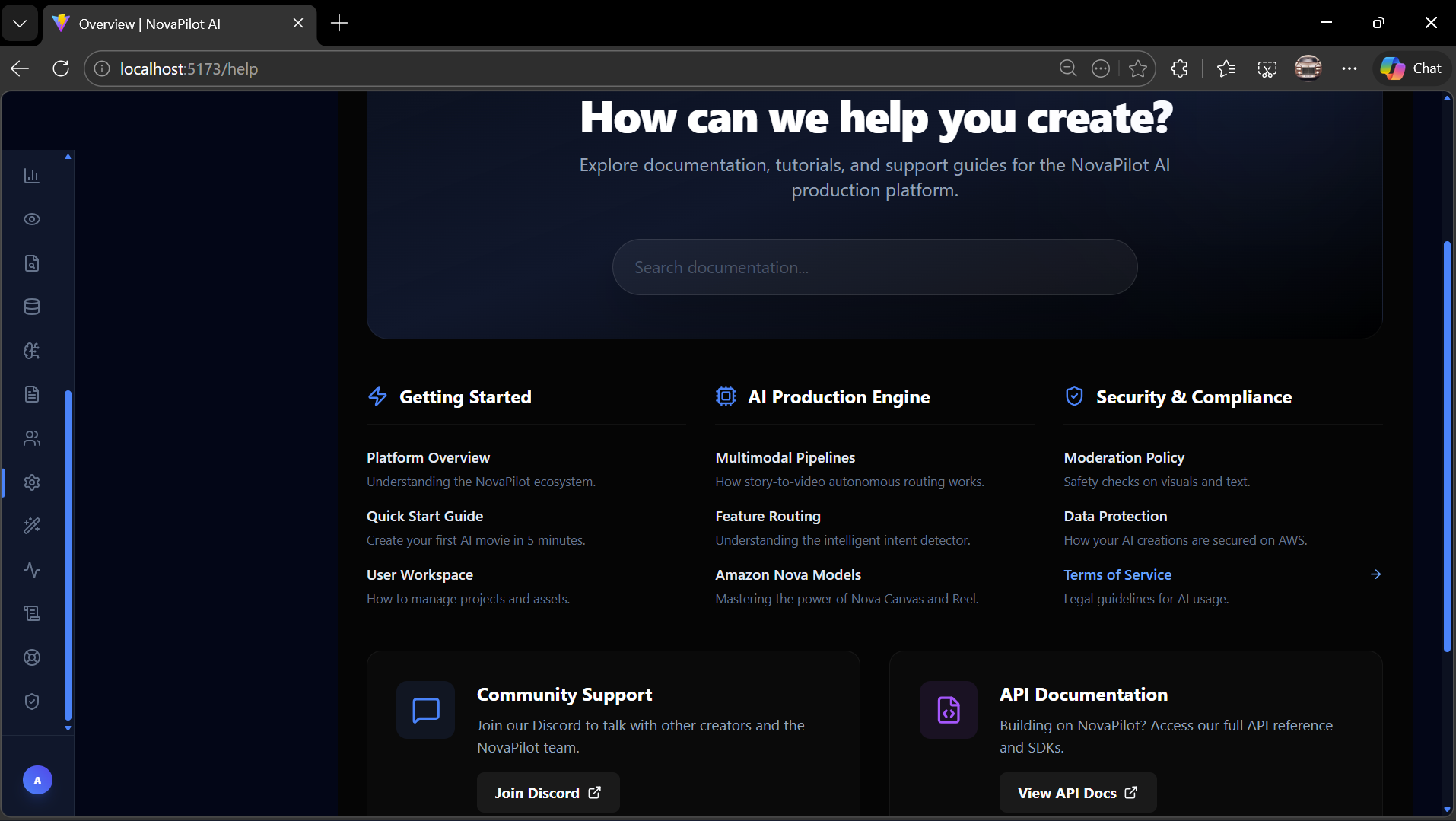
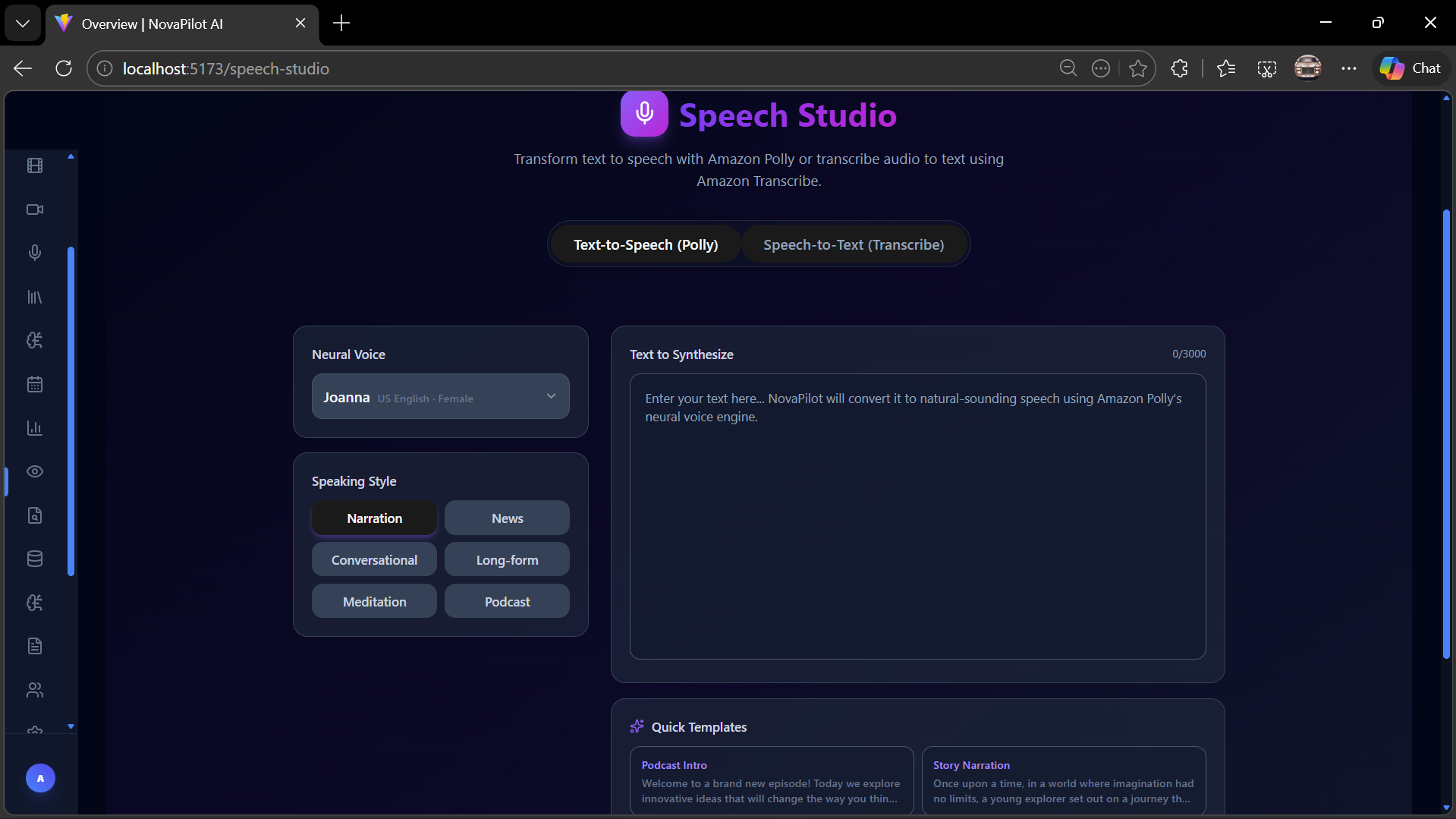
How I Built It NovaPilot is a full-stack application built around a clean separation of concerns: Frontend-React + Vite The UI is built with React (TypeScript) and Vite, prioritizing a premium dark-mode aesthetic with smooth micro-animations and glassmorphism elements. Key screens include: Dashboard: live stats and quick actions Scheduler: a calendar-based post planner with the AI Co-Pilot integrated directly Drafts: a rich editor with in-context AI chat Cartoon Studio: generate scenes, animations, and stories from a single prompt Analytics: engagement tracking and post performance Backend: FastAPI + Python The backend is a FastAPI (Python) REST API with: SQLAlchemy ORM with support for both SQLite (dev) and PostgreSQL (prod) JWT-based authentication with OAuth support (Google, LinkedIn, Twitter/X) Modular endpoint architecture for posts, platforms, chat, analytics, and automation AI Layer Amazon Nova (AWS Bedrock) The AI engine is built on Amazon Nova via AWS Bedrock:
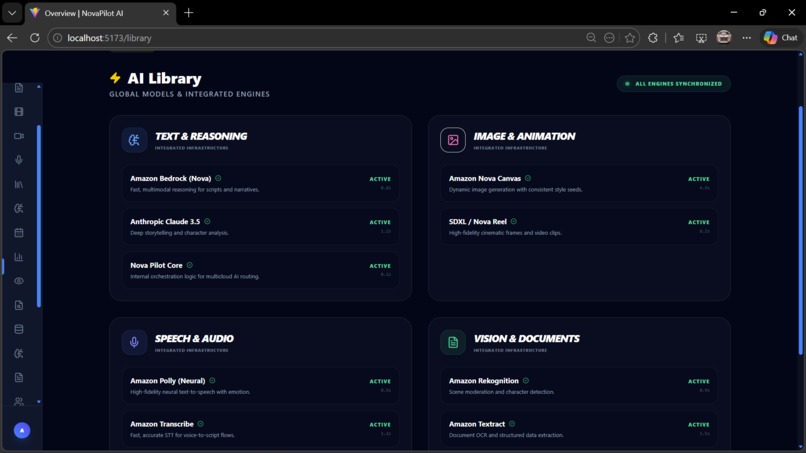
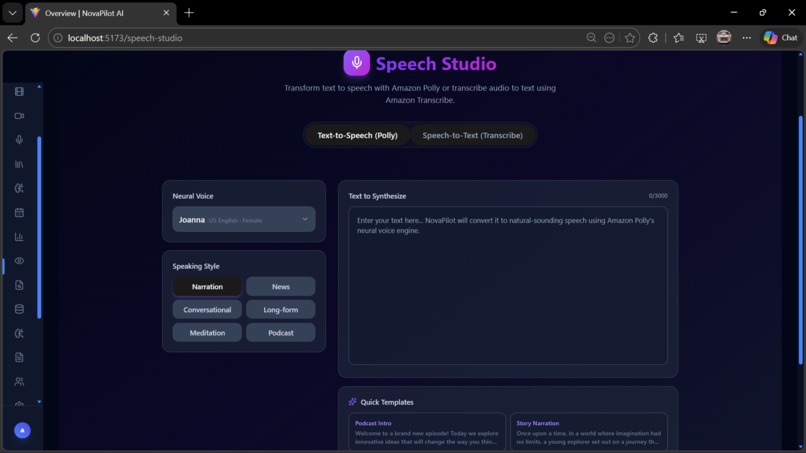
Service Role Nova Text Content optimization, caption generation, hashtag suggestions, engagement prediction Nova Canvas AI image generation from text prompts Nova Reel Short-form video generation The generation pipeline applies structured prompt engineering to produce consistently high-quality outputs. For creative modes like Storytelling and Drama, the system breaks output into numbered scenes, allowing creators to produce series-ready content something like:
$$\text{Output Scenes} = \sum_{i=1}^{N} \text{Scene}_i(\text{polished_prompt}, \text{mode}, \text{tone})$$
What I Learned Building NovaPilot taught me a tremendous amount across the stack:
Multi-platform OAuth is hard each platform (LinkedIn, Twitter, WhatsApp) has subtly different token flows, scope requirements, and refresh mechanics Prompt engineering is a discipline the quality of AI output is determined almost entirely by how well you structure the input. Adding tone, audience, platform context, and mode constraints made results dramatically better Real-time UX matters users lose trust if they don't see something happening while AI generates. Skeleton loaders and animated spinners are not optional SQLAlchemy + Pydantic v2 require careful schema alignment extra field handling between ORM models and API schemas introduced subtle but painful bugs
Challenges
Cross-Platform Consistency Every social network returns data in a different format and enforces different character limits. Building an abstraction layer that treats LinkedIn, Twitter, Facebook, YouTube, and WhatsApp uniformly while still respecting each platform's quirks required careful design.
Cartoon Studio Integration The most ambitious feature was Cartoon Studio a creative suite for generating 3D-style scenes, multi-act stories, and drama sequences. The challenge was bringing series-aware generation into a chat-style UX, where each message could expand into multiple numbered scenes that flow naturally from one to the next.
Demo Mode vs. Live Mode To make the project testable without requiring live API credentials, I built a DEMO_MODE flag that replaces all AI calls with realistic placeholder content. This meant the entire app needed to be functional in two completely different operating modes simultaneously.
Background Task Scheduling Implementing a reliable background job for publishing scheduled posts without a full task queue like Celery required careful use of FastAPI's background task system and robust error handling to prevent silent failures.
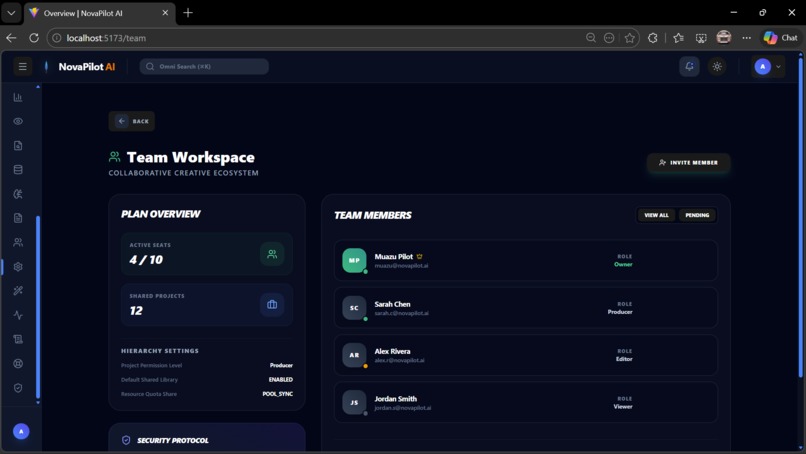
What's Next Full Cartoon Studio animation rendering pipeline AI-powered analytics not just reporting what happened, but recommending what to do next Team collaboration shared drafts, approval workflows, and role-based access control Native mobile app companion Real-Time Rendering: Moving from batch generation to a more interactive, real-time animation preview system. Predictive Analytics: Moving beyond publishing to actually predicting engagement rates before a post is even sent out. Collaboration Hub: Role-based access for agencies so multiple creators can collaborate on a single "Series" or autonomous campaign.
"The best co-pilot doesn't just follow your lead — it helps you fly further than you thought possible."
Built With
- ai-fallback
- amazon-bedrock
- amazon-polly
- amazon-rekognition
- amazon-textract
- amazon-transcribe
- amazon-web-services
- automation-agents
- cloud-storage
- docker
- facebook-graph
- fastapi
- ffmpeg
- jwt
- linkin-api
- natural-language-processing
- nova
- oauth2.0
- postgresql
- python
- react+vite
- redis
- sqlalchemy
- sqlite
- stripe
- tailwind-css
- tiktok-direct-post
- typescript
- whatsapp-business-api
- x-api

Log in or sign up for Devpost to join the conversation.