Inspiration
Students often study technical subjects using PDFs, lecture notes, and presentations scattered across different sources. Finding the right information, understanding difficult concepts, and identifying weak areas can take considerable time. We wanted to build a learning platform that connects students' own course materials with a more personalized learning experience.
What It Does
NovaMind is an AI-powered adaptive learning platform designed for college students studying technical subjects.
Its key features include:
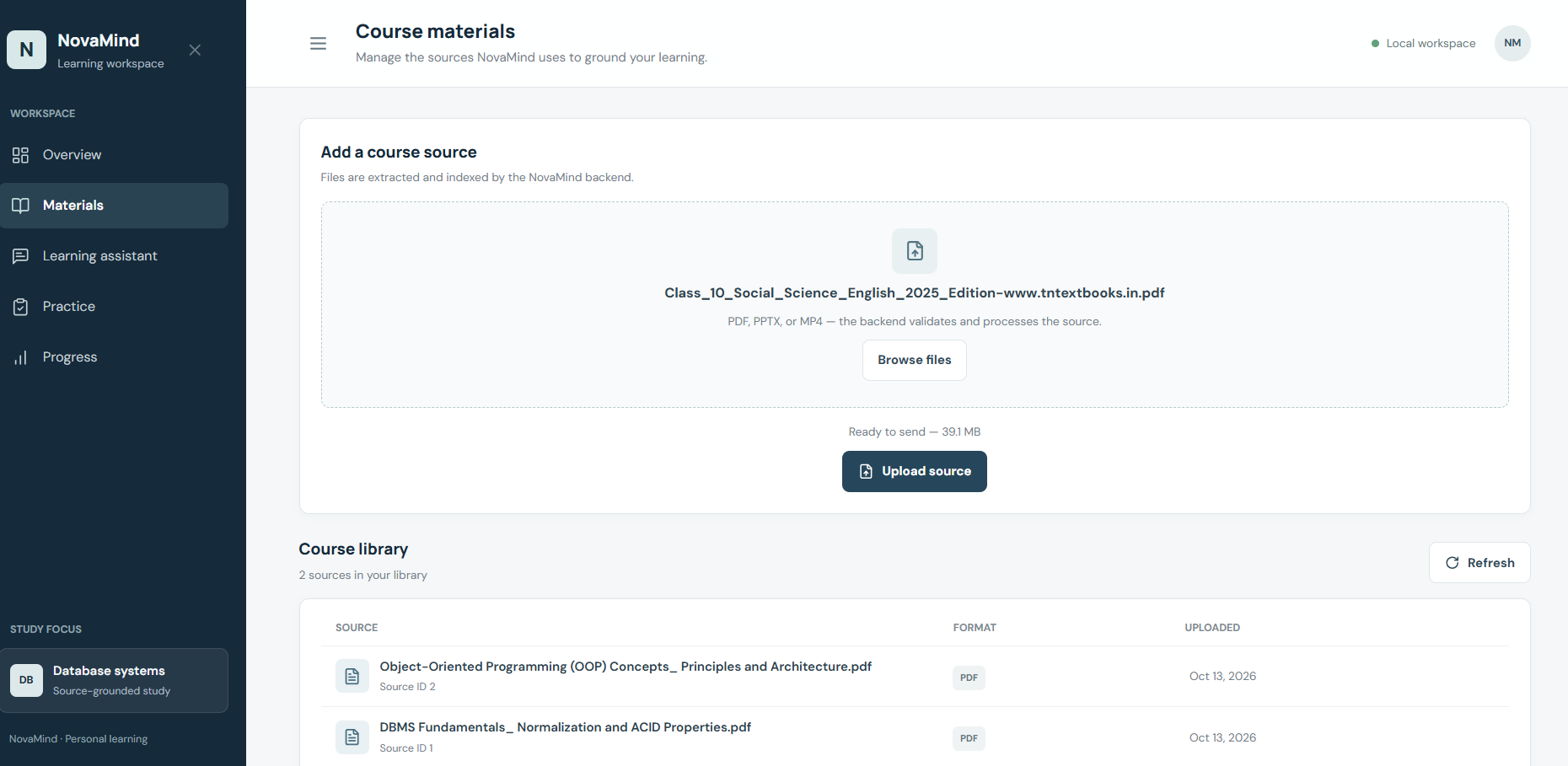
- Course Material Management: Upload and access learning materials such as PDFs and supported presentation files.
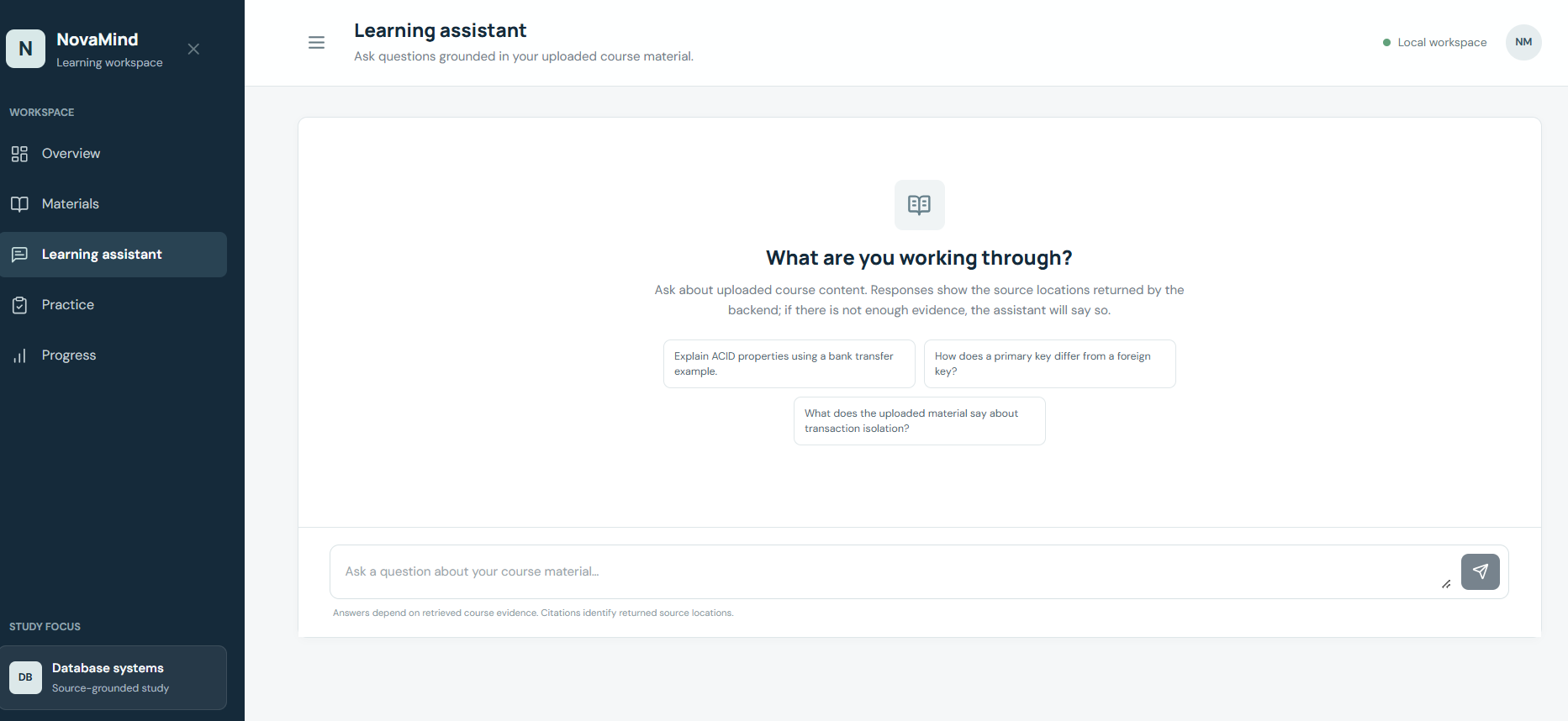
- Source-Grounded Question Answering: Ask questions about course content and retrieve relevant information from uploaded materials, with source citations where supported.
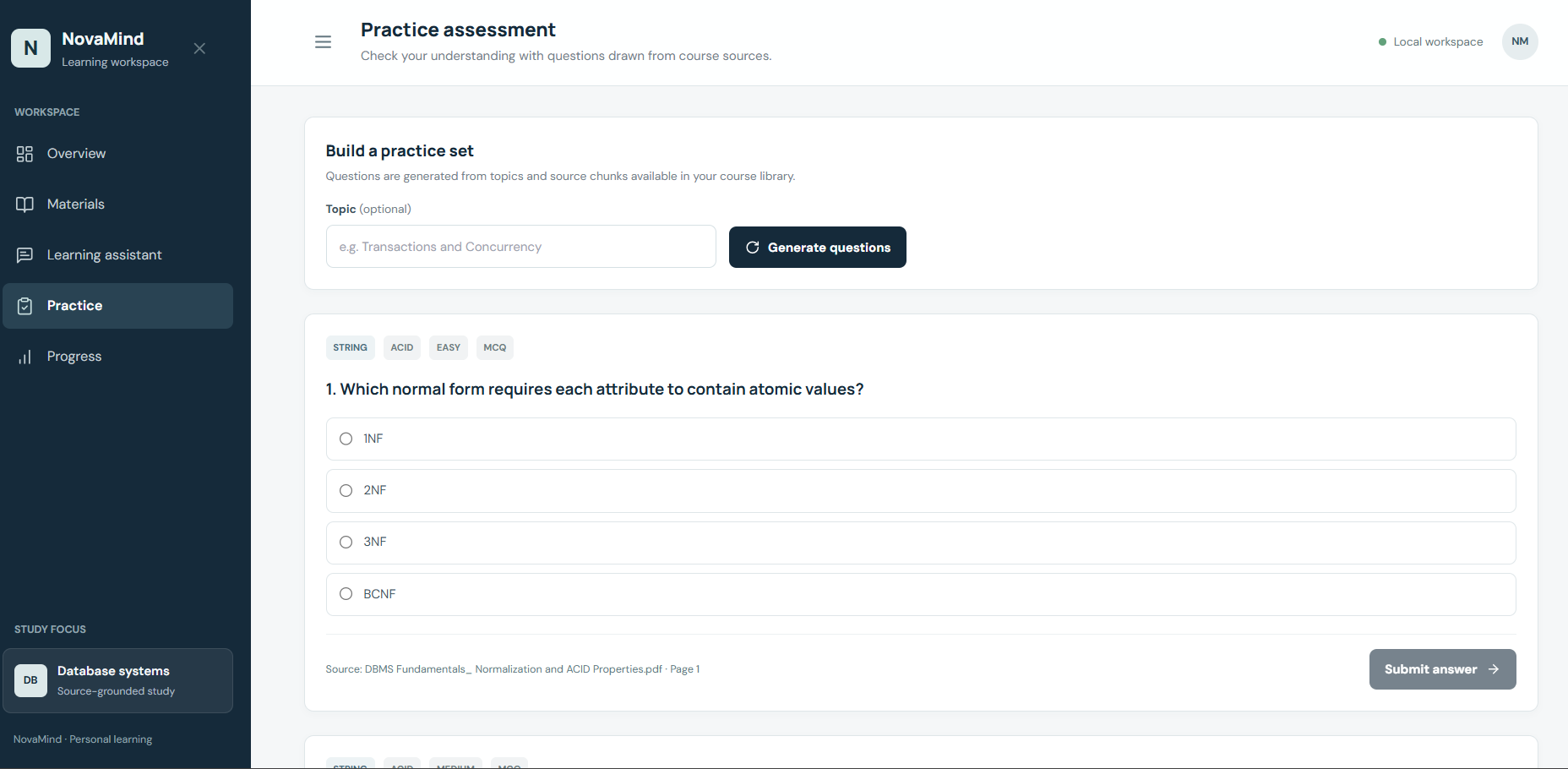
- Interactive Assessments: Generate practice assessments based on learning materials and submit answers for evaluation.
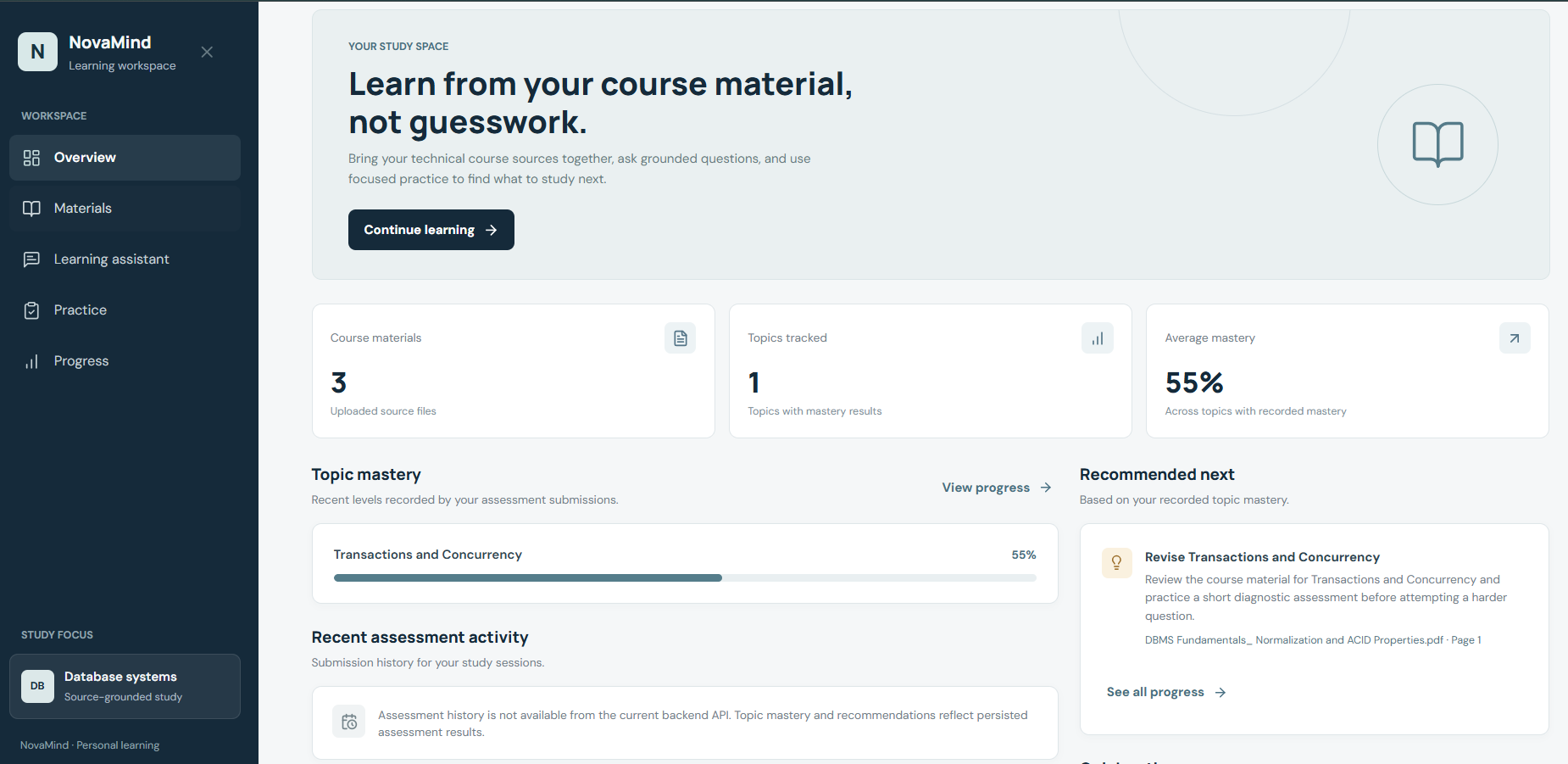
- Learning Progress Tracking: Track topic mastery, identify weaker topics, and view learning recommendations.
- Adaptive Learning Support: Use assessment results and topic-level progress to guide further study.
How We Built It
NovaMind uses a full-stack architecture with a React and Vite frontend and a Python FastAPI backend. The backend handles document processing, retrieval, question answering, assessment generation and evaluation, and learner progress tracking.
We integrated a vector-based retrieval approach to find relevant information from uploaded course materials. SQLite supports application data storage, while the backend is organized into separate modules for ingestion, retrieval, assessment, and learning analytics.
The platform was designed around a continuous learning workflow:
Upload → Retrieve → Ask → Assess → Track Mastery → Recommend
Challenges We Faced
One of our main challenges was connecting document retrieval with reliable, source-grounded answers. Retrieving relevant content is not enough; answers must also be checked against the available sources. We also worked on integrating multiple backend modules, connecting the frontend to the deployed API, and maintaining a consistent learning experience across the platform.
Another challenge was developing a practical prototype within a limited hackathon timeline while keeping the architecture modular and suitable for future improvements.
What We Learned
Building NovaMind helped us understand how frontend and backend components work together in an AI-powered application. We gained practical experience with API integration, document processing, retrieval-based systems, assessment workflows, and deployment.
We also learned that educational AI systems need more than generated answers: source transparency, useful feedback, and meaningful learning progress are important parts of the experience.
What's Next
Future improvements could include more reliable citation verification, persistent cloud storage for uploaded materials, broader multimodal content support, and more personalized learning recommendations based on each student's progress.
Our goal is to make NovaMind a practical study companion that helps students learn from their own course materials and better understand what they need to study next.

Log in or sign up for Devpost to join the conversation.