-
-
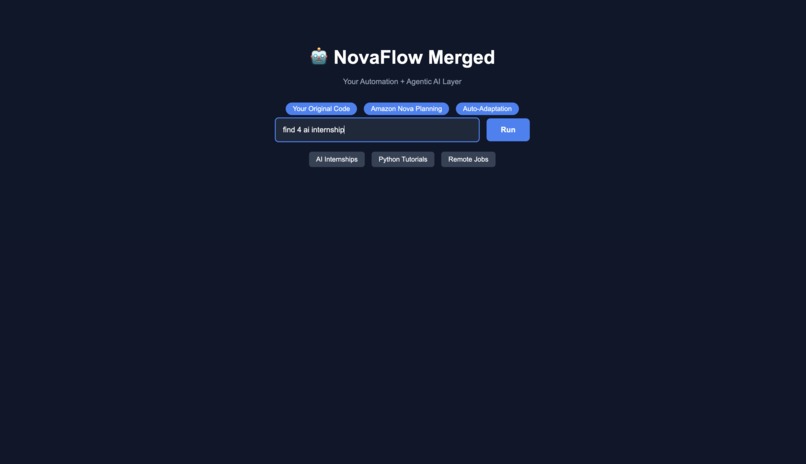
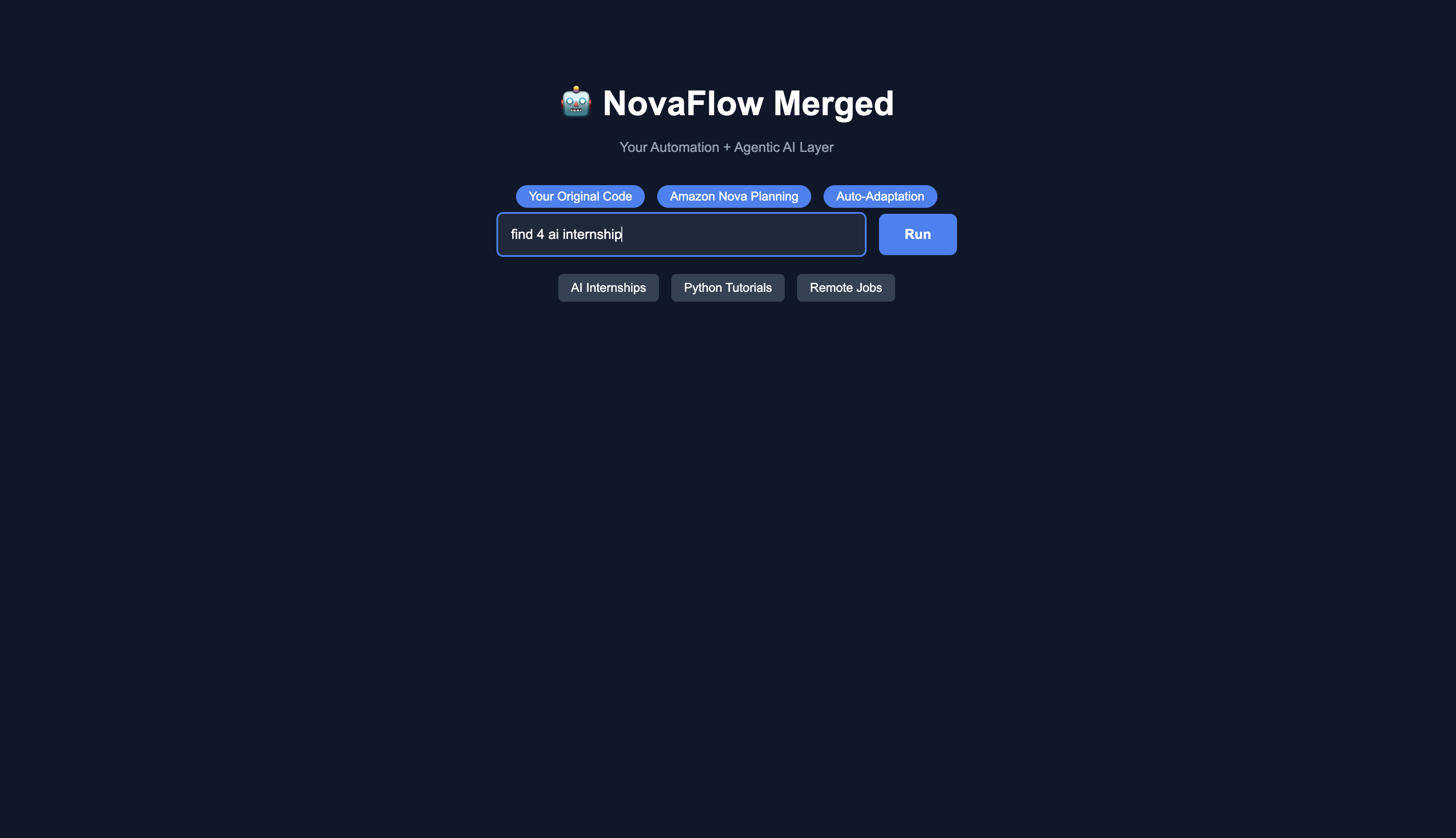
nova flow ui
-
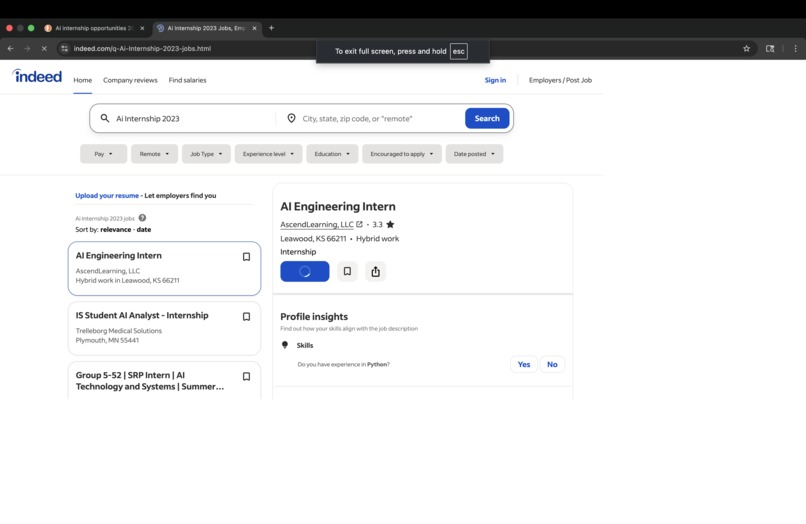
nova flow automation
-
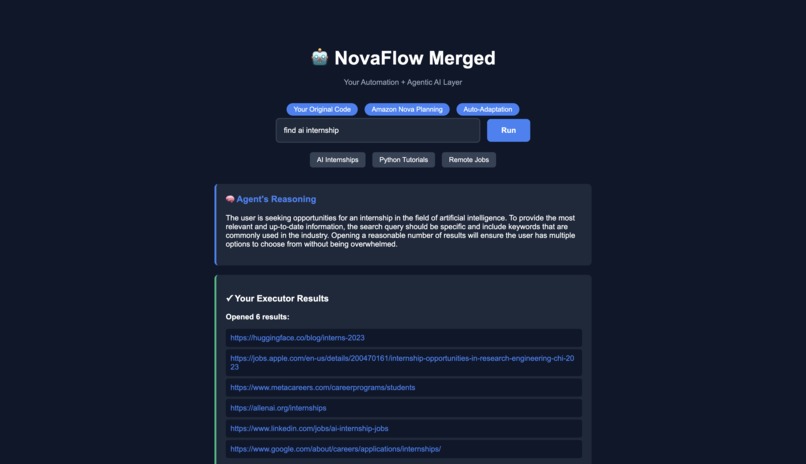
result
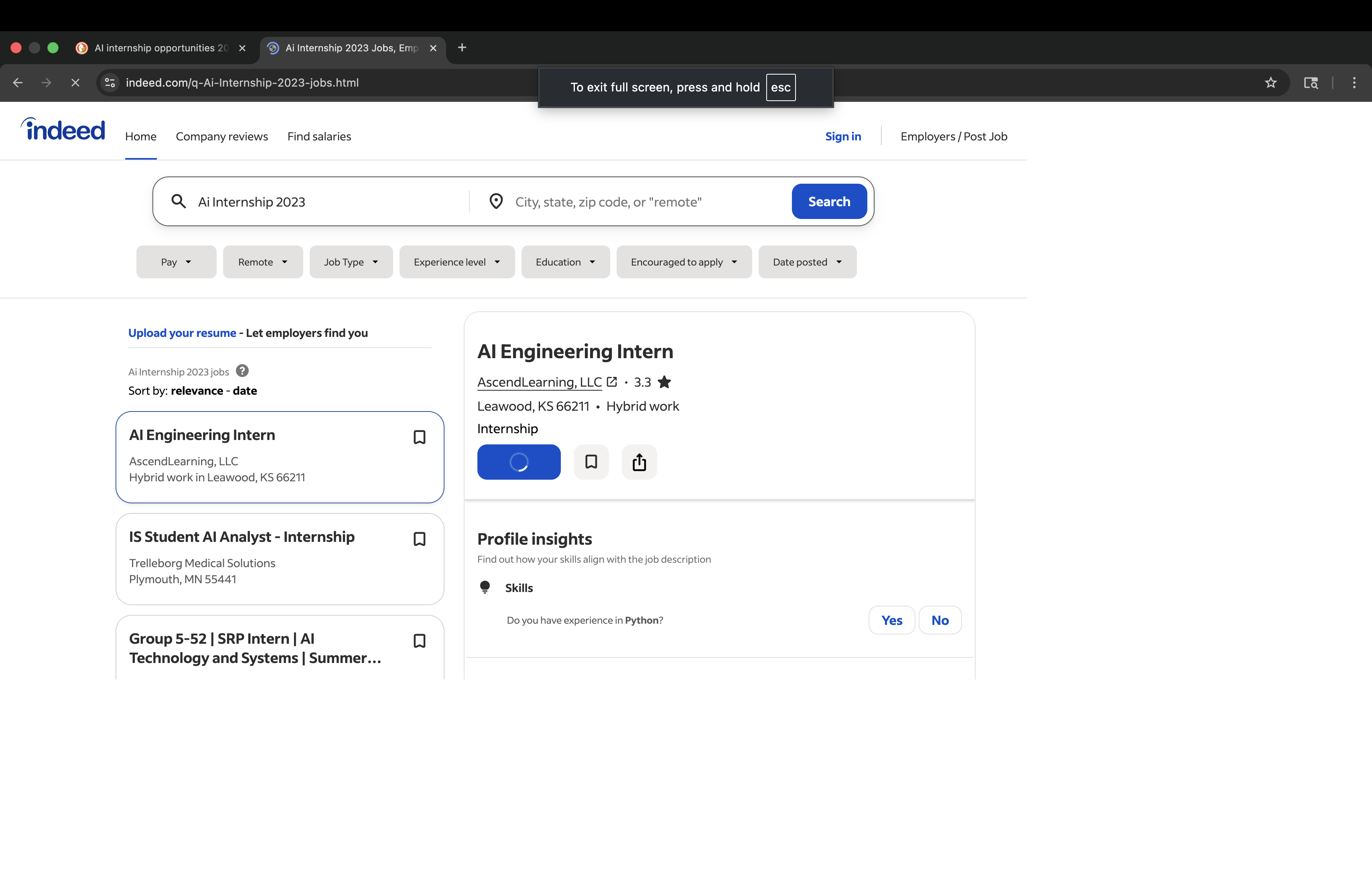
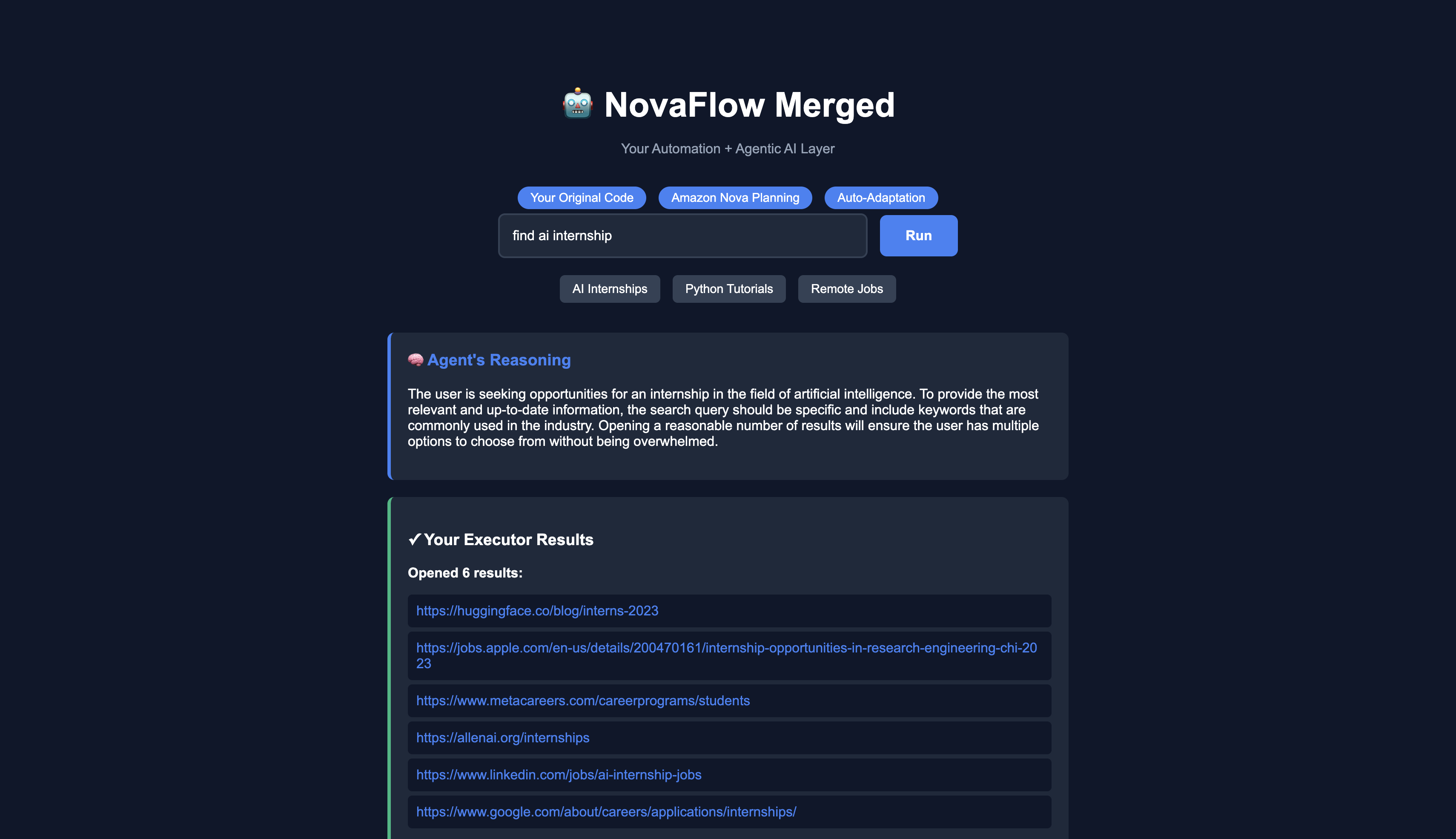
Inspiration
Web automation has always been rigid - break when websites change, fail silently, and require constant maintenance. I wanted to build something that could think and adapt like a human would. When Amazon Nova was announced with its reasoning capabilities, I saw the opportunity to create a truly intelligent automation agent.
What it does
Plans - Amazon Nova analyzes the request and creates an optimal workflow with reasoning Executes - Playwright automation carries out the plan (search, click, navigate) Adapts - If errors occur, Nova generates alternative approaches autonomously Reflects - Nova analyzes results and provides insights on what was accomplished
How we built it
Amazon Nova Lite (v1.0) via AWS Bedrock - The reasoning engine that powers planning, adaptation, and reflection Playwright - Browser automation engine for executing web tasks FastAPI - Backend API that orchestrates the agentic workflow Python - Core implementation language HTML/CSS/JavaScript - Interactive UI showing agent reasoning
Challenges we ran into
Browser Bot Detection Initially used Google for searches, but it triggered bot verification. Solution: Switched to DuckDuckGo which is more automation-friendly. "Target page closed" Errors Browser was closing prematurely when multiple commands ran. Solution: Implemented async locks and proper lifecycle management. Getting Structured Output from Nova Nova sometimes returned prose instead of JSON. Solution: Strict prompt engineering with examples and regex extraction as fallback. Balancing Autonomy vs. Reliability Too much freedom = unpredictable behavior. Too much constraint = not agentic. Solution: Guide Nova with clear action types while letting it decide parameters. Making Reasoning Visible Users need to see the agent thinking. Solution: Built UI that displays planning, execution steps, and reflection in real-time.
Accomplishments that we're proud of
True Agentic Behavior - This isn't a chatbot or simple automation. It's an autonomous agent that makes decisions. Transparent AI - Users can see exactly how Nova is thinking and planning. No black box. Error Recovery - When things fail (they always do in web automation), Nova figures out alternatives autonomously. Clean Architecture - Separation between reasoning (Nova) and execution (Playwright) makes it extensible. Real-World Utility - Actually useful for job searching, research gathering, competitive intelligence.
What we learned
How to structure prompts for agentic behavior vs. simple Q&A AWS Bedrock API intricacies and JSON parsing from LLM outputs Playwright's selector strategies and error handling Async programming in Python for concurrent AI + automation What actually makes AI "agentic" (autonomy, adaptation, goal-orientation) The importance of making AI reasoning transparent How to balance AI creativity with reliability That good agent design is 50% prompt engineering, 50% architecture
What's next for NovaFlow Merged
Add more action types (form filling, data extraction, screenshots) Multi-page workflows (navigate complex sites) Save and replay workflows Visual understanding - Nova analyzes screenshots to guide clicks Voice commands using Amazon Transcribe Integration with other tools (email, calendars, spreadsheets)
Built With
- amazon-nova-lite
- aws-bedrock
- boto3
- css
- fastapi
- html
- javascript
- playwright
- python


Log in or sign up for Devpost to join the conversation.