Inspiration
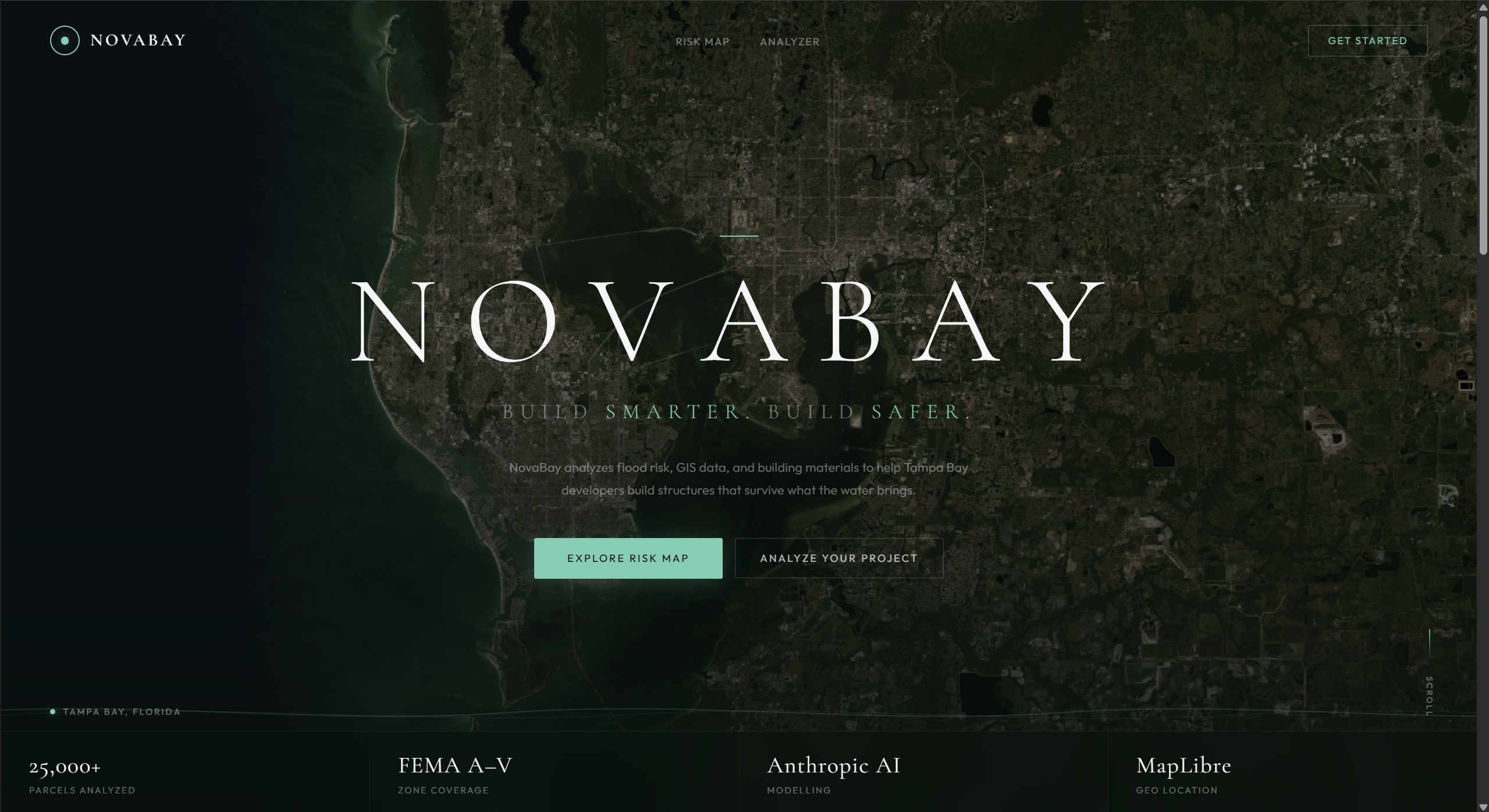
Living in the Tampa Bay area means living with beauty—and risk. Coastal communities face increasing threats from flooding, rising sea levels, and intensifying hurricanes. Yet, the tools available to homeowners, architects, and planners are often fragmented, reactive, or difficult to interpret.
We asked a simple but powerful question:
What if anyone—from a first-time homeowner to a city engineer—could proactively design and build homes that are both sustainable and resilient to coastal hazards?
Nova Bay was born from the vision of merging geospatial intelligence, AI-driven insights, and architectural creativity into one seamless platform—empowering smarter, safer, and greener coastal development.
What It Does
Nova Bay is a dual-application platform that combines geo-logistics intelligence with interactive architectural design to reimagine coastal construction.
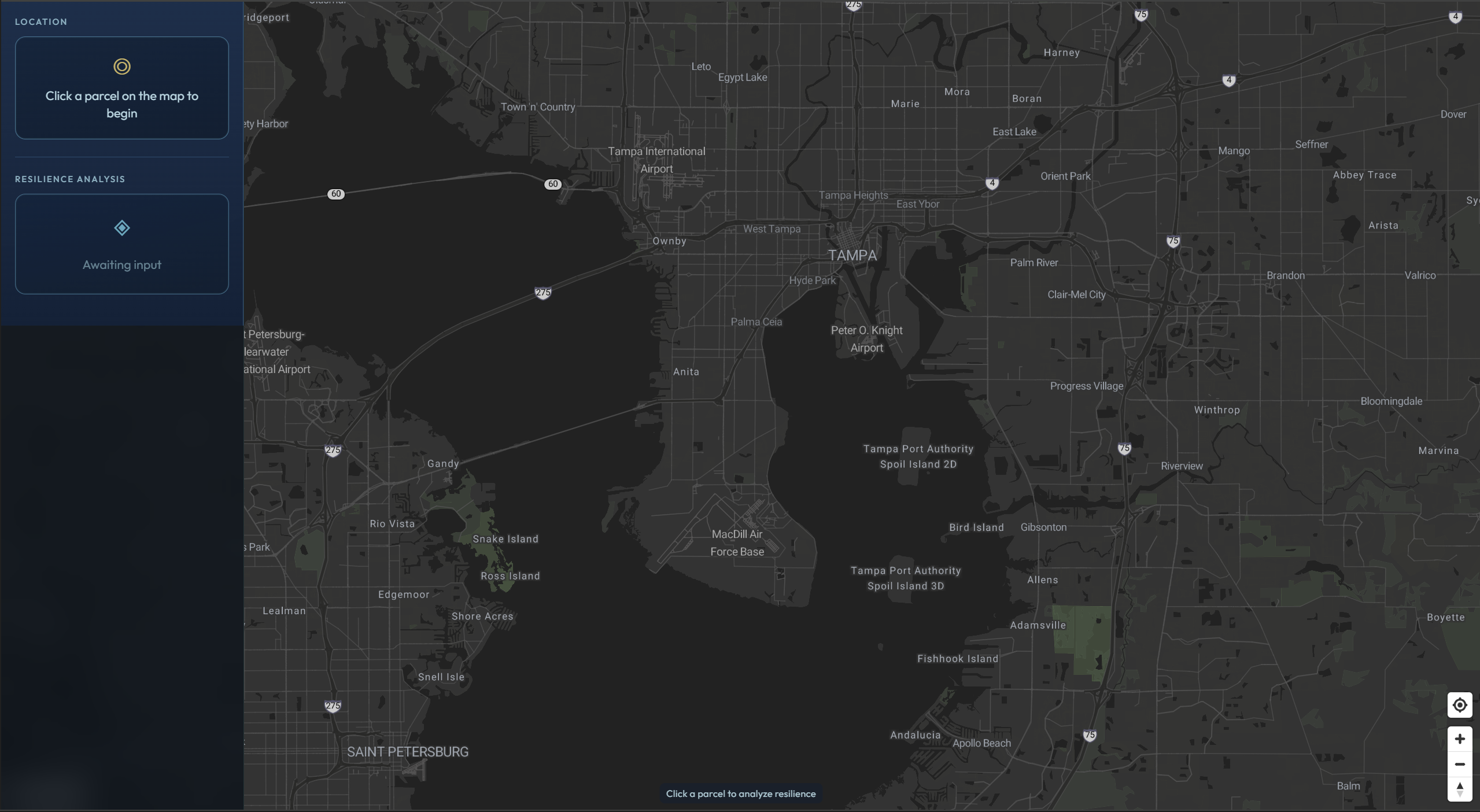
1. GIS Coastal Intelligence Platform
Our first application is an interactive GIS-based map centered on the Tampa Bay region. Users can:
- Select any parcel of land
- Analyze flood risk and hazard exposure
- View building metadata such as:
- Year of construction
- Number of stories
- Surrounding infrastructure
- Year of construction
But we go beyond static data.
Through an integrated AI assistant powered by Anthropic’s Claude model, users can:
- Ask natural language questions about land viability
- Predict long-term flooding risks
- Identify optimal zones for new development
- Receive data-driven recommendations for safer construction
This transforms complex geospatial datasets into actionable insights anyone can understand.
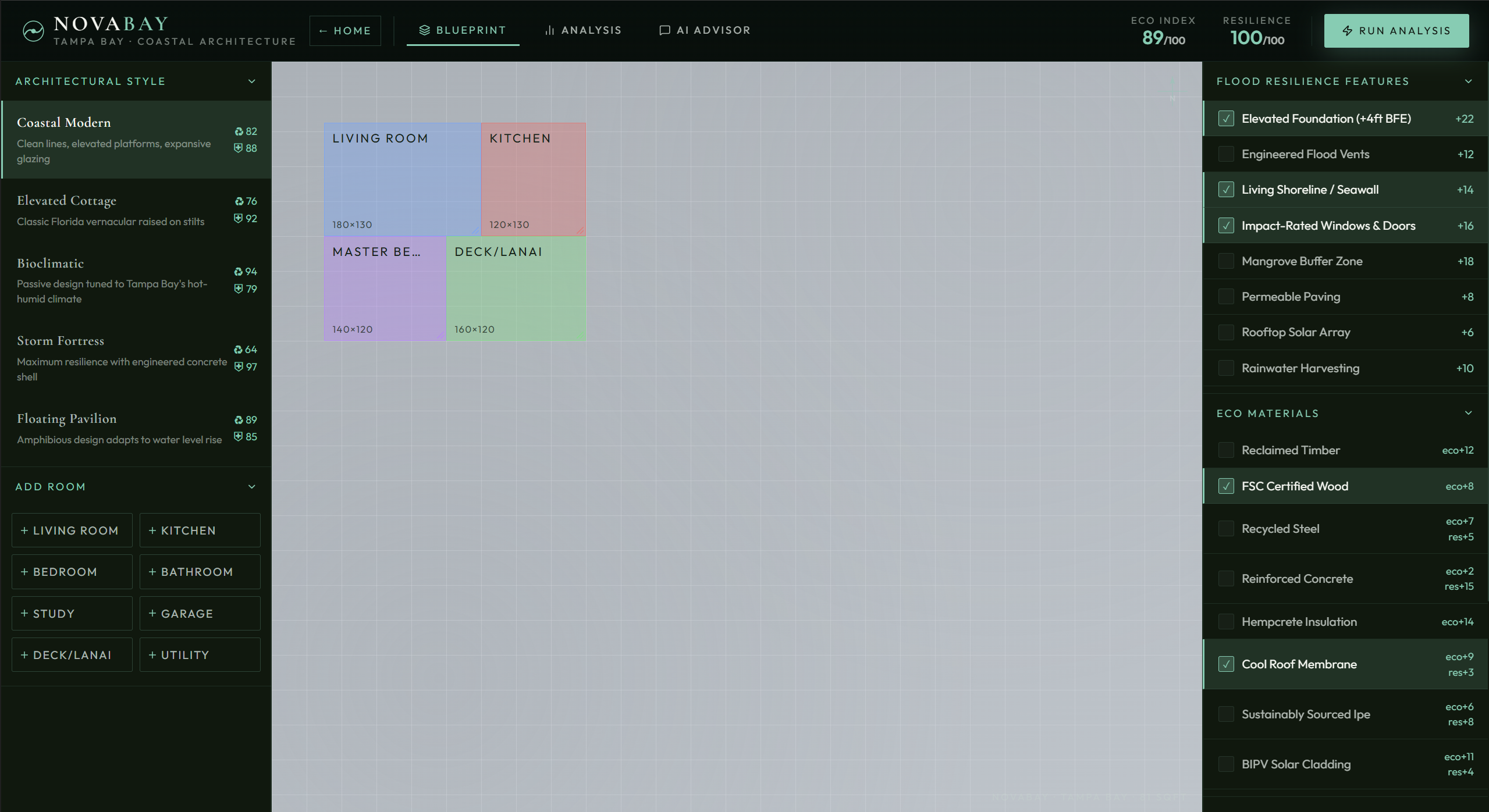
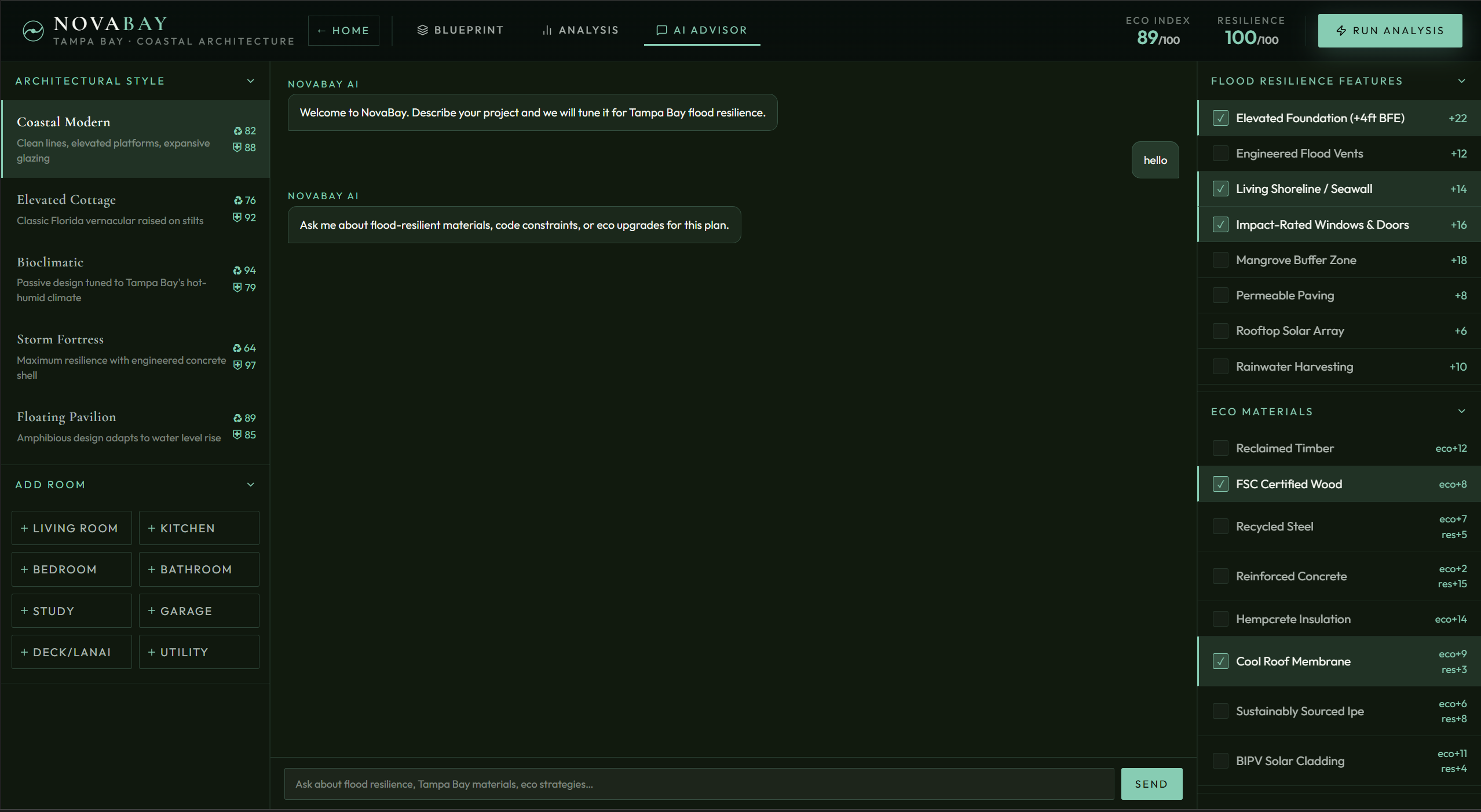
2. Sandbox Architectural Design Studio
Our second application is a sandbox-style home design environment where users can:
- Customize and blueprint their ideal home
- Choose architectural styles and structural elements
- Experiment with sustainable materials and layouts
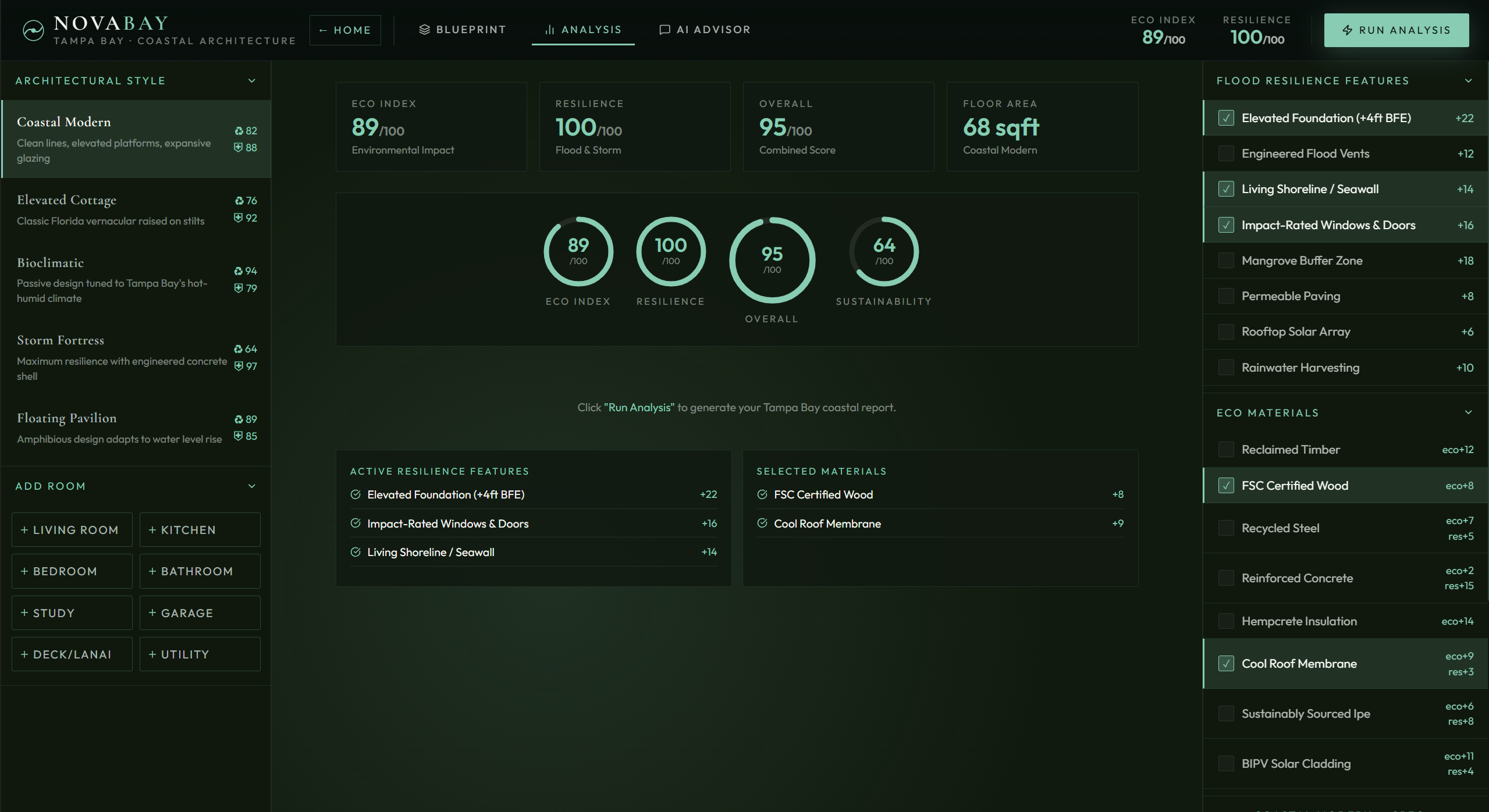
As users design, Nova Bay dynamically evaluates two core metrics:
Eco Index
Measures environmental sustainability, energy efficiency, and ecological impactResilience Score
Assesses durability against coastal threats such as flooding, storm surges, and hurricanes
This allows users to visually and interactively balance aesthetics, sustainability, and safety—something traditional design tools fail to integrate.
How We Built It
Nova Bay is a full-stack system that integrates:
AI Engine:
Powered by Claude from Anthropic for natural language reasoning and predictive analysisGeospatial Data:
Leveraging government APIs and live-feed environmental data sources to provide real-time coastal insightsFrontend Systems:
Interactive GIS visualization and a sandbox-style architectural interfaceData Integration:
Parcel data, flood zone mapping, infrastructure metadata, and environmental risk models
By combining real-time data streams with AI interpretation, we created a system that feels less like software—and more like a decision-making partner.
Challenges We Ran Into
Data Integration Complexity:
Aggregating and synchronizing multiple government APIs with different formats and update cyclesAI Contextual Accuracy:
Ensuring the AI could meaningfully interpret geospatial data and provide relevant, location-specific insightsBalancing Technical Depth with Usability:
Making advanced environmental and architectural analytics accessible to non-expertsReal-Time Performance:
Handling large GIS datasets while maintaining a smooth, interactive user experience
Accomplishments That We’re Proud Of
- Successfully built a dual-system platform combining GIS analytics and architectural design
- Created meaningful scoring systems (Eco Index and Resilience Score) that translate complex metrics into intuitive feedback
- Integrated AI in a way that enhances—not replaces—human decision-making
- Designed a solution with real-world applicability to one of the most urgent global challenges: climate-resilient housing
What We Learned
This project pushed us to think beyond traditional software boundaries. We learned:
- How to bridge AI with geospatial intelligence
- How to design systems that balance technical complexity and user accessibility
- The importance of interdisciplinary thinking—combining environmental science, urban planning, and software engineering
- How to build a product that is not just functional, but impact-driven
What’s Next for Nova Bay
Nova Bay is just the beginning. Our future roadmap includes:
- Expanding beyond Tampa Bay to coastal regions worldwide
- Incorporating real-time climate change projections and sea-level rise models
- Adding cost estimation and construction feasibility analysis
- Partnering with governments, developers, and sustainability organizations
- Enhancing the sandbox with AR/VR visualization for immersive home design
Our ultimate goal is to build a global platform for resilient, sustainable living—where every home is designed with both the planet and its future in mind.
Built With
- anthropic
- claude
- deck.gl
- geospatial
- maplibre


Log in or sign up for Devpost to join the conversation.