-
-
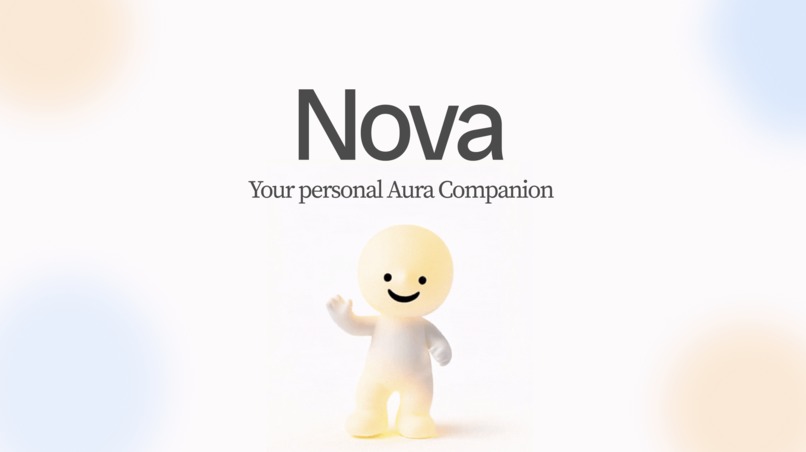
Nova - Your Aura Companion poster
Inspiration
The idea for Nova came from something very simple. Most of us don't really notice how we're feeling until things get bad. You night feel tension in your neck, breathe a little faster, or feel mentally drained, but its easy to ignore these signals At the same time, our phones are full of apps that asks us to track everything , our steps, sleep productivity but very few help us notice our emotional state in the moment. We keep thinking about that gap. What if there was something that quietly reflected how you’re feeling throughout the day? That idea slowly turned into Nova. Instead of charts or numbers, we wanted something softer and more intuitive. A companion that reflects your emotional state through an aura and subtle behavior. Our goal wasn't to "fix" emotions. It was just to help people notice them.
What it does
Nova is a companion that reflects how you might be feeling during the day. At the core of the idea is something called Neuroception, It describes how our nervous system is constantly scanning the environment for signs of safety or danger even when we are not consciously paying attention. In simple terms, you body is always picking up signals before you mind does Your breathing changes, your muscles tense, your heart rate shifts Most of the time we ignore these signals because they're subtle. Nova tries to make those invisible signals visible
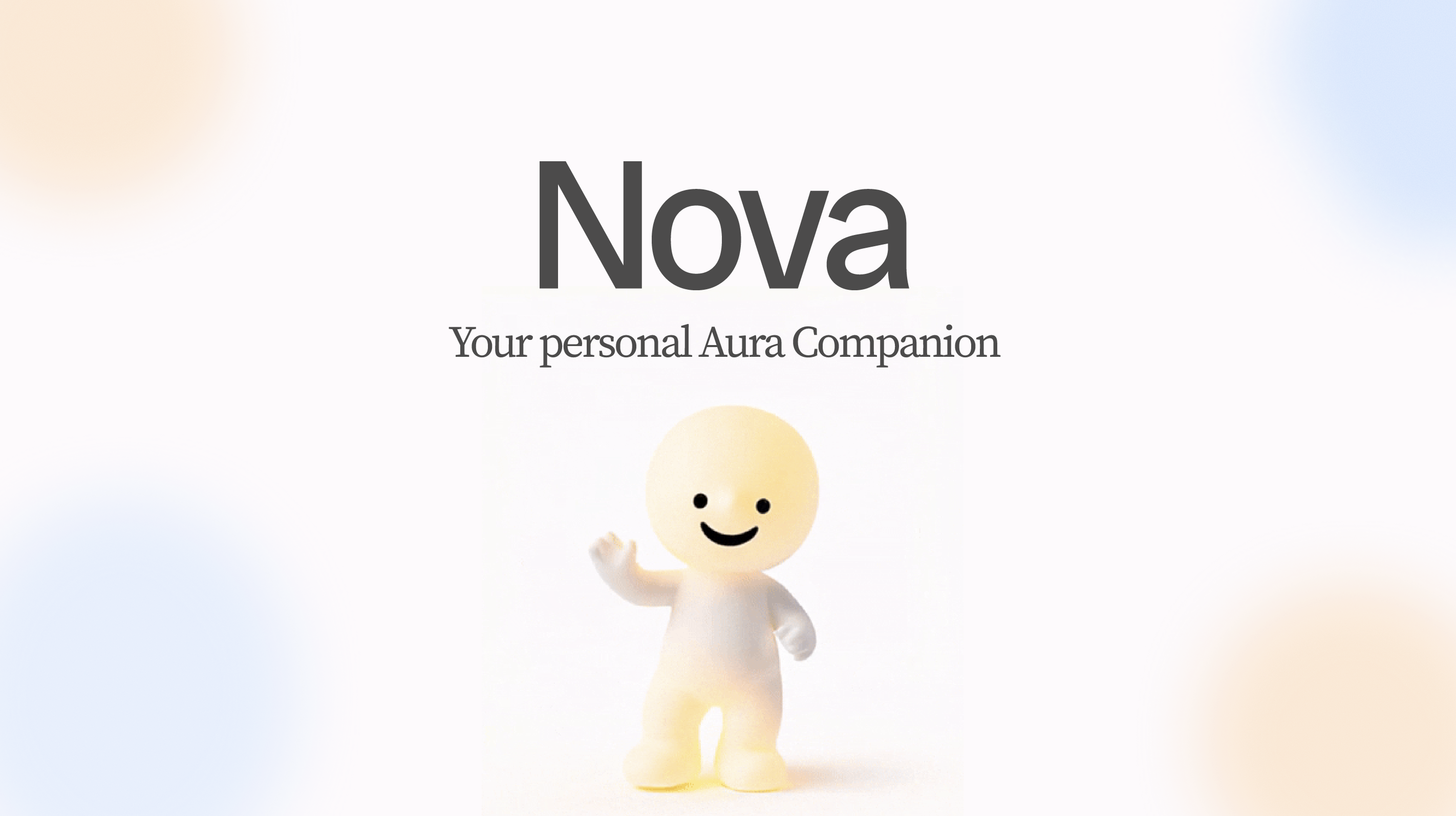
Instead of showing raw data or charts, Nova translates those signals into something easier to understand, a living aura around a small companion character. The aura shifts in color, movement, and energy depending on what your body might be experiencing. For example:
- If your body shows signs of stress, the character might move slower or gently rub its neck.
- If your body is calm, the aura becomes softer and more stable.
- If there’s emotional warmth or connection, the aura may glow brighter.
The goal isn’t to diagnose emotions or tell people how they should feel. It’s simply to reflect the subtle signals your nervous system is already processing.
How we built it
We started by designing the overall experience in Figma. The goal was to keep everything visually calm and simple so the app wouldn't feel overwhelming. The character and aura animation were created using AI animation told and then integrated into the interface. These animations were important because they carry most of the emotional feedback in the app. Behind the scenes, we created a simple system that interpret signals and maps them to emotional states. These signals could come from body cues, patterns in movement, or direct input from the user. Once a state is identified, the app changes the aura color, animation speed, and the character’s behavior. We thought of the system in three parts: the signals we receive, the interpretation of those signals, and the visual response that the user sees.
Challenges we ran into
One of the hardest parts was figuring out how to represent emotions visually without making the app feel childish. Since Nova uses a character, it was easy for things to start looking too cartoon-like. We had to experiment with different styles until the character felt calm and expressive without being distracting. Another challenge was emotional accuracy. Feelings are not neat categories, and people can move between states quickly. We had to think carefully about how the aura transitions so the changes feel smooth instead of sudden. We also realized that emotional tools can easily become overwhelming. If an app constantly asks questions or sends alerts, people stop using it. So we had to design Nova to feel quiet and supportive rather than demanding attention.
Accomplishments that we're proud of
One thing we’re really proud of is how Nova makes emotional awareness feel simple and visual. Instead of asking users to think about data or labels, the app shows emotional shifts through color, movement, and subtle animation. People can glance at the screen and immediately understand the mood of the moment. We're also proud of how calming the overall experience feels. Every detail, from the colors to the animation speed, was chosen to make the app feel gentle rather than stimulating.
What we learned
We learned that in order to prompt Figma Make to build what we wan the instructions needed to be broken down into smaller steps for the LLM to build it seamlessly. we also needed to complete UI detailing to maintain creative control over the product. We learned to utilize the credits in the best possible way. This project made us realize how difficult it is to design for emotions. We learned to prototype concepts faster than ever as well as juggling between different tools. We also learned to incorporate different skillset to achieve a particular outcome. Understanding the concept of Spatial UI and creating a minimal design for it was also a very good learning opportunity.
This project made us realize how difficult it is to design for emotions.
What's next for Nova - Your Aura Companion
Nova isn’t meant to be something people depend on forever. The real goal is that, over time, the user begins to read their own signals without needing the system to translate them. Eventually the user doesn’t need an aura or a companion to tell them something has shifted. They already know. Eventually the user doesn’t need an aura or a companion to tell them something has shifted. They already know. Instead, Nova could evolve into something closer to a persistent companion system. Nova could become an interface that lives alongside the user across different environments, adapting to their habits, interests and goals as they change over time. Rathe than only sensing internal states, it would start noticing patterns in how someone lives. At that stage, Nova would shift from interpreting signals to anticipating needs. The companion that once helped users understand themselves could eventually become a system that helps them navigate what comes next.
Built With
- cloudinary
- figjam
- figma
- figmamake
- nanobanana2.0
- pika.art


Log in or sign up for Devpost to join the conversation.