-
-
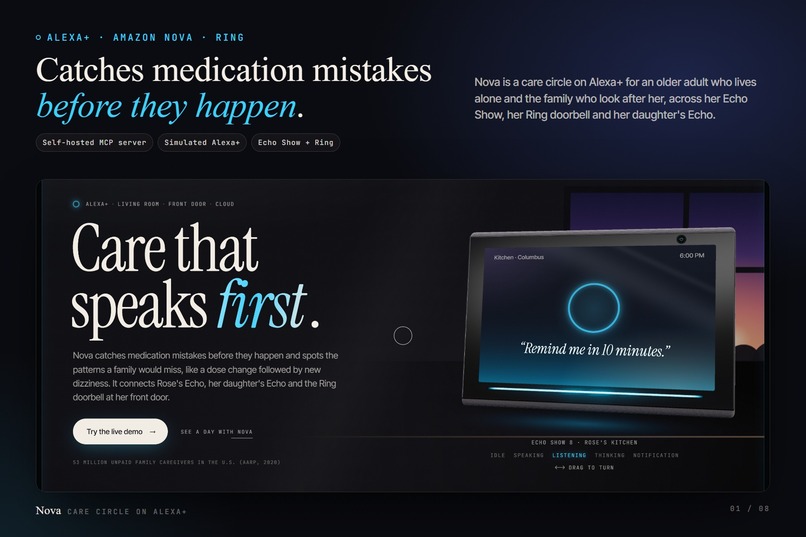
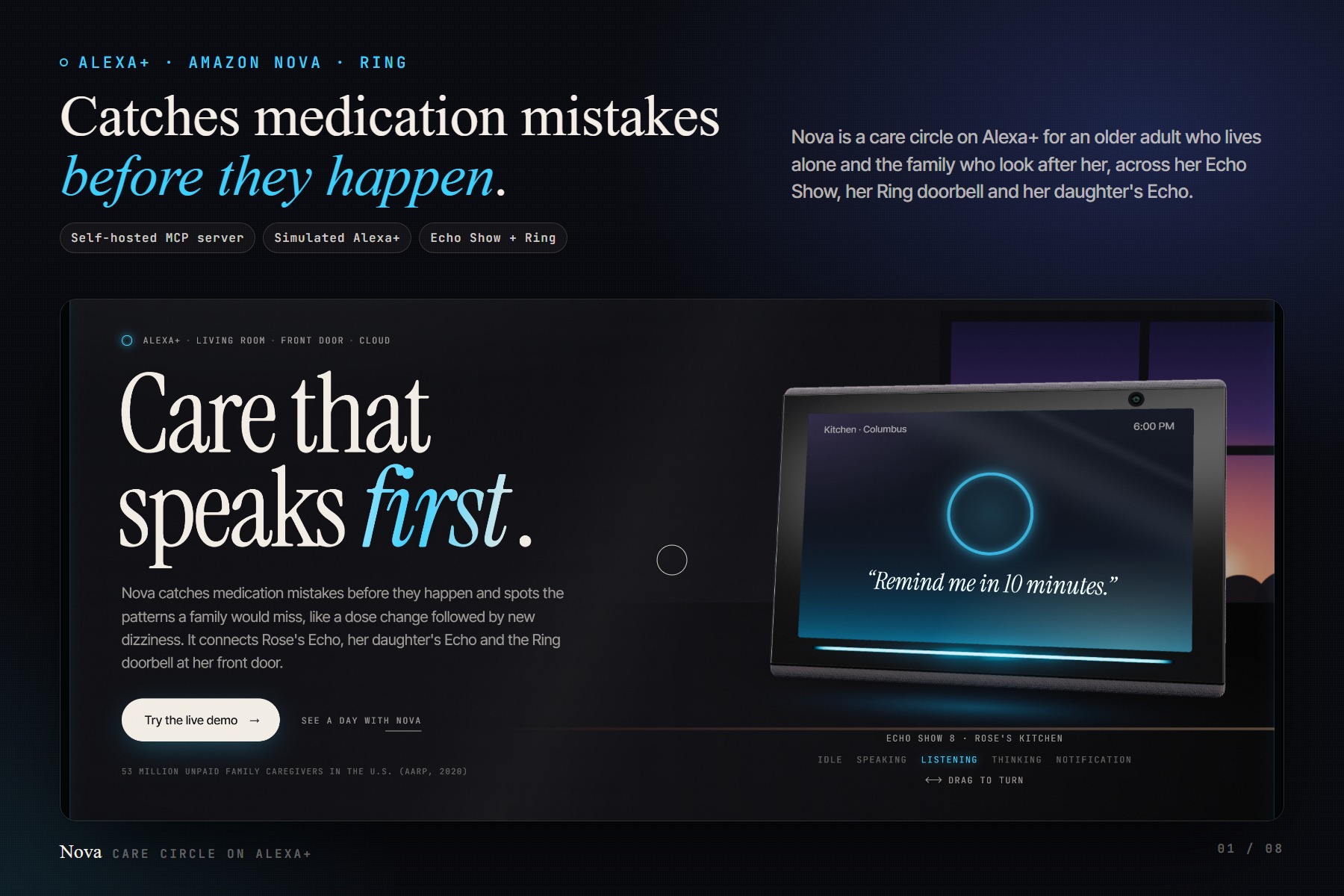
Nova: a care circle on Alexa+ that catches medication mistakes before they happen
-
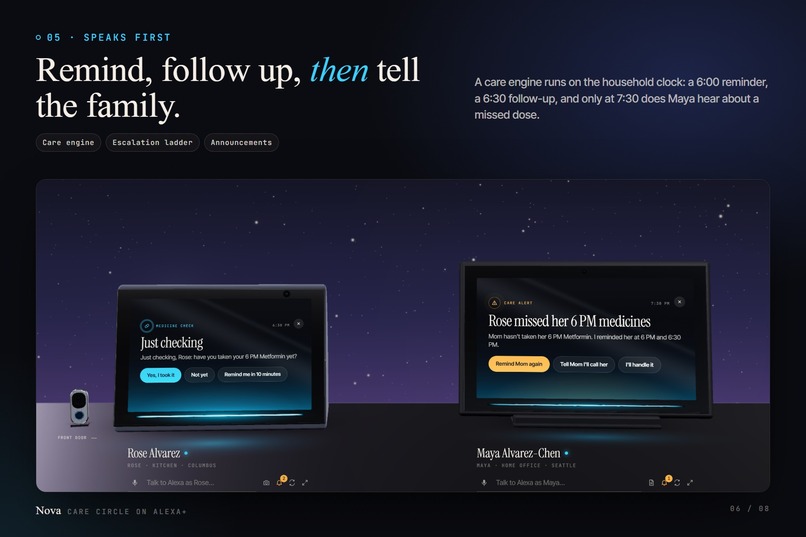
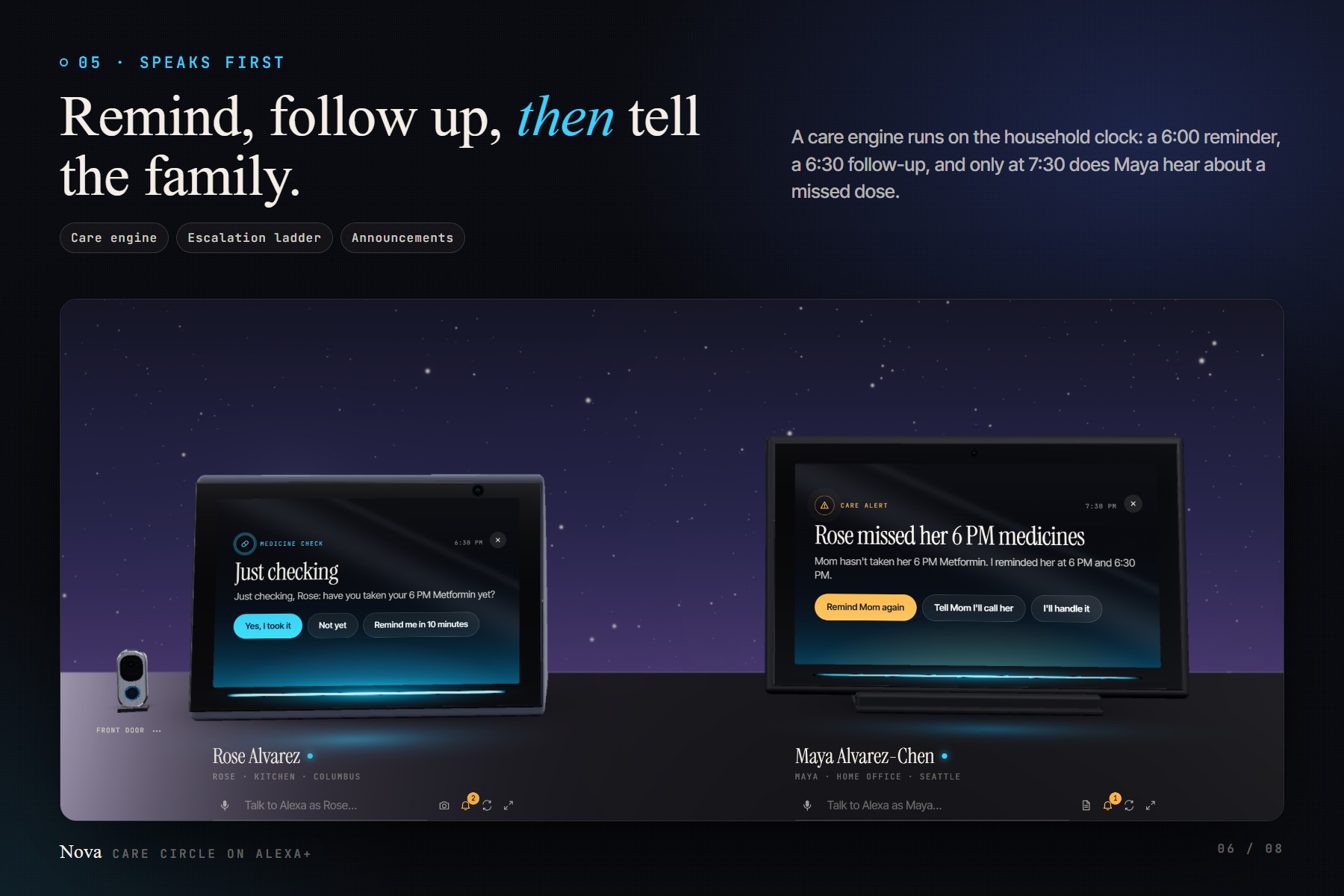
Remind, follow up, then tell the family: the escalation ladder
-
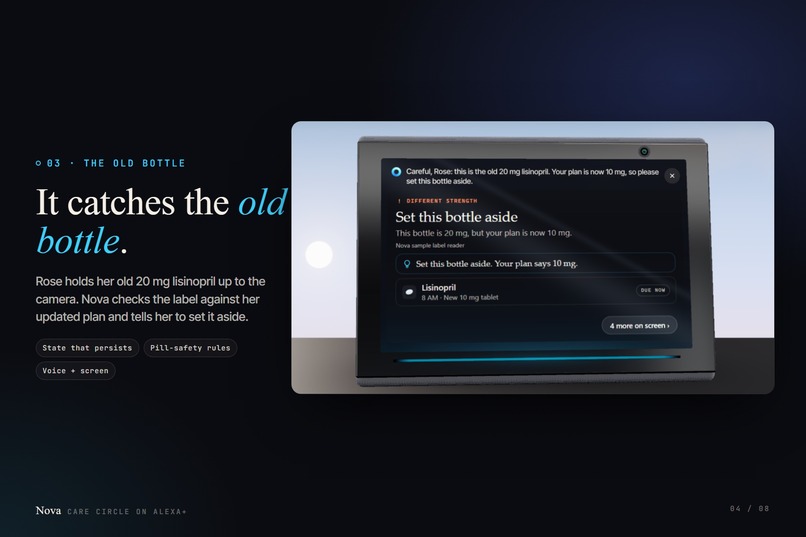
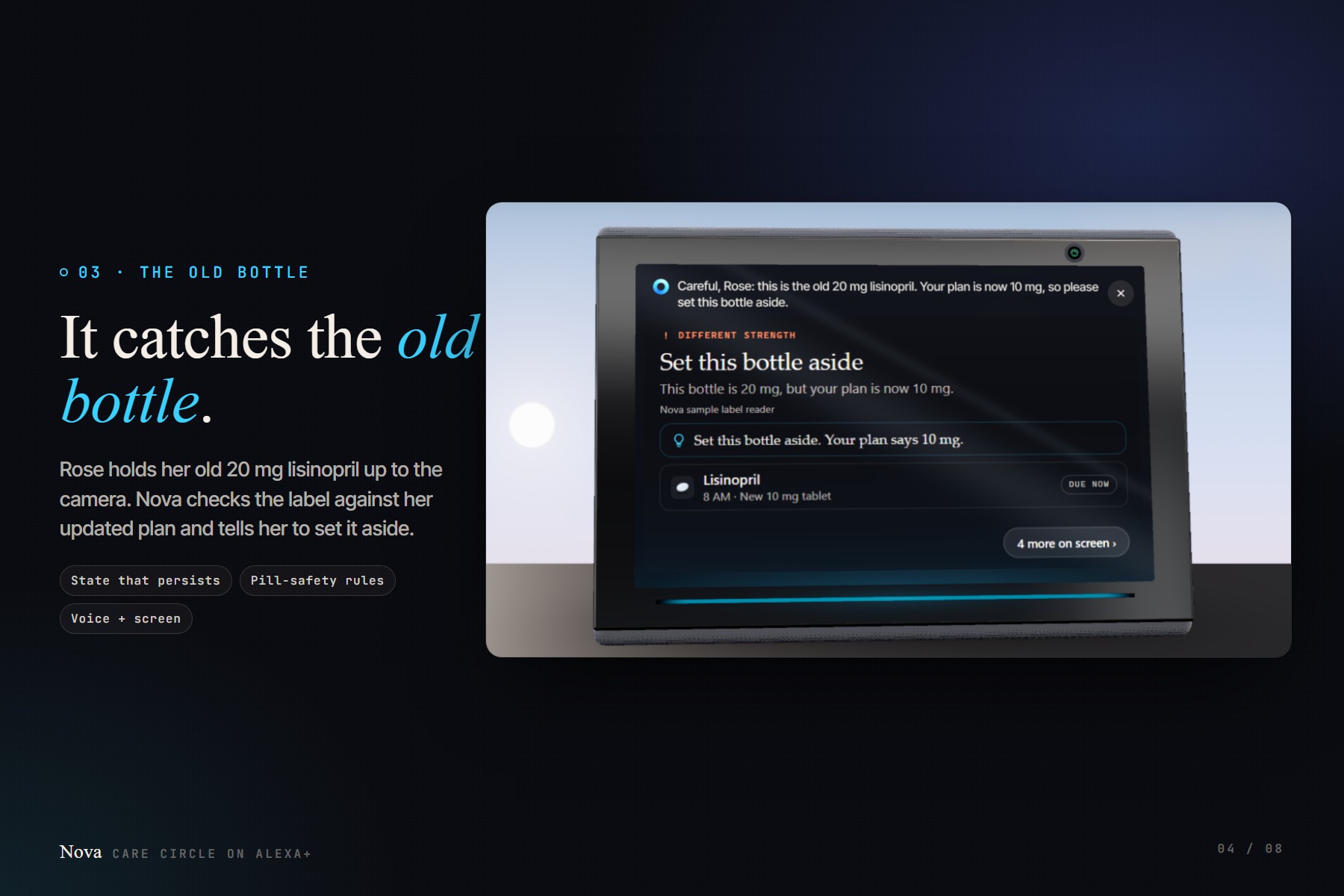
Nova catches the old 20 mg bottle and tells Rose to set it aside
-
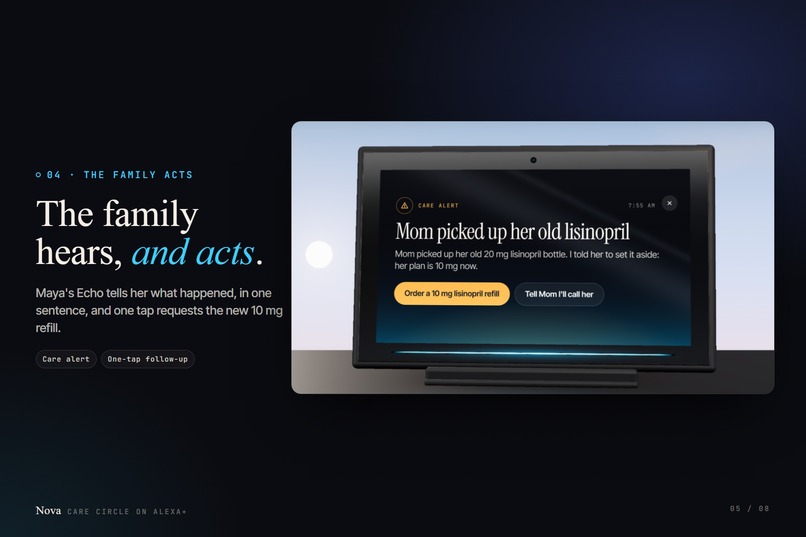
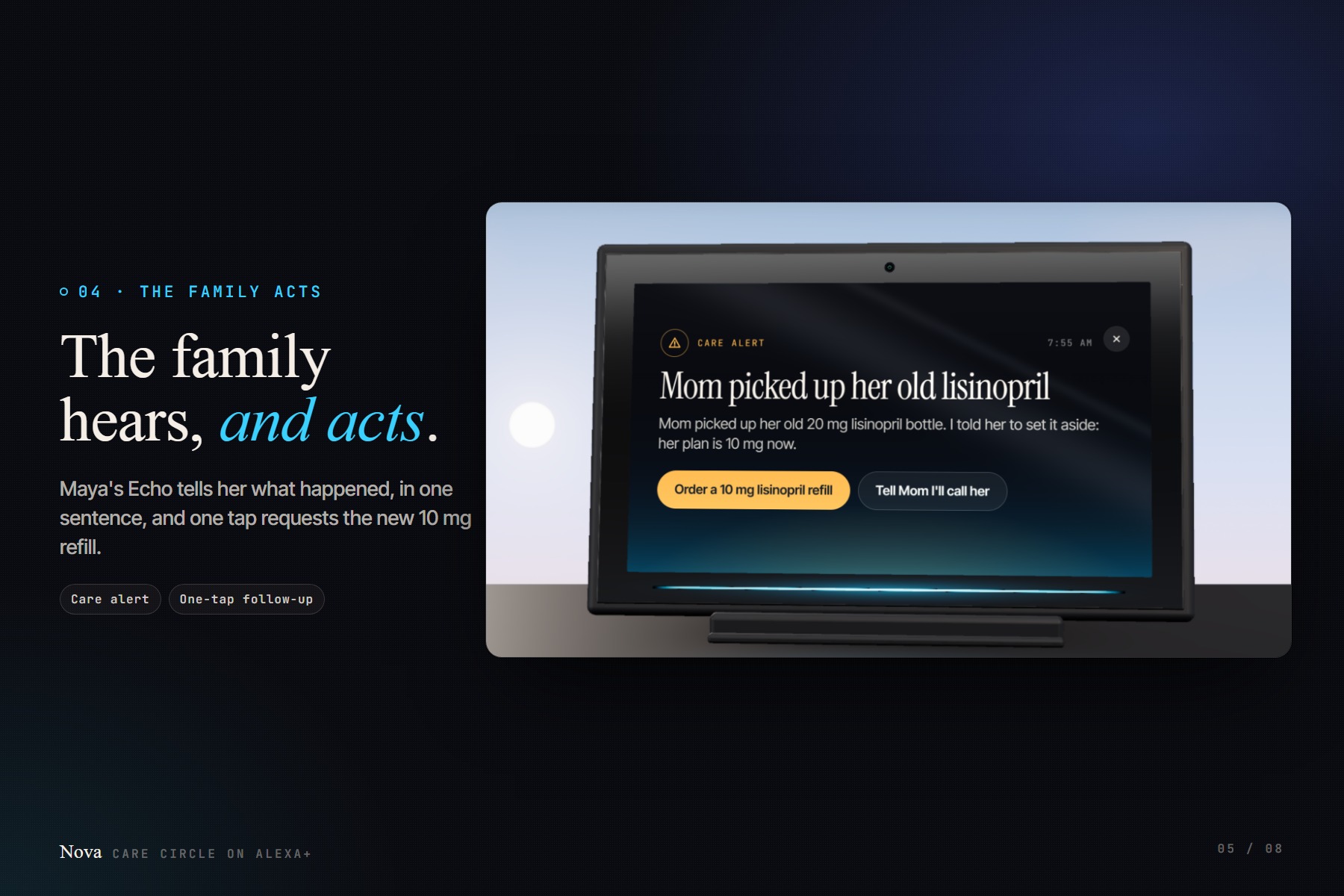
Maya hears what happened and requests the new dose in one tap
-
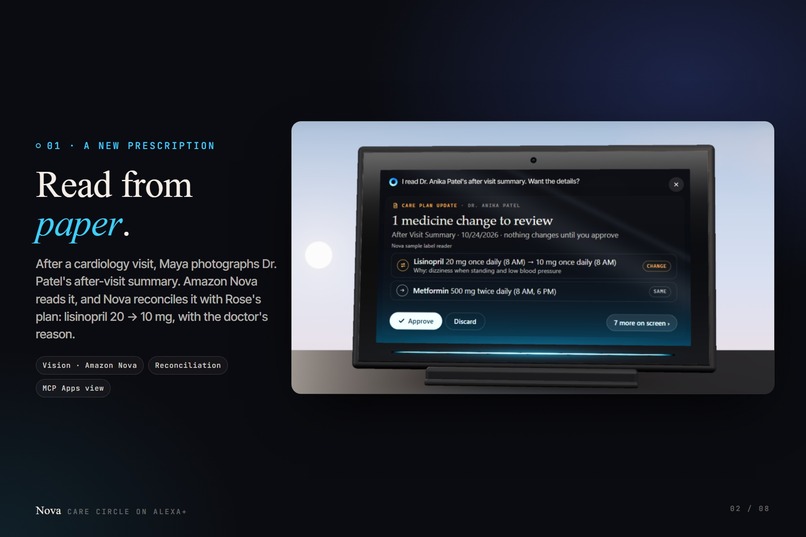
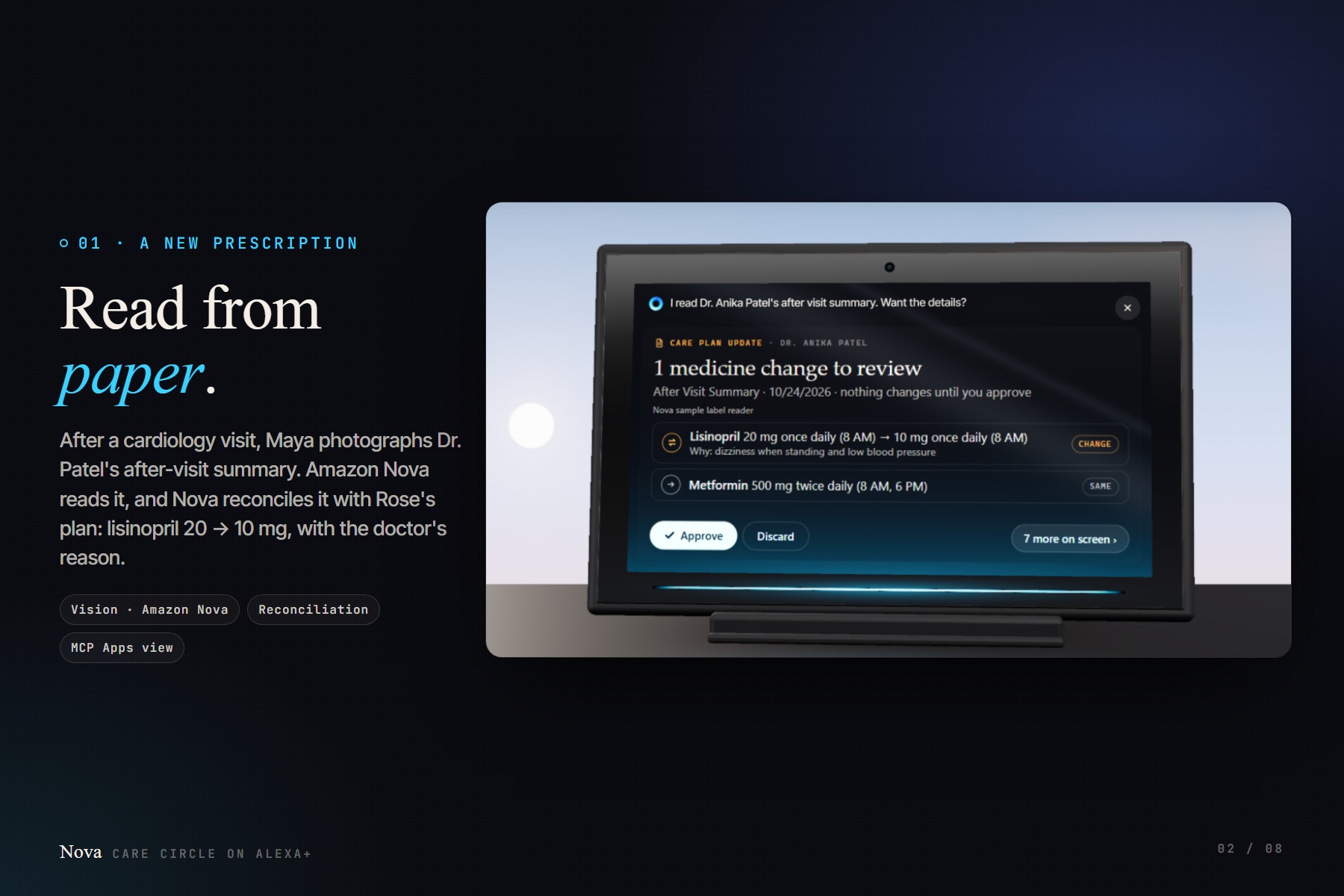
A new prescription, read from paper: lisinopril 20 → 10 mg, with the doctor's reason
-
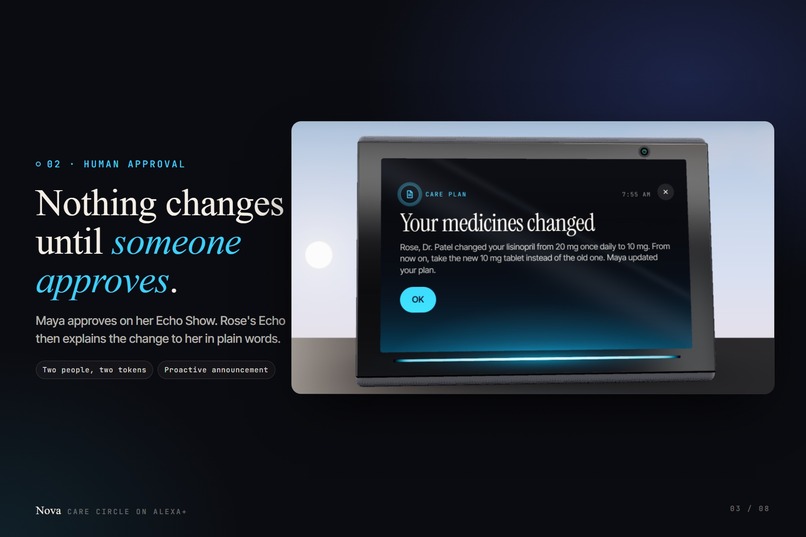
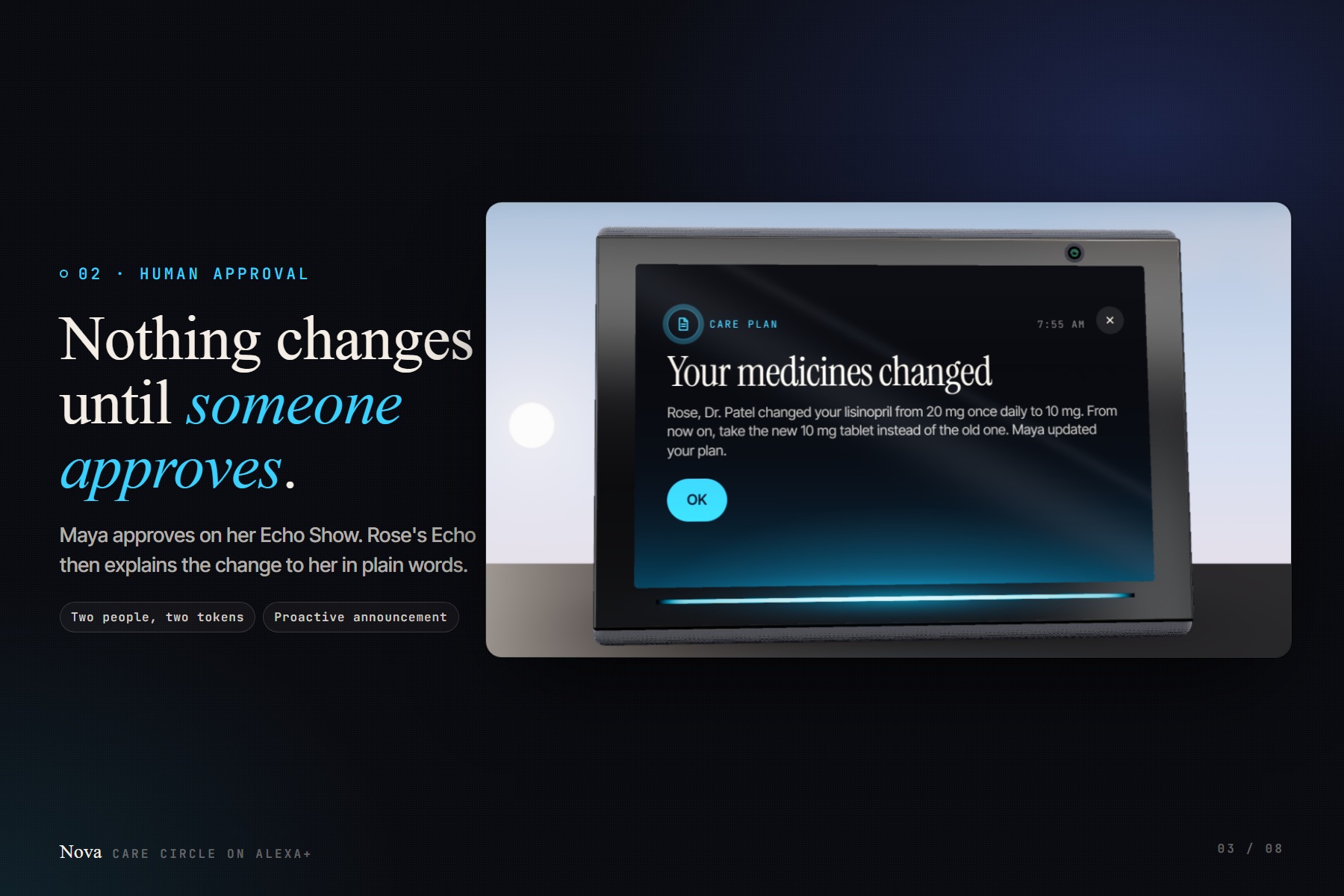
Nothing changes until Maya approves; then Rose hears it in plain words
-
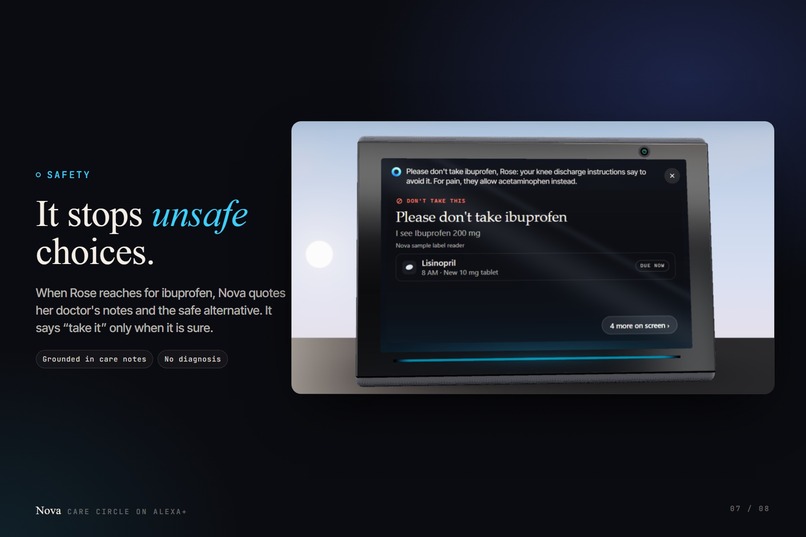
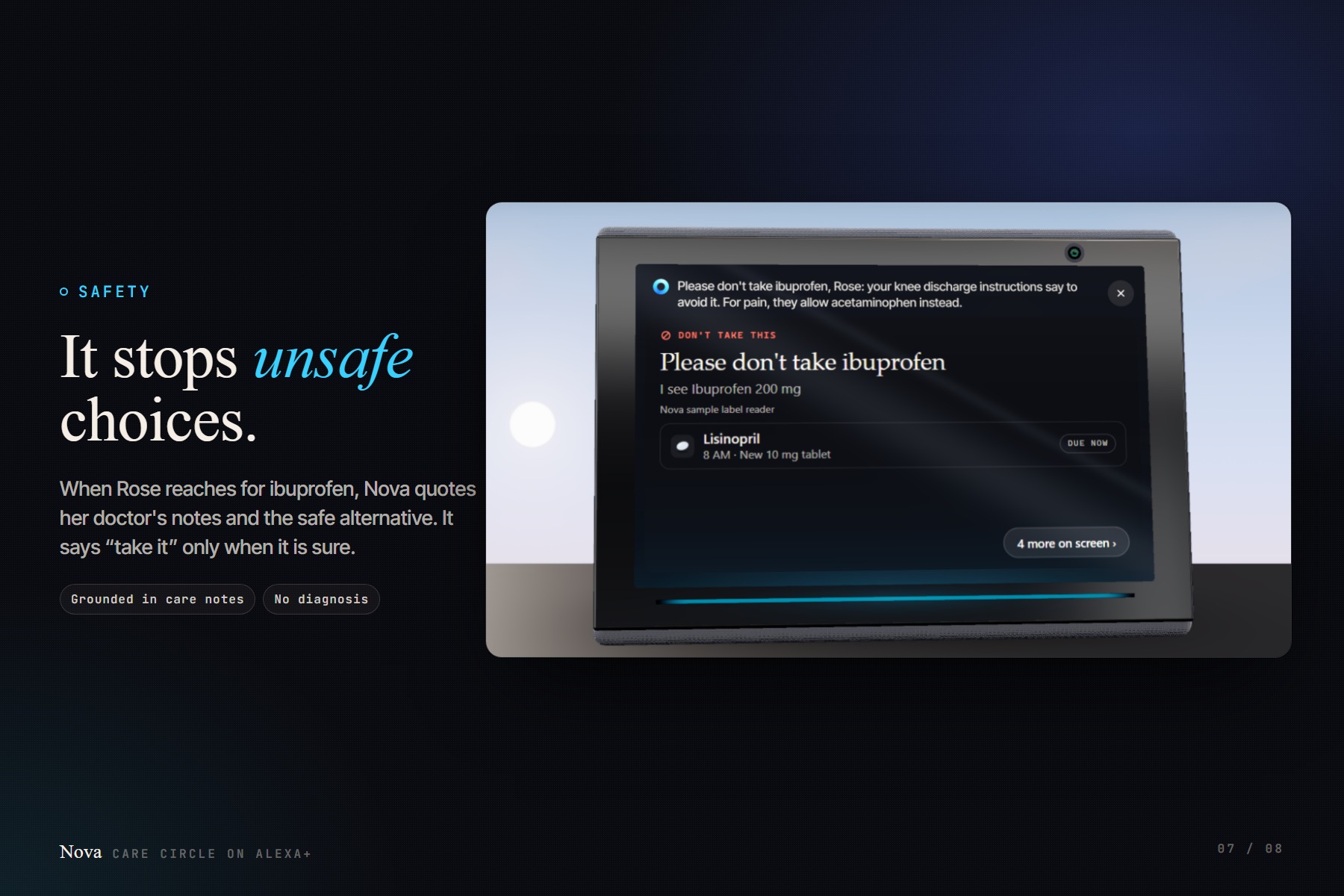
It stops unsafe choices, quoting her doctor's notes
-
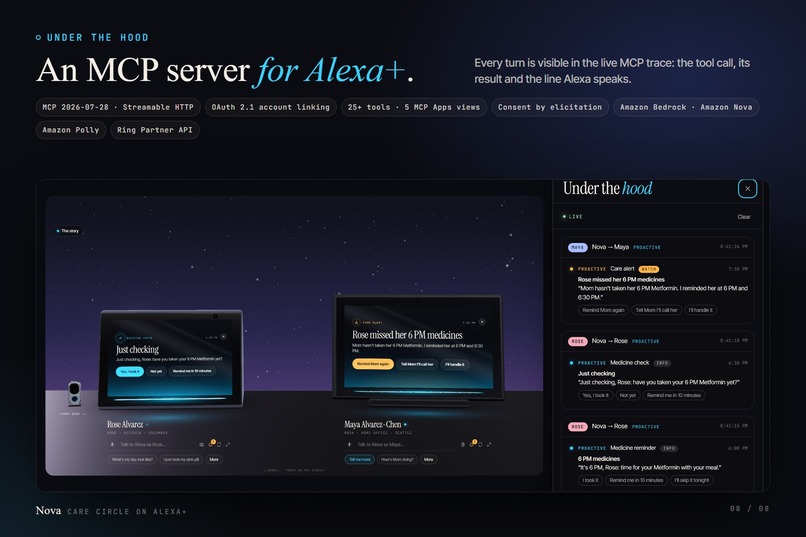
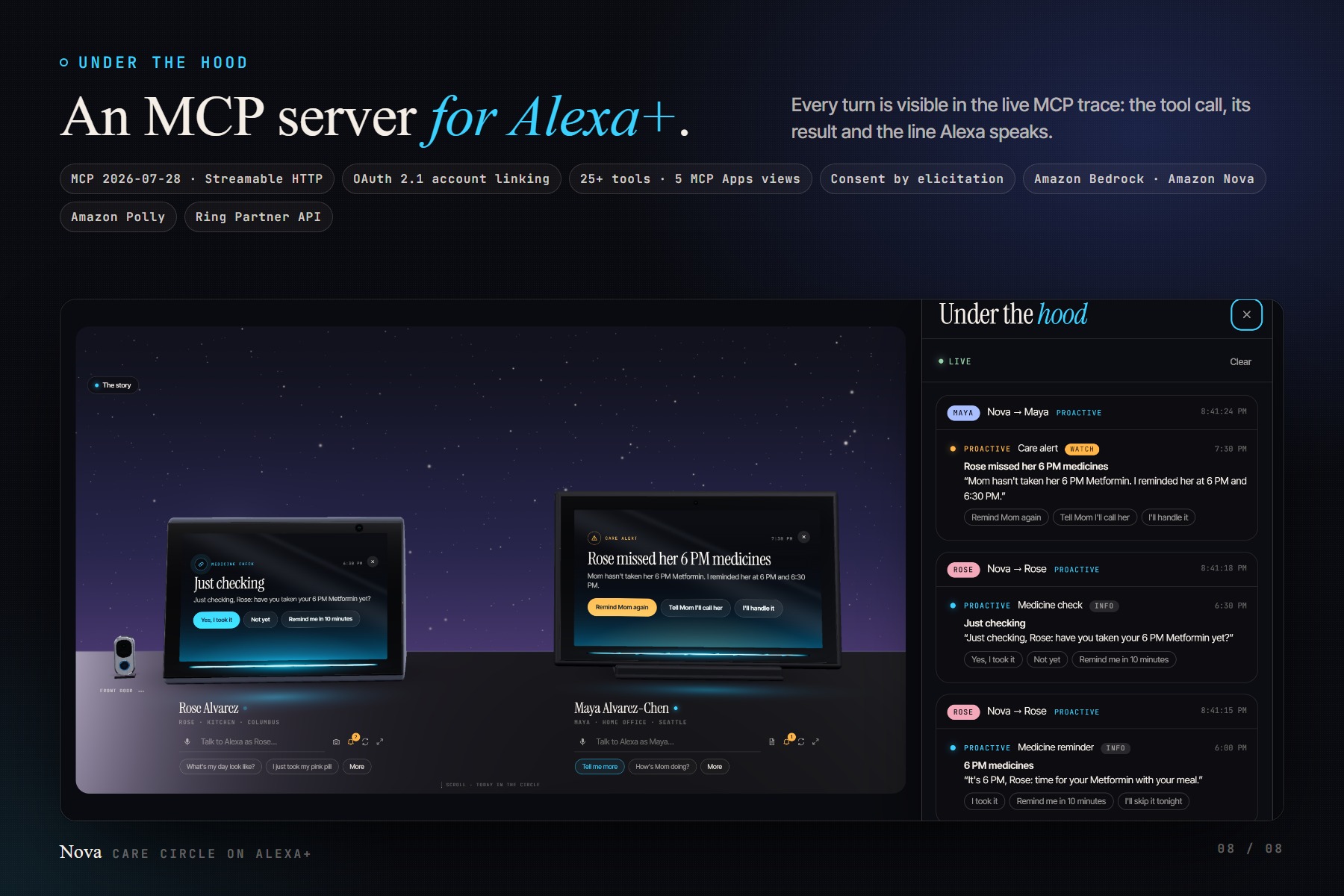
Under the hood: an MCP server for Alexa+, with every call in the live trace
Inspiration
More than 53 million Americans are unpaid family caregivers, and many live far from the person they look after. The riskiest moments are predictable: a dose change after a doctor's visit, an old bottle still in the cabinet, a missed evening pill. The warning signs are small and scattered across people and devices, and nobody sees them together until something goes wrong. We wanted Alexa+ to be the place where they come together.
What it does
Nova is a care circle on Alexa+. It links Rose's Echo Show in her kitchen in Columbus, her Ring doorbell, and her daughter Maya's Echo Show in Seattle.
The main story: a prescription change, from paper to the pill bottle.
- A new prescription. After a cardiology visit, Dr. Patel lowers Rose's lisinopril from 20 mg to 10 mg. Maya photographs the after-visit summary on her Echo Show. Amazon Nova reads it, and Nova reconciles it with Rose's plan: change lisinopril 20 → 10 mg, because of dizziness when standing and low blood pressure.
- Human approval. Nothing changes until Maya approves.
- Rose hears it in plain words. "Rose, Dr. Patel changed your lisinopril from 20 mg once daily to 10 mg."
- The old bottle. Later, Rose holds her old bottle up to the camera: "Careful, Rose: this is the old 20 mg lisinopril. Your plan is now 10 mg, so please set this bottle aside."
- The family acts. Maya's Echo tells her what happened, and one tap requests the new 10 mg refill.
One sequence shows vision, persistent state, human approval, two identities, voice and screen working together.
Around that story, Nova also:
- Speaks first. A care engine runs on the household clock: a reminder at 6 PM, a gentle follow-up at 6:30, and only at 7:30 does Maya hear "Mom hasn't taken her 6 PM Metformin. I reminded her at 6 and 6:30."
- Stops unsafe choices. When Rose reaches for ibuprofen, Nova quotes her doctor's instructions and the safe alternative. It says "take it" only for the exact product, a readable matching strength and a confident read.
- Connects the dots, with evidence. "How's Mom doing?" gets one sentence and a card: dizziness began after the lisinopril change, home BP averaged 152/91 before and 110/66 since, and Dr. Patel's notes say to call.
- Reads the front door. Through the Ring Partner API and signed webhooks, a doorbell press near a scheduled visit asks Rose to confirm who is there; then the aide gets her checklist and the family is told.
- Keeps Rose in charge. She is asked before her family hears about a symptom, she controls what the circle can see, and emergencies skip every question.
How we built it
- A self-hosted MCP server for Alexa+ on the official Python SDK 2.3: Streamable HTTP (MCP 2026-07-28, compatible with 2025-11-25), 25+ tools, 8 resources, 2 prompts and 5 MCP Apps views that render on the Echo Show screens.
- Account linking with OAuth 2.1: dynamic client registration, PKCE and refresh-token rotation. Identity comes from the token, so the same tool answers differently for Rose and for Maya.
- Consent by MCP elicitation, structured output with a short
speechline for voice, andnova://announcementsas the queue Nova uses to speak first. - Amazon Bedrock with Amazon Nova: the agent's tool-use loop on the Converse API, image understanding for pill labels and after-visit summaries, and the language of briefings and visit briefs. Deterministic rules find the patterns, so every insight is testable and cites its evidence.
- Amazon Polly generative voices for every reply and announcement.
- Ring Partner API: devices, status and event history, plus Webhook v1.1 with HMAC signature checks and deduplication.
- A simulated Alexa+ (two Echo Shows and a Ring doorbell in the browser), with a live MCP trace that shows every tool call.
- 94 automated tests in CI, covering the escalation ladder, pill safety, reconciliation, OAuth, Ring and the Bedrock request shapes.
Challenges we ran into
- Designing for the ear first. Older listeners need one or two sentences, not a screen read aloud. Every tool returns a short spoken line, with the details on screen or one "tell me more" away.
- Safety without false confidence. We wrote strict, tested rules for when Nova may say "take it", and it defers to the pharmacist otherwise.
- Consent inside a tool call. Asking Rose before telling her family meant using MCP elicitation through the SDK's resolver model, and only when the client supports it.
- Identity at the front door. A doorbell press says that someone is there, not who, so Nova matches the care calendar and asks Rose to confirm.
Accomplishments that we're proud of
- One story, end to end: paper → plan → kitchen counter → family, with a person approving every change.
- A full MCP integration: OAuth account linking, elicitation, MCP Apps and proactive announcements.
- An open-source MCP Apps host library, mcp-apps-lite-host (41 tests), plus a fix to the official MCP Apps specification that came out of building it.
What we learned
MCP maps naturally onto Alexa+: tools become actions, resources become a delivery queue, and MCP Apps become Echo Show screens. The hardest problems weren't technical. They were about trust: who hears what, when to interrupt, and when to defer to a person.
What's next
Production account linking with Login with Amazon, deployment on Amazon Bedrock AgentCore Runtime, per-household Ring linking, Alexa proactive notifications, and conversations with caregivers, nurses and pharmacists to shape the next version.
Built With
- alexa
- amazon-bedrock
- amazon-polly
- docker
- fastapi
- javascript
- mcp
- python
- three.js
- typescript

Log in or sign up for Devpost to join the conversation.