-
-
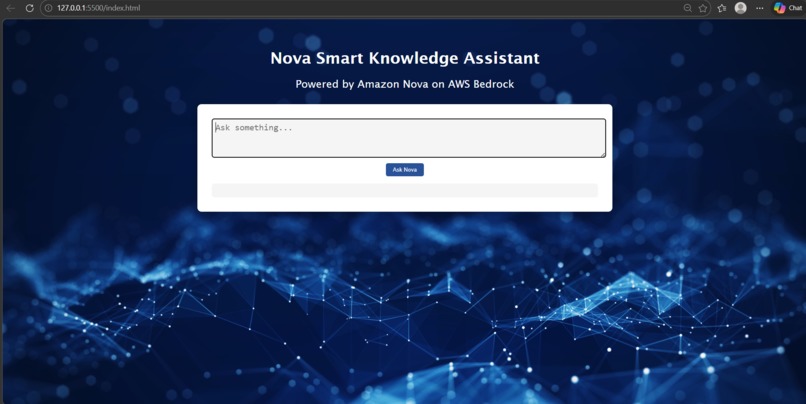
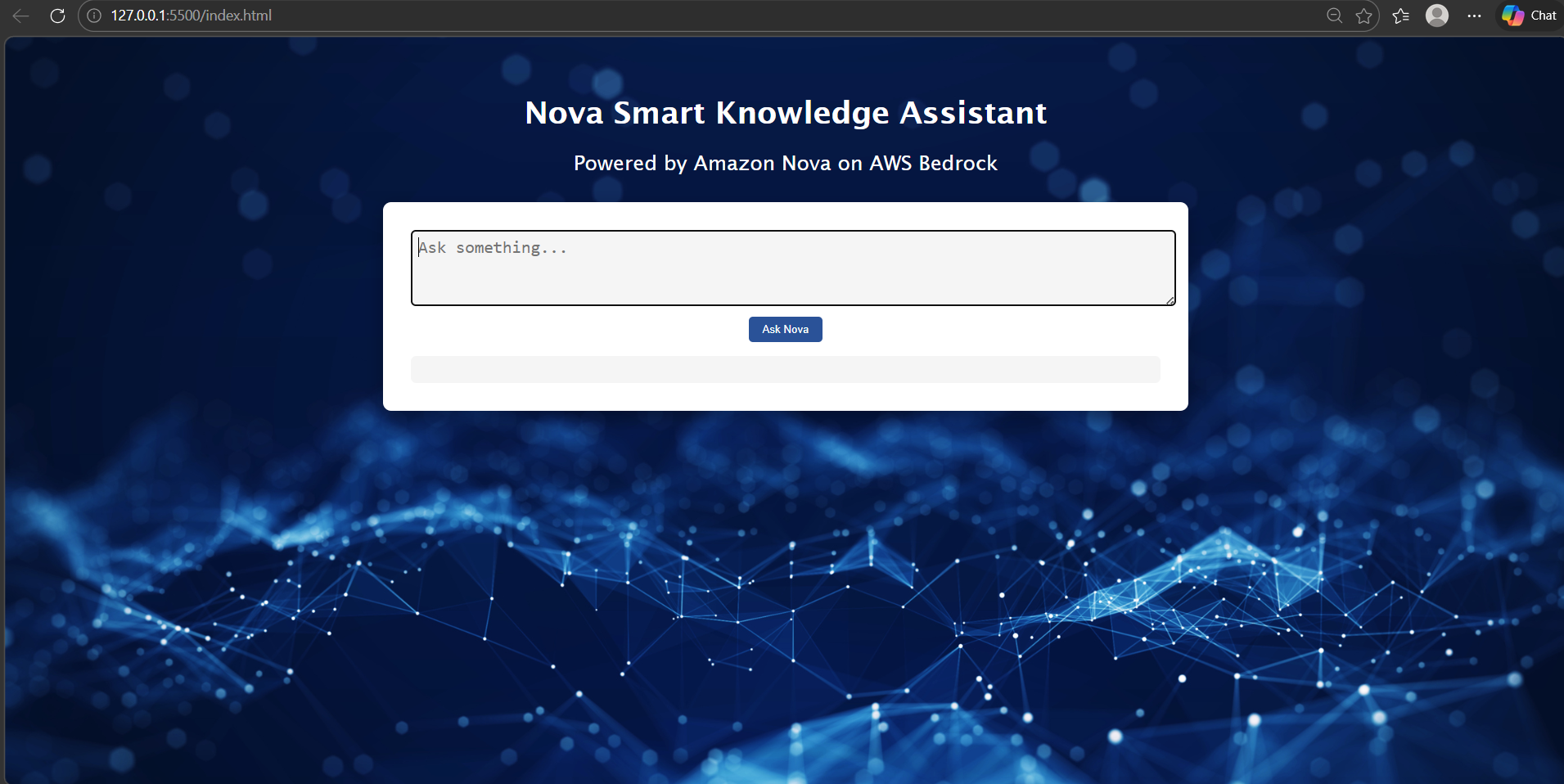
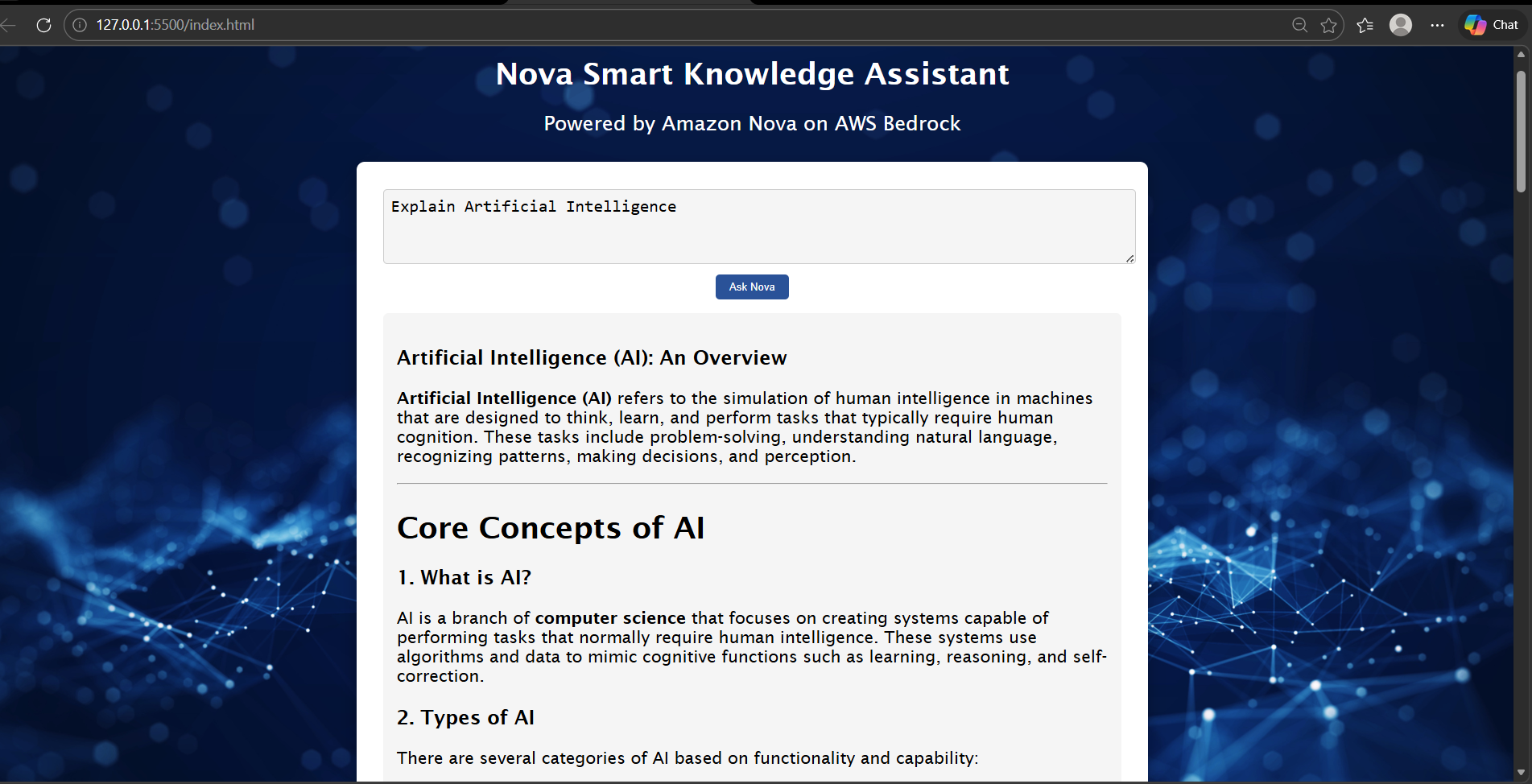
Nova Smart Knowledge Assistant interface where users ask questions and receive AI-generated explanations powered by Amazon Nova.
-
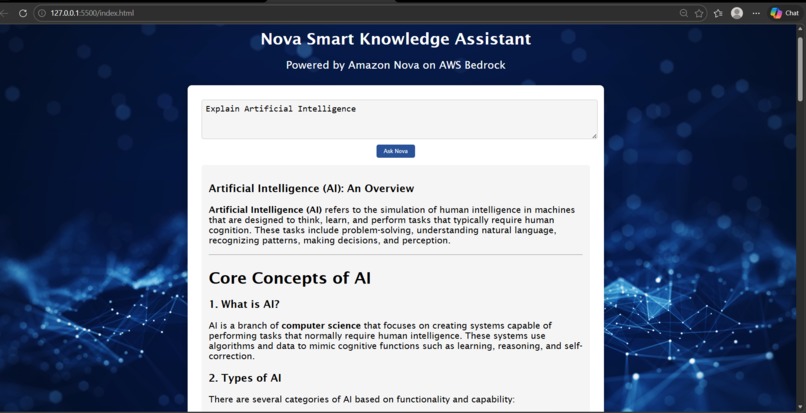
Example showing structured AI responses generated by the Amazon Nova 2 Lite model through Amazon Bedrock.
-
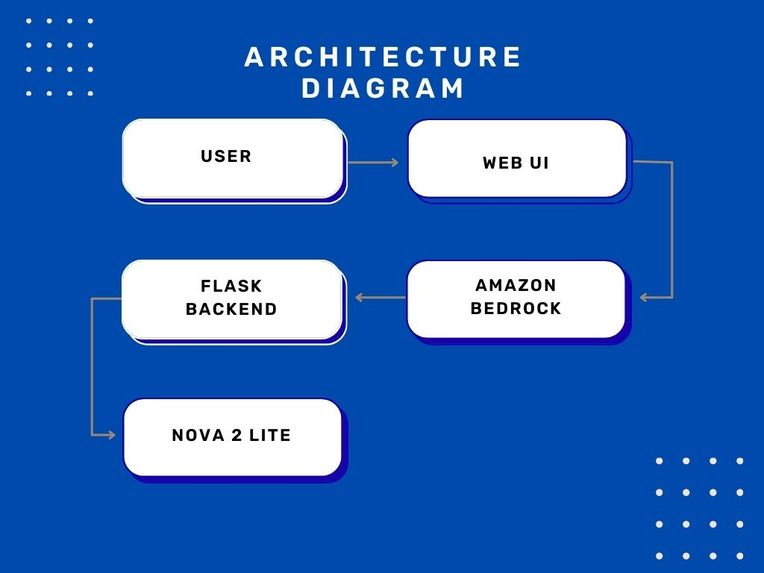
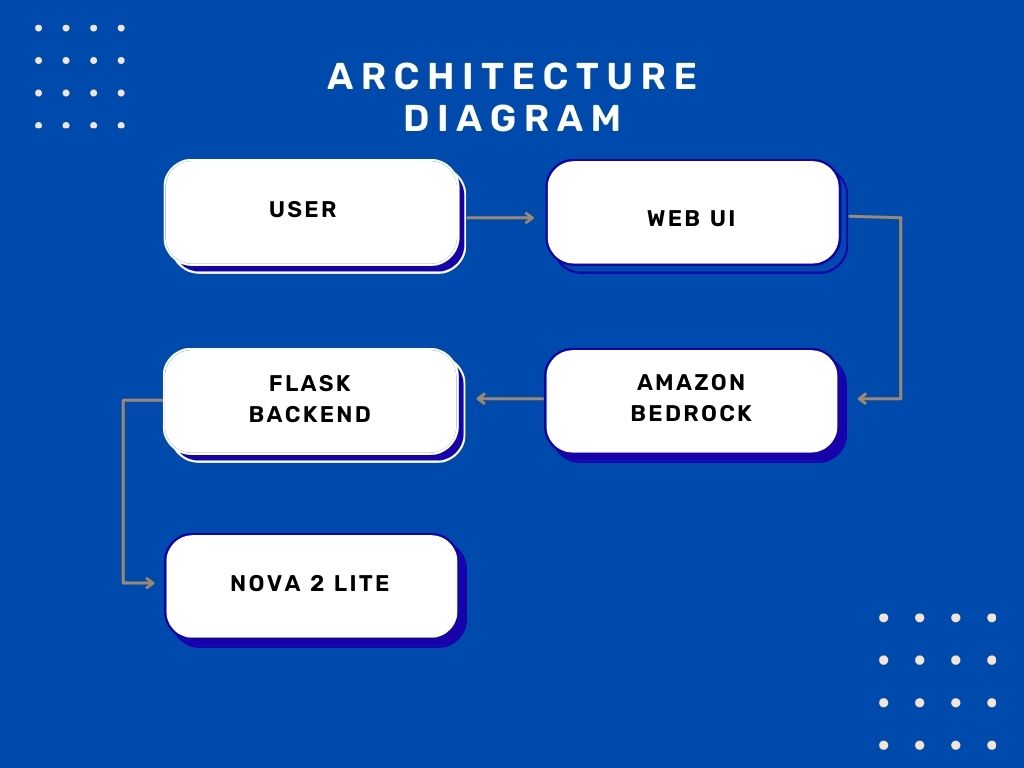
Architecture flow: User → Web UI → Flask Backend → Amazon Bedrock → Nova 2 Lite generating intelligent responses.
Inspiration
Understanding complex topics quickly is a common challenge for students and learners. Many concepts in areas such as artificial intelligence, climate science, or technology can be difficult to grasp from traditional sources. We wanted to explore how generative AI could make learning simpler by providing clear, structured explanations instantly. The Amazon Nova Hackathon provided a great opportunity to experiment with Amazon Nova foundation models and build an AI-powered knowledge assistant that helps users learn faster.
What it does
Nova Smart Knowledge Assistant is a web-based generative AI application that allows users to ask questions and receive structured explanations in real time. Users can type a question into the interface, and the system generates a detailed response using Amazon Nova 2 Lite through Amazon Bedrock. The assistant presents answers in a well-organized format with headings, bullet points, and explanations, making complex topics easier to understand.
How I built it
The project was built using a simple but effective architecture. The frontend was developed using HTML, CSS, and JavaScript to create an interactive interface where users can submit questions. A Python Flask backend handles API requests and communicates with Amazon Bedrock. When a user asks a question, the backend sends the prompt to the Amazon Nova 2 Lite model via the Bedrock API. The generated response is returned to the frontend and displayed in a structured format using Markdown rendering.
Architecture Flow: User → Web Interface → Flask Backend → Amazon Bedrock → Nova 2 Lite → Response
Challenges I ran into
One of the main challenges was setting up the connection with Amazon Bedrock and correctly configuring authentication using AWS IAM credentials. I also needed to understand how to properly invoke Nova models using the Converse API and inference profiles. Another challenge was ensuring the frontend could communicate with the backend without browser security issues, which required configuring CORS. Finally, I improved the user interface to properly render Markdown responses from the model.
Accomplishments that I'm proud of
I Successfully built a working generative AI application powered by Amazon Nova foundation models. The system demonstrates how Nova can be integrated into real-world applications through Amazon Bedrock. I also created a clean and user-friendly interface that displays structured AI responses, making the assistant practical for educational use.
What I learned
Through this project, I learned how to integrate Amazon Nova models into applications using Amazon Bedrock. I gained experience working with AWS services, REST APIs, and backend integration using Flask. We also learned how to design a simple architecture that connects a frontend interface with a powerful generative AI model.
What's next for Nova Smart Knowledge Assistant
In the future, I will plan to expand the assistant with additional capabilities. These include support for document uploads for summarization, voice-based interaction using speech AI models, and multimodal inputs such as images or PDFs. I also envision integrating conversation memory so the assistant can maintain context across multiple questions, making it even more helpful for learning and research.

Log in or sign up for Devpost to join the conversation.