-
-
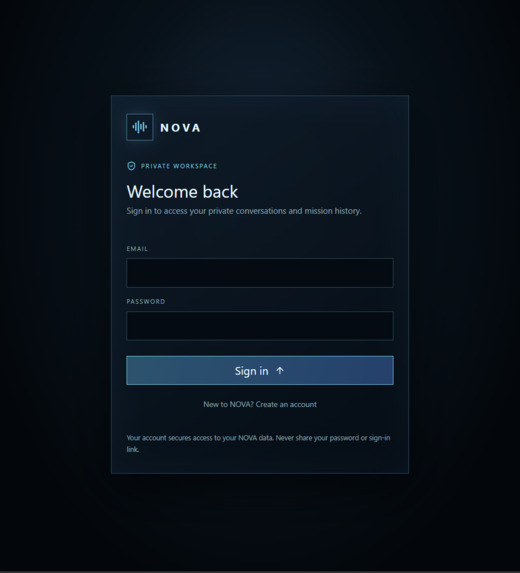
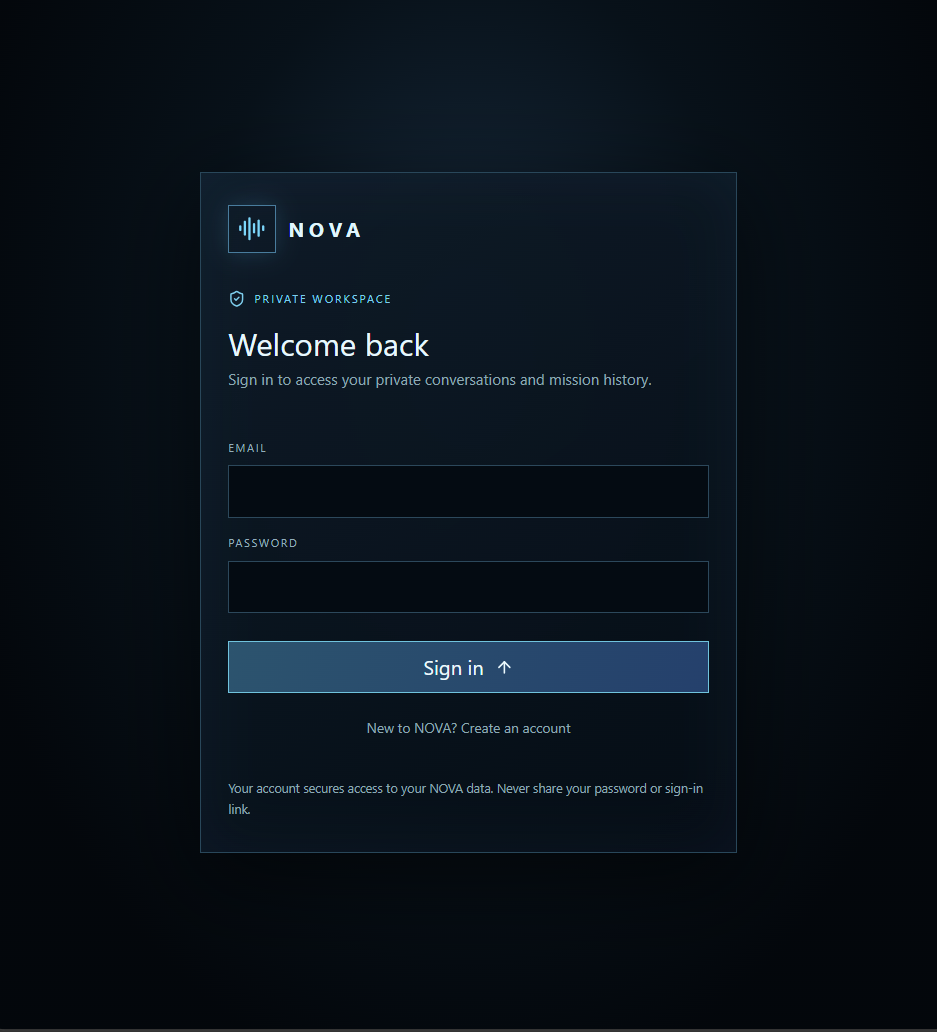
login page
-
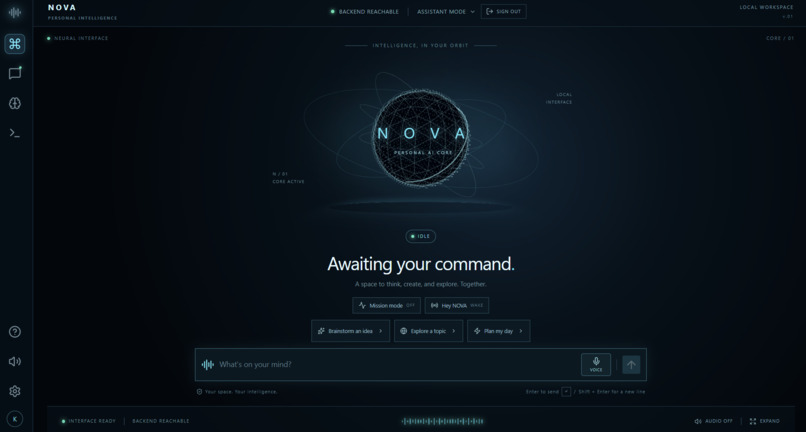
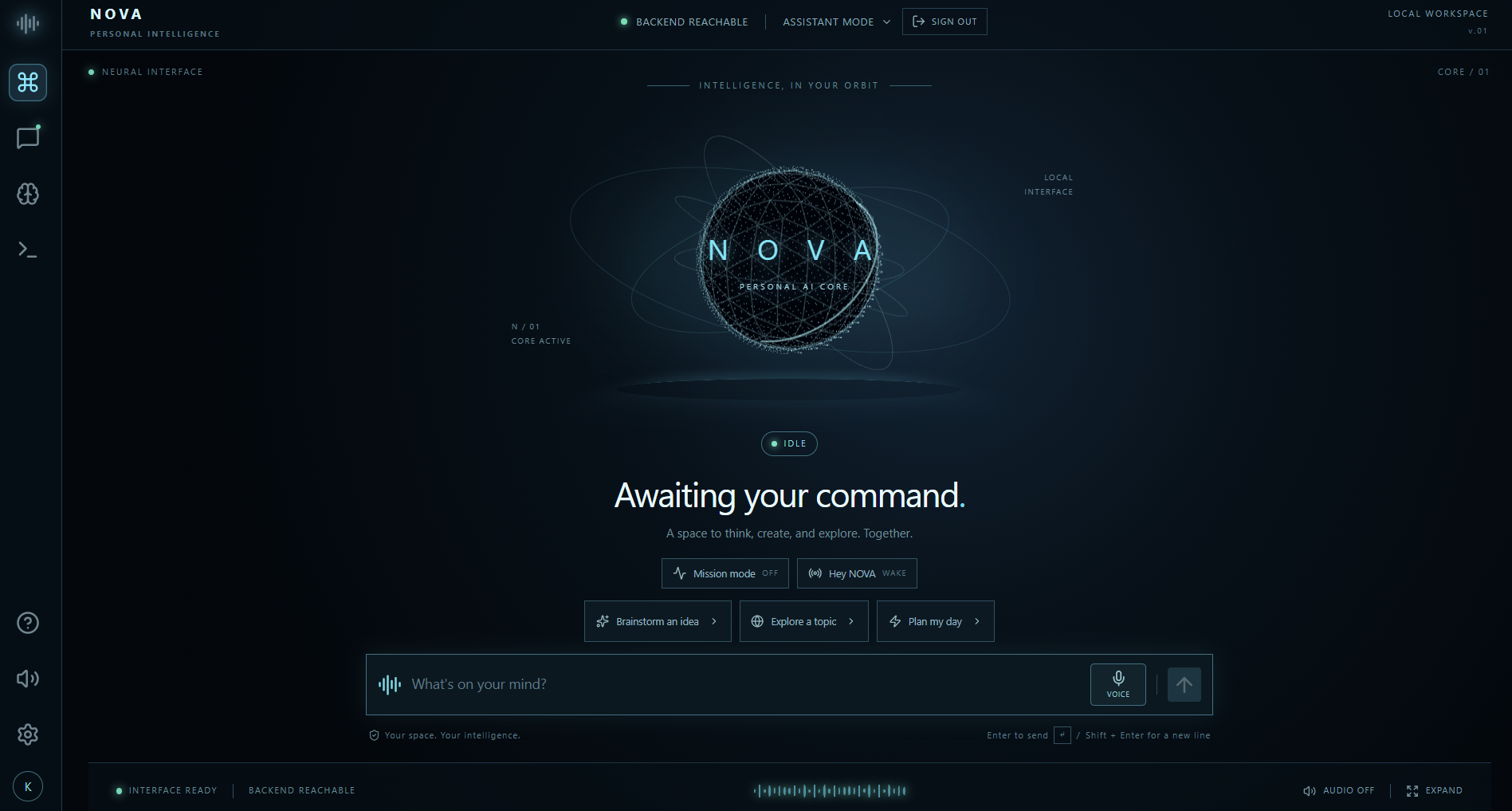
normal chat mode
-
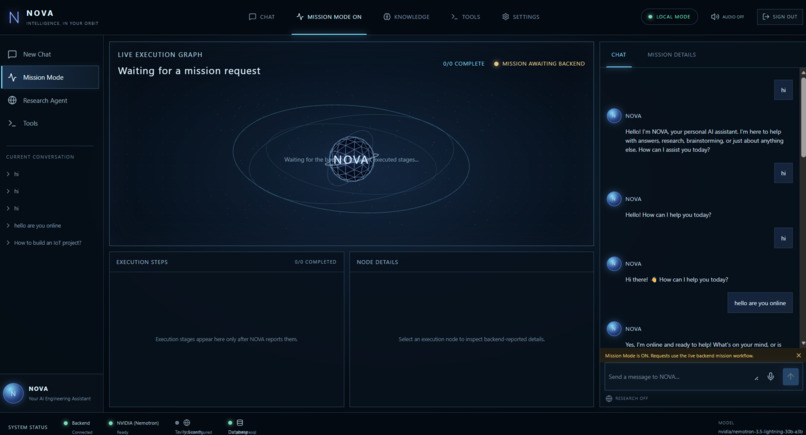
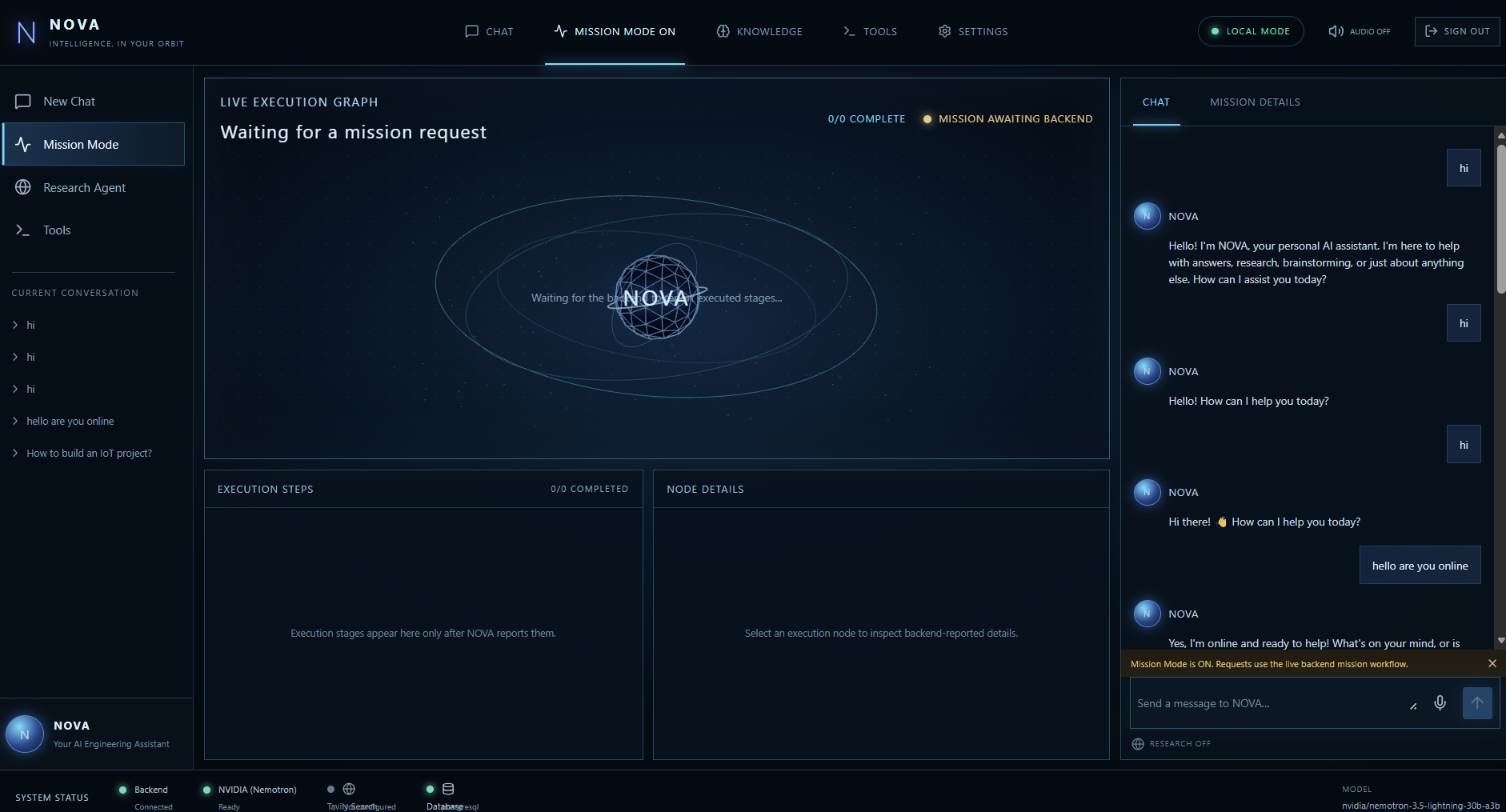
live mission model
-
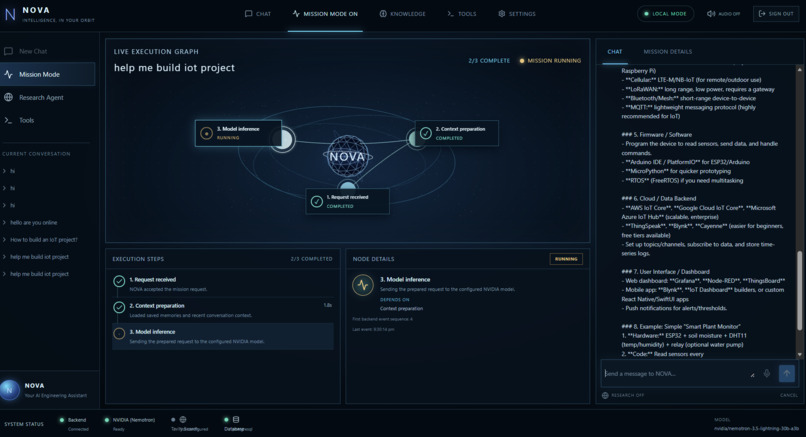
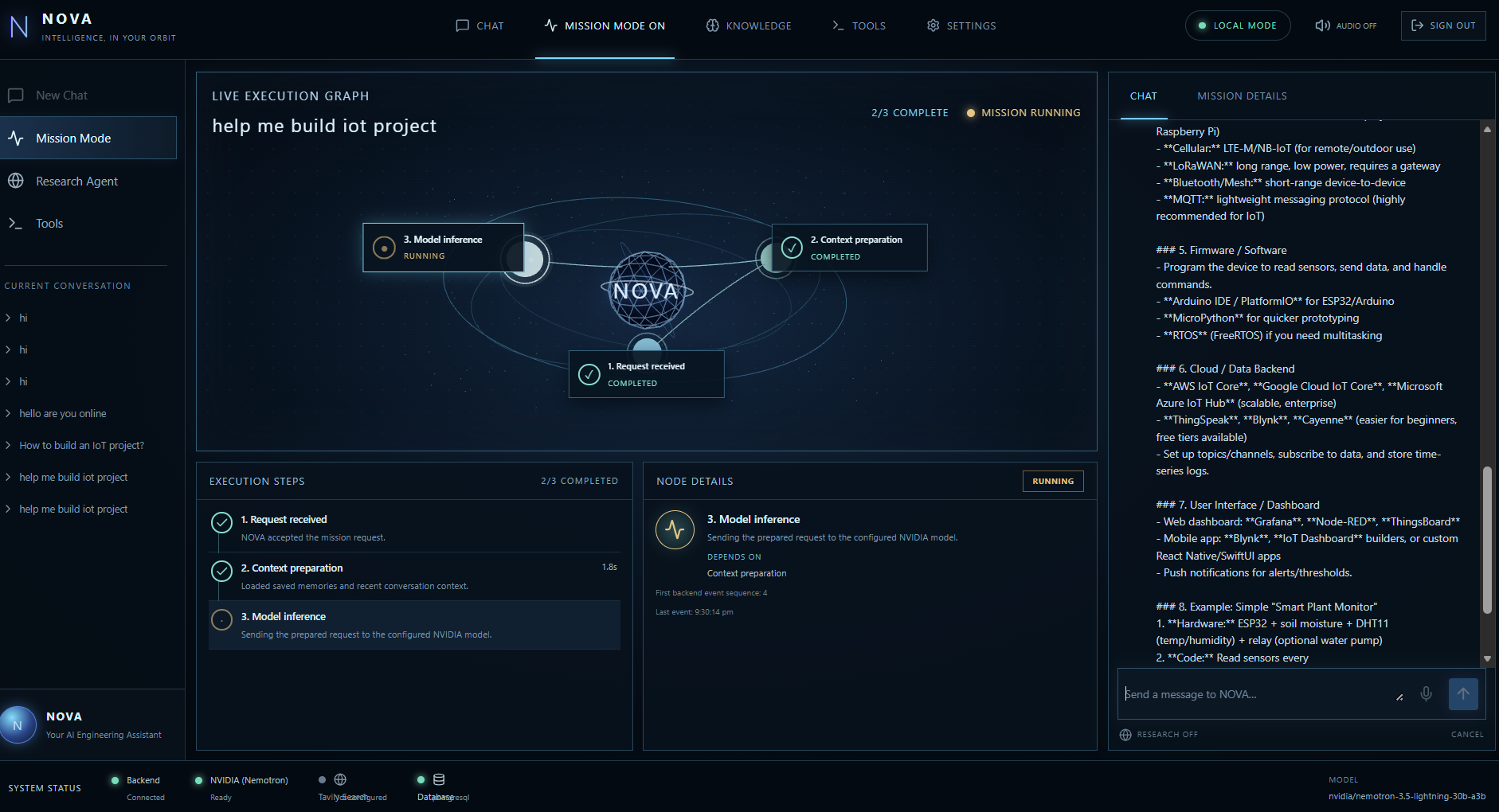
end result
NOVA — Personal Intelligence, in Your Orbit
Inspiration
I have always been fascinated by the idea of having an intelligent assistant like JARVIS from Iron Man — not just a chatbot that answers questions, but an intelligent system that can understand requests, reason through problems, research information, and help execute tasks.
As an engineering student, I regularly work across programming, research, electronics, project development, and problem-solving. I realised that constantly switching between different tools and applications makes it difficult to maintain a single, organised workflow.
I wanted to build something that could bring these capabilities together.
That idea became NOVA — Personal Intelligence, in Your Orbit.
My vision was to create a modular AI assistant that could eventually grow into a larger intelligent system, with specialised agents responsible for different tasks rather than relying on one chatbot to do everything.
What is NOVA?
NOVA is an AI-powered personal intelligence platform designed to provide a unified interface for interacting with AI capabilities.
Instead of treating every request as a simple question-and-answer interaction, NOVA is designed around specialised capabilities and task-oriented workflows.
Its planned core capabilities include:
- AI Conversation: Interact with NOVA through a conversational interface.
- Mission Mode: Approach complex requests as structured tasks with execution stages.
- Research Agent: Support information gathering and research workflows.
- Knowledge: Provide a foundation for organising and accessing useful information.
- Tools: Create an extensible layer for connecting external capabilities.
- Voice Interface: Move towards a more natural, voice-first assistant experience.
The long-term vision is to evolve NOVA into a modular, multi-agent personal intelligence system.
How I Built It
I approached NOVA as a full-stack engineering project rather than simply building a frontend around an AI API.
The architecture consists of several major components:
1. Frontend — Next.js, React and TypeScript
I developed the user interface using Next.js, React, and TypeScript. The interface includes a dedicated chat experience, Mission Mode, research and tools sections, and a futuristic visual identity.
2. Backend — Python and FastAPI
FastAPI acts as the backend service. It handles API requests and provides the foundation for connecting the frontend to AI capabilities and other services.
3. AI Integration — NVIDIA Nemotron
I integrated NVIDIA's hosted Nemotron model through its API to power the AI interaction layer.
4. Database and Authentication — Supabase
Supabase provides the database and authentication infrastructure, allowing users to authenticate and enabling NOVA to develop towards persistent user-specific functionality.
5. Deployment — Vercel and Render
I deployed the frontend through Vercel and the FastAPI backend through Render. The frontend communicates with the backend through a secure same-origin API proxy.
The project is structured so that additional agents, tools, and capabilities can be integrated without having to redesign the entire application.
Challenges I Faced
Building NOVA was not just about writing code. Some of the most valuable lessons came from debugging problems that appeared only after deployment.
1. Connecting multiple services
Integrating a Next.js frontend, FastAPI backend, Supabase authentication, and NVIDIA's AI API required careful configuration.
A system that worked locally did not automatically work in production. Environment variables, authentication tokens, CORS configuration, and deployment settings all had to be handled correctly.
2. Production deployment
Deploying the frontend and backend separately introduced communication challenges.
I had to troubleshoot backend URL resolution, production environment variables, authentication forwarding, and the API proxy.
3. Response compression and decoding
One particularly difficult issue was that API requests returned HTTP 200, yet the browser reported:
net::ERR_CONTENT_DECODING_FAILED
After investigating the proxy implementation, I identified a potential mismatch involving the upstream content-encoding header and the response body.
I modified the proxy to remove stale content-encoding metadata while preserving response streaming and authentication forwarding.
This taught me that a successful HTTP status code does not necessarily mean the response can be correctly consumed by the browser.
4. Working independently
Building NOVA as a solo project meant handling the architecture, frontend, backend, AI integration, deployment, and debugging myself.
I had to prioritise the core experience and make engineering decisions quickly.
What I Learned
This project taught me several important lessons:
- How to design and connect a full-stack AI application.
- How frontend and backend services communicate in a production environment.
- How authentication and environment variables affect deployed applications.
- How to integrate hosted AI models into an application.
- How to debug HTTP responses, proxy behaviour, and production-only issues.
- Why modular architecture matters when building systems intended to grow.
Most importantly, I learned that building an AI product involves much more than connecting an API to a chatbot interface. Reliability, architecture, deployment, authentication, and user experience are equally important.
What's Next?
NOVA is the beginning of a much larger vision.
My next goals are to strengthen its agent architecture, improve Mission Mode, expand the Research Agent, integrate additional tools, and develop a more capable voice-first interaction system.
Ultimately, I want NOVA to evolve from an AI assistant into a modular personal intelligence system that can understand goals, plan workflows, delegate tasks to specialised agents, and help users accomplish complex work.
Final Thoughts
I built NOVA because I wanted to move beyond simply using AI tools and start engineering an intelligent system of my own.
This project represents my first steps towards that vision.
NOVA — Intelligence, in Your Orbit.
What's next for NOVA-Neural Orchestration & Virtual Assistant
Built With
- fastapi
- git
- github
- next.js
- nvidia
- pnpm
- python
- react
- render
- supabase
- typescript
- vercel
- visual-studio

Log in or sign up for Devpost to join the conversation.