-
-
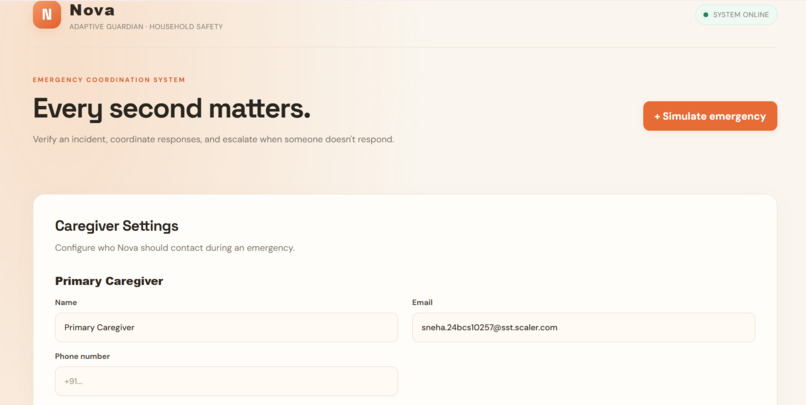
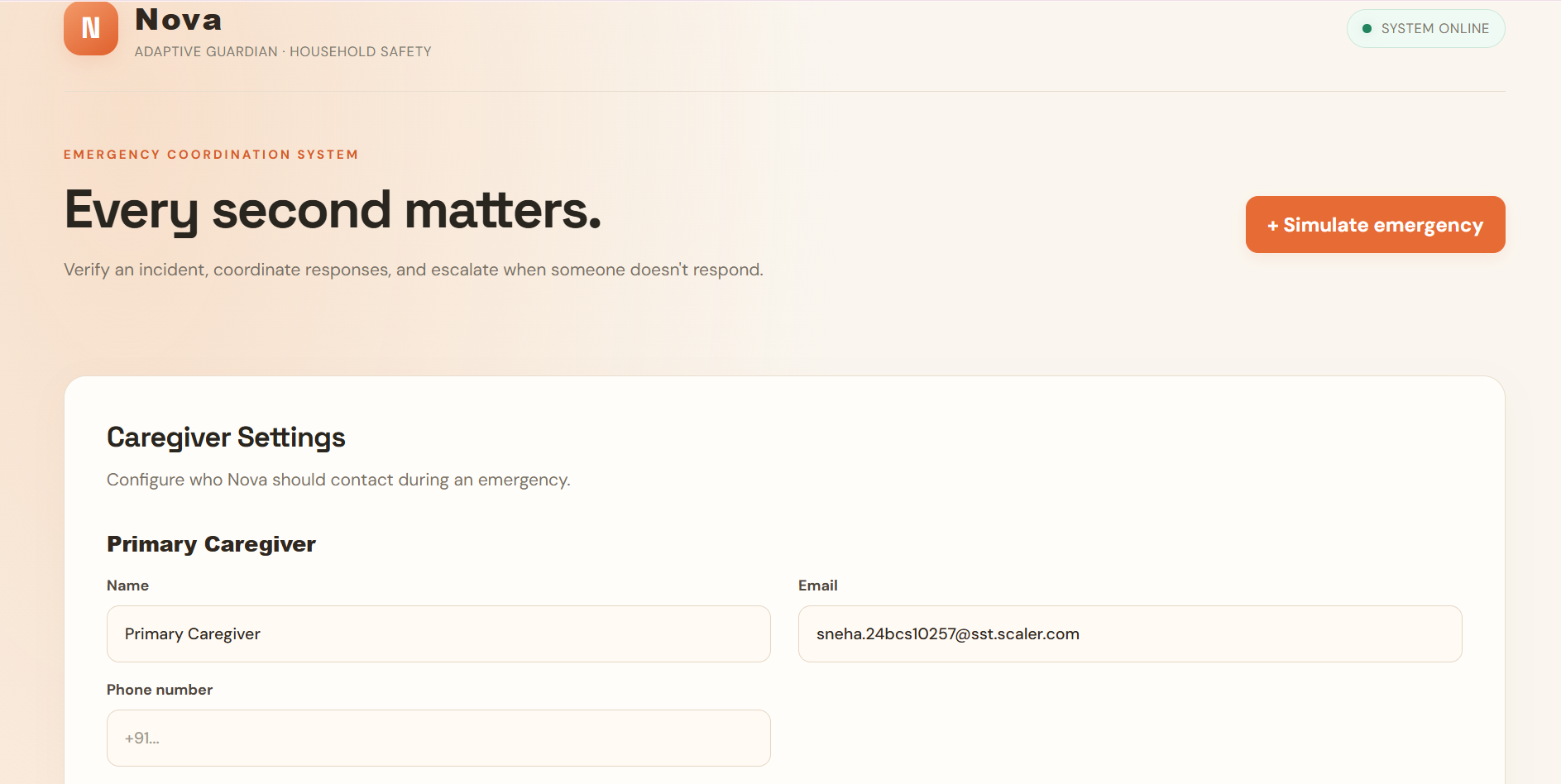
nova_dashboard01
-
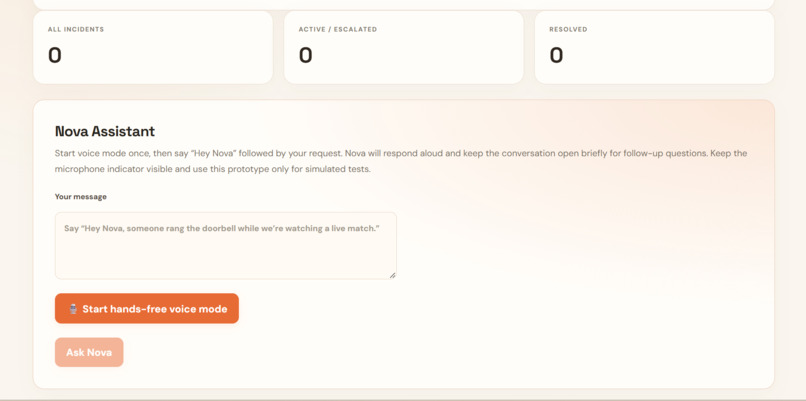
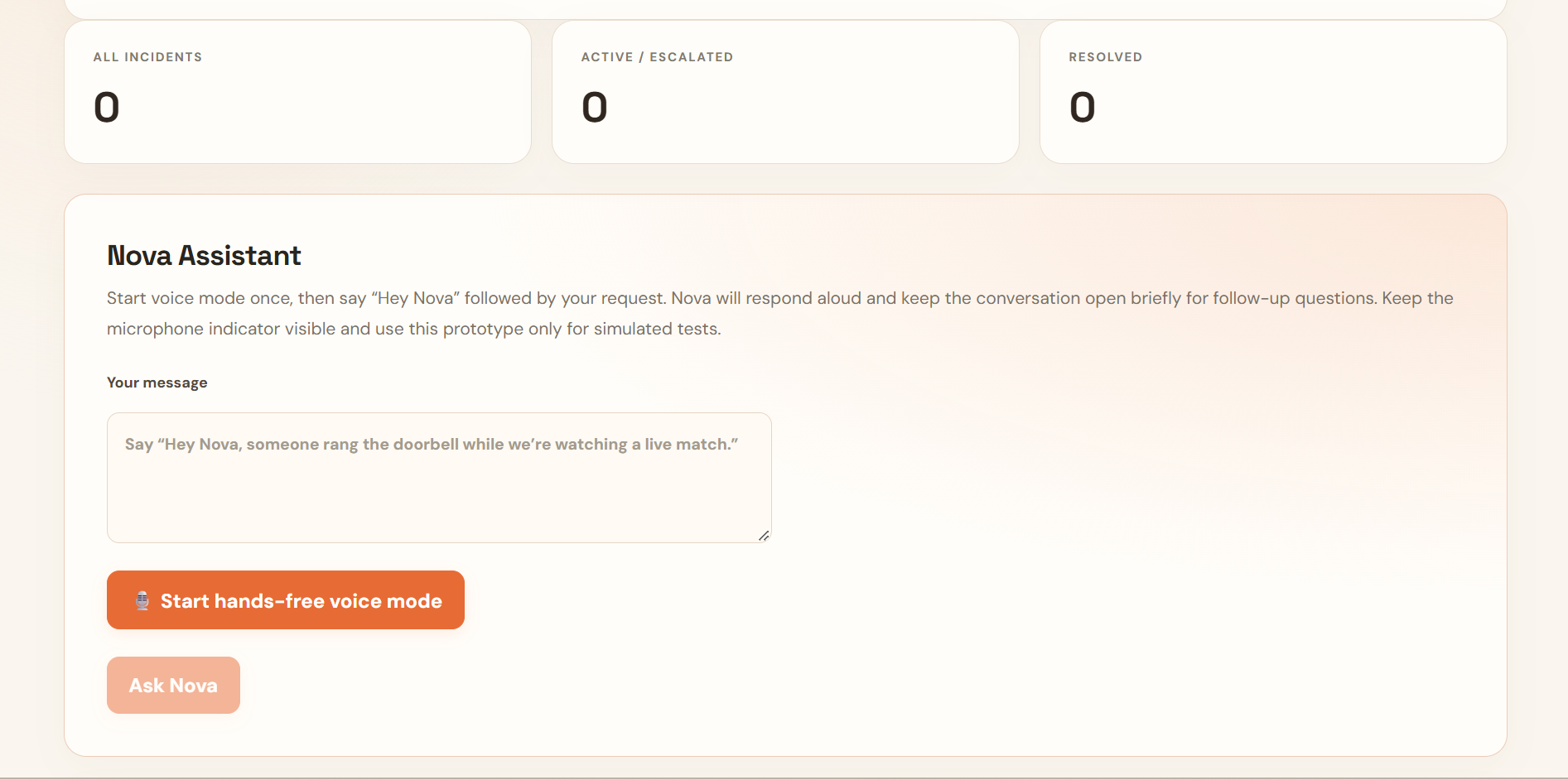
nova_dashboard02
-
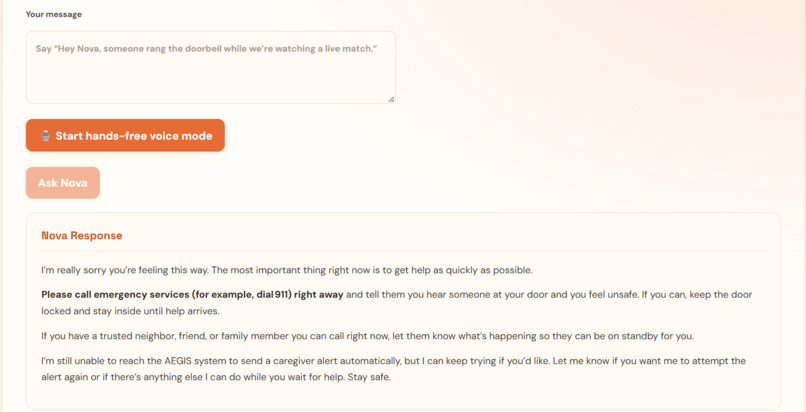
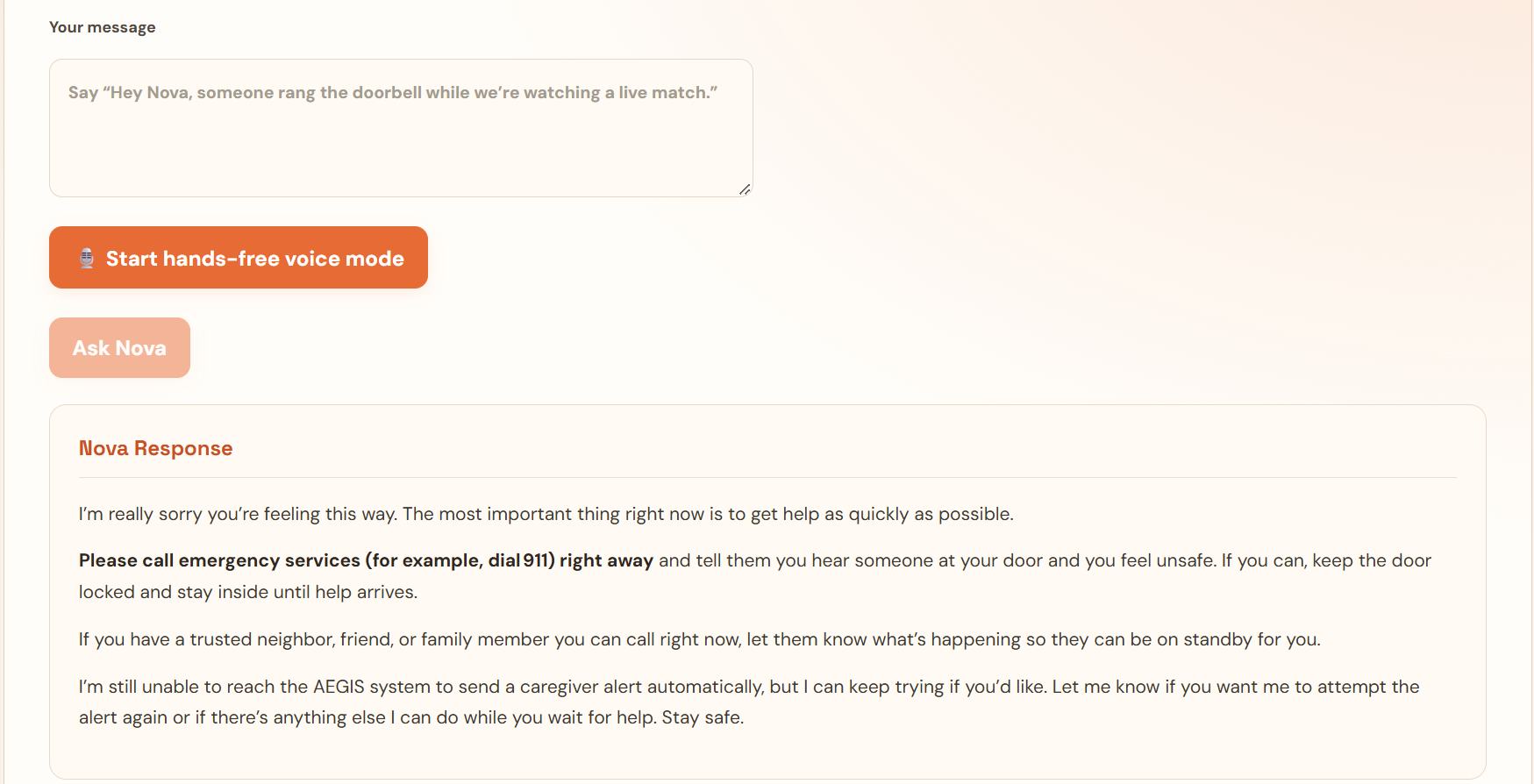
ai_assistant
-
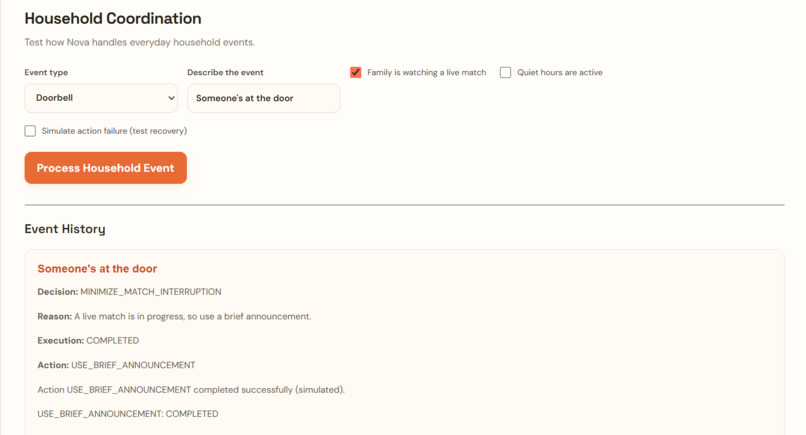
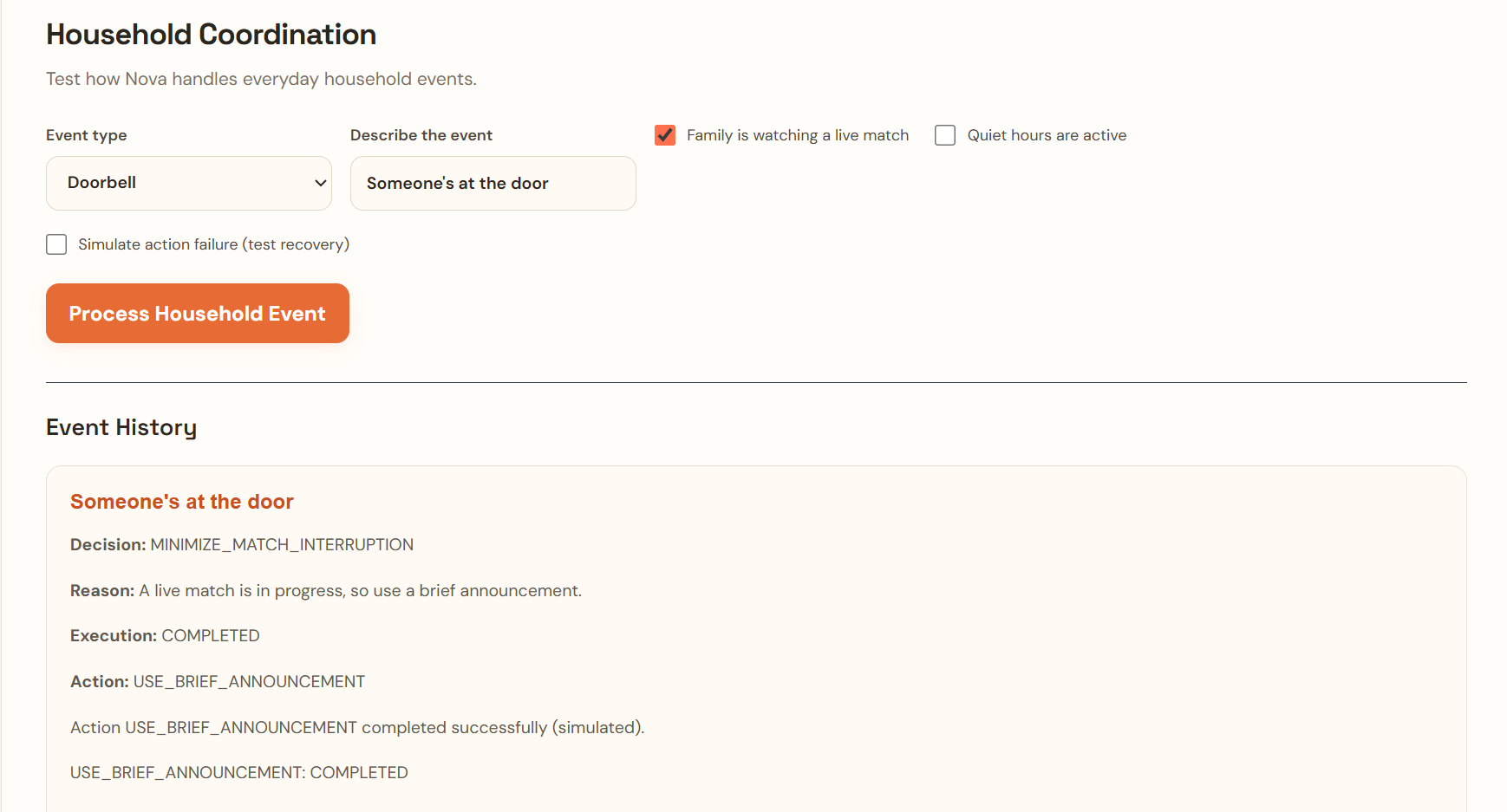
household_coordination
-
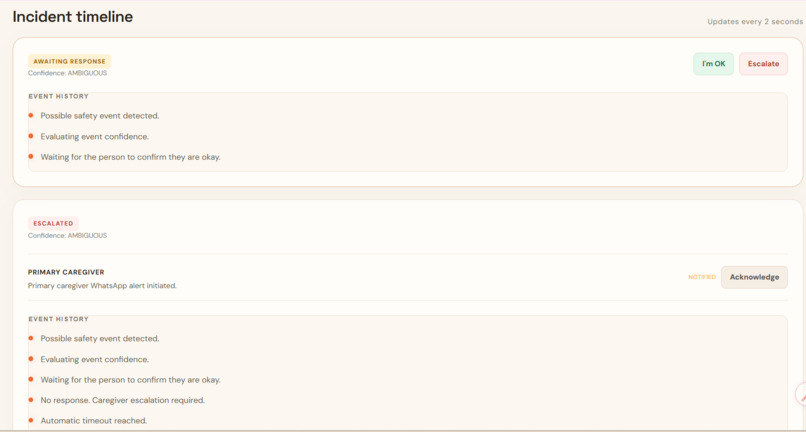
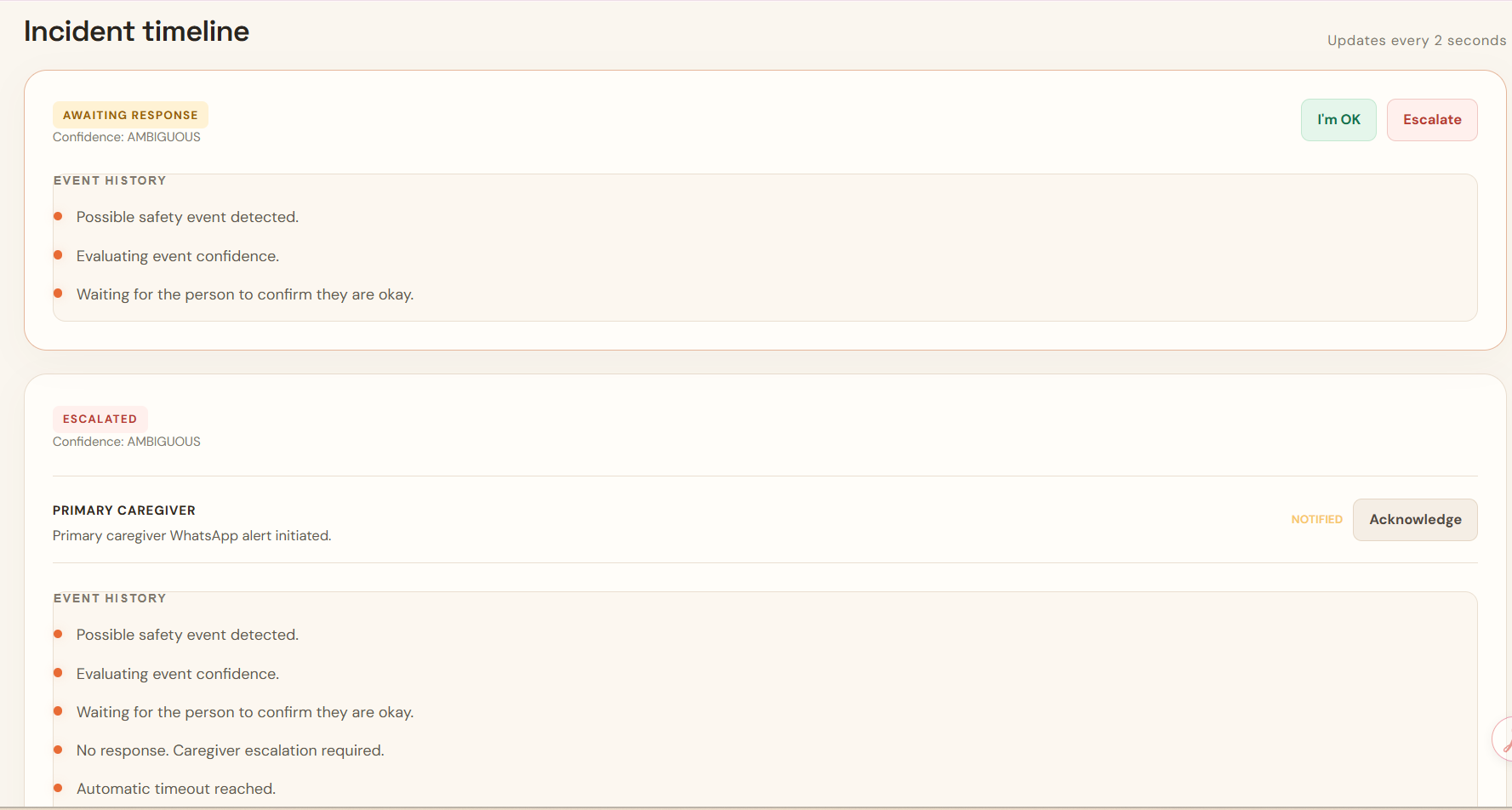
emergency_alert_timeline
-
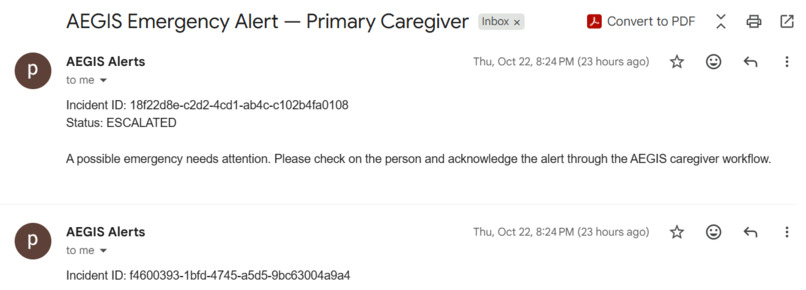
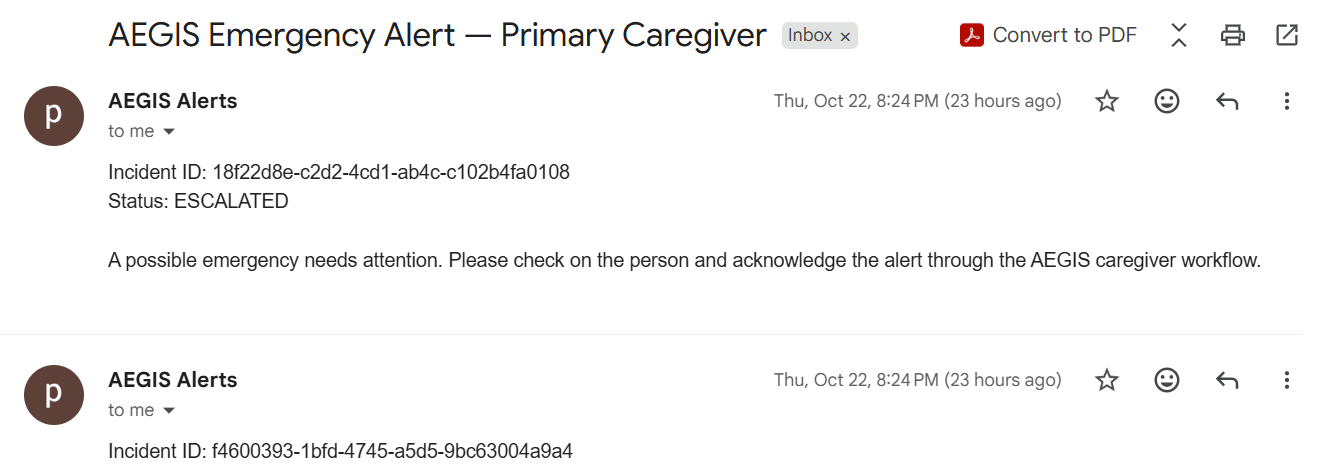
emergency_alert_caregiver mail
-
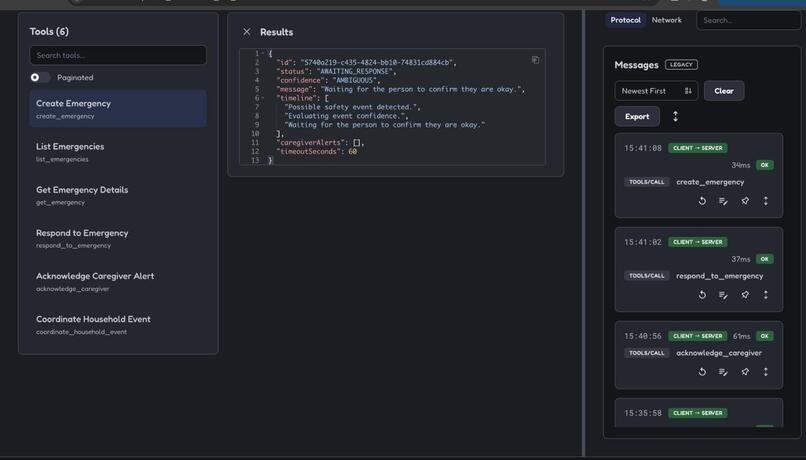
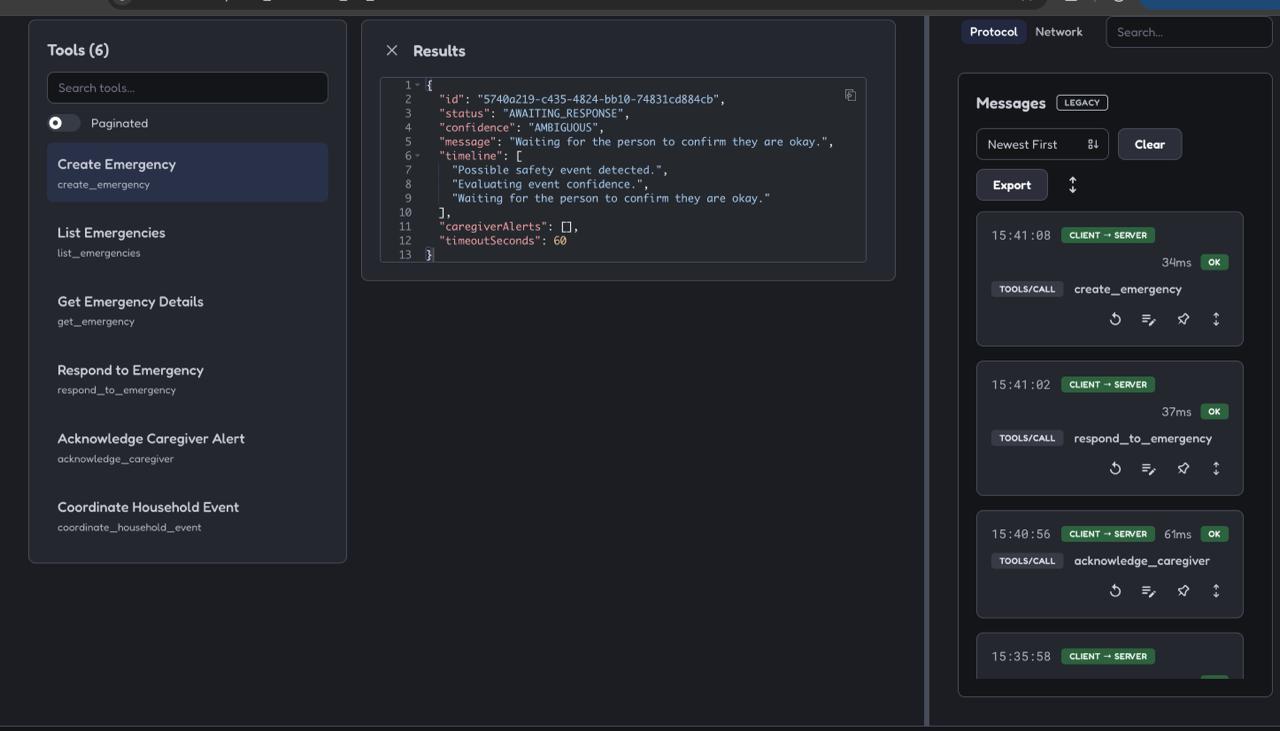
mcp_emergency_create
-
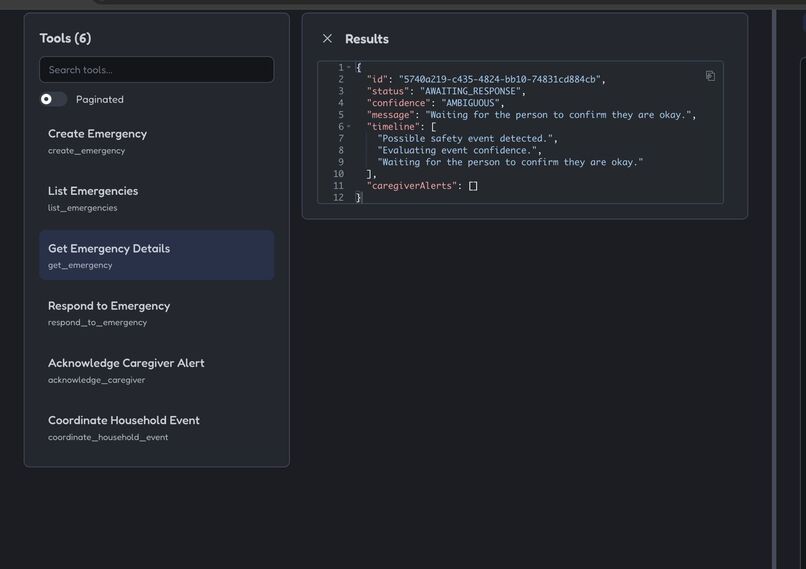
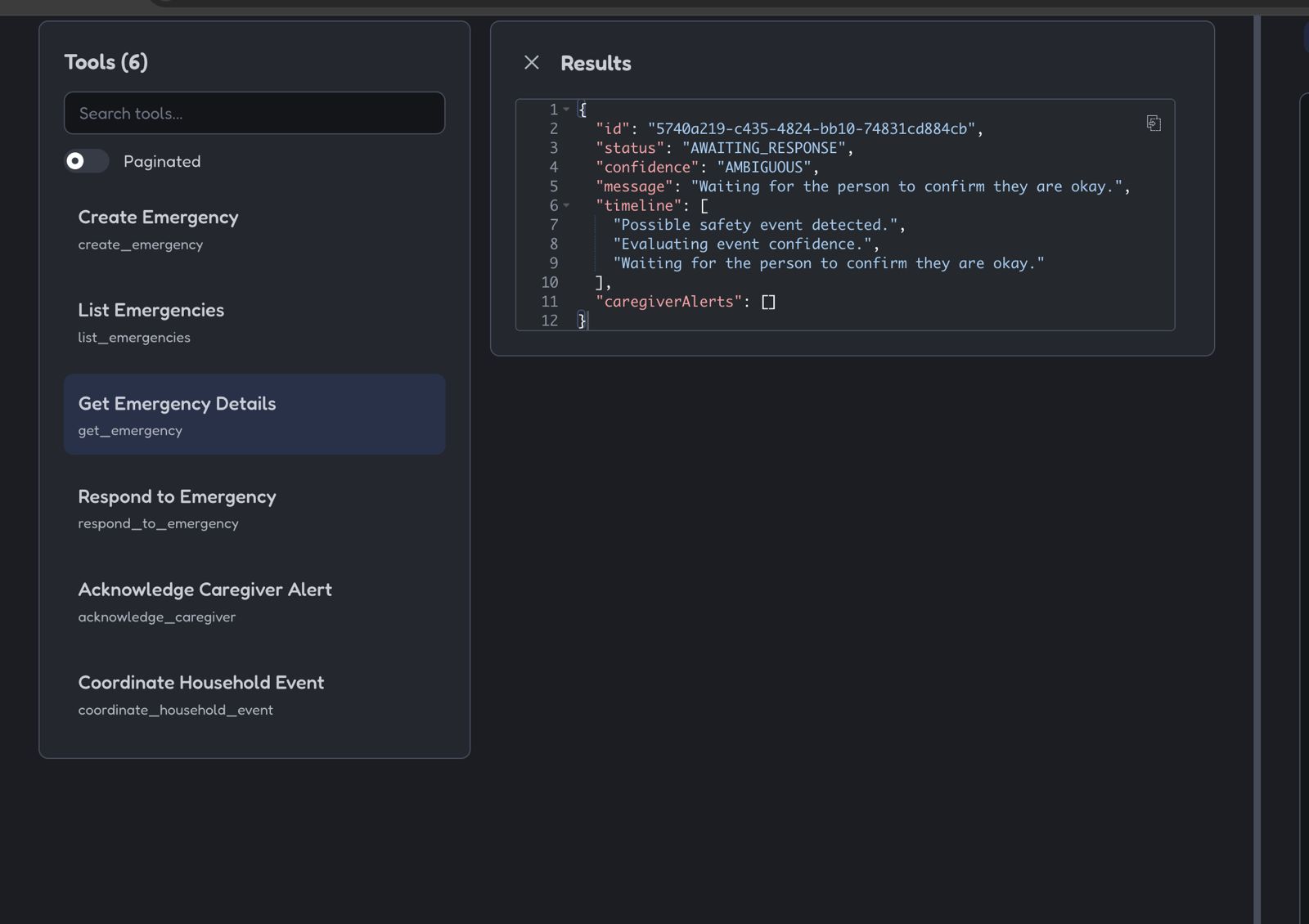
get_emergency_details
-
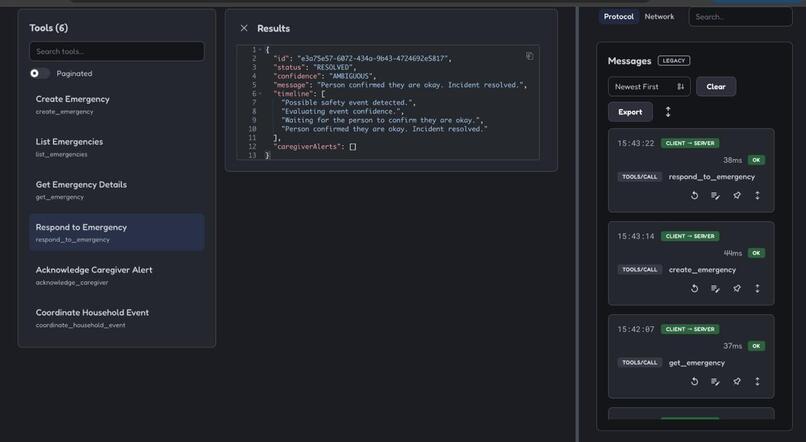
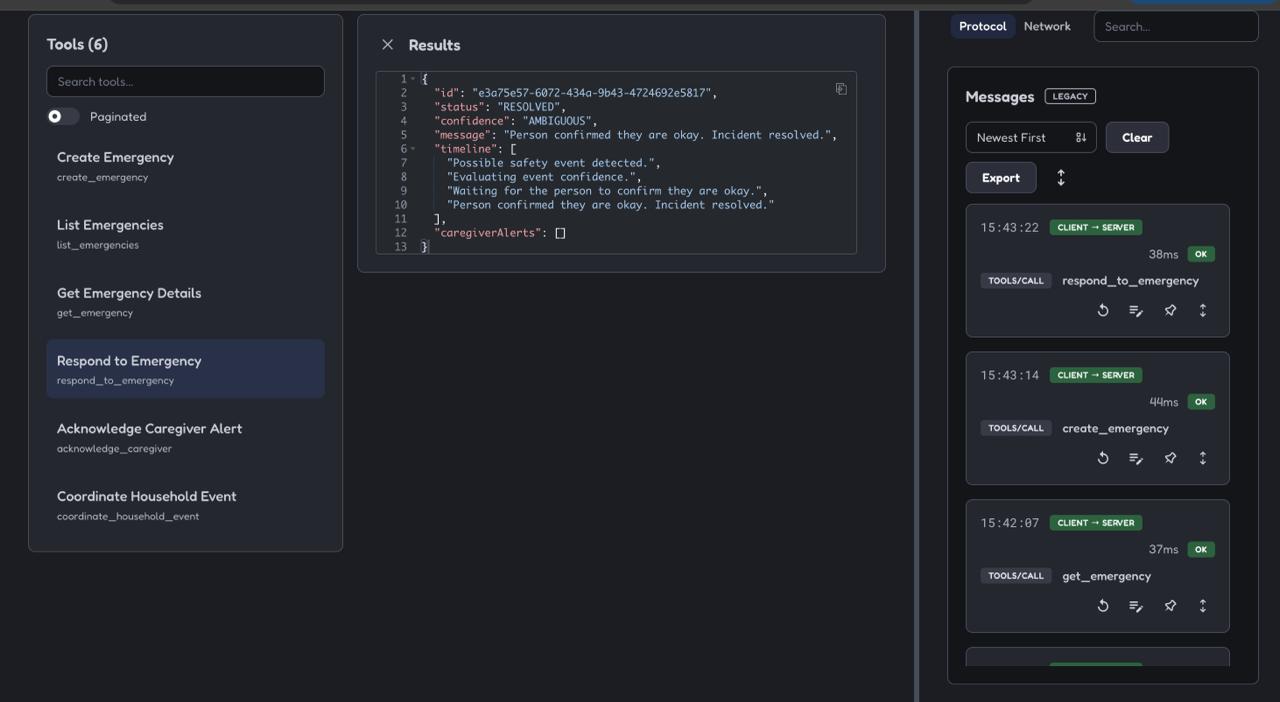
respond_to_emergency
NOVA — The Adaptive Guardian
Building a household system that knows what to do when nobody responds
Inspiration
A smart home can turn on lights, respond to commands, and automate everyday tasks. But we started thinking about a more difficult question: what happens when something goes wrong and the person who needs help doesn't respond?
Imagine a possible emergency in a home. An alert appears, but nobody confirms they're safe. Does the system keep waiting? Does it know when to escalate? Can someone understand what happened and what the system did next?
We wanted to explore the gap between detecting an event and managing the response that follows.
That question inspired NOVA the Adaptive Guardian, an agentic household safety and coordination prototype built around a simple principle: an event should not be the end of a workflow. The system should track what happens next.
What We Built
NOVA brings together three core capabilities.
- An emergency response workflow
NOVA models an incident through explicit states. It can wait for a person's response, resolve an incident when the person confirms they're okay, and escalate an unanswered incident when its configured timeout expires. The workflow makes the outcome visible rather than leaving the incident in an ambiguous state.
- Household event coordination
Household events and conflicting requests can require different responses depending on the situation. NOVA includes a coordination engine that evaluates supported scenarios and returns decisions through a structured workflow.
3. An MCP Tool Interface
NOVA uses the official Model Context Protocol (MCP) TypeScript SDK and Streamable HTTP transport to expose structured application tools. The implementation uses the SDK v1.x line, which supports the MCP specification through 2025-11-25.
The server exposes six tools for creating and inspecting emergency incidents, recording responses, acknowledging caregiver alerts, and coordinating household events. These tools provide a structured interface through which compatible MCP clients can interact with NOVA's application workflows.
How We Built It
We developed NOVA as a connected application rather than a standalone chatbot.
The frontend provides the interface for interacting with incidents and viewing their status. The backend coordinates application requests and the underlying workflows. The emergency state machine manages incident progression, while the household coordination engine handles supported household scenarios. The MCP server exposes selected capabilities as structured tools, and the configured email integration supports caregiver notifications during escalation.
We focused on making the system's behavior observable and testable. An incident should have a visible state, a response should produce a meaningful transition, and an unanswered incident should follow its configured escalation path.
For example, a successful test follows this sequence:
Emergency Created → Awaiting Response → Resolved
An unanswered test follows a different path:
Emergency Created → Awaiting Response → Escalation
These are not merely two different screens. They represent different outcomes managed by the application's workflow.
Challenges We Faced
One of the central engineering challenges was coordinating state transitions. A successful response and a missing response must lead to different outcomes, and the system needs to preserve a clear view of the incident as it progresses.
Another challenge was connecting multiple application components: the frontend, backend workflows, assistant, MCP tool interface, and notification mechanism. Each component has a different responsibility, but the user should experience them as parts of one coherent system.
We also had to think carefully about the boundary between an intelligent assistant and a reliable workflow. A conversational answer alone is not enough for an incident-management system. The underlying application needs explicit states, defined transitions, and observable results.
Finally, we had to distinguish a convincing prototype from a production-ready safety system. Simulated household events are useful for demonstrating and testing decision logic, but they do not replace real sensors, validated device integrations, or safety testing.
What We Learned
Building NOVA taught us to think beyond the happy path.
It is easy to demonstrate what happens when a person responds immediately. The more revealing test is what happens when they don't. Designing for that case requires us to consider timeouts, escalation, incident visibility, and the consequences of a workflow that fails to receive an expected response.
We also learned that MCP is most meaningful when it exposes useful application capabilities. A tool interface should let a compatible client perform a structured action and inspect the result; simply adding a conversational interface does not automatically make an application agentic.
Most importantly, we learned to make system behavior observable. Showing how an incident changes state and what action follows makes the prototype easier to understand, test, and improve.
What Makes NOVA Different
NOVA's central idea is to focus on what happens after an event, not just the event itself.
The project brings incident tracking, response verification, timeout-based escalation, household coordination, and structured tool access into one prototype. Its value lies in exploring how these capabilities can work together in a workflow where different outcomes require different next steps.
We are not claiming that NOVA already detects real falls, controls physical smart-home devices, or contacts emergency services. Household events are simulated, and the current implementation is a prototype. Our goal is to demonstrate and test the coordination logic that could form part of a more complete system in the future.
What's Next
Our next steps would be to validate the workflows more extensively, improve reliability and auditability, and explore integrations with real sensors and supported smart-home devices. Any real-world safety deployment would require substantial additional testing, privacy safeguards, and validation before it could be trusted in emergencies.
Closing
NOVA began with a question: what should a system do when the expected response never comes?
Our answer is to make the next step explicit to track the incident, distinguish between outcomes, and make the response workflow visible.
NOVA The Adaptive Guardian. Designed not only for when everything works, but for what happens when it doesn't.
Built With
- api
- context
- css
- express.js
- groq
- http
- javascript
- language
- large
- llms
- mcp
- model
- models
- node.js
- nodemailer
- protocol
- react
- recognition
- rest
- smtp
- speech
- synthesis
- typescript
- vite
- zod

Log in or sign up for Devpost to join the conversation.