Inspiration
The idea for NourishNet came from witnessing the harsh realities of poverty and food insecurity in local communities. While technology is advancing rapidly, many low-income individuals and smallholder farmers remain disconnected from essential services. We wanted to create a platform that bridges the gap between technology, empowerment, and sustainability, enabling real impact where it matters most. The GNEC Hackathon’s focus on SDG 1 (No Poverty) and SDG 2 (Zero Hunger) inspired us to design a solution that tackles financial inclusion and sustainable food distribution simultaneously.
What it does
NourishNet is a multi-faceted platform that addresses both poverty and hunger through technology:
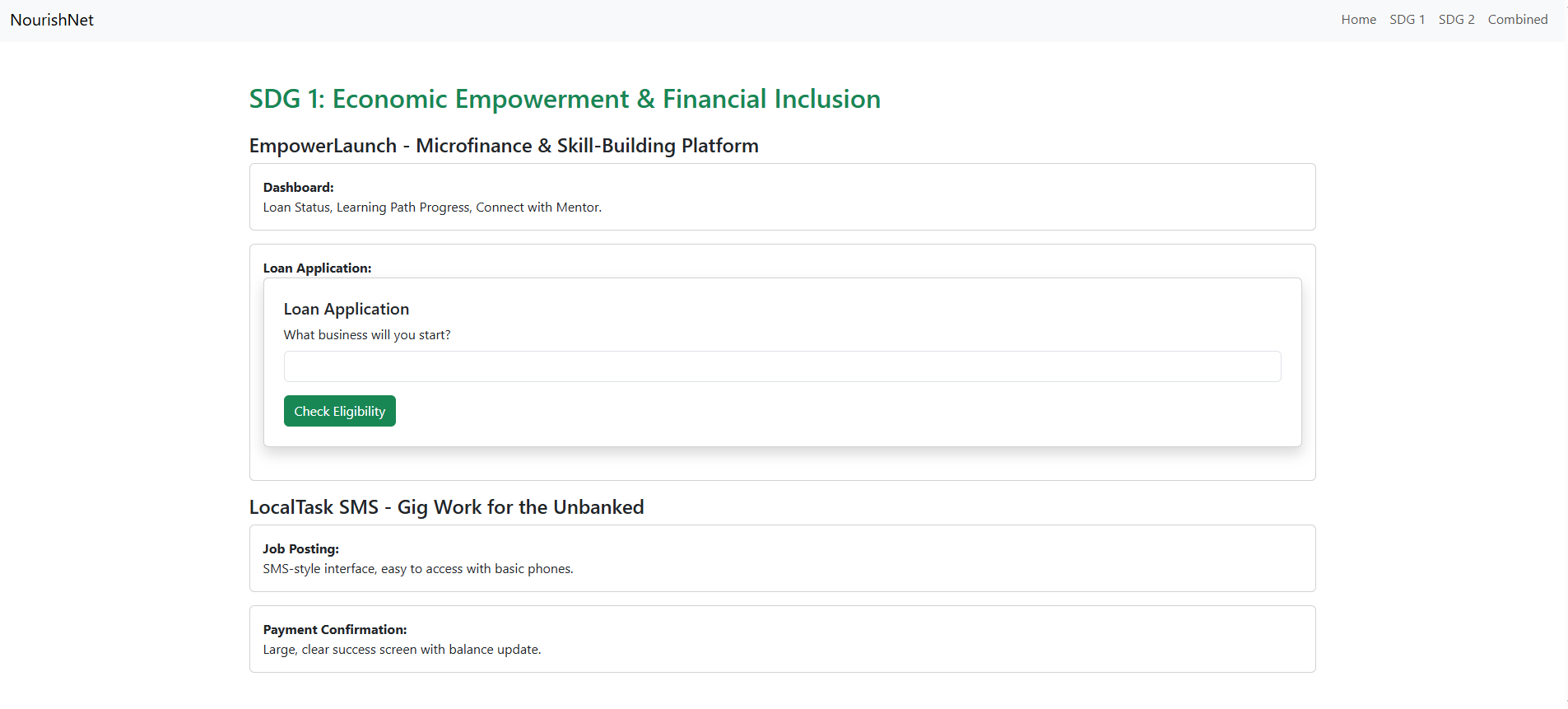
EmpowerLaunch: Microfinance & skill-building for low-income individuals, helping them gain financial independence.
LocalTask SMS: A gig work system accessible via simple mobile phones to help unbanked users earn safely.
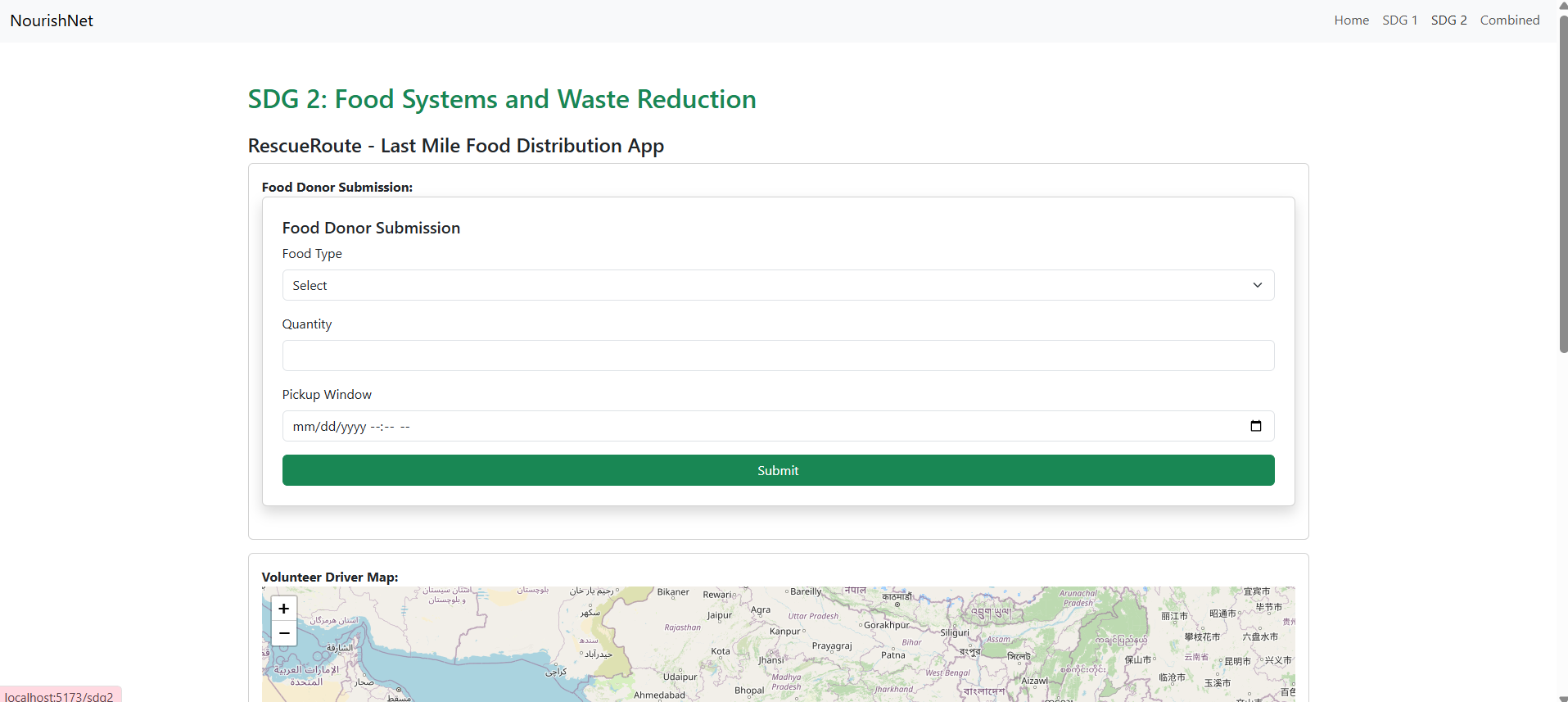
RescueRoute: Last-mile food distribution app connecting donors, volunteers, and food banks.
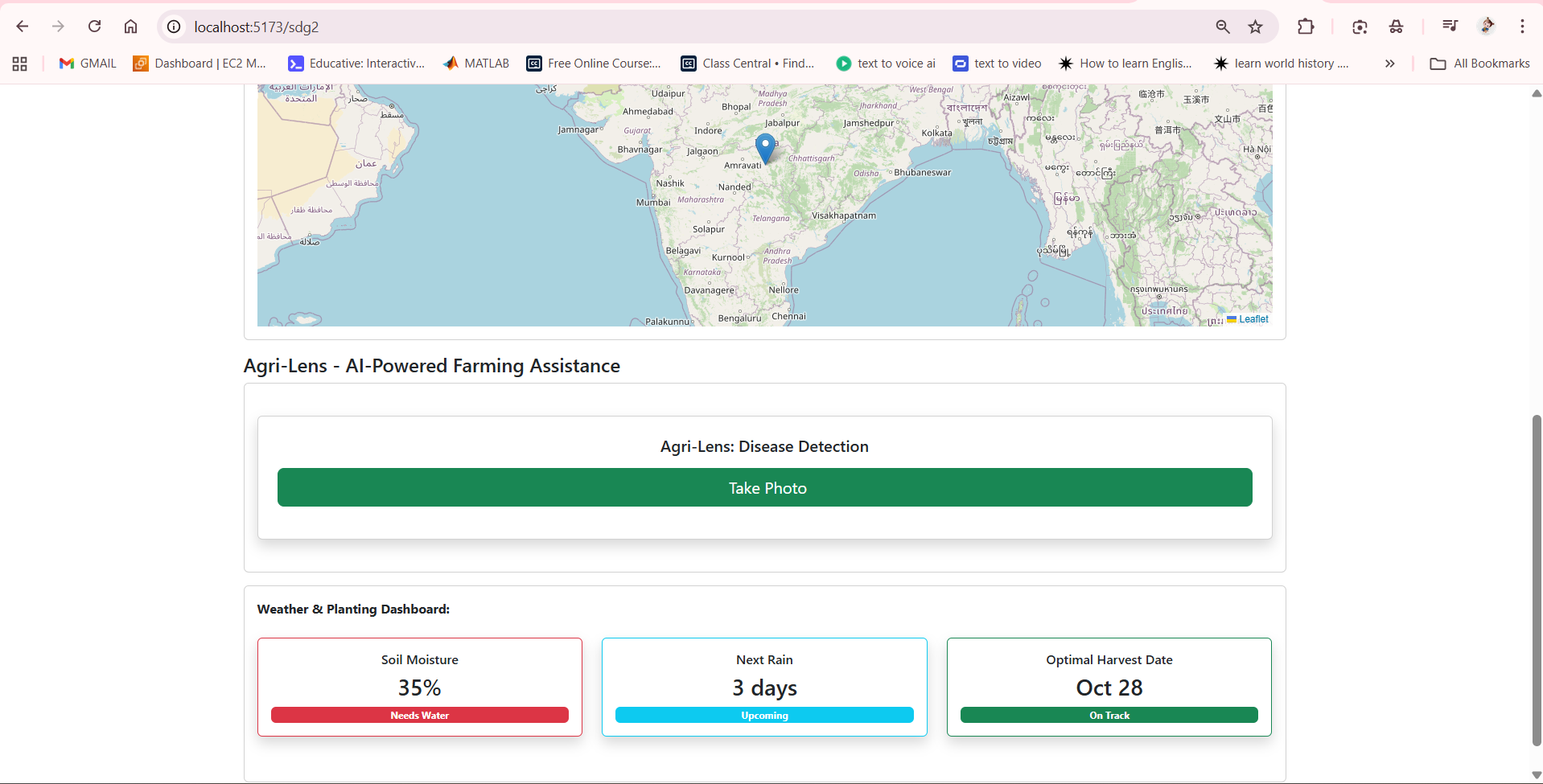
Agri-Lens: AI-powered farming assistance for smallholder farmers, with disease detection and actionable planting guidance.
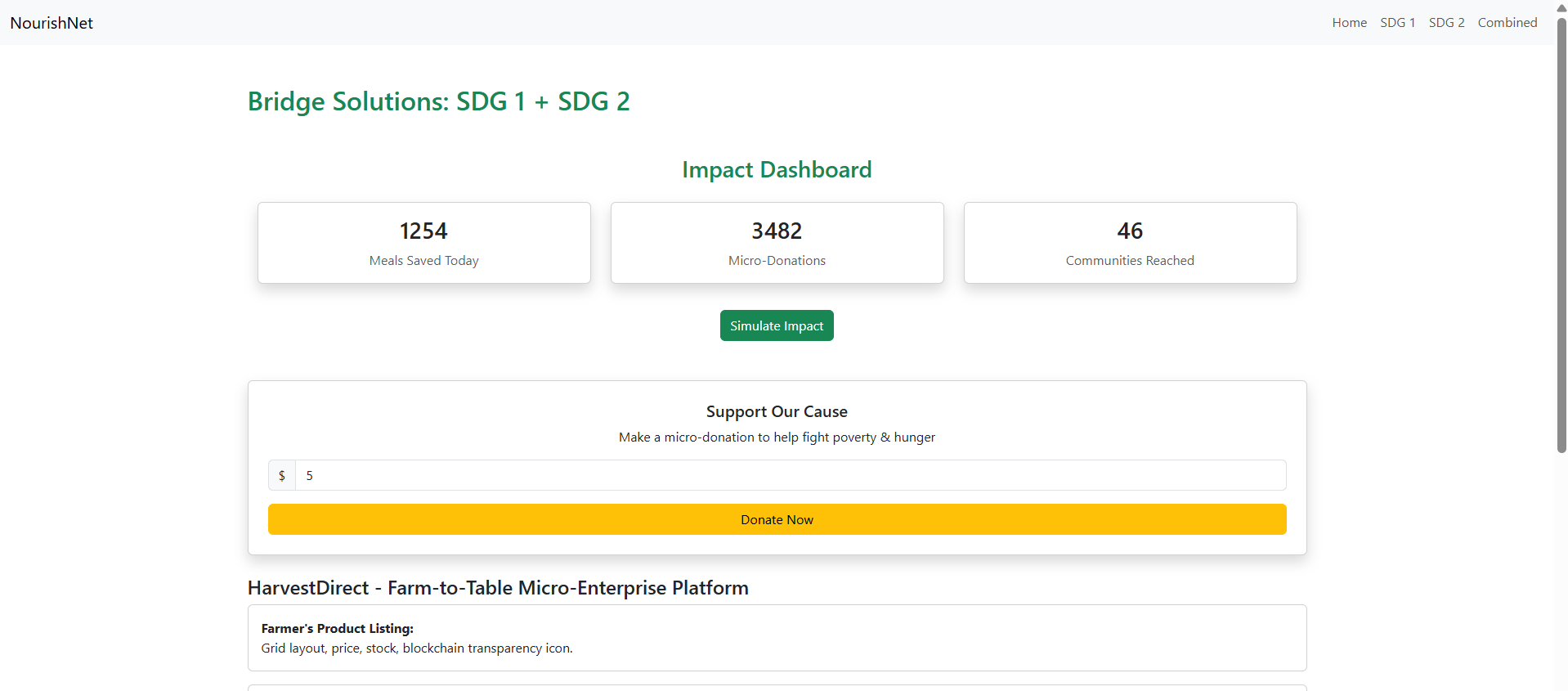
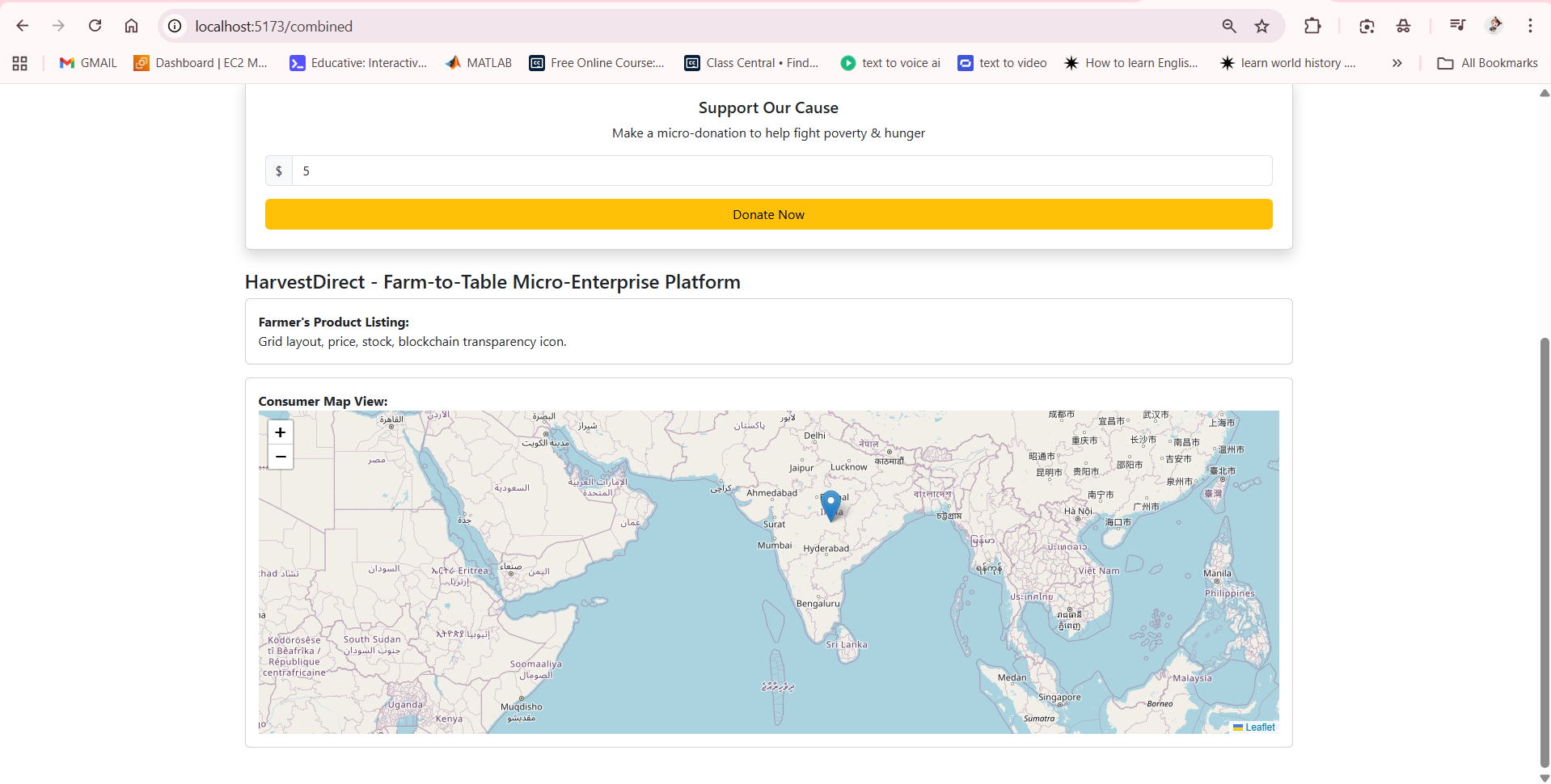
HarvestDirect: A farm-to-table micro-enterprise platform that connects local farmers to consumers and restaurants, ensuring fair profit and reducing food waste.
How we built it
We used React.js for a responsive front-end, Bootstrap for clean UI and mobile-first design, and React Router for multi-page navigation.
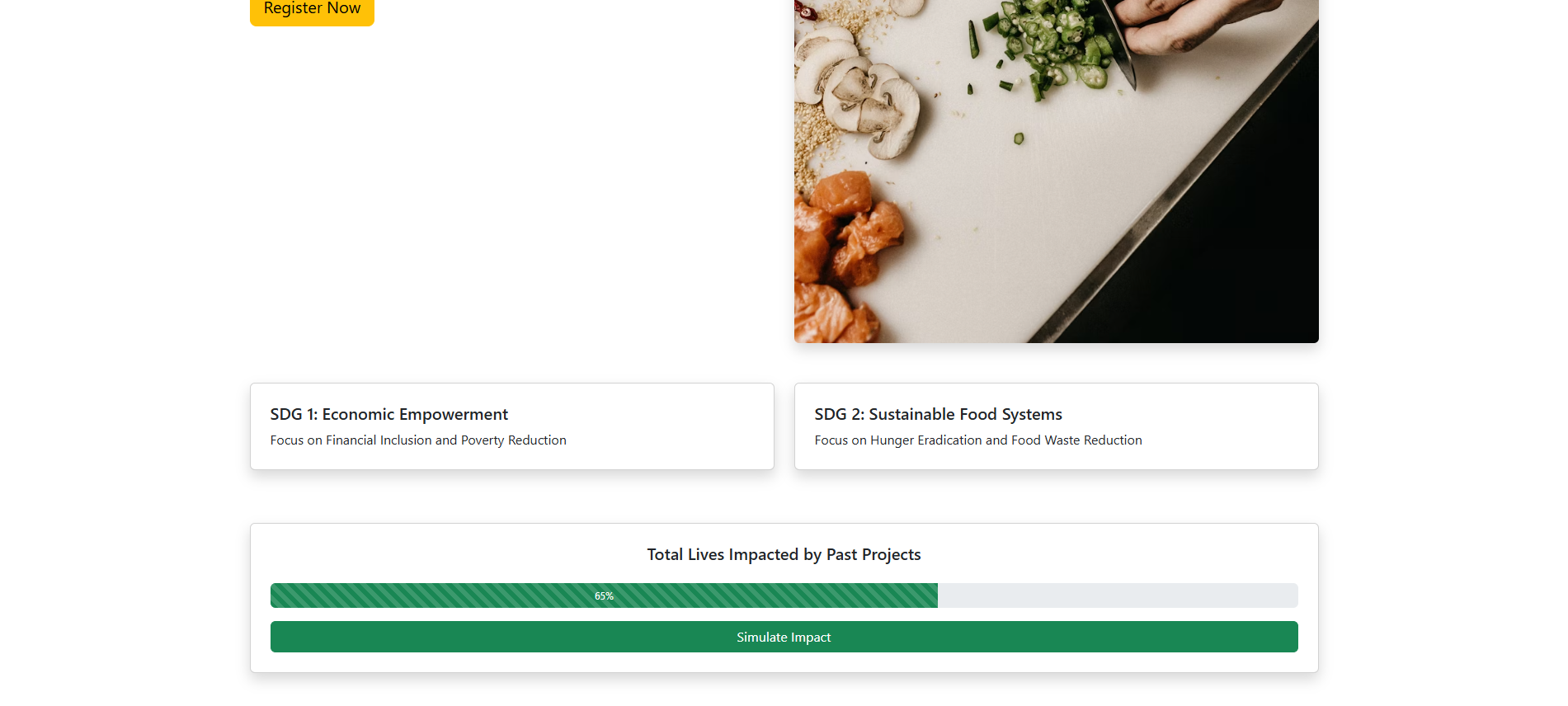
Dynamic impact stats and progress bars were built with React state for real-time visualization.
Interactive forms for loan applications, food donation, and micro-donations allow users to engage immediately.
Leaflet.js maps visualize local farmers, donation points, and volunteer routes.
AI simulation in Agri-Lens provides an intuitive, camera-first interface for plant disease diagnosis.
Testimonials, sponsor tiers, and community walls foster trust and encourage participation.
Challenges we ran into
Simulating AI functionality without a live backend required clever use of randomized mock data while keeping the experience believable.
Ensuring low-tech accessibility, especially for unbanked users relying on SMS or feature phones.
Balancing multi-page navigation and user engagement without overwhelming the user with too much information at once.
Accomplishments that we're proud of
Successfully integrated multiple SDG-focused solutions into a single cohesive platform.
Built dynamic, interactive features like impact stats, donation progress bars, and maps for real-time visualization.
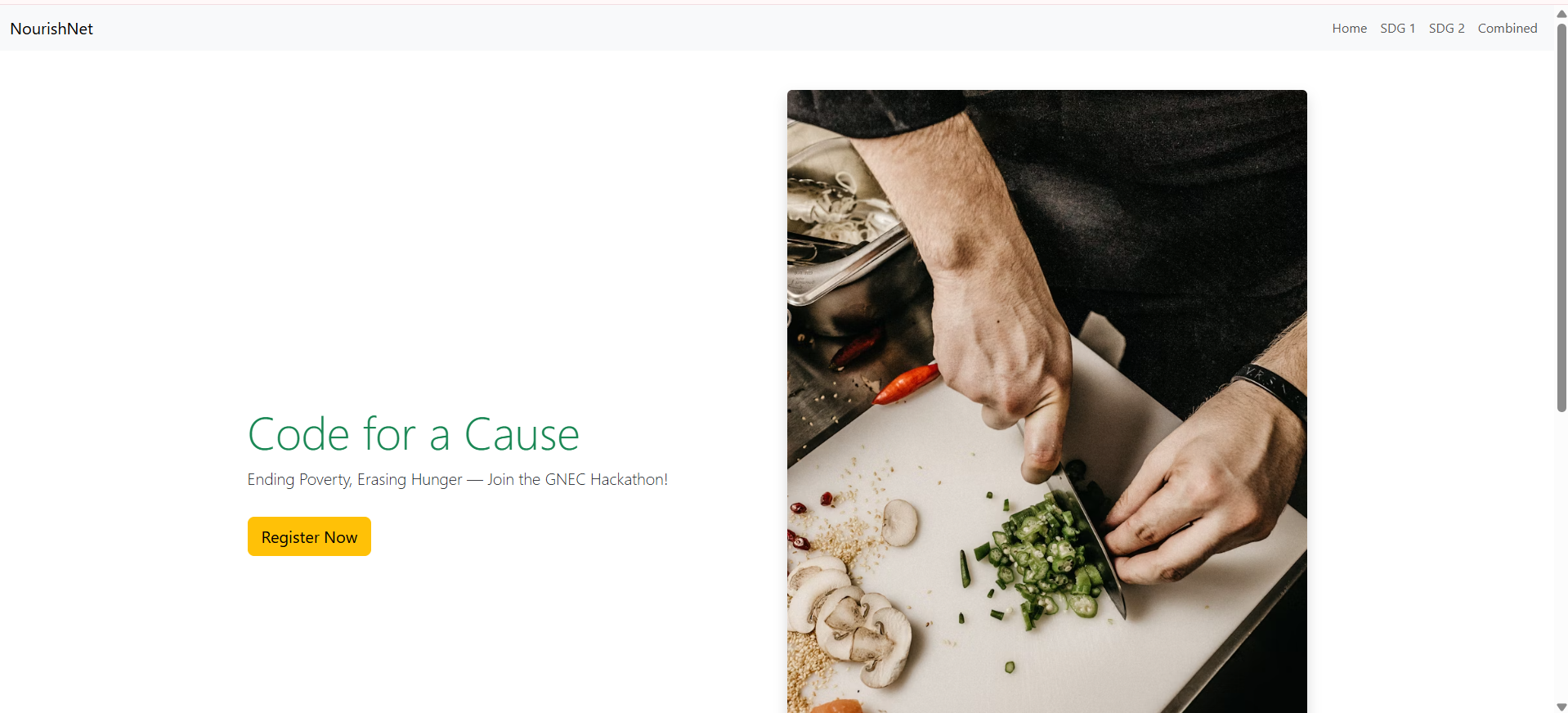
Designed a visually engaging UI that communicates the hackathon theme clearly while remaining accessible to all users.
Created a demo-ready prototype that is intuitive for participants, donors, and farmers alike.
What we learned
Designing for social impact requires empathy: every feature must serve a real-world problem effectively.
Technology can empower marginalized communities, but accessibility and simplicity are key.
Combining data visualization, gamification, and storytelling enhances engagement and motivates action.
What's next for NourishNet
Integrate real-time AI plant disease detection with a live backend and camera input.
Implement micro-donation and loan processing workflows with secure payment APIs.
Expand RescueRoute mapping and HarvestDirect marketplace for live user interaction.
Launch community dashboards showing real-time social impact metrics to inspire more participants.


Log in or sign up for Devpost to join the conversation.