-
-
-
UI


Inspiration
The inspiration for NourishNet came from our concerns about food shortage and food insecurity in North Carolina, as well as other states in the US. Having volunteered in the rural community in North Carolina, one of our teammates learned the fact that 1 in 8 people and 1 in 6 children in North Carolina face hunger, and the number even increased because of COVID-19. She worked with the local non-profit organizations in the rural community, packing food boxes and distributing them to local residents. However, she noticed that there is a gap in communication between the organizations and people as some people don’t know the exact time and location of the food pantry, or they don’t know that they should bring their ID to get food. In order to improve the working efficiency and make the information more accessible to people in need, we decided to create a platform, NourishNet, to bridge between organizations and individuals.
What it does
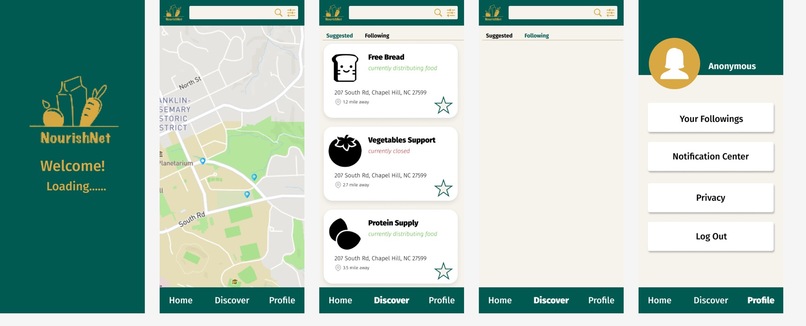
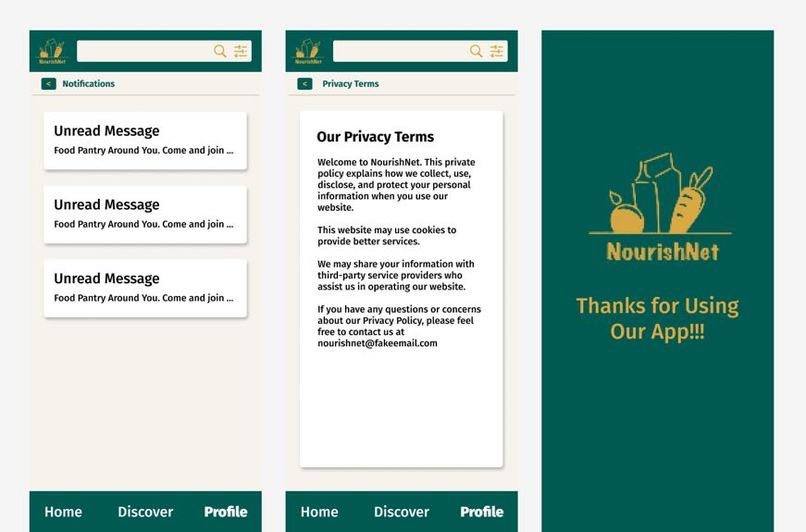
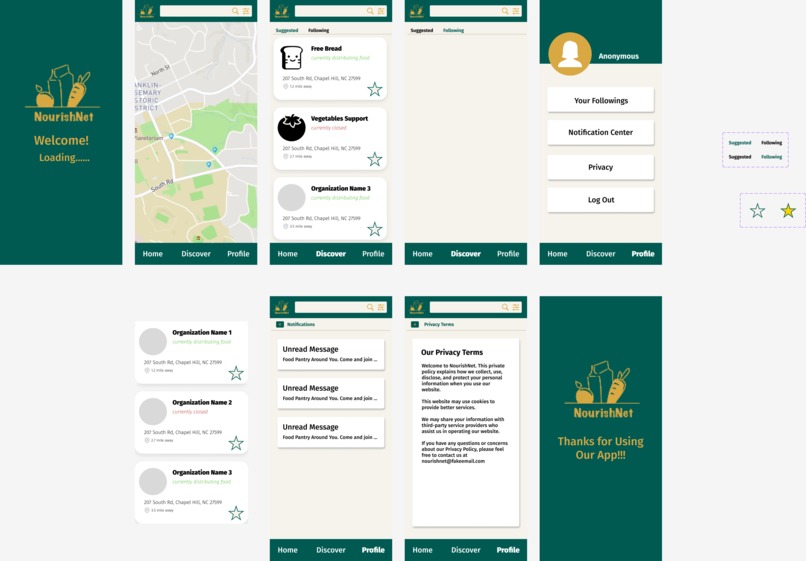
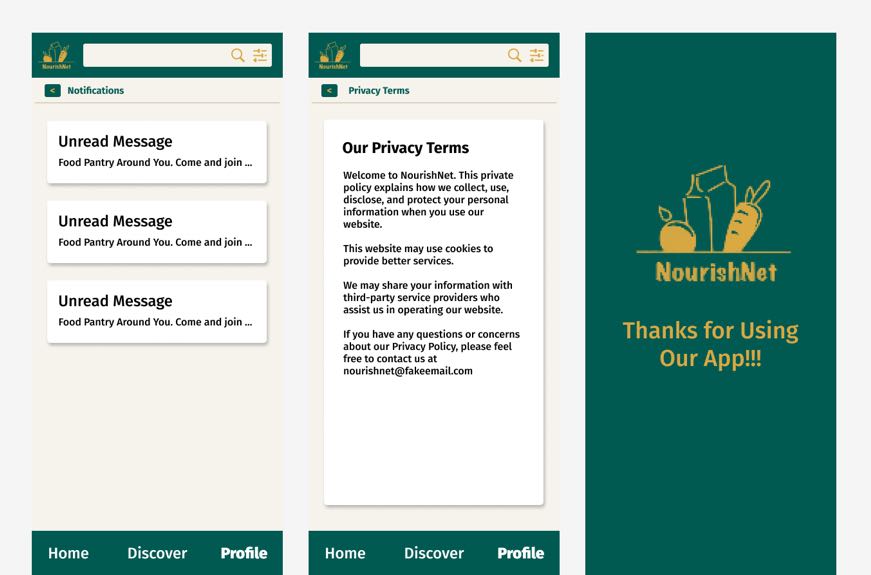
There should be two sides to NourishNet, the resident’s side, and the organization’s side, but we focus on the resident’s side because of the time limitation. The resident’s side has a built-in map that allows users to locate organizations that offer food support near them, and they can check the live status of the food distribution happening around them. Users can follow the organizations that they are interested in so that they can receive notifications when the starred organizations start to distribute food.
How we built it
We mainly used Figma to create the prototype for NourishNet. We designed and sketched the UI on paper to create a wireframe first. We also figured out the logic of NourishNet in this step. Then, we moved to Figma and created the prototype. We finalized our color template and font. We focused on accessibility, making sure that the UI is clear and easy for users to understand. We added drop-down lists and the like function before we implemented the interactions.
Challenges we ran into
Both of us cannot master using Figma, so we learned a lot while we worked on the project! For example, it took us time to figure out how to create buttons for following and unfollowing the organizations and dealing with the overflowing list of information.
Accomplishments that we're proud of
We are glad that we finished it and turned our vague idea into reality! We learned a lot about using Figma during the hackathon, which is a lot of work. It's good to see that the final version works well!
What we learned
Reflecting on our journey in this hackathon, we deepened our understanding with Figma. We became more proficient in creating and organizing frames, understanding where to find essential tools and features and how to add additional functionalities. We also learned how to create interactive elements and transitions, making our prototype more dynamic and user-friendly. By utilizing components and assets, we streamlined our design process and maintain consistency across our prototype.
What's next for NourishNet
- Continue to work on the prototype, and finish the organization’s side so that organizations can post their activities on NourishNet.
- Integrate Twilio SMS to enable users to communicate in different ways, like receiving messages, emails and calls.
- Create the application and work with community partners to gain feedback.
Built With
- figma


Log in or sign up for Devpost to join the conversation.