-
-
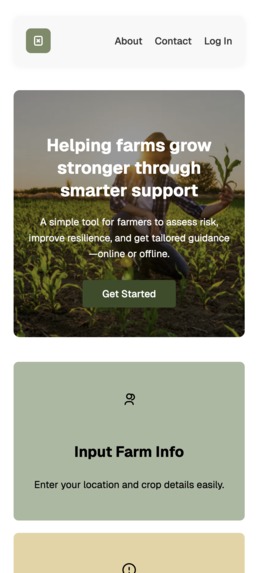
Mobile Friendly
-
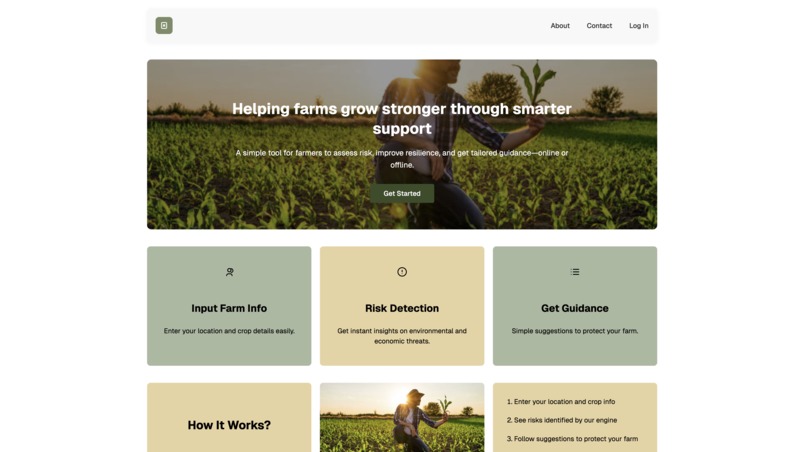
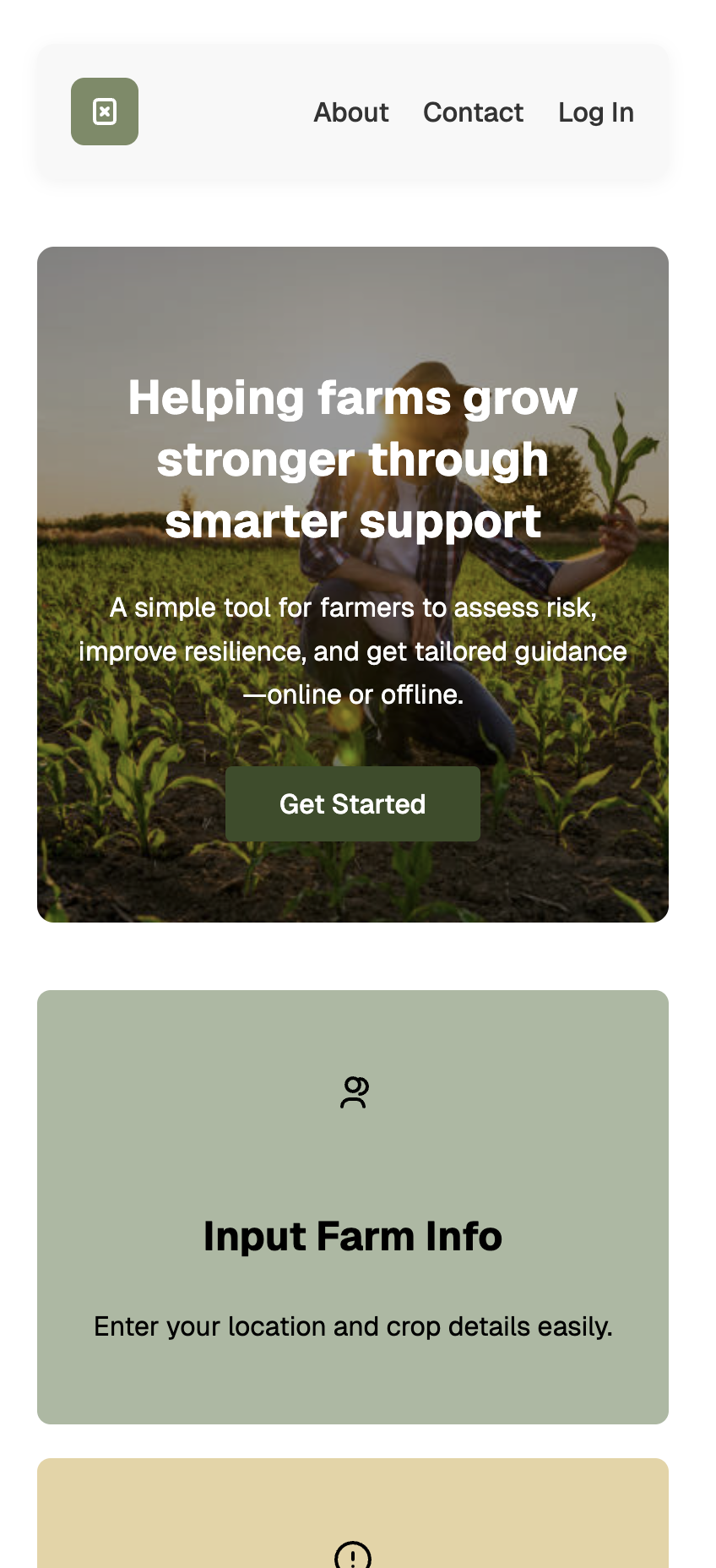
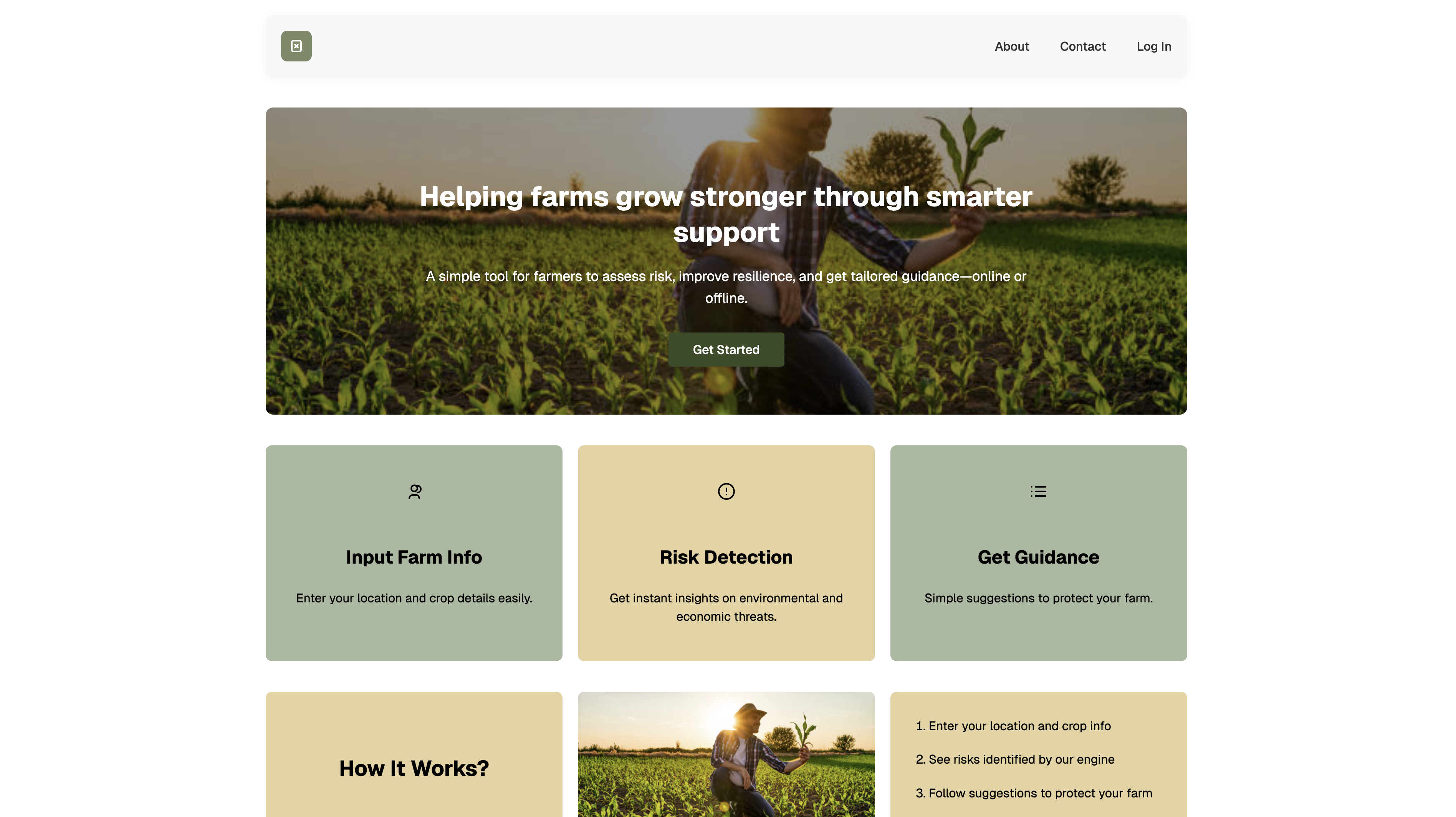
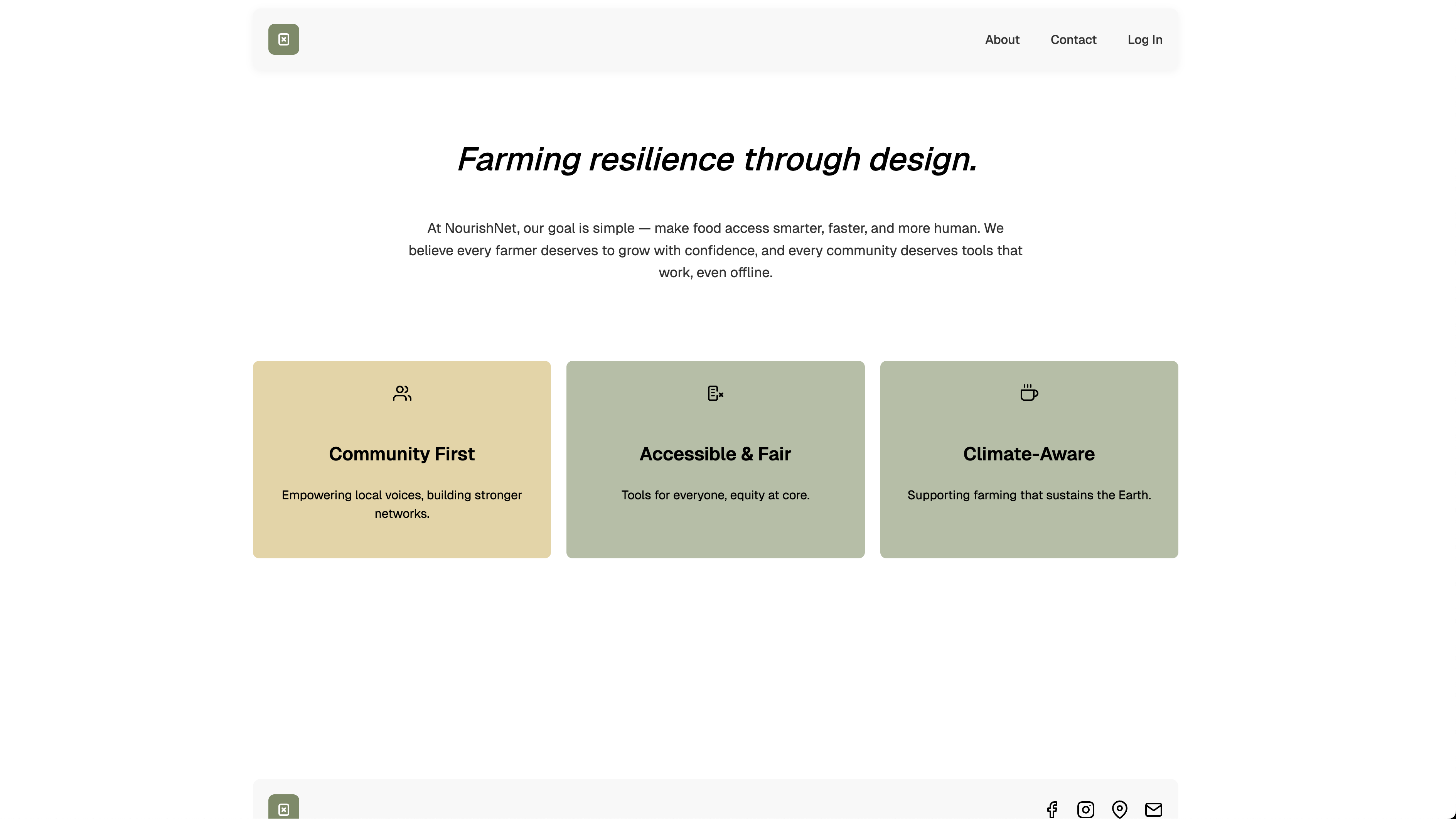
Home Page
-
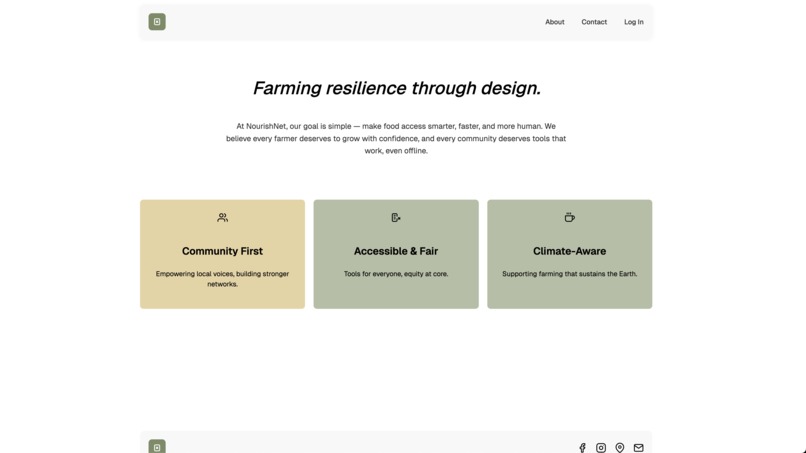
About Page
-
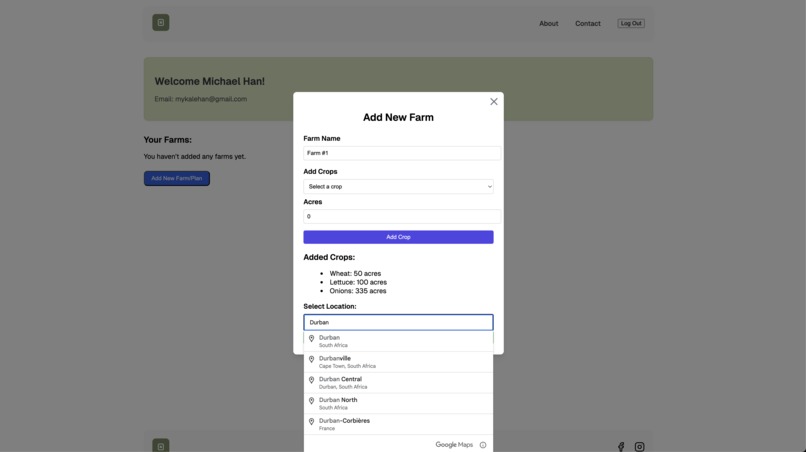
Add Existing Farm
-
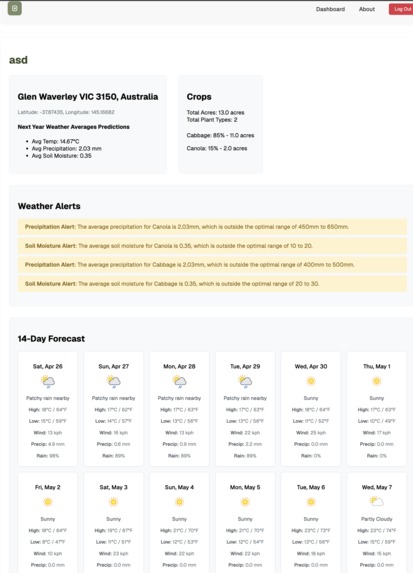
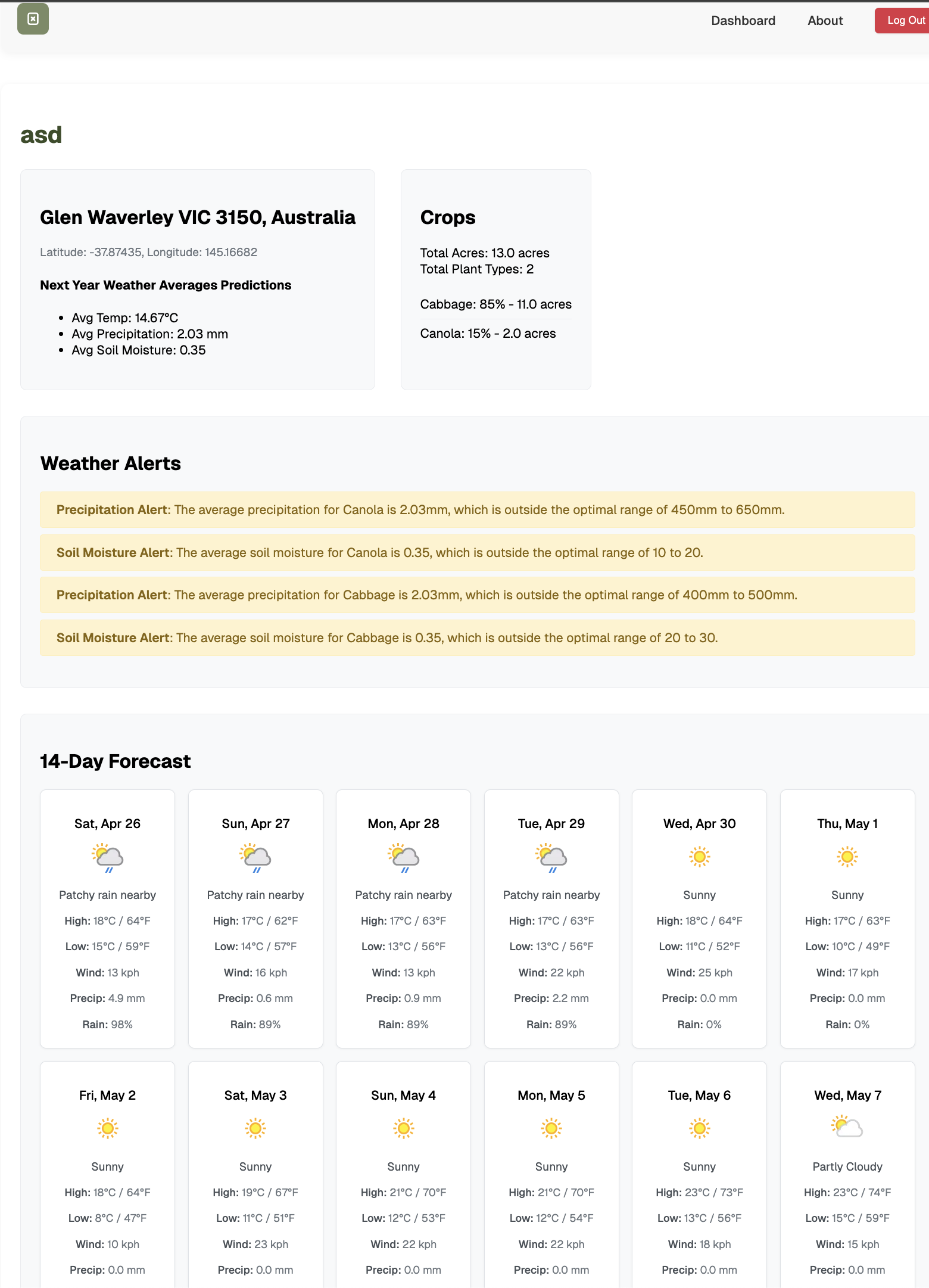
Weather Forecast Insights
-
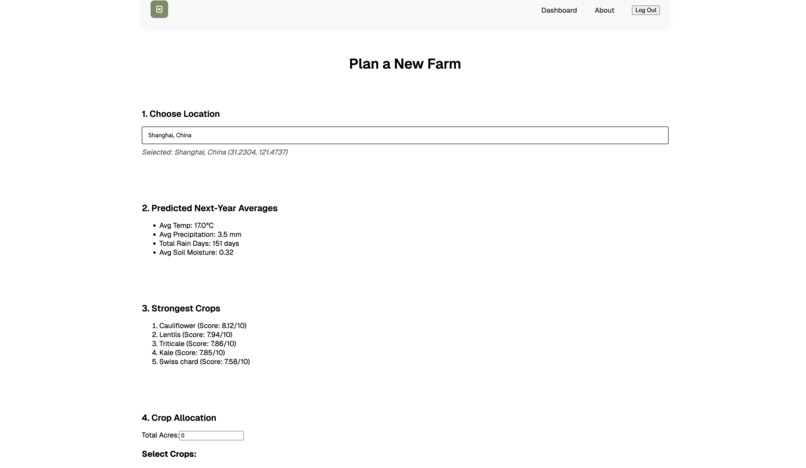
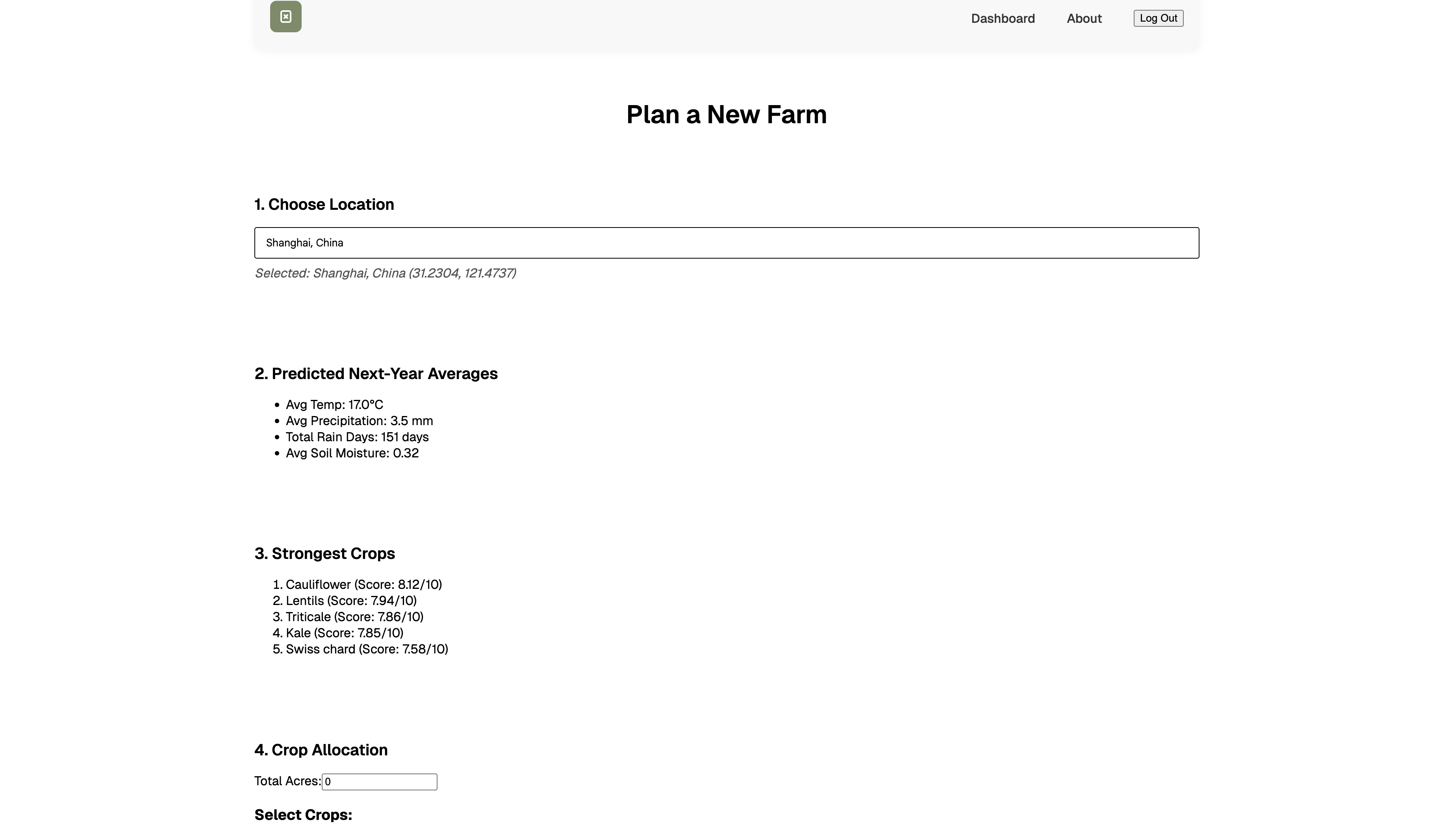
Plan New Farm

Team bestfriends
Inspiration
Farming is challenging, and the unpredictability of weather events—such as droughts, floods, heatwaves, and frost—can severely impact a farmer's livelihood. Climate change has made these risks even more pressing, inspiring us to create NourishNet, a solution aimed at enhancing farmers' resilience against these environmental challenges.
What it does
NourishNet enables farmers to easily monitor and manage climate-related risks affecting their farms.
Follow these steps to start managing your farms' risks!
- Farmers input their location and crop details into our intuitive platform.
- NourishNet leverages machine learning models to analyze climate data, offering a straightforward risk assessment ranging from low to high.
- The app provides tailored crop recommendations to help farmers adapt to predicted weather conditions.
For example, if drought is expected, it suggests planting drought-resistant crops like sorghum or barley; if increased rainfall or flooding is likely, it recommends cultivating crops like rice or soybeans.
How we built it
Our platform utilizes a tech stack combining Next.js with React and CSS on the frontend, ensuring a responsive and intuitive user interface. On the backend, we used Firebase (Firestore) with TypeScript to efficiently handle data storage and retrieval. Location-specific climate data was integrated using third-party APIs from Google Maps, Free Weather, and OpenMeteo. The machine learning component, responsible for generating risk assessments and crop recommendations, is built using a linear regression model implemented with scikit-learn.
Challenges we ran into
One of the primary challenges we encountered was accurately integrating diverse third-party APIs to fetch reliable and comprehensive climate data. Additionally, fine-tuning the machine learning model to ensure meaningful, actionable recommendations required substantial effort and iteration.
Accomplishments that we're proud of
We are particularly proud of developing a seamless integration between our frontend and backend, delivering a user-friendly experience. Additionally, successfully training and implementing our machine learning model to generate accurate risk assessments and useful crop recommendations represents a significant achievement for our team.
What we learned
Through this project, we gained extensive experience in handling complex API integrations and deepened our understanding of machine learning applications in real-world scenarios. We also learned valuable lessons about effective teamwork, rapid prototyping, and iterative problem-solving under tight deadlines.
What's next for NourishNet
Looking ahead, we plan to enhance the accuracy and scope of our predictions by incorporating additional climate indicators and historical agricultural data. We aim to expand NourishNet's accessibility, especially in developing regions disproportionately affected by climate change, thereby promoting sustainable agricultural practices globally.


Log in or sign up for Devpost to join the conversation.