-
-
-
Dashboard
-
Dashboard
-
Landing Page
Inspiration
According to the UNEP's food wastage index report 68,760,163 tonnes of food is wasted annually in India majority of which comes from HoReCa industry. The HoReCa industry discards substantial amounts of prepared food after each operational day, exacerbating the issue. Furthermore, decaying food in landfills emits methane, a greenhouse gas even more potent than carbon dioxide.
Despite the immense food wastage a significant portion of the population faces hunger and malnutrition. Statistics from the NSSO indicate that 21.9% of urban slum households struggle to afford three meals a day. The Comprehensive National Nutrition Survey highlights the persistent challenge of low birth-weight babies due to malnourished pregnant women in slums.
In India, food wastage is a pressing issue, while hunger remains a challenging problem for many communities. We present to you an innovative solution that aims to tackle this social problem head-on - introducing "NourishNet"!
What it does
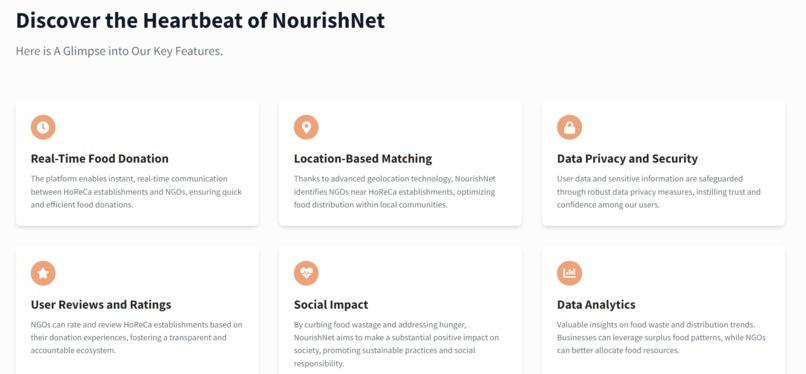
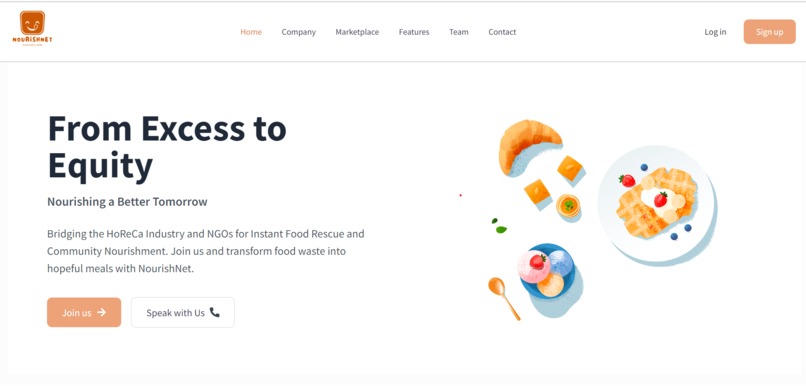
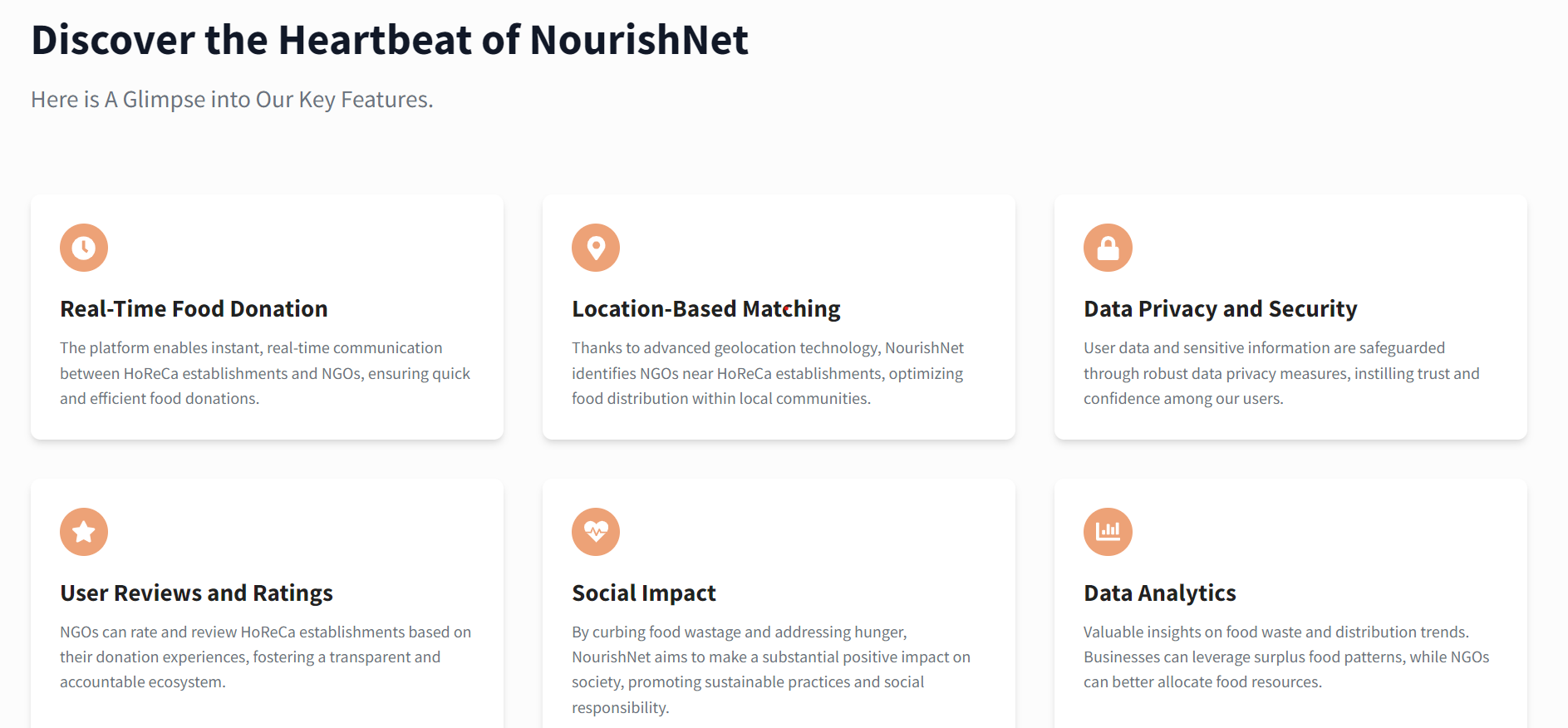
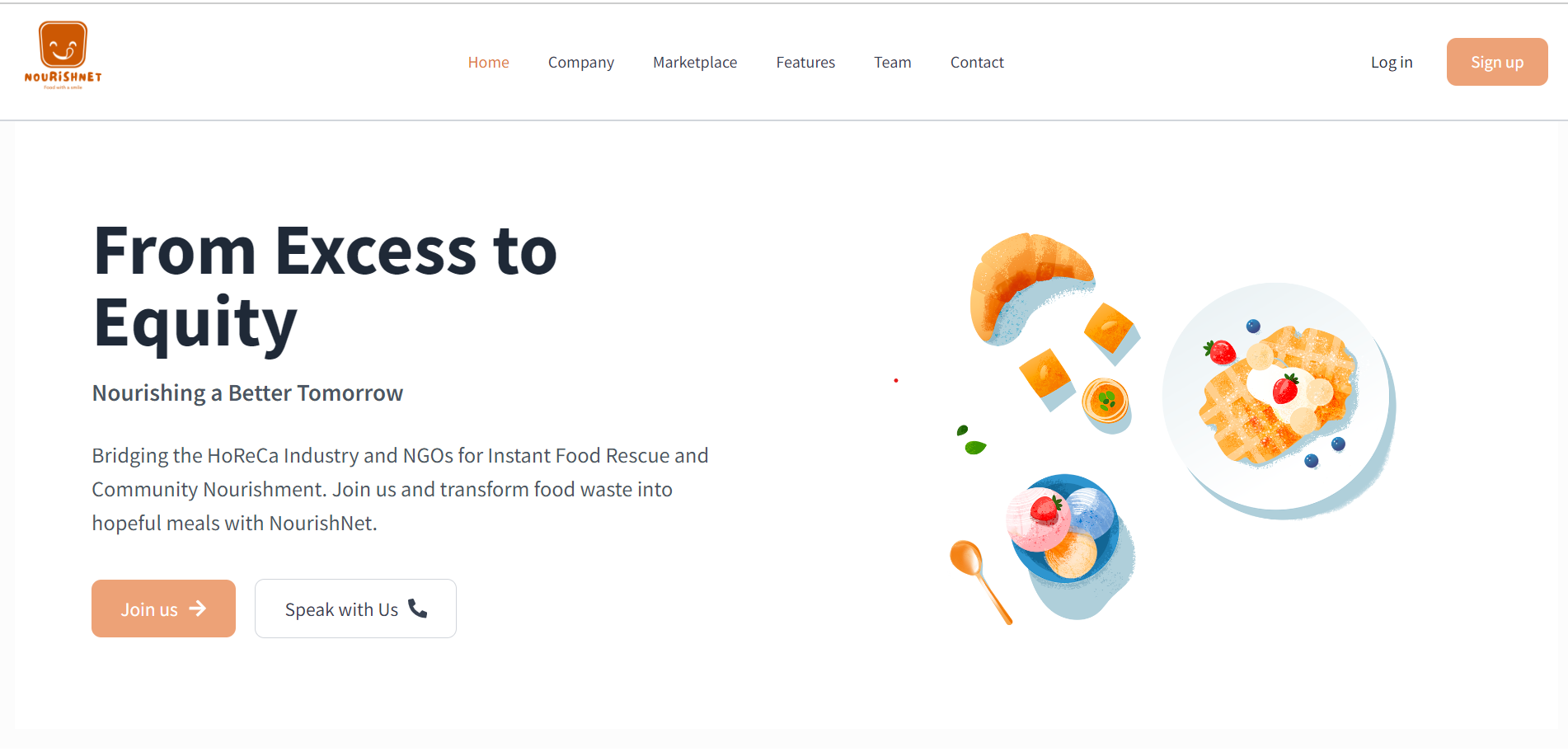
"NourishNet" is a real-time food donation platform designed to connect HoReCa (Hotels, Restaurants, and Caterers) businesses with NGOs (Non-Governmental Organizations) to efficiently distribute surplus food to those in need. This platform addresses food wastage by providing a system for businesses to donate excess food, and it also helps combat hunger by ensuring that the surplus food reaches the communities that need it.
How we built it
Dashboard Development:
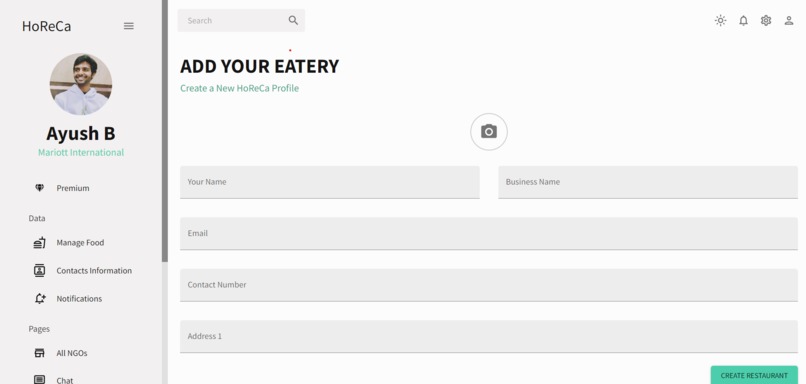
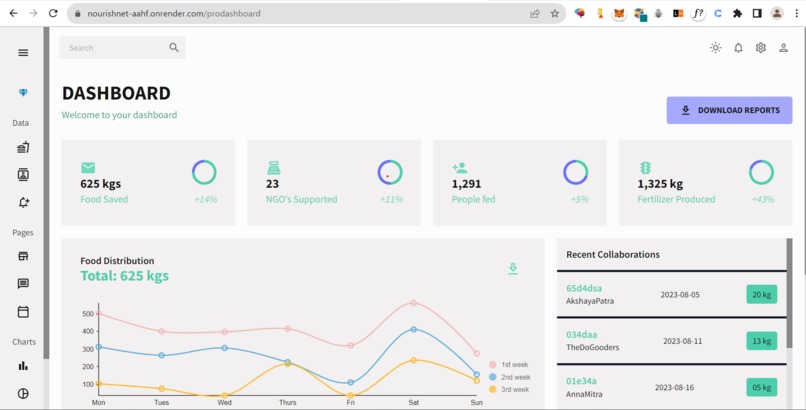
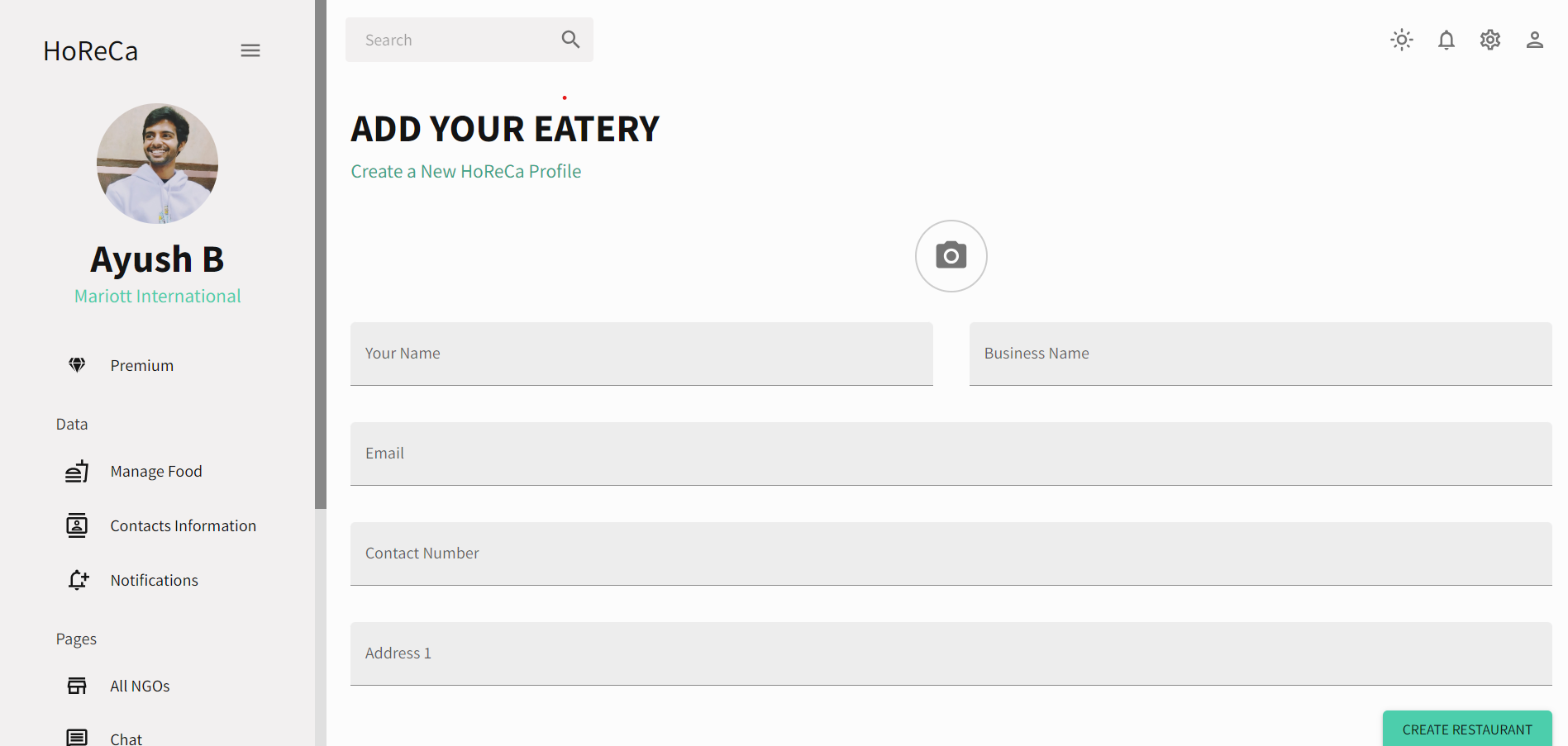
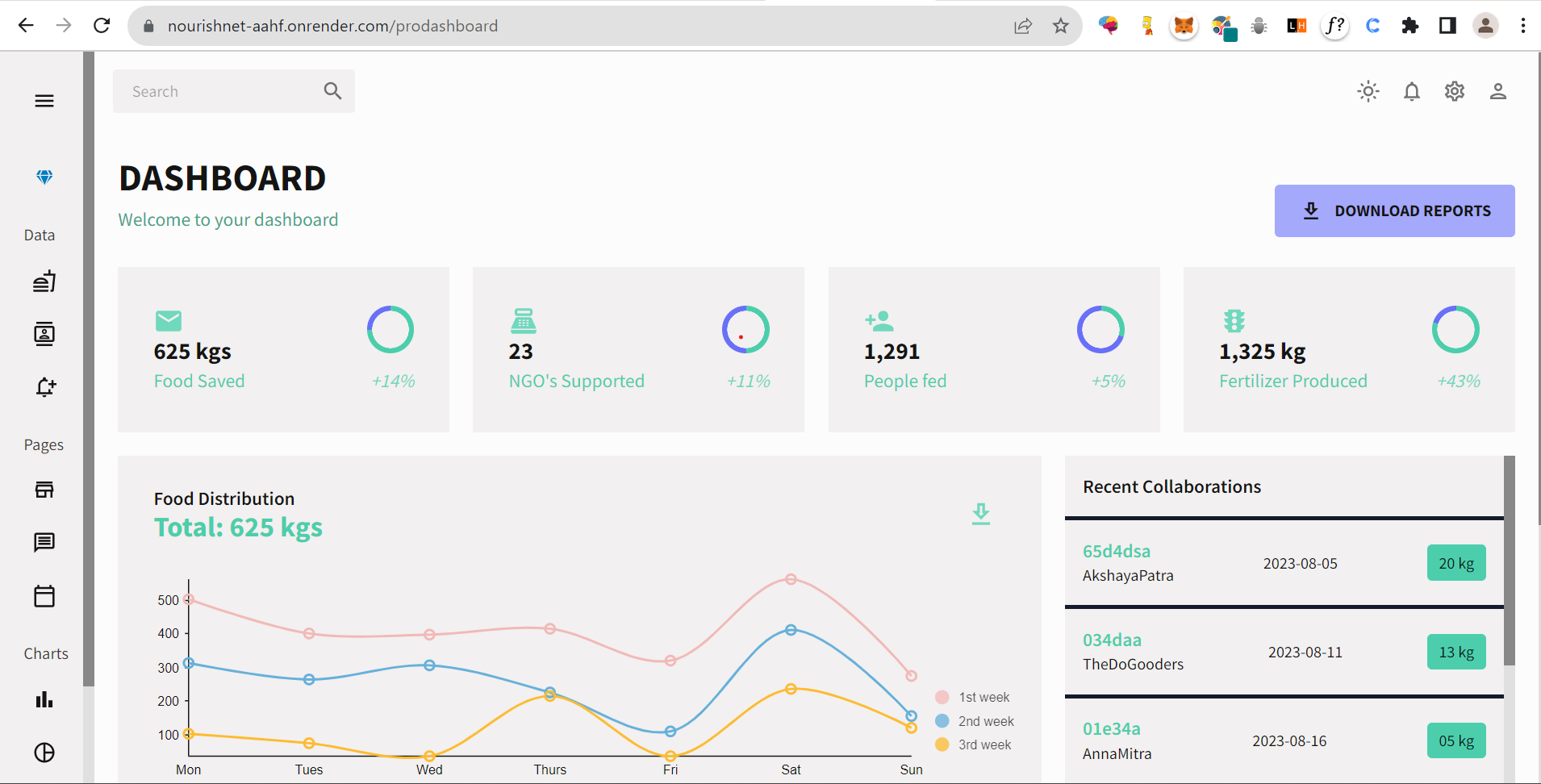
- We designed two distinct dashboards for HoReCa and NGOs, using NextJS and Material UI. These user-friendly dashboards serve as the primary interfaces for users to interact with the platform.
HoReCa Dashboard:
- HoReCa establishments can efficiently list surplus food on their dashboard, describing details such as food type, quantity, and expiration date.
- MongoDB stores this information securely for easy retrieval and management.
NGO Dashboard:
- NGOs have access to a dedicated dashboard where they can view the available surplus food listings by HoReCa establishments.
- The Google Maps API integration empowers NGOs to find nearby food listings, facilitating efficient food distribution within local communities.
Contacting HoReCa Establishments:
- Real-time communication is achieved through NodeJS, ExpressJS, and Socket.io. NGOs can instantly communicate with HoReCa businesses to express interest or seek clarifications on surplus food listings.
- Socket.io minimizes delays, ensuring swift responses.
Accepting Food Donations:
- Upon reaching an agreement, NGOs and HoReCa establishments coordinate the food pickup process.
- The Google Maps API's geolocation feature aids in optimal food distribution within local communities, ensuring food reaches its intended destination quickly and efficiently.
Challenges we ran into
Data Privacy and Security: Ensuring secure user authentication, data privacy, and secure API calls, especially for NGOs, presented ongoing challenges related to protecting sensitive data and maintaining a high level of security.
Machine Learning Model Complexity: Developing machine learning models for predicting hunger zones and food wastage analysis demanded a deep understanding of data preprocessing, model training, and validation, which can be complex in terms of accuracy and performance.
Accomplishments that we're proud of
NourishNet has achieved several significant accomplishments that make us proud. Here are some of the best features and achievements of the platform:
Permanent Solution for HoReCa Wastage: NourishNet has provided the HoReCa industry with a lasting and practical solution to combat food wastage. HoReCa establishments now have a reliable avenue to channel surplus food, reducing waste and enhancing sustainability. This accomplishment has had a positive environmental impact.
Strategic NGO-HoReCa Connections: NourishNet's ability to facilitate meaningful connections between NGOs and HoReCa industry leaders has created a win-win situation. NGOs can access surplus food resources, while HoReCa businesses engage in impactful philanthropy. This symbiotic relationship has strengthened the fight against hunger.
Real-Time Connectivity: The platform's real-time connectivity feature, powered by Socket.io, has enabled swift food donations by allowing instant communication between HoReCa and NGOs. This has minimized delays and maximized efficiency in food distribution.
Location-Based Efficiency: Utilizing the Google Maps API for advanced geolocation features has optimized food distribution within local communities. This feature ensures that food reaches hunger-stricken areas quickly and efficiently, maximizing its impact.
What we learned
Machine Learning for Predictive Analysis: We've delved into the world of machine learning, learning how to create models and algorithms for predicting hunger zones and analyzing data to make data-driven decisions. This expertise is invaluable for addressing complex societal issues.
Cloud Scalability: Our experience in deploying and managing applications in the cloud, particularly AWS, has given us the knowledge to handle large-scale applications and nationwide expansion.
What's next for NourishNet
Geographic Expansion: We aim to expand our platform's presence to connecting a larger network of HoReCa businesses and NGOs, and making a difference on a global scale.
Community Engagement: We will actively foster a vibrant community of HoReCa partners and NGOs, organizing workshops, seminars, and networking events to share best practices and amplify our impact.
Research & Development: Our team is committed to innovation. We will invest in R&D to explore new technologies, such as mobile apps, AI-driven insights, and predictive analytics, to further streamline food distribution.


Log in or sign up for Devpost to join the conversation.