-
-
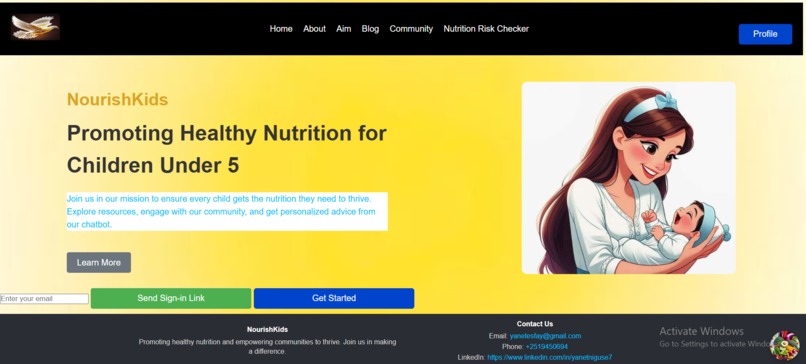
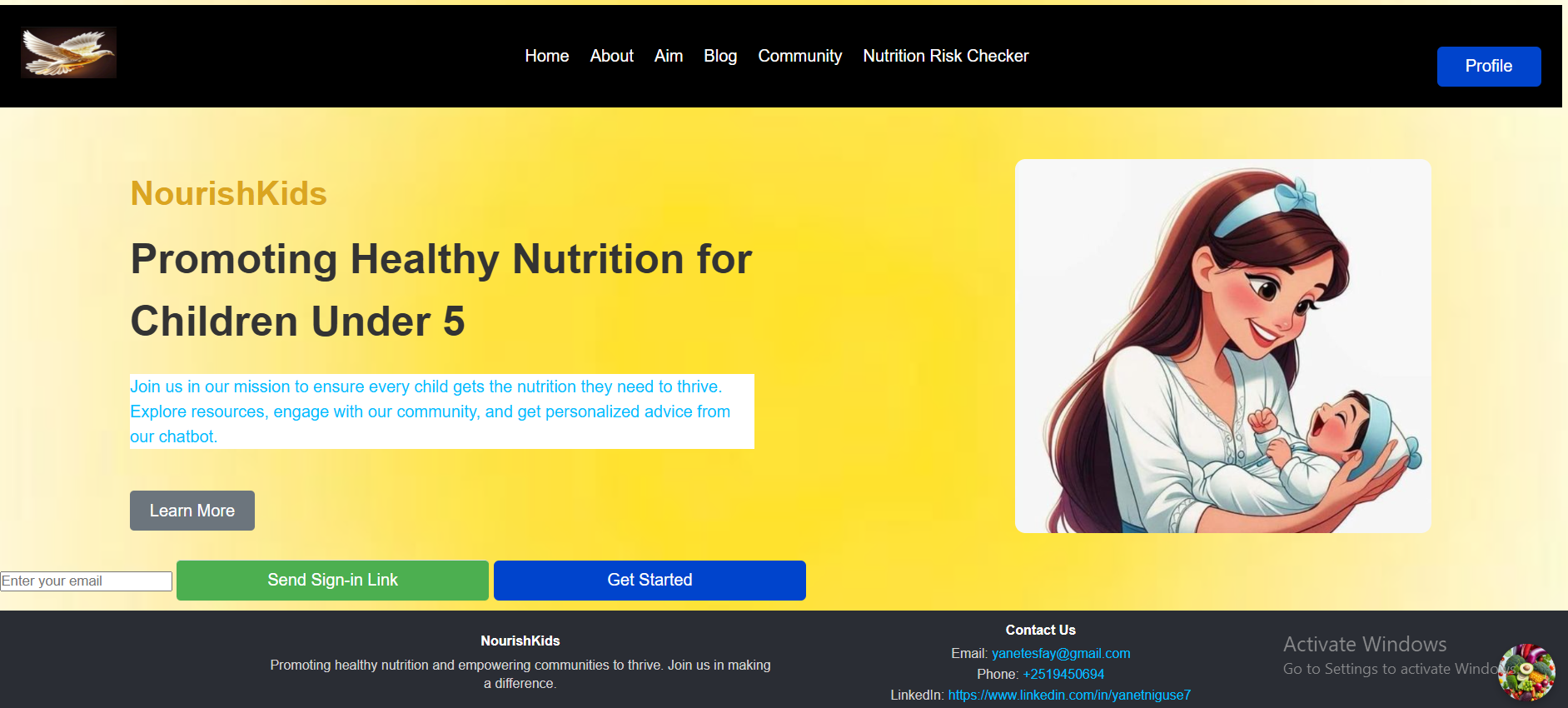
Screenshot of the NourishKids homepage (vercel site)
-
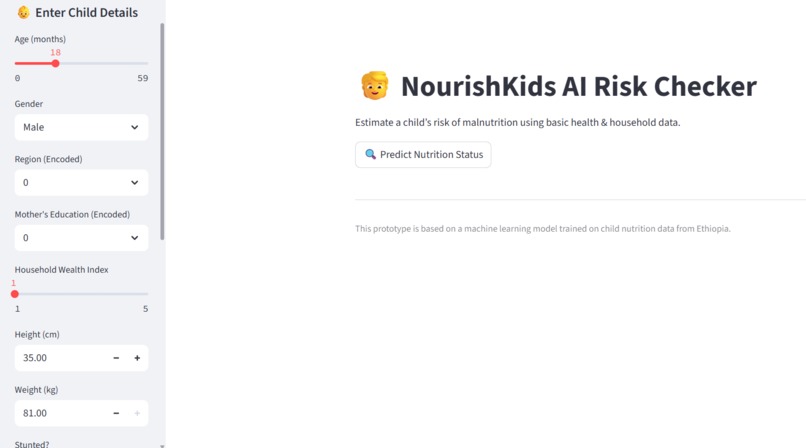
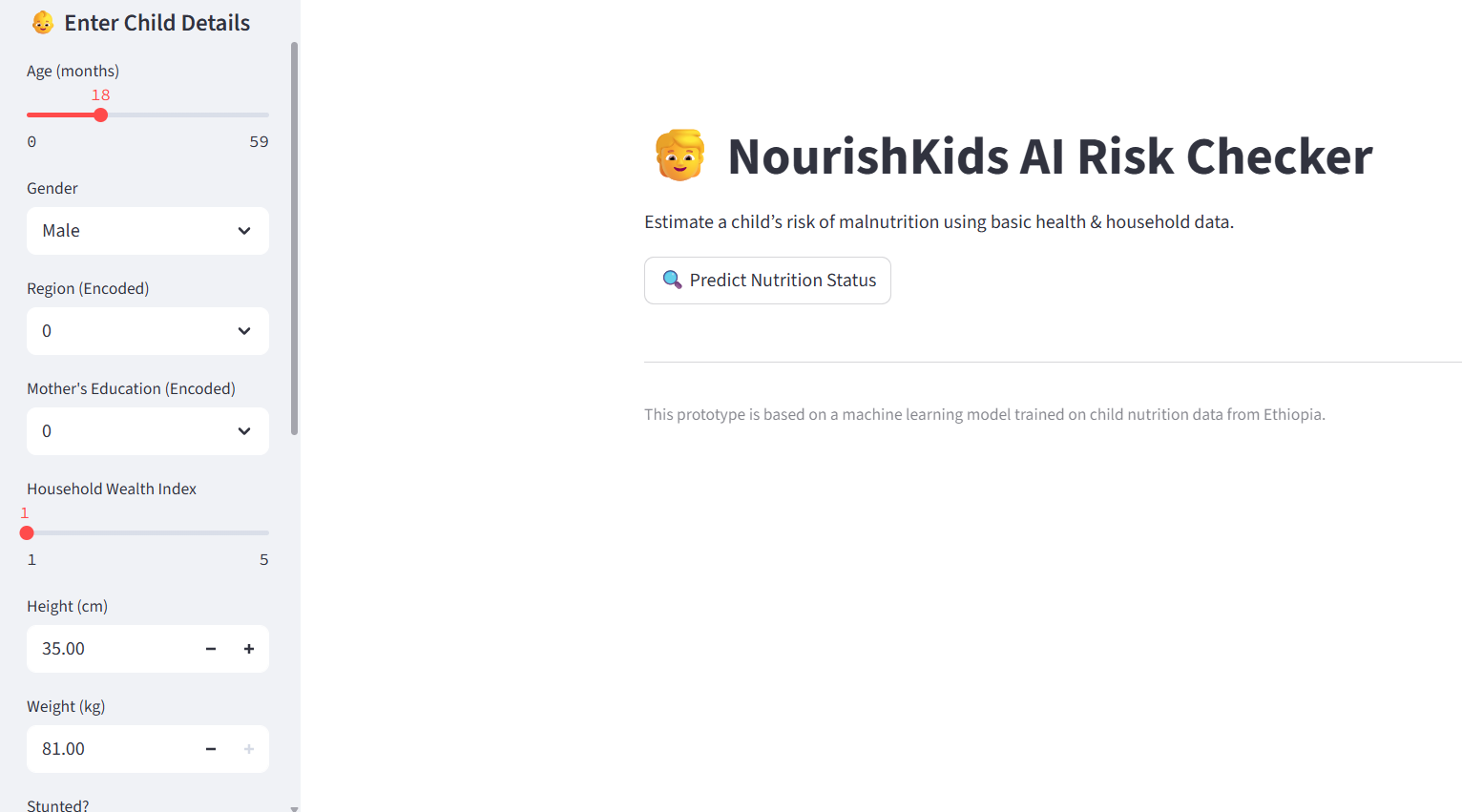
Screenshot of the AI Predictor interface (Streamlit app)
-
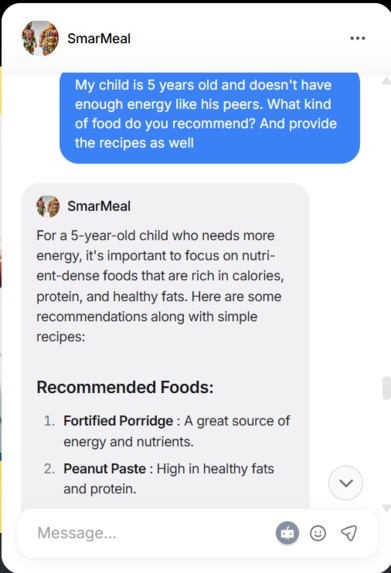
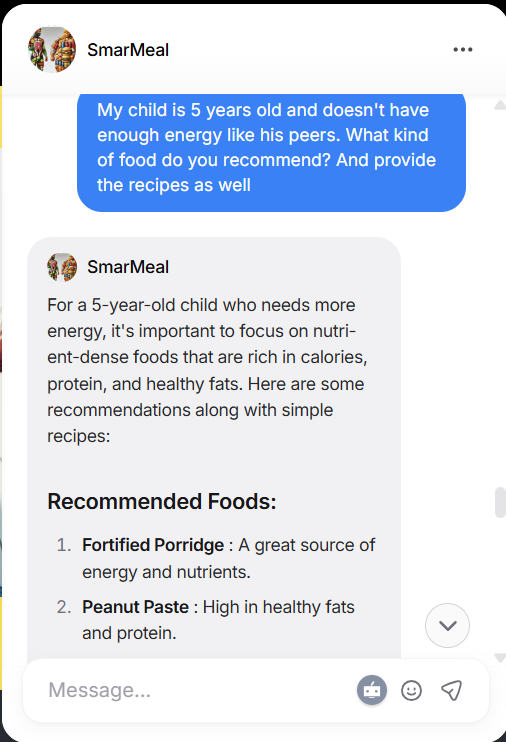
chatbot interface with a conversation snippet
-
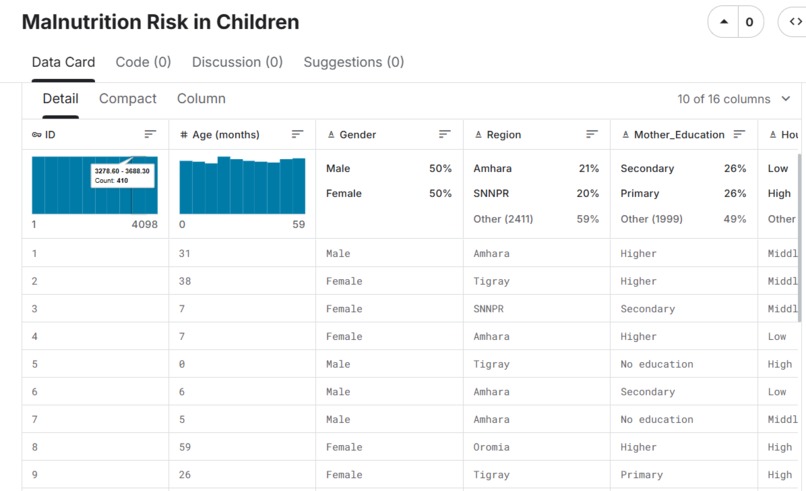
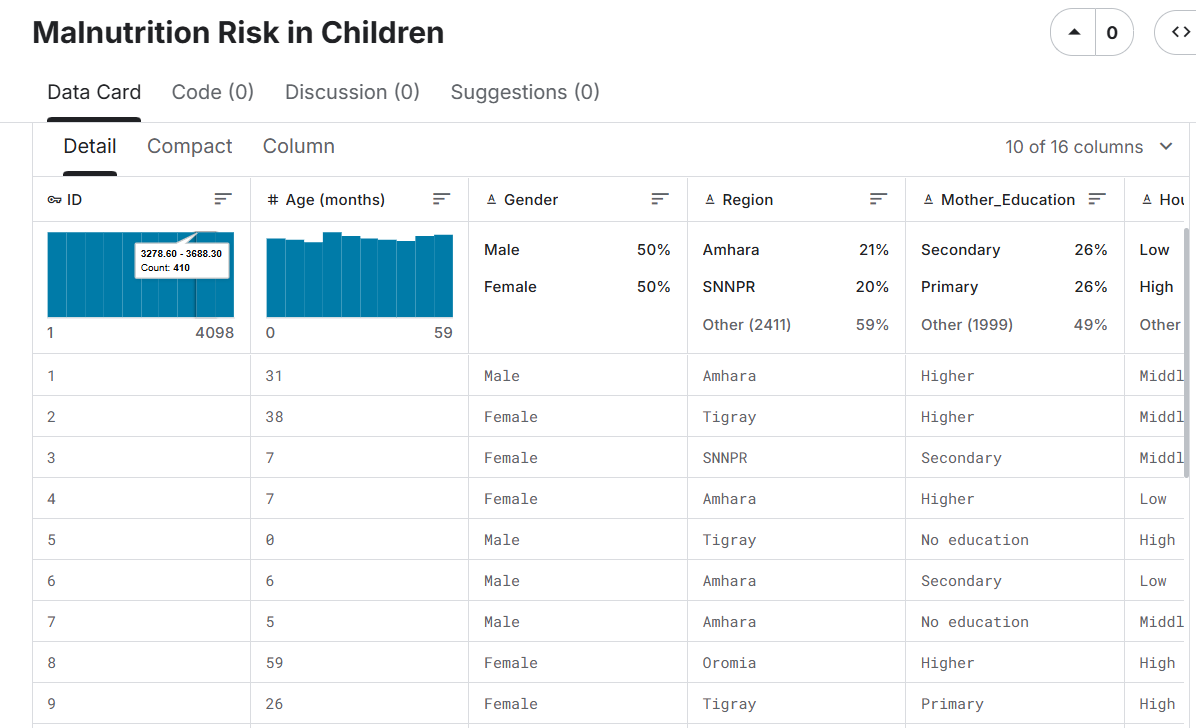
Dataset I used: malnutrition_children_ethiopia.csv(280.86 kB)
-
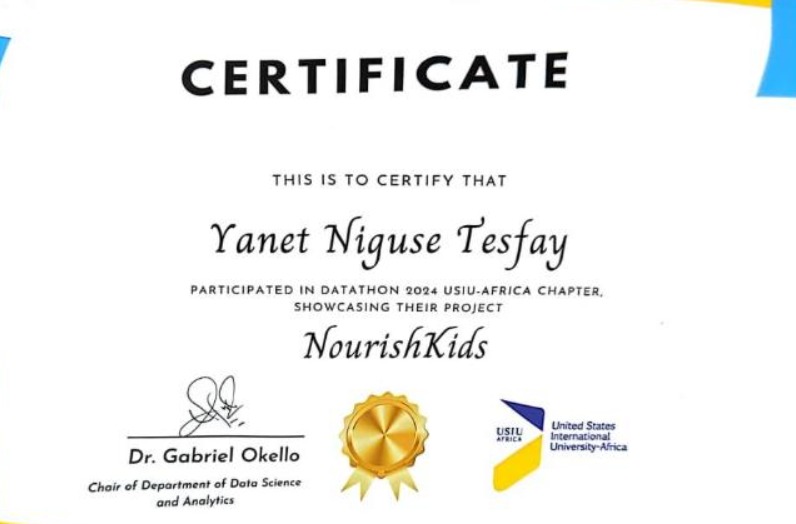
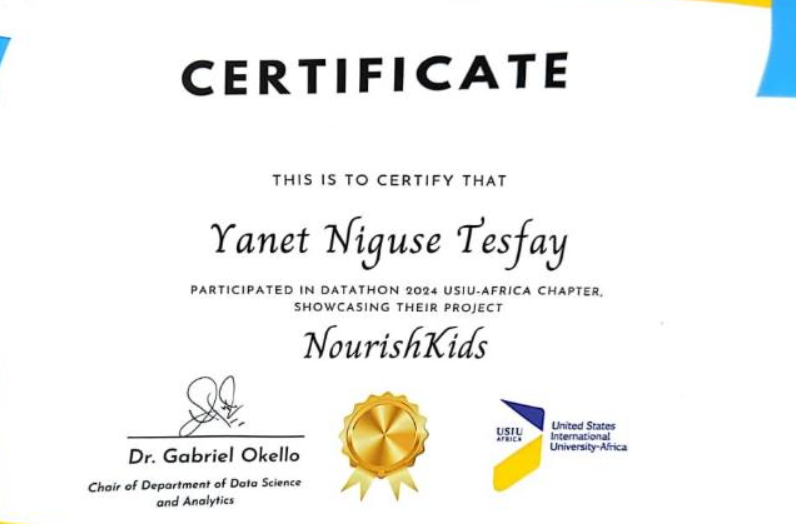
Honored to receive this recognition for NourishKids as the winning project at the 2024 School Datathon (USIU-Africa Chapter).
Project Story NourishKids — AI-Powered Risk Screening for Malnutrition in African Children
Inspiration When I was around ten years old, I visited Adigrat, a city in the Tigray region of Ethiopia. I remember seeing a child my age on the street, barefoot and selling chewing gum. He looked tired. I, in contrast, was walking with my parents after lunch. That moment never left me. Even as a child, I knew something was deeply unfair — not just between us, but in how opportunity, safety, and health were distributed.
Years later, the war in Tigray left over 2.2 million people displaced. Hospitals were destroyed. Schools closed. Families uprooted. Malnutrition rates soared. In some districts, more than 29% of children under five are now acutely malnourished — a figure that far exceeds the global emergency threshold of 15%. In places where health workers have not been paid for months, parents are left without guidance or support.
I built NourishKids because I saw how delayed responses often cost lives. Malnutrition doesn’t announce itself loudly. It creeps in — through skipped meals, untreated infections, or lack of clean water — until it becomes irreversible. But what if we could catch it early?
What I Built NourishKids is a lightweight AI tool that screens for early signs of malnutrition risk using a simple set of clinical and socioeconomic indicators: age, height, weight, maternal education, anemia status, and others. It is intentionally designed to work in low-connectivity settings.
The machine learning model (Random Forest Classifier) predicts a child’s risk as Normal, At Risk, or Malnourished.
The tool can be used offline, on basic computers or mobile devices, by community health workers, educators, or caregivers.
I built it using Python, scikit-learn, and Streamlit, with a focus on transparency and usability.
Feature engineering includes weight-to-height ratio and a composite health risk score for children.
Confidence scores help guide action, like referrals to clinics or immediate nutritional interventions.
What I Learned This project taught me that building with empathy means listening before coding. I spoke with health students, reviewed field survey reports, and studied how caregivers actually interact with data. I learned:
Simplicity is power: health workers in rural areas prefer interfaces that are intuitive and fast.
Fairness matters: I tested the model across gender and regions to ensure it didn’t amplify bias.
Local context is essential: a "good" model in theory can still fail if it doesn’t align with lived realities.
I also learned that sometimes technology’s biggest contribution is not automation — it’s visibility. NourishKids gives malnutrition a face and a name, earlier than before.
Challenges The data required heavy cleaning and imputation due to gaps in local surveys.
Balancing model performance with offline functionality was difficult but crucial.
Trust: introducing AI into maternal and child health workflows requires careful explanation and accountability.
Designing for different literacy levels and user types (nurses, teachers, parents) took several iterations.
What’s Next For AbiHack, I aim to:
Add Swahili and Amharic language support.
Optimize the interface for mobile-first users using Flutter.
Incorporate voice-based inputs for low-literacy environments.
Use Gemini API to offer contextual follow-up recommendations for caregivers.
This is not just a tech project. It’s a vision for a healthier childhood — one where data helps communities act before it's too late. I didn’t build NourishKids in a lab. I built it from lived observation, pain, and hope — for every child who deserves a full, nourished life.


Log in or sign up for Devpost to join the conversation.