Inspiration
The idea for Nourishment is personal to one of our team members who struggled with an eating disorder for two years. Being able to experience firsthand the severe physical and mental toll of nutritional deficits that came with an eating disorder helped us find solutions for others dealing with the same struggles. During recovery, a major obstacle is the lack of accessible and educational support on how to work towards full rehabilitation. It was difficult to figure out what specific nutrients were missing and how to safely reintroduce them without overwhelming anxiety. Our app is targeted for the use of people struggling with Avoidant/Restrictive Food Intake Disorder (ARFID). ARFID is a feeding or eating disorder characterized by limited variety and amount of food intake, driven by a multitude of reasons spanning from sensory sensitivities, lack of interest in eating, or fear of aversive consequences such as choking. We wanted to include a user-friendly interface that accommodates all ages who struggle with this disorder to help educate people about nutrients and the importance of a proper diet.
What it does
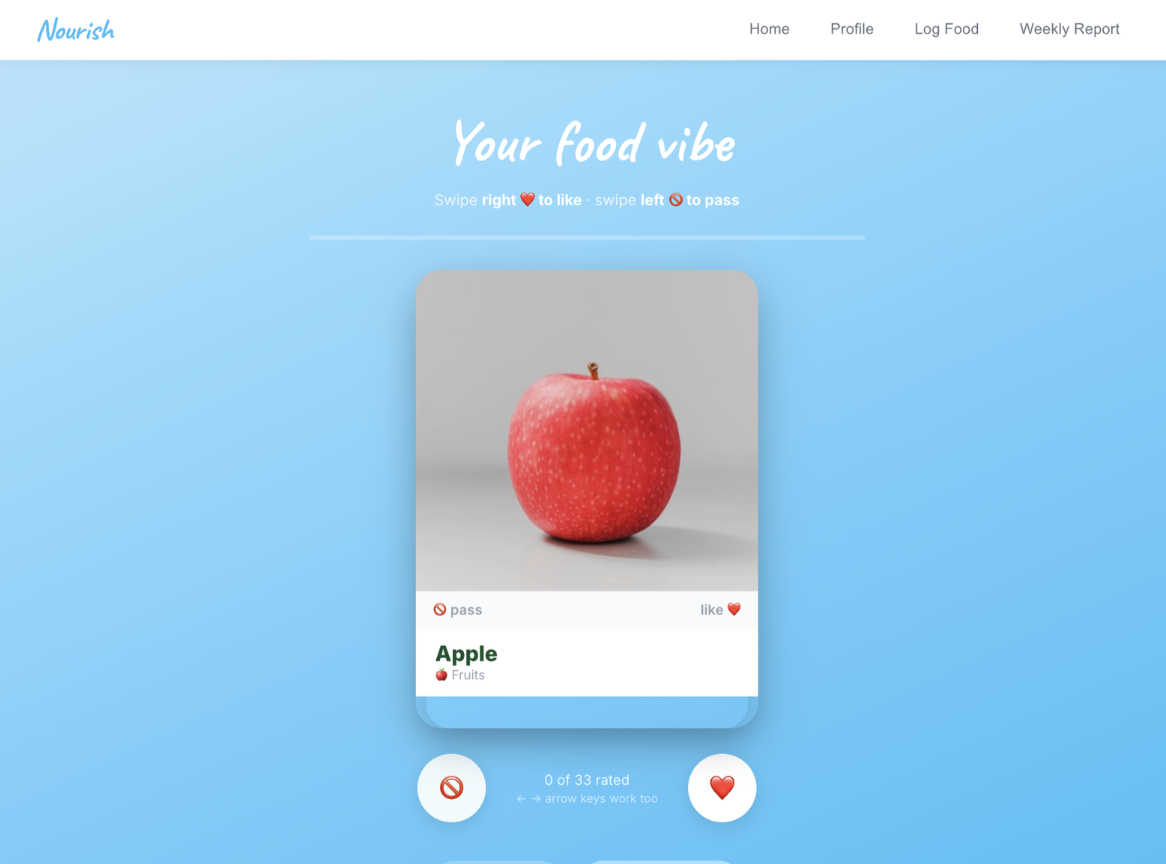
Our website takes in user information through a profile questionnaire and daily food reports submitted through photos. Each meal is logged with the user’s opinions of the meal as well as the reason they chose to eat it. With this information, the website analyzes a week of the user’s diet to find likes and specific triggers that the user may have concerning food, while also tracking the nutritional content of every meal. The information is summarized into a weekly report that shows the user’s progress towards a healthier diet, as well as introducing new nutritional foods for the user to try. The website has a built-in eye tracking software that analyzes the reaction to these new foods, which helps us determine how to further cater to their palette. The goal of the website is to help improve nutritional intake while accommodating specific eating needs.
How we built it
Our project is a full-stack web application with an interactive front end and an AI-powered backend. We designed the front end of our project using JavaScript and React. On the backend, we used Flask to handle requests and communicate with the AI APIs.
Challenges we ran into
We had some issues with calling the API but were able to debug and figure out what went wrong in the process of calling it.
What we learned
We learned a lot about backend development as a lot of our members did not have much experience with backend development and integrating APIs.

Log in or sign up for Devpost to join the conversation.