-
-
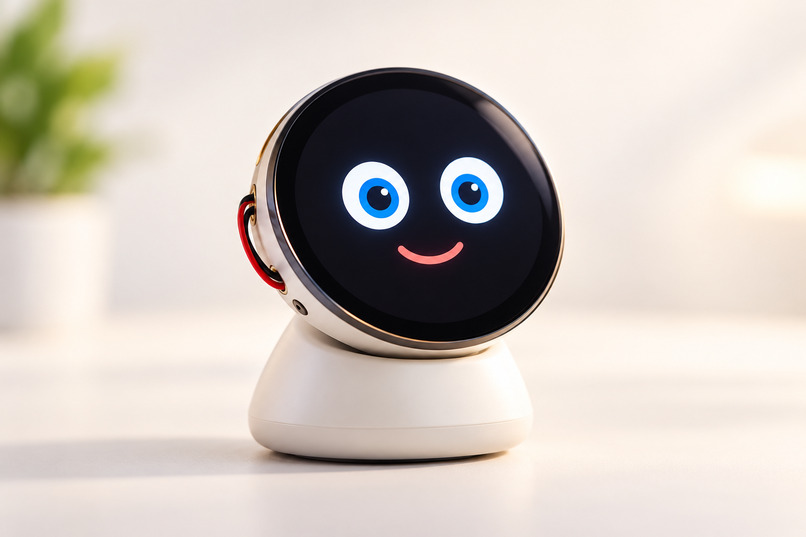
Meet Nouri
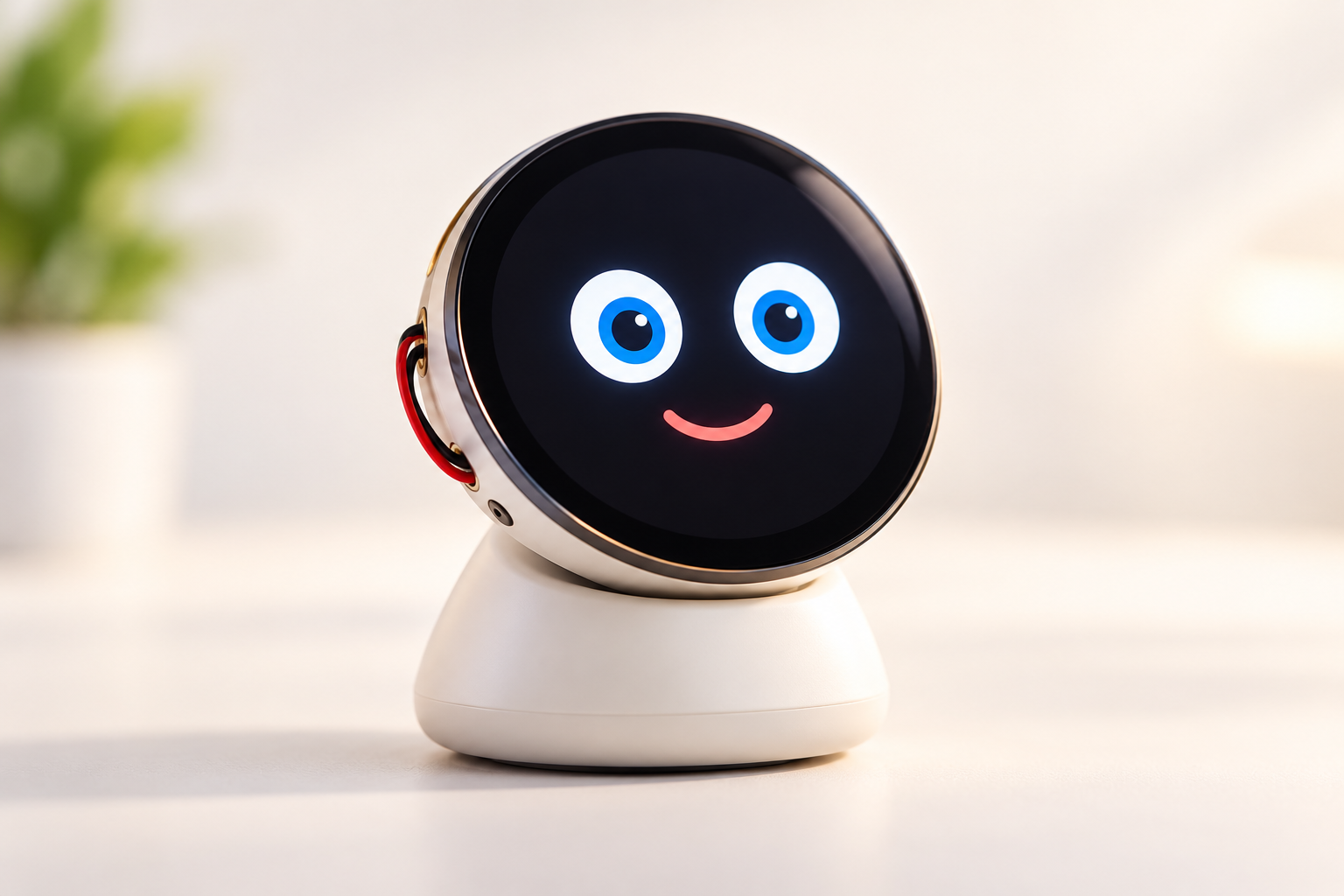
Inspiration
We believe artificial intelligence should do more than answer questions. It should make people feel heard, supported, and cared for.
For older adults living with diabetes, the time between medical appointments can be challenging. Important details about sleep, meals, blood sugar, and symptoms are easy to forget. Family members want to help, but they cannot always be there, and doctors often have limited insight into what happens between visits.
We asked ourselves: What if an AI companion could provide the warmth of a conversation while helping patients, families, and healthcare professionals stay connected?
That question inspired Nouri Care.
Our vision is to create a companion that feels approachable and human-centered while turning everyday conversations into meaningful, actionable support.
What it does
Nouri Care is an AI-powered companion robot and care coordination platform designed to support older adults living with diabetes.
Nouri combines an expressive physical robot, natural-language conversation, multi-agent AI orchestration, and a connected healthcare dashboard.
Compassionate AI conversations: Patients interact with Nouri through a voice-enabled robot or web companion. Anthropic Claude generates thoughtful, supportive responses.
Intelligent health check-ins: When patients mention sleep, meals, symptoms, or blood glucose measurements, Nouri identifies the relevant observations while preserving the patient's actual words.
Consent-based memory: Before recording observations, Nouri asks for confirmation. Nothing is saved without the patient's approval.
Doctor dashboard: Confirmed observations appear in a clinician-facing dashboard, helping healthcare professionals understand changes between appointments.
Source-grounded medical visit briefs: Nouri generates structured summaries where statements are linked to the patient's recorded observations. These remain pending clinician review rather than being treated as medical conclusions.
Fetch.ai multi-agent coordination: Our registered Nouri Coordinator works through Agentverse and the Agent Chat Protocol. Through ASI:One, users can request care-related actions. We successfully demonstrated Nouri understanding a hydration reminder request, asking for the missing time, and storing a real reminder using its Planning Agent.
Expressive hardware: Our custom 3D-printed Nouri robot uses an ESP32-S3 touchscreen, microphone, speaker, and animated facial expressions to make interacting with AI feel welcoming.
Nouri does not diagnose conditions or recommend medication doses. Its purpose is companionship, organization, and better communication.
How we built it
We combined AI, full-stack development, agent orchestration, and embedded hardware.
Anthropic Claude powers Nouri's supportive conversations, structured observation extraction, and clinician-facing summaries.
Next.js, TypeScript, and Tailwind CSS power our responsive website, patient experience, clinician dashboard, authentication, and device simulator.
We implemented a 12-step orchestrated agent workflow with specialized responsibilities including memory, conversation, emotional context, health observations, data quality, emergency handling, and safety. Each observation is checked against the user's actual words before it can be saved.
For Fetch.ai, we built four collaborating agents using Python and uAgents. Our Coordinator is registered on Agentverse and communicates using the Agent Chat Protocol. Specialized Safety, Planning, and Companion agents process requests in a defined sequence.
We successfully tested the Coordinator directly through ASI:One. In a two-turn conversation, the agent asked for a reminder time, received the user's answer, and executed a backend API request that returned 201 Created. We independently verified the saved hydration reminder.
For hardware, we used a Waveshare ESP32-S3 Touch LCD, Arduino firmware, microphone input, speaker output, and a custom-designed 3D-printed enclosure. The device communicates with our backend through authenticated HTTP requests, sending recorded WAV audio and requesting synthesized speech.
Our web simulator also allows the real care workflow to be demonstrated without requiring a stable physical device connection.
Challenges we ran into
One of our biggest challenges was getting the physical robot, multiple laptops, and cloud-based AI services to communicate reliably during a live hackathon.
The venue's wireless environment created unstable connections, and Windows Mobile Hotspot repeatedly disconnected or reassigned our backend's IP address. We implemented bounded backend discovery and authenticated communication to improve recovery, but maintaining a stable full physical conversation remained challenging.
Another major challenge was building a genuine multi-agent system rather than a chatbot that simply imitates agents. We had to coordinate specialized responsibilities, implement the Agent Chat Protocol, register agents on Agentverse, and verify that requests originating in ASI:One triggered real backend actions.
Safety and reliability were equally important. Health-related AI can accidentally invent details or interpret uncertain statements as facts. We built data-quality checks that preserve the patient's original wording, confirmation before saving, and explicit safety boundaries for emergencies and medication questions.
Finally, we had to balance ambitious hardware and AI features against the limited time available during Cal Hacks.
Accomplishments that we're proud of
Our biggest accomplishment is building a working care coordination pipeline that turns a simple patient conversation into useful, reviewable information.
We demonstrated a patient sharing health observations, Claude responding compassionately, the system requesting consent, confirmed information appearing in the clinician dashboard, and a visit brief generated with references to its underlying observations.
We are especially proud of our working Fetch.ai integration.
Our registered Nouri Coordinator was discovered and used directly inside ASI:One. In a real conversation, it asked for the missing reminder time, coordinated its specialist agents, and saved a hydration reminder through our backend. The resulting record was verified independently.
We also developed a custom Nouri robot enclosure, animated touchscreen expressions, microphone recording, backend discovery, and successful audio uploads from the ESP32 hardware.
Most importantly, we built Nouri around a principle that guided our decisions: AI should be compassionate, useful, transparent, and careful with people's information.
What we learned
We learned that building useful AI requires much more than connecting an application to a language model.
Agentic AI needs verifiable actions. A system should not simply claim it completed a task. It should execute the action, receive a result, and allow that result to be checked.
Trust matters in healthcare technology. Preserving the patient's exact statements, requesting consent, and keeping clinician review in the loop are essential design principles.
Hardware reliability is a system-level challenge. A working microphone, server, touchscreen, and speaker do not automatically guarantee a reliable end-to-end experience. Networking, authentication, timeouts, and error recovery matter just as much.
Clear collaboration is critical. Building software, embedded hardware, and agent infrastructure simultaneously taught us how to divide responsibilities, define interfaces, and test individual components.
We also learned that a thoughtful user experience can make technically complex systems feel approachable and reassuring.
What's next for Nouri Care
We want to take Nouri beyond a hackathon prototype and develop it into a reliable, accessible companion for everyday care.
Our next steps include:
- Completing and hardening the physical voice conversation loop so Nouri can reliably listen, respond, and remember conversational context.
- Adding persistent, secure storage with appropriate access controls for real-world deployments.
- Delivering scheduled reminders automatically through the physical robot and companion application.
- Supporting multiple languages and more natural, personalized voices.
- Improving clinician verification, patient consent, and selective sharing with family members.
- Expanding Fetch.ai agent capabilities to coordinate useful daily care tasks.
- Working with patients, caregivers, and healthcare professionals to validate accessibility, usefulness, privacy, and safety.
Our long-term vision is a future where technology doesn't just process information — it helps people feel connected, understood, and supported.
Nouri Care — a little care goes a long way.
Built With
- 3d
- agentverse
- anthropic
- arduino
- asi:one
- claude
- esp32-s3
- fetch.ai
- next.js
- python
- react
- tailwind-css
- typescript
- uagents
- whisper


Log in or sign up for Devpost to join the conversation.