Inspiration
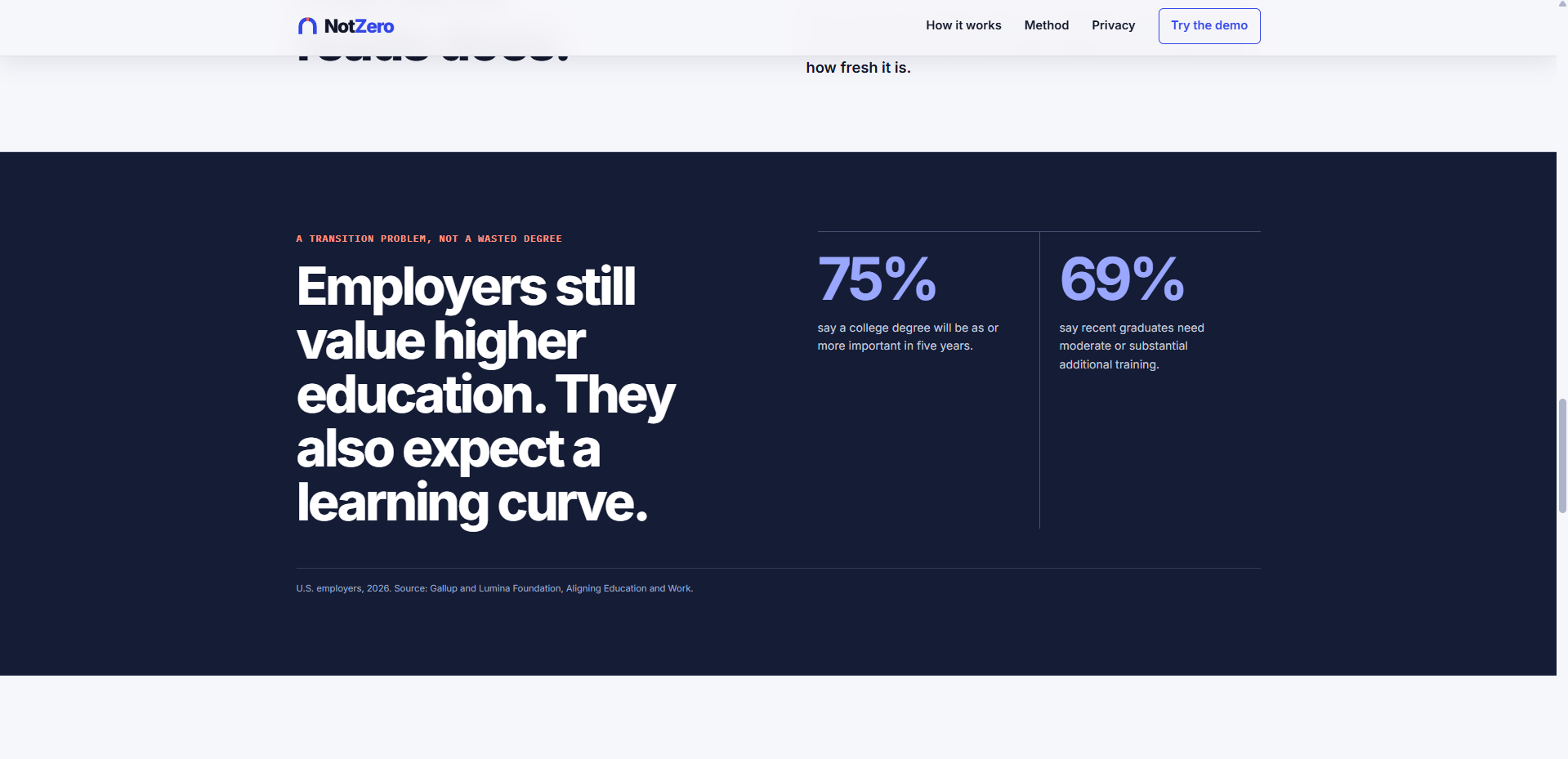
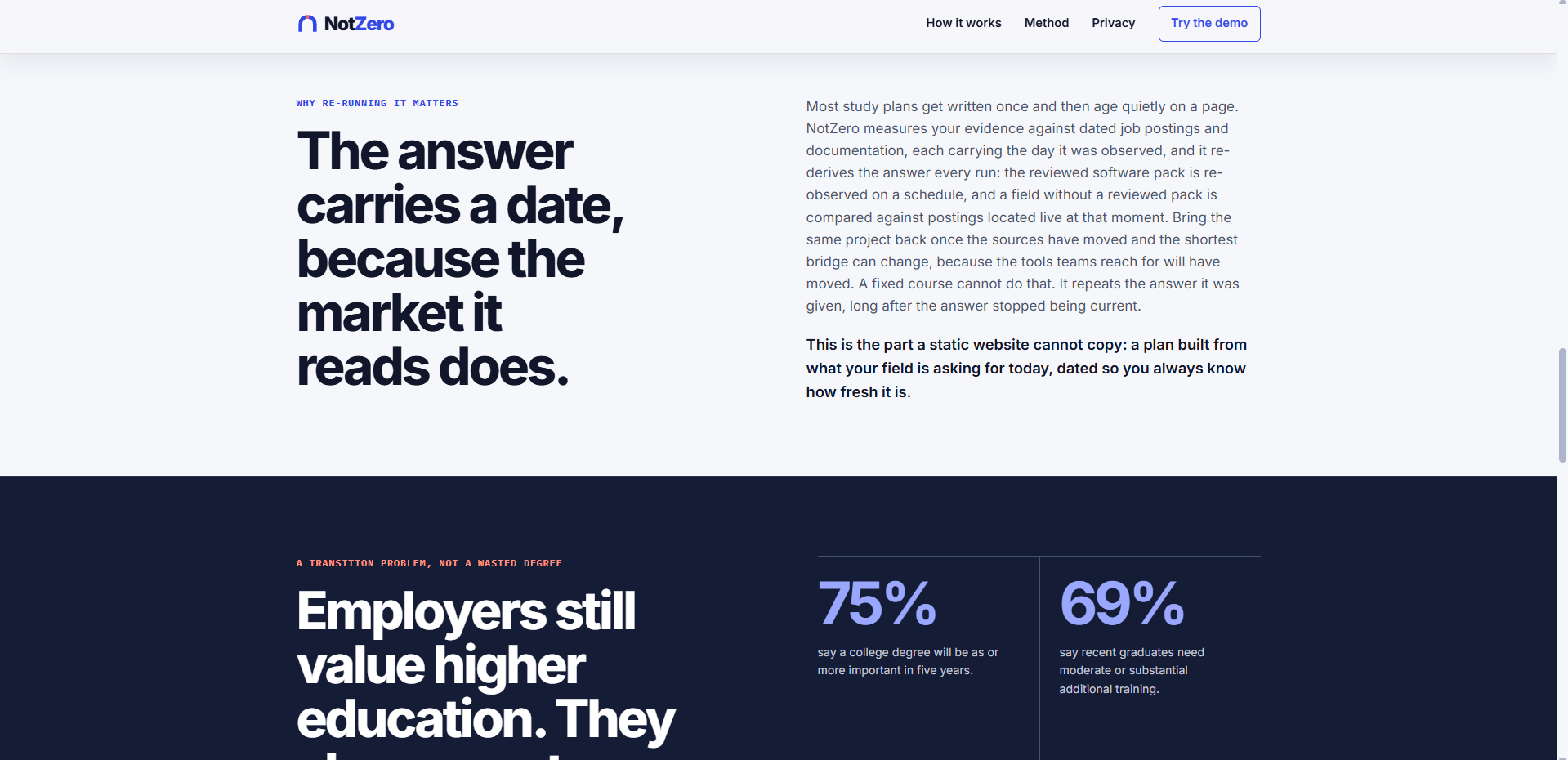
Graduates often discover that the tools and practices employers request today differ from what they studied. NotZero helps them see that they are not starting from zero. Their existing knowledge can become a practical bridge to current work.
What it does
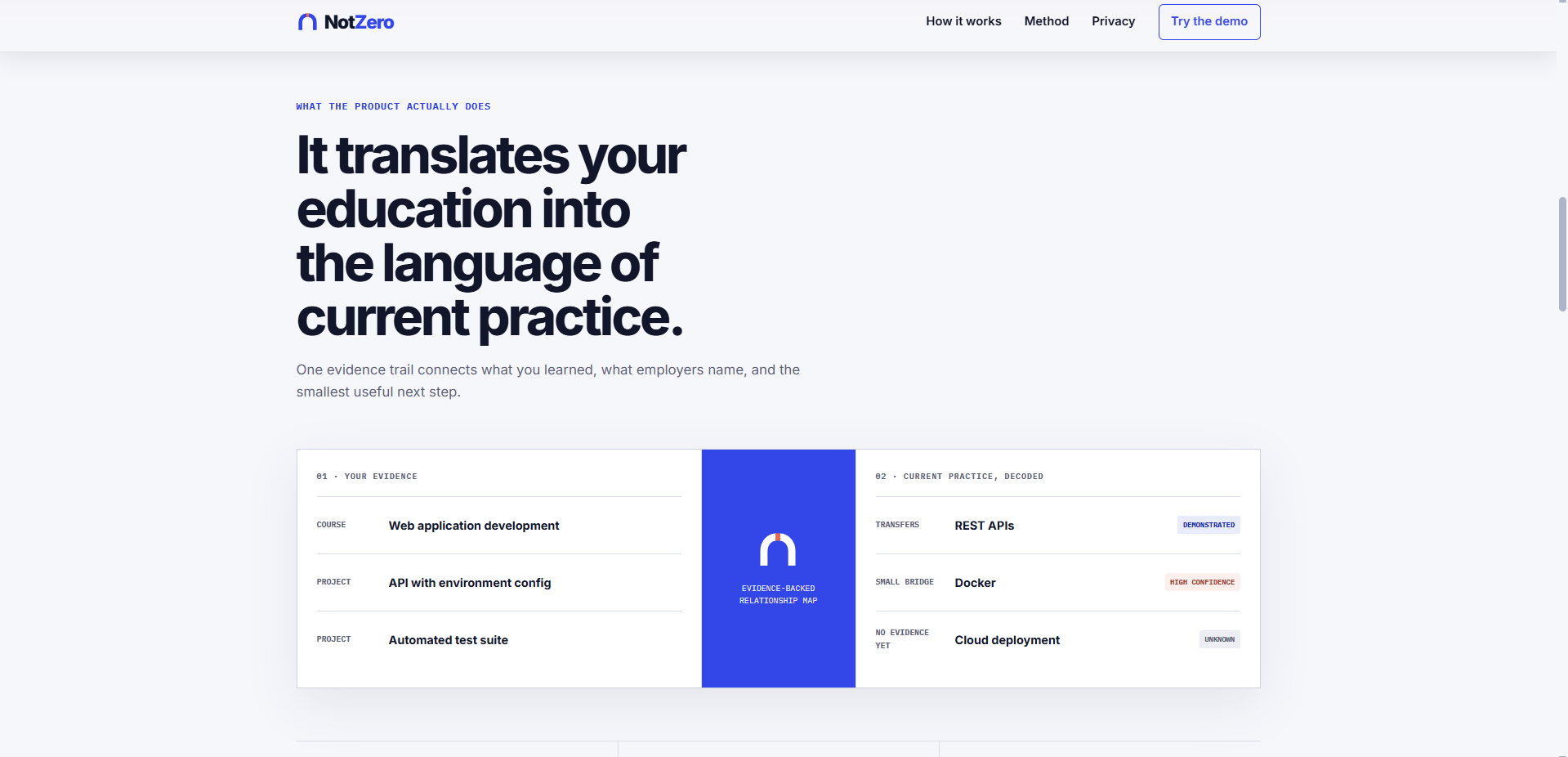
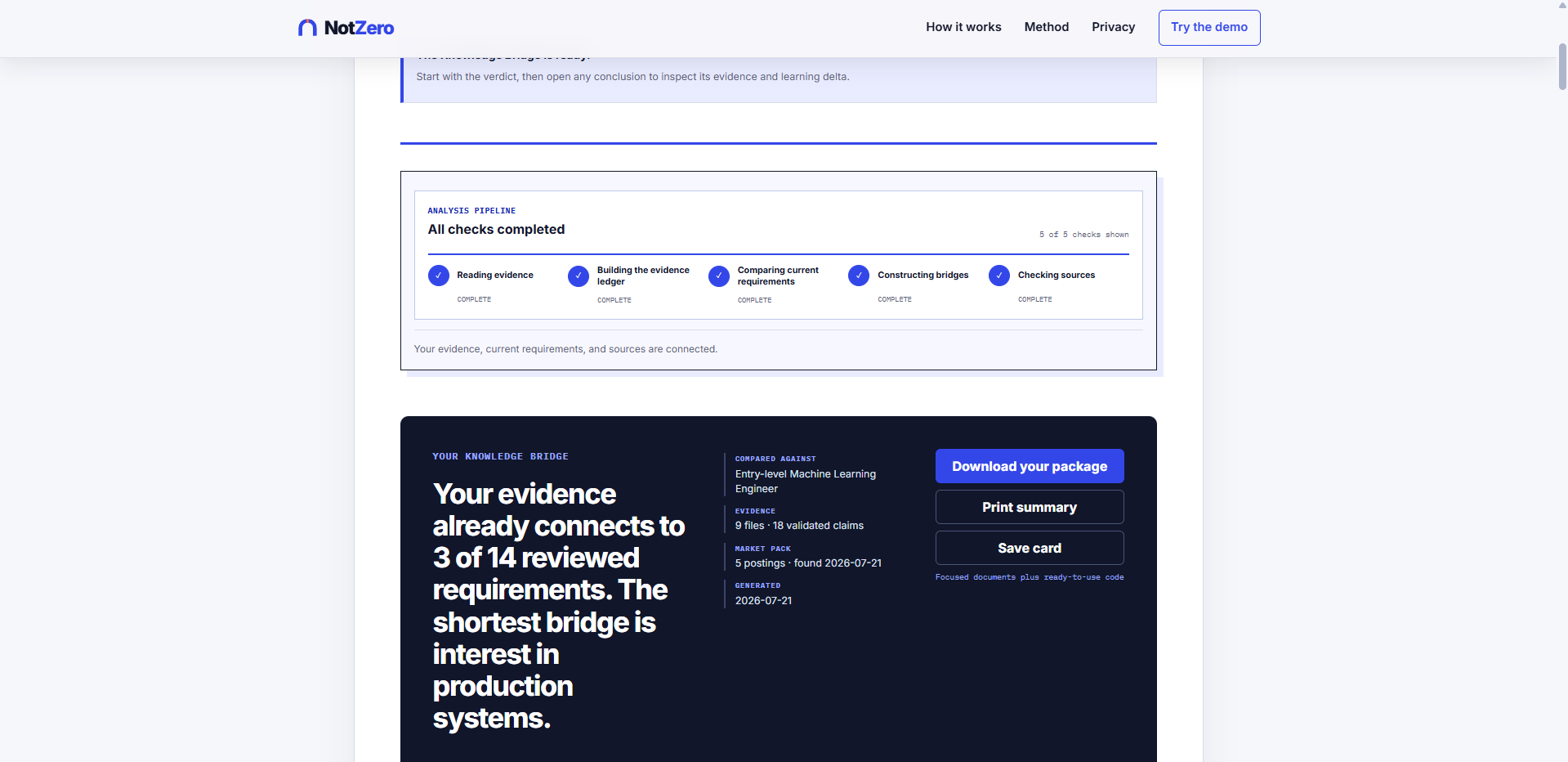
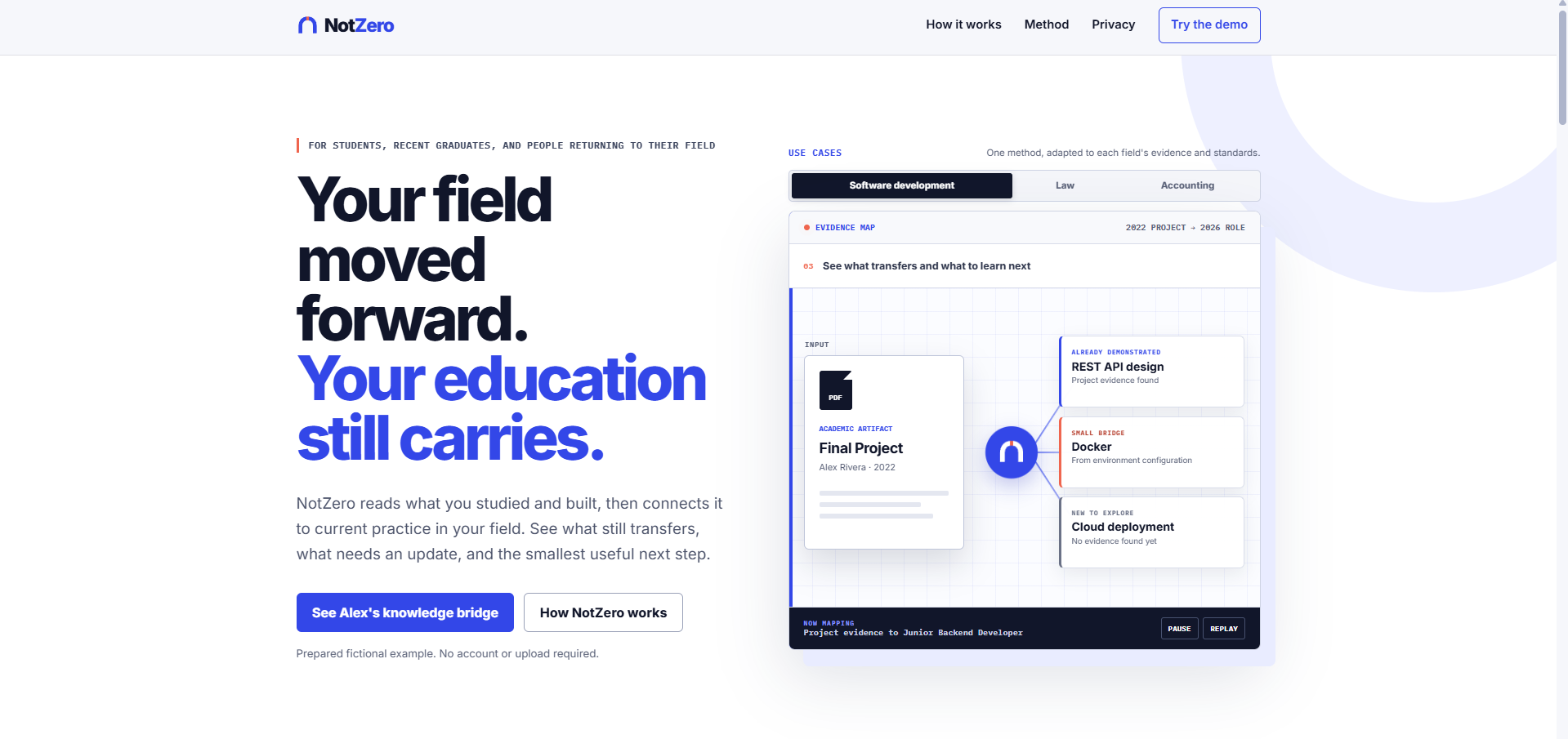
NotZero analyzes a user’s curriculum, academic materials, project files, target role, and location. It identifies what remains current, what transfers, what needs a small bridge, what appears missing, and what cannot yet be concluded. It then provides evidence, prioritized next steps, and a concrete upgrade challenge.
How we built it
We built NotZero with Codex, GPT-5.6, TypeScript, and a server-side OpenAI API integration. The product uses bounded file uploads, staged analysis, structured outputs, evidence locators, schema validation, checkpointed retries, and progressive disclosure so users see the result first and inspect supporting evidence when needed.
Challenges we ran into
The hardest problems involved incomplete or inconsistent documents, model outputs that referenced evidence incorrectly, long-running requests, and making detailed traceability useful without overwhelming users. We addressed these with smaller batches, strict validation, resumable stages, graceful failure states, and clearer evidence presentation.
Accomplishments that we're proud of
We created a working end-to-end knowledge bridge for recent software graduates while keeping the underlying concept applicable to other disciplines. The product turns existing academic work into an actionable view of current professional expectations instead of treating unfamiliar tools as proof that a user lacks knowledge.
What we learned
Reliable analysis requires more than sending documents to a model with a prompt. Inputs must be bounded, claims must resolve to evidence, uncertainty must be visible, and failures must preserve progress. We also learned that the most valuable recommendation is usually a focused bridge from something the user already understands.
What's next for NotZero
After the MVP, we plan to expand the evidence model for fields such as law, accounting, business, and nursing. Each discipline will need its own source rules, terminology, and update patterns. We will also continue improving source quality, document coverage, and user-controlled privacy.
Built With
- and
- cloudflare-workers
- css
- d1
- flask
- gpt-5.6
- html
- markdown
- pandas
- python
- react
- scikit-learn
- the-openai-responses-api
- typescript
- vinext
- vite
- zod


Log in or sign up for Devpost to join the conversation.