-
-
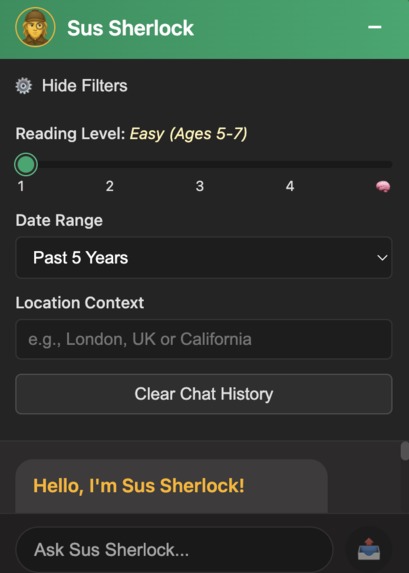
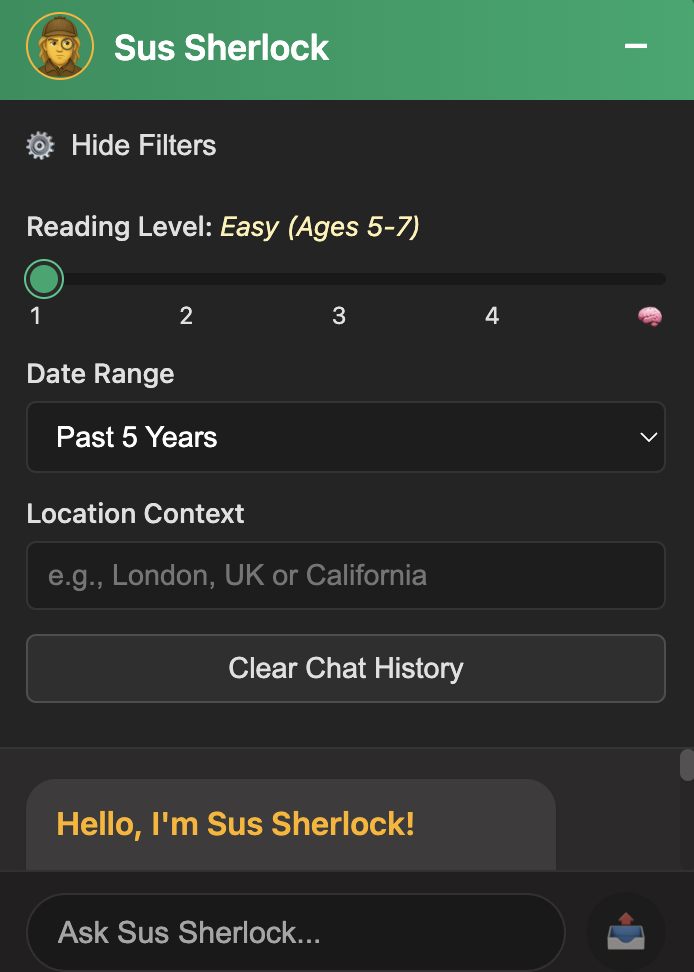
An image of the Sherlock widget settings options
-
Inspiration
NotSus was inspired through my work as a children's tech and business educator. I see that the vast majority of kids are overly addicted to screen based entertainment. I am cautious about exposing kids to LLMs too early for a number of reasons, but when I do, I choose Perplexity for sourced and scientific output. I was excited to learn that the Sonar API is now available, and this hackathon gave me the initiative to test out some ideas. Many of our users are of diverse ages, reading levels, and expertise across subjects. I thought it would be useful to allow the user to determine their reading or comprehension level when asking a question.
What it does
🎯 Revolutionary Reading Level Intelligence - Five dynamic comprehension modes from "Ms. Frizzle excitement" for 5-year-olds to PhD-level academic discourse. This isn't just simpler words - it's completely different tone, complexity, and depth based on age. No other LLM does this!
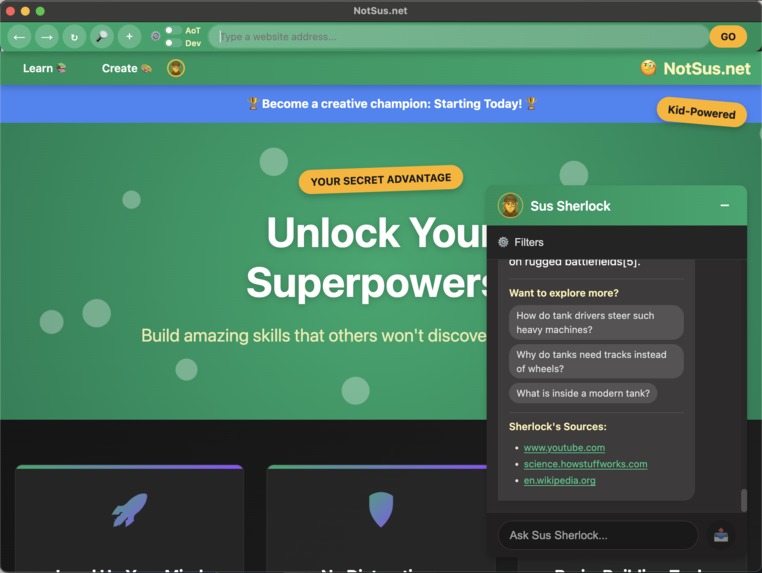
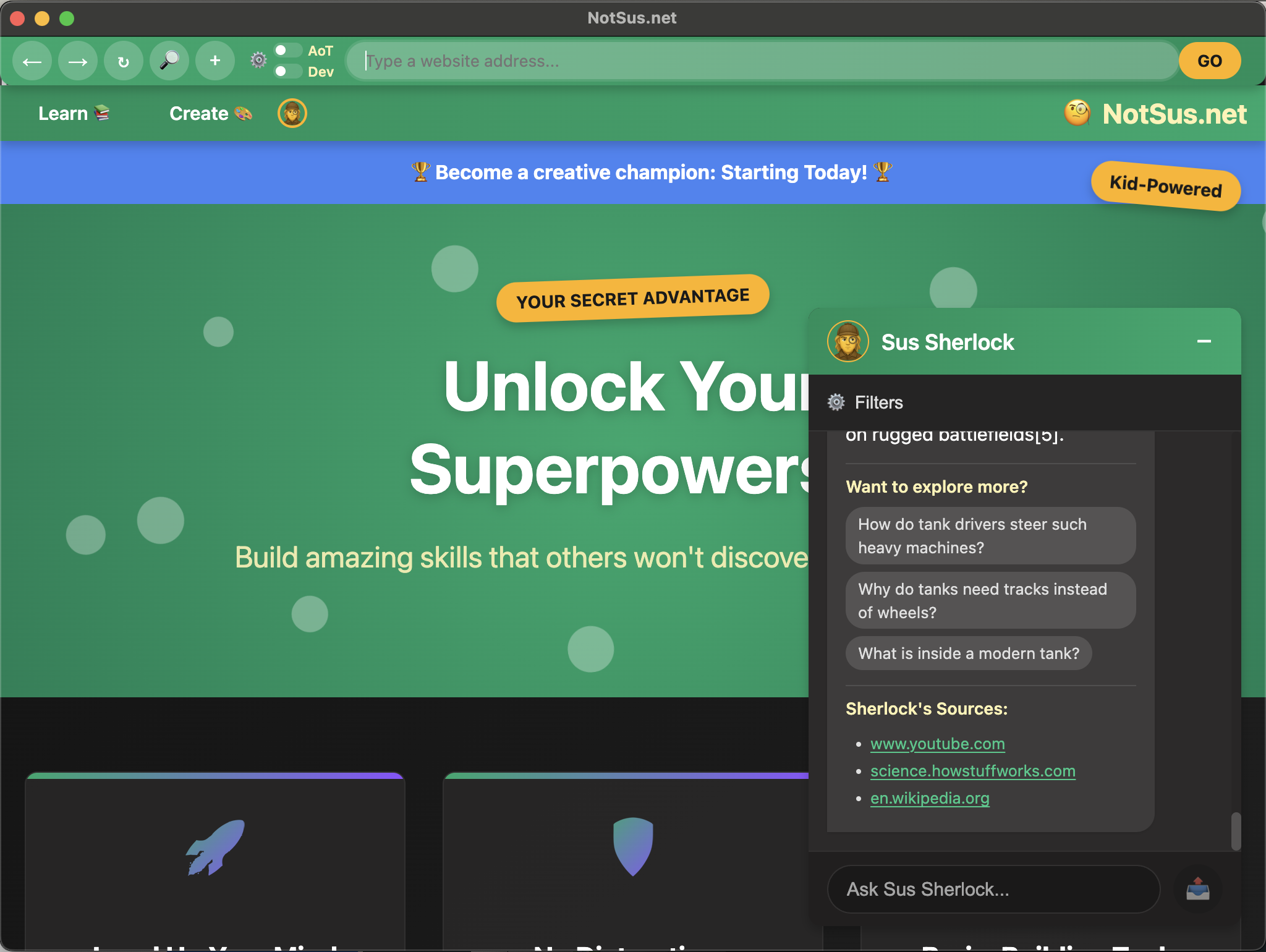
🔍 Real-Time Context Awareness - Sherlock automatically knows what webpage you're viewing and provides contextual answers without being asked. It's like having a research assistant that's always looking over your shoulder.
🛡️ Built-in Child Safety Architecture - Multi-layered protection that blocks inappropriate sources, redirects unsafe queries to educational alternatives, and ensures all responses are age-appropriate. Safety is baked into every response.
🎮 Interactive Learning Experience - One-click exploration with "connection tags" that let kids dive deeper into related topics instantly, plus smart follow-up suggestions that build learning journeys.
📅 Smart Search Filtering - Date and location awareness that tailors responses with temporal and geographic context that most LLMs ignore.
🏫 Educational-First Design - Built specifically for learning, prioritizing educational sources and structuring responses to spark curiosity rather than just answer questions.
How we built it
It was pretty straight forward, following the API docs, and implementing/testing my ideas as I went through. I initially built it as a standalone chatbot before integrating it into the NotSus.net browser which is built with Electron. The key was building sophisticated system prompts that dynamically adjust based on reading level, implementing real-time webview context monitoring, and creating a comprehensive safety filtering system.
Challenges we ran into
The first few attempts weren't fruitful for a variety of reasons. When I slowed down and properly understood the documentation, I got a simple version working before adding complexity. The biggest challenge was getting the dynamic reading level system to work consistently - ensuring that a 5-year-old gets genuinely age-appropriate responses while a PhD student gets academic-level depth.
Accomplishments that we're proud of
It's seamlessly integrated into our browser, sporting a great brand (Sherlock), and the core features create something truly unique. We built the first LLM specifically designed for educational use that adapts to different learning levels while maintaining rigorous safety standards. The real-time context awareness makes it feel like magic - kids can ask questions about what they're reading and get instant, relevant help.
What we learned
The Perplexity API is fantastic out of the box! I love that it easily provides sources and follow up questions. But we learned that with careful prompt engineering and system design, you can create something far more sophisticated than a basic API wrapper - you can build a genuinely educational AI companion.
What's next for NotSus.net - Sherlock Chatbot
Building out the backend so that users can reference their history, predefine Sherlock personas for different subjects, and create learning paths that adapt based on a child's interests and progress. We're also exploring ways to integrate with educational curricula and provide teachers with insights into student learning patterns.


Log in or sign up for Devpost to join the conversation.