NotForExam
Inspiration
NotForExam was inspired by a problem I kept seeing while mentoring other people on platforms like ADPList.
As a mentor, I spoke with learners, junior engineers, career switchers, and certification holders who were trying to move into cloud and DevOps roles. Many of them had studied hard, watched courses, passed certifications, or built small projects, but they still felt unprepared for real engineering work.
The pattern was clear: people knew the theory, but they struggled when they had to troubleshoot something without step-by-step instructions.
Certifications are useful, but production does not look like an exam. In real cloud engineering, nobody gives you four multiple-choice answers. You get a broken system, incomplete context, logs, Terraform files, vague error messages, and pressure to find the root cause.
I wanted to build something different from traditional exam preparation platforms.
NotForExam is designed for people who want to practice real cloud troubleshooting, not just memorize services or pass quizzes. The goal is to help learners think like cloud engineers by putting them inside realistic infrastructure problems.
What it does
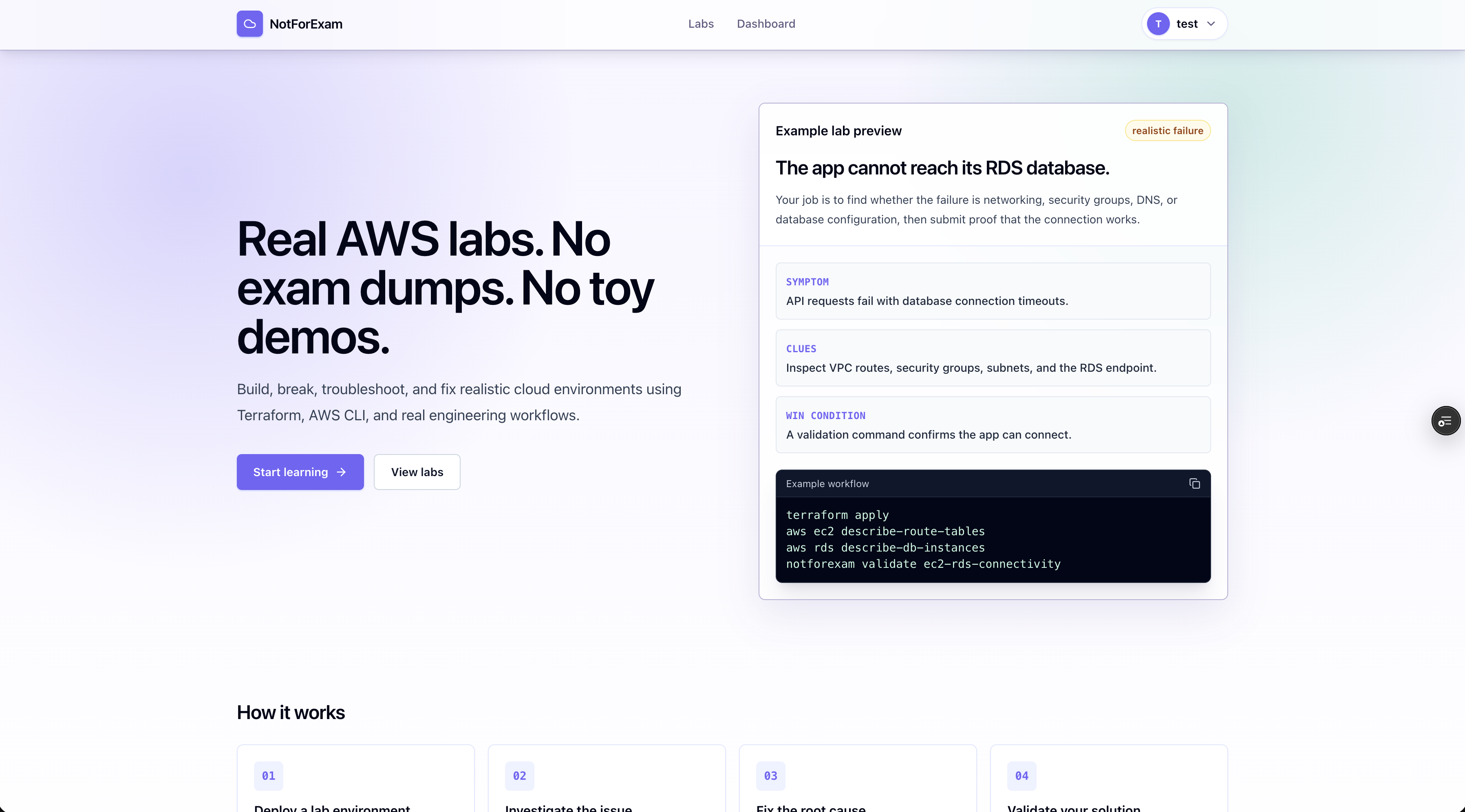
NotForExam provides real-world cloud labs where users investigate and fix broken infrastructure scenarios.
Instead of asking, “What is the correct answer?”, the platform asks:
“Something is broken. Can you figure out why?”
The project focuses on practical scenarios such as AWS networking issues, Terraform misconfigurations, IAM and security mistakes, broken application connectivity, production-style incident tickets, guided troubleshooting with hints, and senior-engineer-style solution debriefs.
The first version focuses on AWS and DevOps troubleshooting, especially the kind of problems junior engineers, career switchers, and certification holders often struggle with when moving from theory to real work.
How we built it
The project was built as a web platform for hands-on cloud learning.
The main idea is to present users with a realistic incident brief, supporting files, and a broken infrastructure scenario. Users then work through the problem, use hints if needed, and compare their reasoning with a detailed solution explanation.
The platform was designed around a few core principles:
- Realistic problems over quizzes
- Troubleshooting over memorization
- Hints instead of direct answers
- Understanding the root cause, not just applying a fix
- Labs that feel close to real production work
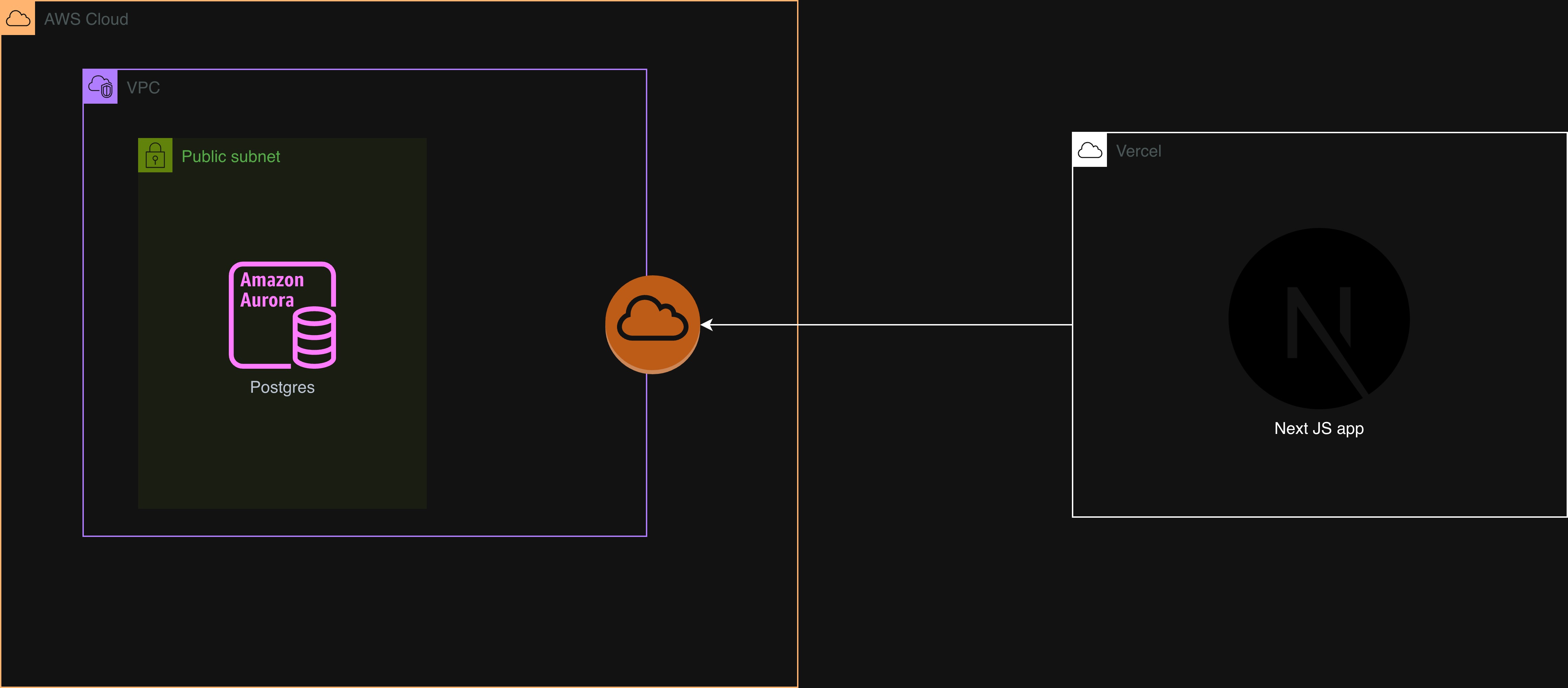
The project uses a modern web stack, with a focus on being simple to run, easy to extend, and flexible enough to add more labs over time.
Challenges we faced
The biggest challenge was deciding what the product should not be.
It is easy to build another course platform, another certification site, or another list of cloud tutorials. The harder part was keeping the product focused on real troubleshooting.
Another challenge was balancing realism with accessibility. If a lab is too easy, it does not feel valuable. If it is too hard, learners get stuck and quit. The hint system was designed to solve this by giving users progressive help without immediately revealing the answer.
A major technical and product challenge was also deciding how to provide realistic AWS environments. Giving users only Terraform files is simple, but it can create friction because users must deploy everything in their own AWS accounts. On the other hand, live AWS sandbox environments are more realistic, but they introduce cost, security, cleanup, and abuse-prevention challenges.
What we learned
We learned that the most valuable part of cloud education is not always the content itself, but the thinking process.
Through mentoring, I saw that many learners do not only need more information. They need practice making decisions, asking better questions, reading symptoms, and narrowing down the root cause.
Many learners know what a VPC, route table, security group, or IAM policy is. The harder skill is knowing where to look first when something breaks.
NotForExam is built around that mindset.
We also learned that a good lab is not just a task. A good lab needs a realistic story, clear but incomplete context, useful evidence, multiple possible investigation paths, a root cause that teaches something practical, and a debrief that explains how an experienced engineer would think.
What makes it different
Most cloud learning platforms teach users how services work in isolation.
NotForExam focuses on how systems fail in combination.
For example, a real issue might involve networking, Terraform, security groups, DNS, and application configuration at the same time. That is closer to real cloud engineering than a simple step-by-step lab.
The goal is not to help users collect badges. The goal is to help them build confidence before they face real incidents, interviews, or production systems.
What is next
The next step is to create a small set of high-quality AWS troubleshooting labs and test them with real learners and engineers.
The main planned feature is an AWS sandbox environment. Instead of asking users to deploy Terraform in their own AWS accounts, NotForExam will give them access to pre-created cloud projects inside a controlled sandbox. Each project will contain realistic problems, such as broken networking, security misconfigurations, or failed deployments. Users will investigate the environment, find the root cause, and fix the issue as if they were working on a real production incident.
After that, the platform will expand with more incident-style labs, AI-assisted hints and feedback, progress tracking, and portfolio-style proof of completed work.
The long-term vision is to make NotForExam the place where cloud engineers practice real-world troubleshooting before they have to do it in production.
Final thought
NotForExam exists because cloud learning should not stop at passing an exam.
The real test starts when something breaks.
Built With
- amazon-web-services
- aurora
- codex
- nextjs
- postgresql
- vercel

Log in or sign up for Devpost to join the conversation.