-
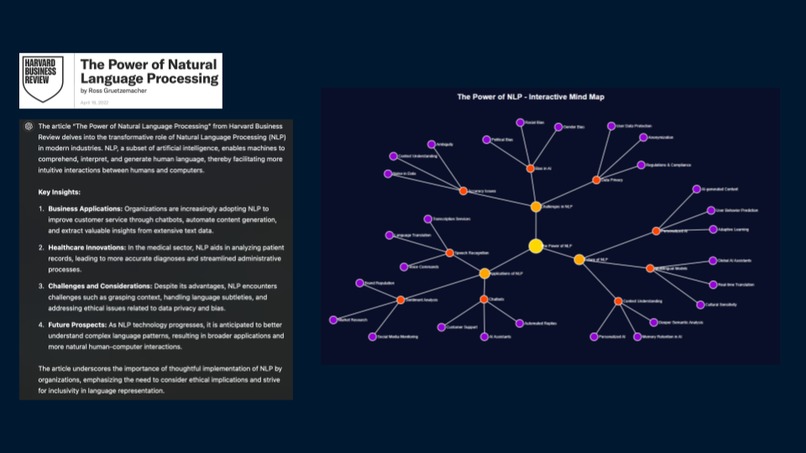
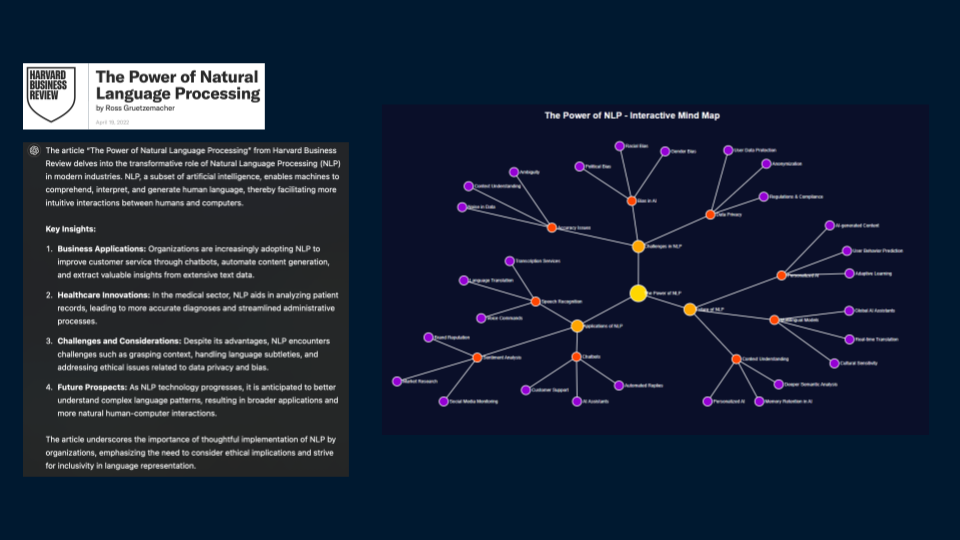
bland text vs mind map
-
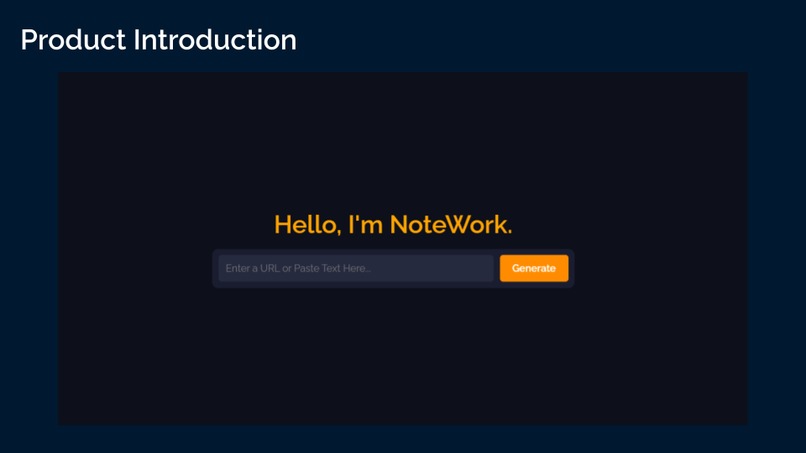
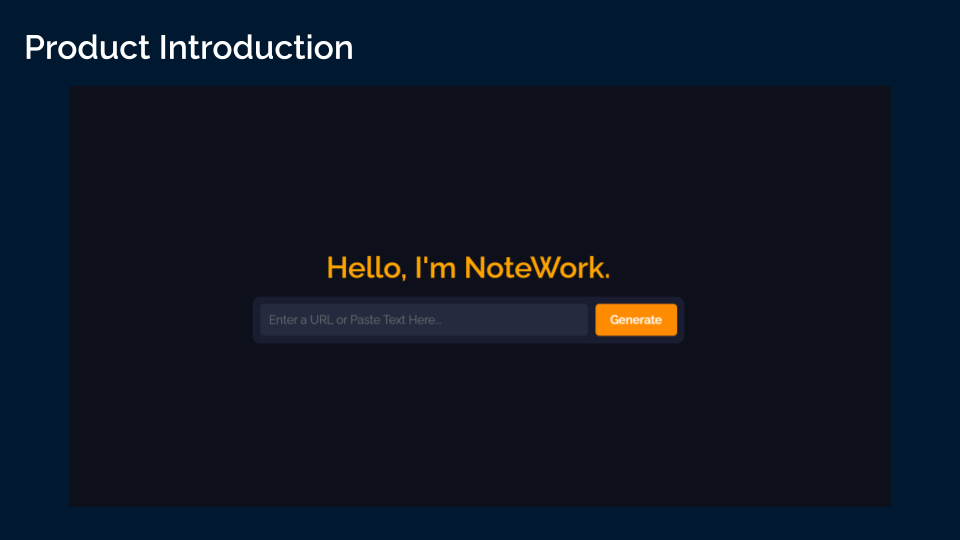
Introducing NoteWork
-
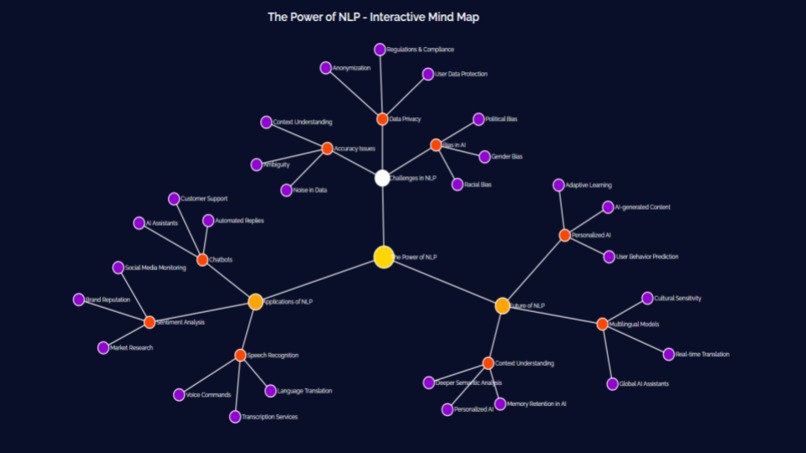
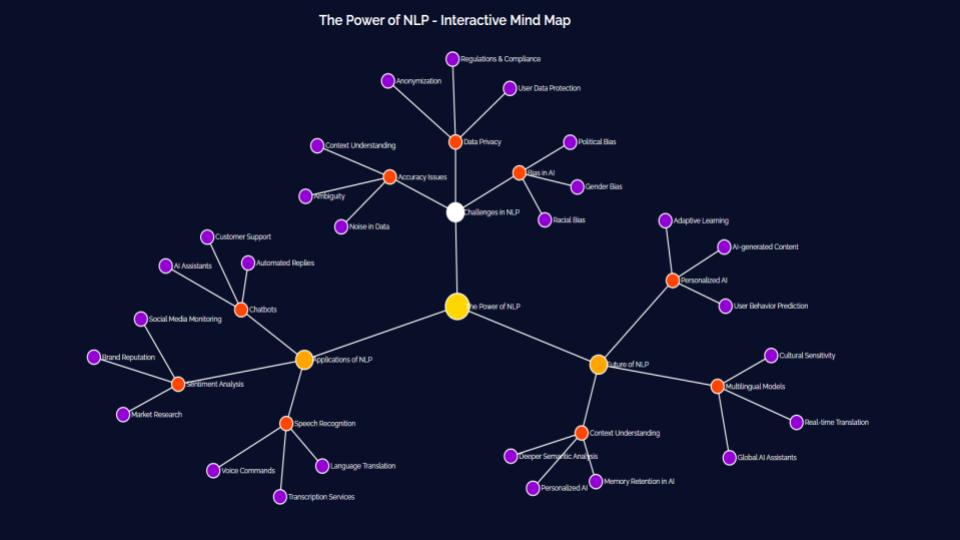
NoteWork Illustrative Example
-
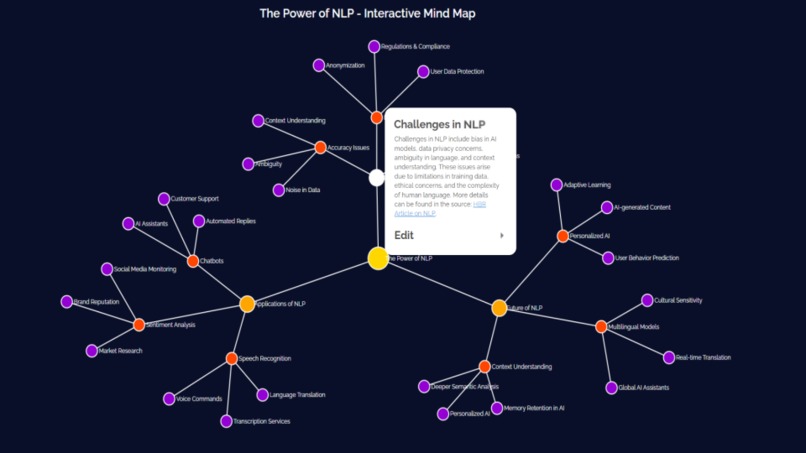
NoteWork Illustrative Example, Node Interaction
-
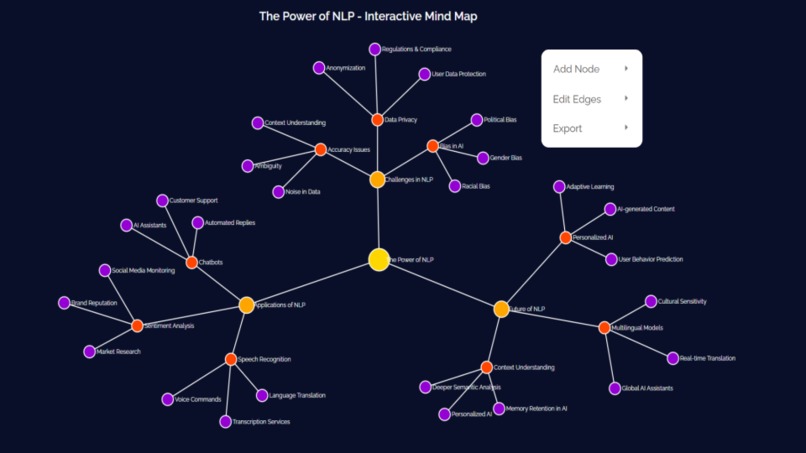
NoteWork Illustrative Example, Other Functionalities
Inspiration
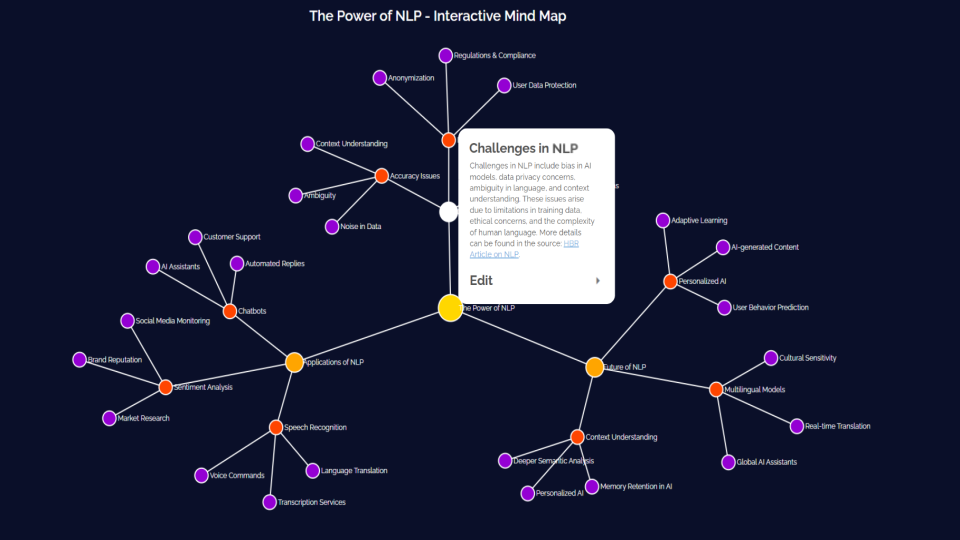
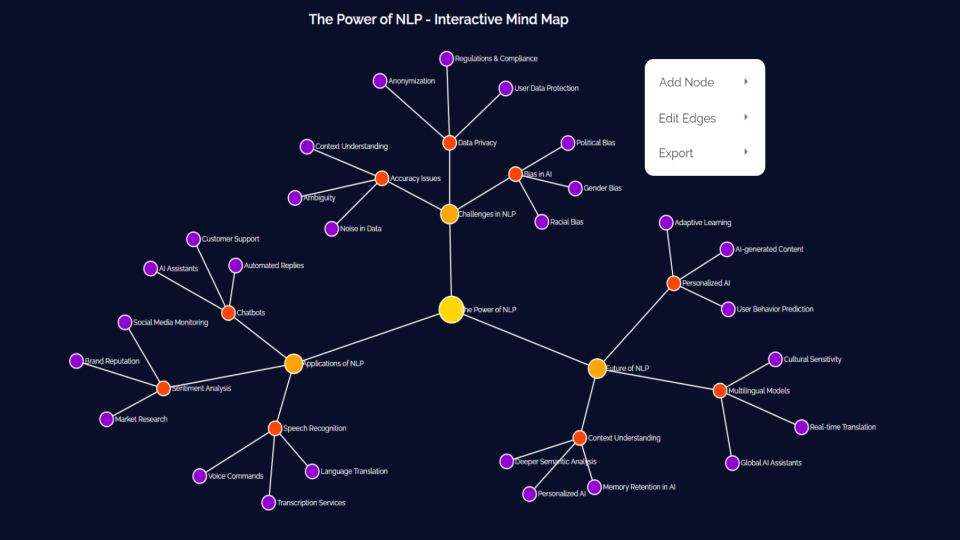
Tired of bland linear text responses of ChatGPT and other NLP models, we wanted to explore an alternative way to represent and interact with these models. We decided on utilizing mind maps to represent information in the form of interactive and dynamic networks.
What it does
It converts information, whether it be text on a website or from a transcript, into interactive and dynamic mind maps by using an NLP model.
How we built it
We engineered a specific prompt for ChatGPT which would give it clear instructions on taking in text from a defined source, processing it into a network and then formatting it as an html file which can then be opened or embedded in our platform.
Challenges we ran into
While making the network for the mind map, we had to make sure that ChatGPT focused on ideas that we would consider non-trivial so not connective words like "and" or "but."
Accomplishments that we're proud of
After ironing out some issues we were able to get ChatGPT to generate mind maps from different websites and text sources with very little problem.
What we learned
Unlike regular old text based note taking methods, mind maps really help you absorb and consolidate information. By doing research into the method of mind mapping and doing a fishbone analysis we came to a deeper appreciation of the simple yet meaningful way a change in visualization can impact the way we interact with information.
What's next for NoteWork
We want to fully develop the web app with the NLP process we have developed fully embedded in it. Eventually we want this tool to be able to help bring clarity to more complex data sets through AI Powered Bibliographic Network Visualization for Academic Literature.
Built With
- chatgpt
- powerpoint

Log in or sign up for Devpost to join the conversation.