Inspiration
The inspiration for NoteKeeper came from an engineering reality check. While organizing old workspaces during the high-octane rush of a competitive hackathon, a repository containing a basic, forgotten local codebase was discovered. Looking back at that early code sparked a challenge: to bridge the gap between past experimentation and present full-stack capabilities. The goal became to take a legacy project trapped on localhost and transform it into a robust, cloud-scalable application using modern architectural principles.
What it does
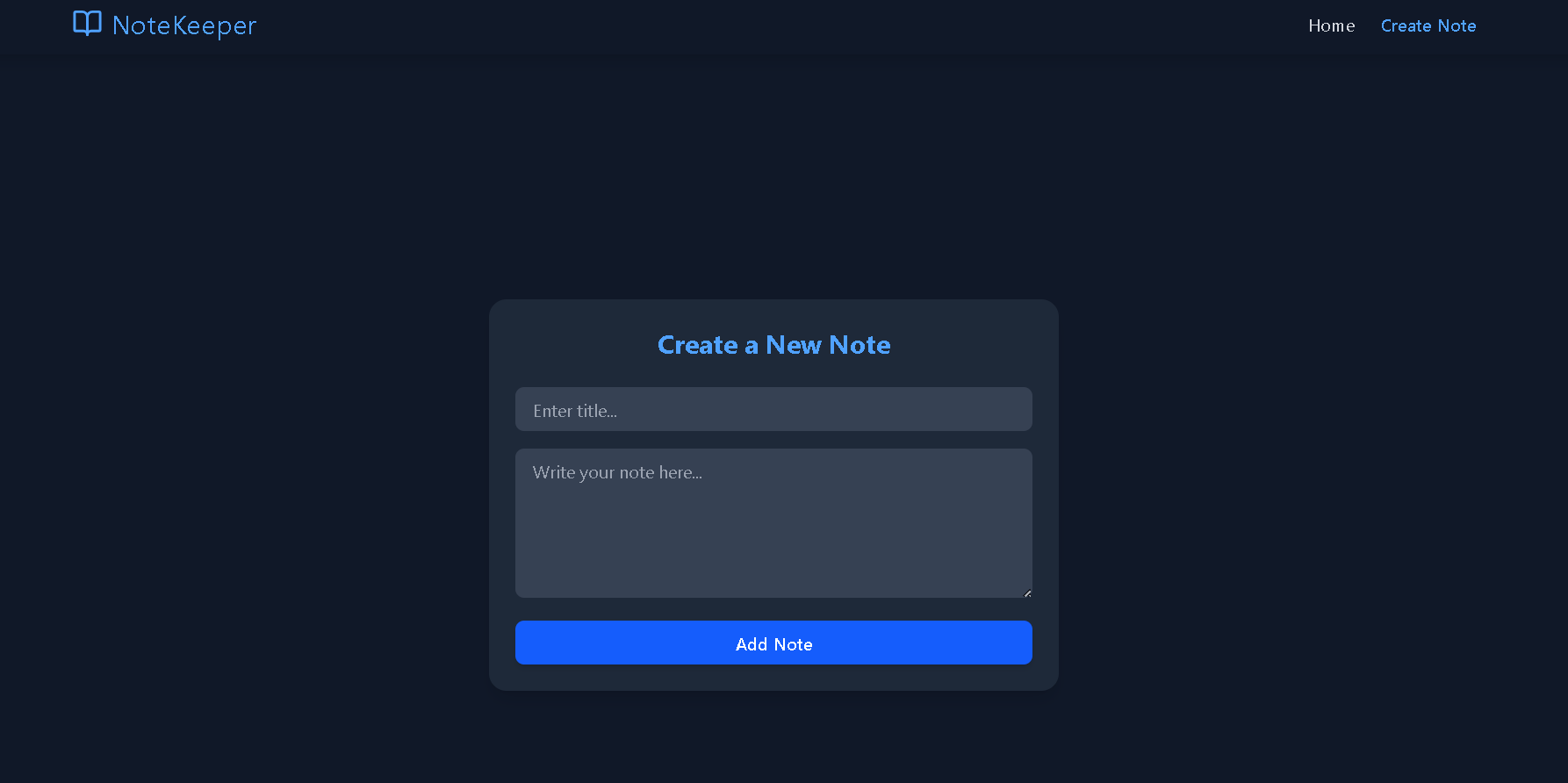
NoteKeeper is a production-ready, full-stack productivity tool that provides users with a clean, immersive, and highly responsive dark-mode workspace to safely organize thoughts and manage documentation.
Secure User Authentication: Features a secure, encrypted onboarding system (Signup/Login) to ensure absolute data privacy.
Full CRUD Capabilities: Allows users to seamlessly create, read, update, and delete personal notes dynamically with zero latency.
Responsive Layout: Designed with a mobile-first philosophy, ensuring the entire UI behaves flawlessly across desktop, tablet, and smartphone screens.
How we built it
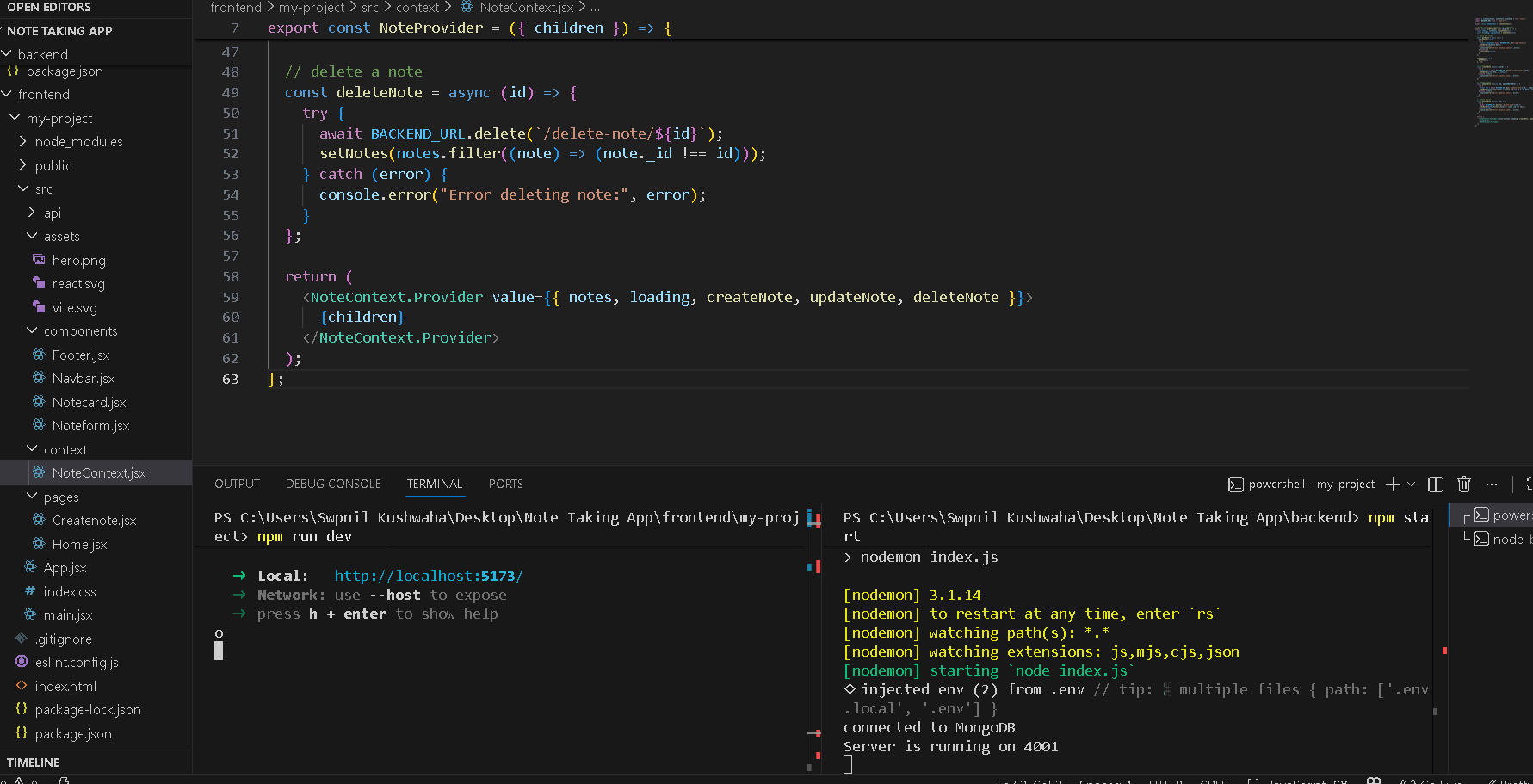
The project leverages a robust, decoupled MERN Stack architecture designed for maximum performance and isolation of concerns:
Frontend Layer: Built using React.js and Vite for blazing-fast builds and hot-module replacement, styled with Tailwind CSS for custom design utility, and deployed globally via Vercel.
Backend Layer: Powered by Node.js and Express.js to construct a RESTful API grid that handles user requests, route routing, and data communication, hosted on Render.
Database Layer: Implemented using a cloud-managed MongoDB Atlas instances to manage dynamic JSON-like data documents safely and securely.
Challenges we ran into
Orchestrating a fully decoupled infrastructure out of an old codebase meant facing severe environment mismatches and configuration bottlenecks. Handling Cross-Origin Resource Sharing (CORS) security policies between the Vercel domain and the Render backend required meticulous header setups. Additionally, managing asynchronous states in React while ensuring data integrity inside MongoDB during rapid CRUD actions presented tough debugging loops that were successfully resolved.
Accomplishments that we're proud of
Successfully migrating a static, legacy local codebase into a fully live, cloud-hosted production environment.
Maintaining an efficient, low-latency pipeline where independent frontend, backend, and cloud database modules talk to each other securely.
Designing a premium, highly aesthetic dark-mode layout that transforms a simple text field into a highly functional user experience.
What we learned
This hackathon journey heavily reinforced the core principles of Continuous Integration (CI), environmental security, and modern deployment workflows. It offered hands-on experience in debugging complex ecosystem configurations across distinct cloud hosting environments. Most importantly, it proved that old ideas are never obsolete; they just require updated engineering skill sets to unlock their true potential.
What's next for Note Keeper
Rich Text Support: Upgrading the simple editor to support markdown formats, checklists, and code blocks.
Smart Categories: Integrating automated tagging and search index filters for lightning-fast note organization.
AI Assistance: Adding a minor smart feature to summarize long notes and auto-generate contextual tags.


Log in or sign up for Devpost to join the conversation.