-
-
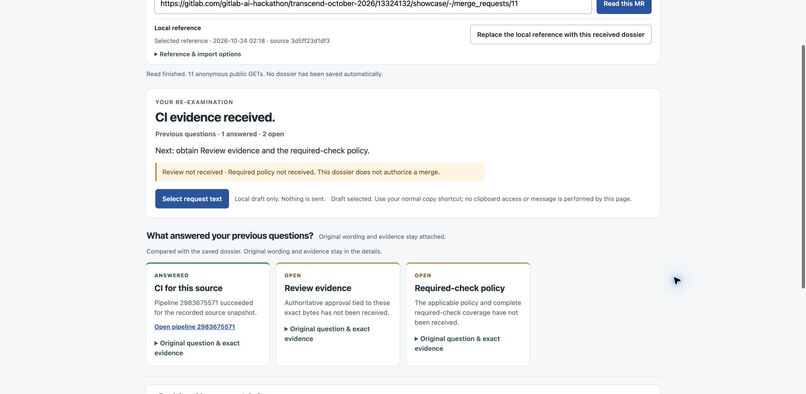
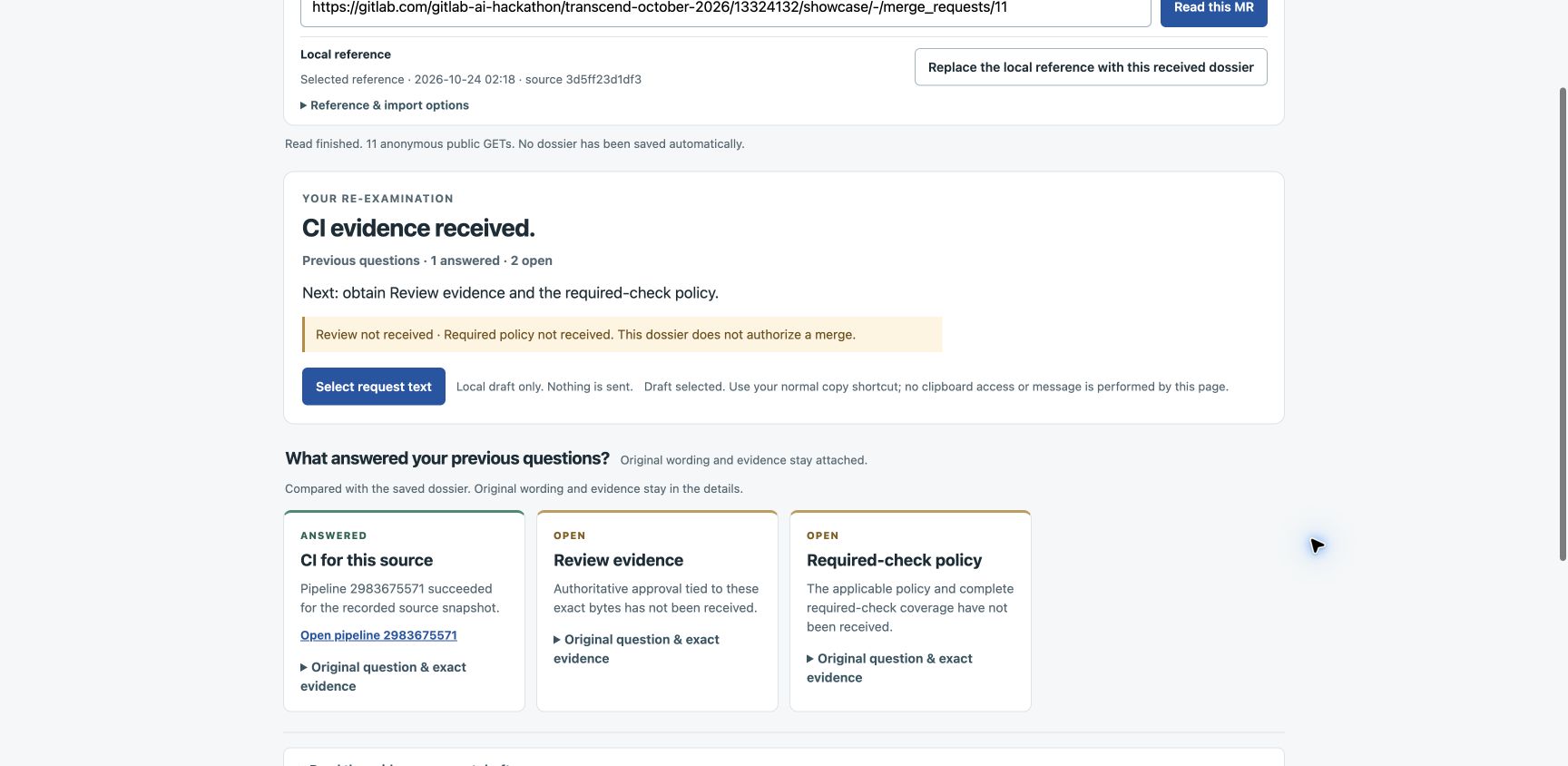
Historical client on historical MR !11 / 3d5ff23d: CI answered; Review and policy open. Draft selected; nothing sent.
-
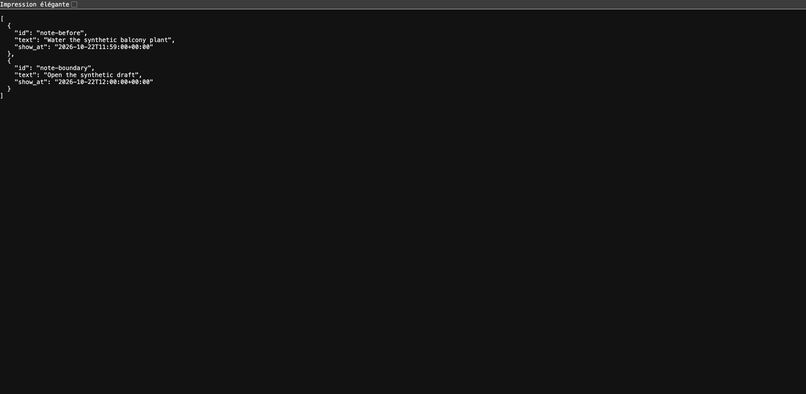
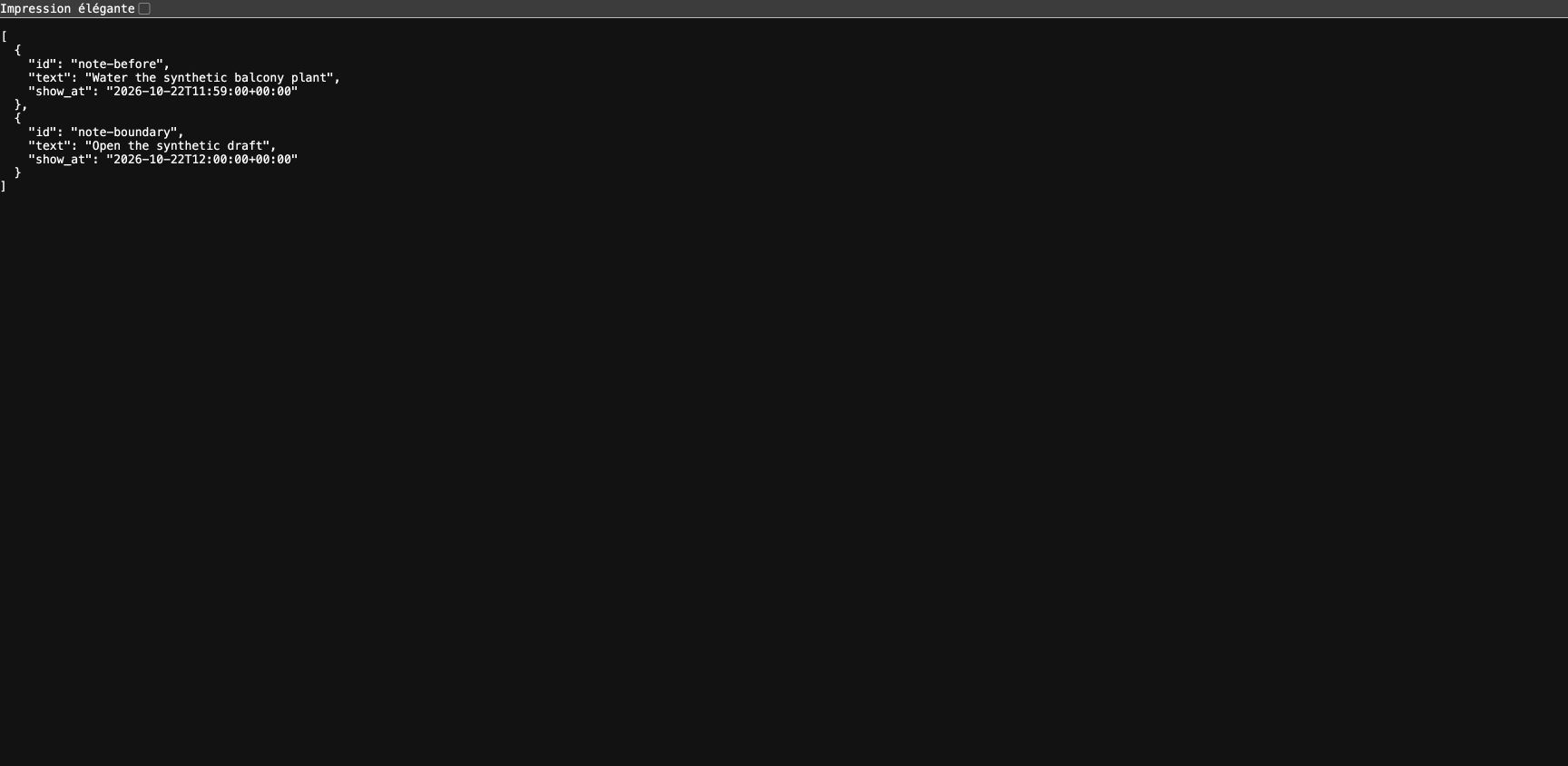
Historical NG-001 (MR !2) — CI output at noon includes note-boundary and note-before; future and archived notes remain excluded.
-
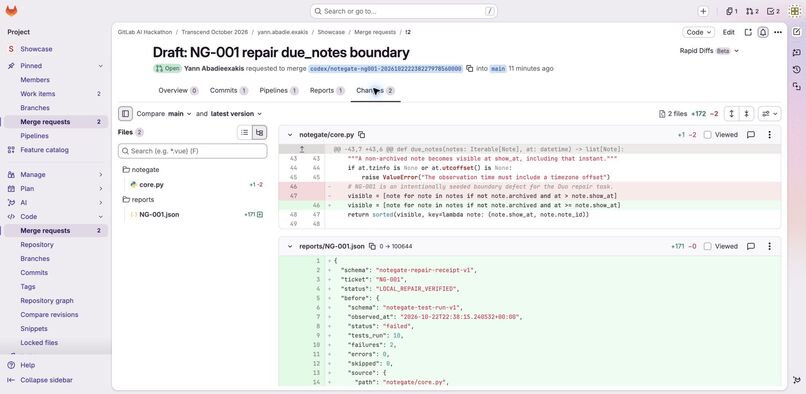
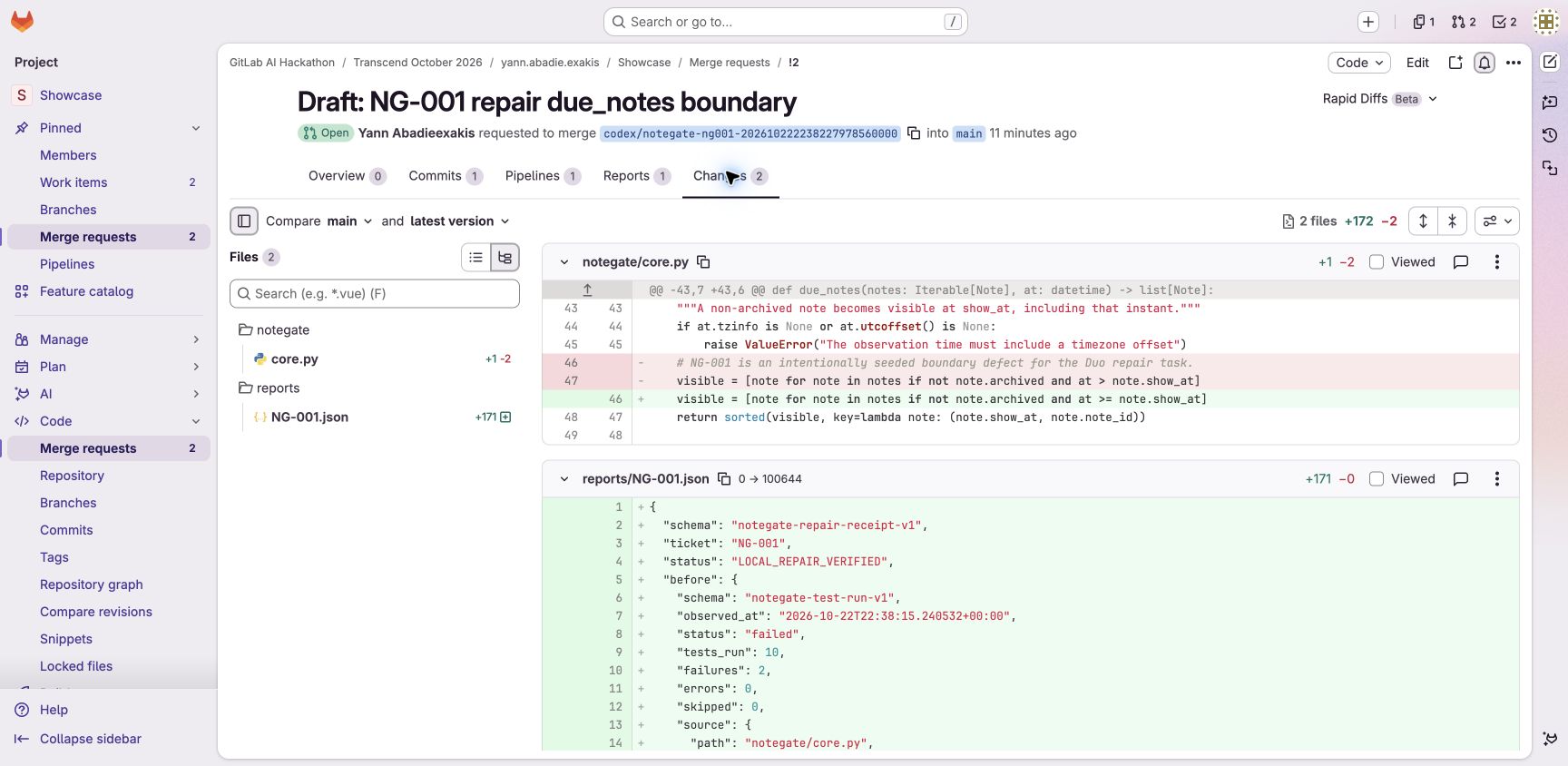
Historical NG-001 — MR !2 / ac34ee2a changes core.py and its generated report. Notes become visible exactly at their deadline.
-
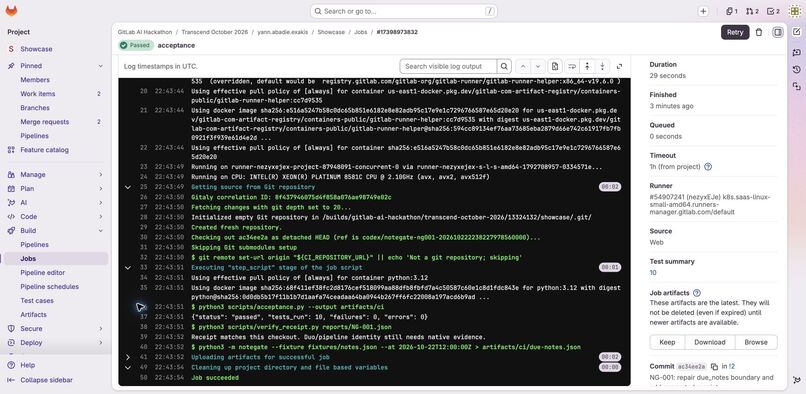
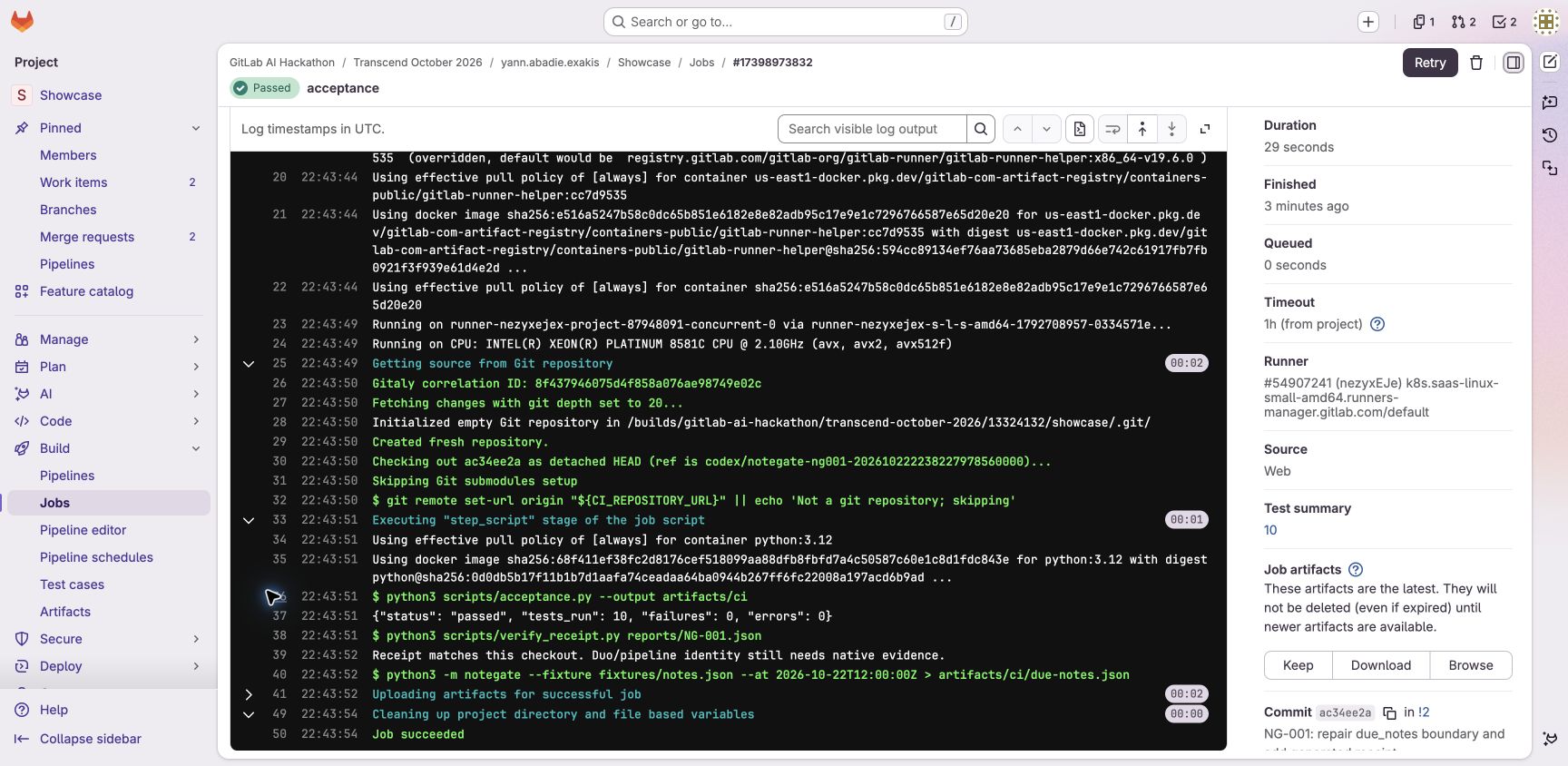
Historical NG-001 — acceptance CI for MR !2 / ac34ee2a: 10 tests, receipt verification and CLI passed.
Ten tests passed. The committed patch was different.
In our first native GitLab Duo attempt, MR !1 stored a Python module with one LF byte fewer than the file described by its test receipt. All ten business tests passed; the public test summary confirms it. CI rejected the receipt. The corrected Duo run produced MR !2, whose file identity and ten tests both passed.
For maintainers and platform teams accepting agent-written changes: a green test result should be attached to the exact patch you receive. NoteGate combines a supervised Duo repair, an inspectable review packet and a remote byte check before its v2 draft-MR step. The maintainer keeps the merge decision.
A supervised Duo loop
- Repair. GitLab Duo works on a bounded issue and runs the supplied tests. In the second native case, a fictional reminder retry created two pending jobs; the received repair keeps one. Among 19 unchanged business cases, failures fell from 3 to 0; the other 16 already passed.
- Freeze and review. A fixed controller binds the files, tests and complete review body. V2 Review has only read/list tools; Repair has no remote commit or MR tool, and Persist has no MR tool.
- Persist and verify. The stored commit's expected parent, complete changed paths, modes and both file contents must match the frozen approval before the deterministic MR node is reached.
- Hand off. The maintainer receives the draft MR, inspects CI and decides whether to merge. A separate browser reader can inspect a public MR's declared files, observed head, applicable CI and missing review evidence.
For judges
| Official criterion | Public evidence | What to inspect |
|---|---|---|
| Technical implementation | Exact executed Duo 1.6.0 graph, native MR !3 | Thirteen components, separated tools, pinned seed, frozen review and remote identity checks. |
| Design | Flow and evidence guide, MR reader | Follow repair → review → verify → handoff, then inspect the maintainer's remaining decision. |
| Impact | Received retry case | Two pending jobs after retry become one; 3 failing cases become 0. Human time savings remain unmeasured. |
| Innovation | The first refused receipt, controlled comparison | Passing tests and receiving the tested bytes are separate checks. The comparison preserves parity with a careful script. |
| Presentation | 99-second native demo, recorded transfer replay | The NG-002 Duo case and the separate later operator transfer, each identified as recorded evidence. |
Try it in two minutes
Open the public MR reader, paste MR !21 and choose Read this MR. The browser tools need no sign-in; native Duo session pages can require authorized GitLab access. The reader neither approves nor merges. Saving or exporting a received dossier is explicit.
The separate transfer replay shows an actual operator encoding mistake: Base64 text was stored instead of the approved file contents. Its handoff was refused; the corrected UTF-8 transfer matched. This is distinct from the original native Duo cases.
DevSecOps and inspectable source

The integration CI configuration runs acceptance and frontend checks automatically on merge requests and main, alongside stable basic SAST and Secret Detection jobs. Inspect current pipelines. Scanner execution and reported findings are separate evidence.
The workflow covers bounded issue intake, repair, tests, review, source verification and draft-MR handoff. The public graph is the exact received catalogue definition; the default template remains deliberately blocked until a qualified seed and protocol are selected. The later operator controller improvements have their own receipts, not a new native qualification. The project is public and MIT licensed.
Limits and next steps
- A careful pre-MR script matched the exercised safeguards. NoteGate packages them into inspectable Duo roles, a frozen review packet and a deterministic gate; real-project time and intervention savings have not been measured.
- The native cases use fictional fixtures. Original failed attempts and CI failures remain linked to their versions. They do not establish general repair performance or a fresh native run of the later operator improvements.
- Verification and branch-based MR creation are separate operations: a race can create a transient MR at a changed head before later receipt rejects it. Local declarations do not grant authenticated Review authority. No automatic merge, deployment or external reminder delivery is performed.
