-
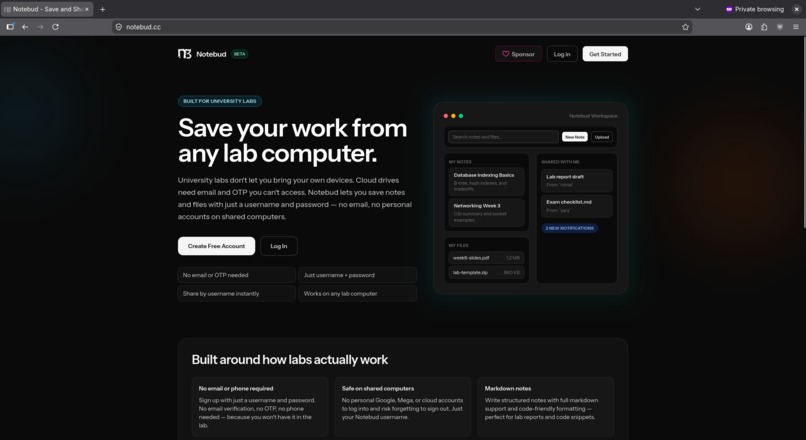
Welcome Page
-
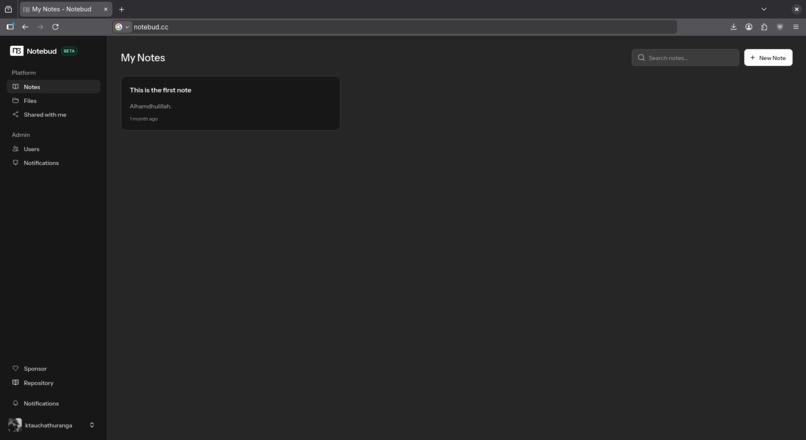
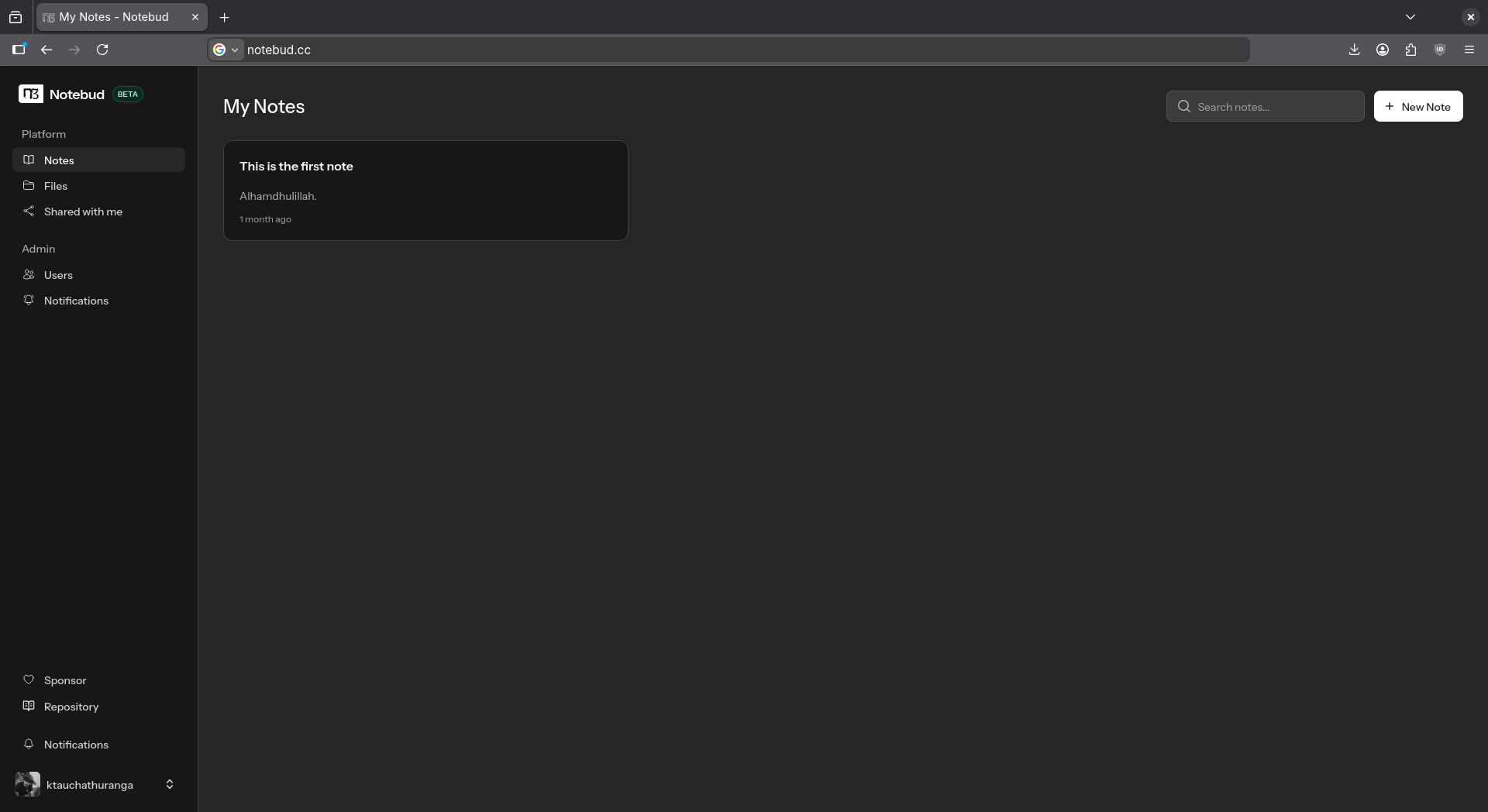
Notes
-
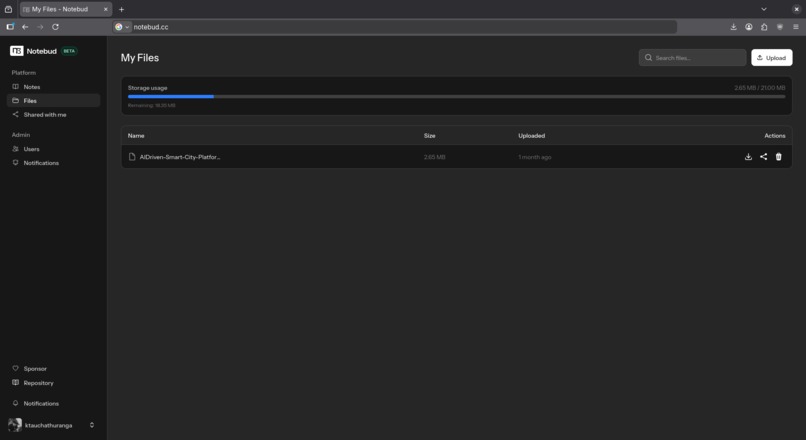
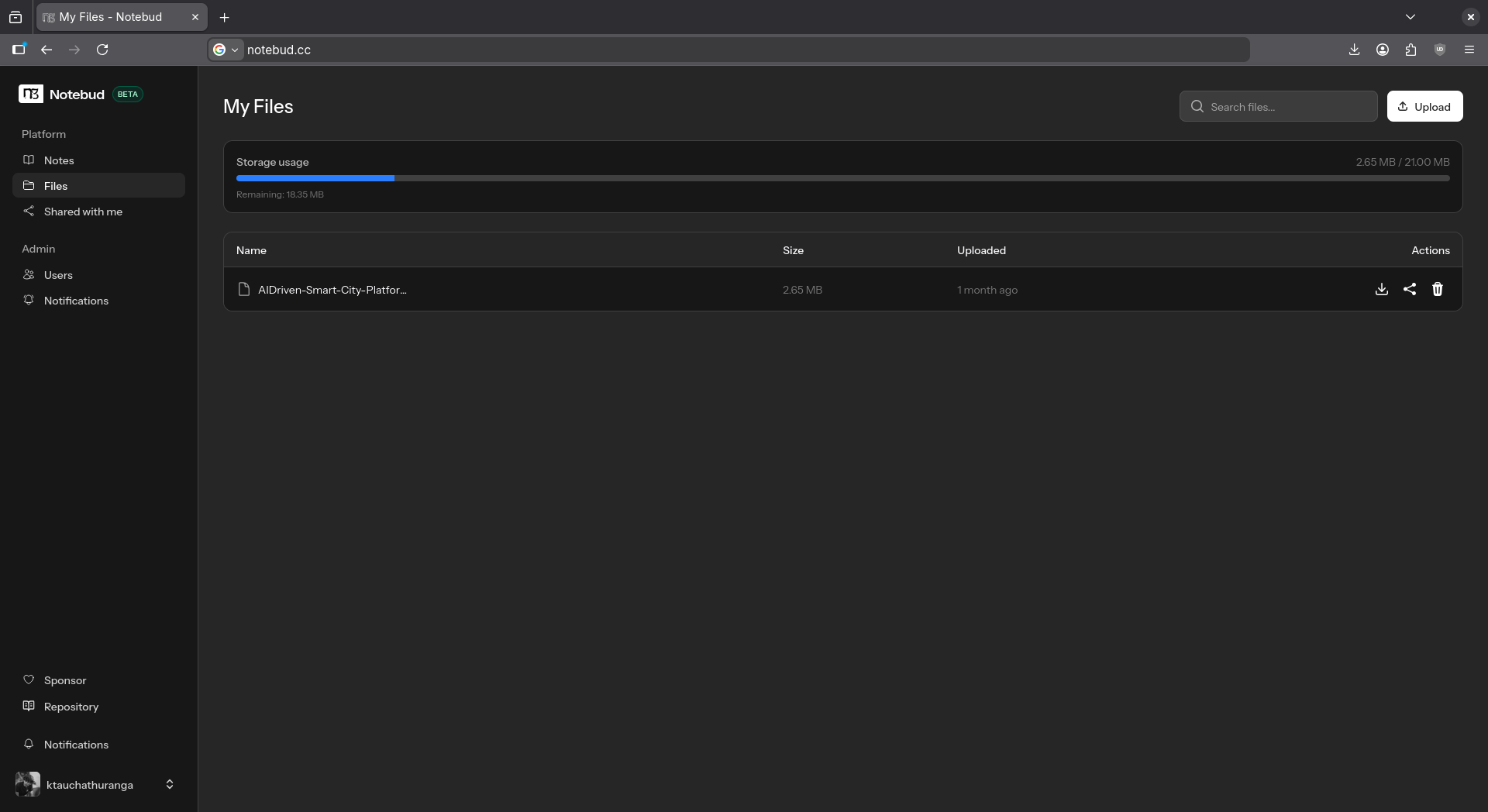
Files
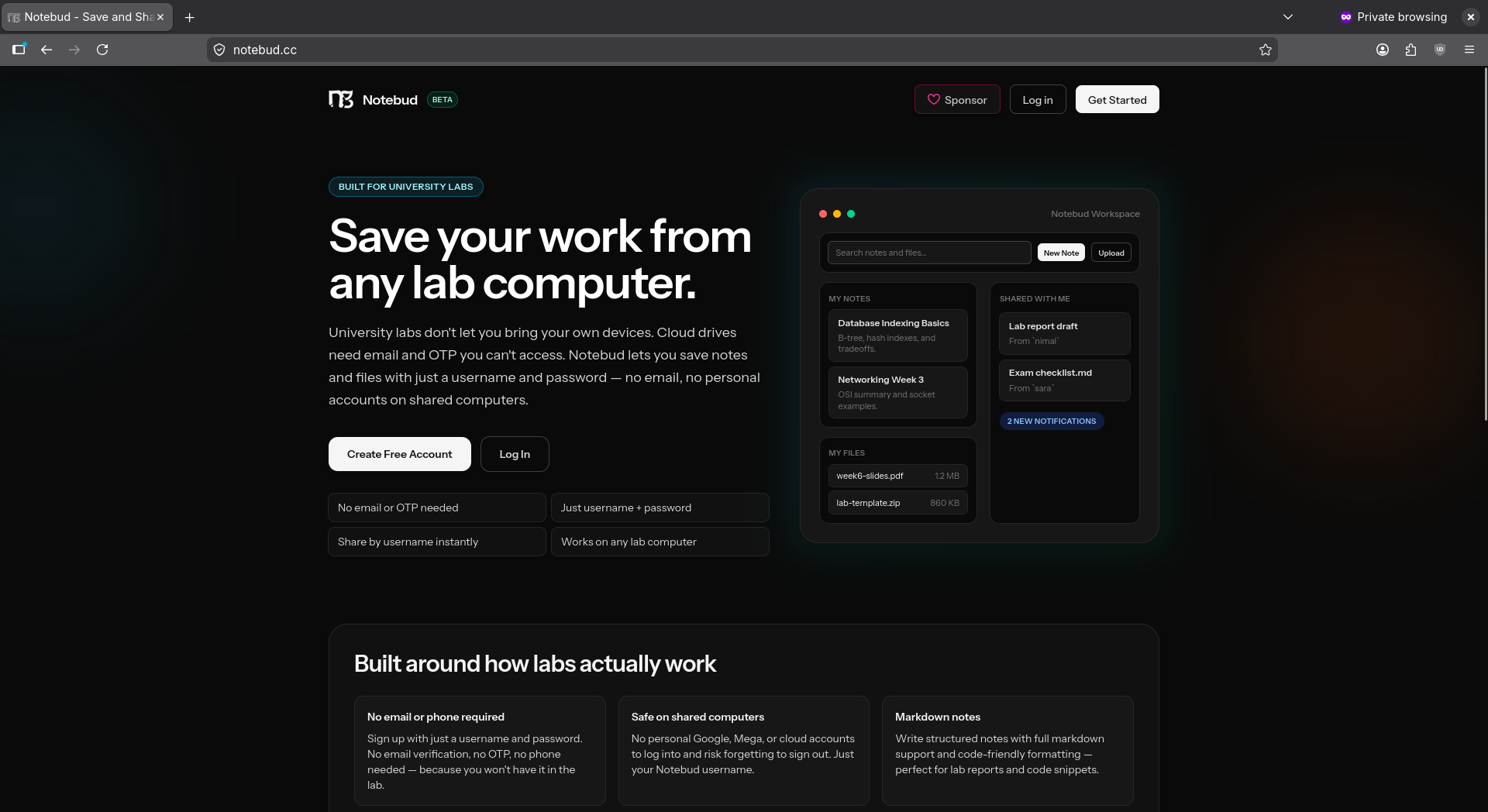
Inspiration
NoteBud was born out of pure frustration with broken university lab rules and restricted environments. We aren’t allowed to bring our phones inside the labs, which immediately breaks any workflow relying on Google Drive or personal cloud storage because of 2FA. Pen drives are also banned. If a lab session ends in the middle of an assignment, you are forced to leave your work on a public PC, blindly trusting that the next user won't delete it. Even if you manage to log into a private cloud account, forgetting to log out exposes your personal data to whoever sits down next.
To make matters worse, the university LMS removed its file upload feature due to storage limits. I got tired of dealing with this system, the lack of privacy, and the total inability to access my lab work from outside the university. I needed a frictionless way to save my work without the 2FA and MFA bs. So, I built NoteBud.
What it does
NoteBud is a frictionless, lightning-fast file and note storage platform designed specifically for highly restricted or public computing environments. It skips the complex 2FA and personal cloud logins entirely. You simply sign up and log in with a username and password.
Users can instantly drop files, write notes, and safely close the browser knowing their work is saved and accessible from anywhere. It also features an instant-share capability, allowing users to share their files or notes with colleagues immediately just by typing in their username.
How we built it
NoteBud evolved in two phases. The initial version was built rapidly using raw PHP, utilizing MongoDB (Atlas) for storage, and hosted on Render. It was a fast prototype, but as more of my colleagues started relying on it to bypass the lab restrictions, the architecture needed an upgrade.
For the current version, I completely rebuilt the platform using Laravel. I migrated the note storage to a relational model using TiDB (MySQL). For robust and scalable file handling, I integrated Cloudflare R2. Finally, to ensure the UI felt instant and the user experience was seamless, I implemented Redis for caching.
Challenges we ran into
One of the main challenges was architectural: transitioning a live concept from a NoSQL database (MongoDB) and raw PHP over to a structured, relational database (TiDB) and the Laravel framework. It required completely rethinking how data was modeled and accessed.
Additionally, handling file streams directly to Cloudflare R2 required careful configuration to ensure uploads from restricted university networks were fast and reliable without timing out. Building a secure system that intentionally strips away "standard" security layers like 2FA, to remain frictionless, meant ensuring the core authentication and session management were rock-solid so users wouldn't accidentally expose their data.
Accomplishments that we're proud of
I'm incredibly proud to have built a tool that solves a real, daily annoyance not just for me, but for my colleagues. Seeing organic adoption from other students who were equally tired of the university's lab restrictions is validating.
Technically, executing the migration from a raw PHP prototype to a fully modernized Laravel stack utilizing TiDB, R2, and Redis, while keeping the application lightning-fast, is a major win. The addition of the instant username-based sharing feature completely changed how we collaborate in the labs.
What we learned
Building NoteBud reinforced how critical User Experience (UX) is; sometimes the best feature is removing friction rather than adding complexity. Technically, I gained deep, hands-on experience in migrating database paradigms (NoSQL to SQL), integrating S3-compatible object storage (Cloudflare R2) with Laravel, and utilizing Redis caching to drastically reduce load times.
What's next for NoteBud
Right now, the priority is scaling the infrastructure as more students adopt the platform. Next steps include refining the instant-share features, potentially adding time-expiring public links for sharing files with non-users, and continuing to optimize the UI to make the transition from sitting at a public PC to securely saving a file as close to instantaneous as possible.

Log in or sign up for Devpost to join the conversation.