-
-
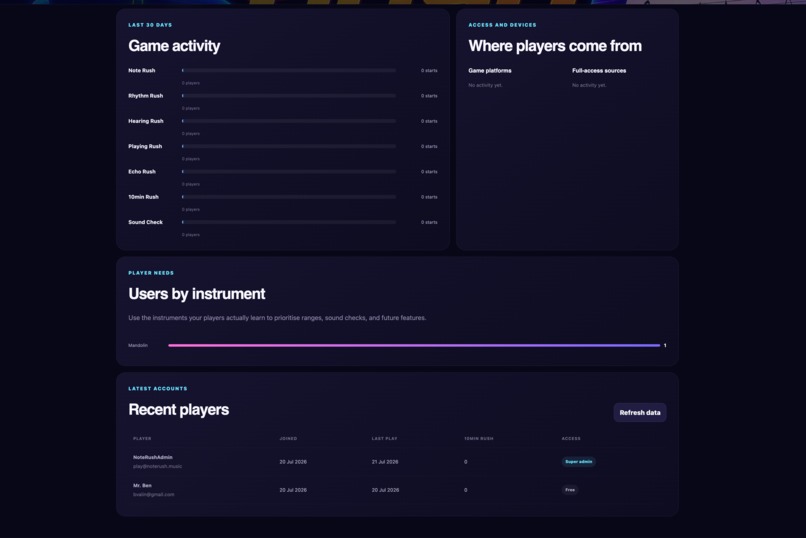
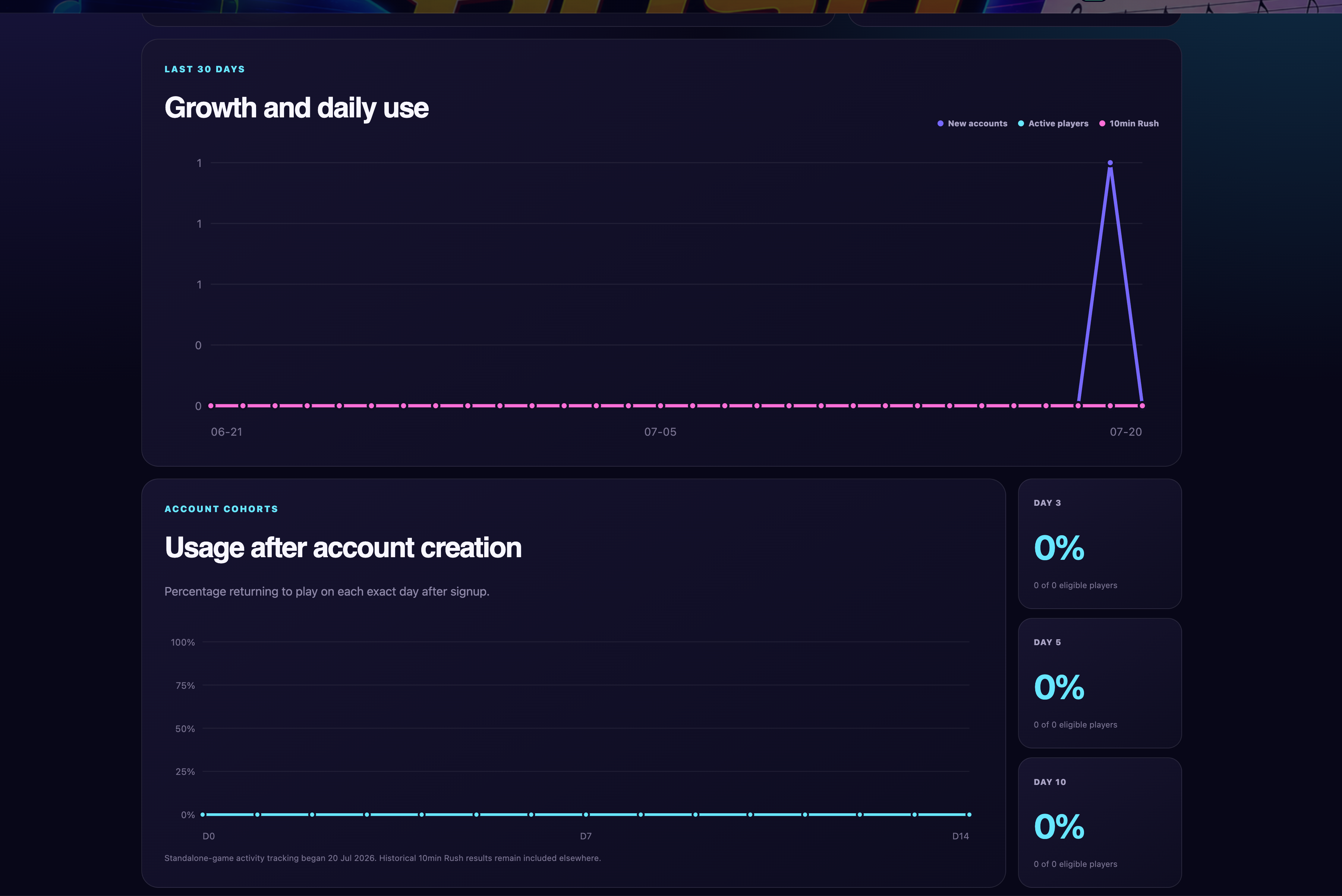
Admin Dashboard 3
-
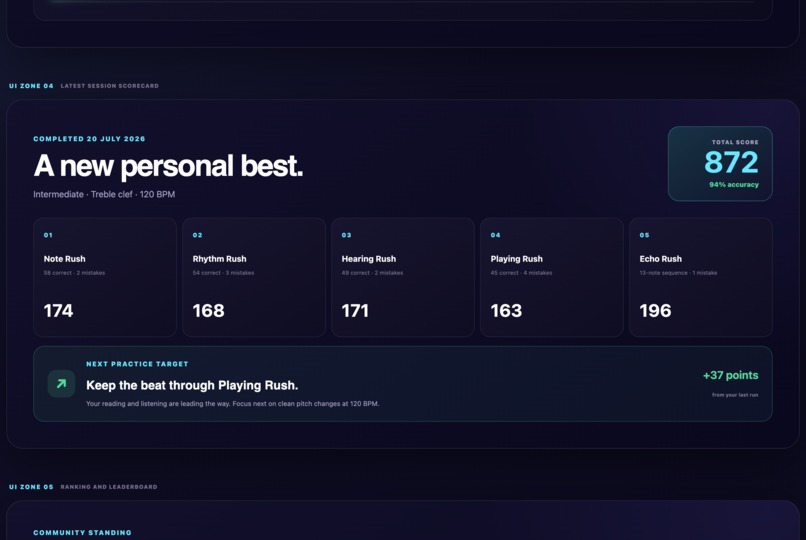
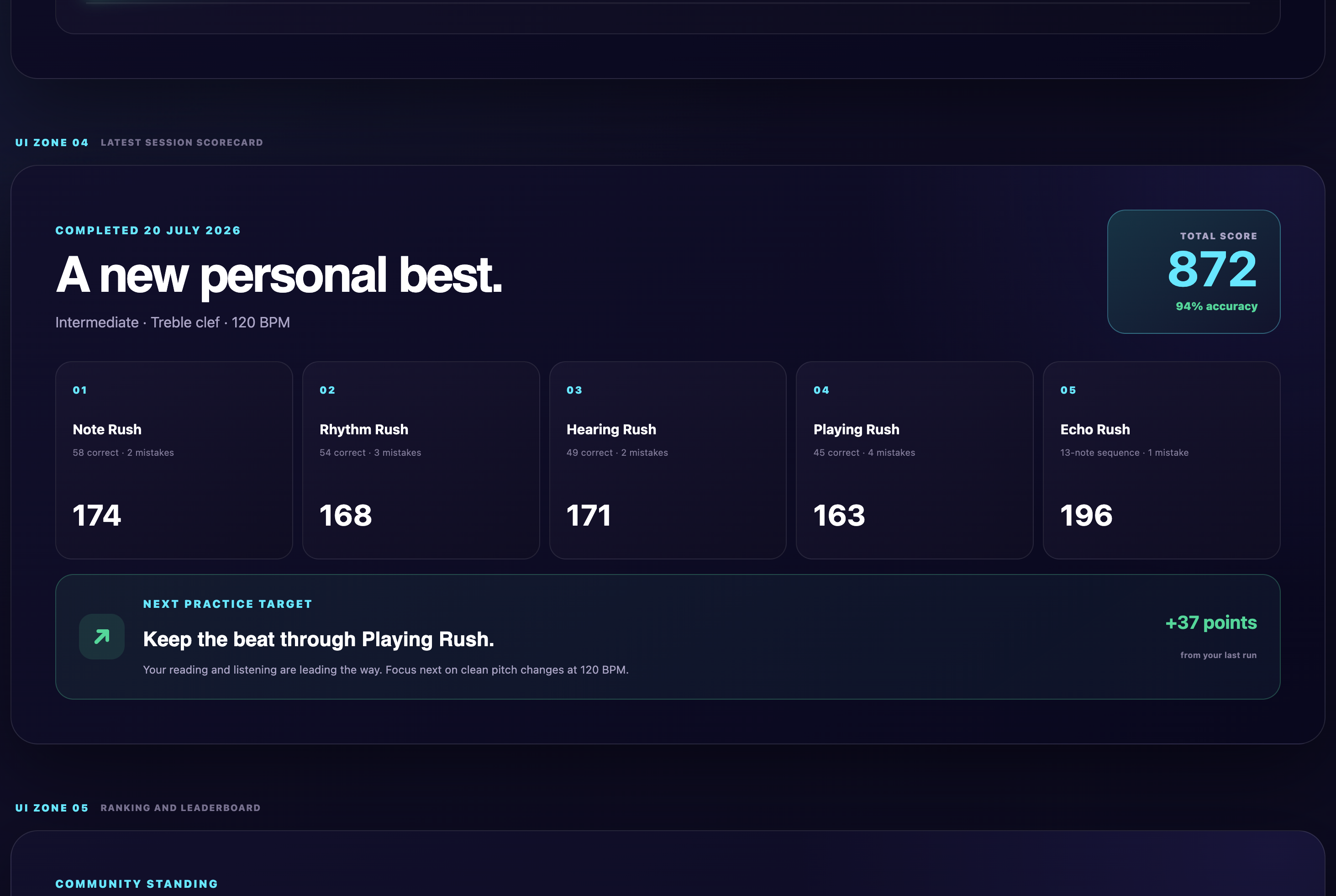
Player Score Card
-
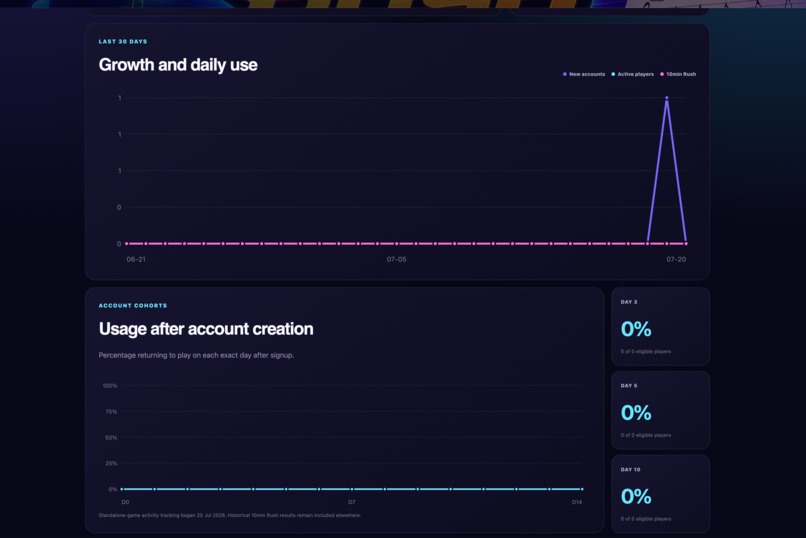
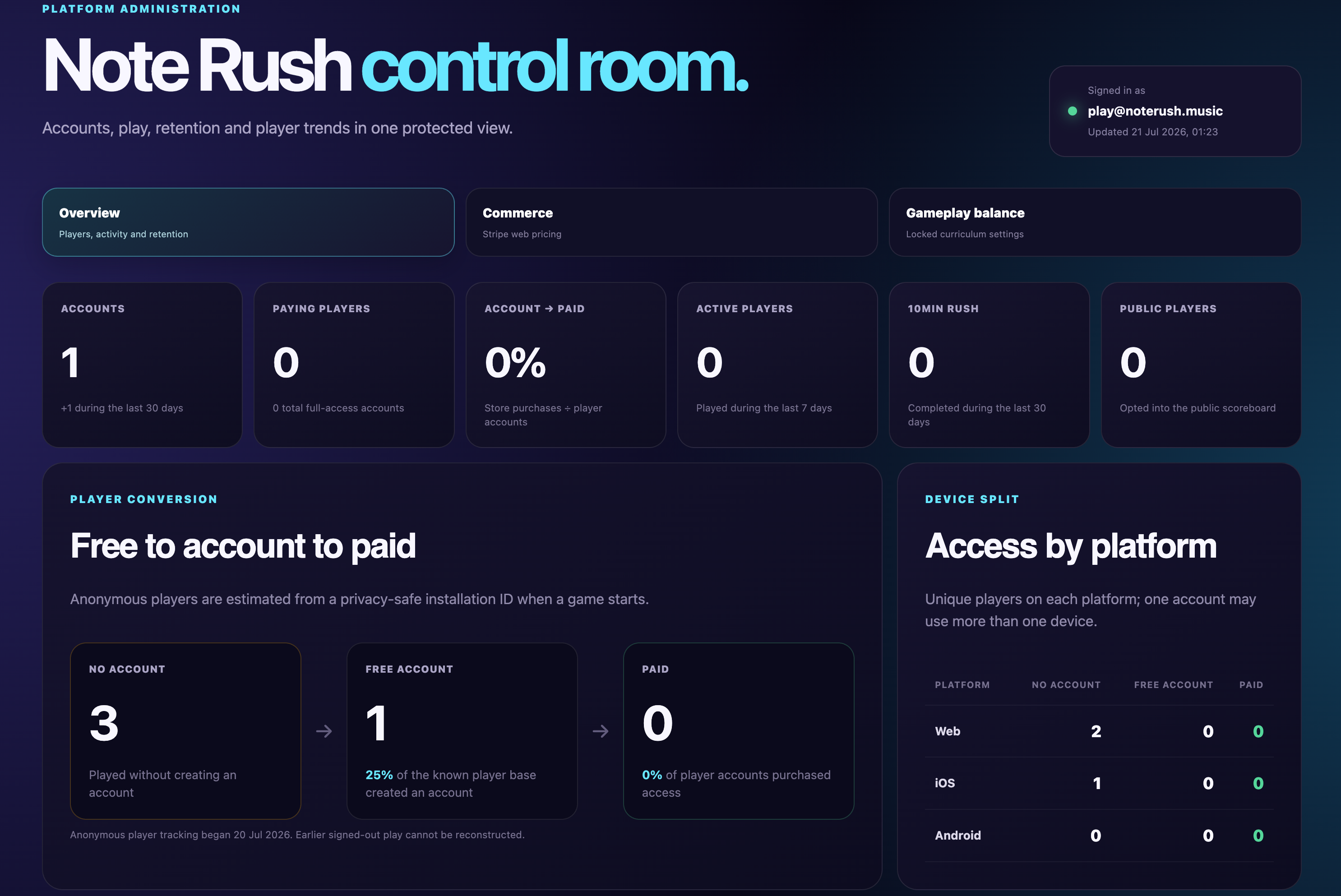
Admin Dashboard 2
-
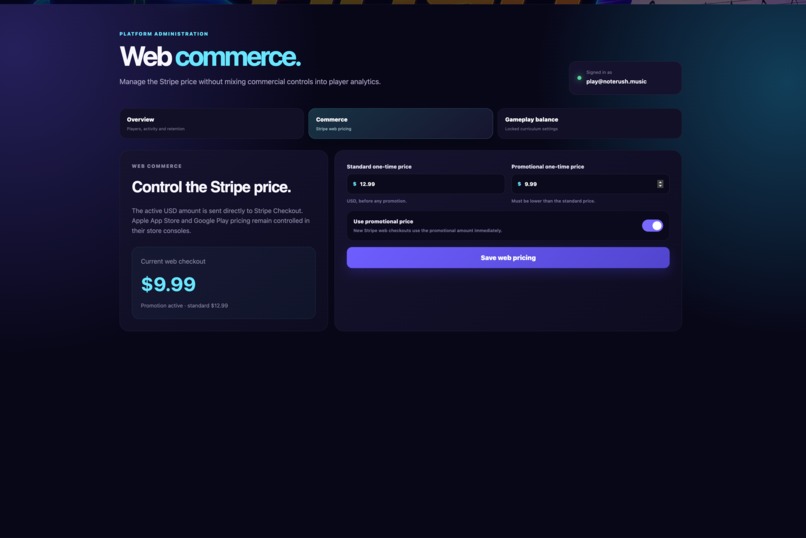
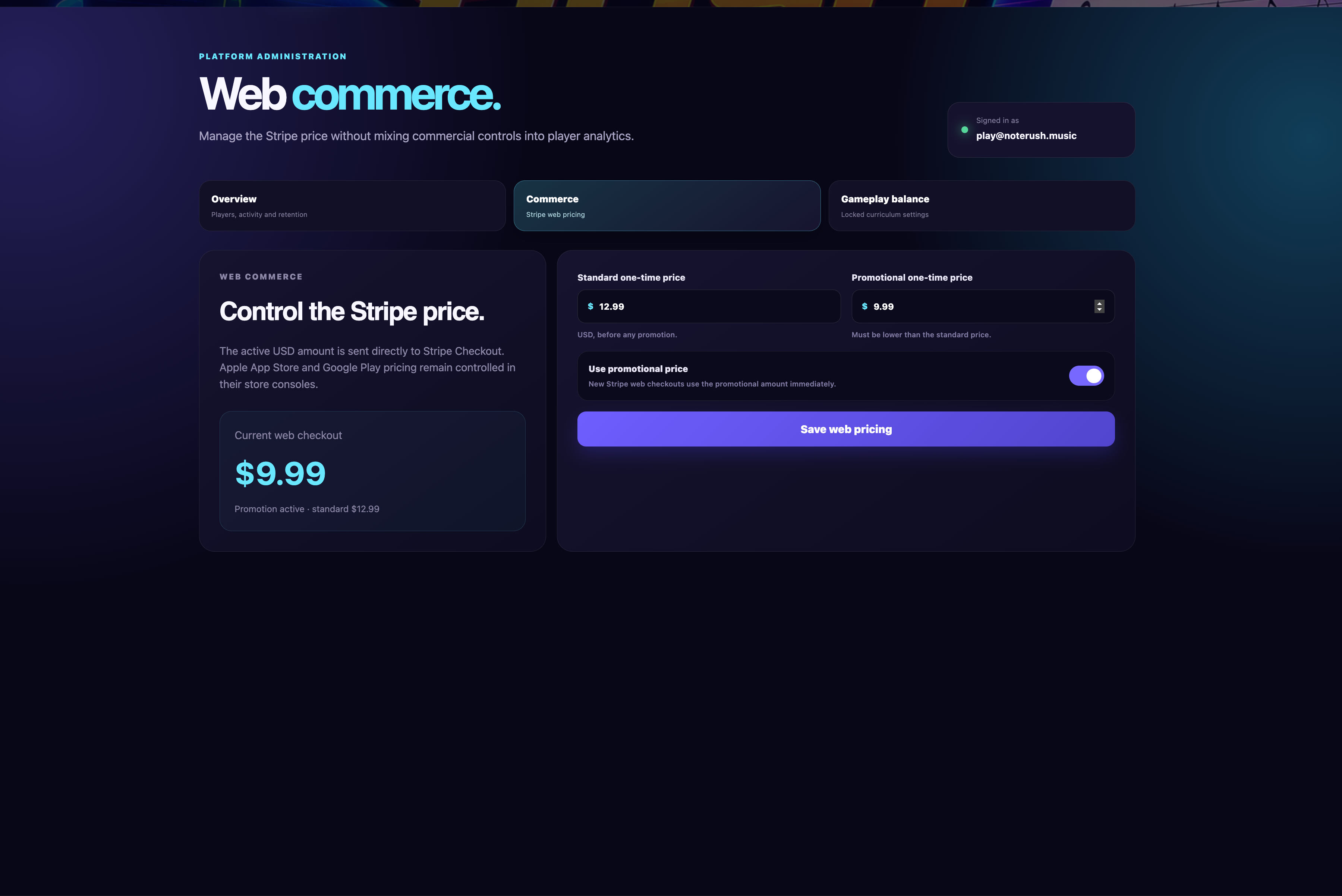
Admin Pricing Configuration
-
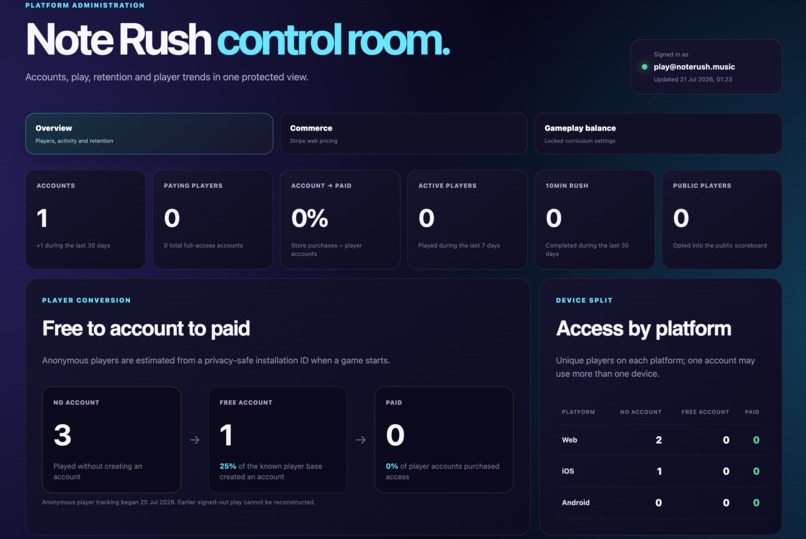
Admin Dashboard 1
-
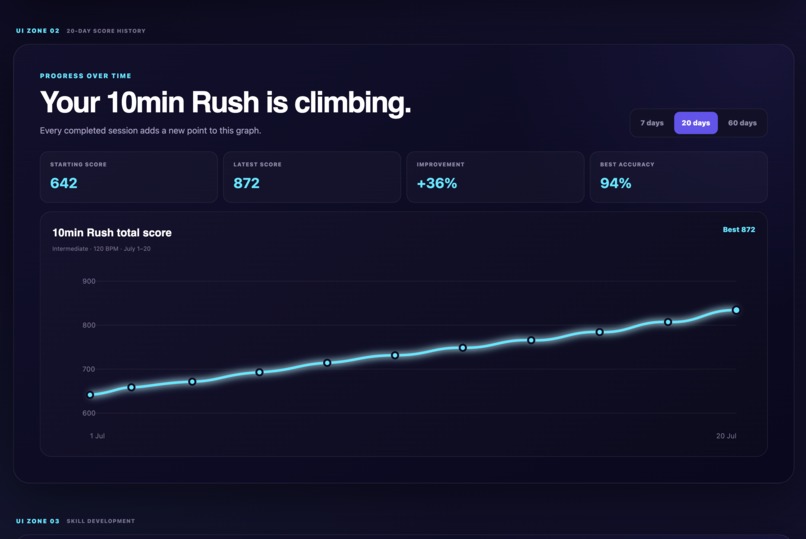
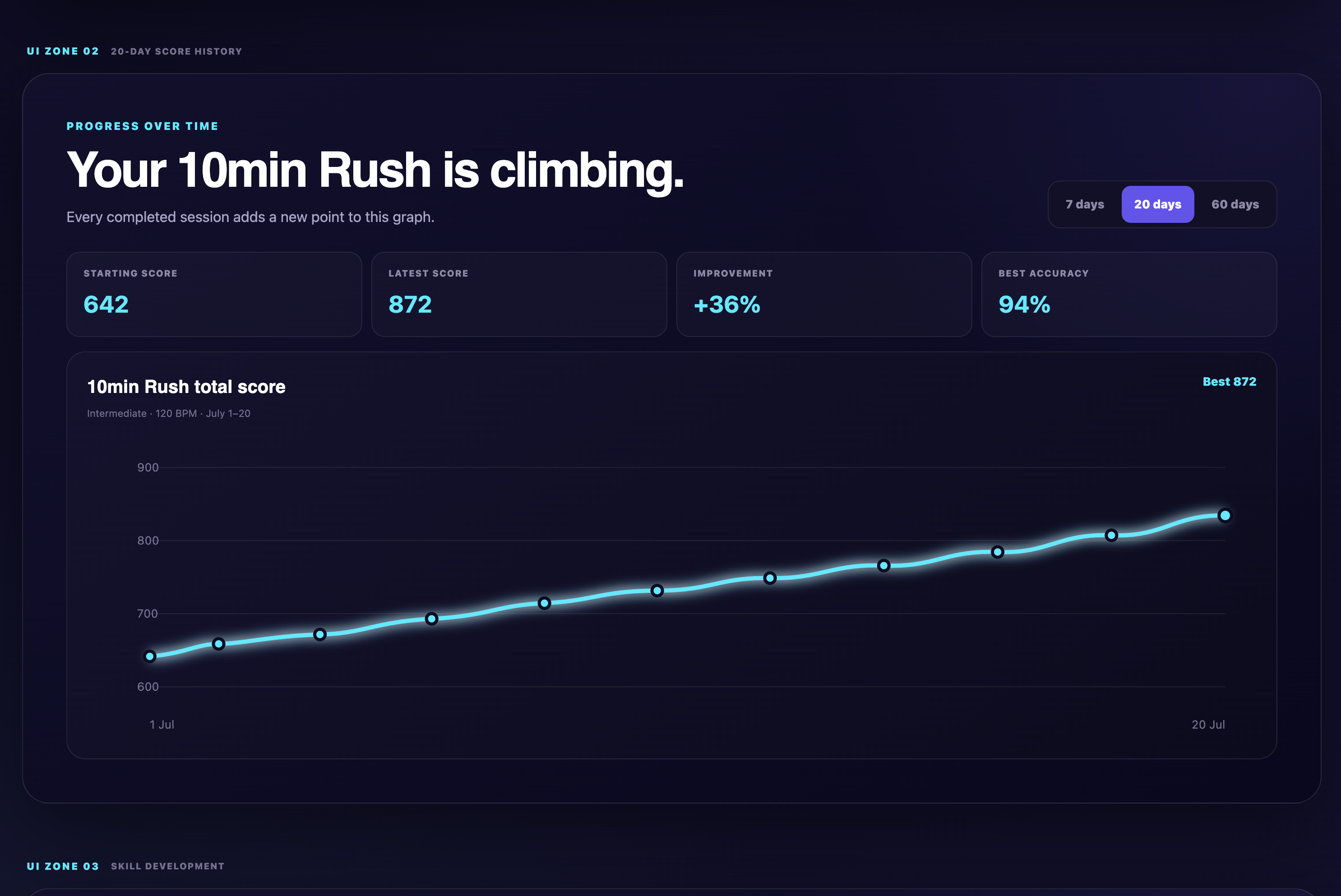
Player Improvements
-
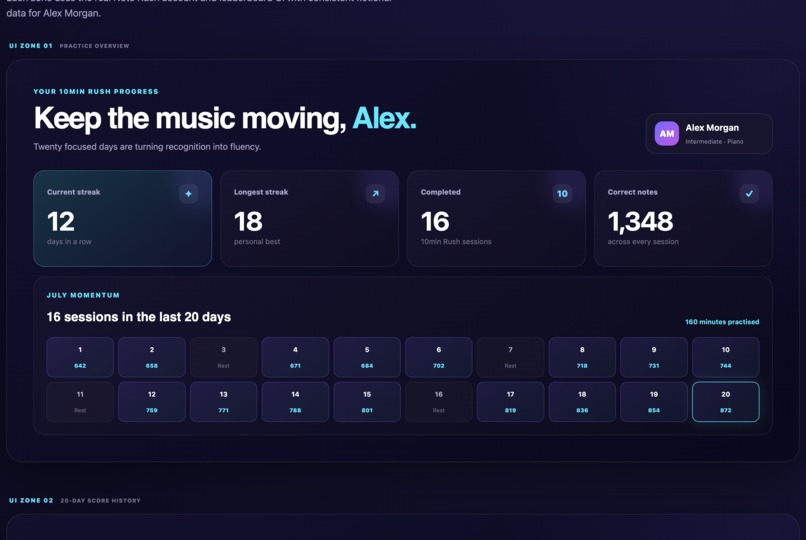
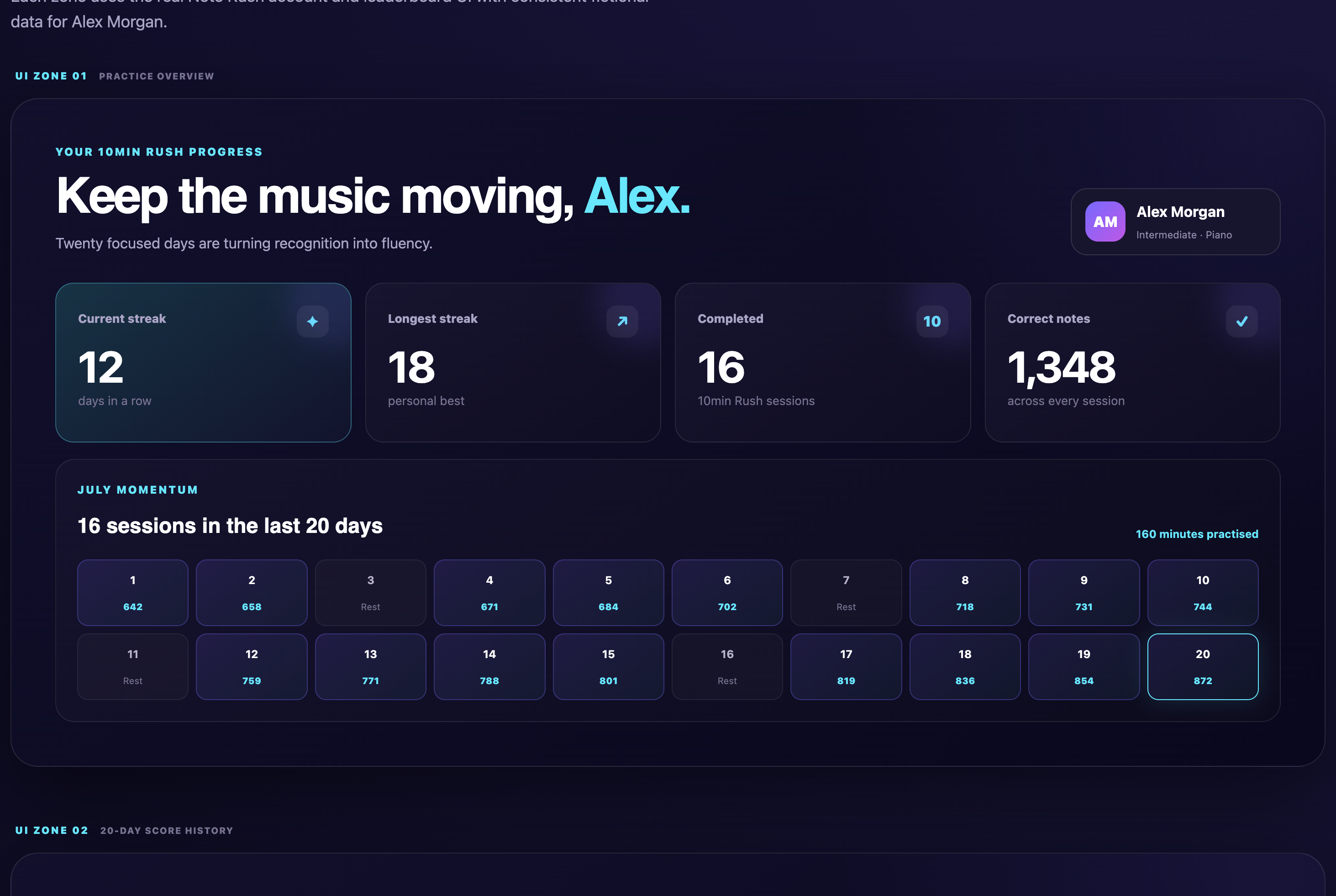
Player Streaks
-
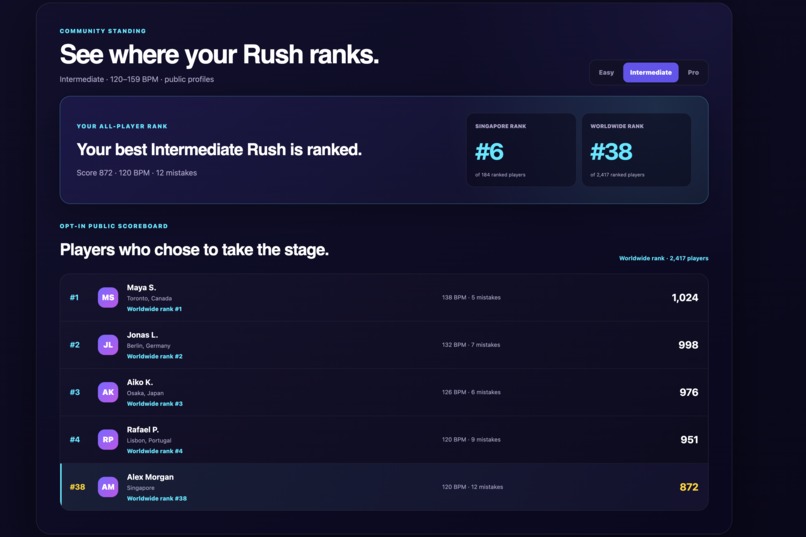
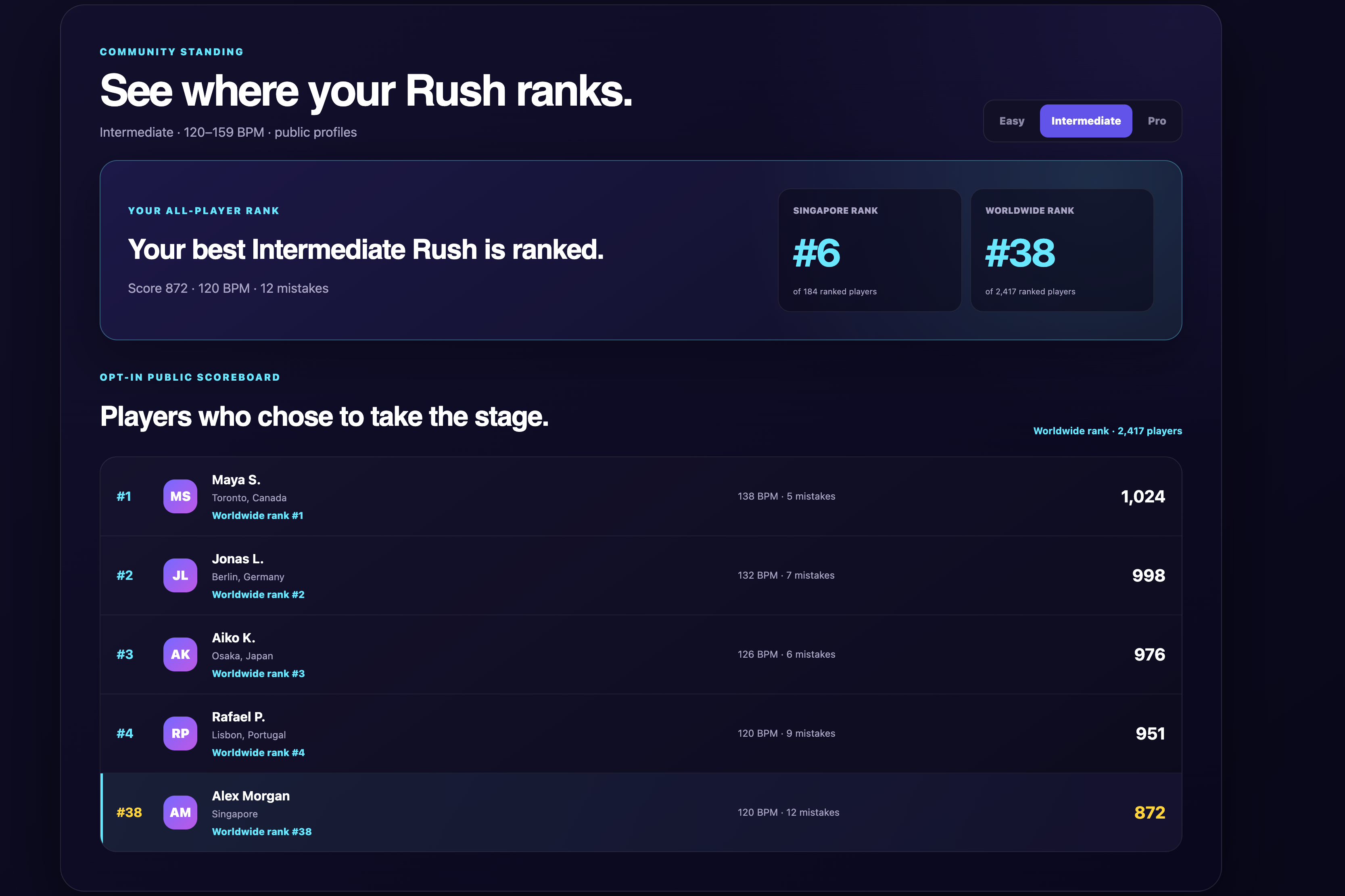
Leader Board Results
-
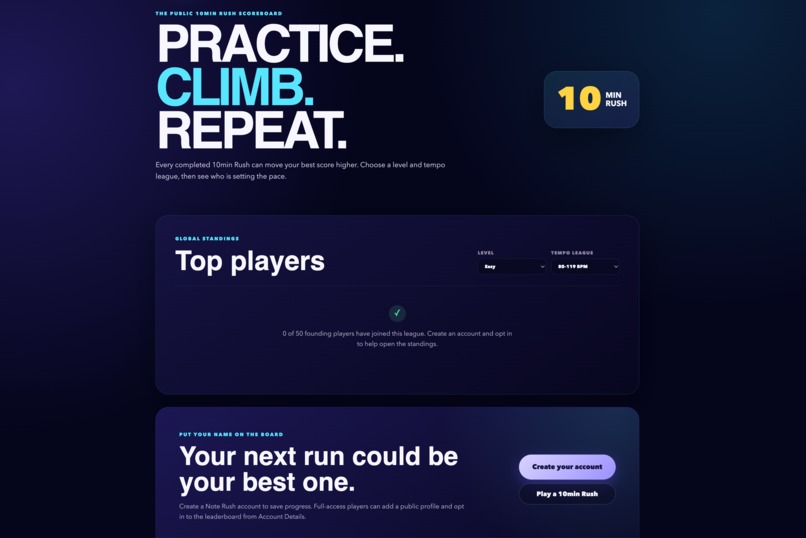
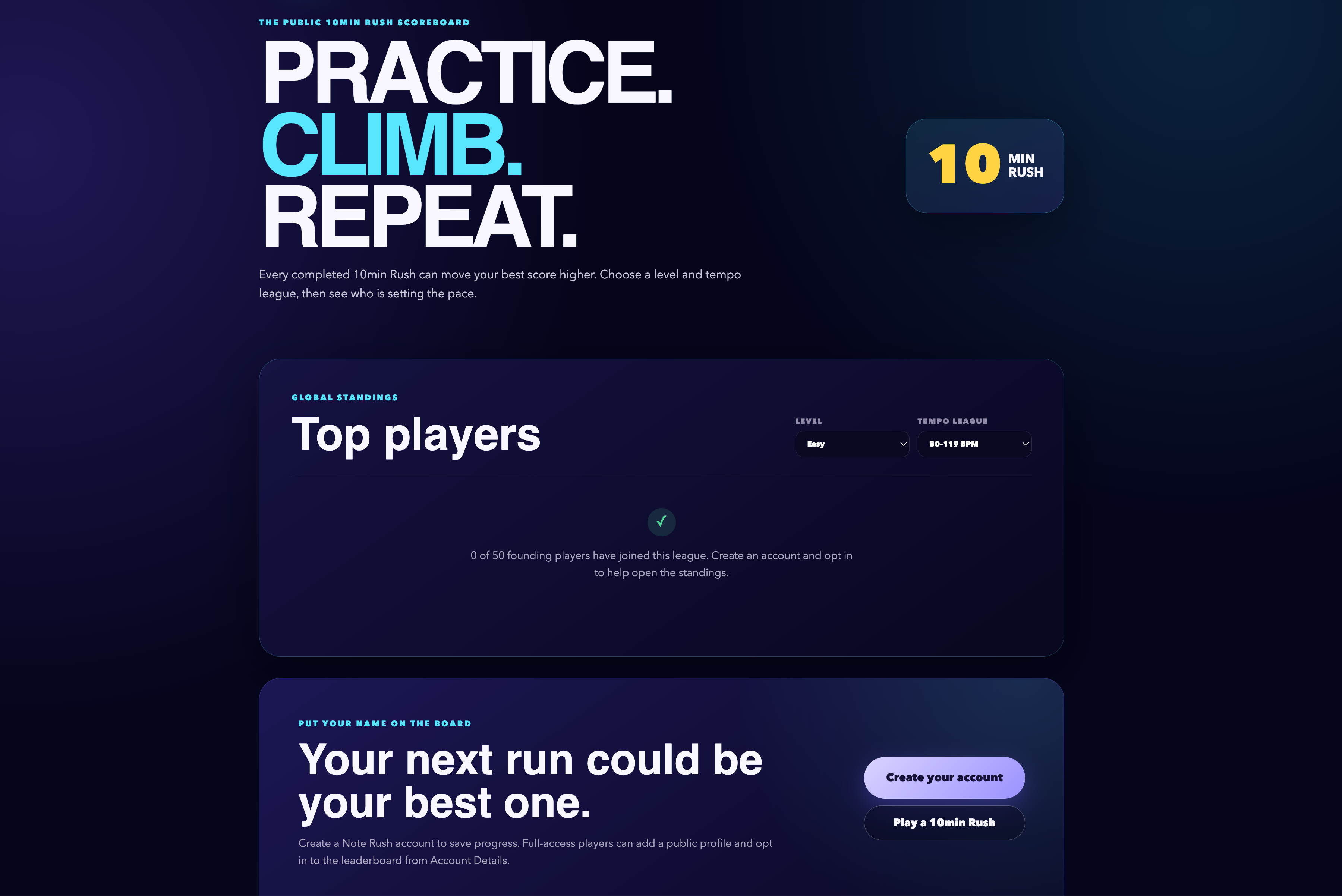
Leader Board Teaser
-
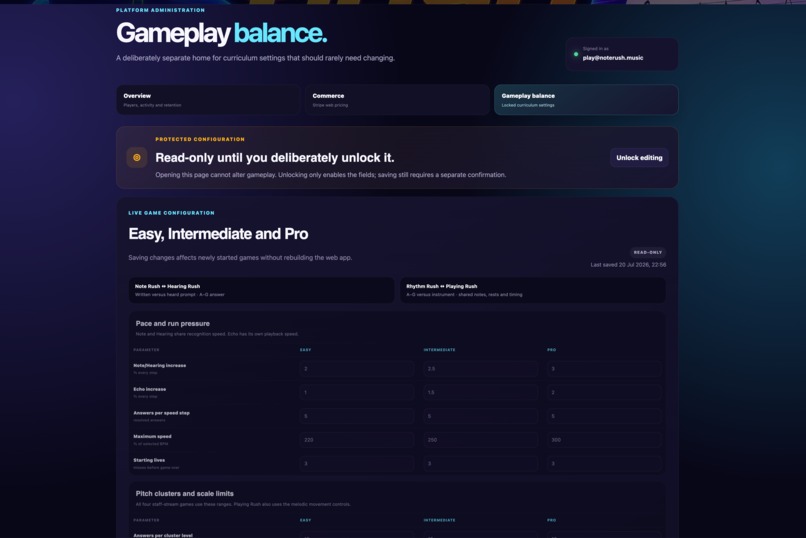
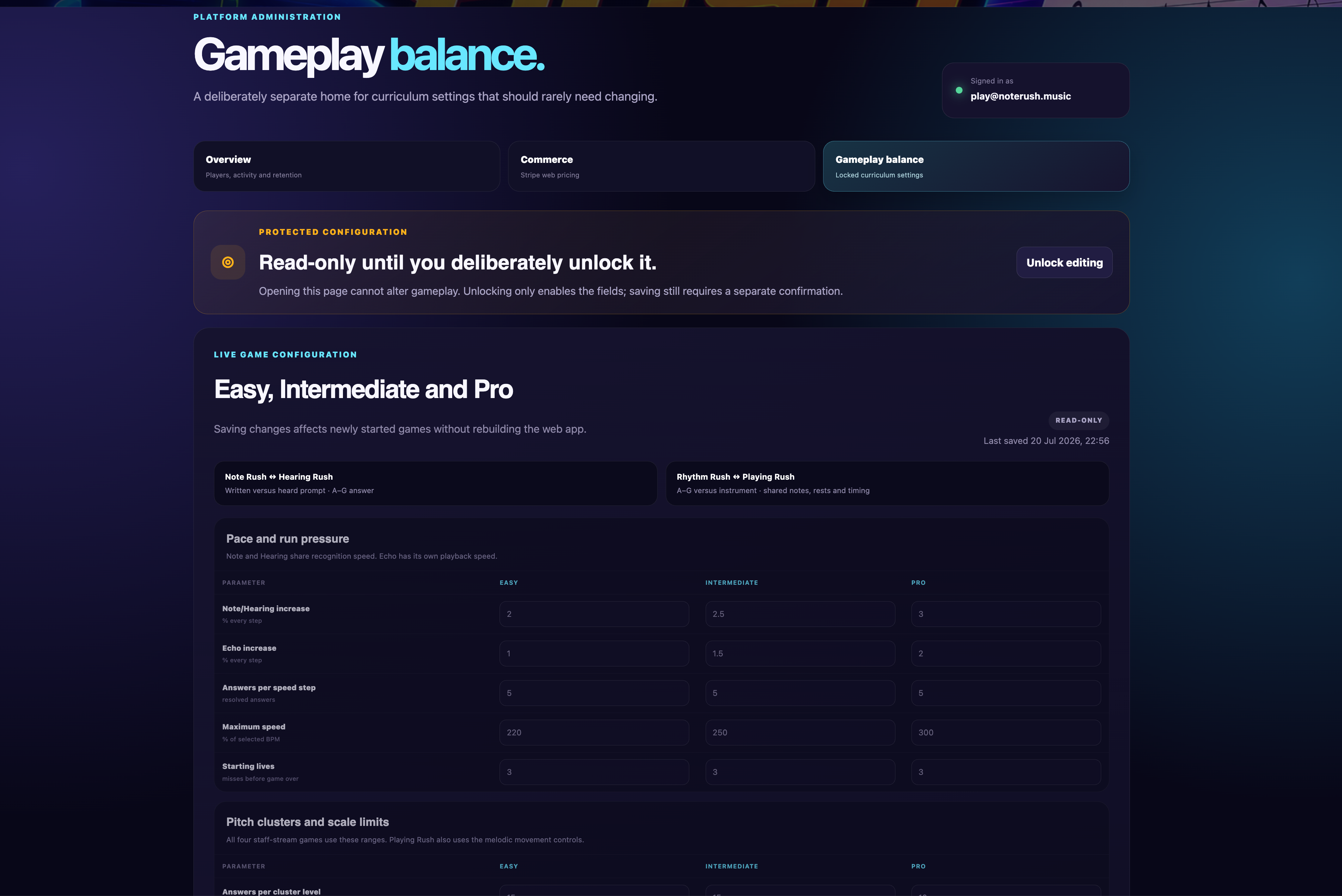
Admin Game Level Configuration
-
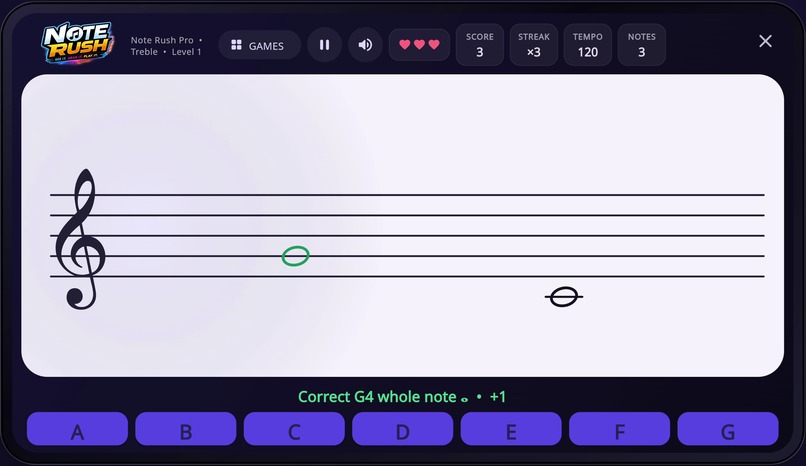
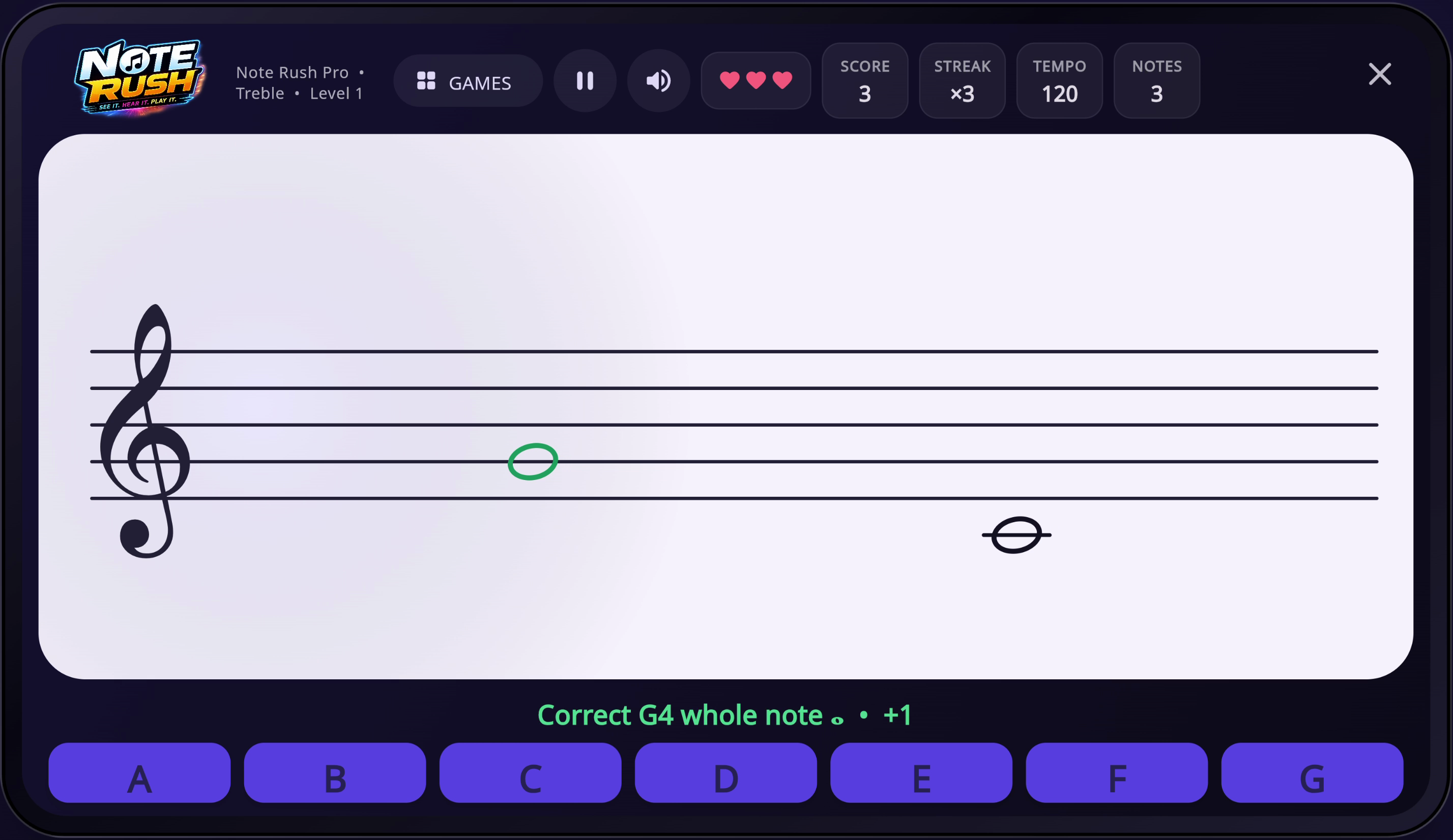
Game Screen - Note Rush - See it, Name It
-
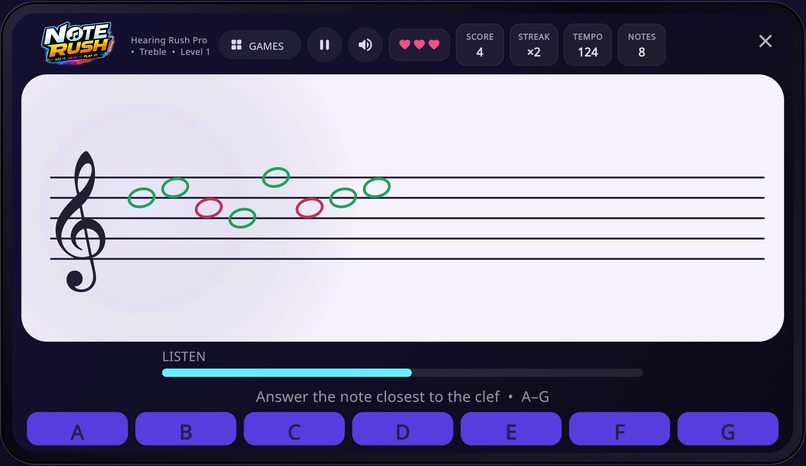
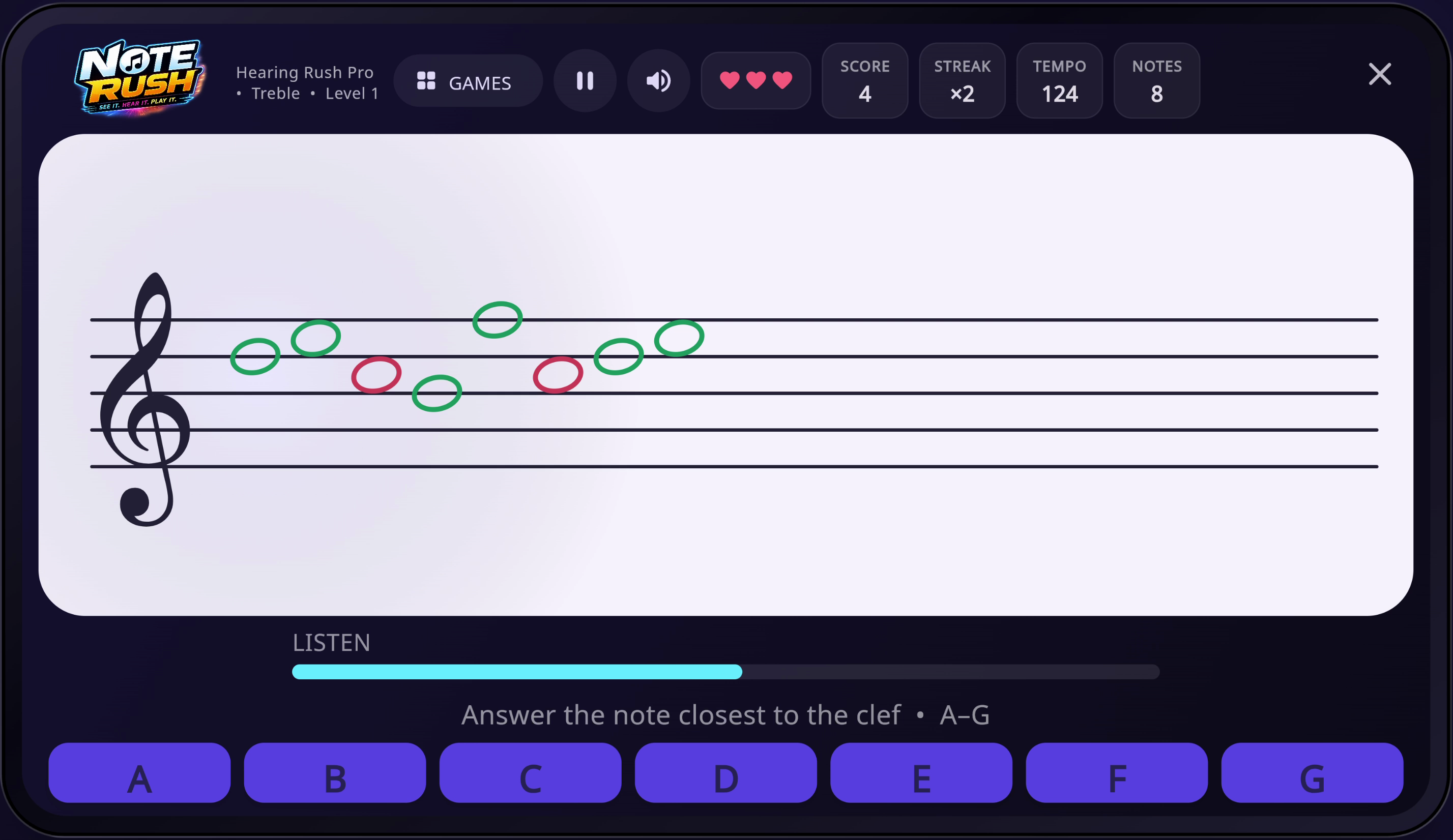
Game Screen - Hearing Rush - Hear it, Name It
-
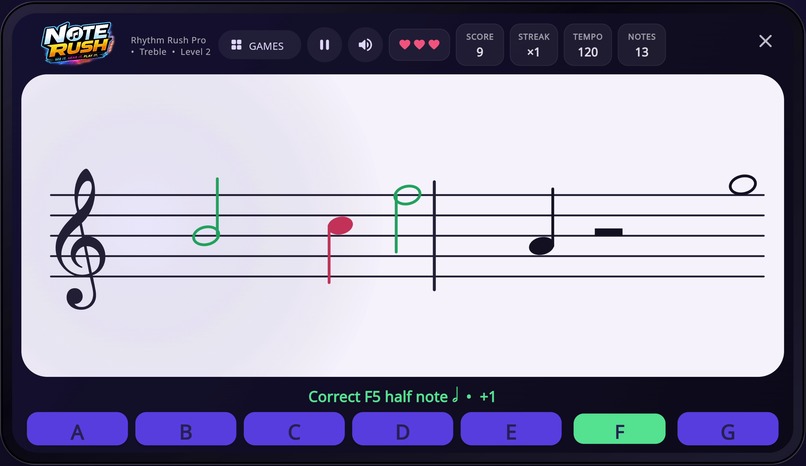
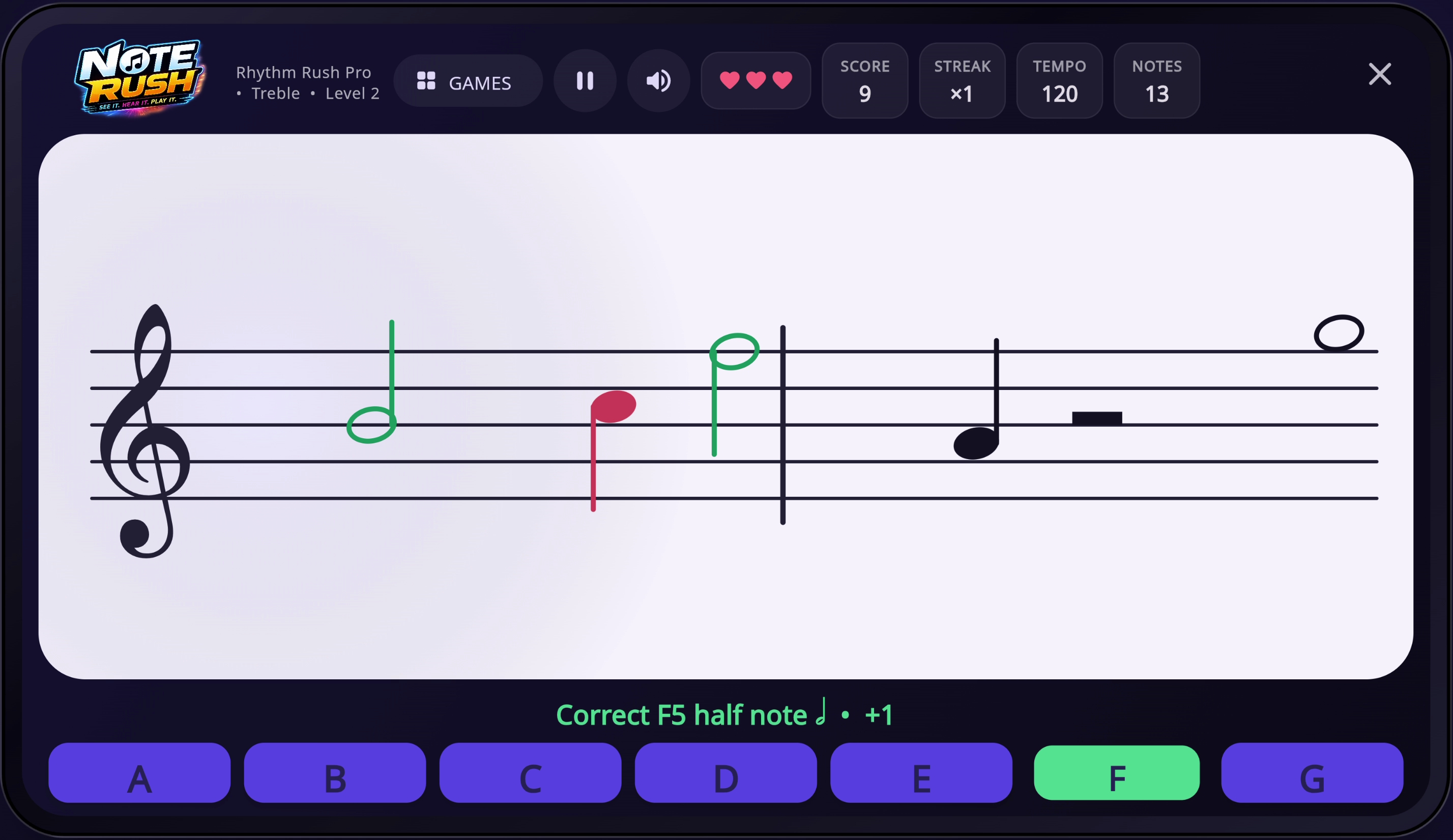
Game Screen - Rhythm Rush - Hear it, Name It on Beat
-
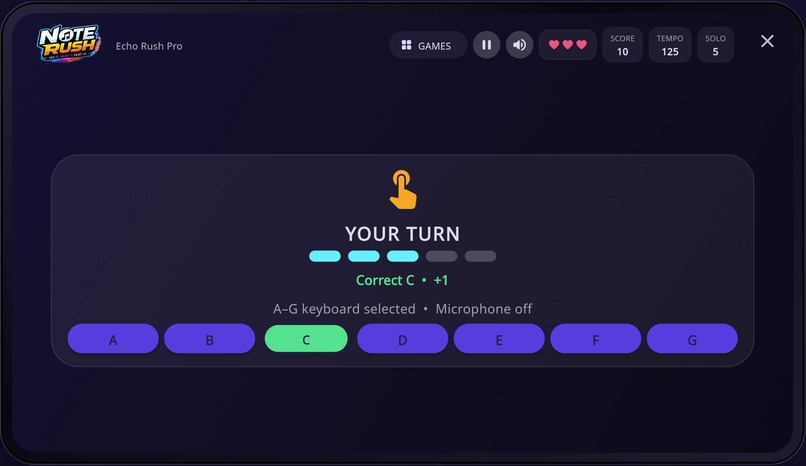
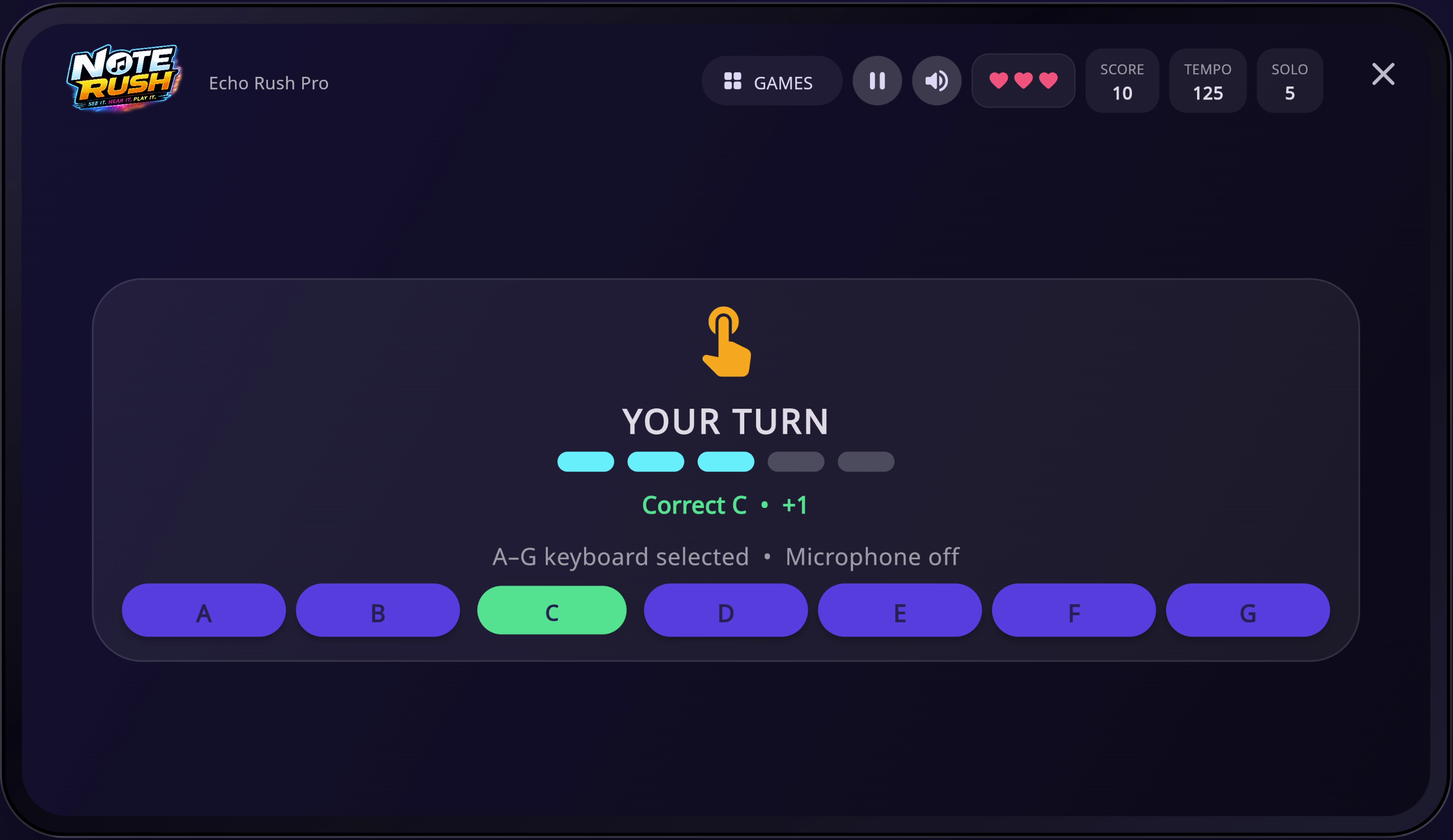
Game Screen - Echo Rush - Hear it, Name It and build a solo
-
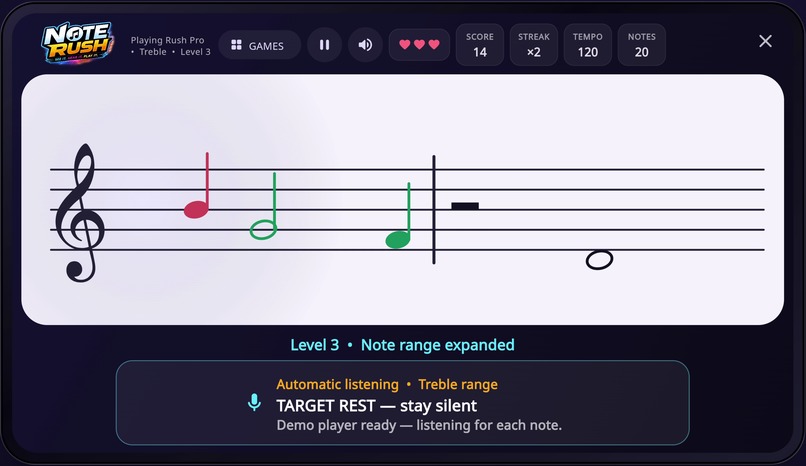
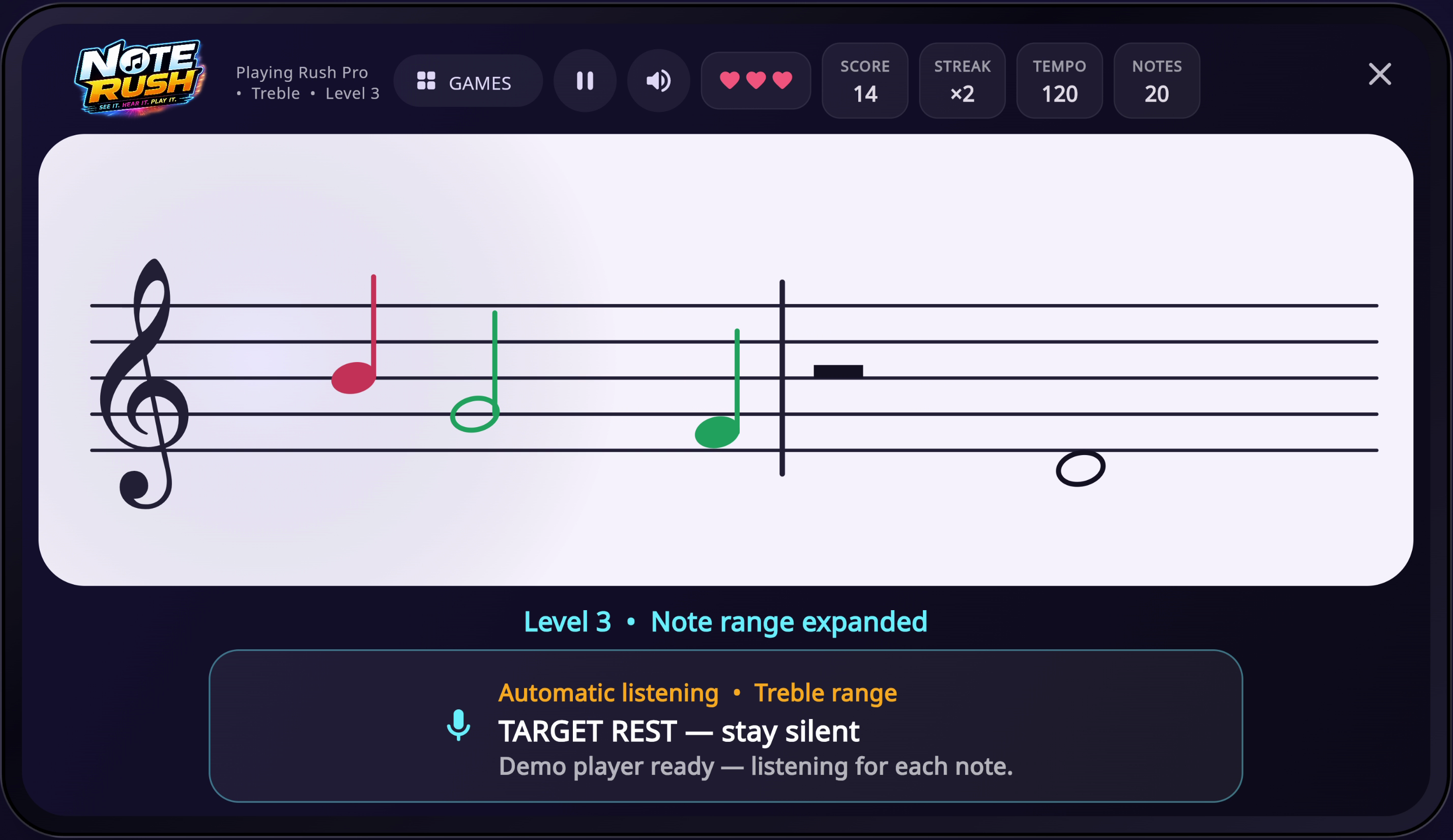
Game Screen - Playing Rush - Hear it, Play It on Beat
Note Rush — See It. Hear It. Play It.
Inspiration
Learning music is often divided into separate exercises: read a note, clap a rhythm, train your ear, then try to play it on an instrument. The learner is expected to connect those skills later.
We wanted to make that connection happen from the beginning.
Inspired by the immediacy of rhythm games, we asked: What if the musical staff became the playfield, and practice created the feeling of “one more run”?
That question became Note Rush—a game where written symbols become sounds, sounds become actions, and repetition feels energetic rather than mechanical.
The idea is captured in three words:
See it. Hear it. Play it.
What it does
Note Rush is a cross-platform music-learning game that connects notation, rhythm, ear training, instrument performance, and musical memory through six arcade-style experiences:
- Note Rush — Read a written note and identify it before it reaches the clef.
- Rhythm Rush — Identify written notes on the beat while responding correctly to whole, half, and quarter notes and rests.
- Hearing Rush — Hear a hidden pitch and identify its note name.
- Playing Rush — Read a note and perform its exact pitch on an instrument or with the voice.
- Echo Rush — Listen to an expanding melody and repeat the complete sequence.
- 10min Rush — Play all five skills in five automatic two-minute sections, followed by a detailed scorecard.
An optional Sound Check helps players test their microphone and instrument without scores, lives, or time pressure.
Players can choose treble clef, bass clef, or Grand Staff; select a tempo; and play at Easy, Intermediate, or Pro difficulty. The curriculum begins with manageable pitch clusters and expands through musically coherent neighbouring notes instead of presenting a random wall of notation.
Note Rush provides immediate visual and audible feedback after every response. Microphone-enabled games use real-time, on-device pitch detection, and microphone audio is never uploaded.
The game is immediately playable in a computer browser without creating an account:
Optional accounts add practice streaks, score history, difficulty-specific progress graphs, personal rankings, and an opt-in public leaderboard.
How we built it
Note Rush was built in close collaboration with Codex and GPT-5.6—not by adding a decorative chatbot to a finished product, but by using agentic development throughout the real build.
Codex was the hands-on engineering agent inside our real repository. It inspected the existing Flutter and PHP architecture, edited implementation files, ran tests, investigated failures, compared behavior with our acceptance criteria, and helped package working web and Android releases.
GPT-5.6 provided the reasoning that connected the whole product. It helped translate a detailed educational vision into architecture, reason across audio processing, game state, responsive interface behavior, backend services, and musical pedagogy, and maintain context while the specification evolved.
Codex accelerated work across the complete stack:
- Designing shared music-domain models for pitches, clefs, ranges, rhythm values, and results.
- Implementing the six games and their reusable arcade rules.
- Building responsive musical staff and notation components.
- Developing real-time monophonic pitch detection and cross-platform audio handling.
- Creating touch, hardware-keyboard, and microphone input systems.
- Building responsive phone, tablet, and desktop layouts.
- Implementing optional authentication, progress tracking, streaks, rankings, and entitlements.
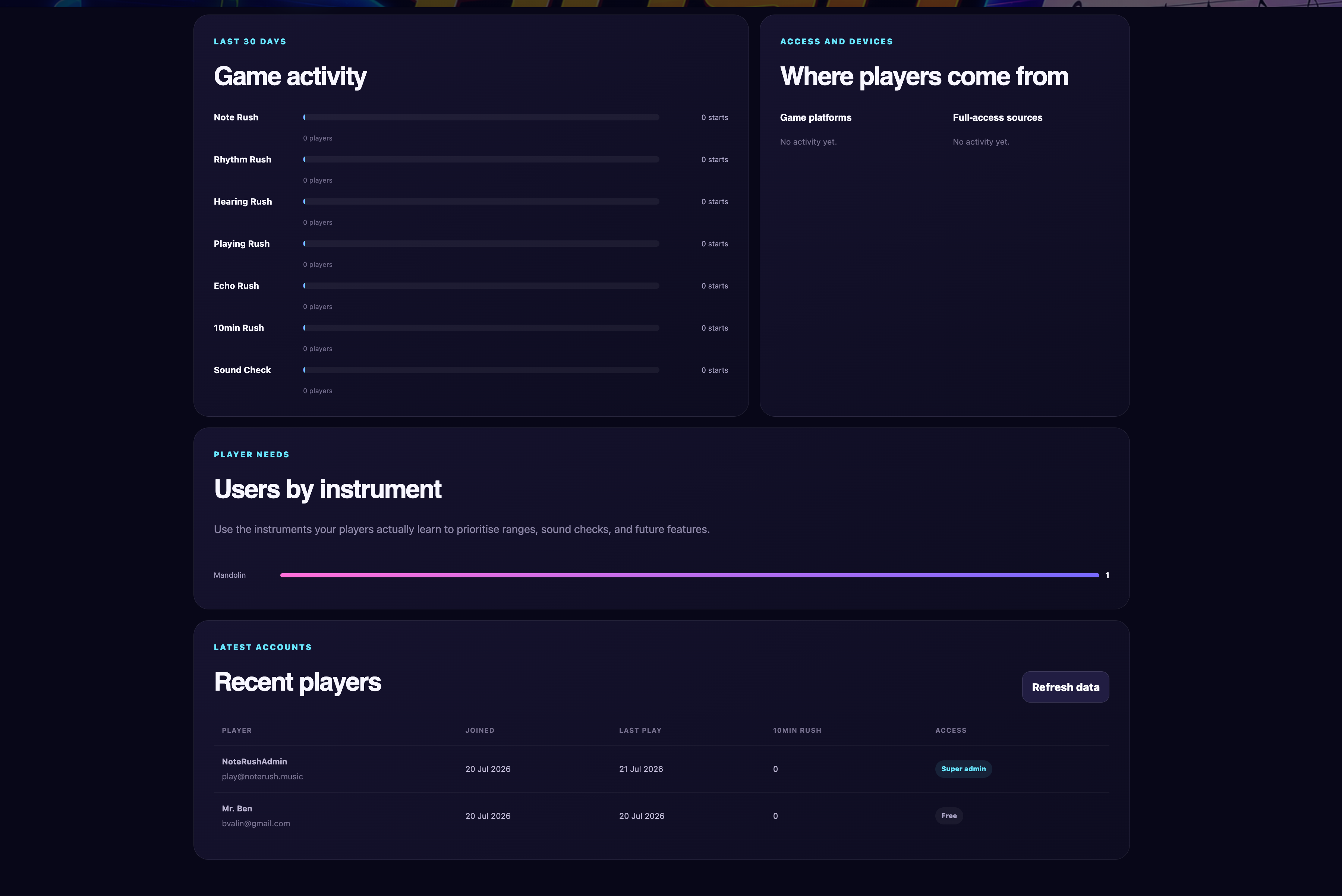
- Creating protected administration tools for analytics, commerce, and live gameplay balancing.
- Writing Flutter and PHP tests and iterating on failures.
- Producing the web release, supporting website, technical documentation, and demo experience.
The human role remained central. We made the product, musical, educational, privacy, and design decisions: what each game should teach, how difficulty should progress, which mechanics belonged together, what feedback a learner needed, and where technology should stay out of the way.
Flutter provides one shared application for web, iOS, and Android. The game’s music rules, scoring, notation, interface, and tests are shared across those platforms.
A PHP-based service supports optional accounts, progress, rankings, administration, and cross-platform entitlements. The browser release can be played without an account, allowing judges and learners to experience the core product immediately.
Challenges we ran into
The hardest challenge was making microphone gameplay reliably understand real instruments.
To a human listener, a played note can sound obvious. To a phone microphone, it is a complex waveform containing the fundamental pitch, stronger harmonics, background noise, room reflections, and the noisy attack of the instrument. A detector can easily mistake a harmonic for the intended note—or recognize the correct note in the wrong octave.
Different instruments made this even harder. A piano note decays quickly, a violin can change pitch during its attack, a guitar produces strong harmonics, and a voice may naturally drift around the target. Microphone sensitivity, playing distance, room noise, and audio processing also vary significantly between devices and browsers.
We needed to balance two competing goals:
- Recognition had to be strict enough for scored gameplay, especially when Playing Rush required an exact pitch and octave.
- Calibration had to feel forgiving and encouraging, without asking the learner to place the device unnaturally close to their instrument.
We created an unscored Sound Check that verifies microphone distance, guides the player through an A–G instrument check, and previews microphone interactions without mistakes, lives, or time pressure. Its calibration profile tolerates instrument attacks and matching harmonics, while scored gameplay retains stricter pitch recognition.
We also limited every game to the practical sounding range of the player’s selected instrument. Combining that information with the chosen clef reduces octave ambiguity and prevents the game from requesting notes the instrument cannot reasonably produce.
Cross-platform audio introduced another layer of complexity. Web, iOS, and Android handle microphone permission, audio routing, speaker playback, and interruptions differently. We developed separate web and native audio paths while preserving the same recognition rules and musical experience.
This challenge taught us that instrument recognition is not simply “find the loudest frequency.” It requires musical context, careful calibration, confidence checks, harmonic handling, and continuous testing with real instruments.
Accomplishments that we're proud of
We are proud that Note Rush is a complete, playable learning product rather than a technical proof of concept.
In particular, we built:
- Six connected games covering visual, aural, rhythmic, physical, and memory-based musicianship.
- A playable browser release that requires no account.
- Real-time instrument interaction with privacy-preserving on-device audio processing.
- A shared cross-platform Flutter codebase for web, iOS, and Android.
- Responsive notation and gameplay across phones, tablets, and desktop browsers.
- A guided ten-minute session with five section results and a final scorecard.
- Optional streaks, progress graphs, private rankings, and an opt-in public leaderboard.
- A live gameplay-balance system that can refine difficulty without rebuilding the application.
- A verified safety net of 121 Flutter tests plus six PHP server test suites, covering domain logic, gameplay, widgets, accounts, progress, commerce, and backend behavior.
- A polished demo reel generated from the real gameplay interface.
Most importantly, all of these pieces support one clear learning journey: recognising a symbol, connecting it to a sound, and turning it into musical action.
What we learned
We learned that a strong specification is one of the best ways to collaborate with an agentic coding system. The more clearly we expressed the educational goal, acceptance criteria, and product constraints, the more effectively Codex could help us implement and test them.
We also learned that the best use of GPT-5.6 was not simply generating large amounts of code. Its greatest value came from maintaining context across product design, engineering, testing, documentation, and iterative debugging.
Music software reinforced another lesson: the physical world always has the final vote. A pitch detector can pass isolated tests and still behave differently with a violin attack, a quiet voice, a phone microphone, or browser audio routing. Automated verification and real-device testing complement each other; neither replaces the other.
Finally, we learned that educational difficulty must remain understandable. A game can become more intense without becoming arbitrary. The learner should always know what was tested, what happened, and how to improve on the next run.
What's next for Note Rush — See It. Hear It. Play It.
The immediate next step is broader testing with learners, teachers, instruments, and physical iOS and Android devices. That feedback will help us refine microphone calibration, timing windows, difficulty progression, and accessibility.
Our roadmap includes:
- Accidentals, sharps, flats, and more advanced notation.
- Adaptive microphone calibration for different instruments and environments.
- Note-level mastery and confusion-pattern insights.
- Deeper accessibility and reduced-pressure practice options.
- Teacher and family profiles with assignable practice.
- Daily challenges and richer progress goals.
- Expanded instrument support and platform-certified mobile releases.
The long-term vision is for Note Rush to become a connected practice environment where learners do not merely memorise note names—they learn to recognise, hear, remember, and confidently perform music.
See it. Hear it. Play it.

Log in or sign up for Devpost to join the conversation.