Inspiration
Students preparing for exams often rely on their own notes, but have no reliable way to determine whether those notes are complete, what key topics they are missing, or how to turn them into an effective study plan.
As a result, they study blindly, spending time on material they already understand while overlooking gaps in their knowledge. They struggle to organise their revision around upcoming test dates. This lack of insight and structure leads to inefficient studying, poor time management, and increased stress, especially as exams approach.
There is a clear need for a tool that can intelligently analyze a student’s existing notes, identify missing or weak areas, and provide personalized, time-based study recommendations. Such a solution would help students study more efficiently, stay organized, and approach their exams with greater confidence and preparedness.
What it does
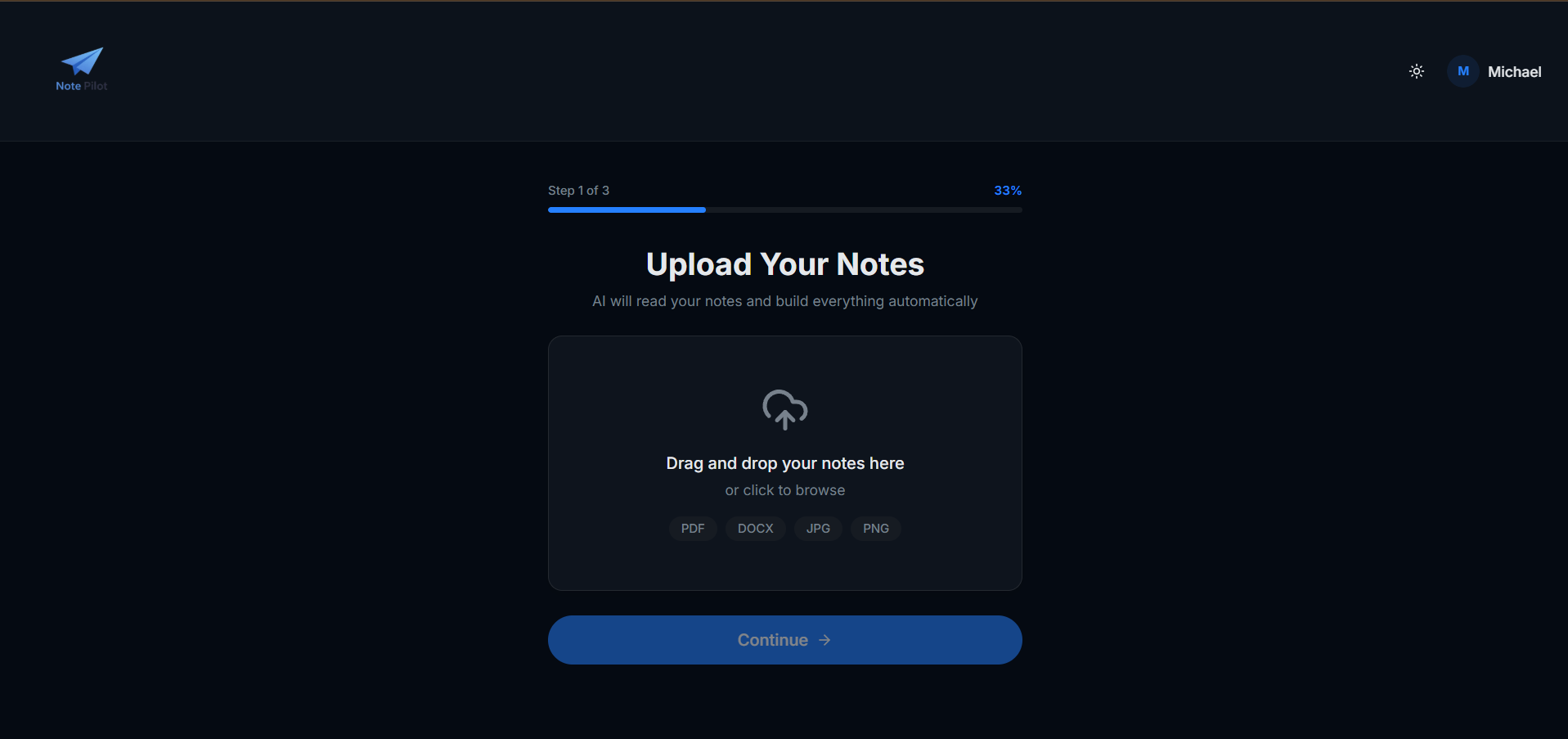
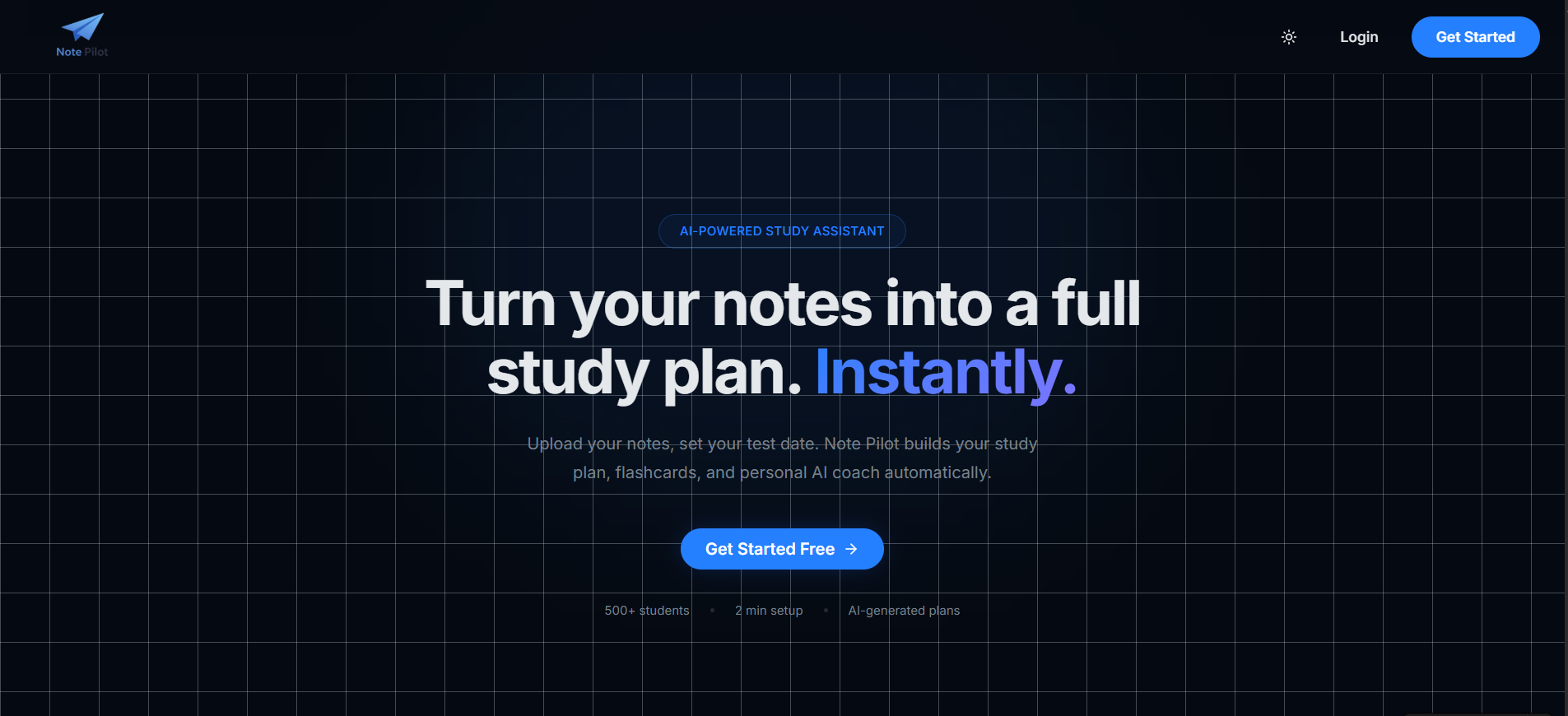
Note Pilot is an AI-powered web application that transforms unstructured student notes into a complete, personalised study system. The platform is designed to guide students from raw material to exam readiness through a clear, automated workflow. The core approach begins with students uploading their study notes in various formats (PDF, DOCX, or images) and entering their test date. The system then uses artificial intelligence to extract and analyse the content of these notes, identifying key topics covered as well as potential gaps or missing areas. This ensures that the student gains a clear understanding of what they know versus what still needs attention.
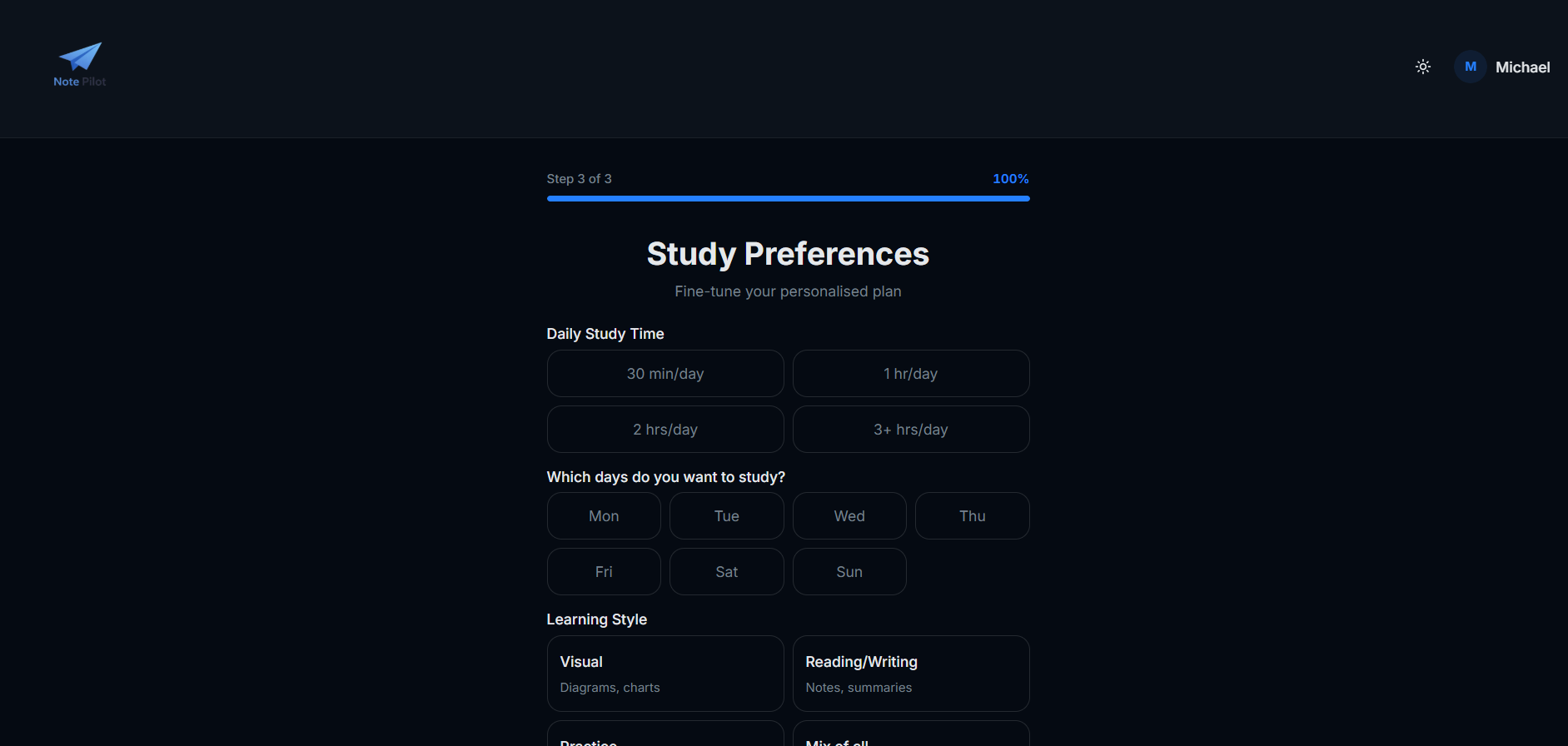
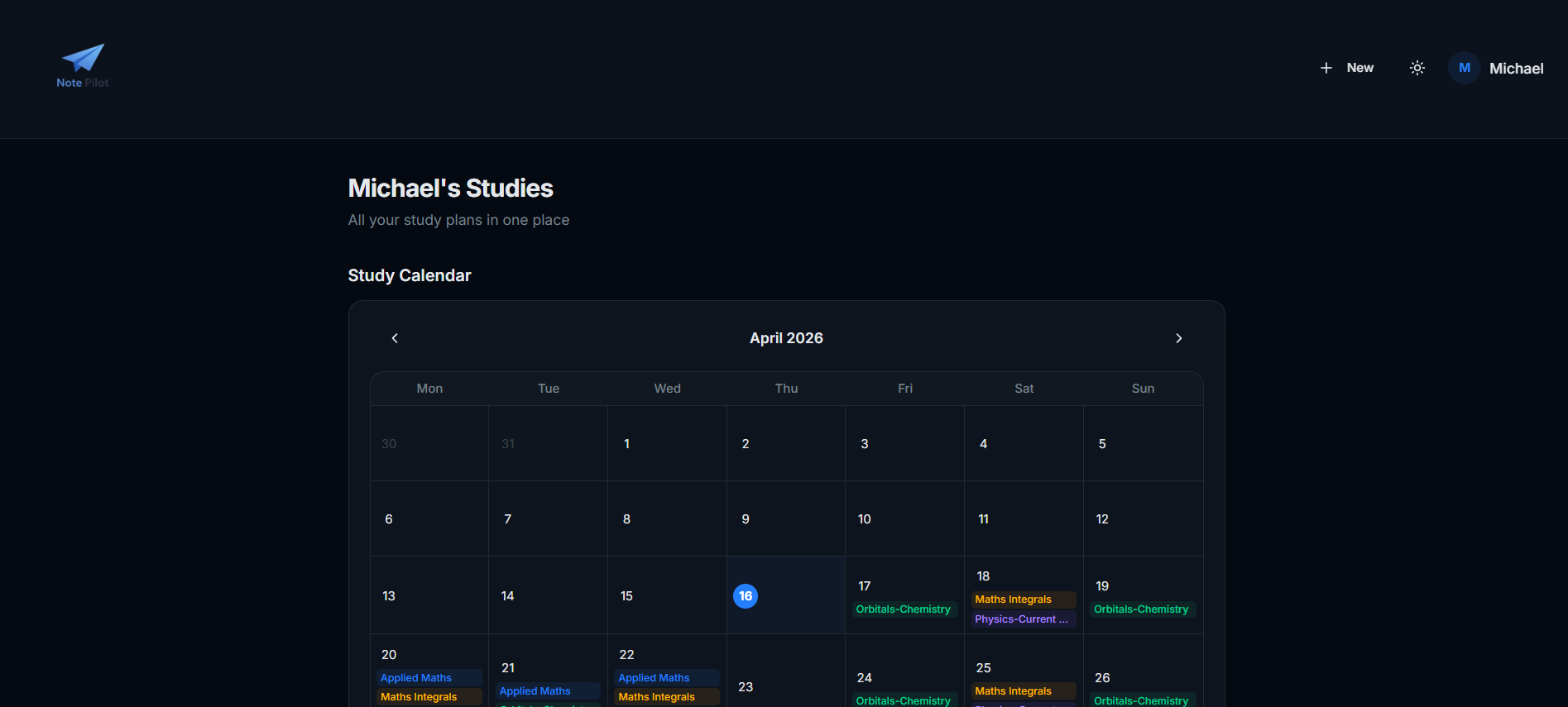
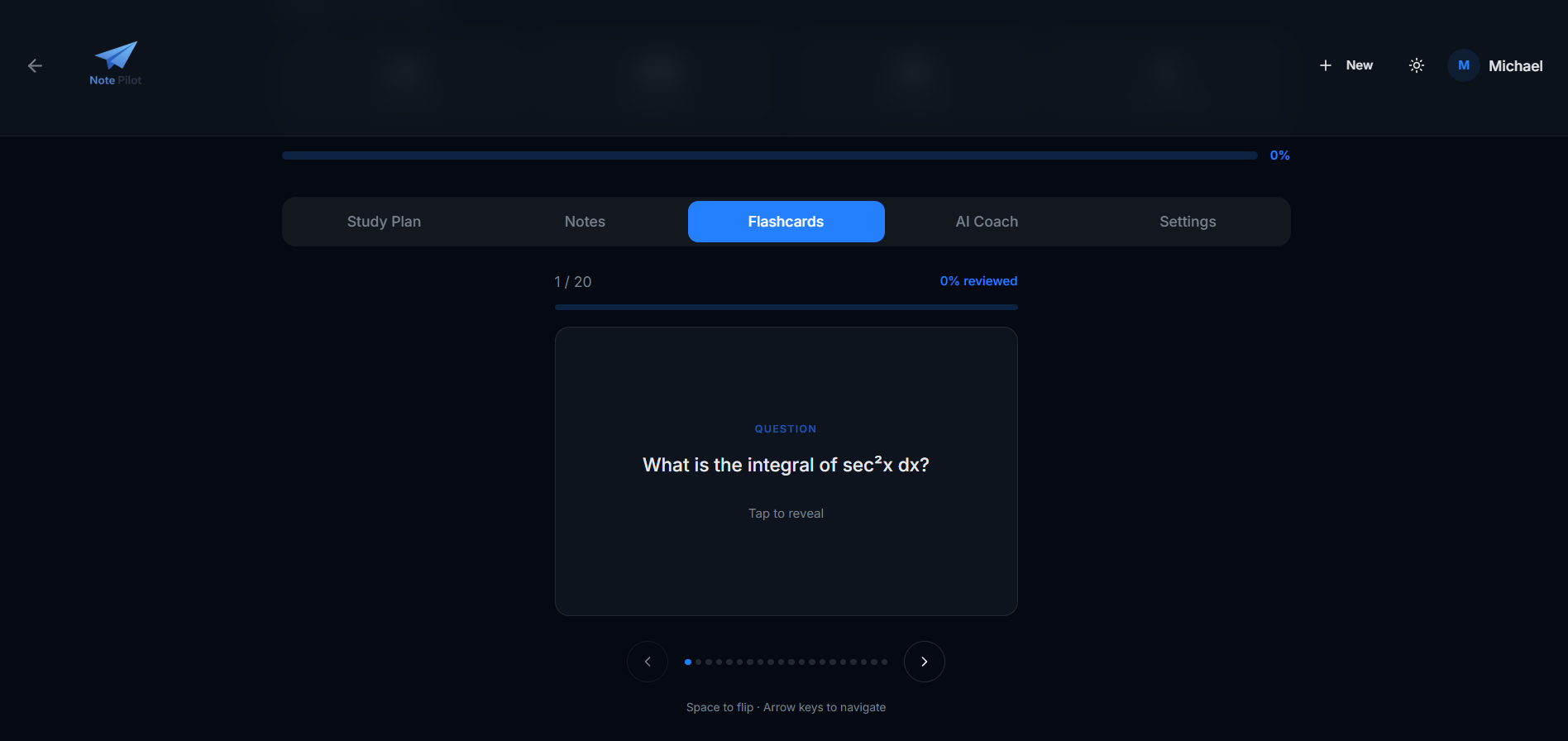
Based on this analysis, the application automatically generates a structured, day-by-day study plan tailored to the student’s available time before the exam. This plan distributes topics efficiently, prioritising weaker or incomplete areas while balancing workload to avoid last-minute cramming. In addition, the system generates a set of flashcards directly from the uploaded content, enabling active recall and more effective revision.
To further support learning, Note Pilot includes an AI-powered coach that allows students to ask questions about their notes and receive instant, context-aware explanations. This creates an interactive learning experience, replacing passive revision with active engagement.
How we built it
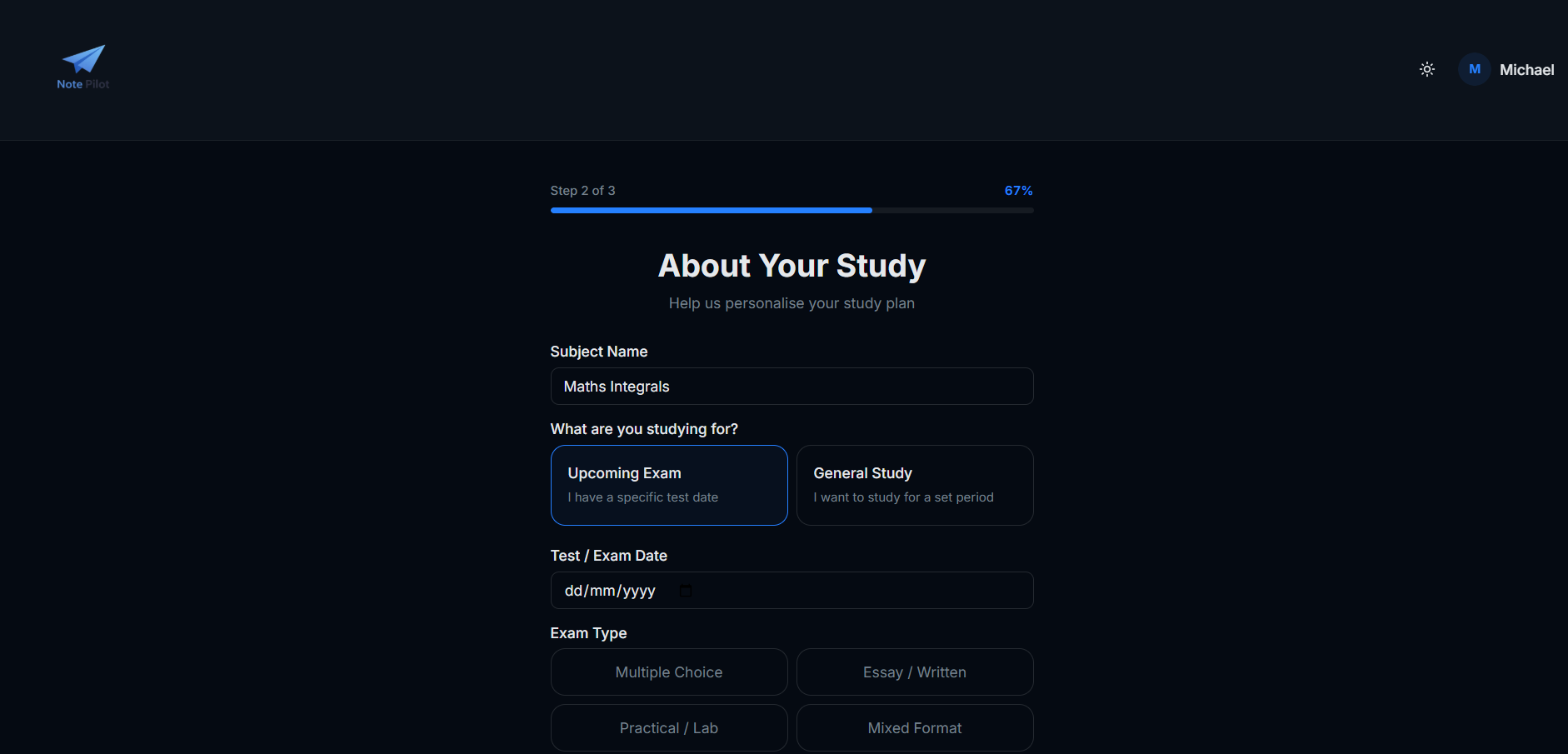
Note Pilot is a fully working web application deployed at notepilot.lovable.app. A student can sign up, upload their notes as a PDF, DOCX or image, enter their subject name and test date, and within about 30 seconds receive a personalised day-by-day study plan, a full set of AI-generated flashcards, and access to an AI coach that answers questions using their own notes as context. All three features are live and functional. The prototype was built and deployed within 24 hours using Lovable for the frontend, Supabase for authentication and data storage, and the Gemini API for all AI analysis. The full codebase is available at the GitHub repository linked below.
Note Pilot is built with React and TypeScript on the frontend, styled with Tailwind CSS and shadcn/ui components. Vite handles the build tooling. Supabase provides user authentication, a PostgreSQL database, file storage for uploaded notes, and serverless Edge Functions that handle all server-side logic. The Gemini API powers the core AI features.
When a user uploads a file, it is stored in a Supabase Storage bucket. A Supabase Edge Function then downloads the file, extracts the text content, and sends it to the Gemini API with a structured prompt. Gemini returns a study plan and flashcard set as JSON, which is saved to the database and rendered on the dashboard. A second Edge Function handles the AI coach tab, passing the user's question along with their original note content to Claude and returning the response to the chat interface. The API Key is stored as a Supabase secret and never exposed to the frontend. Row Level Security is enabled on all database tables so users can only access their own data
Challenges we ran into
Looking back honestly, three things held us back. We were working against the clock the entire time, which meant some features were not as polished as we would have liked. Our team had varying levels of technical experience, so the workload was not always evenly distributed. And we had no customer feedback going in. We built based on our own experience as students, which gave us reasonable instincts, but real user testing would have sharpened the product significantly.
Accomplishments that we're proud of
Although Note Pilot is designed with everyday students in mind, it can be used in a wide range of learning situations. At its core, the app solves a simple but common problem: people have material to study and a deadline, but no clear way to organise everything or know what to focus on.
Second and Third Level Education - The most obvious use is for secondary school and university students preparing for exams. At secondary level, many students are still figuring out how to study effectively, especially when juggling multiple subjects. Note Pilot helps by turning their notes into a clear, step-by-step plan so they know exactly what to do each day.
At university level, the workload is much heavier and more self-directed. Students often deal with large amounts of lecture notes and readings, which can quickly become overwhelming. The app helps organise all of this into one structured plan, making it easier to stay on top of multiple modules and deadlines.
Professional Exams and Certifications - The app is also useful for people studying for professional exams, such as in business, law, or medicine. These learners are often studying on their own, without much external structure. Note Pilot can take large amounts of technical material and break it down into a manageable plan, helping them stay consistent and focused as their exam approaches.
Language Learning and Skill-Based Study - Beyond formal education, the app can be used for any type of learning with a clear goal. For example, language learners can upload vocabulary and grammar notes and use the app to prepare for exams. It can also be useful for things like driving theory tests, technical interviews, or aptitude tests — anywhere someone needs to study and improve over time.
Classroom and Institutional Use - Schools and colleges could also use Note Pilot as a support tool. Teachers can recommend it to students who struggle with organising their revision or managing their time. It doesn’t replace teaching, but it supports it by helping students stay structured outside the classroom.
How It Is Used in Practice - No matter the situation, the process stays simple. The user uploads their notes, enters their test date, and the app takes care of the rest. It builds a study plan, creates flashcards, and provides an AI coach for questions and support. Because of this simplicity, the app can be used by almost anyone. As long as someone has something to study and a deadline to work toward, Note Pilot can help them stay organised, focused, and better prepared.
What we learned
Building Note Pilot in under 24 hours was one of the most challenging and rewarding things our team has done. We came into this hackathon with a clear problem we genuinely cared about. Students, ourselves included, waste hours trying to organise notes, figure out what to study, and stay on top of exam prep without any real structure. Note Pilot was our answer to that.
The core idea was simple. Upload your notes, set your test date, and let AI do the heavy lifting. But turning that idea into a working product in a single day forced us to make fast decisions, cut what was unnecessary, and focus entirely on what mattered. The result is something we are genuinely proud of. A student can sign up, upload their notes, and walk away with a full study plan, a flashcard set, and an AI coach in under a minute. That works. It is live. Anyone can use it right now.
The hardest part of the build was connecting everything cleanly. Getting the Claude API, Supabase Edge Functions, file storage and the frontend to all talk to each other without breaking required a lot of debugging and clear thinking under pressure. There were moments where logic that looked right on paper was not behaving correctly in practice, and working through those problems in real time was genuinely difficult. It was also the most educational part of the process.
What's next for Note Pilot
We believe Note Pilot has a real future beyond this hackathon. The problem is genuine, the solution works, and the technology behind it is powerful enough to go much further. We would want to add smarter gap diagnosis, progress tracking over time, and deeper personalisation based on how each student actually learns. This hackathon gave us the foundation to build something meaningful, and we intend to keep building it.
Built With
- css
- gemini
- lovable
- supabase
- typescript

Log in or sign up for Devpost to join the conversation.