-
-
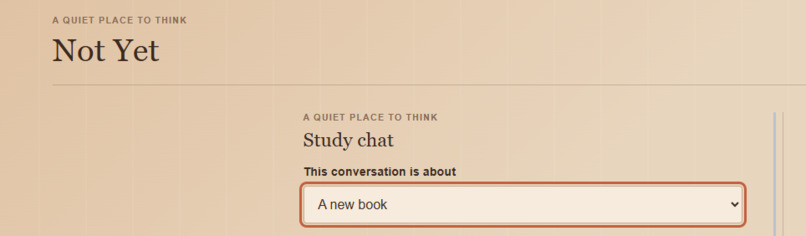
website app
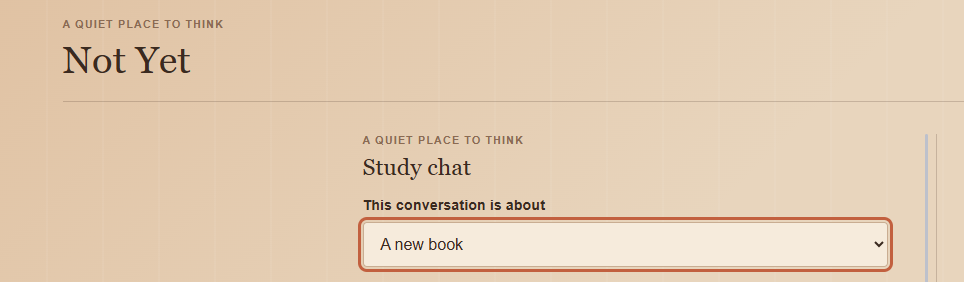
Inspiration
I read hard maths books like Spivak on my own, and I kept hitting the same feeling. I would get stuck on a proof for a long time and slowly start to feel stupid, even though the book was simply hard. Reading alone is lonely, and lectures help, but they don't sit with you while you work through the book itself.
Most AI tools just hand over the answer, which takes away the thinking that makes you understand. I wanted the opposite: a study partner that asks questions, gives small nudges, remembers exactly where I got stuck, and brings that spot back later. No scores, no streaks, no pressure. The name comes from that feeling: you don't get it yet.
What it does
- Paste a screenshot of a page (Ctrl+V). It is read once and saved as text under the book, and you can check and fix the text, especially equations, before saving.
- Talk it through with a study partner that asks questions and gives small, gradually more specific nudges. It never gives the final answer, never grades you, and has no scores, levels or streaks.
- Press "I'm stuck" and write where you lost the thread, in your own words. It is saved with the book and page.
- Revisit a saved spot and the app asks a fresh question about it. When you understand it, mark it "Got it" and it moves to an Understood drawer you can reopen.
- Maths shows as real symbols. Everything stays in your browser, with no accounts.
- A cosy room with a glass cabinet, drawers, a cat tree and a small cat, in light, dark, warm and night looks.
How I built it
Made with the Devpost Learn Skill Pack. The planning documents (scope.md, prd.md, spec.md) are in the devpost/ folder of the repo. It uses Next.js with plain JavaScript, and a server route calls the Google Gemini API so the API key never reaches the browser. Saved text lives in local storage, and maths is shown with KaTeX. I used AI coding assistants (GitHub Copilot and Claude) and made the product decisions and tested it myself.
Challenges I ran into
Getting the tutor to hold back. It must never give the answer, and a language model can slip, so I tested it by hand with direct requests and repeated nudges. The free Gemini tier also has tight rate limits and sometimes returns errors, so the app retries and falls back to other models with a friendly message.
Accomplishments I'm proud of
I had never built a web app before. I planned it first, shipped a working version with a public repo, and designed a calm room with a cabinet, drawers and a cat that wanders around its tree.
What I learned
Planning before building saves time, small steps beat big rewrites, and keeping an API key off the browser and out of a public repo matters from the start.
Honest limits
The tutor follows its "never give the answer" rule on a best-effort basis, and I tested it on only a handful of prompts. PDF import, accounts and an optional progress mode are not built yet.
What's next
PDF import so you can work through a whole chapter, accounts so your shelf follows you across devices, an optional progress mode for people who like rewards, and links between ideas across different books.
Built With
- claude
- github-copilot
- google-gemini-api
- javascript
- katex
- next.js
