-
-
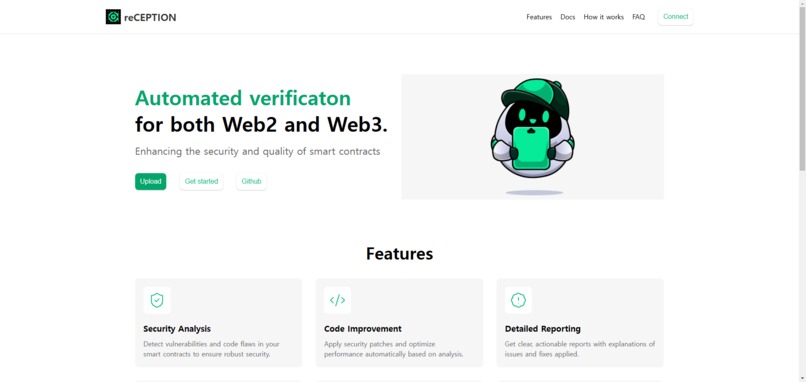
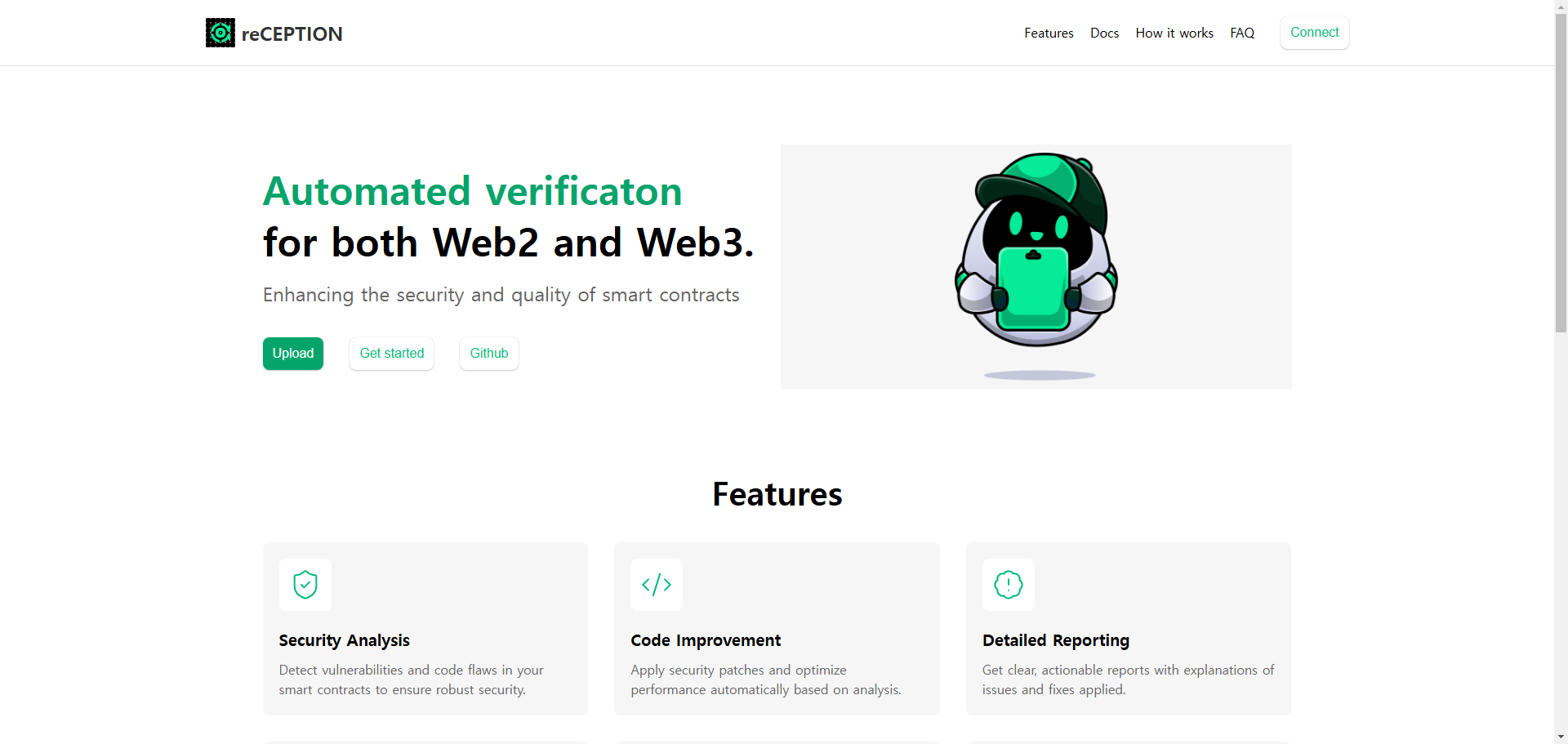
Landing page
-
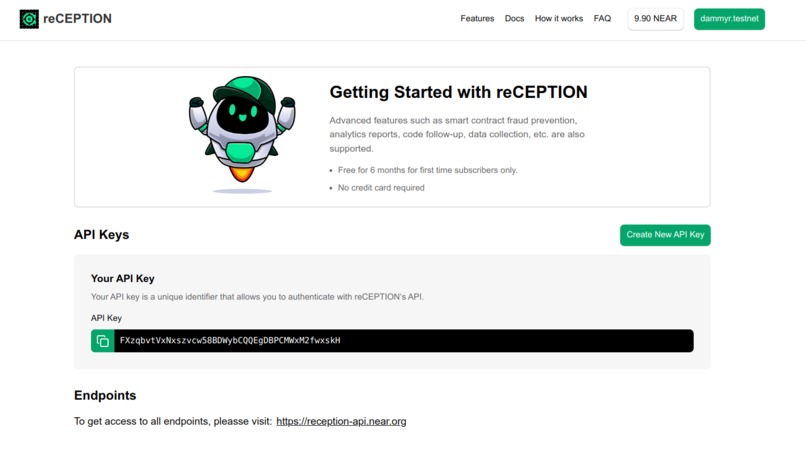
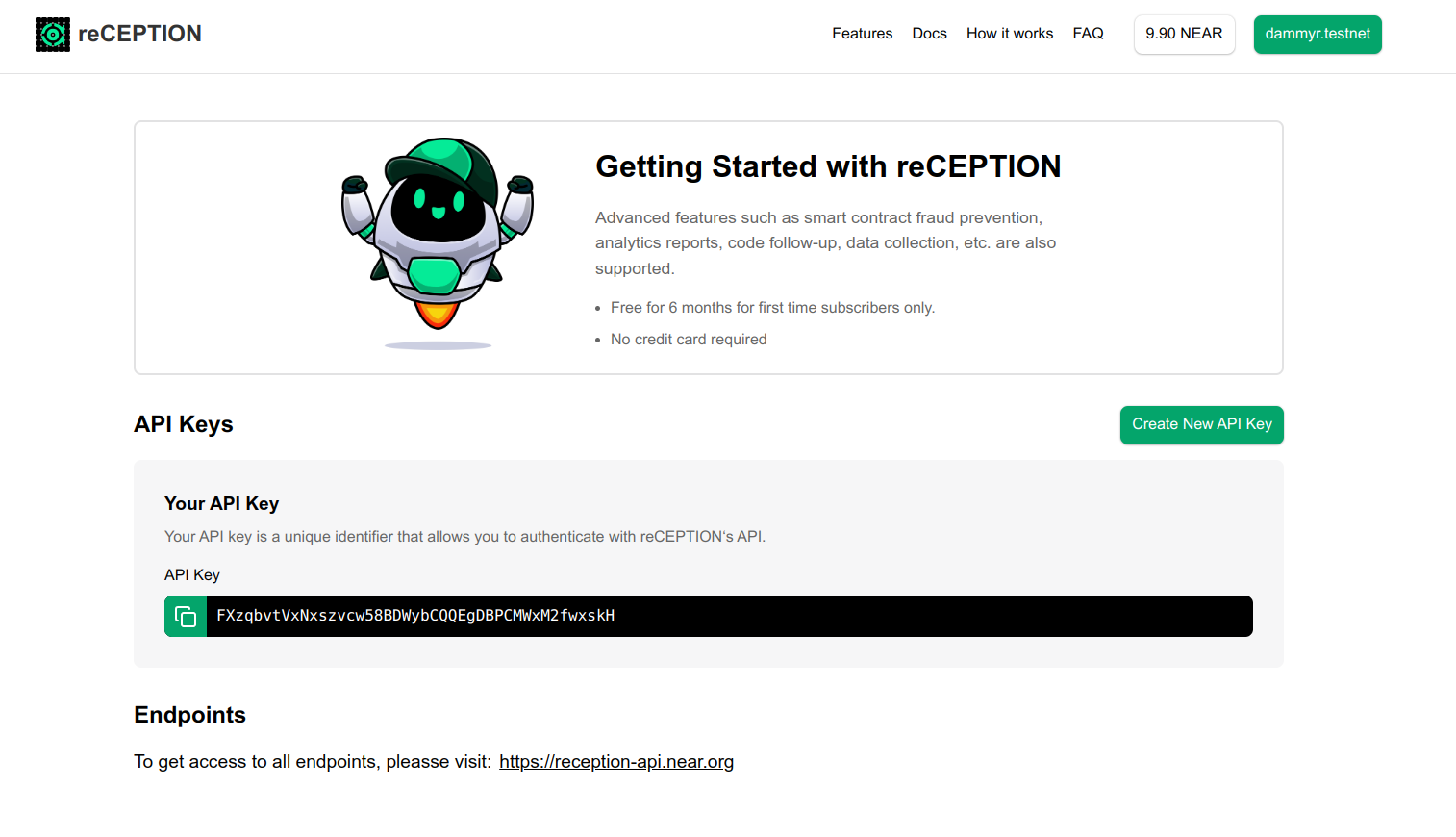
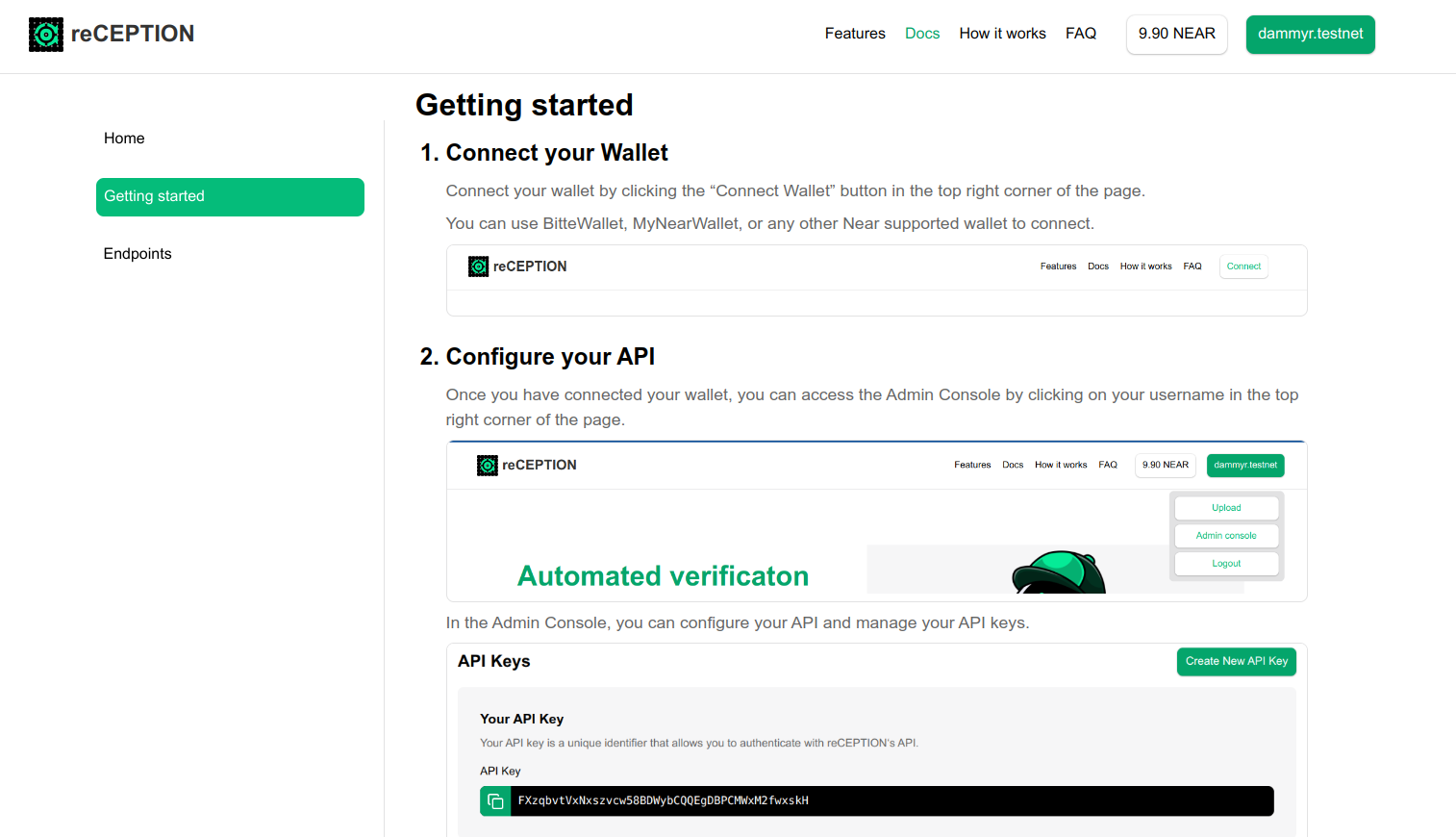
API page
-
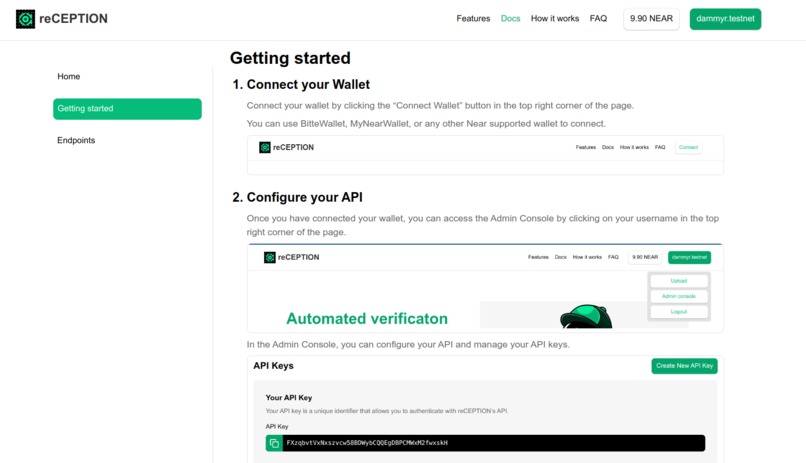
API Docs page
-
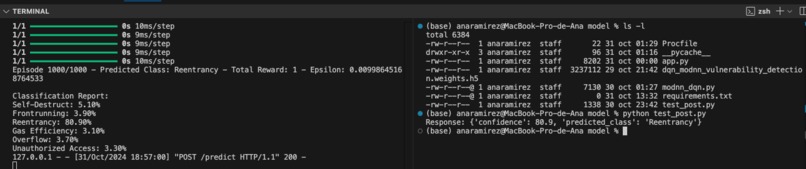
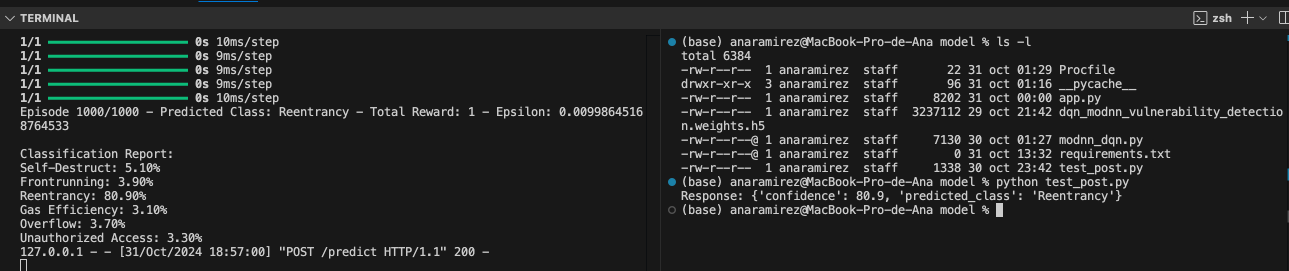
AI Model Result
-
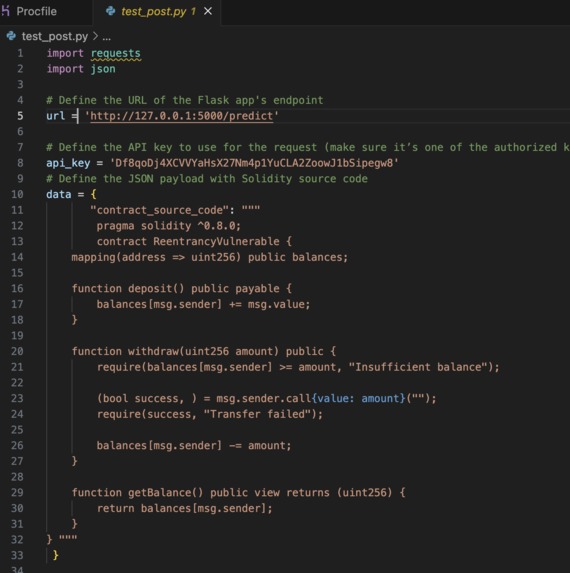
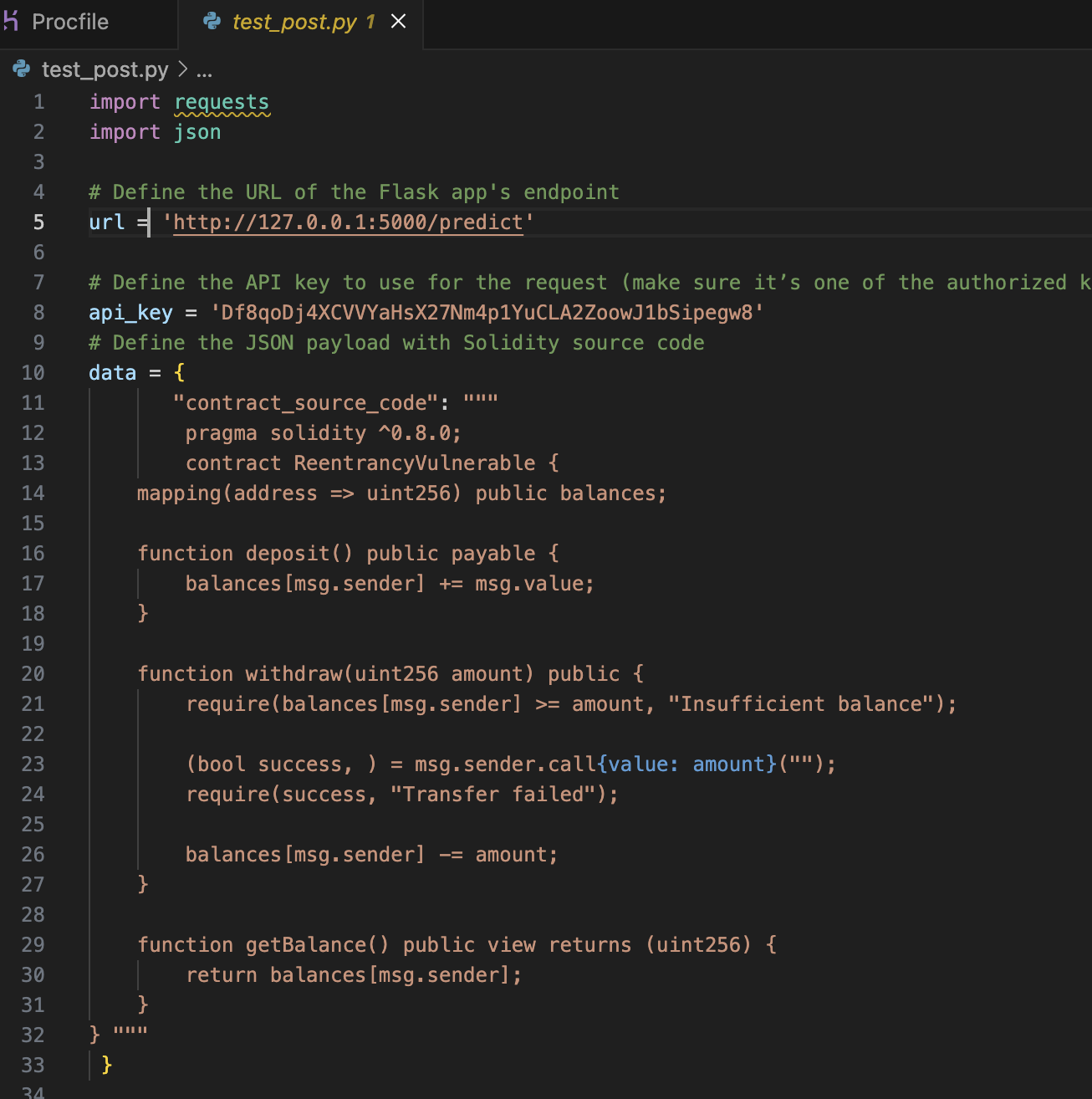
Call from the API
-
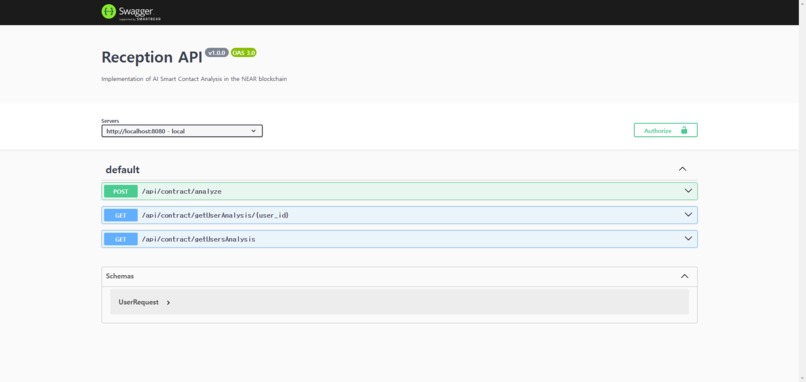
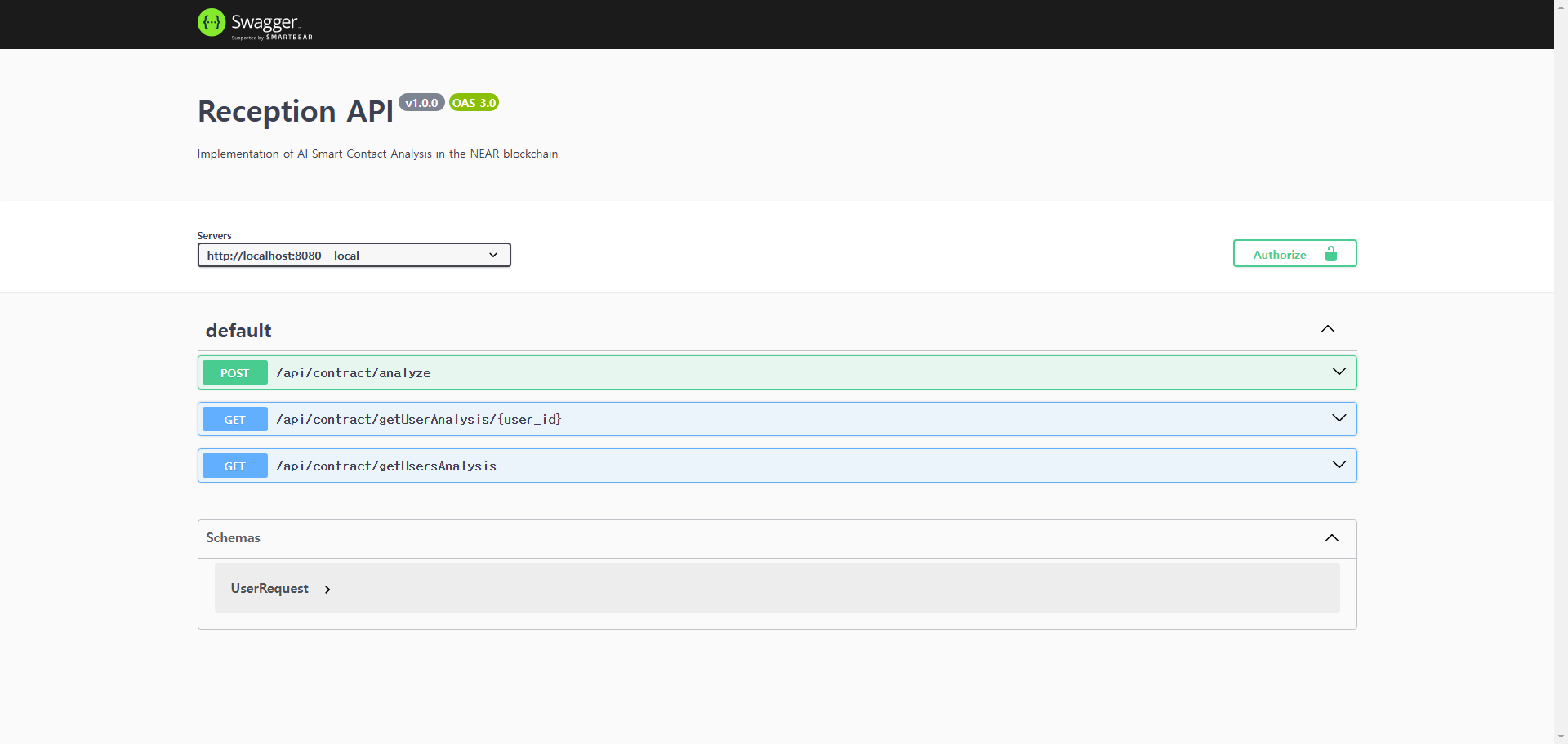
API Swagger
Inspiration
The reCEPTION project was inspired by the need to enhance security and increase user trust within decentralized ecosystems. In Web3 technology, especially in e-commerce and financial transactions, smart contracts play a crucial role. However, smart contracts often become targets for exploitation due to vulnerabilities, leading to financial loss and damage to trust.
Our inspiration comes from the success of reCAPTCHA, which provides a simple yet powerful security layer that distinguishes human users from bots. Similarly, we envisioned applying such a security checkpoint to smart contracts, ensuring that every transaction and contract interaction is thoroughly analyzed and checked for vulnerabilities before execution. By integrating AI technologies like NEAR AI and offering an easy-to-use experience, reCEPTION becomes a versatile solution that can be used in both Web2 and Web3 environments.
The goal of this project is to empower developers, businesses, and everyday users to use smart contracts securely and efficiently. Whether it's an e-commerce platform processing cryptocurrency payments or a Web3 application managing decentralized transactions, reCEPTION provides real-time security analysis, making the blockchain ecosystem more trustworthy and user-friendly.
What it does
reCEPTION is an AI-powered security platform that offers functionality similar to reCAPTCHA, providing automated verification solutions for both Web2 and Web3 environments. The project aims to enhance the security and quality of smart contracts and provide automated validation solutions for users and developers.
Key Features
- AI-Based Smart Contract Analysis:
- Users upload their smart contract code for analysis, where AI identifies security vulnerabilities, code flaws, and potential scams.
- Automated Security Checks and Corrections:
- Based on the analysis, the AI suggests and implements modifications, including security patches and performance optimizations.
- Provides a feature to automatically deploy the modified code within the platform.
- Detailed Reporting:
- Generates comprehensive reports detailing the issues found, modifications made, and explanations to help users understand improvements.
- Reports are available for download in CSV and PDF formats.
- Admin Console:
- An admin console allows administrators to set up and manage reCEPTION features on their own websites.
- Supports reCAPTCHA-like functionality for security validation on web pages.
- API Provision:
- Offers API access to analysis results and data, enabling e-commerce platforms or Web3 applications to use these as security solutions.
Use case & Target
- Web2:
- Enhances security for e-commerce platforms, especially regarding cryptocurrency payment contracts.
- Integrates with existing Web2 services to improve the security of smart contracts.
- Web3:
- Provides security validation and enhancement for smart contracts on Web3 platforms.
- Ensures safe execution of contracts and supports verification through blockchain technology.
- Long-term goal to expand the service to the entire Web3 ecosystem, offering security solutions for all platforms using smart contracts.
- Ensuring the trustworthiness of Web3 platforms' contracts and transactions is the ultimate objective.
- E-Commerce Platforms:
- Targeting e-commerce platforms as a primary focus due to their ease in integrating cryptocurrency payments and creating use cases.
- By integrating reCEPTION, e-commerce platforms can quickly adopt and implement secure cryptocurrency payment systems.
How we built it
AI Model
The model extracts the opcodes of the vulnerable contract. After, it transforms the opcode sequences into numerical data and feed it into a neural network for classification. Finally ,the model scores the potential vulnerability category the opcode belongs to. In this case, the intuition behind the network architecture relays not solely in analyzing the opcode but also actively picking which information is crucial to learn and to forget . In addition , it makes decisions about the necessary actions to take next (e.g., recommend a fix, analyze another operation).
- A MODNN network combined with Reinforcement Learning techniques composes a neural architecture capable of not only analyzing contracts but also learning and improving its analysis through interaction. This could be especially useful for dynamic environments like smart contracts, where opcode patterns can vary significantly, and optimal analysis strategies need to be learned over time.
The Types of learned vulnerabilities & AI Model result: It is just pretrained at the moment with Reentrancy vulnerability so it learned how to identified from its opcodes. (Reference training data)
- Overflow: 3.90%
- Self-Destruct: 3.50%
- Frontrunning: 4.80%
- Reentrancy: 80.50%
- Unauthorized Access: 3.90%
- Gas Efficiency: 3.40%
NEAR Protocol contract
Our reCEPTION project utilizes NEAR Protocol to enhance transaction security and user experience in blockchain-based e-commerce. Key integrations include:
- Smart Contract Interaction: reCEPTION stores and retrieves user interactions on NEAR, allowing secure analysis of payment smart contracts.
- Fee Management: Customizable fees are configured by the contract owner for each transaction, streamlining cost management.
- User Authorization and API Keys: Secure methods for authorizing users and managing API keys ensure authenticated access to smart contract features.
- Safety Analysis: reCEPTION conducts real-time safety checks on contracts, categorizing them as "normal" or "abnormal" based on NEAR’s analysis results.
- Interaction Records: NEAR stores transaction histories, enabling transparent, safe access for users and platforms.
This integration makes reCEPTION an efficient, secure choice for Web3 platform transactions.
Challenges we ran into
As far as it is concerned I will summarize the three main categories the AI model was faced with: Arquitectural Design Mathematical problems Operating system incompatibilities
Accomplishments that we're proud of
In developing this model, we achieved seamless cross-chain interoperability using NEAR’s Chain Signatures, implemented AI-driven contract security, and delivered a user-friendly interface that simplifies blockchain interactions. Our platform integrates easily with existing e-commerce sites and provides a comprehensive admin console for managing security features, enhancing accessibility and security across Web2 and Web3 environments.
What we learned
Throughout this project, we gained valuable insights across several critical areas. First, in Architectural Design, we discovered the importance of a flexible framework to handle cross-chain interactions, ensuring smooth integration with various networks. This experience underscored the necessity of adaptability to accommodate both current blockchain structures and future expansions. In addressing Mathematical Problems, we encountered complex algorithmic requirements essential for accurate contract analysis and anomaly detection. These challenges pushed us to deepen our understanding of advanced cryptographic techniques. Finally, Operating System Incompatibilities highlighted the need for cross-platform compatibility, especially when running decentralized applications across multiple environments, guiding us to create solutions that maximize accessibility and reliability for all users.
What's next for reCEPTION
Feature Expansion:
- Extend functionalities to support various blockchain networks and optimize solutions for Web3 platforms.
- Continuously improve AI models by exploring new environments where Reinforcement Learning techniques advantageous and lead to wisdom actions that introduce new security solutions based on user needs. Also if developed properly the model could incorporate other use cases such as Antivirus.
Market Expansion:
- Expand services beyond e-commerce platforms to include all Web3 platforms utilizing smart contracts.
- Develop solutions applicable to a wide range of smart contract applications.
Finally Goal is To develop a security solution applicable to all platforms utilizing smart contracts, creating a globally secure blockchain application environment.
Built With
- ai
- bitte
- blockchain
- css
- evm
- html
- javascript
- near
- nearprotocol
- python
- solidity
- typescript


Log in or sign up for Devpost to join the conversation.