Inspiration
Everyone has stared at a room and thought: “This doesn’t feel like me.” Interior design is expensive, inaccessible, and often generic. We wanted to change that by creating an AI system that understands not only your space, but you — your personality, habits, aesthetic, lifestyle, and daily routines — and transforms it into a personalized 3D room that reflects your identity.
What It Does
SpaceIdentity generates a fully customized 3D “dream room” based on the user’s identity profile.
How it works:
Identity Quiz: Users answer questions about lifestyle, habits (night owl vs. early bird), tidiness level, color preferences, and aesthetic identity
Room Upload: Upload a photo or floorplan
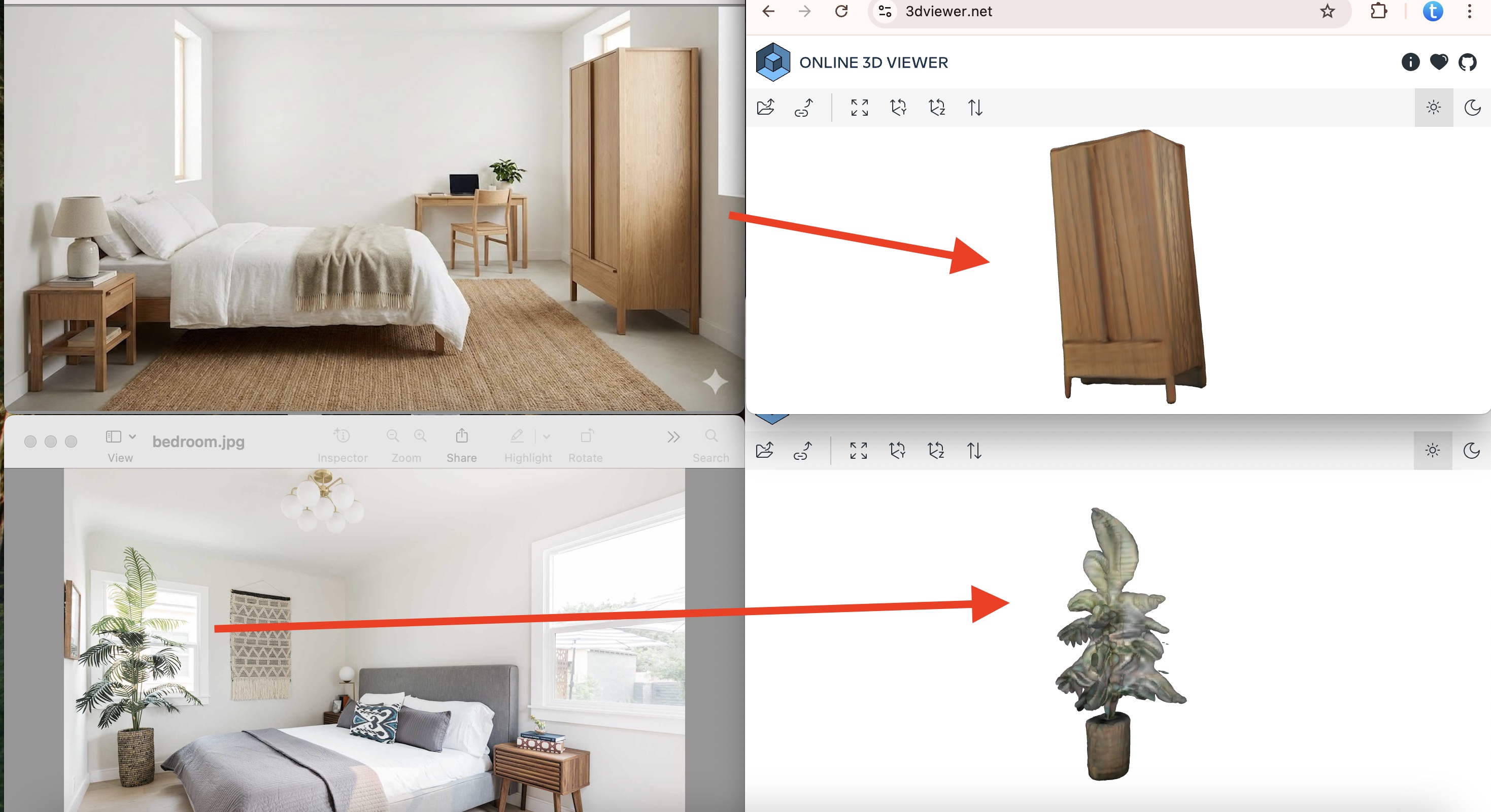
AI Analysis: Gemini Vision detects furniture, layout, lighting, and dimensions
Personalized Design: Automatically generates an interactive 3D redesigned room tailored to the user’s identity
AI Reasoning: Explains exactly why each item and layout choice fits the user
From minimalist students to cozy maximalists, every design adapts to who you are — not just what looks nice.
How We Built It (High-Level Architecture)
Frontend:
Next.js 15, React, TailwindCSS
React Three Fiber + Drei for the 3D room viewer
Zustand for global state
Backend on Vultr Cloud Compute:
Ubuntu 22.04 VM running Docker + Nginx reverse proxy
Identity quiz engine
Room analysis API
Gemini AI orchestration
3D layout generation service
Secure server environment (UFW firewall, SSL, non-root containers)
Vultr Object Storage:
Stores GLB 3D models (bed, desk, dresser, nightstand, plants)
Stores user-uploaded room images
Serves optimized assets via S3-compatible API
Custom bucket: dreamroom-assets/models/, dreamroom-assets/rooms/
AI:
Google Gemini 2.0 Flash (Vision + Text)
Used for room parsing, style detection, identity mapping, and layout reasoning
Deployment: One-command script (./vultr-deploy.sh) performs:
System provisioning
Docker image builds
SSL setup
Firewall config
Automatic service restart + orchestration
Why Vultr
We didn’t just “host” our app on Vultr. Vultr is the engine behind the entire system.
Vultr Cloud Compute powers:
Real-time AI orchestration
Layout generation
Quiz logic
3D model pipeline
All API routing (via Nginx)
Vultr Object Storage powers:
High-speed CDN-like delivery of GLB furniture models
Storage for user room images
S3-compatible access from our Next.js backend
Cross-origin 3D asset serving for the Three.js viewer
The whole system depends on Vultr’s reliability, speed, and flexible S3 tooling to create an identity-driven design experience that feels instant and immersive.
Challenges We Ran Into
Normalizing GLB furniture scales from different sources
Getting consistent room/lifestyle reasoning from Gemini Vision
Serving GLB assets cross-origin (CORS setup on Vultr Object Storage)
Optimizing 3D scenes for smooth rendering
Reducing Docker image size from 2GB to under 500MB
Accomplishments We’re Proud Of
Truly identity-first design generation
Full-stack deployment on Vultr (compute + storage)
Real-time 3D visualization that works across devices
Transparent AI reasoning that explains design decisions
Sub-3-second room analysis and regeneration
What We Learned
Vultr’s cloud ecosystem is powerful for rapid AI deployment
S3-compatible storage makes asset delivery extremely flexible
Docker + Vultr = simple, smooth, reproducible deployments
Personalization is much stronger when tied to identity, not only style
What’s Next
Shopping integration for furniture recommendations
AR room preview
Multi-room and whole-home design
Designer collaboration mode
Vultr-based analytics dashboards
Built With
- aws-sdk
- docker
- docker-compose
- drei
- google-gemini-2.0-flash-(vision-+-text)
- next.js-15
- nginx
- react
- react-three-fiber
- tailwindcss
- three.js
- typescript
- ubuntu-22.04
- ufw-firewall
- vultr-cloud-compute
- vultr-object-storage
- zustand

Log in or sign up for Devpost to join the conversation.