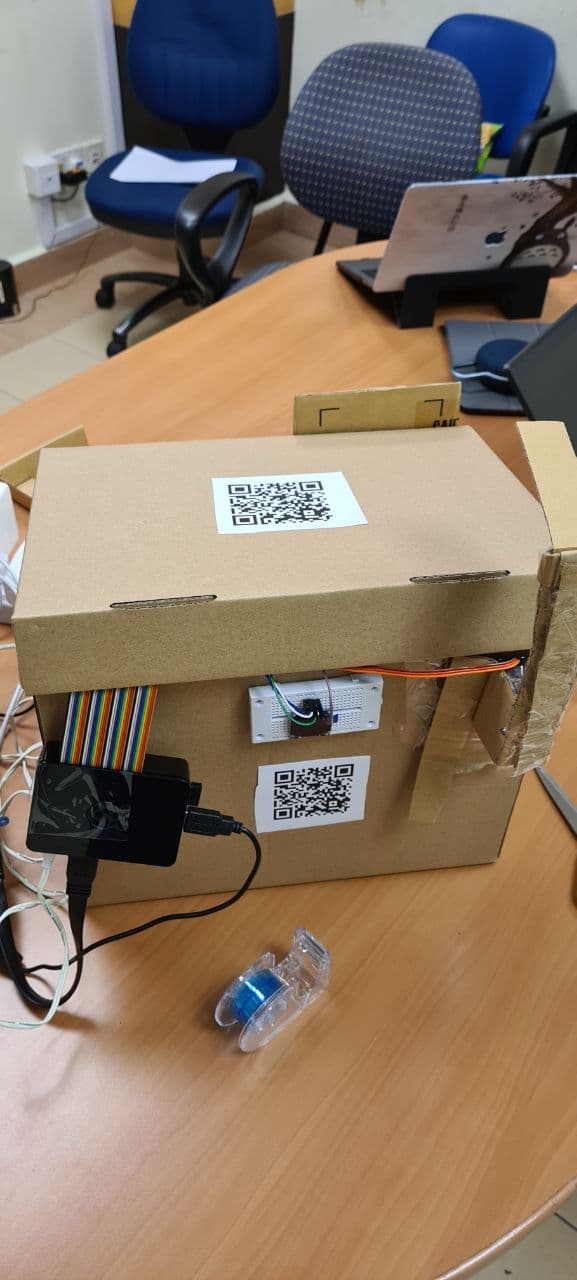
NOT Schrödinger's Box
Inspiration
Ever had a problem with having too many items? Want to find something but forgot where you have stored it? We too face a similar problem. With such a large number of items, we literally have no idea where everything is. All our items has become Schrödinger's items, we simply do not know if it exist anymore. NOT Schrödinger's Box is our way of tackling this issue.
What it does
NOT Schrödinger's Box helps you keep track of what items are stored within the box and where your items are. This will help us organise our items and help us keep track of what we have. With a simple click of a button, we can know what items we have and where exactly they are located by our internal alarm system.
How we built it
For the application front end, it is built in React-Native.
For the Server, it is built on Python using Flask.
For the Iot, it is built on Python using GPIO-Zero.
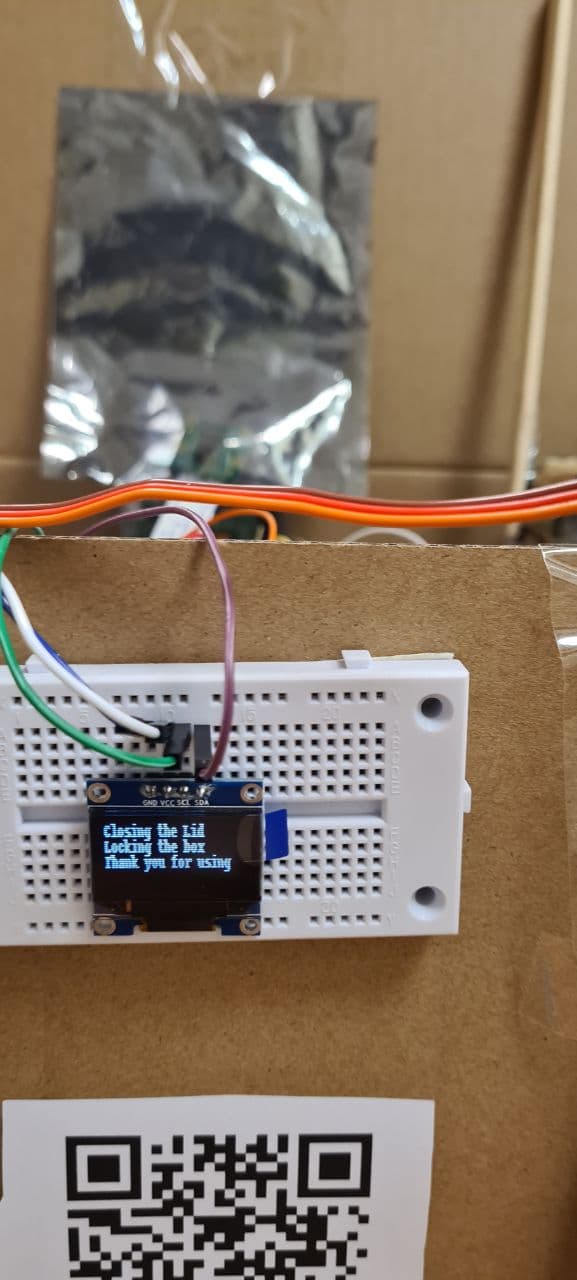
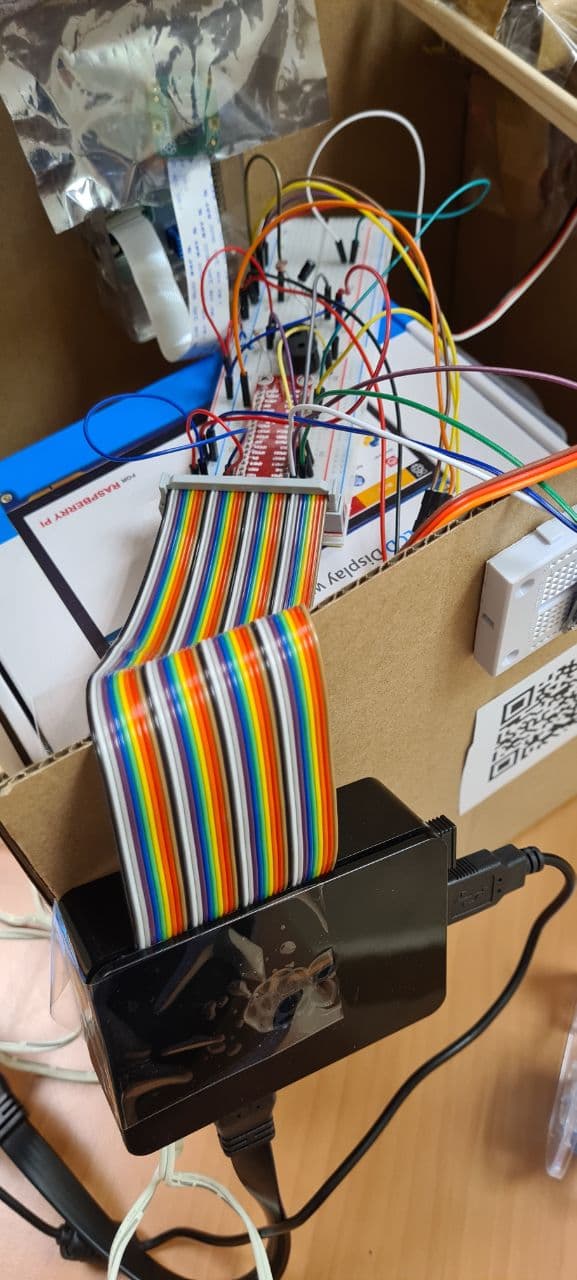
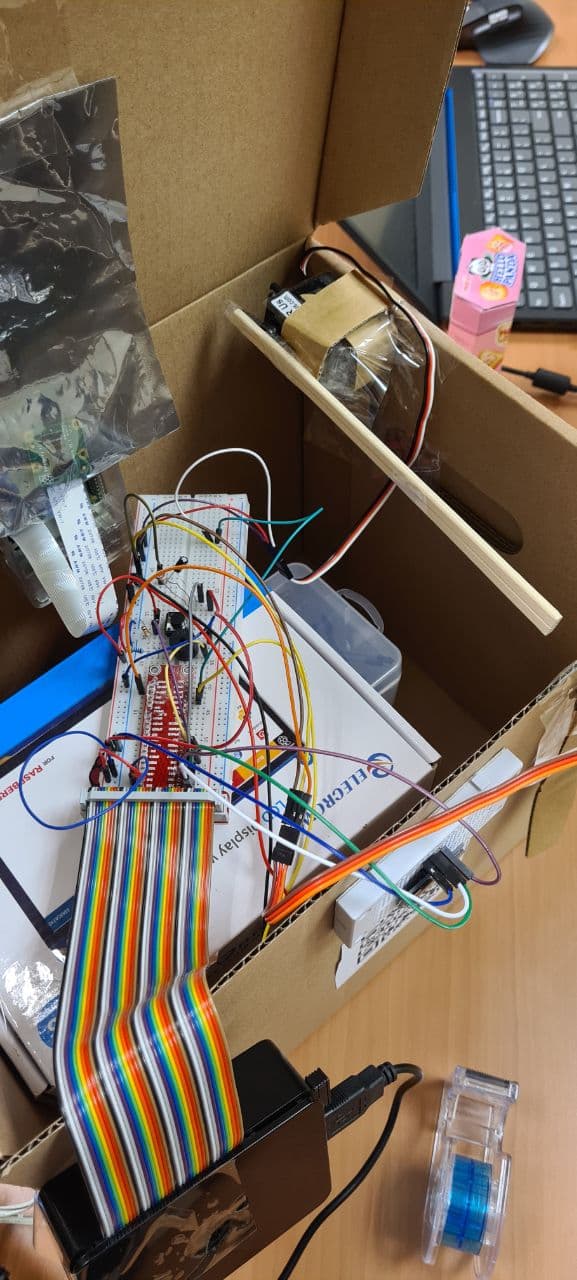
Hardware: OLED I2C - display status and process of the box Servo Motor 1 - Arm to automate opening/closing of the box Servo Motor 2 - Act as a locking mechanism, not allowing unauthorized users from opening the item Photoresistor - Detect unauthorized opening of box Buzzer - Alarm System
Others: Internal and External Pull up resistors for various components Touch Screen Monitor - For the configuring of the RPi Push button (for prototyping) - Place holder for input signals from server
Arduino (during prototype) - For efficient testing of components RPI - Main house where all the hardware was integrated in, translated the low language in Arduino to Python.
Challenges we ran into
Hardware was very limited this year and harder to work on due to the team working in seperate locations for bulk of the time. We had to adapt to using other motors.
Detecting unauthorized opening of our box. We initially planned to use our Ultrasonic sensor, however it was damaged and there was no other pieces available. We adapted our Ultrasonic application from a Grove - Ultrasonic Ranger and prototyped it on the arduino. However the same module was not compatiable with the Rpi. So we had to scratch it and improvise with a Light Dependent Resistor (Photoresistor) to detect the opening and closing.
It was challenging incorporating the Camera function into the application as we were only able to obtain the local file path of the captured images initially.
Accomplishments that we are proud of
We managed to meaningfully create an IoT hack that has both hardware and software aspects in such a short period of time. Our application is very useful for people who have many things to store (e.g. logistics personnel) as it can greatly help them to systematically organize and easily locate their items.
What we learned
Excess preparation time is required for hardware hacks and that we should be better prepared next time.
What's next
In the future, more boxes can be added together with online integration so that it can find all your boxes without it being restricted to a local area network.
Object detection smart features can be integrated into the application to automate the naming process of items. In this way, users are able to efficiently add items into boxes without having to manually name every item.
GPS system can be included as well to assist users in locating the exact location of their boxes. This proves especially useful if the boxes are stored in varying places in a large facility. Users would be able to save a significantly large amount of time locating their items.
What is it built with
- Python
- Flask
- React-Native

Log in or sign up for Devpost to join the conversation.