-
-
01
-
02
-
03
-
04
-
05
-
06
-
07
-
08
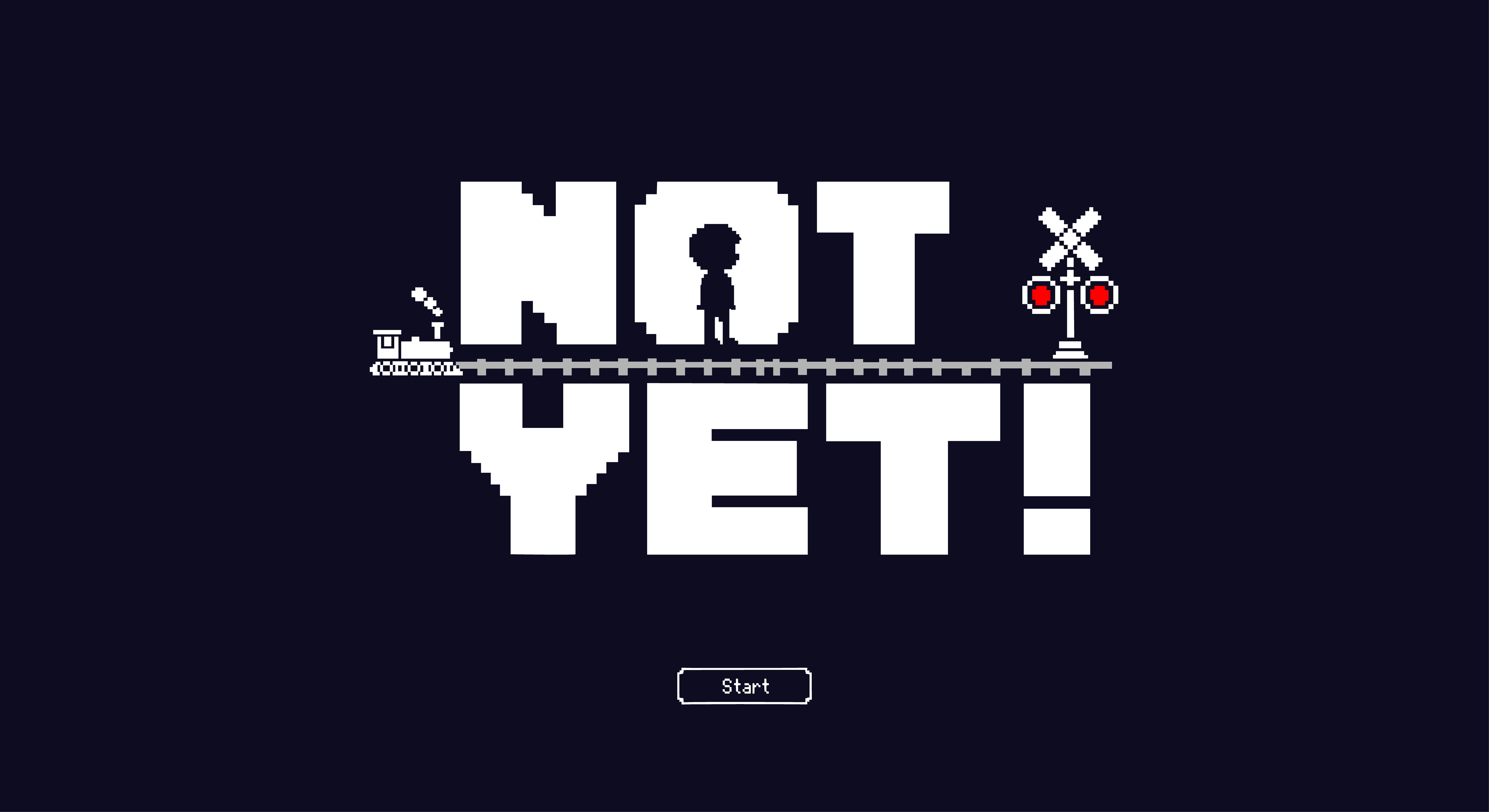
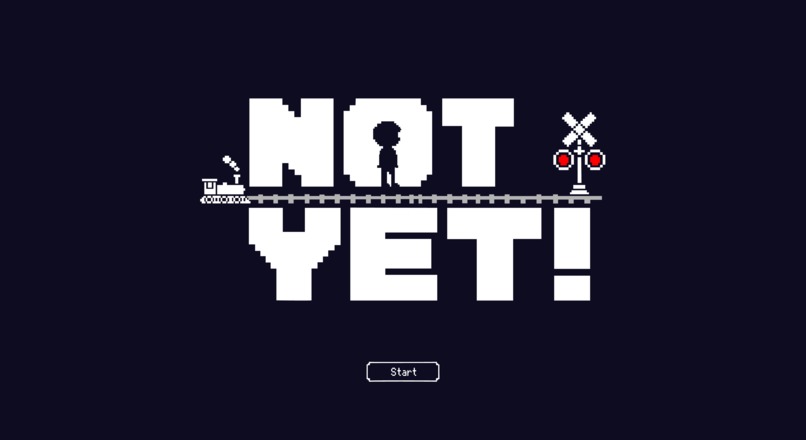
Inspiration Not Yet! started with a question: how can children learn to understand danger before they actually encounter it? Many dangers are not recognized through direct experience, but through stories, repeated reminders, adult guidance, and shared cultural memory. A child may never have come face to face with a wild animal like a tiger, yet through language, stories, and social experience they already know it is dangerous. We wanted to explore whether railway safety could be conveyed in the same way — not just as a set of rules, but as shared knowledge that children can remember, repeat, and pass on to others. "Not Yet!" became the core of our project. It captures the moment just before action: a child wants to move forward, but first needs to stop, listen, and recognise that it is not yet safe.
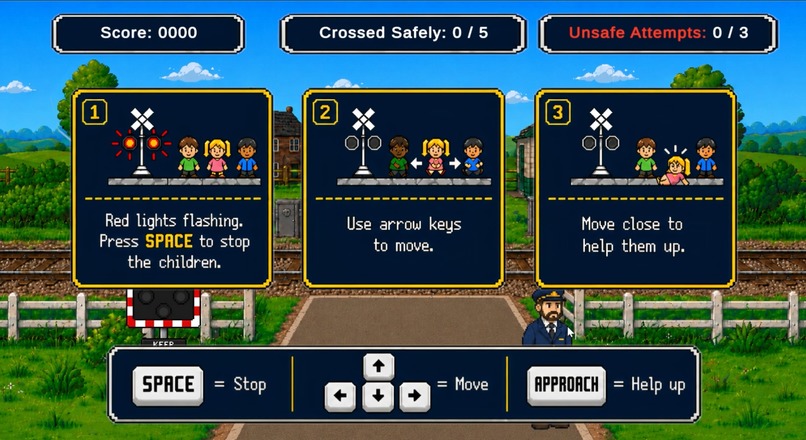
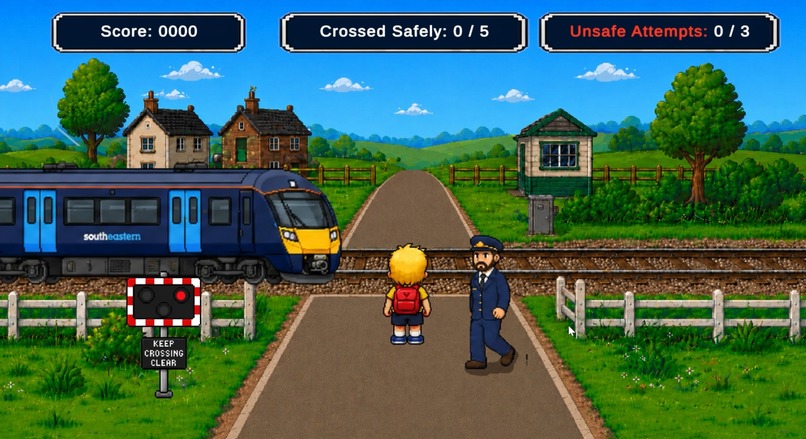
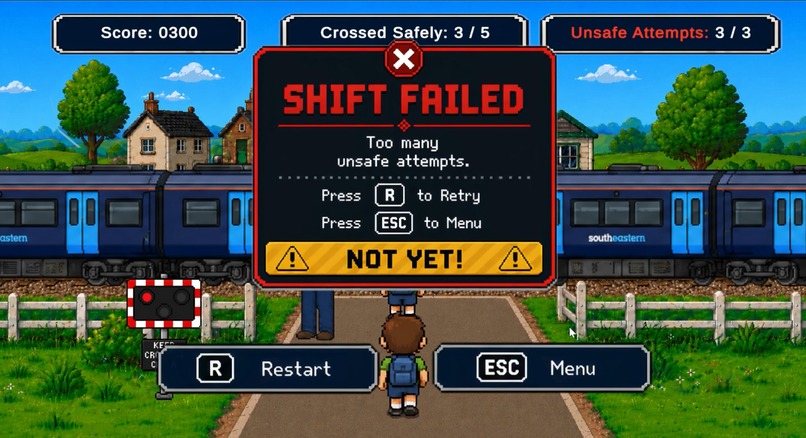
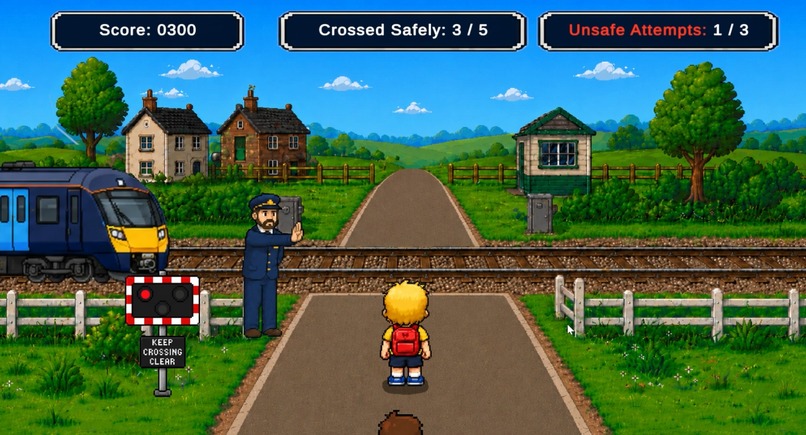
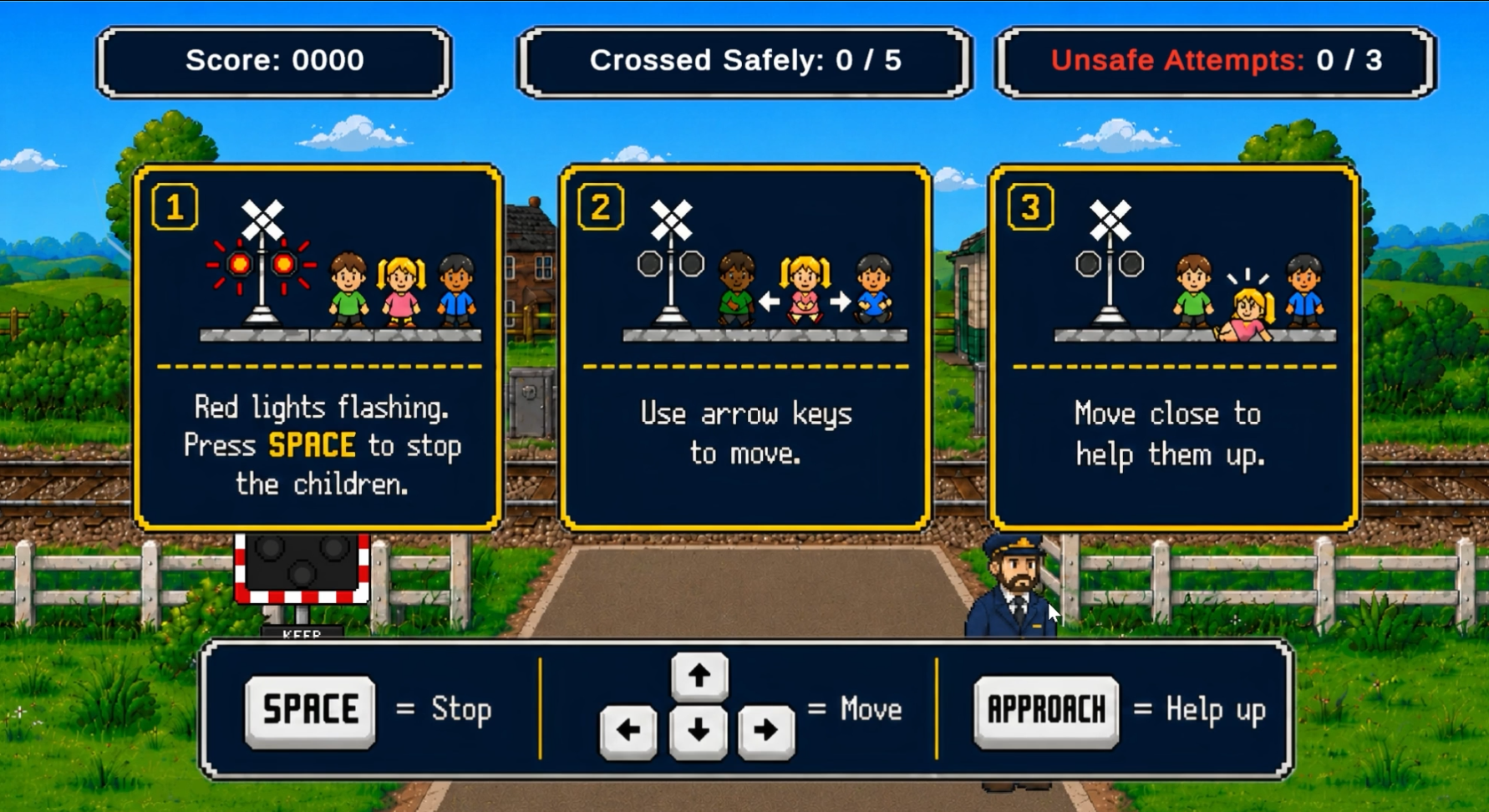
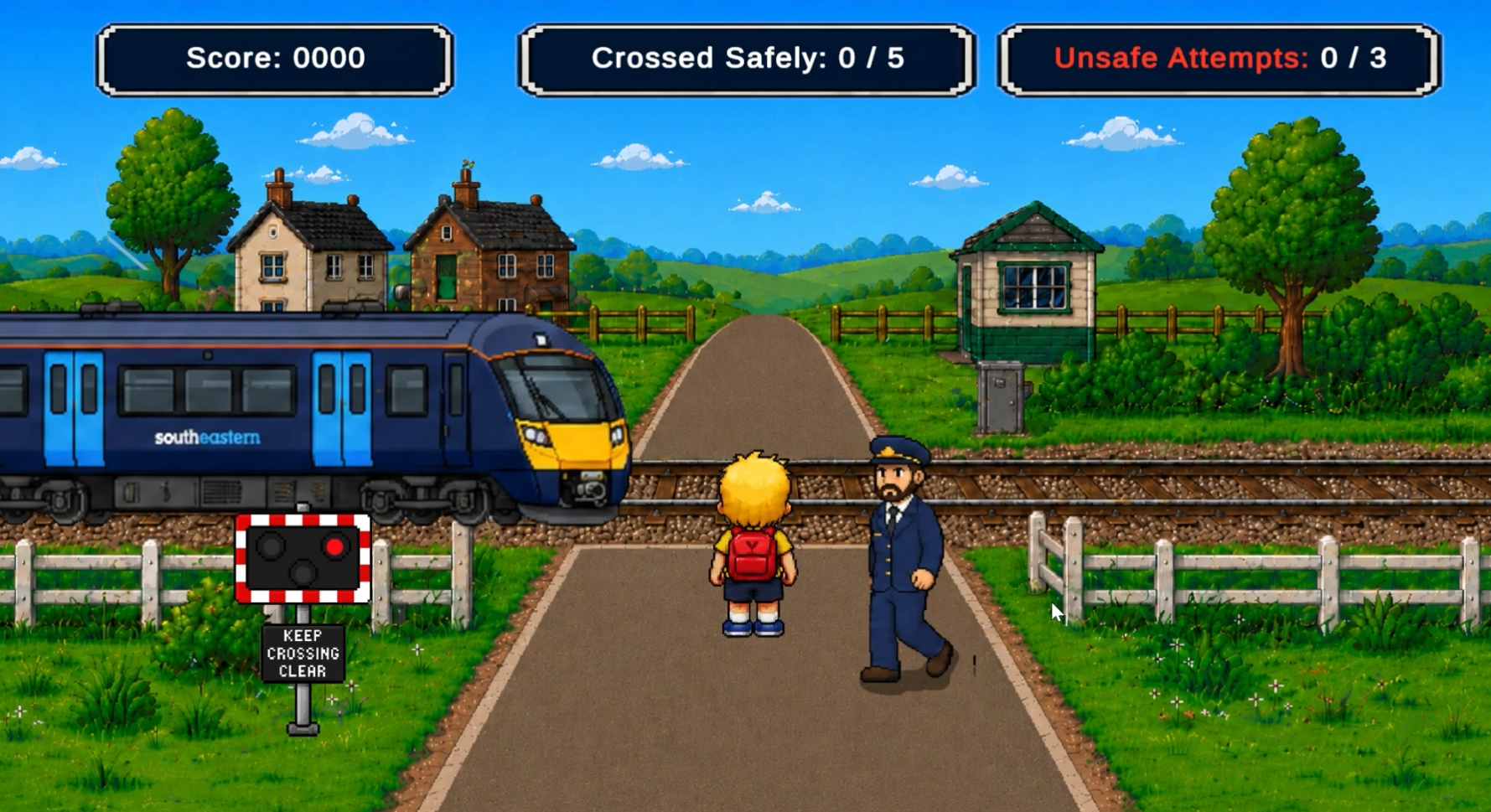
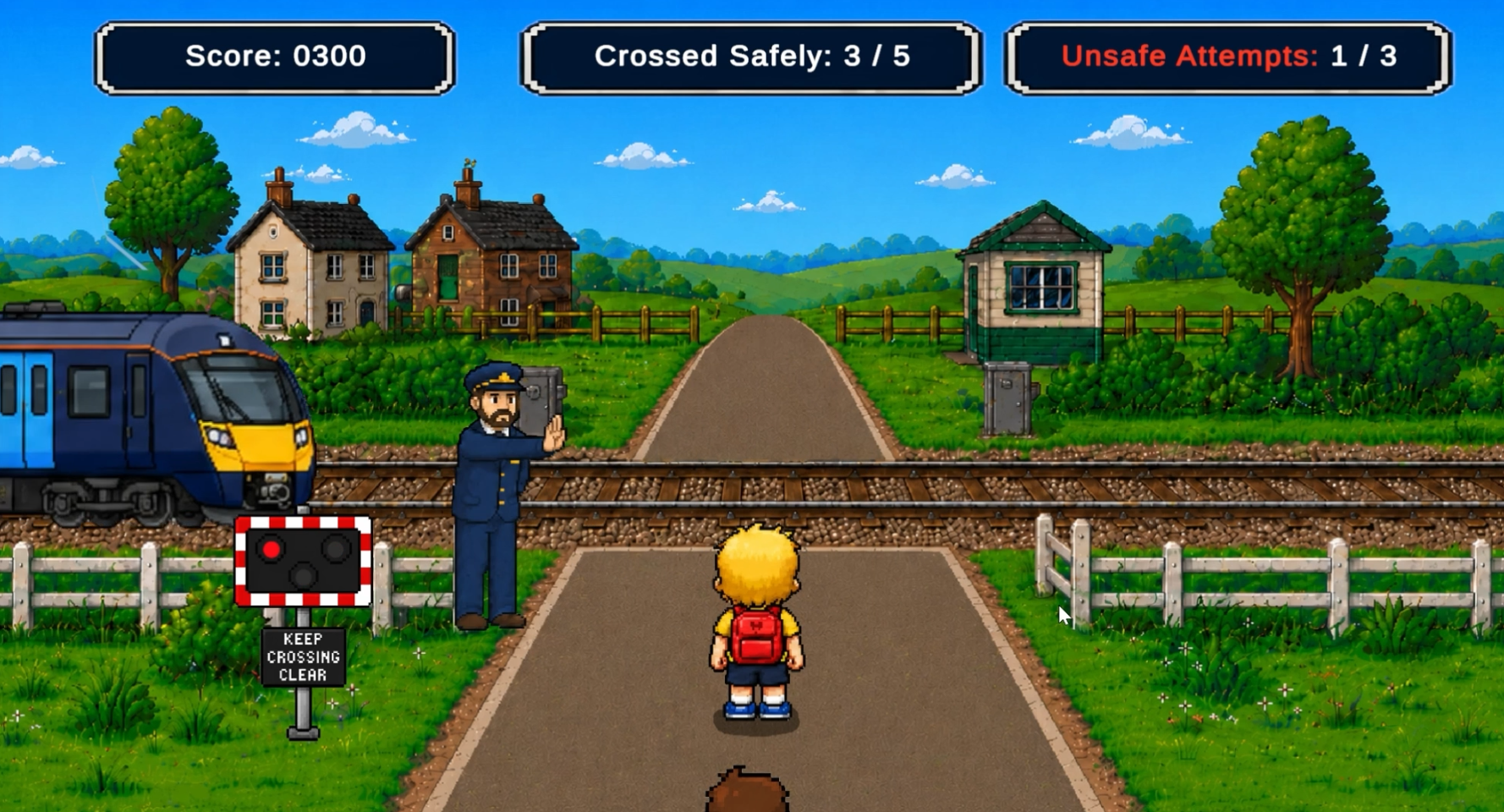
What It Does Not Yet! is a 2D pixel-art railway safety game centred on UK level crossings. Players take on the role of a Linekeeper, helping children stop, listen, wait, and cross only when the crossing is truly safe. Rather than answering safety quiz questions, players must make real-time judgements based on the state of the crossing and the behaviour of the children around them. The core actions are simple:
Stop children when the crossing is not safe Listen — redirect children when they become distracted Cross — allow children through only when it is safe to do so
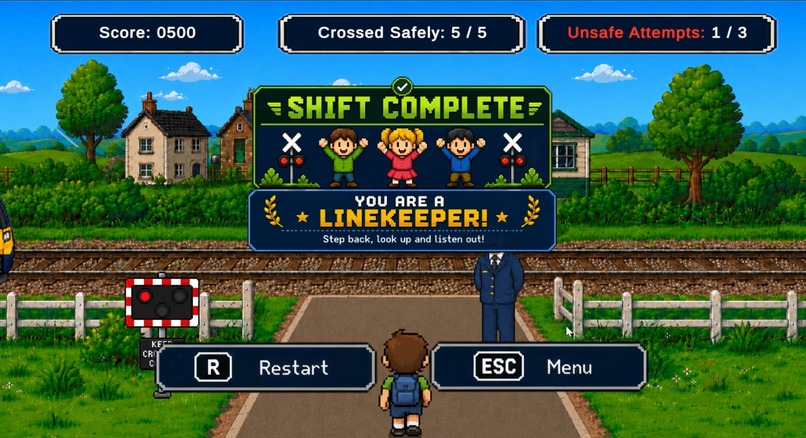
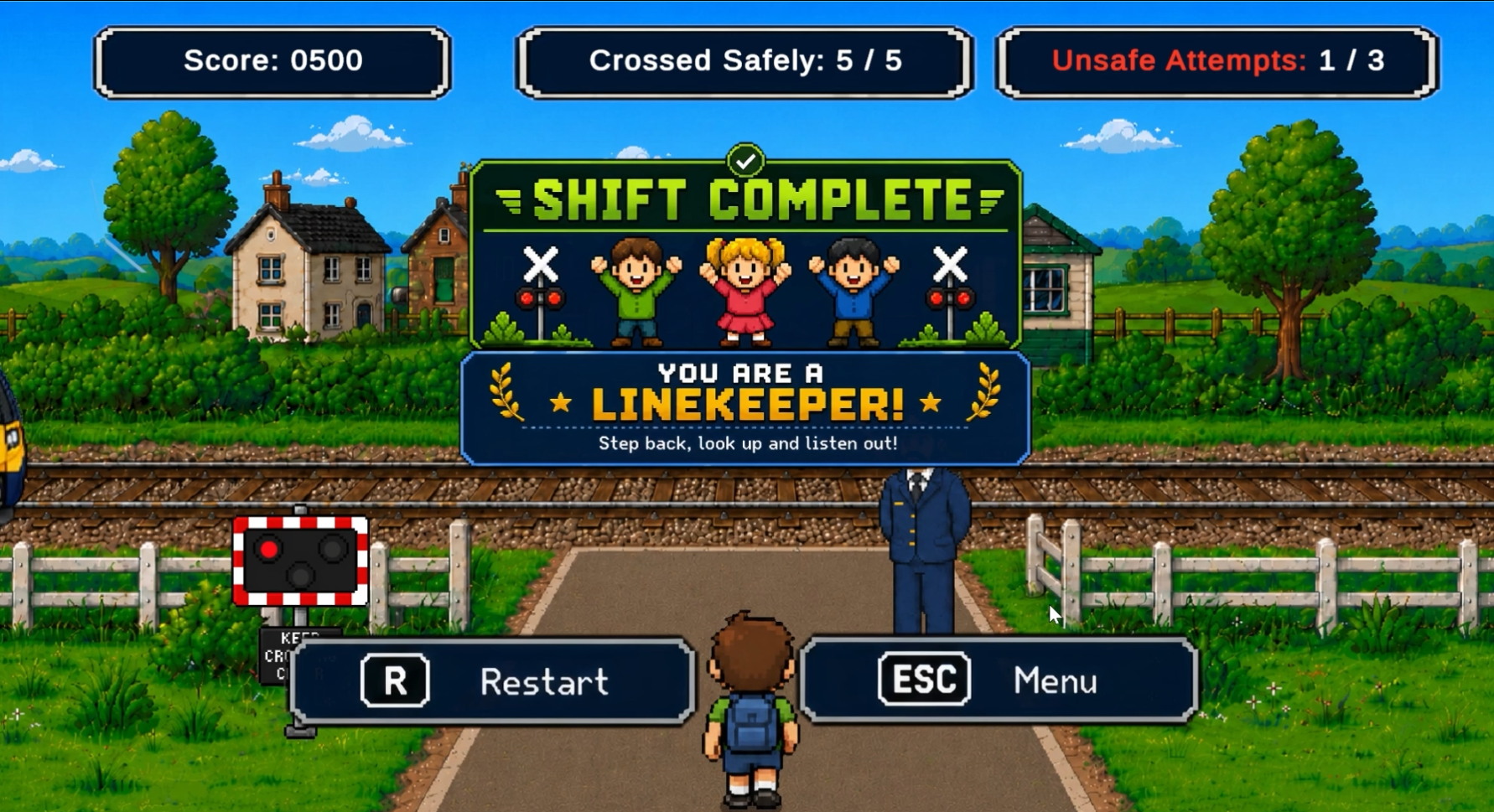
The game's message is this: railway safety is not about who can get through fastest — it is about reading signals, waiting for the right moment, and helping others stay safe.
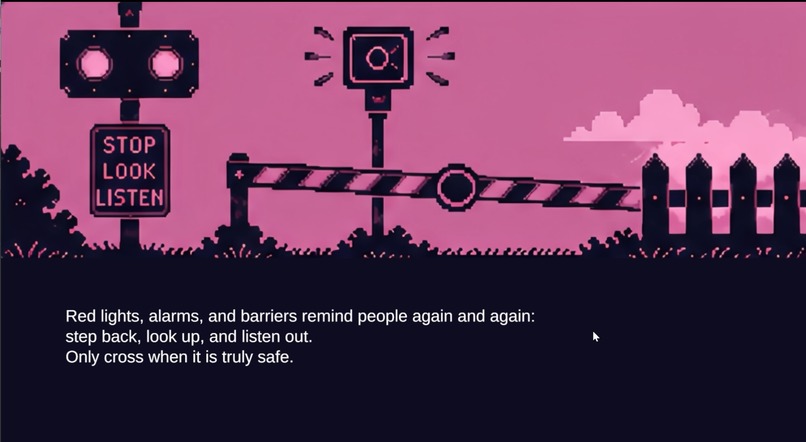
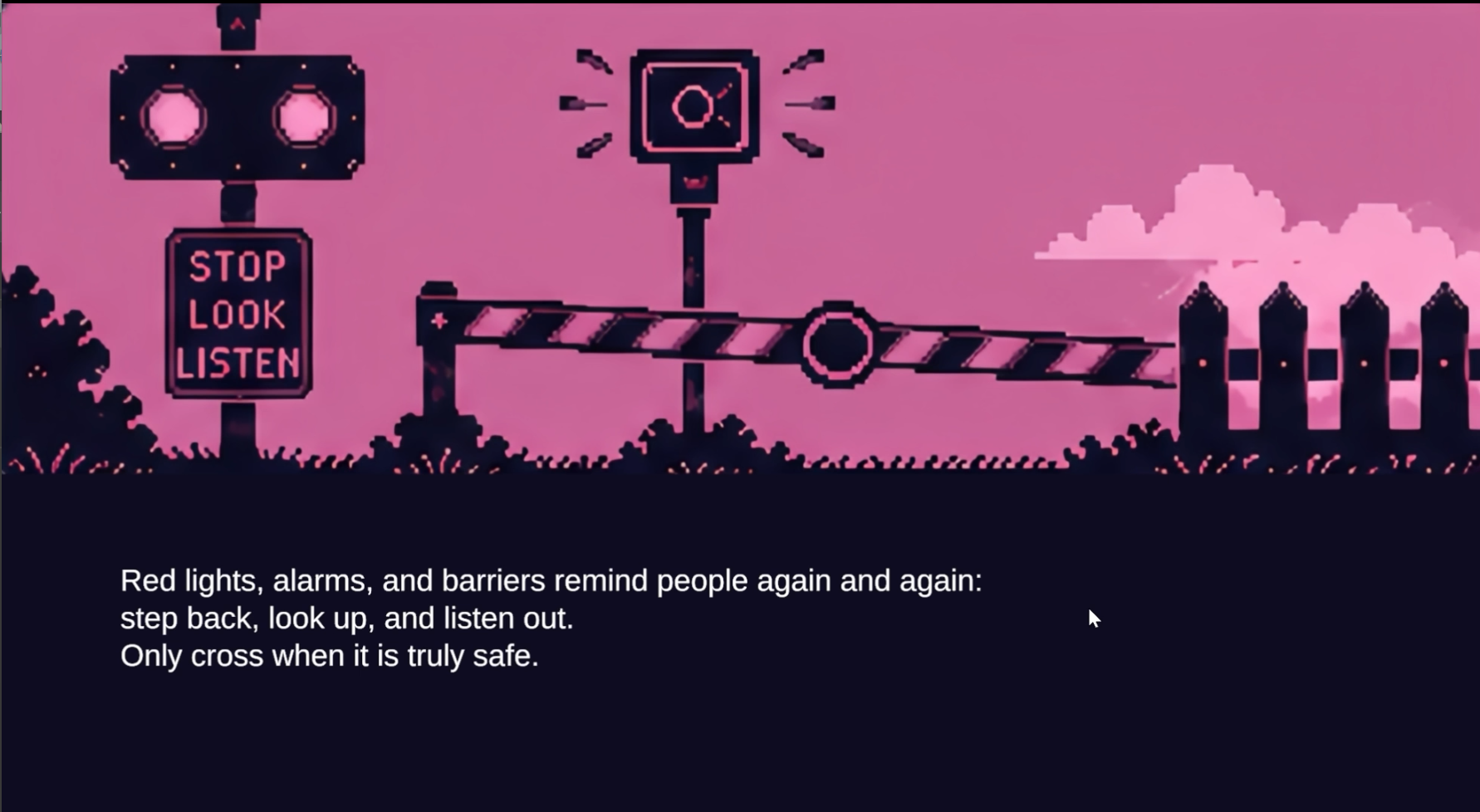
How We Built It We built the Not Yet! 2D pixel-art prototype using the Unity game engine. Unity was used to construct the main level crossing scene, character movement, player interaction, UI systems, and core gameplay logic. The prototype centres on a clear gameplay loop: children approach the crossing, the player decides when to stop them, and the crossing state alternates between safe and unsafe. The scene design is based on UK level crossings. Railway tracks run horizontally across the play space, while children move along a vertical path through the crossing. This layout helps players quickly understand where trains come from, where the children are headed, and what they need to control. We also produced a pixel-art title screen and storyboards to introduce the game world. The visual style is kept simple, readable, and child-friendly so that the safety information is communicated clearly without making the experience frightening.
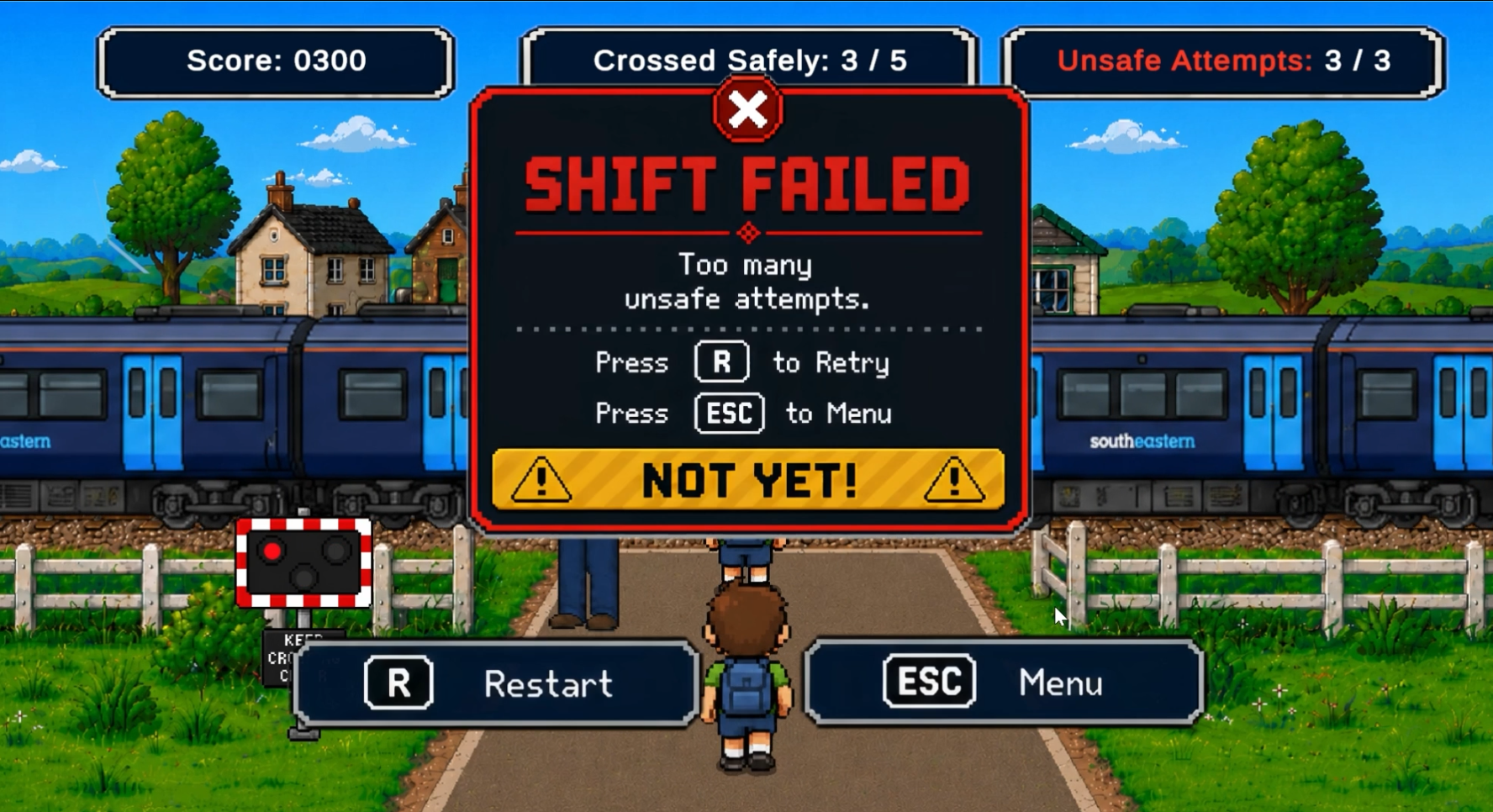
Challenges We Ran Into One of the biggest challenges was striking the right balance between being genuinely fun and being a responsible safety education tool. Early on, it was easy to imagine the game becoming a timing challenge — spot a gap and dash through. But that risks sending exactly the wrong message. Railway safety should never be about guessing whether you can make it in time; it should be about waiting until it is truly safe to act. Visual clarity was another challenge. The crossing, the railway tracks, the direction of the road, the children's movement, the warning elements, and the UI all needed to be understood at a glance. An overly busy screen would cause players to lose focus on what matters most, so we had to keep simplifying the visual design to ensure the key information always remained clear. We also needed the game to feel interactive without turning danger into entertainment. We deliberately avoided accident or violence-based feedback, keeping the emphasis on prevention, awareness, and safe decision-making.
Accomplishments That We're Proud Of We are proud that Not Yet! has a concept that is clear and easy to remember. The title itself expresses the central action: knowing when to wait. We are also pleased with the Linekeeper character. The player is neither a superhero nor a figure of strict authority, but someone who helps others understand a situation and make safer choices. This gives the game a caring quality — more like a gentle reminder between members of a community than an instruction handed down from above. Another source of pride is the way the project connects safety with collective behaviour. The game is not just about one child crossing safely; it is about building a shared habit — stop, listen, wait.
What We Learned We learned that in educational games, the most important thing is for the mechanics and the message to reinforce each other. A railway safety game that over-rewards speed risks sending the wrong message. A game that simply delivers safety instructions risks not feeling like a game at all. Our challenge was to make waiting, stopping, and careful observation feel like meaningful actions within the game itself. We also learned that many small design decisions can change the entire meaning of an experience. The direction of movement, the placement of signals, the layout of the crossing, and the language of feedback all affect how players understand safety. Most importantly, we came to see that safety can be designed as a shared culture. Children do not only learn from adults — they learn from friends, from repeated phrases, and from collective behaviour. Not Yet! aims to turn railway safety into something children can internalise and pass on.
What's Next for Not Yet! The next step for Not Yet! is to make the game fuller and more replayable. We want to introduce more behavioural states for the children — curiosity, impatience, distraction, following a friend. We also plan to develop the Safety Awareness system further, so that children who have already learned safe behaviour can begin reminding others. We also plan to improve the animations, sound design, and feedback. Flashing red lights, warning sounds, train movement, and character reactions can all make the level crossing feel more immediate and present — while still keeping the experience appropriate for children. In the future, Not Yet! could serve as a short interactive experience for use in schools, railway safety workshops, or community events. Our goal is not simply to tell children what they should do, but to help them understand why waiting matters. Stop. Listen. Wait. Cross only when it is safe.
What This Project Means for Southeastern For a railway company like Southeastern, Not Yet! represents more than making a game — it means transforming railway safety from something passively received into something that can be actively experienced. Traditional safety campaigns tend to tell people what not to do. Our game goes a step further: it lets children practise the moment of judgement before real danger ever arises. Players do not simply read a warning — they experience, within the game, what it feels like to stop, wait, listen, and help others make safe choices. The value of this project therefore extends beyond a game prototype. It could be deployed in school events, community railway activities, youth workshops, or public safety campaigns. It presents railway safety in a form children are more receptive to, without softening the seriousness of the subject itself. For Southeastern, the significance of this project is not about placing a brand logo inside a game. It is about demonstrating the company's genuine care for passengers, children, families, and local communities. Supporting a project like Not Yet! is a way for a railway company to build real connection with public responsibility, educational values, and community trust. Most importantly, this game supports a long-term safety culture. If children can hold on to one simple idea — "Not yet" — they may also remember, in real life, to stop first, check the signals, and remind their friends to wait together.

Log in or sign up for Devpost to join the conversation.