-
-
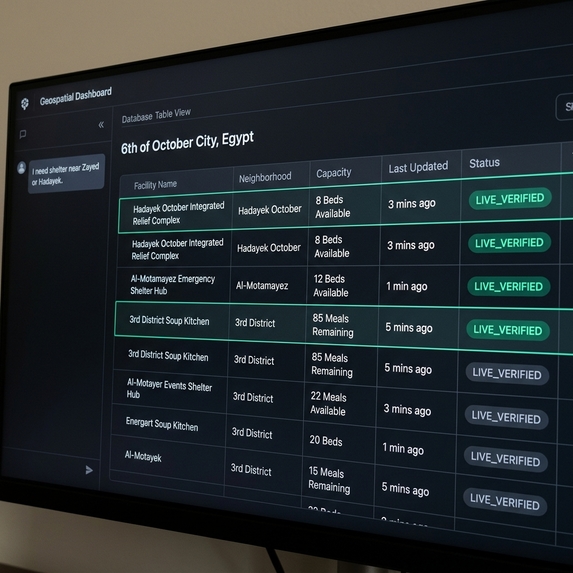
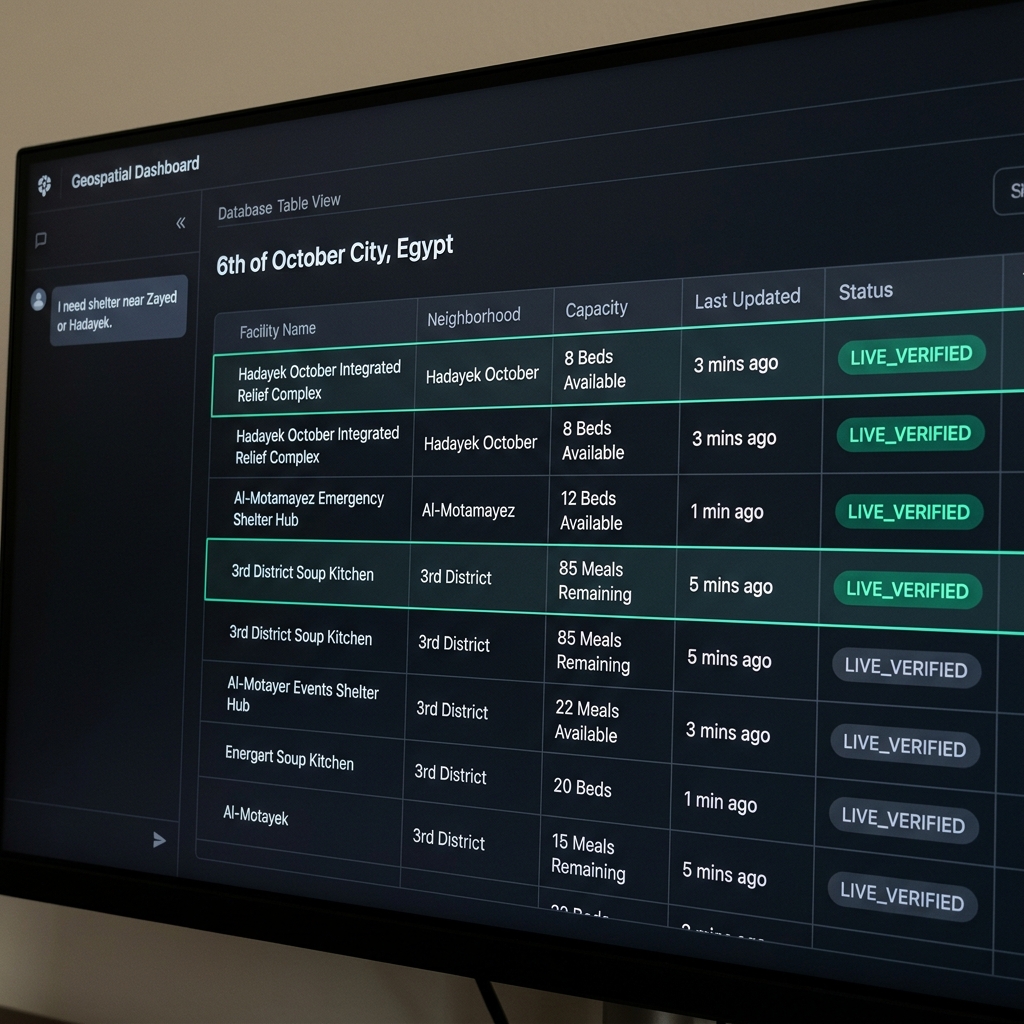
Live geospatial dashboard executing real-time relational database queries filtered by localized 6th of October City districts.
-
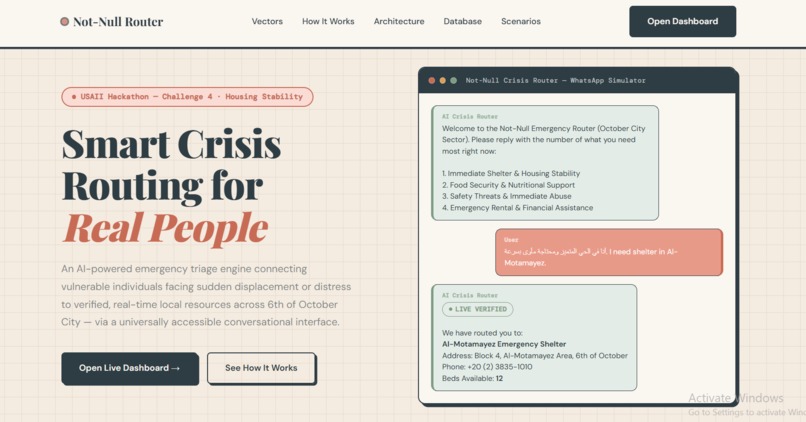
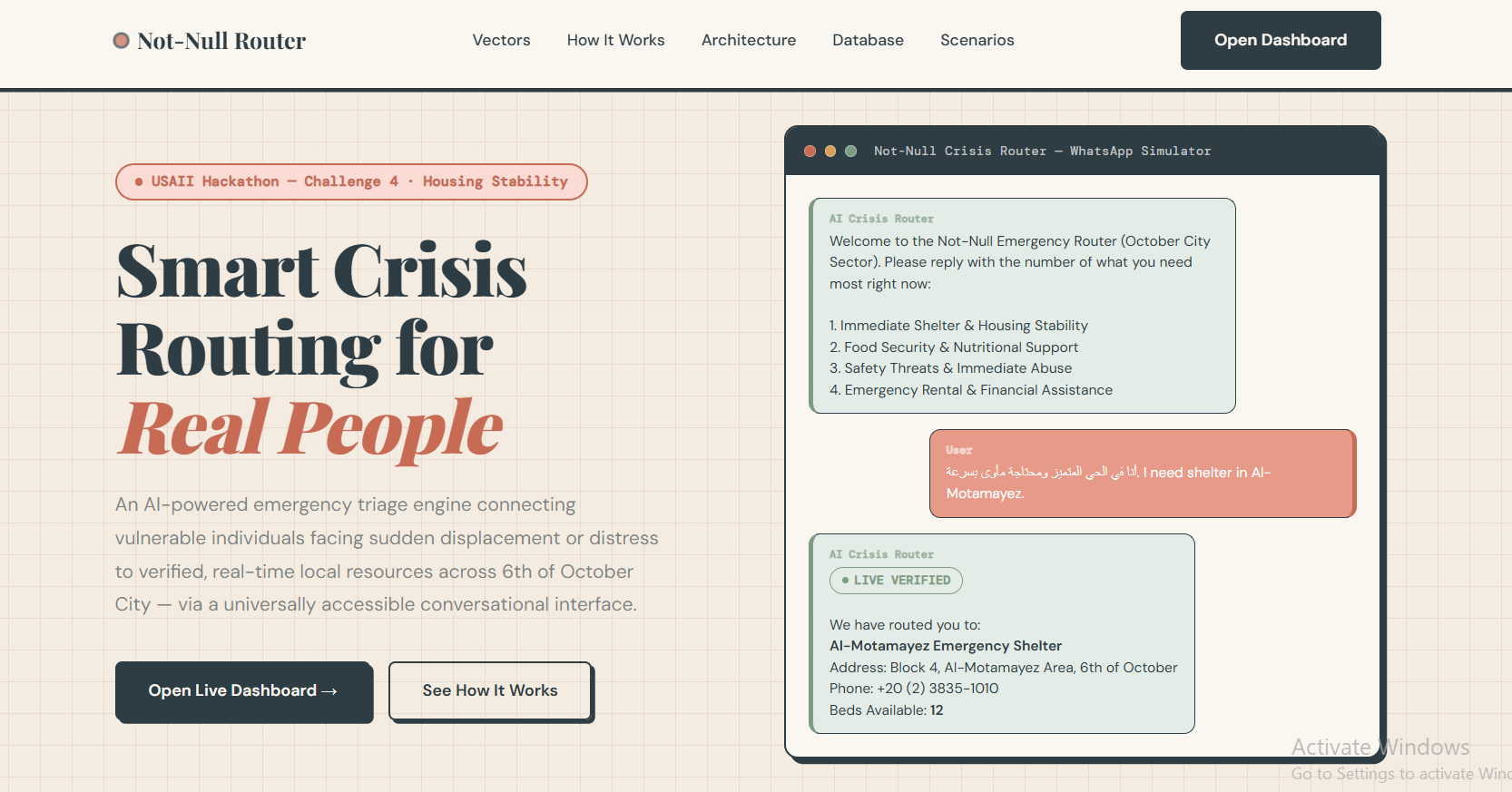
High-fidelity Artisan-themed landing page showcasing the Not-Null core value proposition and live interactive routing gateway.
-
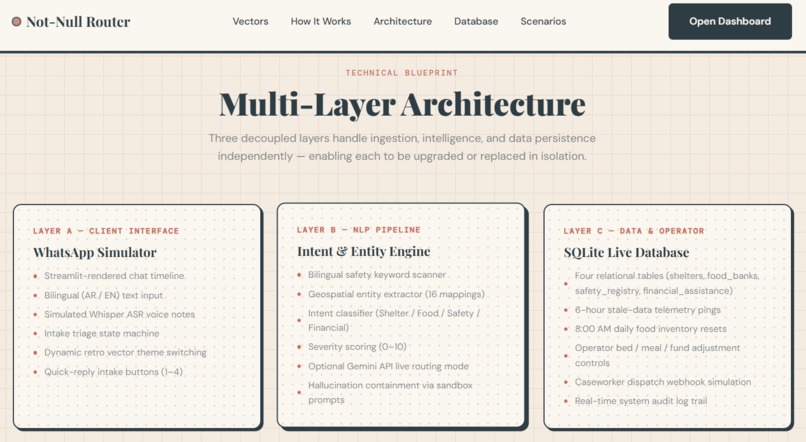
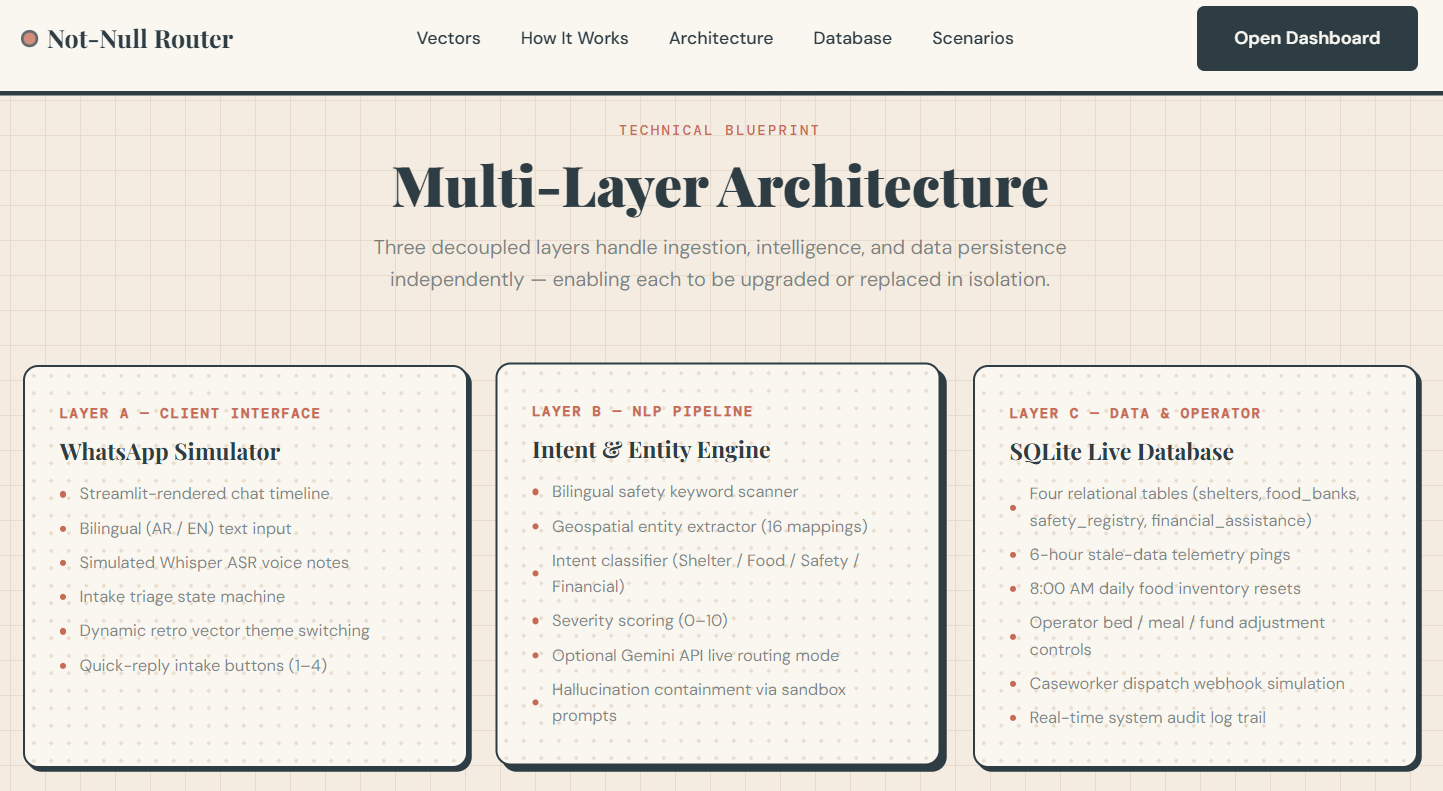
Comprehensive multi-layer technical blueprint decoupling the client interface, NLP intent engine, and data persistence layers.
-
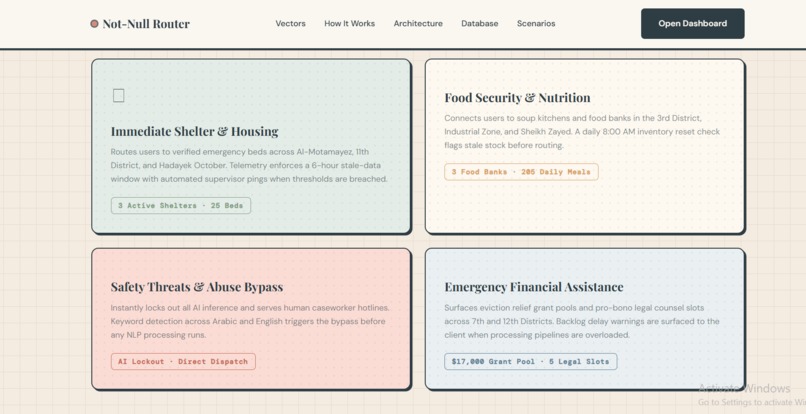
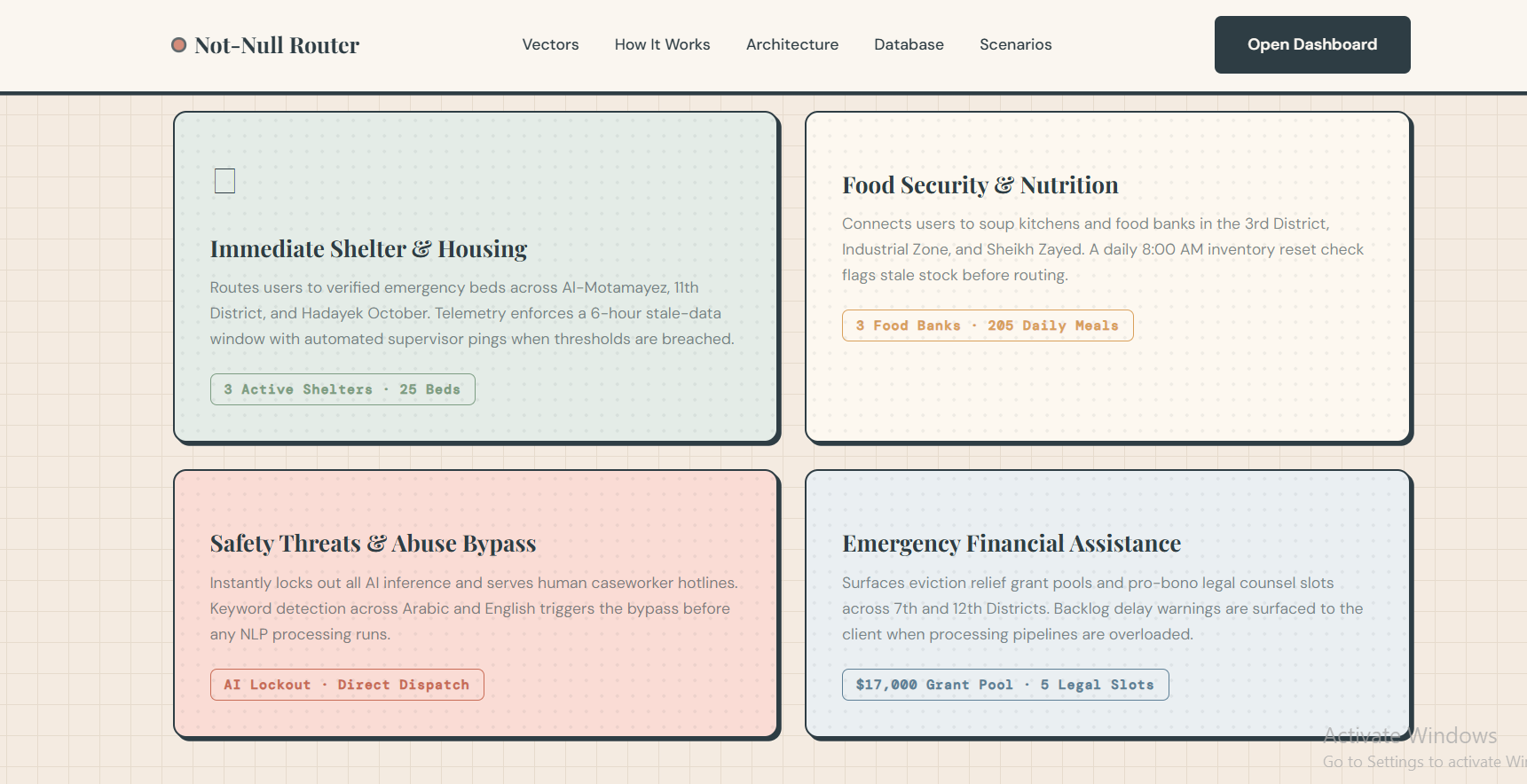
The four core humanitarian pillars layout detailing operational logic, automatic stock resets, and safety protocol overrides.
-
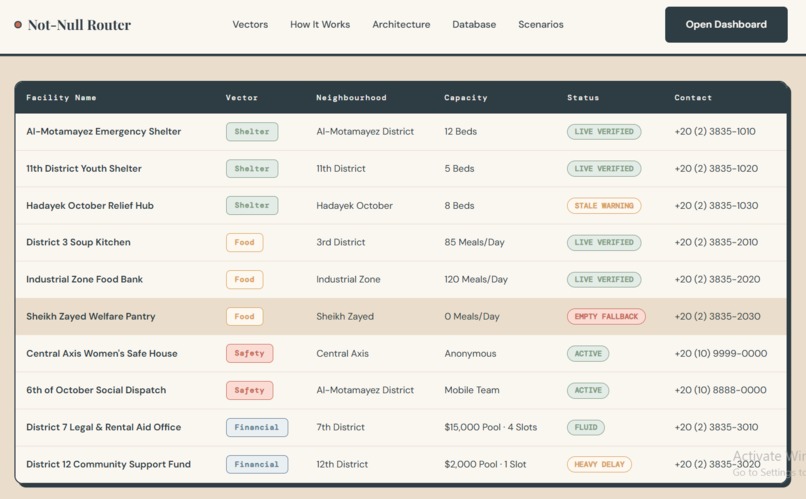
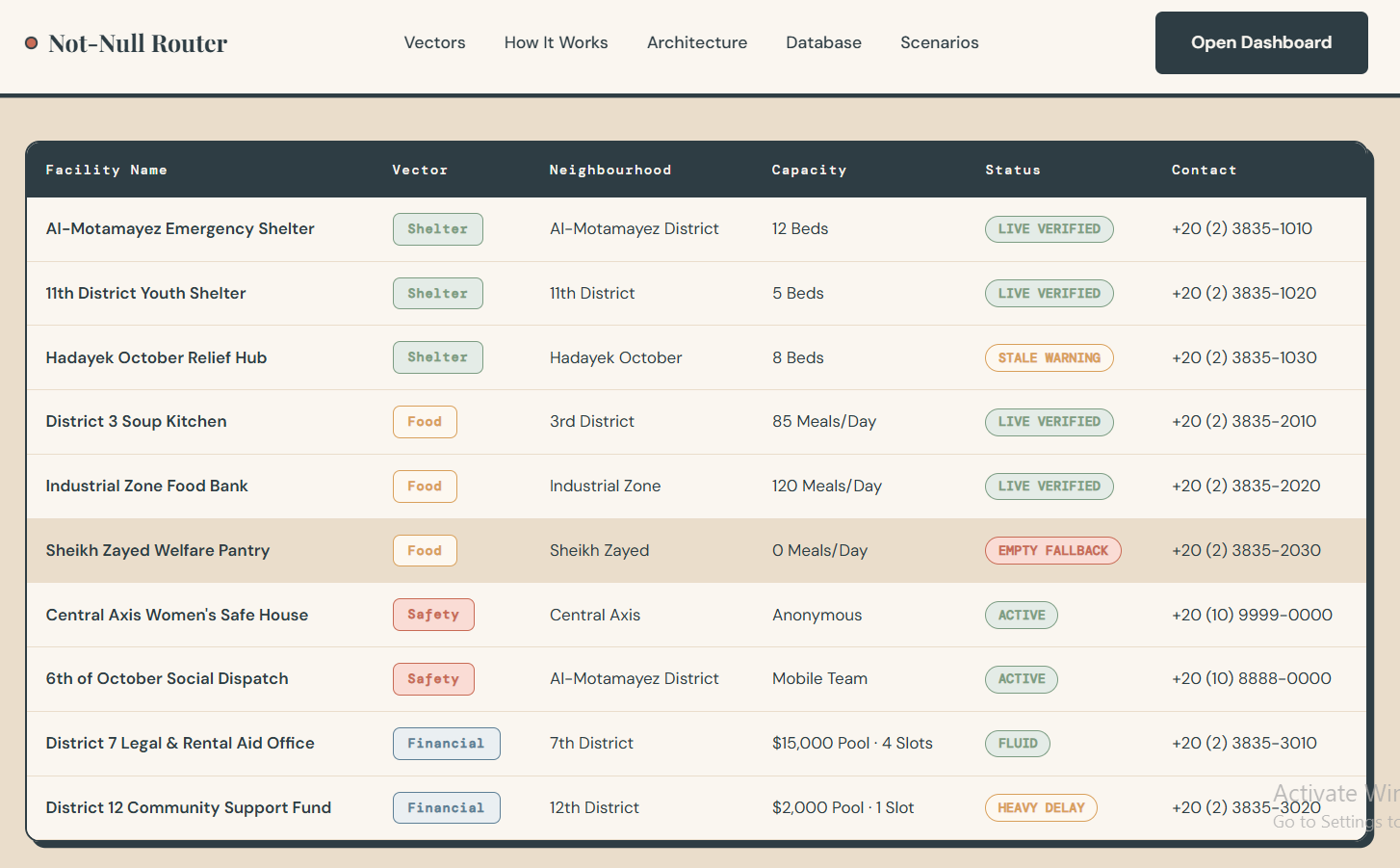
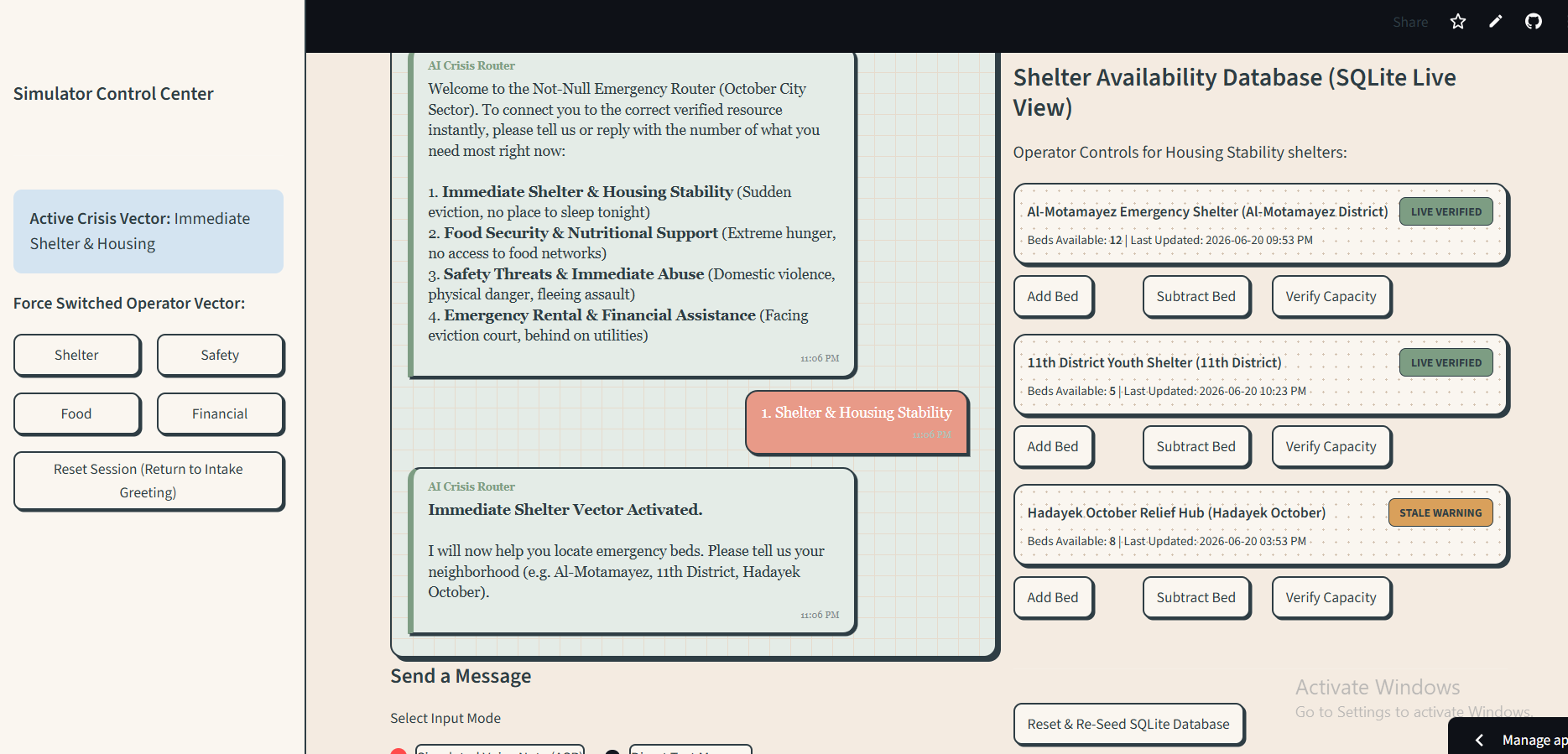
Central resource registry tracking facility names, capacities, live status badges, and neighborhood metadata.
-
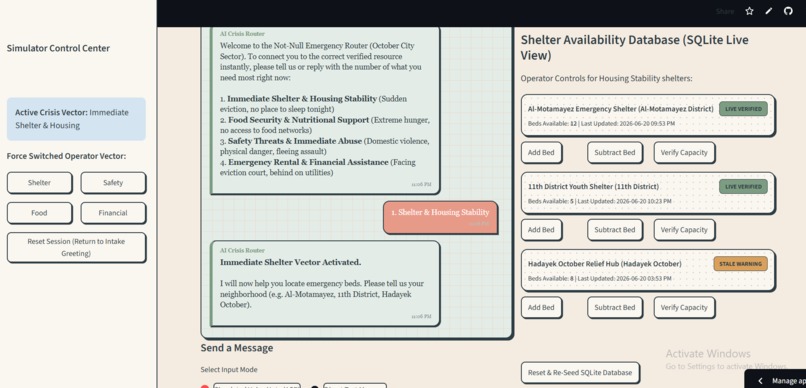
Bilingual multi-vector triage loop simulating immediate conversational client intake and emergency category classification.
-
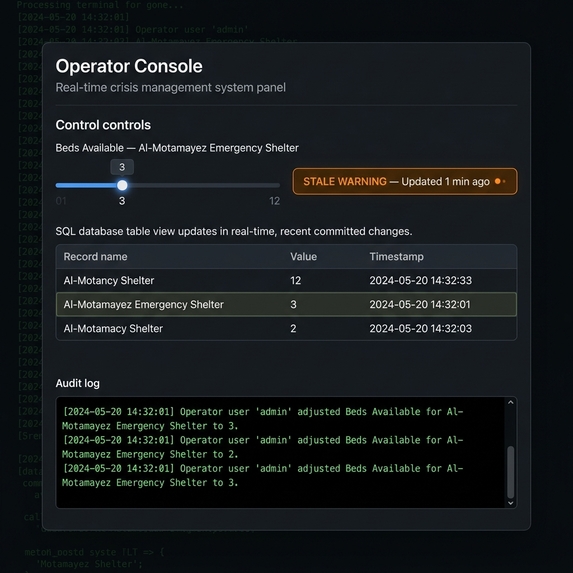
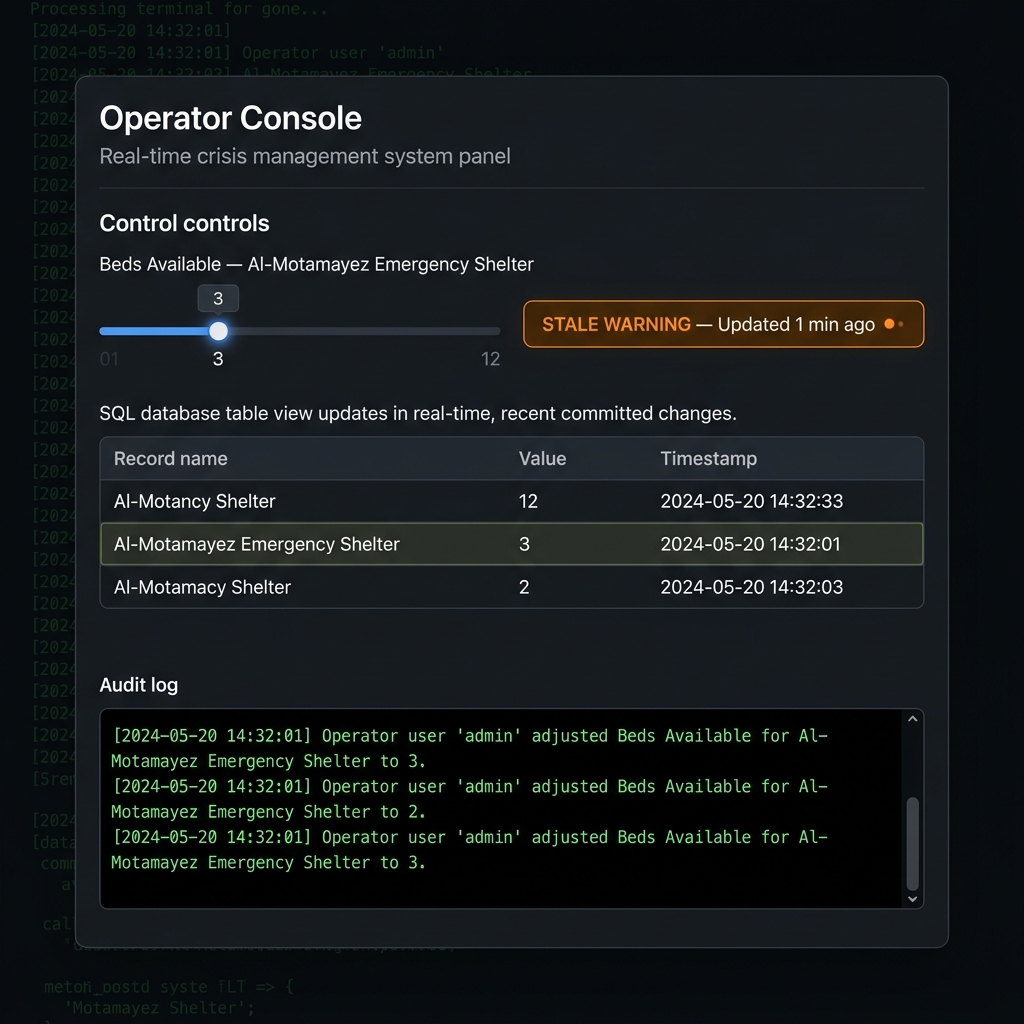
Central Operator Console tracking live resource telemetry adjustments, immediate SQL commits, and system audit logging.
Inspiration
In humanitarian crises, time is measured in lives. Traditional emergency response pipelines are often fragmented; a family facing sudden eviction, extreme hunger, or a safety threat is forced to navigate a confusing maze of siloed organizations. We were inspired to build a centralized, intelligent bridge—leveraging AI to transform unstructured, desperate pleas for help into structured, real-time resource routing, starting right here in our local community of 6th of October City.
What it does
Not-Null is a dynamic, multi-tenant emergency resource router designed as a split-screen dashboard. On the client side, it simulates an immediate conversational intake loop (such as a WhatsApp interface or voice note entry) that greets users and accurately diagnoses their crisis vector across four critical domains: Immediate Shelter, Food Security, Financial/Eviction Aid, and Immediate Safety Threats.
Once the intent and geospatial location (such as Al-Motamayez, Hadayek October, or the 7th District) are extracted, the system instantly filters the database. Simultaneously, the right-side Operator Console dynamically mutates, displaying real-time metrics (e.g., available beds, meal counters, legal slots) and allowing live operators to manage resource telemetry seamlessly.
How we built it
We engineered the application using Python and Streamlit for the frontend dashboard architecture, supported by a highly reactive data state manager via st.session_state. The system utilizes natural language parsing to dynamically extract conversational intent and match localized neighborhood keywords against an indexed database grid. We wrapped the interface in a customized, high-contrast dark theme utilizing CSS injection to guarantee clear legibility, audit trail visibility, and immediate pipeline tracing for hackathon presentations.
Challenges we ran into
One of our primary technical hurdles was handling cross-talk and state synchronization between the simulated client side and the backend live operator registries without hitting infinite state loops in Streamlit. Furthermore, designing a fail-safe layout that instantly drops Generative AI usage during the "Safety Threats & Abuse" vector—bypassing to deterministic, static emergency protocols to protect human lives from AI hallucinations—required strict algorithmic guardrails.
Accomplishments that we're proud of
We successfully developed a fully functional, localized Minimum Viable Product (MVP) tailored specifically to the geographical grid of 6th of October City. We are incredibly proud of creating a highly reactive system where modifying a metric on the operator's side instantly shifts the AI's contextual response on the user's side, proving that dynamic multi-tenant crisis mitigation is achievable in real time.
What we learned
This project deepened our understanding of building layered, human-centric software. We learned that engineering a great product isn’t just about processing data efficiently; it is about managing contextual edge-cases with high empathy. Integrating deterministic emergency overrides alongside dynamic intent cascaders taught us how to design safe, predictable AI guardrails for high-stakes environments.
What's next for Not-Null
We plan to move beyond our simulated prototype by integrating real WhatsApp Business API webhooks and upgrading our localized mock database into a production-grade PostgreSQL system. We aim to collaborate directly with local NGOs, food banks, and shelter networks across Egypt to turn this dashboard into a fully deployed, lifesaver network.


Log in or sign up for Devpost to join the conversation.