-
-
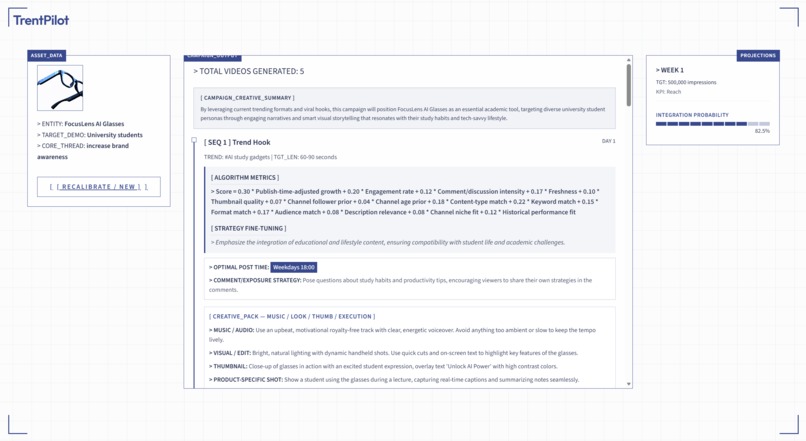
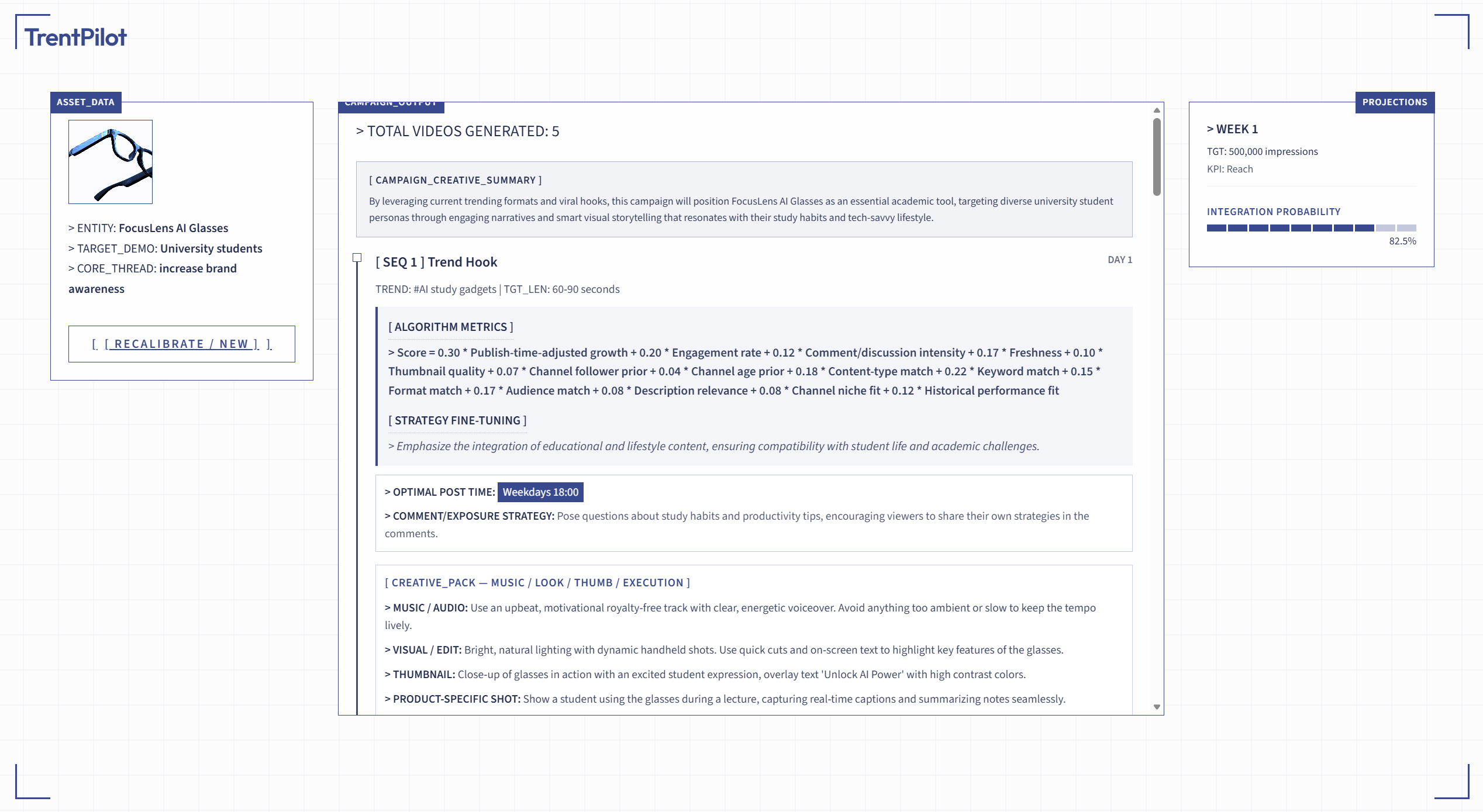
Example output
Inspiration
Every day, millions of videos compete for attention, but most creators and small businesses still rely on guesswork when deciding what to post. While large brands can afford dedicated marketing teams and expensive analytics tools, smaller creators often cannot.
We wanted to build a tool that turns public trending data into practical growth decisions — helping users understand not only what is popular, but what is most relevant for their own product and audience.
What it does
TrendPilot is an AI-powered campaign planning tool that converts trending video signals into actionable short-form content strategies.
Users enter:
- product or brand name
- target audience
- campaign goal
- optional reference image
TrendPilot then generates:
- multiple content angles
- trend hooks
- recommended posting times
- thumbnail and editing guidance
- audience engagement tactics
- projected reach metrics
Instead of just showing trends, TrendPilot explains how to use them effectively.
How we built it
We built TrendPilot using:
- Python + FastAPI for the backend
- HTML/CSS + Jinja templates for the web interface
- Pandas for data processing and scoring logic
- OpenAI API for campaign generation and creative recommendations
- GitHub + Vercel for collaboration and deployment
Our scoring pipeline combines trend momentum with business relevance, using weighted metrics such as engagement rate, freshness, publish-time growth, keyword match, and audience fit.
Challenges we ran into
One major challenge was balancing two different goals:
- Trend popularity
- Product relevance
Something highly viral is not always useful for a specific business. We had to design a system that blends both signals instead of over-prioritising one.
Another challenge was turning complex outputs into a clean and understandable interface within a short hackathon timeline.
Accomplishments that we're proud of
- Built a working end-to-end web prototype
- Successfully integrated AI-generated campaign outputs
- Created a scoring system that combines virality and relevance
- Delivered clear projections and creator-friendly recommendations
- Produced a polished demo ready for real users to test
What we learned
We learned that raw data alone is not enough — users need interpretation, not just information.
We also learned how to rapidly prototype under time pressure, divide tasks effectively as a team, and turn an idea into a deployable product within a hackathon environment.
What's next for Not Genius Team
Our next steps are:
- connect real-time trend APIs
- personalise recommendations using past user performance
- support multiple platforms such as TikTok and Instagram Reels
- improve prediction models with larger datasets
- build team dashboards for creators and small businesses
Our long-term vision is to make data-driven growth tools accessible to everyone.


Log in or sign up for Devpost to join the conversation.