-
Primary Thumbnail
-
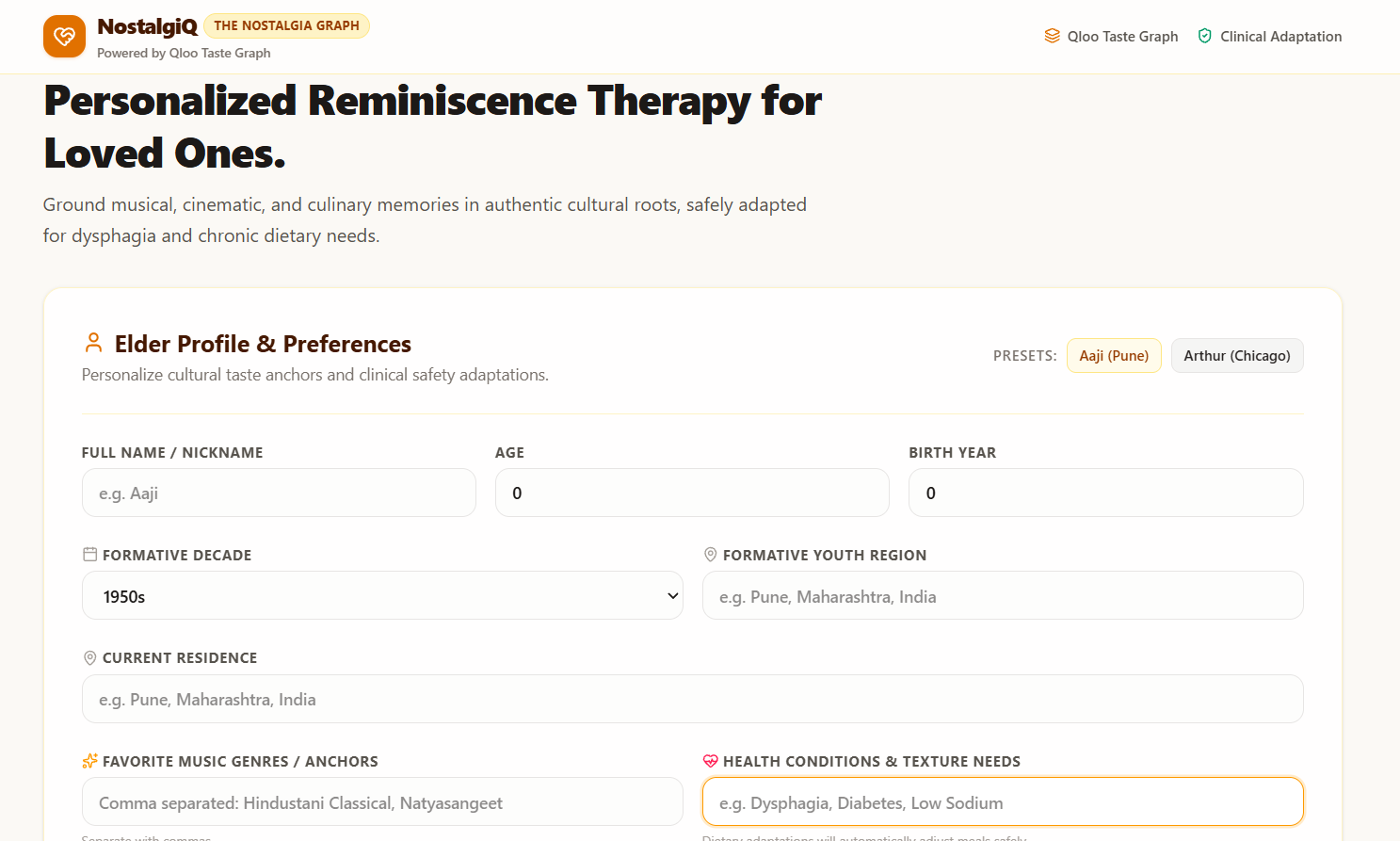
Landing page
-
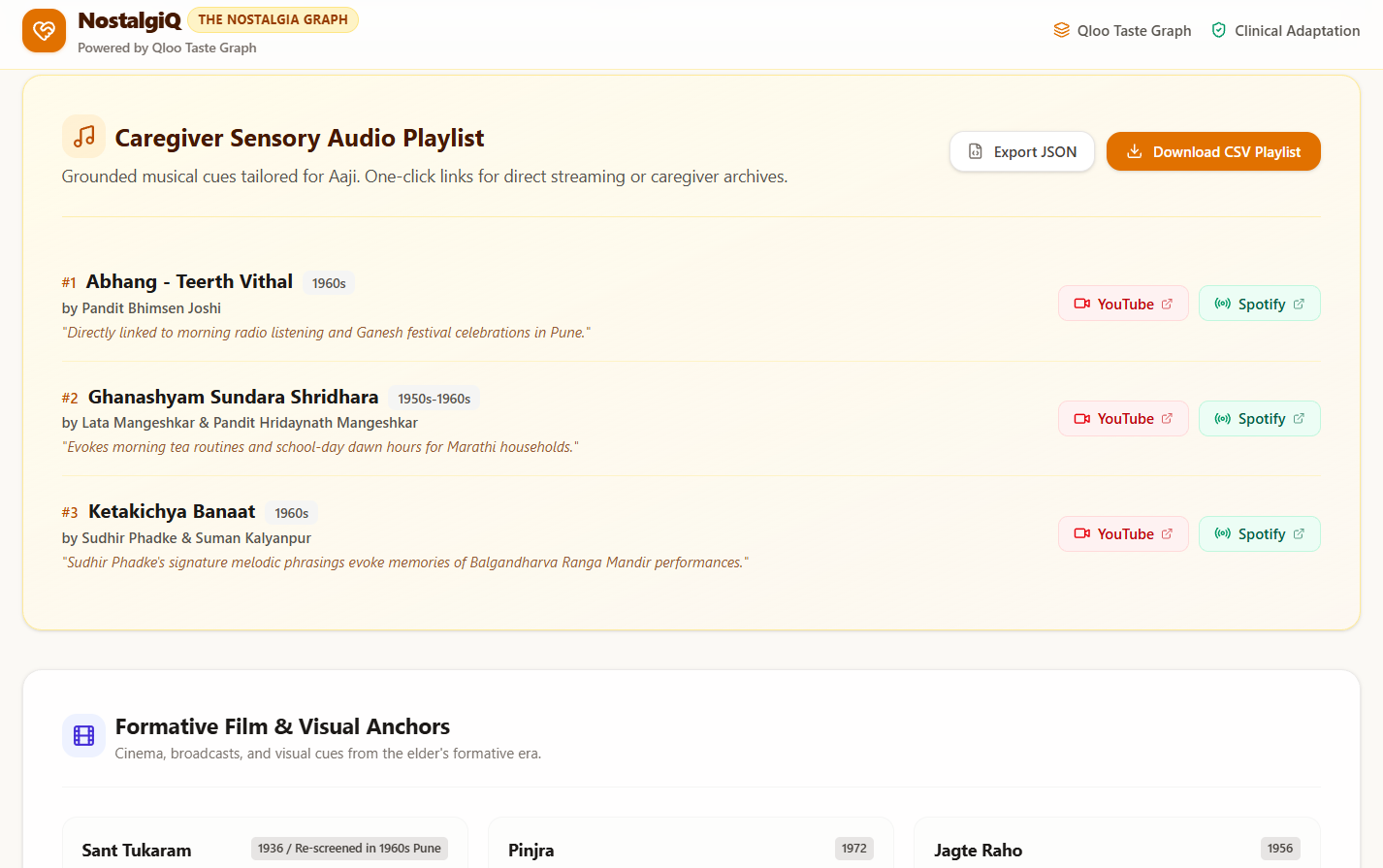
Reminiscence Plan
-
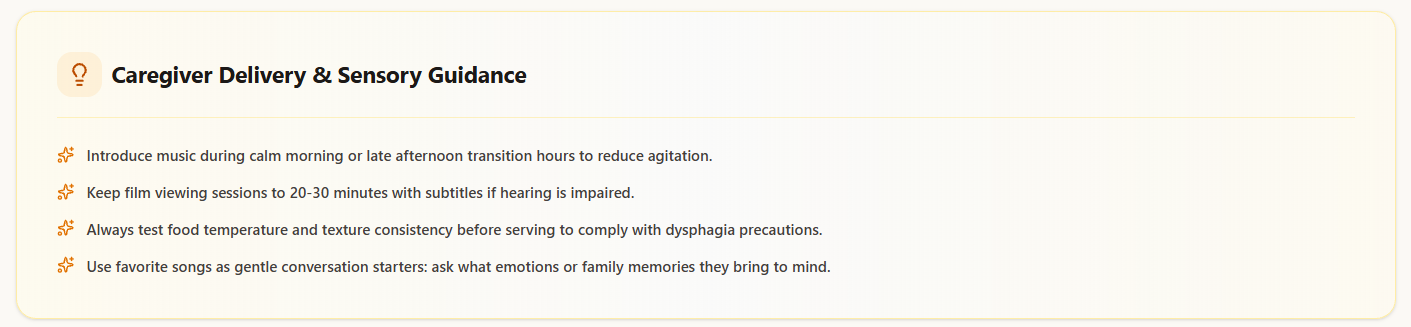
guidance page
-
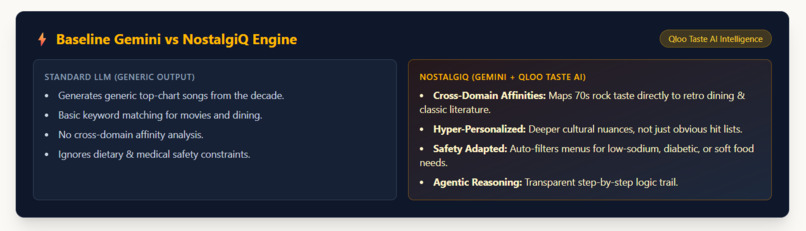
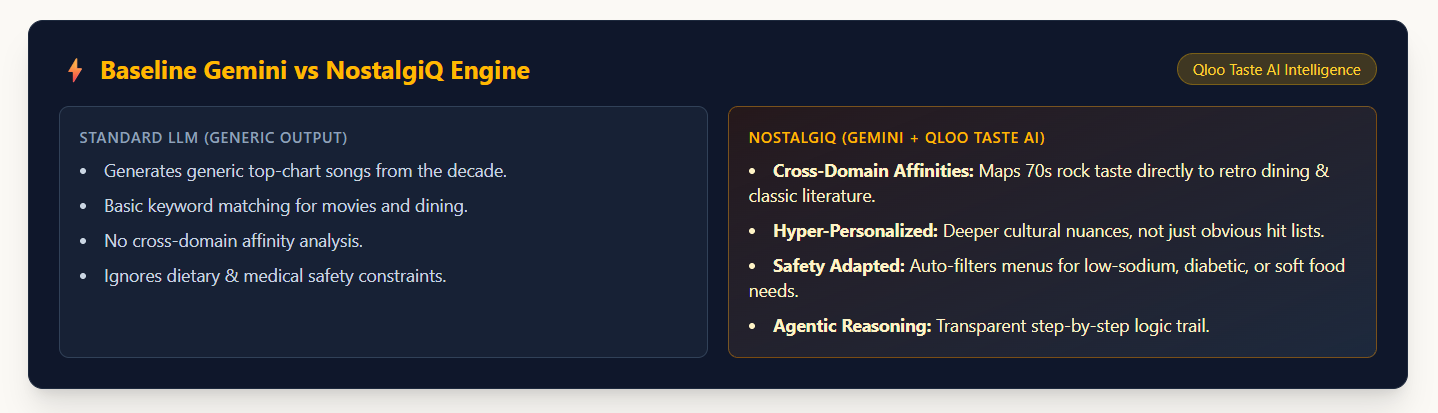
Comparison Page
NostalgiQ: Bridging Memories with Cultural Intelligence
An AI-driven agentic platform designed to curate hyper-personalized cultural journeys, nostalgia itineraries, and cross-domain media recommendations.
What Inspired Us?
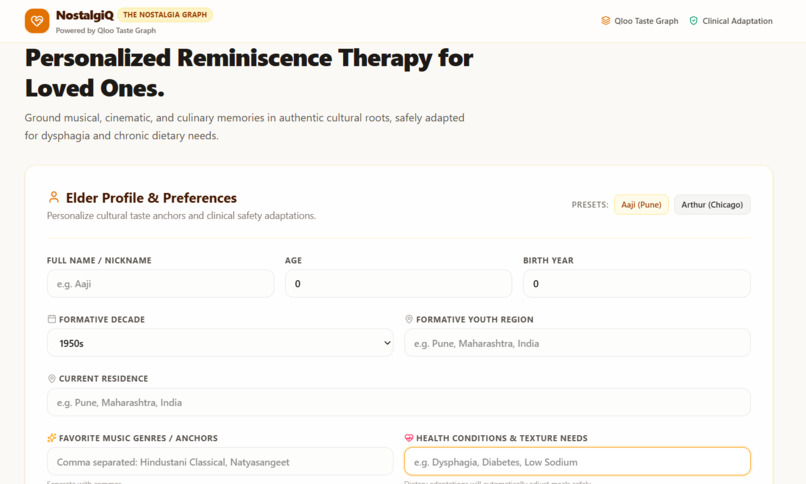
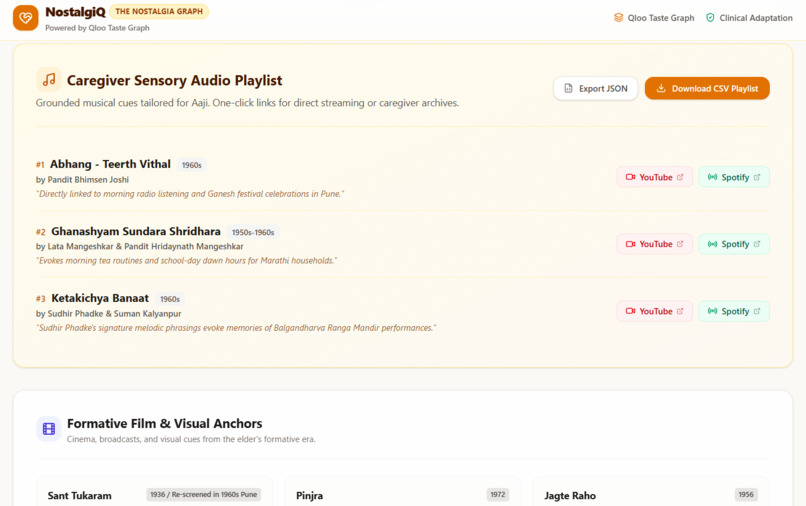
We’ve all seen how a single old song, a classic movie scene, or a childhood dish can instantly light up an elder’s face or bring a wave of comforting nostalgia. But when we looked around, we realized modern recommendation apps are only built for what's "trending" today—not for personal, deep-rooted memories or family heritage. We watched caregivers and families struggle to put together meaningful, personalized day-trips, watchlists, or meals tailored to a specific era (like the 70s or 80s) or medical needs. That’s what sparked NostalgiQ. We wanted to build an AI companion that doesn't just throw random search results at you, but genuinely understands cultural tastes using Qloo's Taste AI API and crafts thoughtful, step-by-step memory-lane journeys with Google Gemini.
How We Built It
We wanted to build something robust, fast, and production-ready from day one:
- Frontend: Built using React, TypeScript, and Tailwind CSS, then deployed globally on Vercel for a clean, responsive UI.
- Backend: Powered by Python and FastAPI, hosted on Render to handle fast, asynchronous API calls.
- AI & Intelligence: We integrated the Google Gemini SDK (google-genai) to handle multi-turn agentic reasoning, along with Qloo’s Taste AI to bridge cross-domain affinities (like mapping a person's favorite classic movies to matching music and dining spots).
The Toughest Challenges We Faced
- Avoiding Generic AI Answers: Getting an LLM to stop hallucinating random recommendations was tricky. By integrating Qloo’s API, we anchored the AI's suggestions in real cultural data, making sure the connections between music, films, and food actually made sense.
- Opening the "Black Box": We didn't want NostalgiQ to feel like a mystery box. We spent a lot of time engineering a clear reasoning trail so users and caregivers can actually see why the AI recommended a specific song or restaurant.
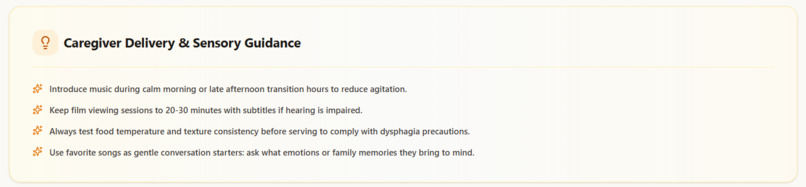
- Balancing Creativity with Safety: When dealing with seniors or health restrictions, creativity isn't enough—safety comes first. We had to build a strict rule-based filtering system alongside Gemini to ensure dietary rules (like low-sodium, diabetic-friendly, or soft-food diets) were never broken, even while suggesting nostalgic meals.
What We Learned Along the Way
- Combining graph-based cultural data (Qloo) with generative intelligence (Gemini) creates a completely different league of smart applications compared to using an LLM alone.
- Building agentic workflows taught us the importance of modularity—breaking down tasks into clear steps makes the app much more reliable and transparent.
What's Next for NostalgiQ?
- Integrating live production-grade Qloo endpoints with smart rate-limiting.
- Adding a voice/audio interface so elderly users or busy caregivers can interact completely hands-free.
- Adding community sharing features so families can build and share digital nostalgia memory books together.

Log in or sign up for Devpost to join the conversation.