
Inspiration
I noticed that food plans for older people are almost always about what they "can't" have: no salt, no sugar, nothing hard to chew. The food ends up safe, but boring. Food is also tied to memory. The songs and films we grew up with shape what feels like home. By the way , my grandfather is now 87. So everytime we trying to plan a dinner comes with lot of restriction . Because of those restriction we can't leave him and then he loves food and enjoys it a lot . Maybe that's where I inspired.
I wanted to build something that starts with what a person loves, and only then applies the safety rules.
What it does
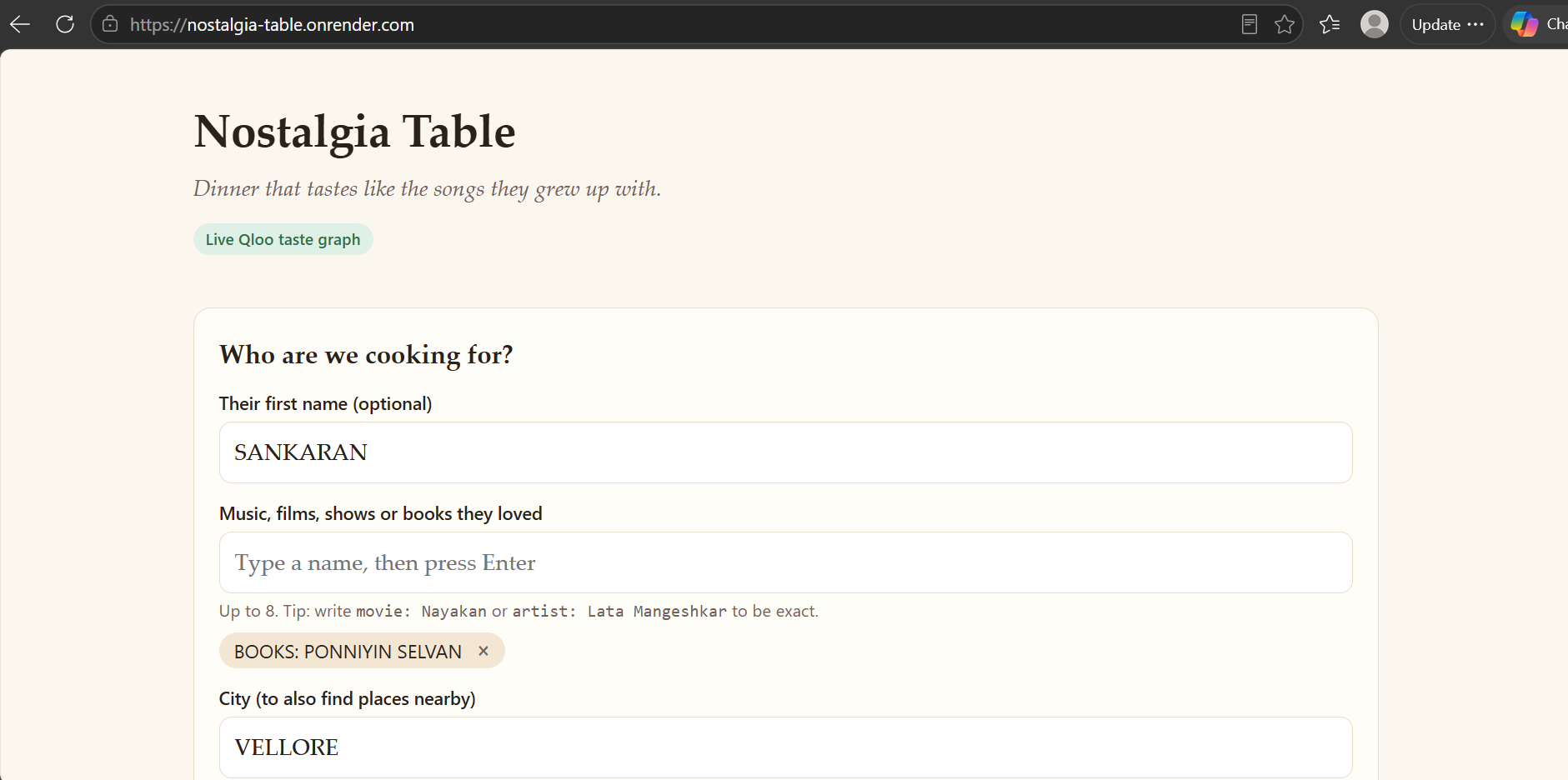
Nostalgia Table plans meals for seniors based on their taste in music, films and shows.
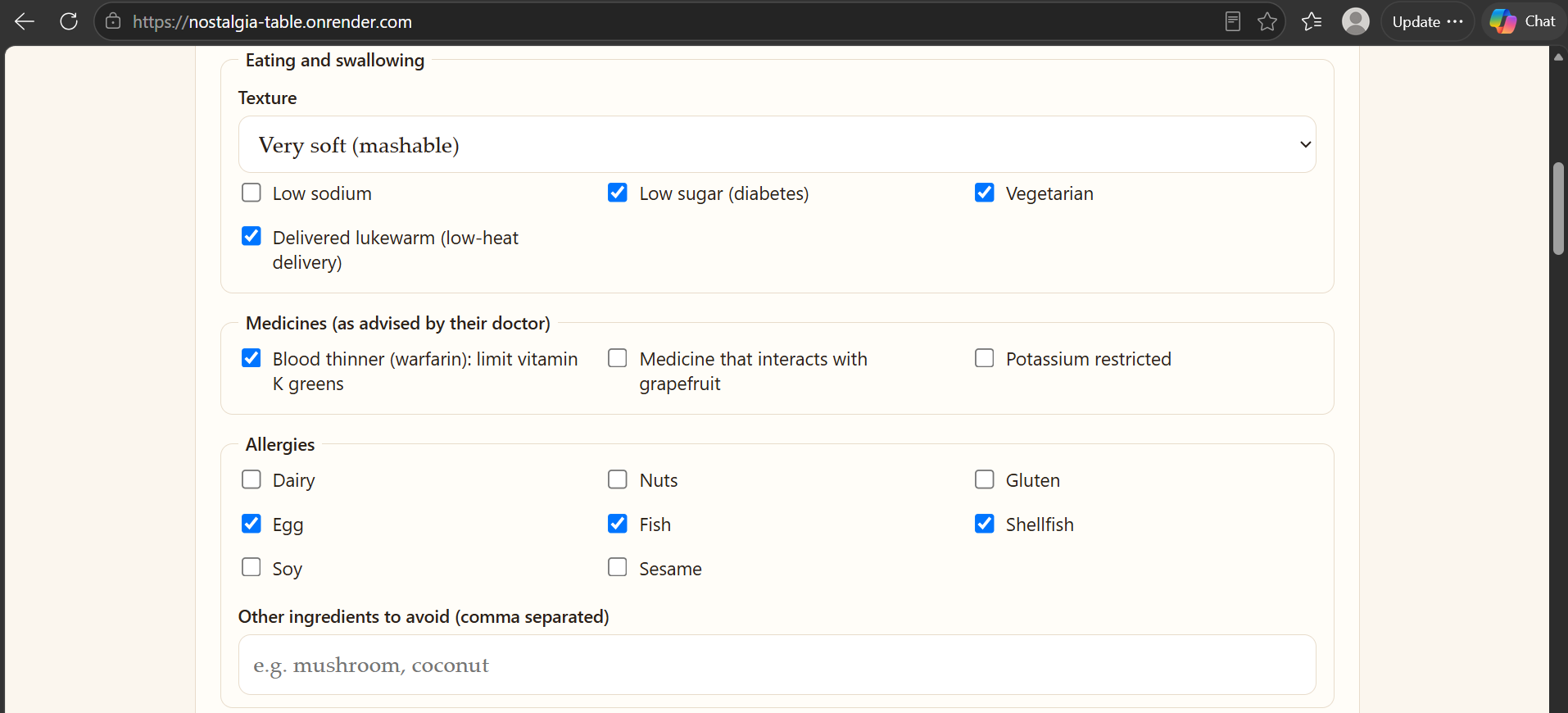
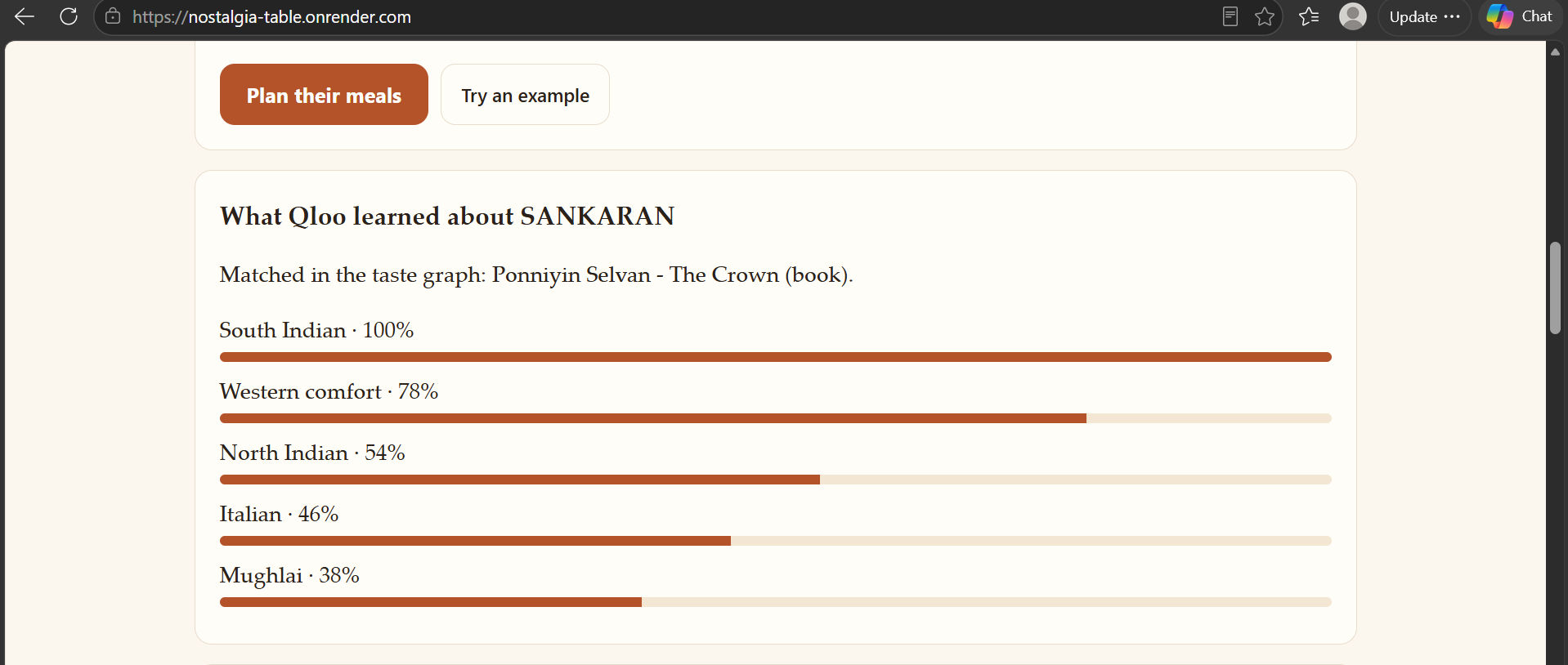
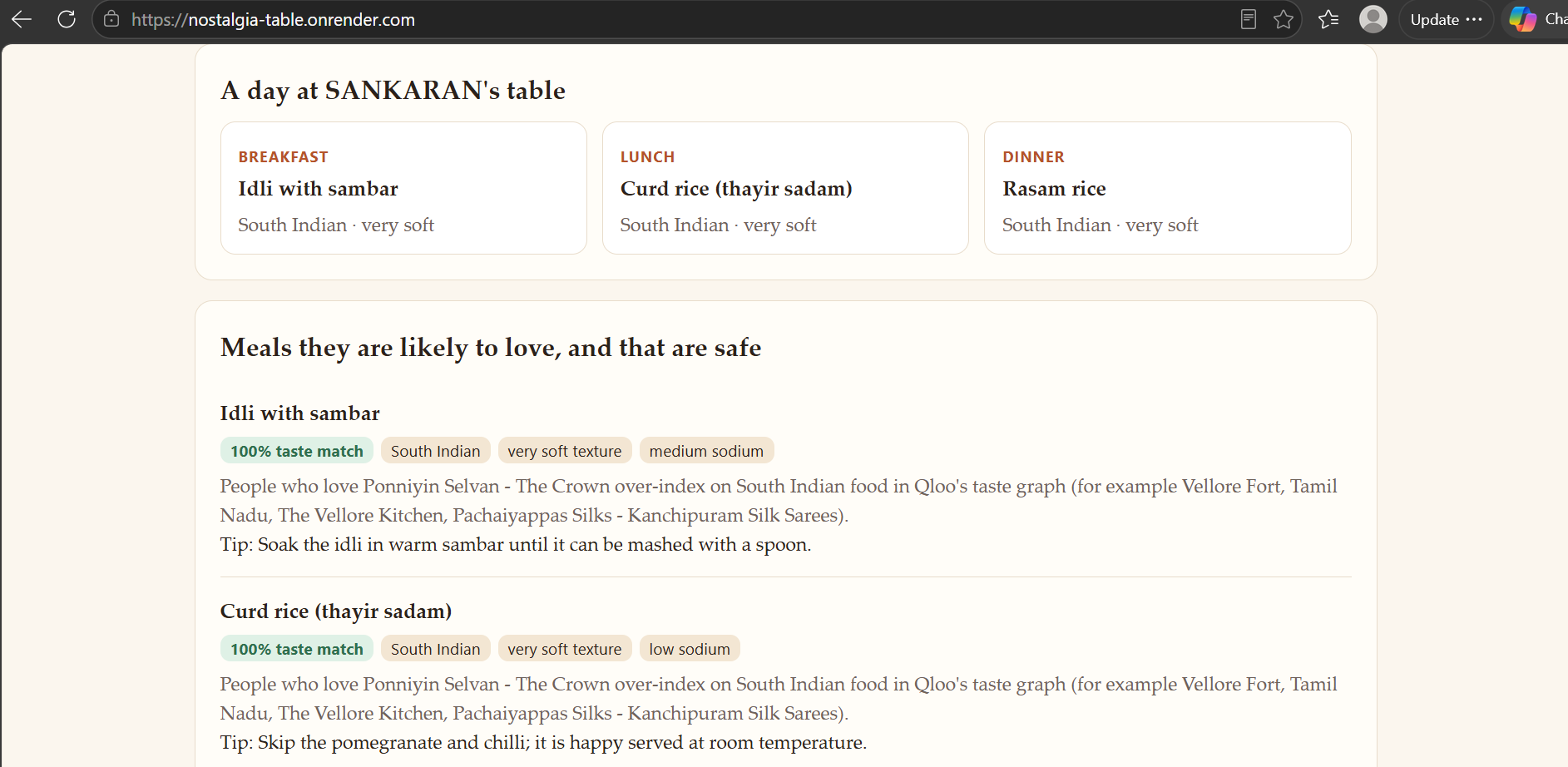
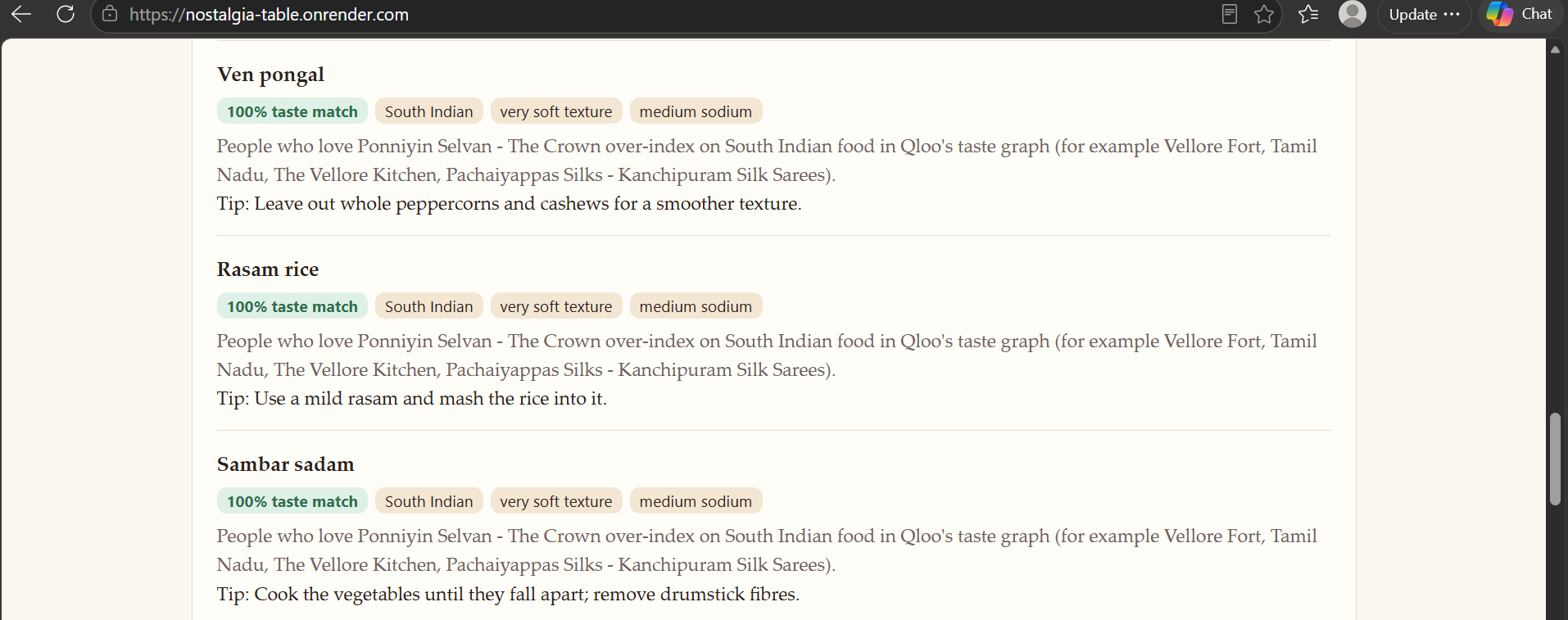
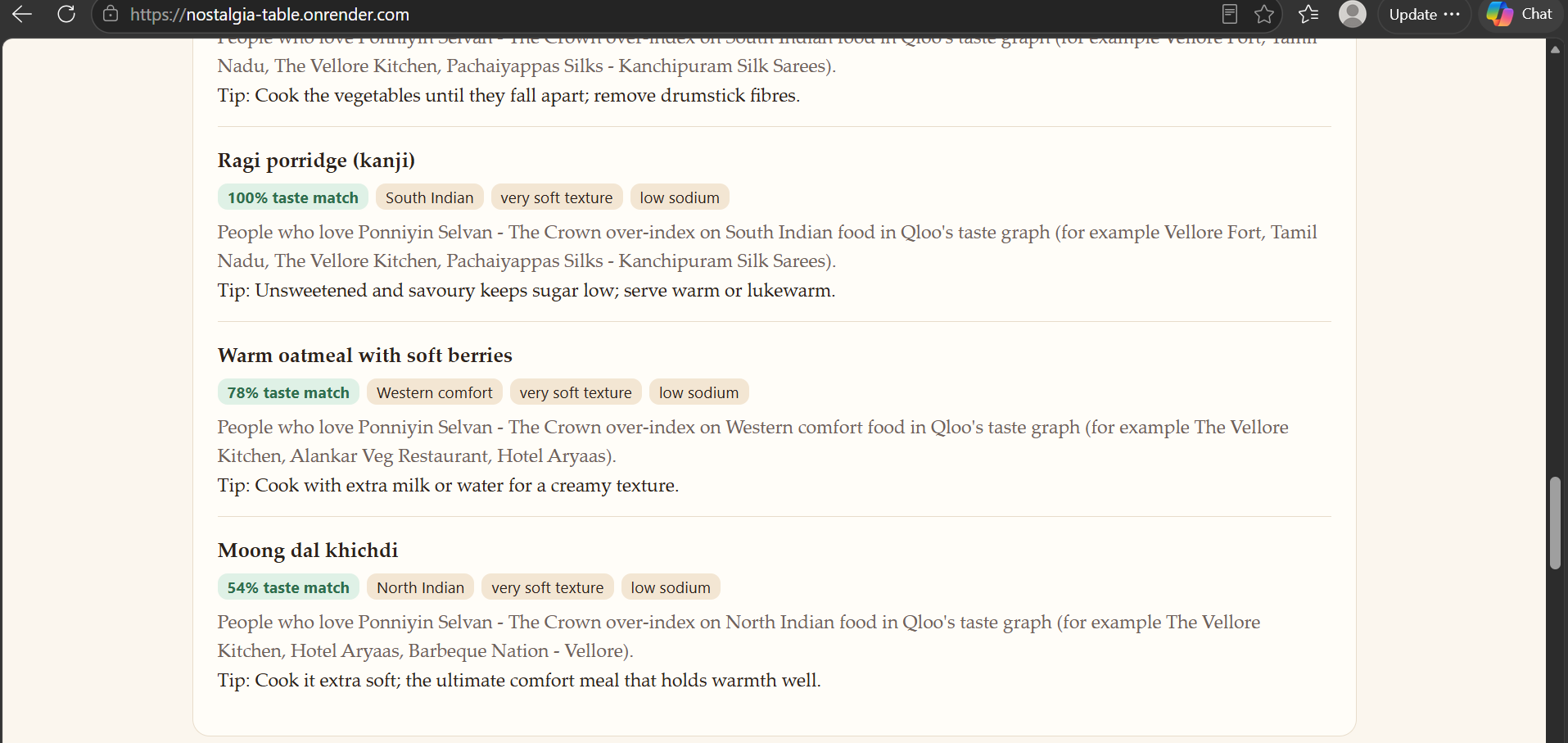
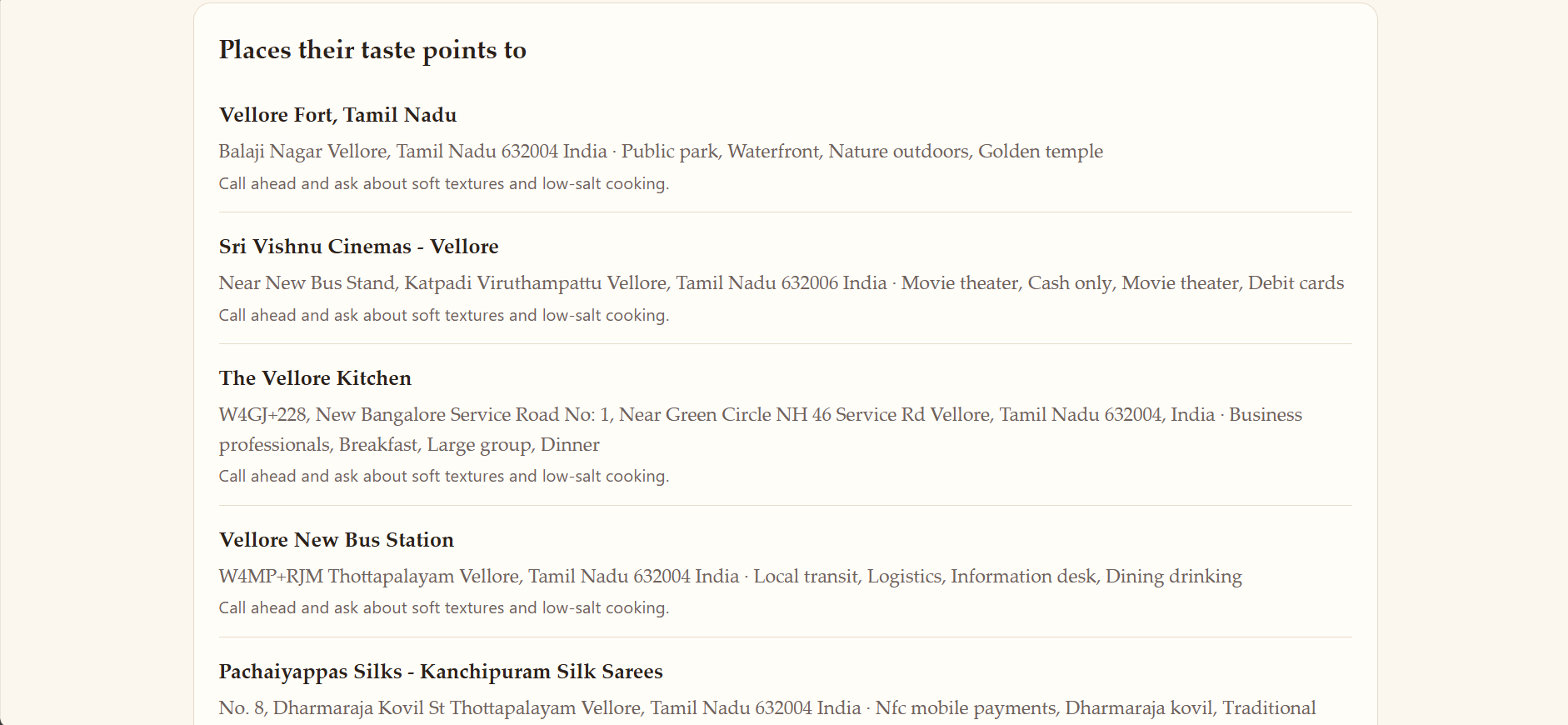
You type in a few favourites, like Ilaiyaraaja or Kishore Kumar, and tick their needs: soft or very soft food, low salt, low sugar, allergies, and medicines like warfarin. The app asks Qloo what people with that taste enjoy eating. It then ranks dishes by that taste, removes anything unsafe, and gives a breakfast, lunch and dinner plan. It also shows which dishes it left out and why, and it suggests nearby places.
How we built it
I built it as a small Node.js web app with a plain HTML page. It works like an agent with steps: it finds each favourite in Qloo, asks Qloo's Insights API what people with that taste like, turns that into cuisines, ranks dishes, filters them with hard safety rules, and then checks its own final list again.
Qloo decides what the person will love. My own safety rules decide what is allowed on the plate, so taste can never override safety. The page also shows every call made to Qloo. I added automated tests, put the code on GitHub under the MIT license, and hosted it on Render. I built it with help from Claude.
Challenges we ran into
This is my first hackathon, so a lot was new. I had to learn GitHub, deploying a live app, and API keys, and I fixed a deployment error caused by my files uploading in the wrong folders. The hardest design question was keeping taste and safety separate, so that a food someone loves never beats a medical rule.
Accomplishments that we're proud of
- I got a live app running that uses the real Qloo API, in my first hackathon.
- Every suggestion is checked against the safety rules twice.
- The app is open about what it excluded, and it shows its Qloo calls instead of hiding them.
What we learned
- Taste data makes recommendations feel personal, and a generic list can't do that.
- Safety rules and taste work best as two separate jobs.
- Building, testing and deploying a real project in one day is possible if you take it step by step.
What's next for Nostalgia Table
- Real menus from meal-delivery kitchens and tiffin services
- A view for dietitians and caregivers
- Taste profiles for the whole family
- More languages and regional cuisines
Built With
- css3
- github
- html5
- javascript
- mcp
- node.js
- qloo-api
- render
