-
-
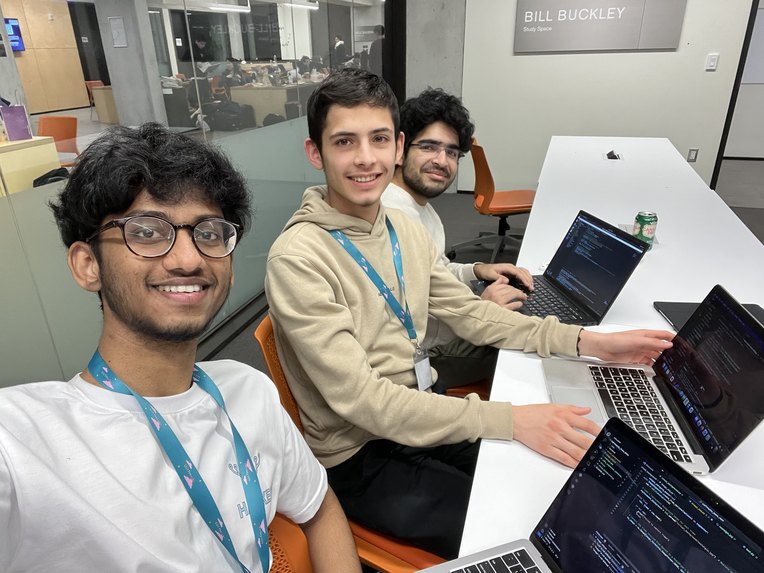
Teammates working
-
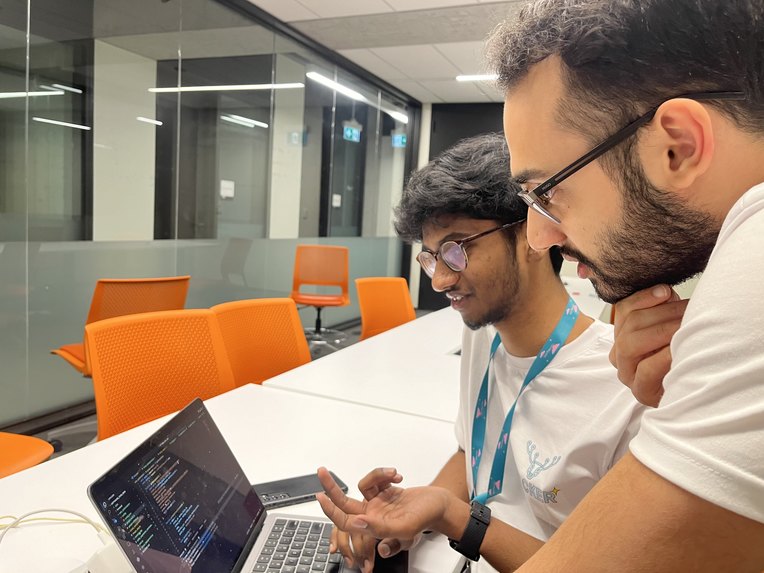
Teammates working
Inspiration
Our inspiration originated from the aspiration to offer users a time-travel experience, enabling them to journey into their past. Recognizing the innate human inclination to cherish and revisit cherished memories, we pondered the idea of crafting a magical mirror. This mirror serves as a portal to the past, inviting users to relive those precious moments in a captivating and nostalgic manner.
What it does.
A virtual mirror software with a webcam that waits for people to walk in front of it, then show them nostalgic memories of them together from their uploaded photo albums through a web app. It uses facial recognition to identify people standing in front of the mirror, then search for their faces on their uploaded albums.
How we built it
Mirror: Pygame for visuals, OpenCV and DeepVision for facial recognition
- Frontend: Crafted using HTML, CSS, and React.js.
- Backend: Developed with Flask (Python).
- Database: Utilized MongoDB.
Challenges we ran into
- Facial Recognition: Faced challenges in achieving accurate facial recognition using OpenCV, encountering low accuracy and requiring extensive troubleshooting.
- API Endpoint Connectivity: Encountered difficulties in connecting API endpoints within the backend.
- Integration Complexity: Navigated challenges in seamlessly integrating frontend, backend, and the Computer Vision aspect.
Accomplishments that we're proud of
Successfully achieved the development of a visually appealing website, showcasing a reasonably accurate facial recognition algorithm.
What we learned
Through collaborative efforts, we gained valuable experience in utilizing Flask, MongoDB, and integrating REST APIs, marking our initial exposure to these technologies.
