-
-
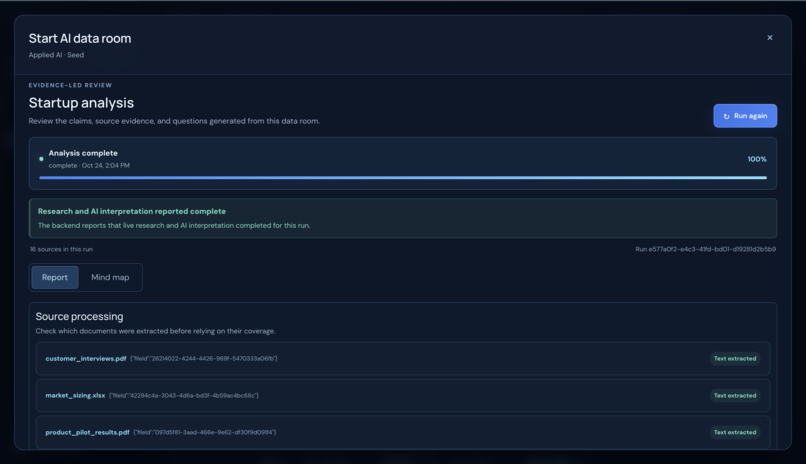
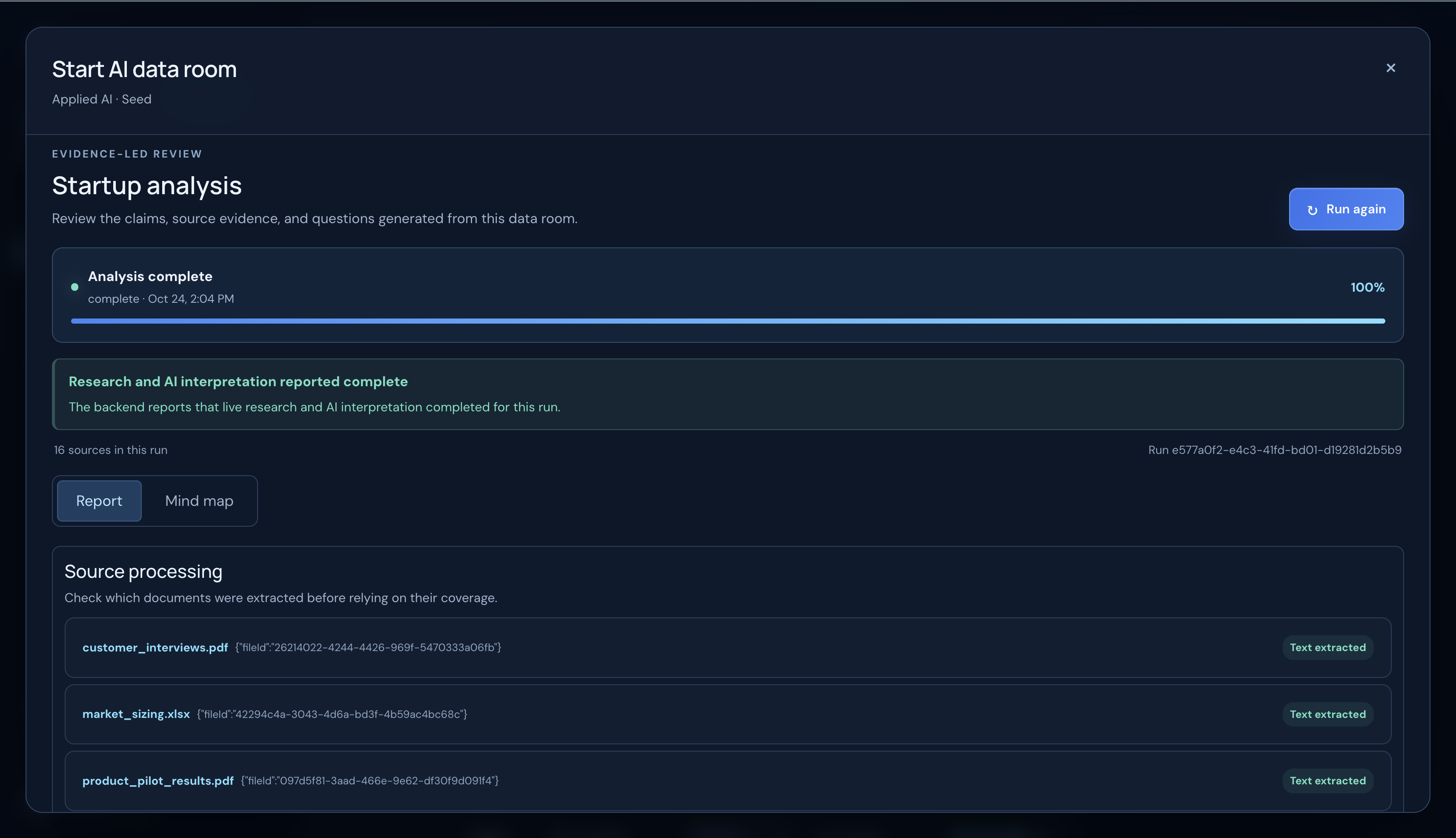
AI analysis
-
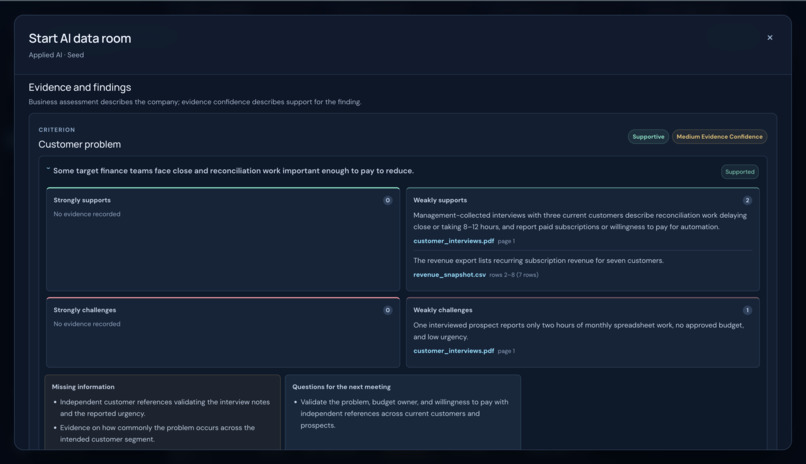
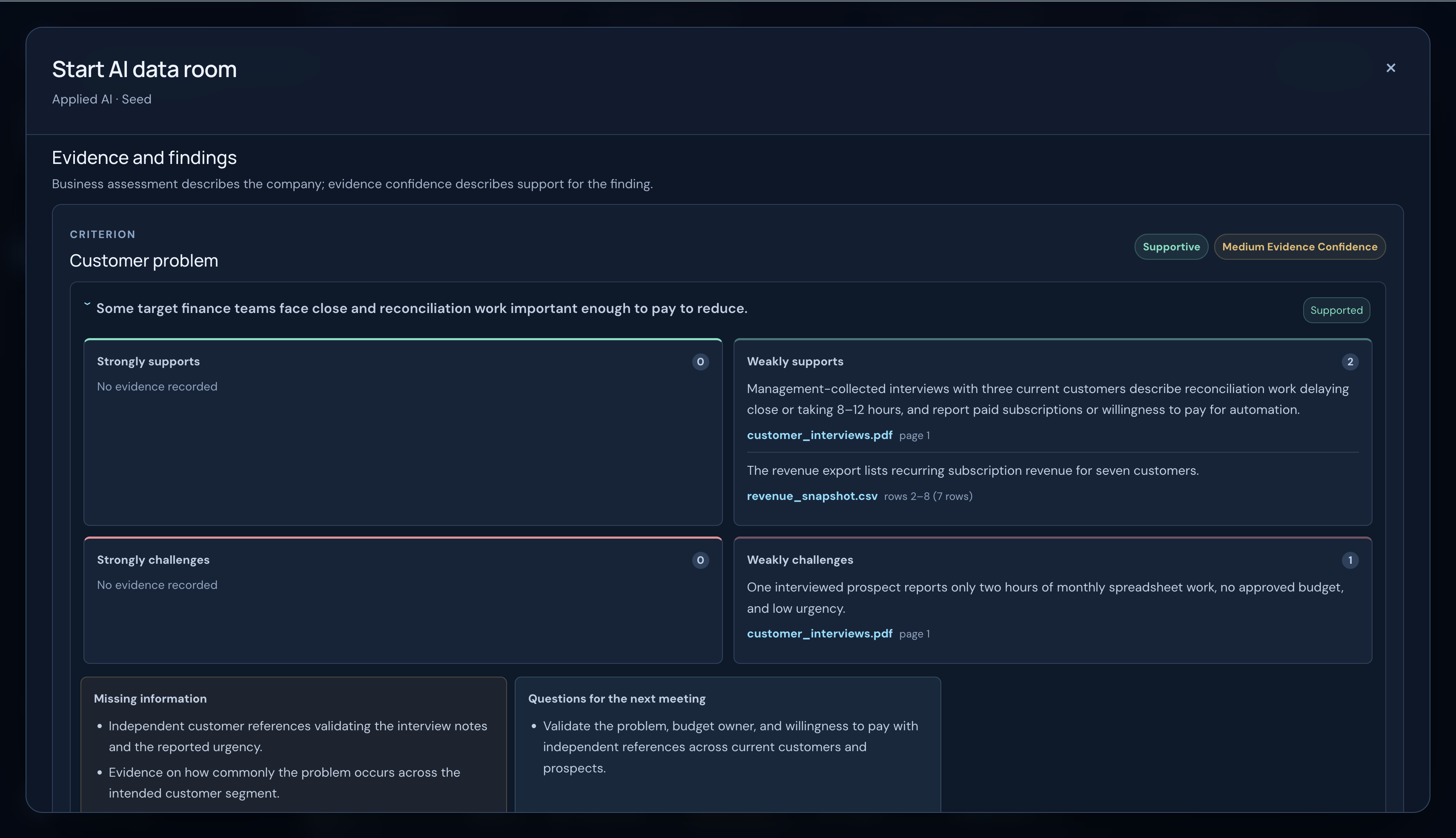
AI findings and evidence
-
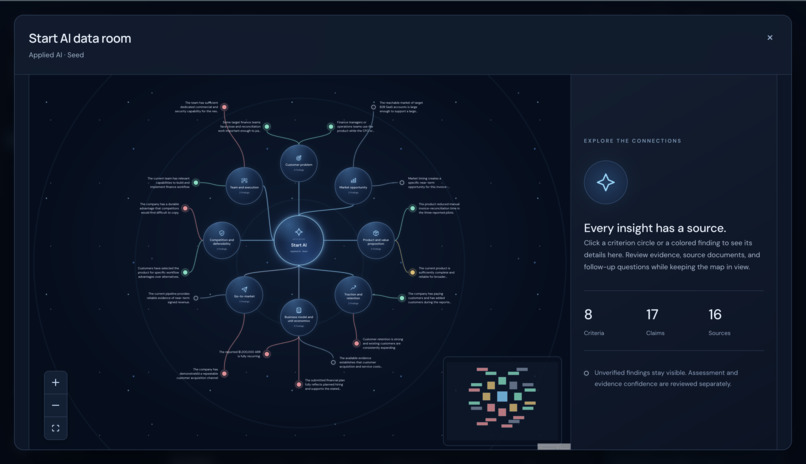
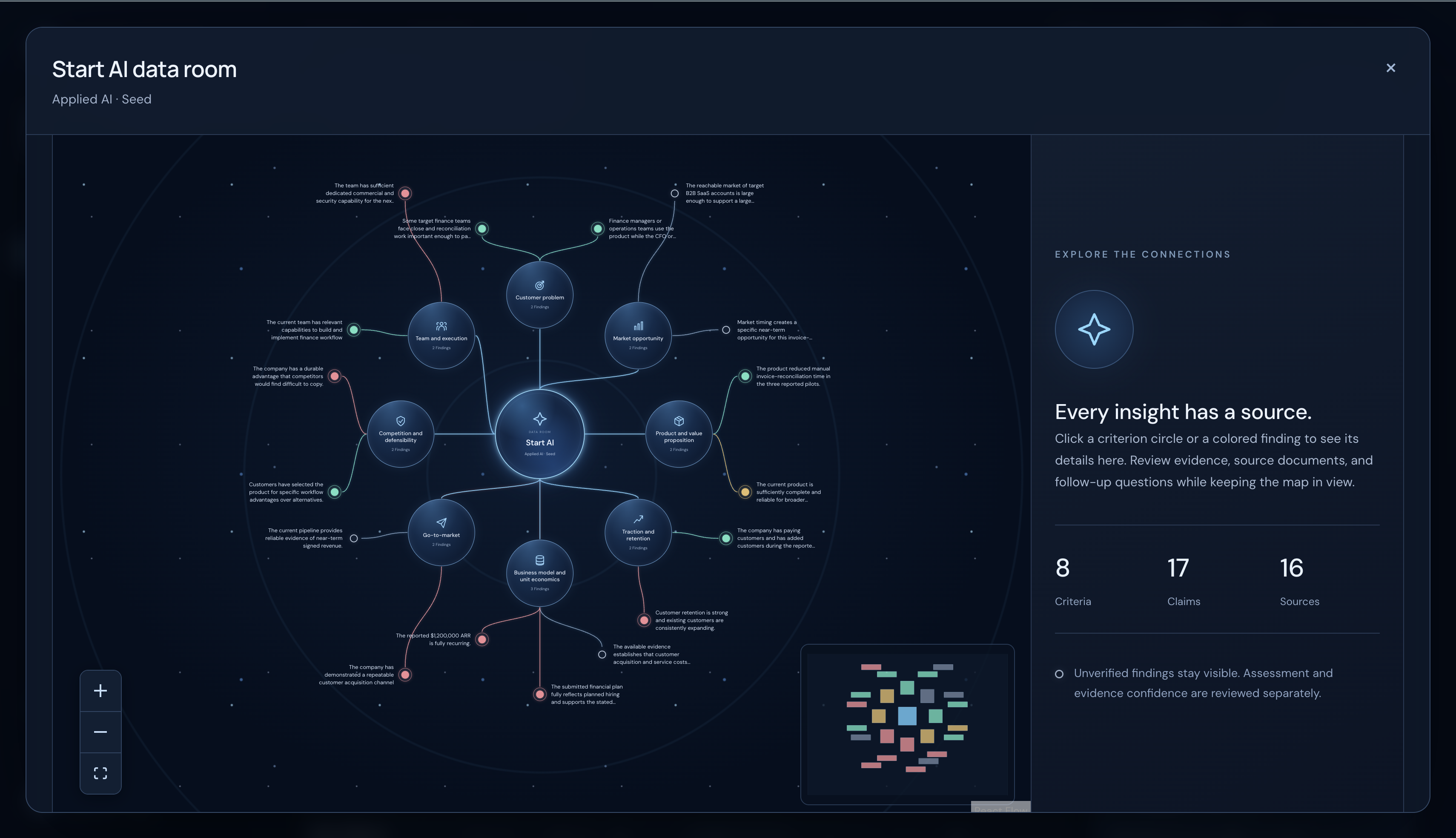
Mind Map
-
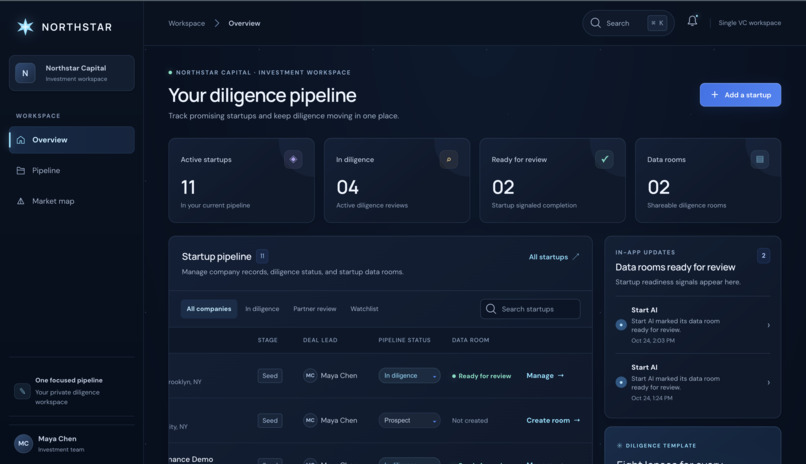
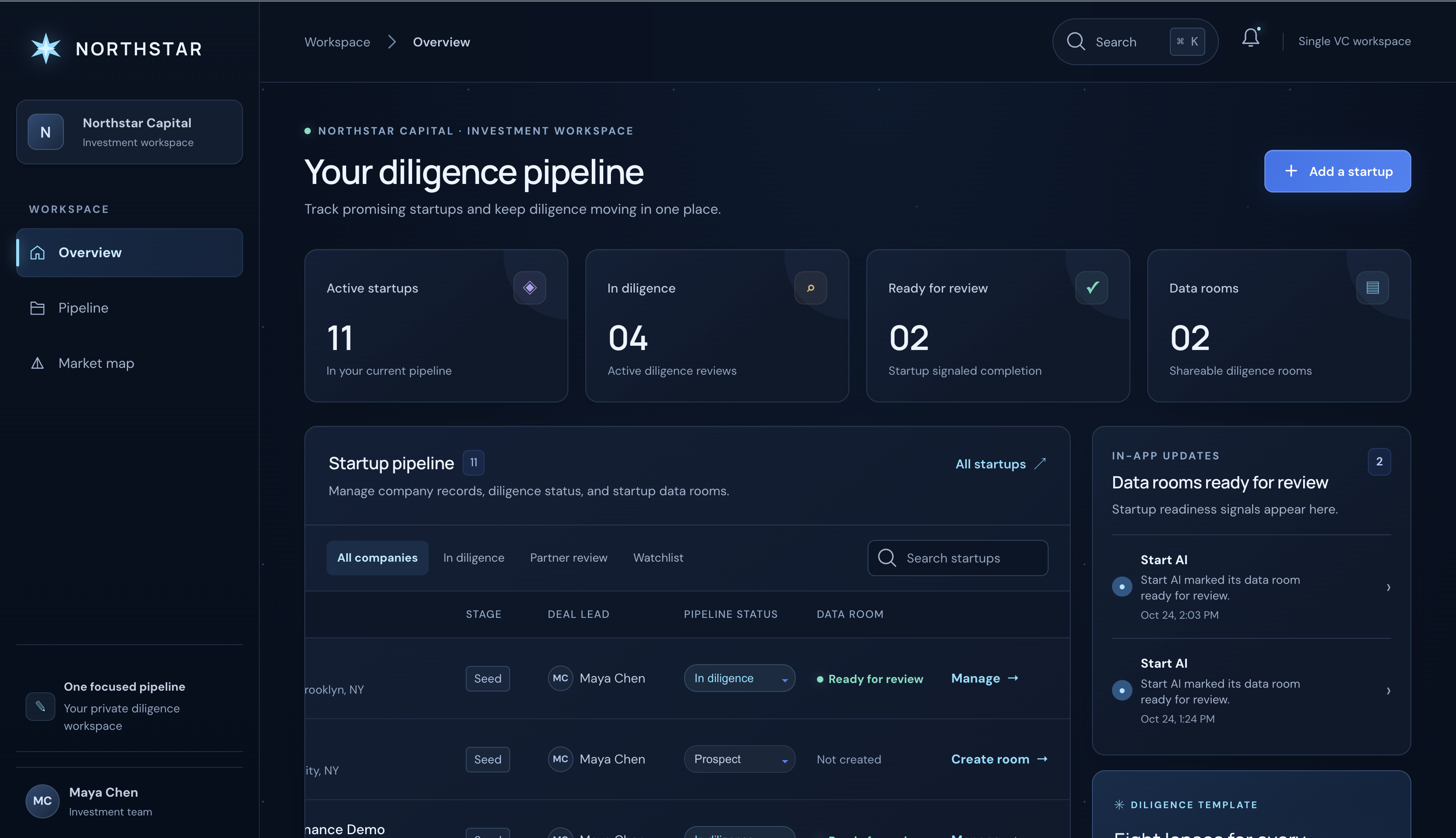
Dashbord
-
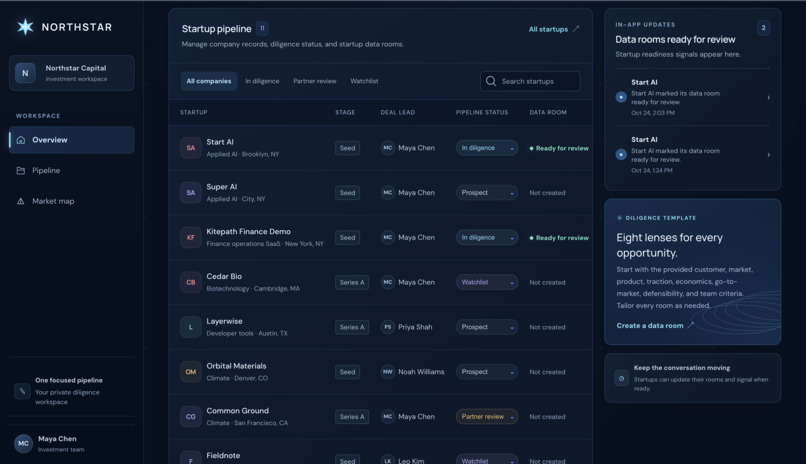
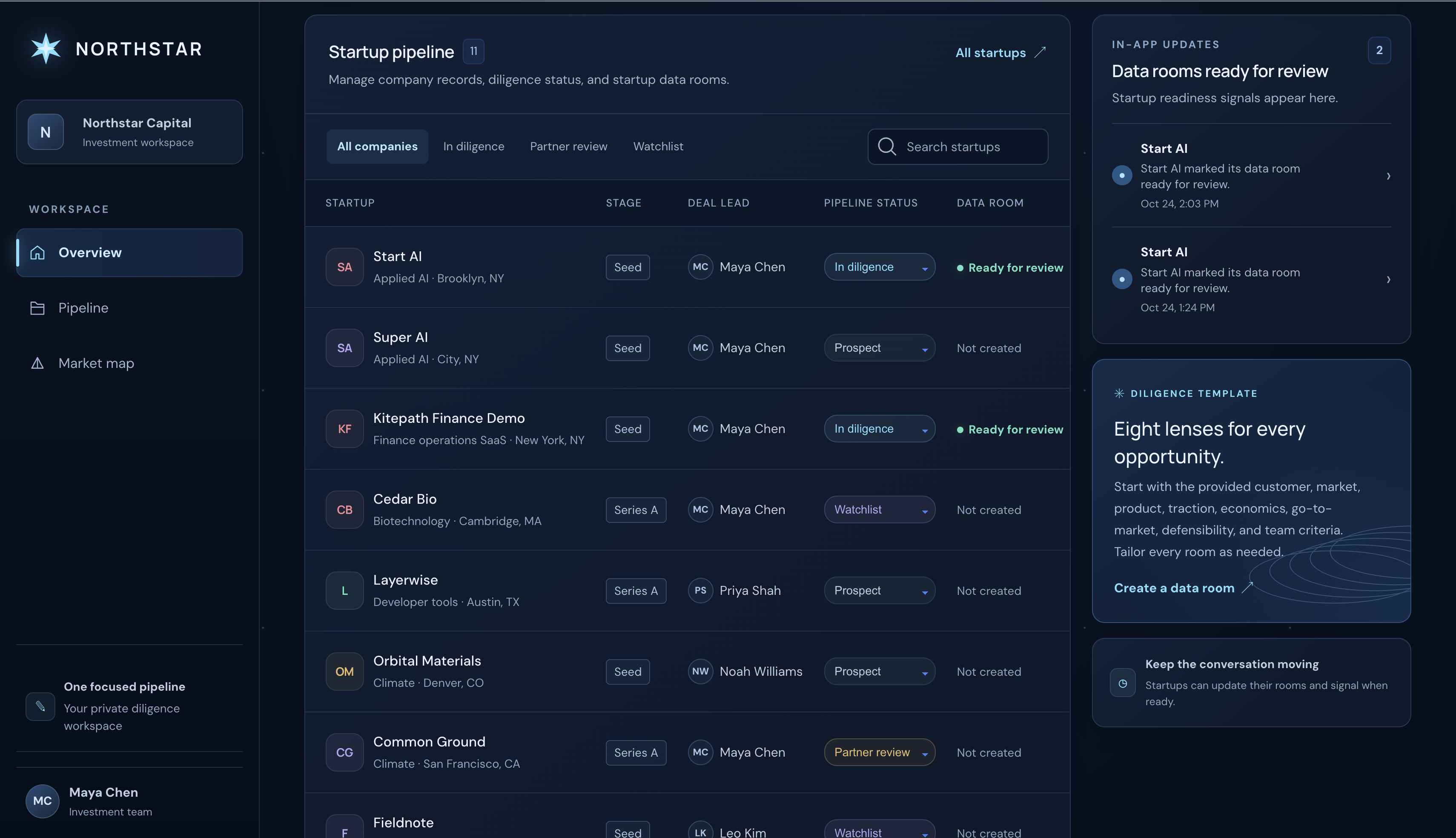
Startups
-
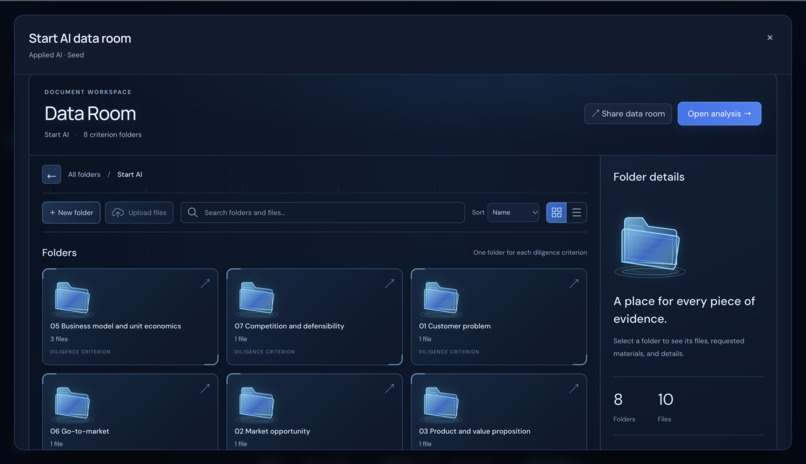
Data Room
-
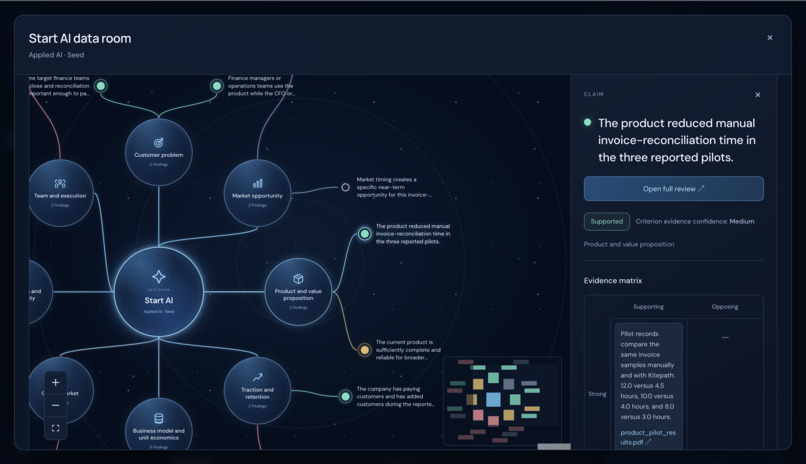
Mind Map closer look
Inspiration
As a former venture investor and startup operator, I have experienced due diligence from both sides of the table. Founders prepare decks, spreadsheets, and supporting documents, while investors spend days piecing them together to understand what the numbers actually mean. The hardest part is connecting a claim to reliable evidence—and recognizing what is missing. We built Northstar to make that investigation faster, clearer, and easier to navigate.
What it does
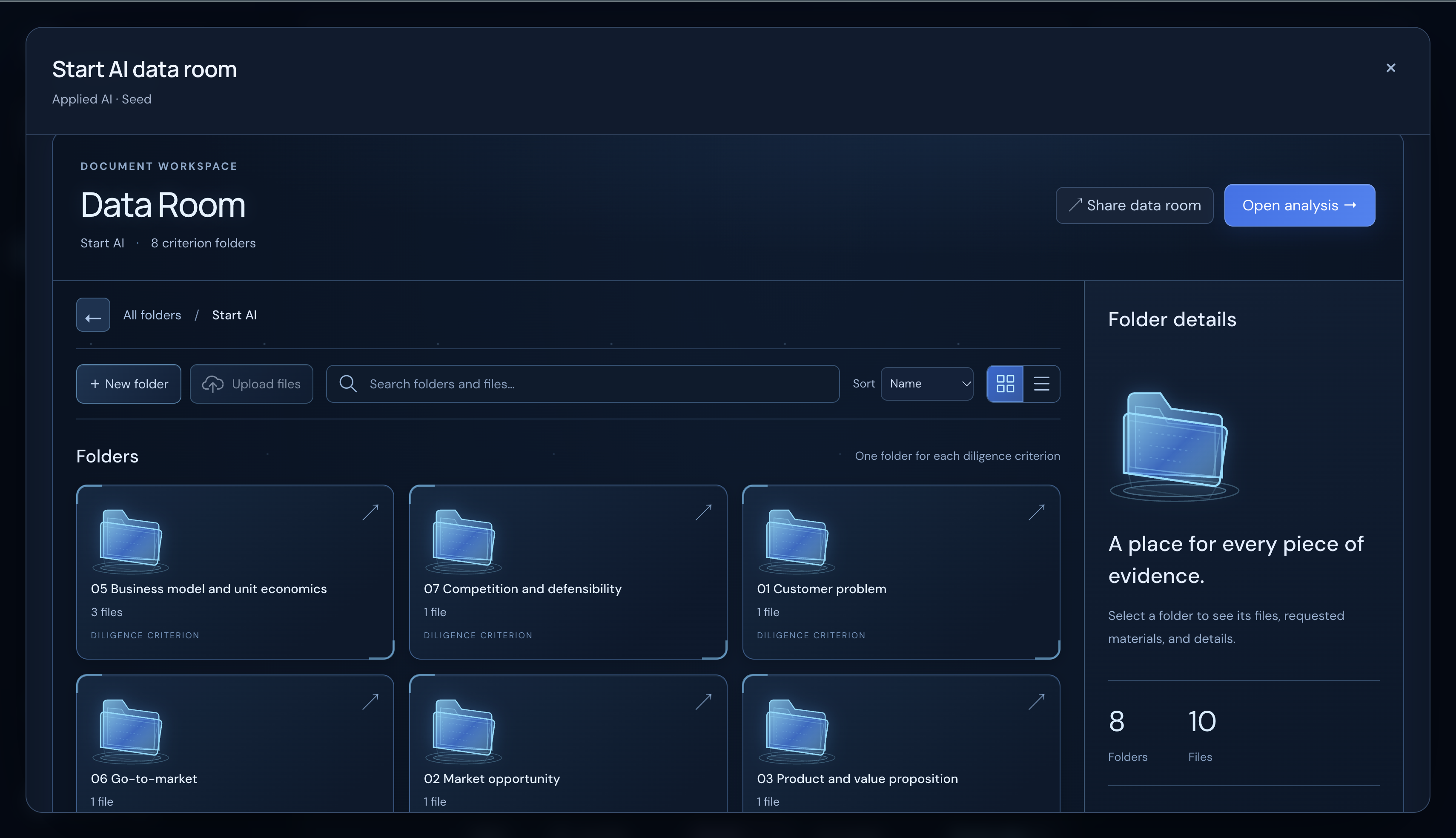
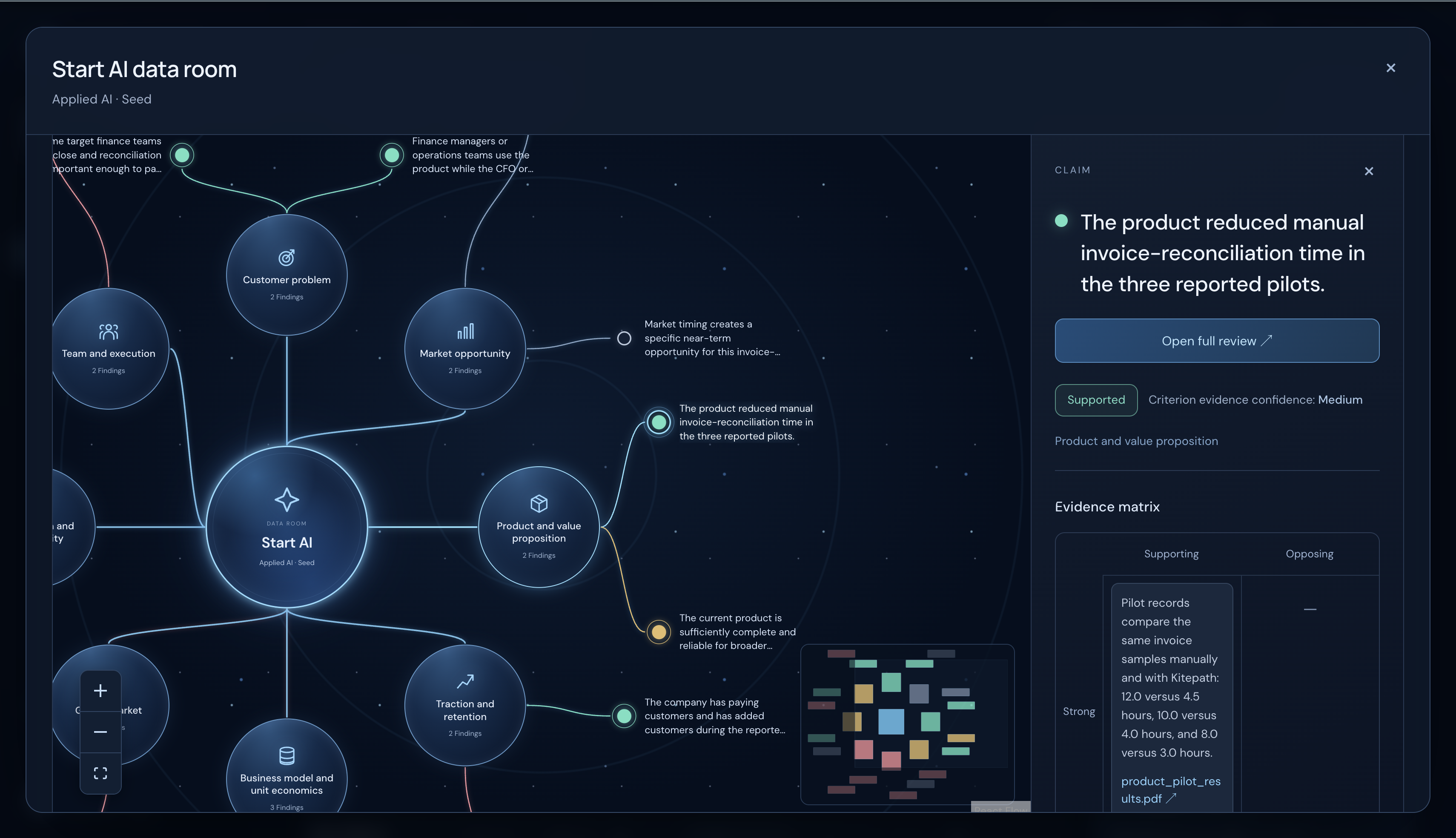
Northstar turns a startup data room into an evidence-based diligence workspace. It checks recurring revenue, customer retention, concentration, hiring plans, and runway. Each finding connects to its underlying evidence, helping investors distinguish strengths, concerns, conflicting information, and unanswered questions. Our signature interface is an interactive diligence mind map, inspired by Obsidian’s knowledge graphs. Investors can explore a startup by criterion, then follow a branch from a finding to its supporting and opposing evidence. The broader workflow brings together financial checks, market research, comparable companies, illustrative historical benchmarks, and an investment memo.
How we built it
We divided the work between the frontend and data-room experience, and the backend analysis and database. Using VS Code, Claude, and Codex, we developed a TypeScript backend that extracts information from PDFs, CSVs, and Excel workbooks. Financial calculations run in code, with source references preserved so users can inspect the records behind a conclusion. We created a fictional SaaS startup, Quillmont DemoCo, with a synthetic data room containing realistic inconsistencies. We also prepared synthetic historical diligence records for illustrative comparisons. The backend uncovered a reported $1.2 million ARR figure that included annualized one-time implementation fees. Recurring ARR was $900,000. It also identified omitted hiring costs and showed how financing assumptions affected runway.
Challenges we faced
One challenge was comparing metrics correctly. A monthly churn claim cannot be directly compared with annual cohort churn. We revised the analysis to show periods, definitions, and denominators explicitly. Runway required similar care: cash before a proposed financing, spending before closing, and omitted hiring costs all changed the result. We also encountered an API billing constraint. Our deterministic document checks worked, while live model-based extraction, research, and memo generation remained blocked. We kept those limitations explicit rather than presenting simulated outputs as live results.
What we learned
Trustworthy diligence requires more than a persuasive summary. It requires traceable sources, reproducible calculations, clear assumptions, and an honest distinction between missing evidence and negative evidence. We also learned that design is central to analytical usefulness. Investors need to see the overall picture quickly while retaining a path into the details.
What’s next
Our next step is connecting the complete interface to verified live research and model-assisted analysis, expanding document support, and testing Northstar with investors. Our goal is to help investors reach better questions—and better-informed decisions—faster.
Built With
- claude
- codex
- css
- nestjs
- node.js
- openai
- react
- tavily
- typescript

Log in or sign up for Devpost to join the conversation.