-
-
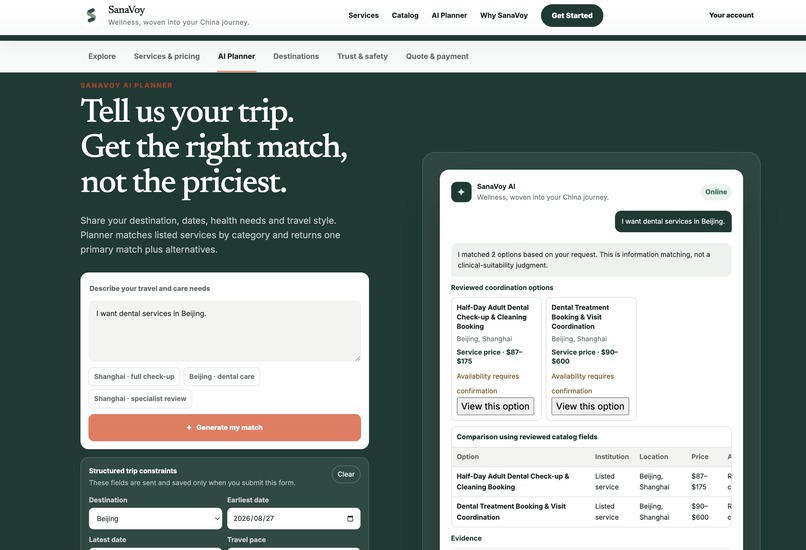
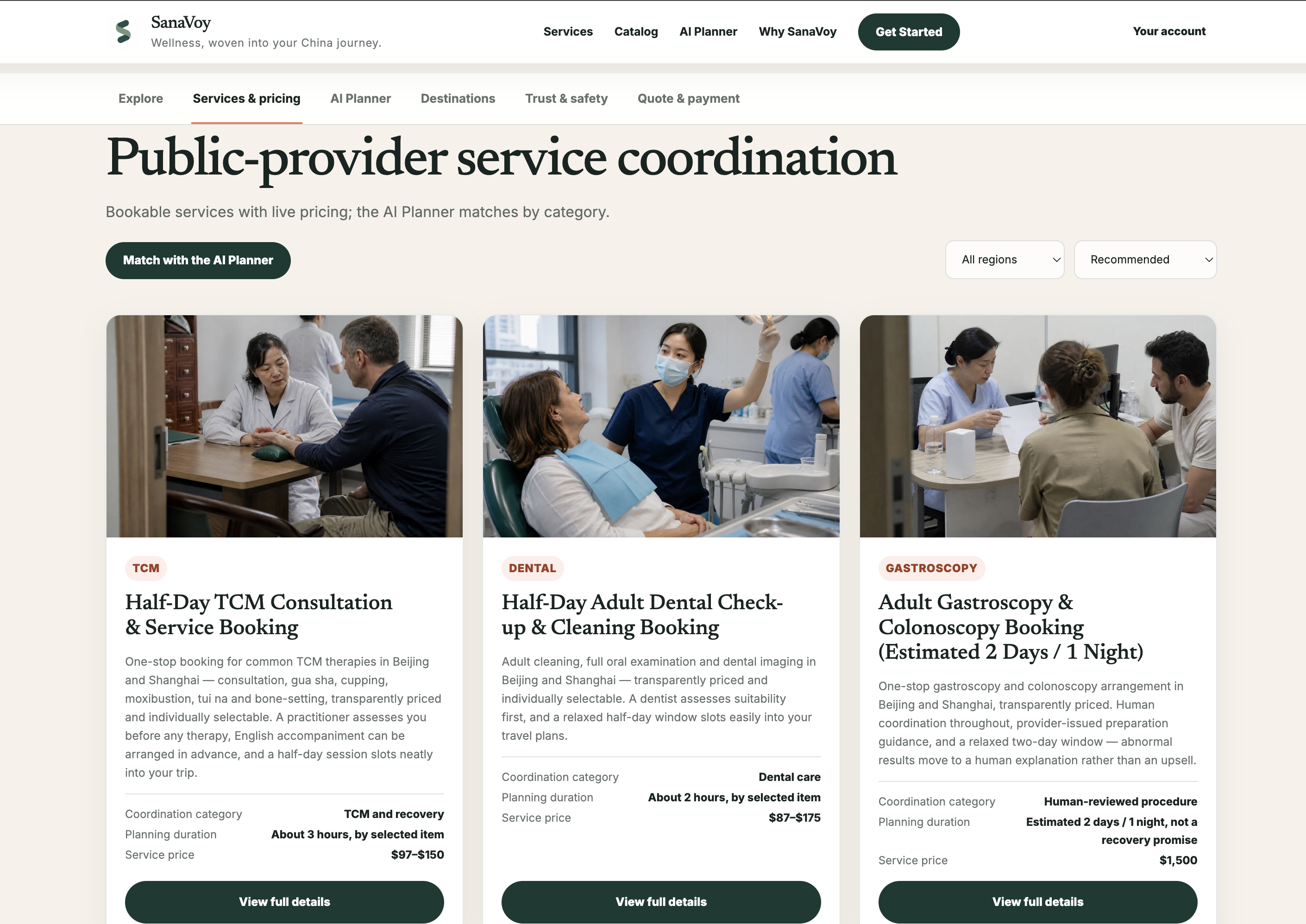
Smart matching
-
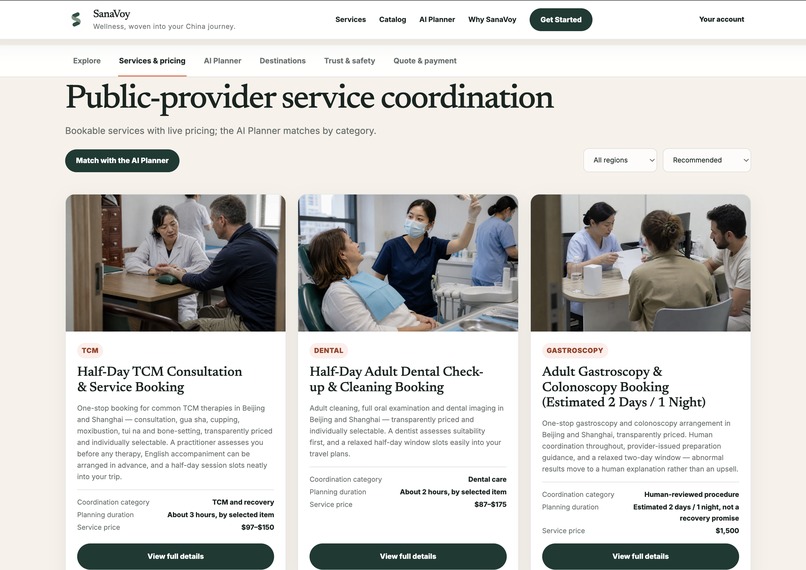
Service catalog
-
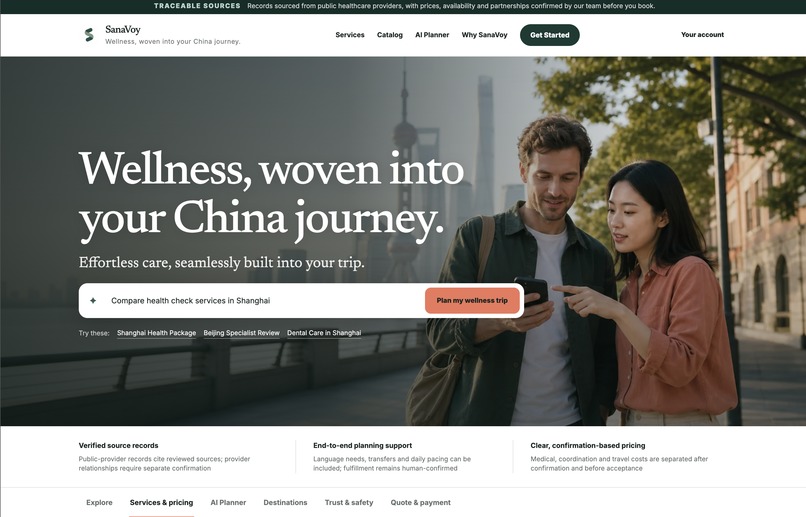
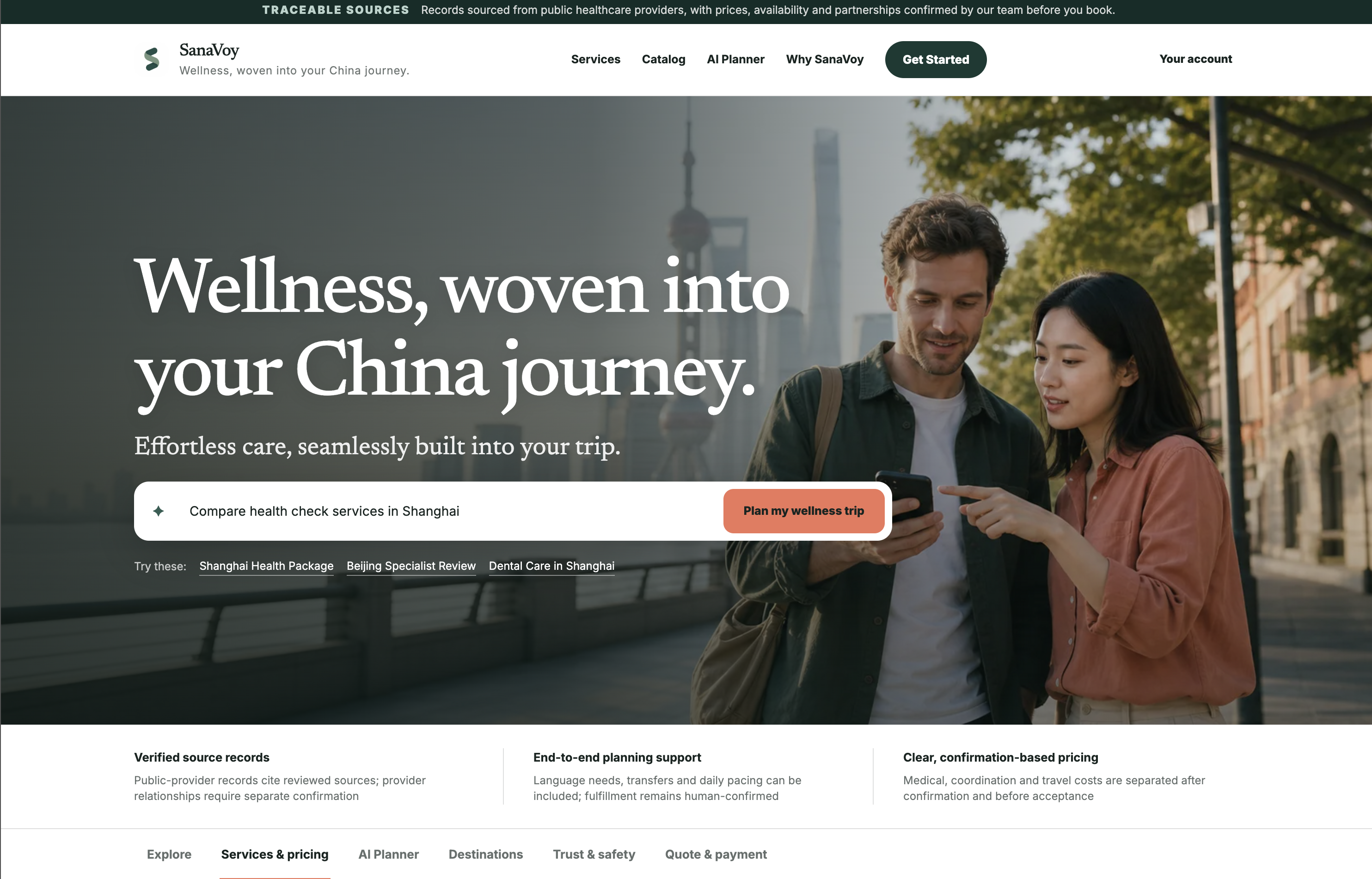
Landing page
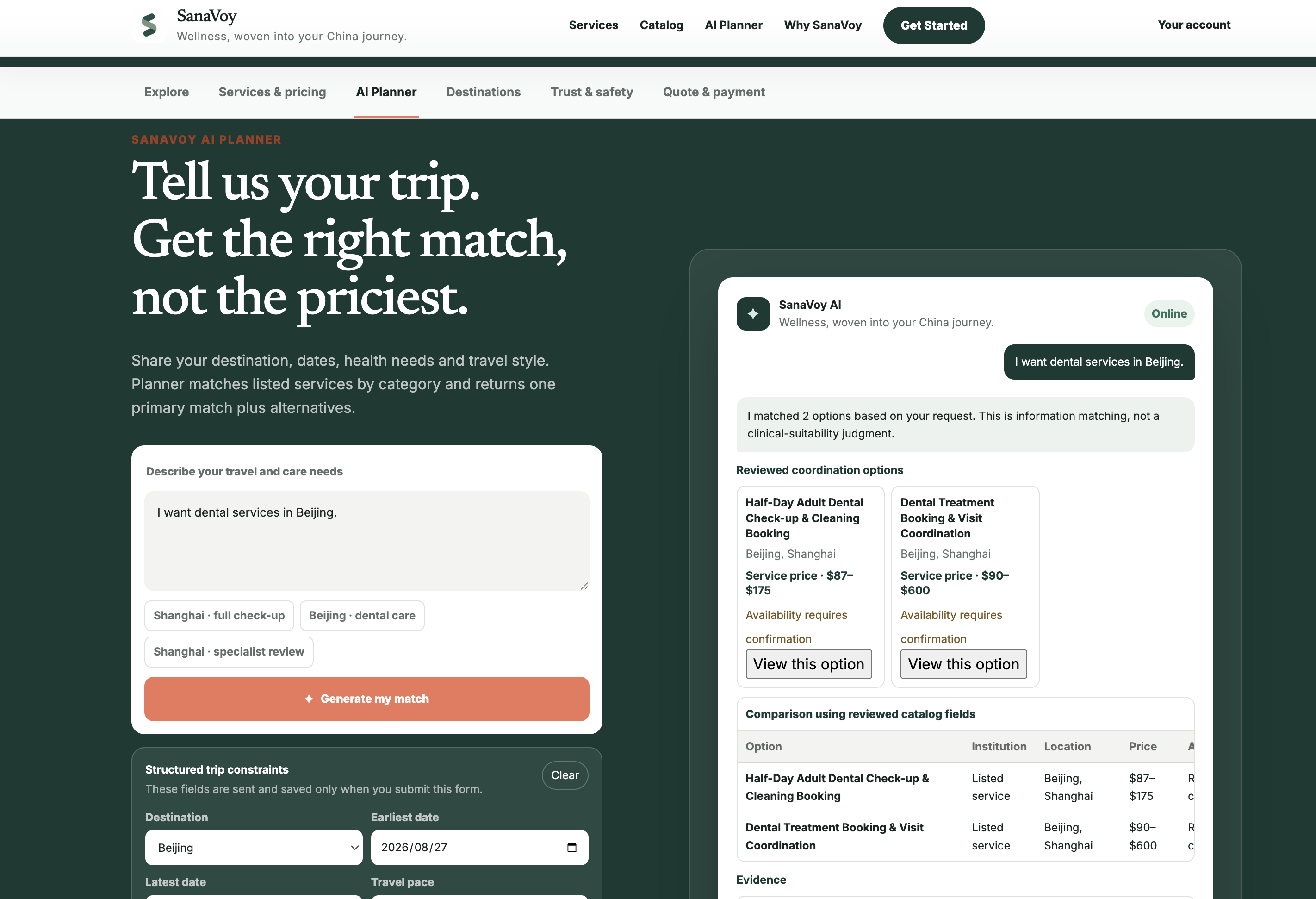
Inspiration
SanaVoy started with a friend from overseas. They were planning a trip to China and wanted to arrange a health check-up along the way. They spent weeks looking for a travel agency that could actually help, but found nothing that fit. Eventually, they came to me. I happened to know people at a medical institution, so I made an introduction. Everything then came together: the trip and the care, arranged as one.
That made me wonder whether this was just my friend's problem. It wasn't. On Reddit and other forums, I found thread after thread of international travelers asking the same questions: Which providers can I trust? What is actually included? How can I book in another language? Will it fit my itinerary?
The demand was clearly there—and just as clearly underserved. At the same time, AI had become capable enough to tackle the hardest part: understanding each traveler's real constraints and matching them with suitable services, personally and at scale.
SanaVoy is our answer: wellness, woven into your China journey.
What it does
SanaVoy is an AI-assisted marketplace for comparing trusted services across China and building them into a practical trip.
Travelers describe their destination, trip length, needs, and travel preferences. The AI Planner then compares structured products on the platform, identifies practical conflicts or missing details, ranks suitable options, explains the trade-offs, and assembles a workable itinerary.
How we built it
The frontend is a lightweight, multilingual static site built with plain HTML, CSS, and JavaScript and served by Nginx.
Behind it is a FastAPI backend powered by PostgreSQL, SQLAlchemy, and Alembic, supporting a source-traceable catalog of coordination offers. The AI Planner runs on Google's Agent Development Kit (ADK) with Gemini and produces validated, structured output.
The complete three-container stack runs locally through Docker Compose and deploys on Google Cloud Run with Cloud SQL and Cloud Tasks. Cloud Build and Cloud Monitoring support releases and observability.
Challenges we ran into
We started only about a month before the competition, so the timeline was extremely tight. Building and launching the full product demanded many late nights and a great deal of focused work.
The hardest part was doing two difficult things at once: designing an AI Planner that could understand each traveler's real constraints and turn scattered options into a sensible, travel-aware itinerary, while also coordinating with the right institutions and partners and structuring their information so the platform could actually use it.
Doing all of that within a month was the real challenge.
Accomplishments that we're proud of
In under a month, we did more than build a prototype: we launched, served real users, and generated revenue.
We brought the entire operation together end to end—from coordinating with institutions and partners to building the product, creating an AI-driven planning experience, and running the online operations and promotion needed to reach travelers.
Taking SanaVoy from an idea to a live, AI-native product with real users and revenue—with a small team spanning product, engineering, operations, and partnerships—is what we're proudest of.
What we learned
The biggest lesson was to start with the market, not the technology.
The real demand we saw in our friend's experience and across all those forum threads showed us what was worth building. Technology matters only when it serves a need people actually have.
Once that need is clear, AI becomes a powerful accelerator for a small team—not only for matching and planning inside the product, but also for prototyping, content, and operations. Used thoughtfully, it helps you move faster and work leaner at every stage.
What's next for SanaVoy
Next, we'll continue growing SanaVoy and bringing it to more travelers around the world.
We'll expand into more markets, onboard more institutions and coordination partners so the Planner has more options to match, and keep improving the AI Planner through real-world use.
The goal is simple: help more international travelers weave wellness into their journeys, wherever they're headed.
Built With
- docker
- fastapi
- gemini
- google-adk
- google-cloud-run
- google-cloud-tasks
- javascript
- nginx
- openid
- postgresql
- python
- sqlalchemy


Log in or sign up for Devpost to join the conversation.