-
-
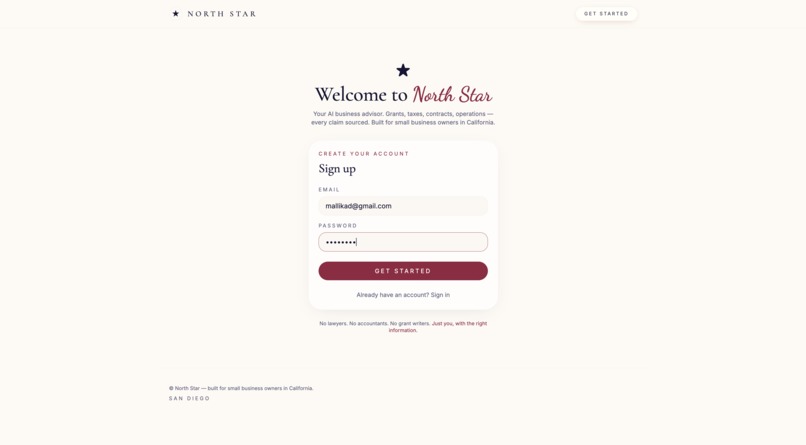
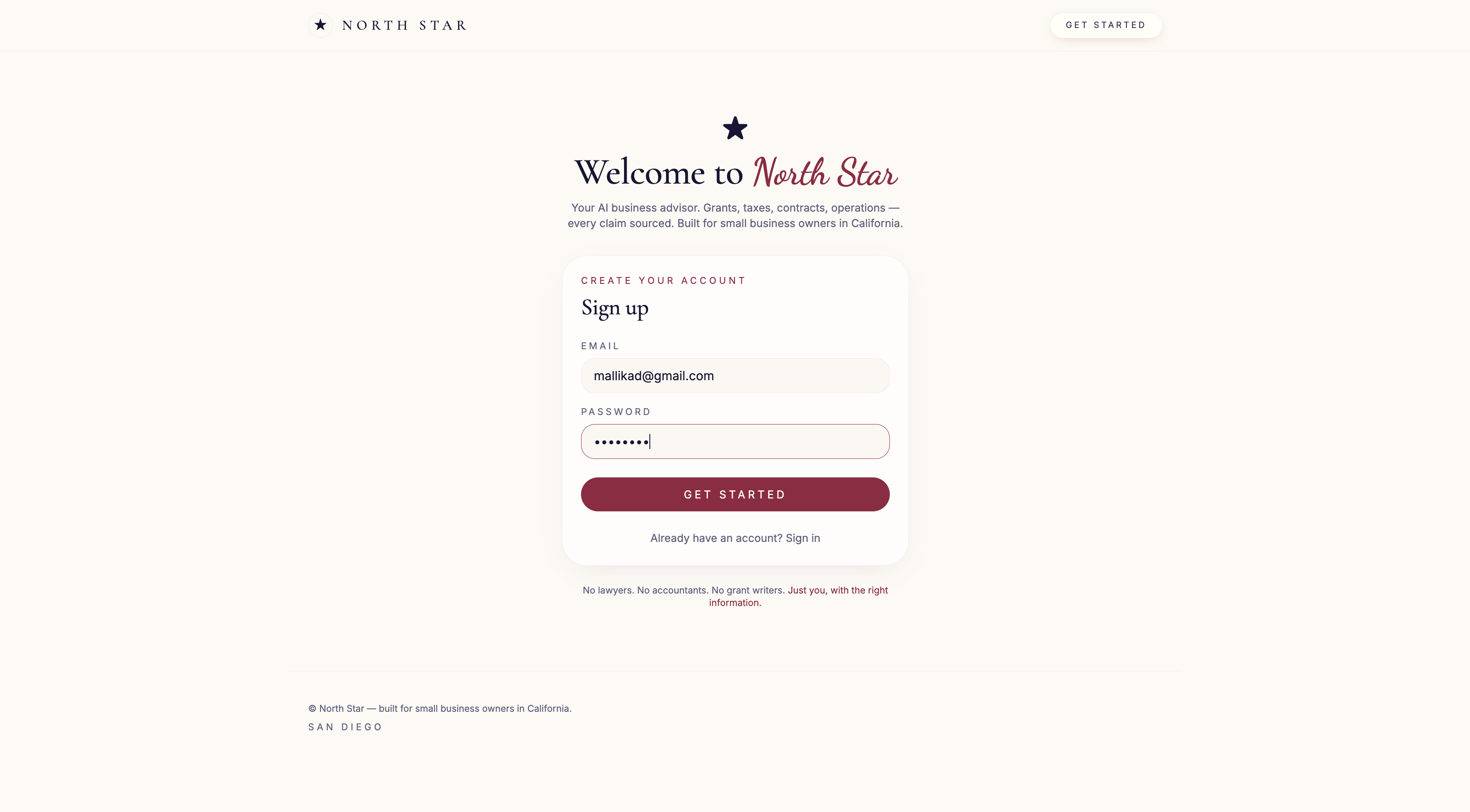
Sign in page
-
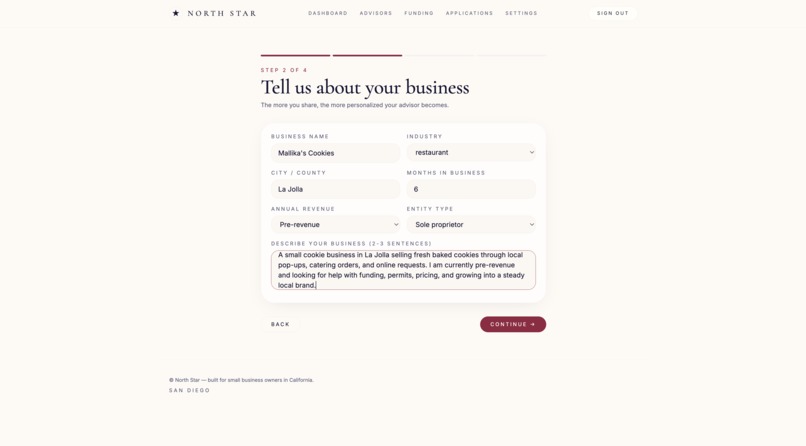
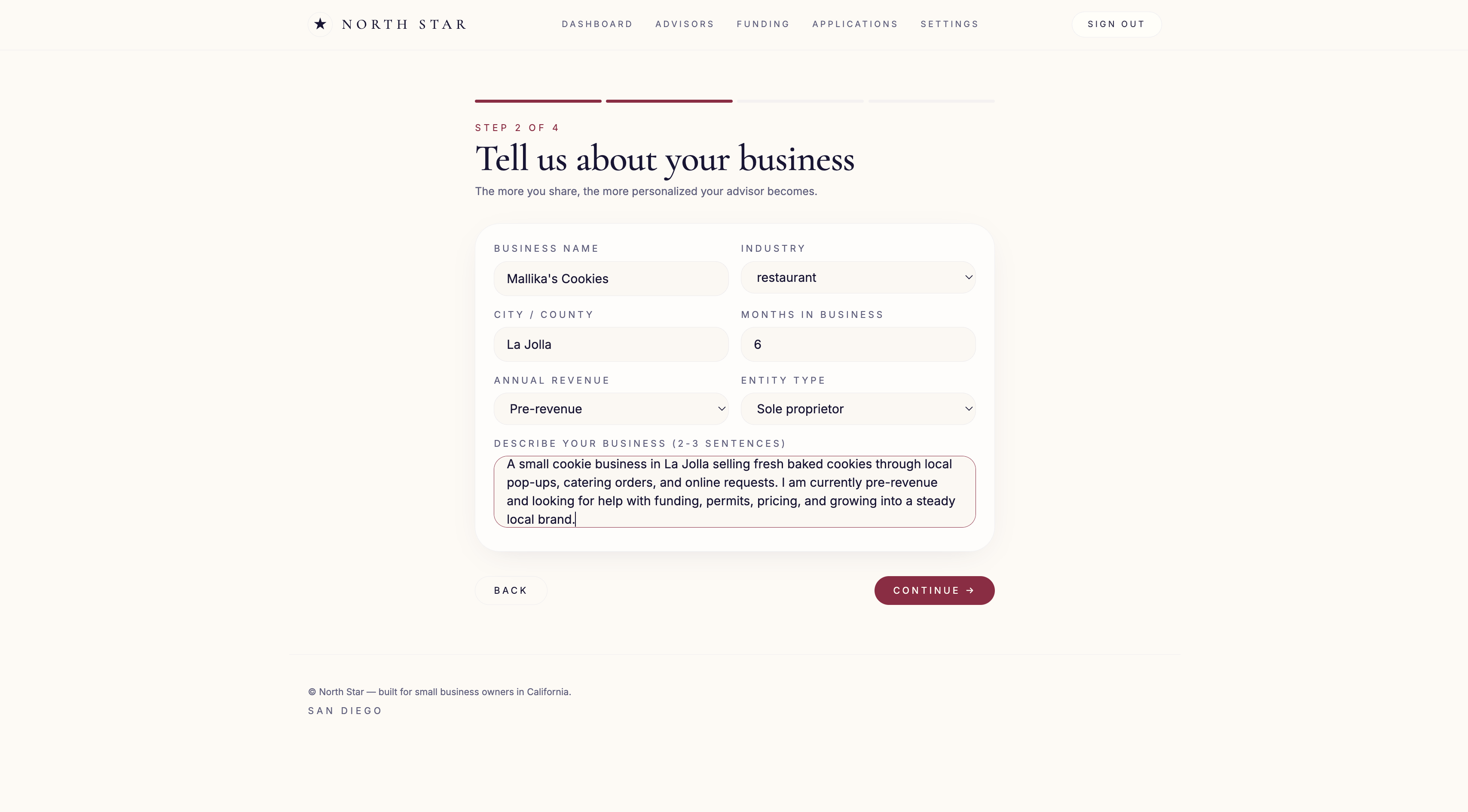
Tell us about your business
-
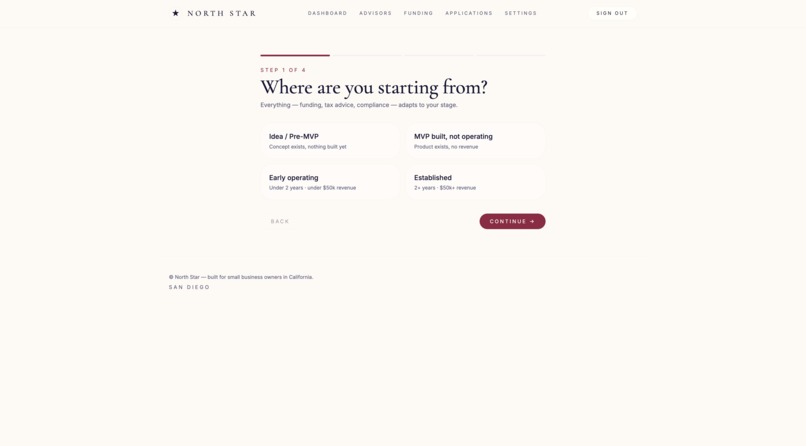
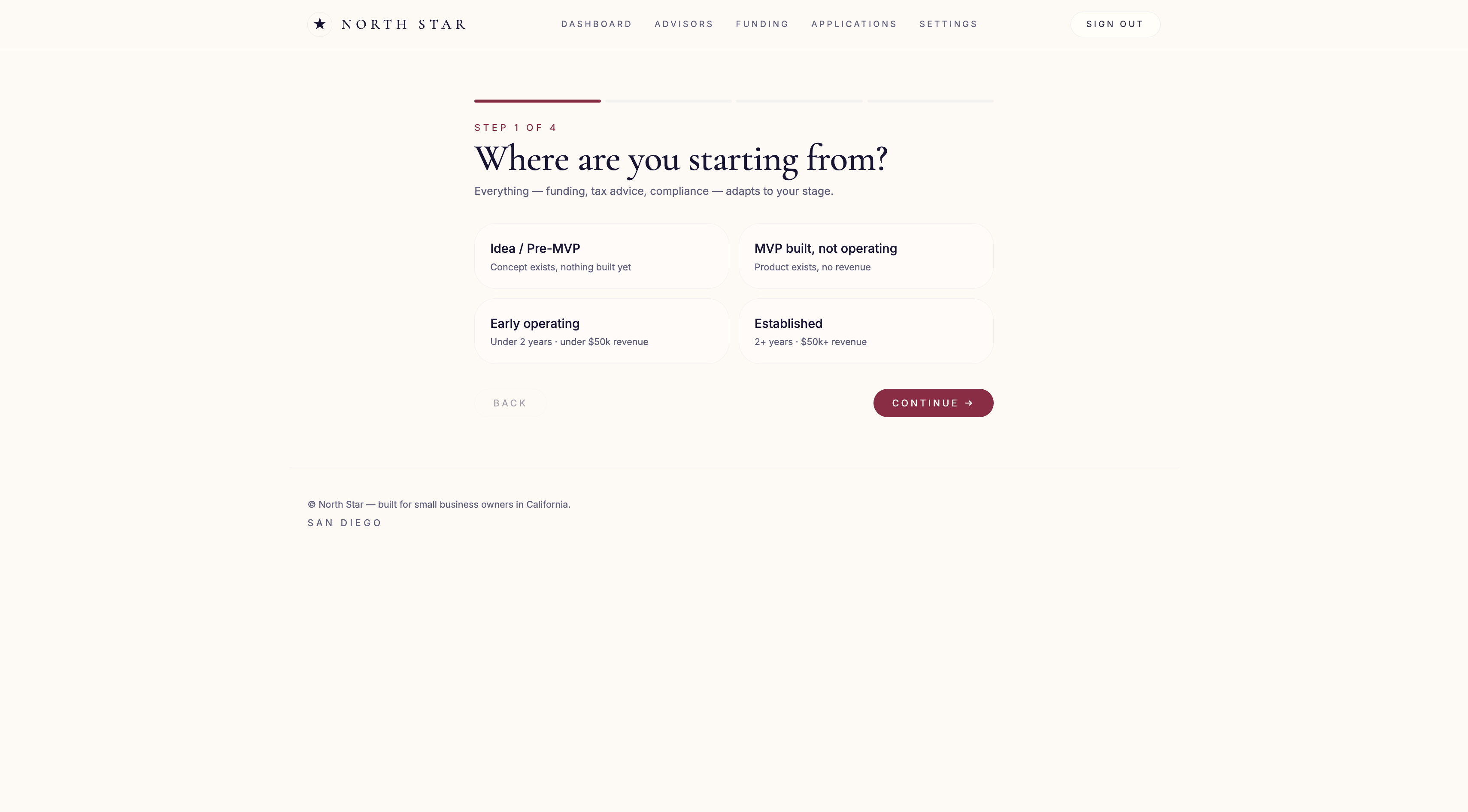
Where are you starting from
-
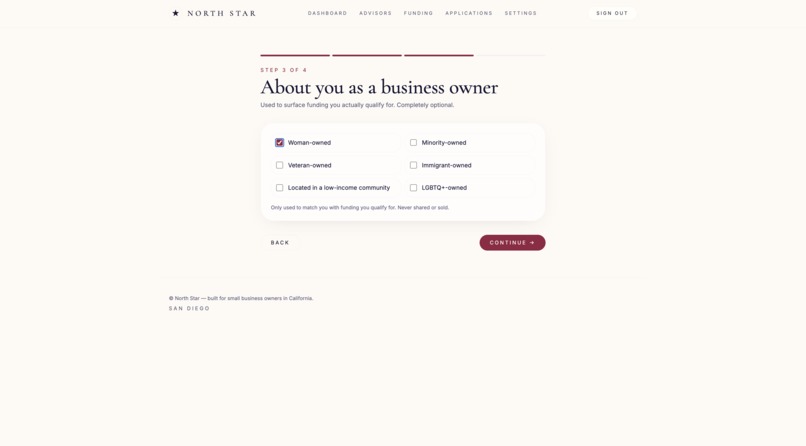
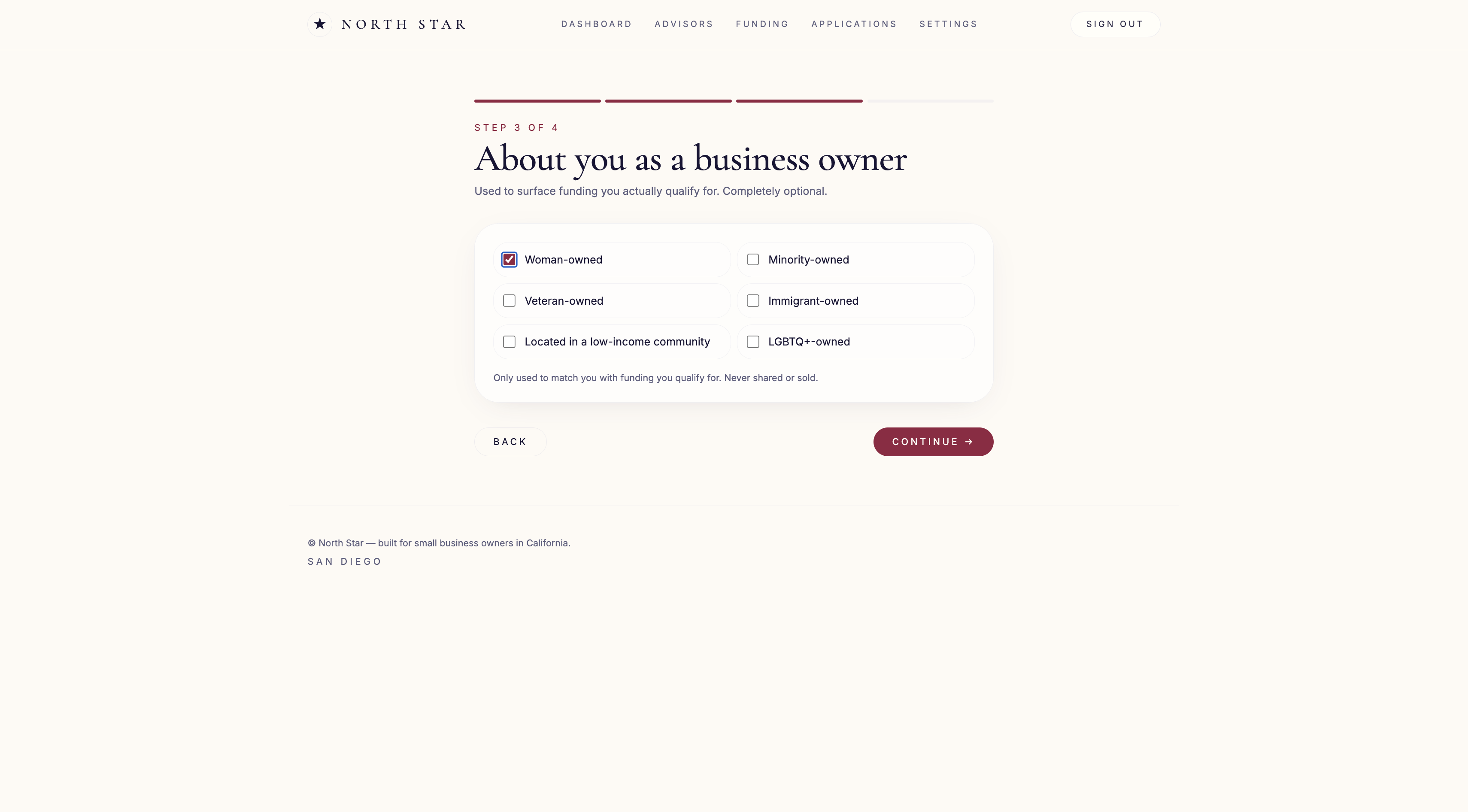
Further profile details
-
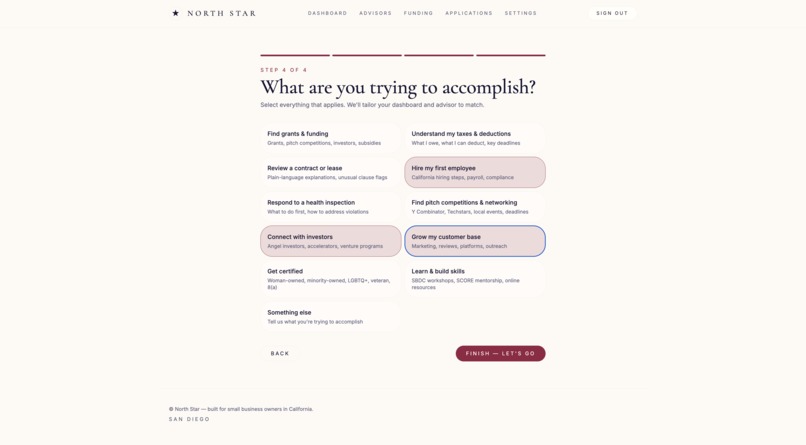
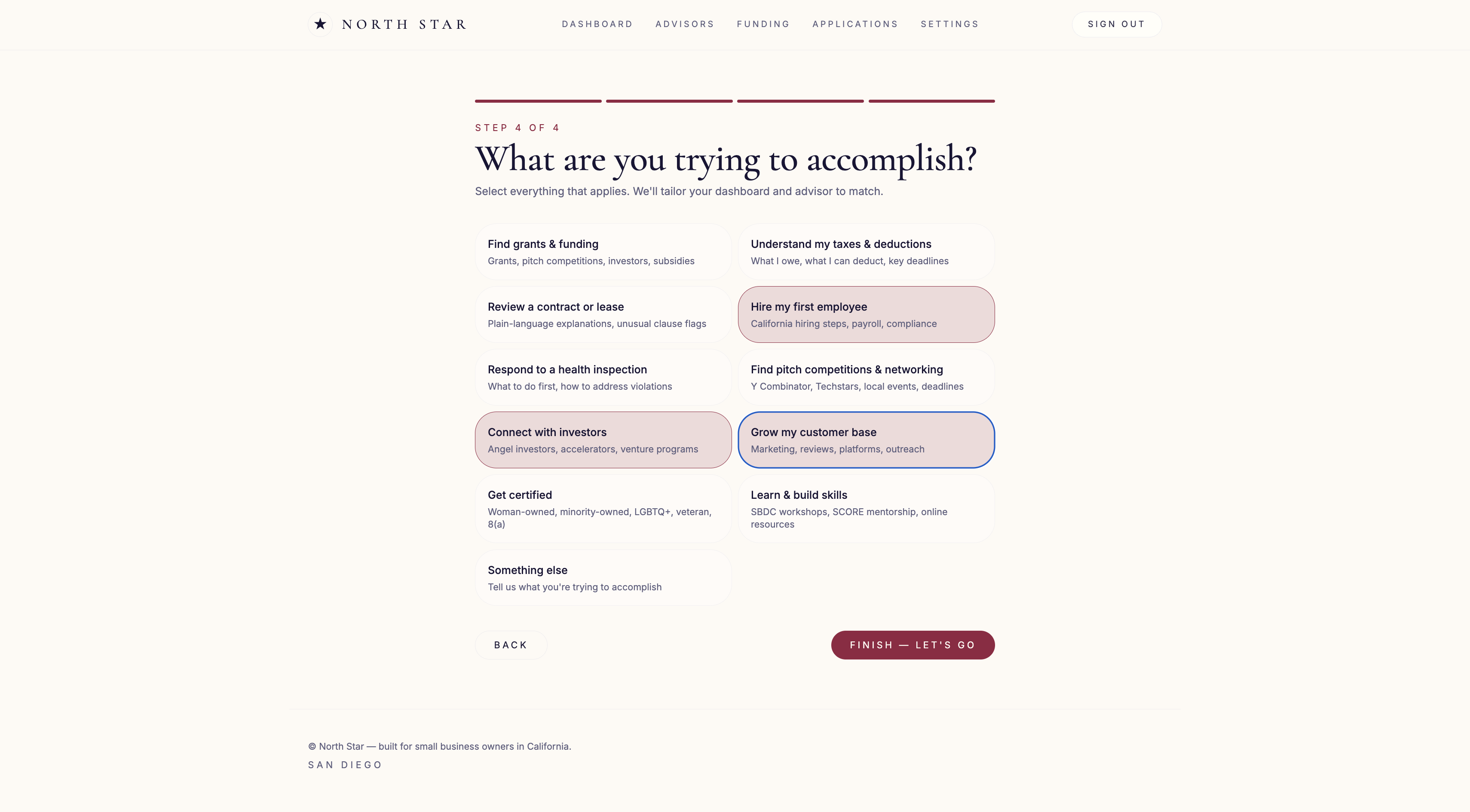
Business goals
-
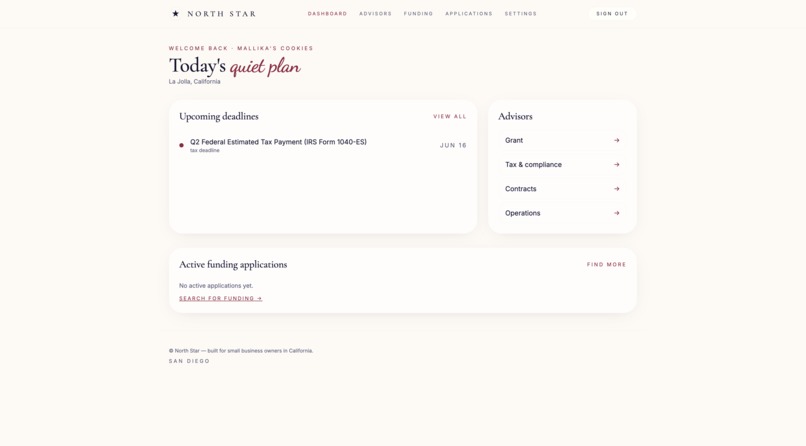
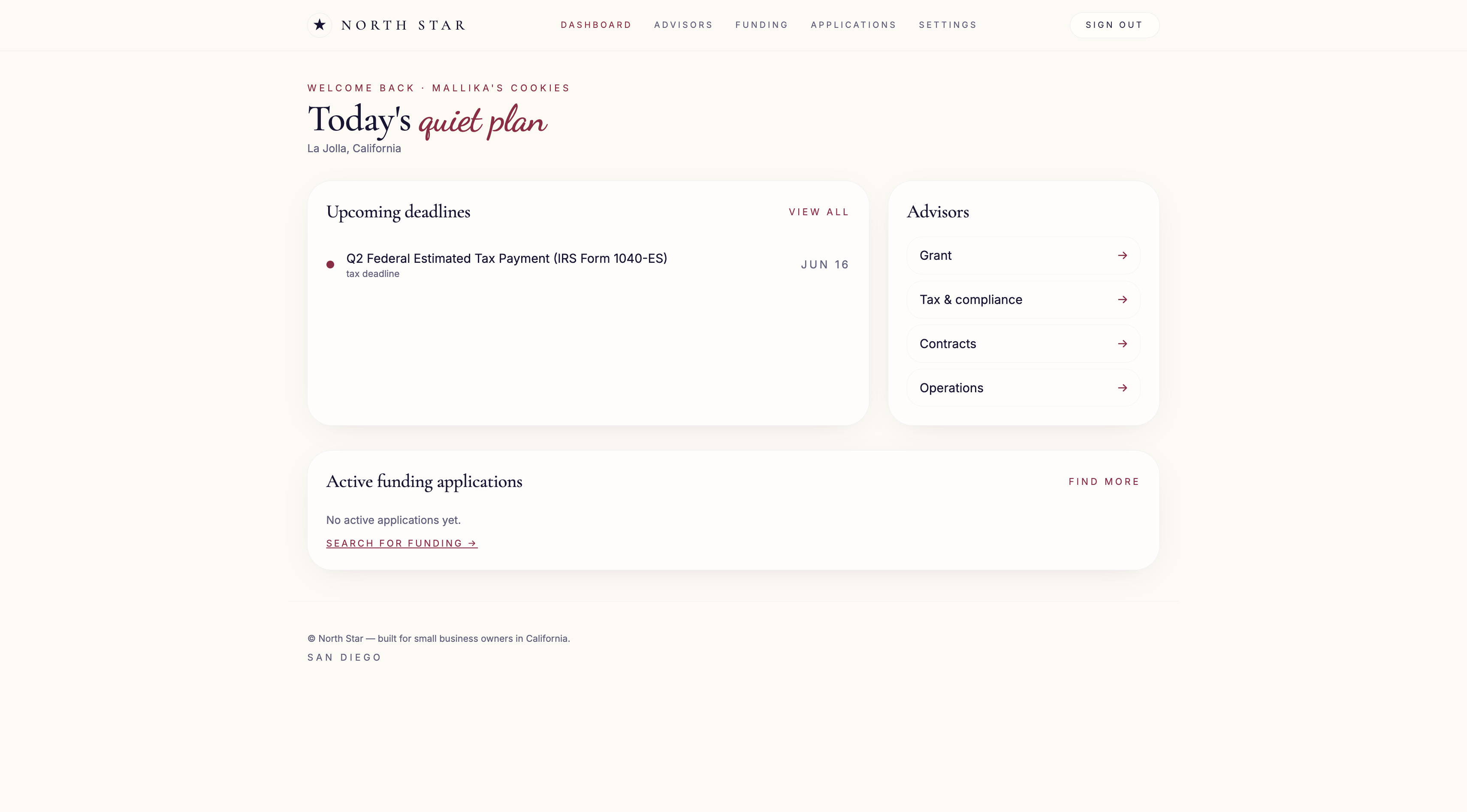
Dashboard
-
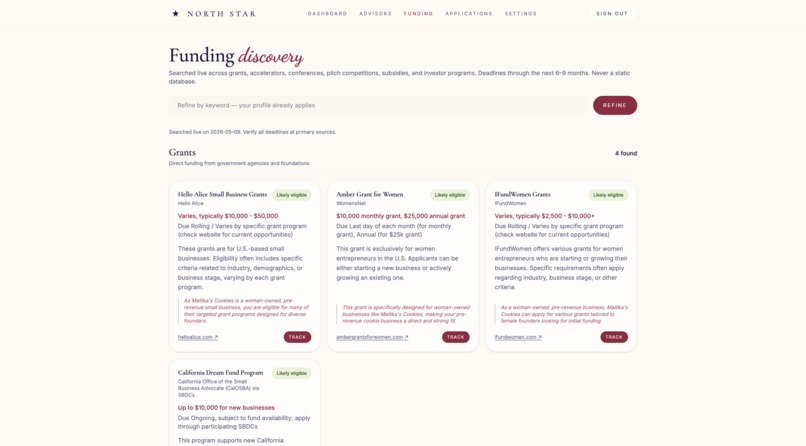
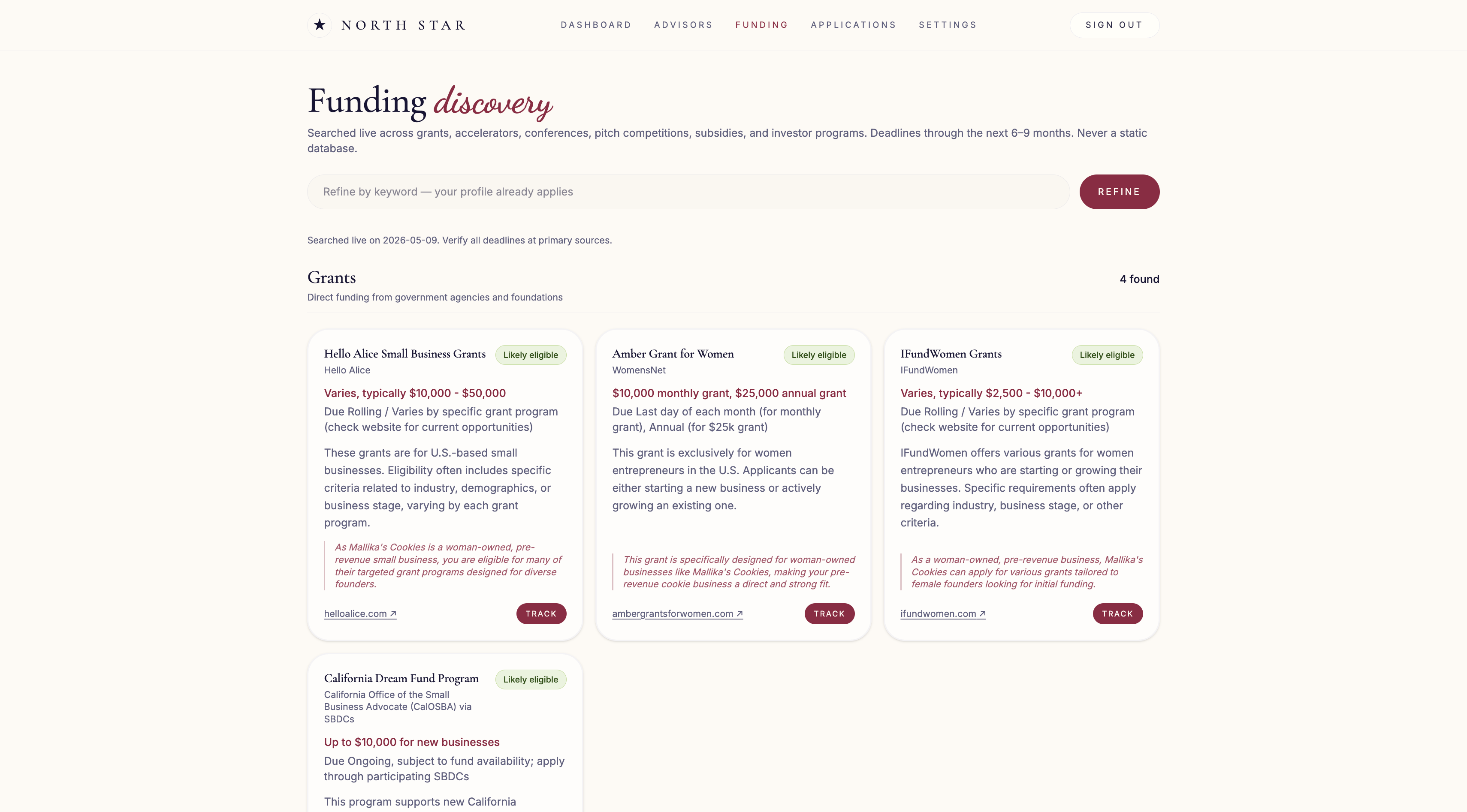
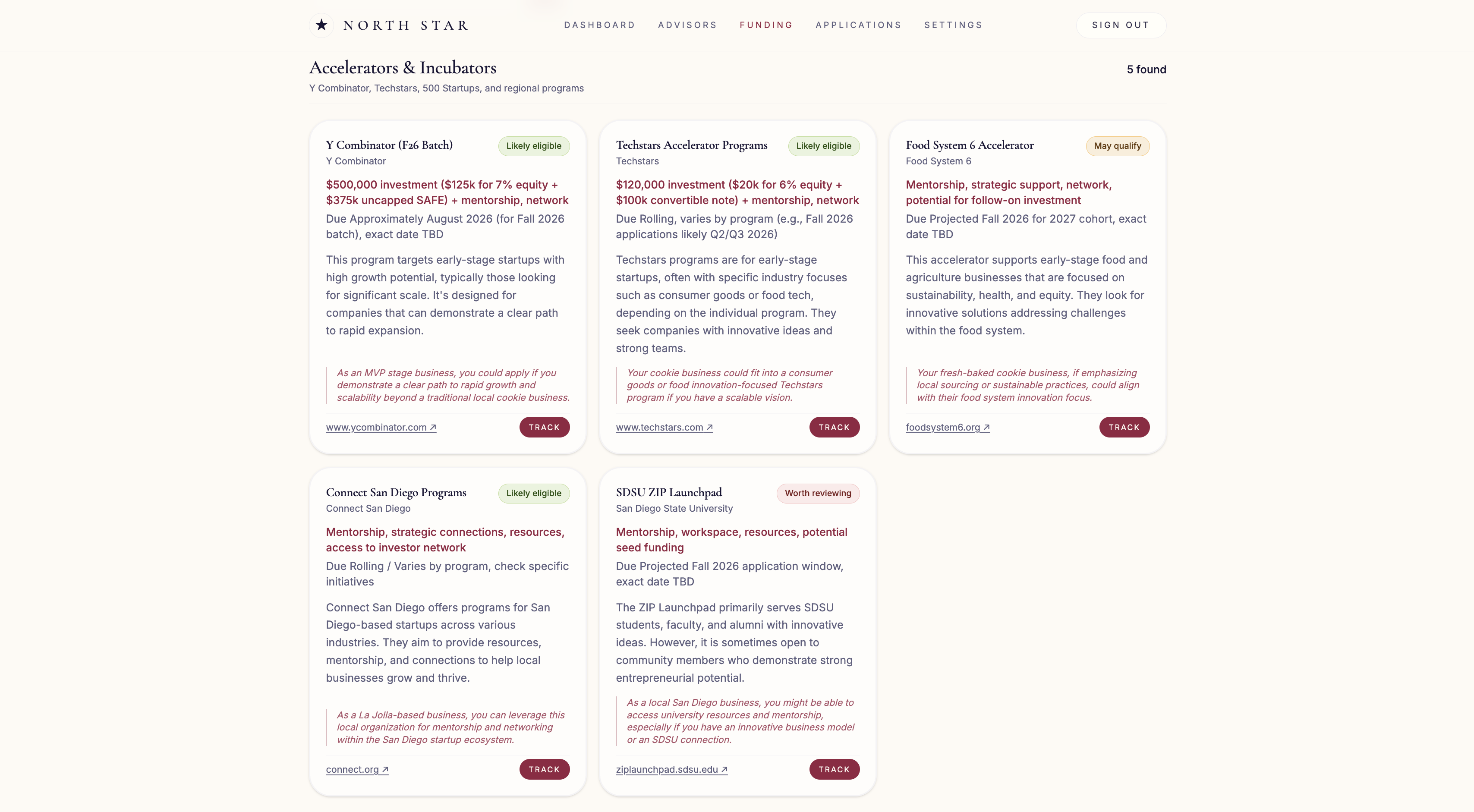
Funding page
-
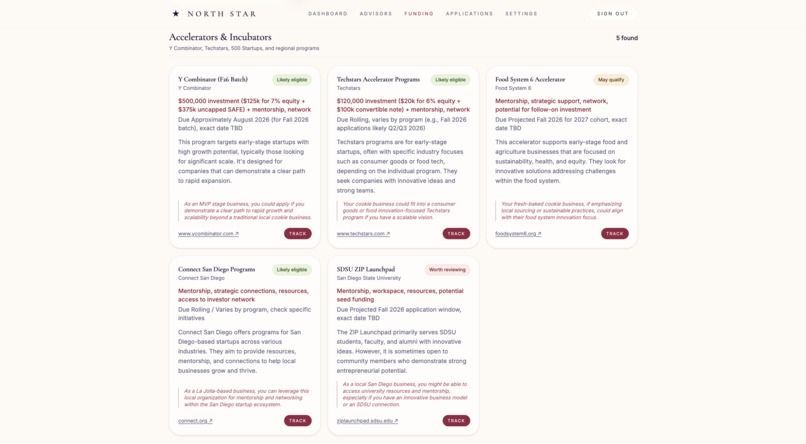
-
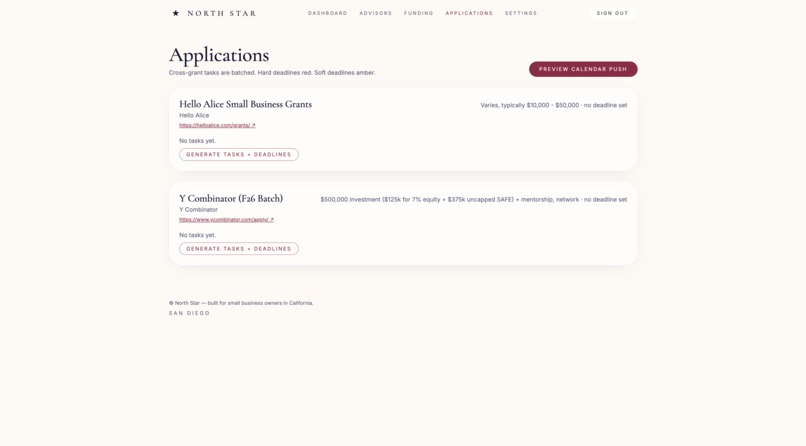
Applications
-
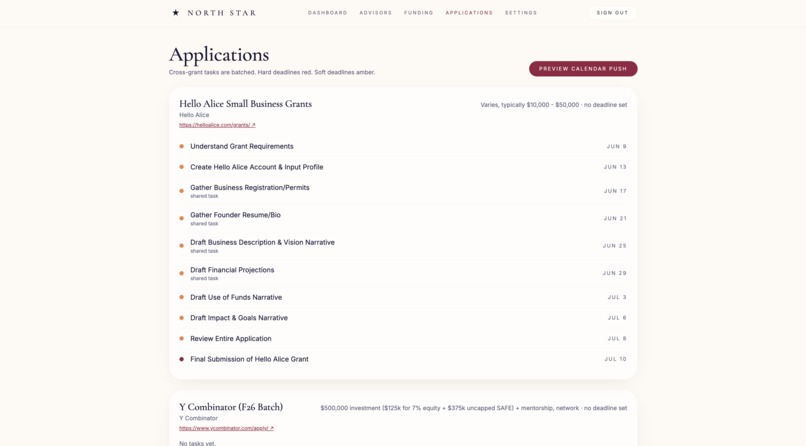
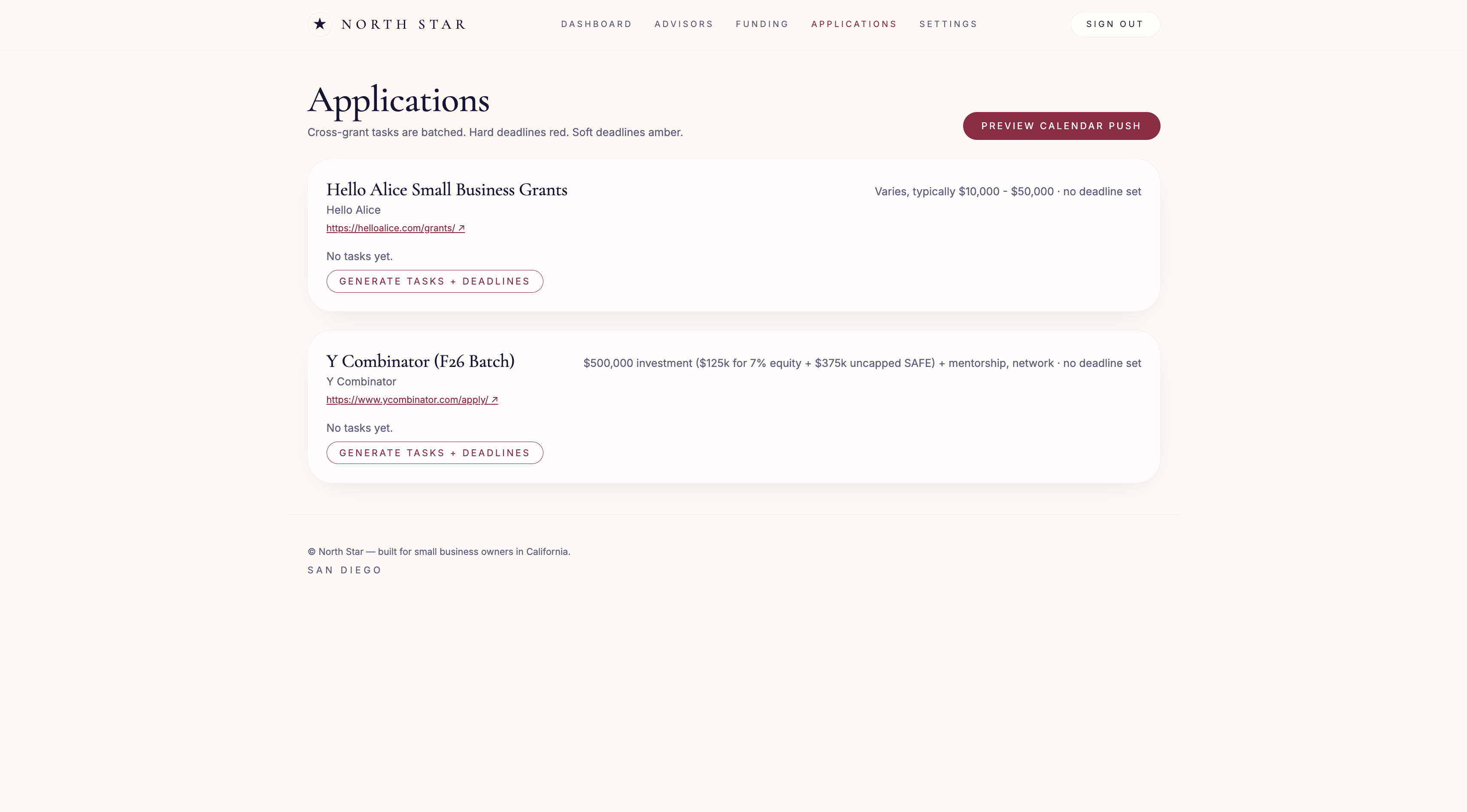
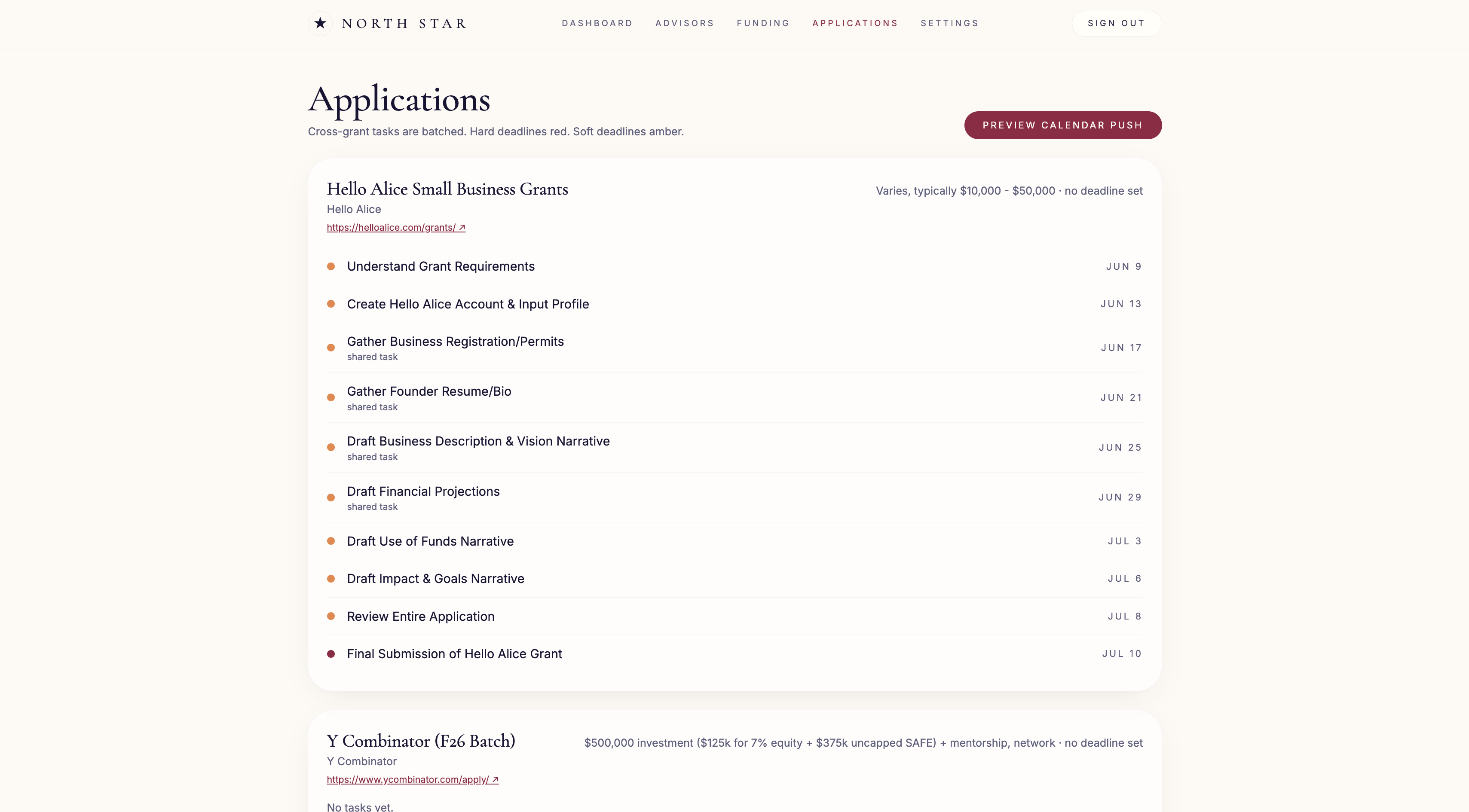
Generating tasks
-
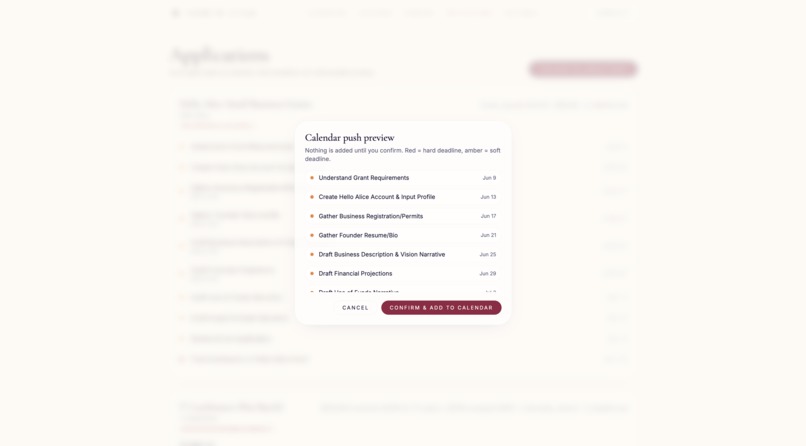
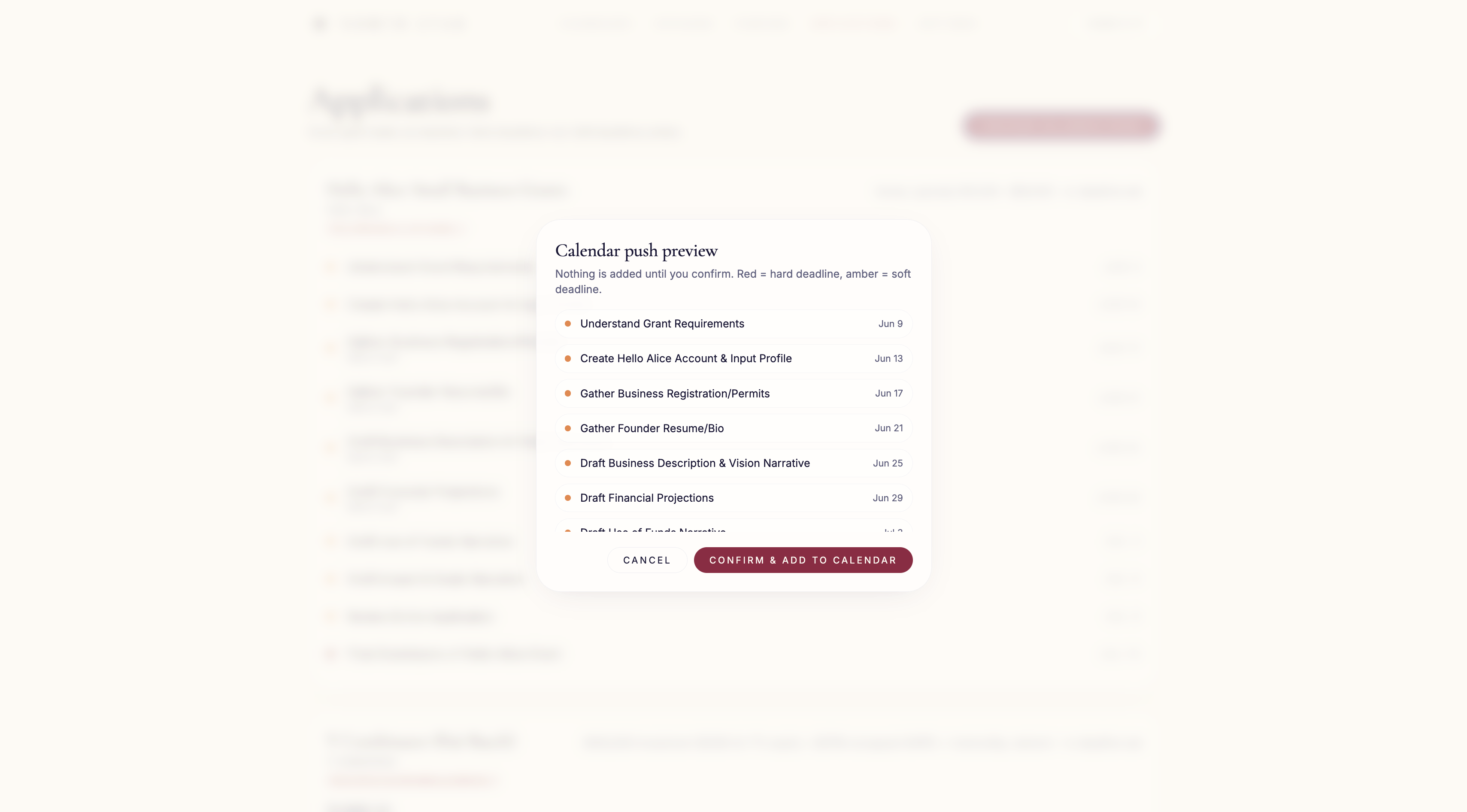
Confirming tasks
-
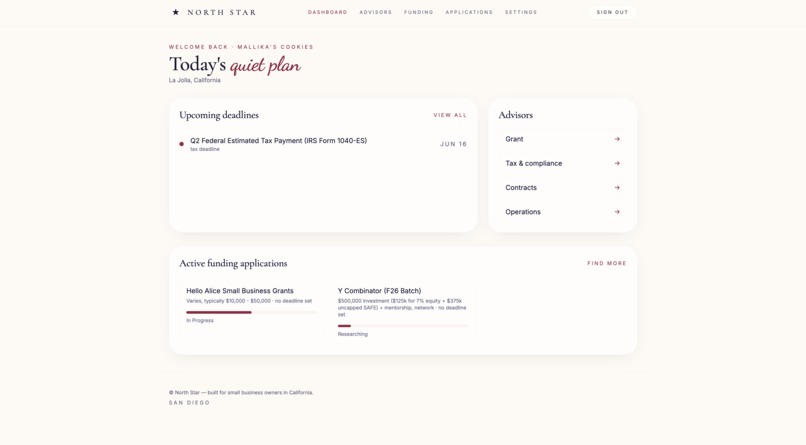
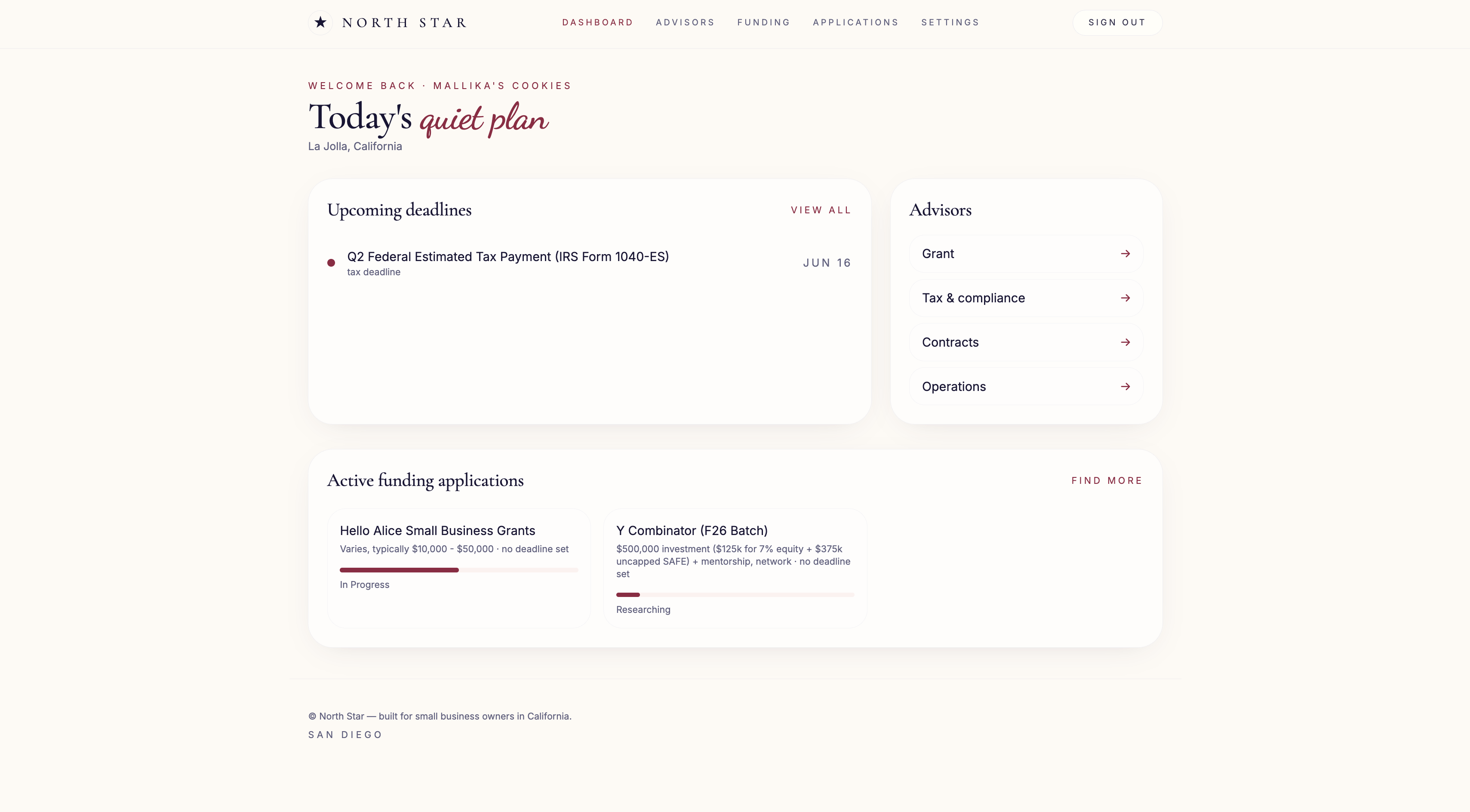
Final dashboard
Inspiration
Small business owners are doing everything alone. The grant applications, the tax filings, the lease negotiations, the health inspection responses, all without a lawyer, an accountant, or a grant writer on call. The people who need that infrastructure the most are the ones least likely to have it: immigrant-owned shops, early-stage founders without capital, local service businesses operating on tight margins, often in their second language. We wanted to build something that actually fills that gap, and empowers these communities.
What it does
North Star is an AI business advisor with four specialized areas: grant and funding discovery, tax and compliance guidance, contract reading, and day-to-day operational problem solving. The funding page runs a live Gemini-powered search across six categories: grants, accelerators, pitch competitions, subsidies, investor programs, and certifications, all personalized to the business profile on file including industry, location, revenue stage, and ownership identity. Results carry an eligibility signal matched against the actual profile, and every result links to the primary source. When a user tracks a funding opportunity, Gemini backward-plans from the submission deadline and builds a task checklist, batching shared tasks across multiple active applications. Confirmed tasks push directly to Google Calendar as morning time blocks. The four advisors are each scoped tightly to what they know. Every response cites the source directly: the IRS publication number, the FTB section, the CDTFA page. The contract advisor reads uploaded PDFs clause by clause and surfaces questions worth asking, without telling the user whether to sign. Users are prompted before every upload to remove Social Security numbers, bank account numbers, and IRS case IDs, not in a terms-of-service wall, but on the screen they actually read. They receive warnings to seek further professional advice when they encounter complex issues that might be tricky to navigate.
How we built it
The backend is FastAPI with a Supabase database using row-level security so each user only ever accesses their own data. Gemini 2.5 Flash handles the advisors, funding discovery, and task decomposition. Gemini 2.5 Pro handles contract analysis. Google Calendar API pushes confirmed deadline tasks. The frontend is React with TanStack Router, Tailwind CSS, and a custom design system built around the aesthetic of a quiet, professional tool rather than a startup product. The system prompts, source citation structure, the decision not to give directional contract advice, and all product and ethical decisions were made by the team. Claude assisted with backend and frontend code throughout the build.
Challenges we ran into
Getting Gemini to return clean structured JSON consistently across all six funding categories in a single call took significant prompt iteration. The Google Calendar OAuth flow had a subtle bug where the state parameter only encoded the user ID, so the callback always redirected to Settings instead of back to Applications, which meant the pending events stored in sessionStorage were never picked up. Debugging that took longer than it should have because the failure was silent on the frontend. We also had to make a hard call on Gemini grounding: the SDK version we were on did not support the google_search tool syntax the API expected, so we pivoted to using Gemini's built-in knowledge with a well-structured prompt instead, which ended up being faster and more consistent anyway.
Accomplishments that we're proud of
The citation system works the way we wanted it to: every advisor response links to the actual source, not a summary of the source. The privacy warnings are in the UI where they matter, not buried in legal boilerplate. The contract advisor genuinely does not tell users whether to sign, and that constraint held through the entire build even when it would have been easier to drop it. The calendar integration pushes timed morning events rather than all-day banners, which is a small thing that makes the whole feature feel like a real tool rather than a prototype.
What we learned
Scope constraints force better product decisions. Four advisors that each know their lane deeply is more useful than one advisor that knows everything shallowly. We also learned that the hardest part of building for underserved communities is resisting the temptation to over-engineer and losing sight of the actual user who just needs to know what they can deduct this quarter.
What's next for North Star
A structured bias audit: running the same questions through different business profiles and checking whether response quality shifts in ways that are not justified by the question. A user-facing data deletion flow, since right now there is no way for a user to remove their conversation history or business profile. And the verification work needed to responsibly add Spanish, Mandarin and Vietnamese support, starting with a structured review of tax and legal terminology against existing IRS and FTB bilingual publications so that when we expand we can actually stand behind the accuracy.
Built With
- fastapi
- google-calendar-api
- google-gemini-2.5-flash
- google-gemini-2.5-pro
- google-oauth-2.0
- postgresql
- pymupdf
- python
- react
- supabase
- tailwind-css
- tanstack-router
- typescript
- uvicorn

Log in or sign up for Devpost to join the conversation.