-
-
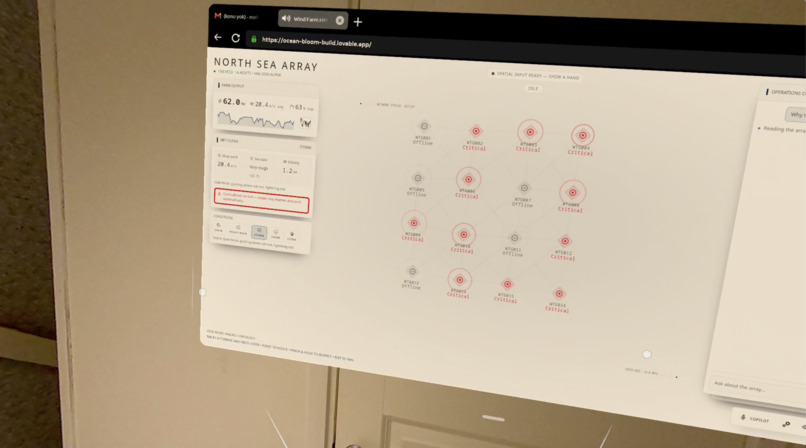
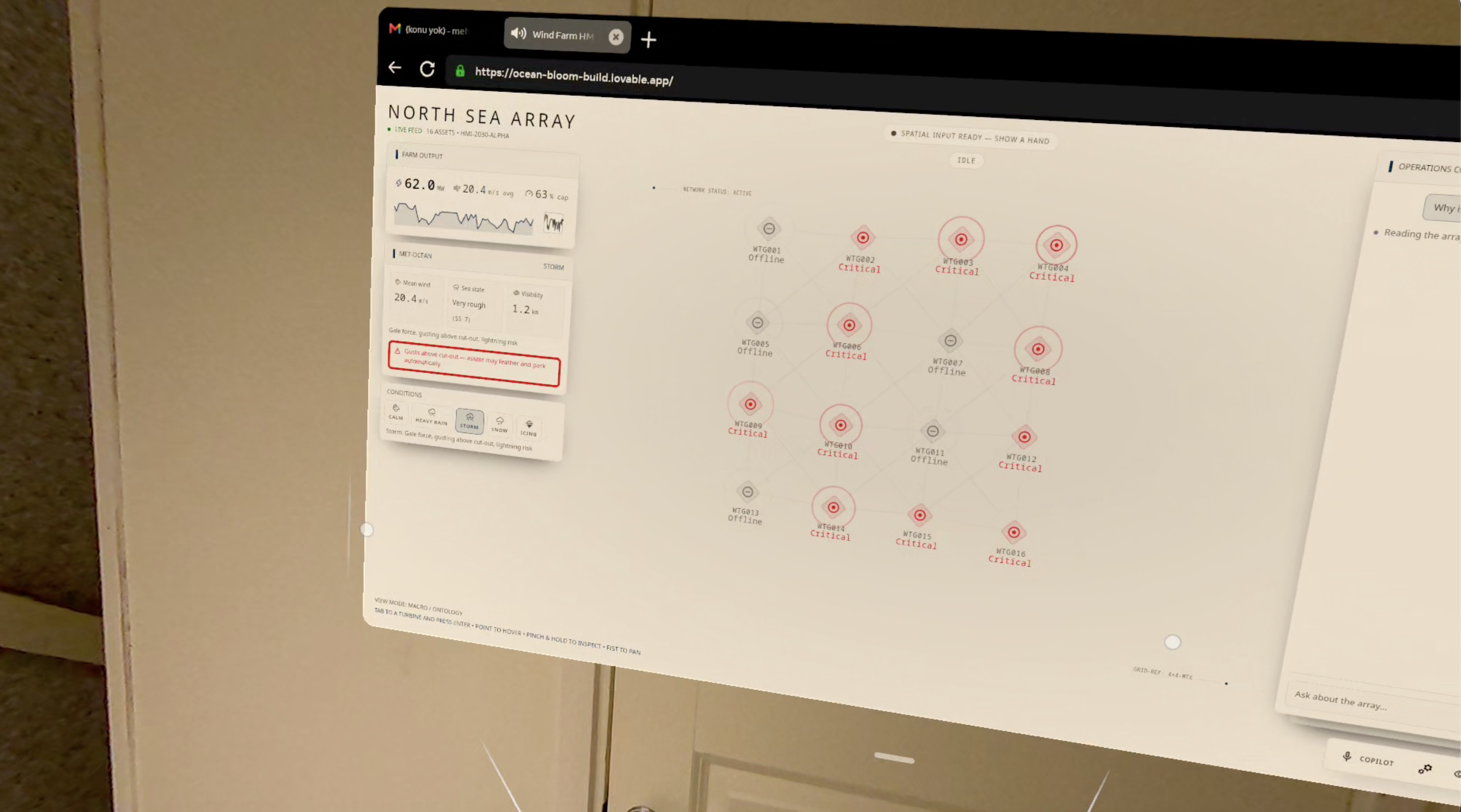
The OpenBridge Desktop Control Center -Ideal for Overview and Quick Check-in
-
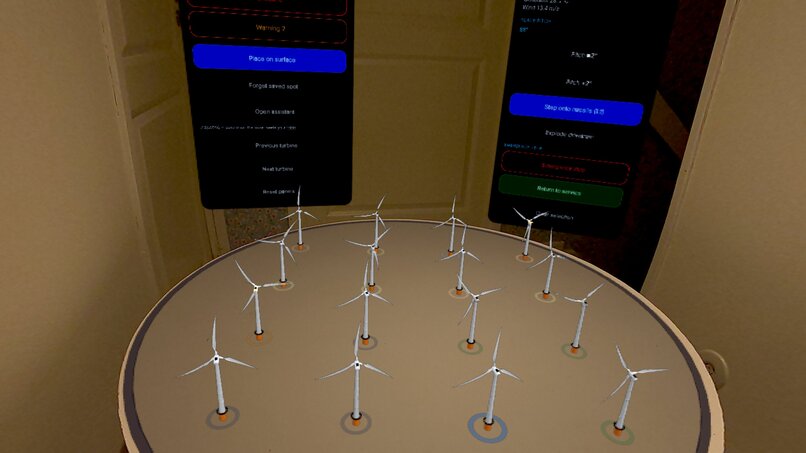
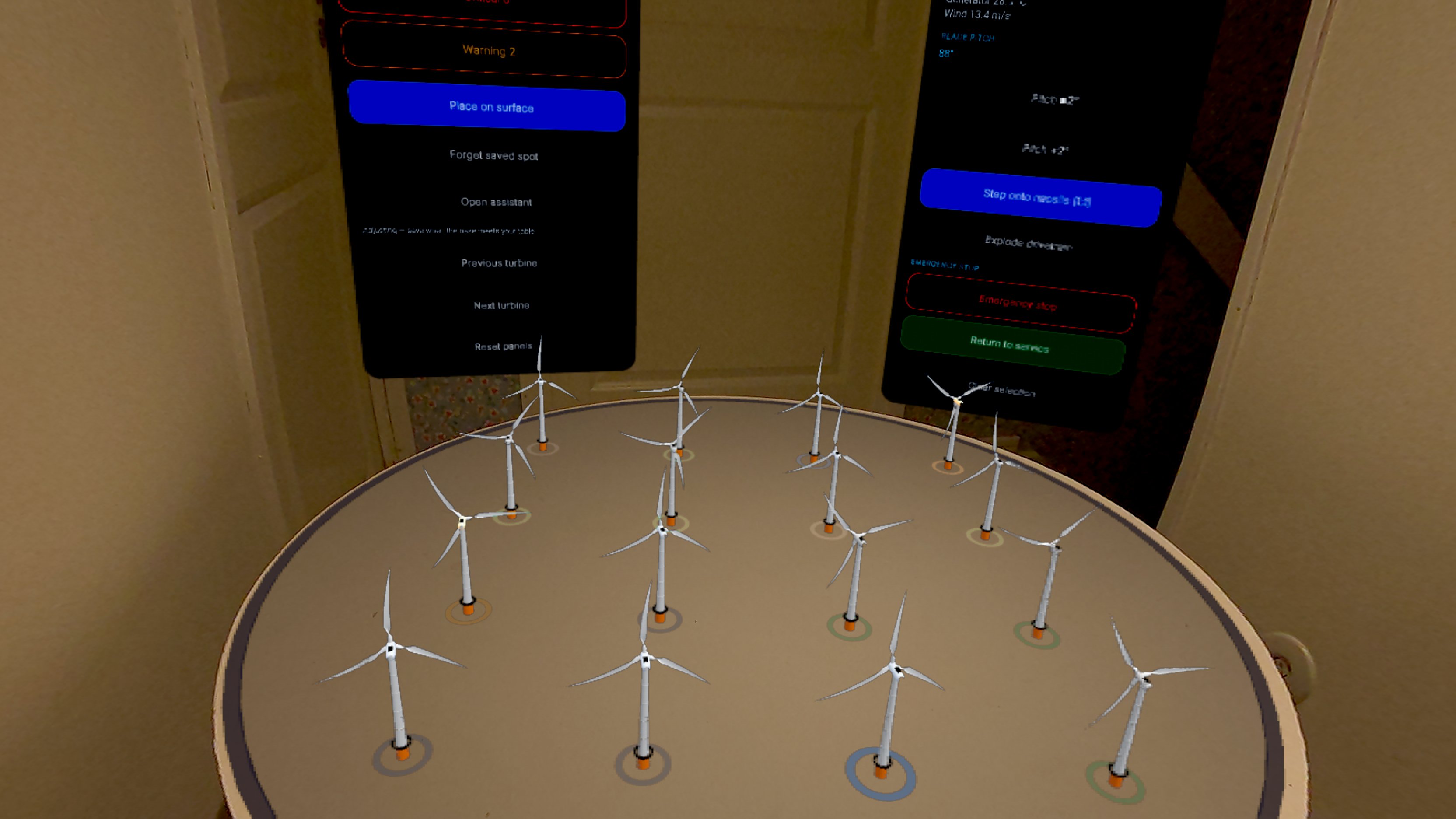
Tabletop Mixed-Reality / Embodied Mode - Ideal for meeting and cocreation
-
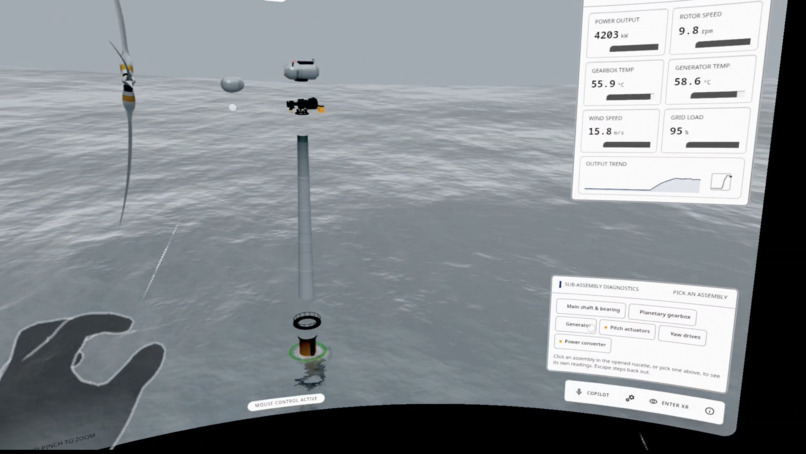
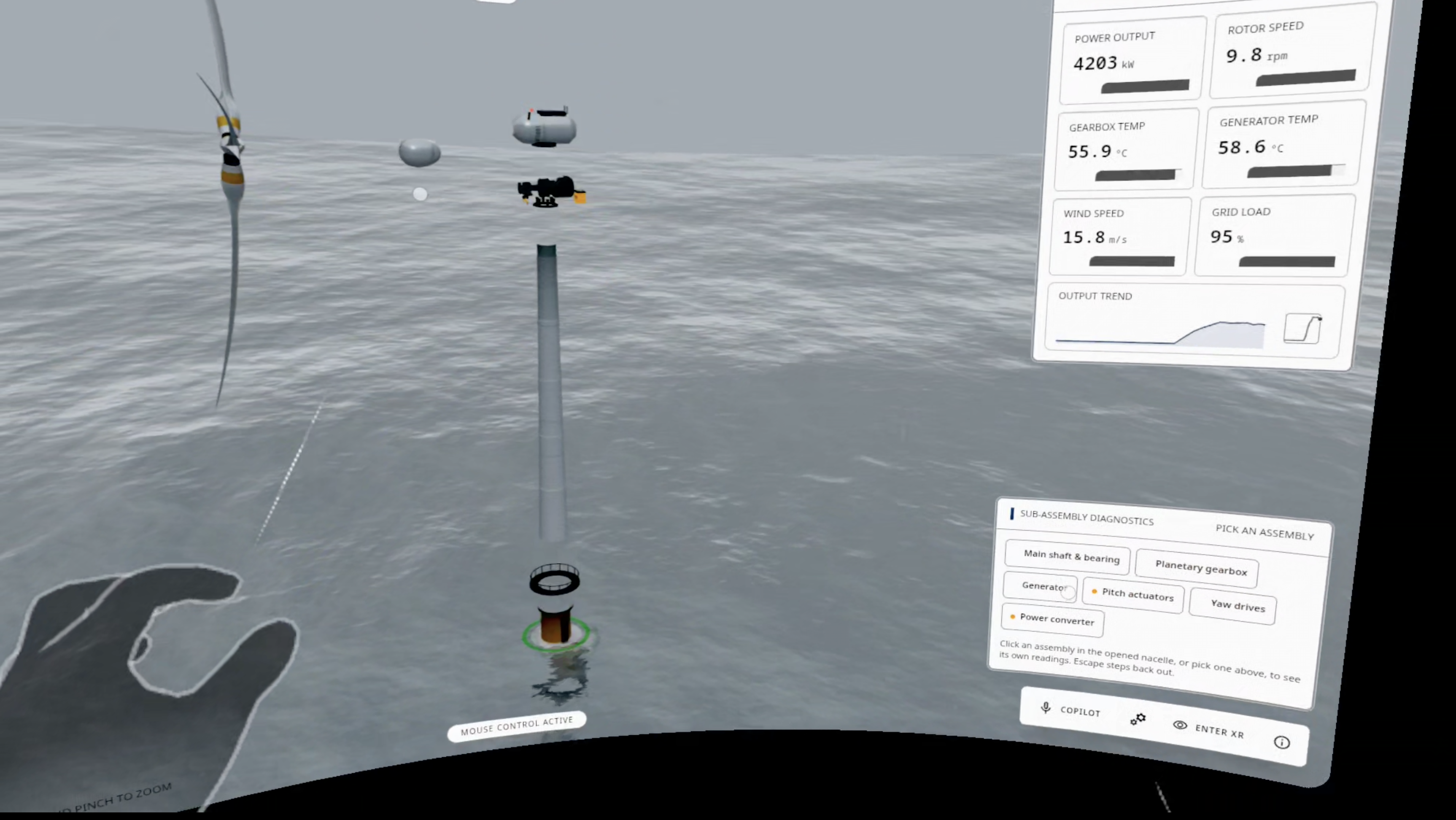
Exploded Drivetrain Inspection / Immersive Mode - Ideal for Focus delivery & Impact
-
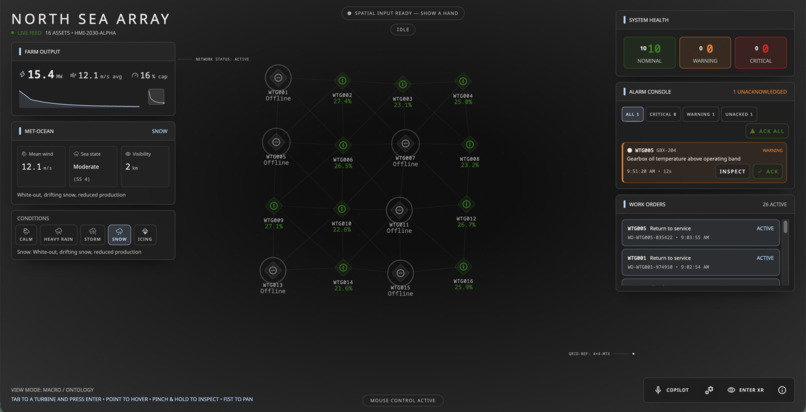
Desktop Mode - Control Center
-
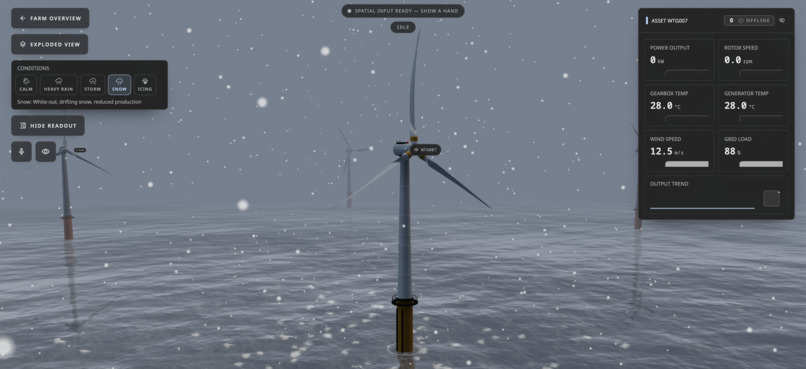
Desktop Mode - Immersive Mode
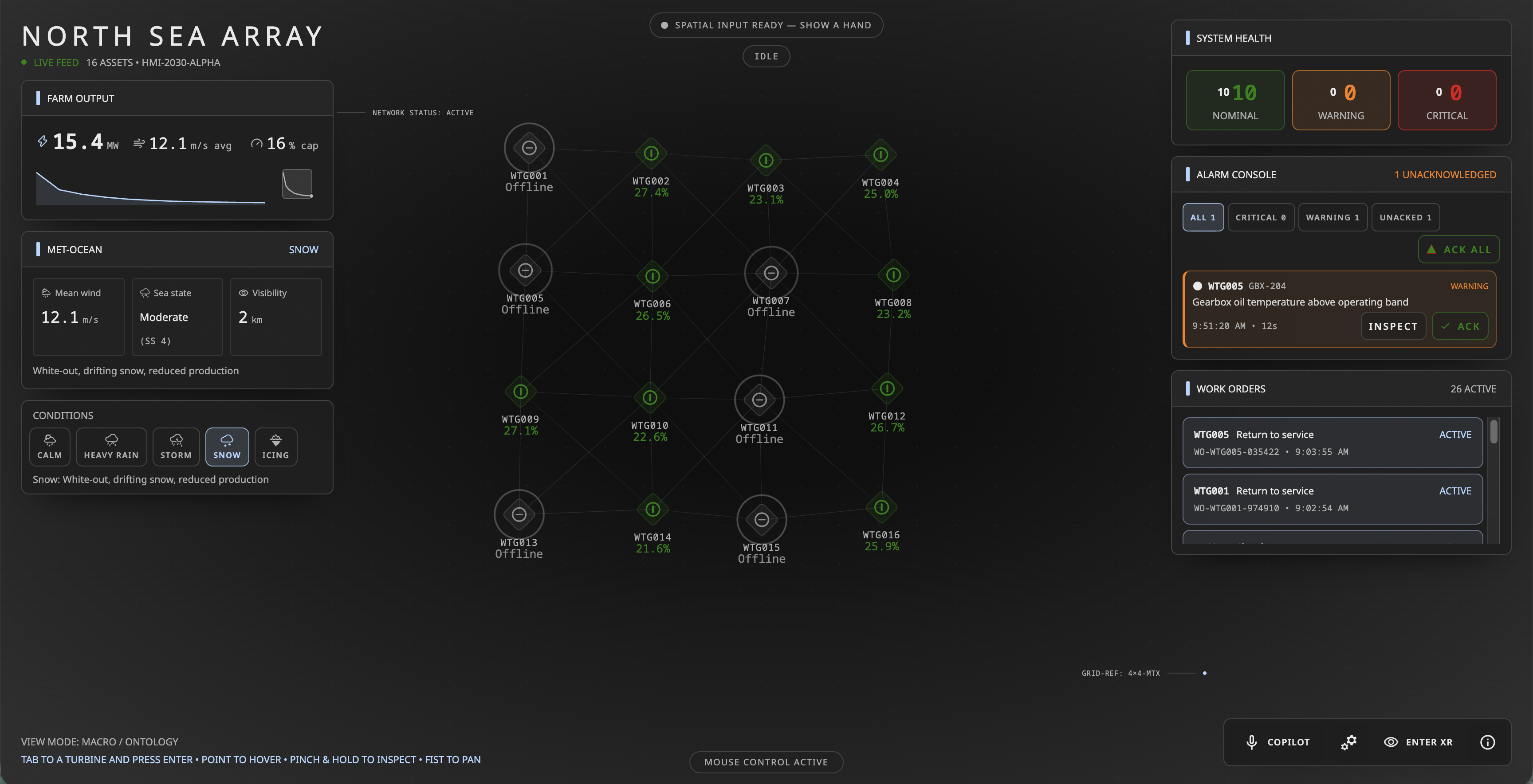
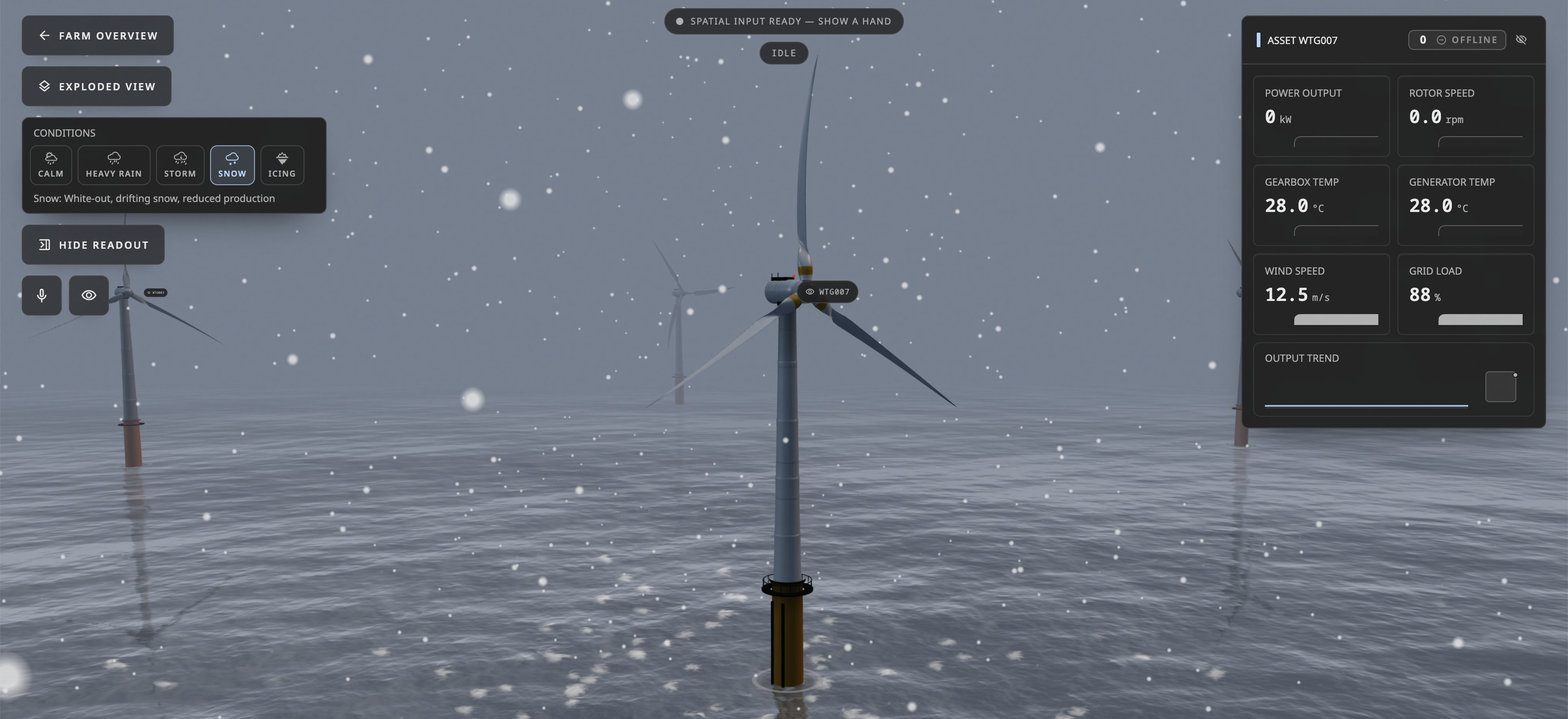
North Sea Array is a zero-install WebXR digital twin and spatial control room for offshore wind farms. Built on the open maritime OpenBridge standard (IEC 62288) and deployed to Meta Quest 3 / 3S and new VR headsets. It bridges the cognitive gap of traditional 2D SCADA by placing a live, interactive turbine floating wind farm directly onto an operator's real physical desk in passthrough, and letting them transition into a 1:1 scale inspection deck 140 meters above sea level.
Primary Domain: Industrial Mixed Reality / Offshore Renewable Energy HMI Target Users: Offshore Operations Watchkeepers, Fleet Maintenance Leads, Marine Ergonomics Directors Target Hardware: Meta Quest 3 / VR Headsets via Meta Quest Browser (Zero-install WebXR, 72/90 Hz) Core Technology Stack: TanStack Start, Three.js, XRBlocks, OpenBridge Design Tokens, Gemini Multimodal Telemetry Grounding, Lovable Cloud (PostgreSQL persistence), Meta AI, Meta Dev tools/solutions.
Tabletop Mixed Reality Cockpit:
Uses real-world plane detection and persistent spatial anchors to lock a miniature 16-turbine array to any physical surface. Floating, toed-in OpenBridge panels wrap around the user at a comfortable 0.56 m reach, displaying fleet generation (128 MW), grid frequency, weather feeds, and real-time IEC alarms.
Exploded Drivetrain Twin:
Operators can tap or pinch "Explode Drivetrain" right on their physical desk: the miniature turbine canopy lifts 12 cm, exposing the main bearing, high-speed gearbox, permanent-magnet generator, and power converter.
Multimodal Input Without Fatigue:
Direct touch: Physical fingertip poke into buttons with 35 mm depth tolerance and audible click feedback. Distance ray: Hand or controller laser ray for distant targets. Gaze + Pinch: Gaze-cone targeting avoids "gorilla arm" during long shifts; a relaxed hand pinch commits the action.
Grounded AI Copilot:
An operator points at an overheating turbine and asks: "Why is this one hot?" The AI responds using strictly the live telemetry data of that exact asset (wind shear, bearing temperature, oil viscosity), recommending specific mitigations (e.g., "Feather blades +4°").
1:1 Scale Immersion:
With one gesture, operators leave the tabletop view and step onto the open roof of a turbine nacelle 140 meters above turbulent waves, inspecting full-scale drivetrain machinery with zero physical risk.
Mission, Vision & Core Values Mission (What we solve today) To eradicate spatial blindness in high-stakes maritime and clean energy operations by replacing disconnected 2D alarm tables with an ergonomic, physical-scale mixed reality control station that any engineer can launch in 3 seconds through a web browser.
Vision (Where this leads tomorrow) The future of industrial control rooms is not a wall of 50 monitors in a dark bunker; it is an untethered, spatial workstation where operators naturally touch, scale, step inside, and collaborate around real-time physical systems regardless of whether the physical asset is 5 miles or 5,000 miles away.
Core Values
How It Manifests in the Project Radical Grounding The AI copilot has zero hallucination leeway. It never invents diagnostics; it reasons strictly over the active JSON telemetry snapshot of the selected turbine.
Ergonomic Respect Built according to Meta Horizon and IMO ergonomics: curved 0.56 m panel reach, high-contrast maritime fonts (Noto Sans), no smooth locomotion (teleport + snap turn only) to eliminate simulator sickness.
Open Standards
Rejects proprietary, walled-garden 3D engines. Uses open WebXR and the official open-source maritime OpenBridge design standard (IEC 62288 compliant).
Human-in-the-Loop Safety
AI never autonomously executes destructive operations. Critical safety actions (blade feathering, Emergency Stop) require explicit, guarded two-stage human confirmation.
We committed to a dual-reality, open-web architecture:
At the desk: Strict adherence to the maritime-standard OpenBridge HMI, leveraging four operational light palettes (Day, Dusk, Night, Bright Sunlight) to eliminate visual fatigue and guarantee glanceable safety compliance.
In spatial XR: An untethered, table-anchored passthrough holographic twin running purely on web standards (WebXR / Three.js), treating physical conference tables as plinths and bare hands as primary diagnostic tools.
Hypotheses & Trade-offs:
We evaluated native game engines (Unity / Unreal via OpenXR) versus WebXR in a standard Chromium browser. While native engines offer raw compute advantages, WebXR won definitively because it eliminates enterprise device management barriers: operators open a secure URL on a desktop monitor, and the exact same application launches instantly into the Meta Quest 3S browser with zero installations or app-store gatekeeping.
Our initial XR iteration featured floating cybernetic HUD rings surrounding the user's head. In user testing, this caused severe spatial disorientation, blocked the user's peripheral passthrough view of colleagues in the room, and induced vestibular strain. We stripped it completely and adopted a grounded tabletop plinth with an ergonomic, chest-level curved panel arc.
Concept Delivery
Deliverable 1: The OpenBridge Desktop Control Center: High-density, high-contrast operational console featuring real-time wave/wind physics, turbine status matrices, and IEC 62288 audible alarm management.
Deliverable 2: Tabletop Mixed-Reality Plinth: Surface-aware spatial twin that snaps to physical tables in mixed reality, complete with an interactive plinth rim for rotating and scaling the entire array.
Deliverable 3: Bimanual Exploded Drivetrain Inspection: Operators physically reach out, pick up any turbine, and pull their hands apart to explode the nacelle into low-speed shafts, epicyclic planetary stages, generator rotors, and yaw rings with live thermal telemetry overlays.
Built With
- lovable
- meta
- xrblocks


