-
-
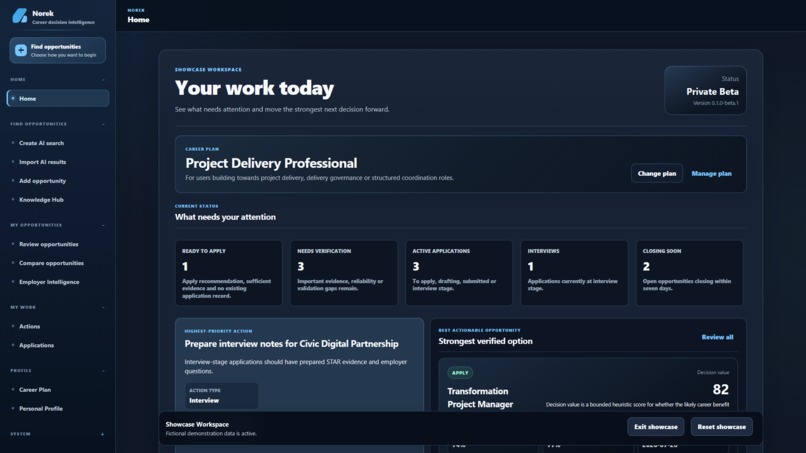
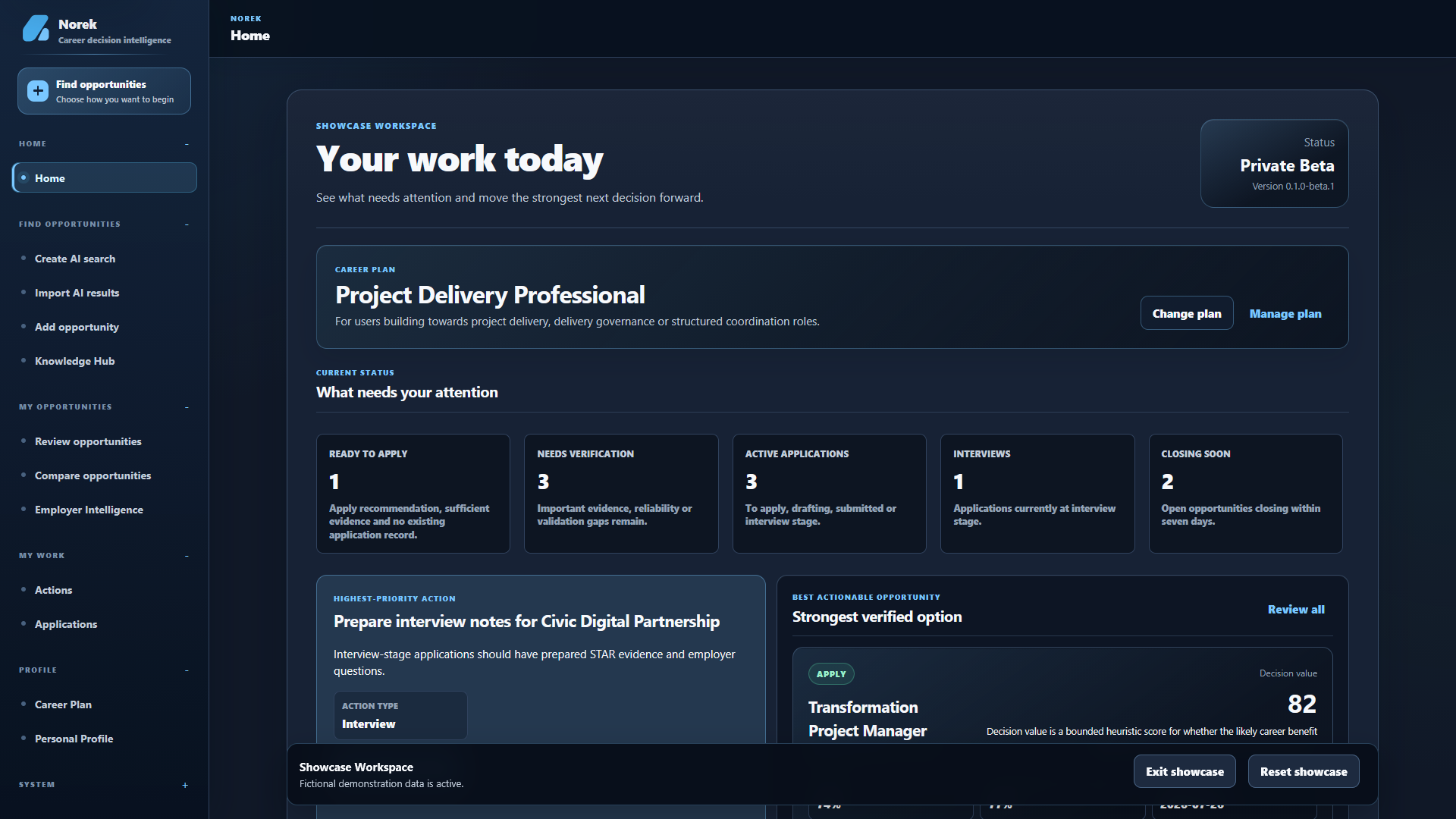
Norek Home
-
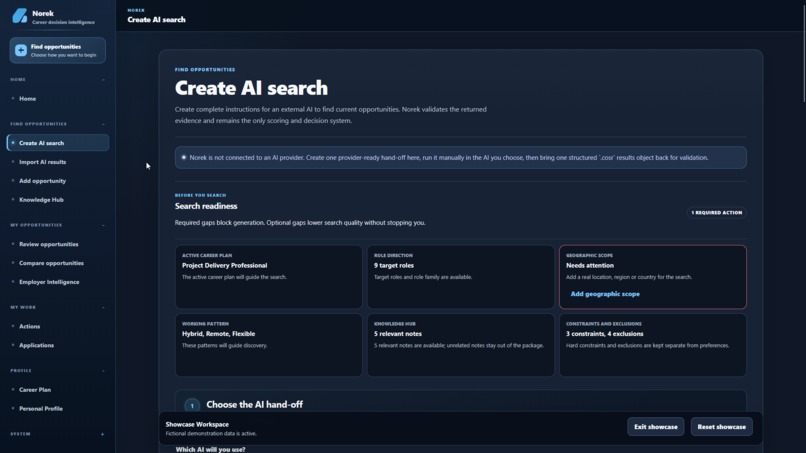
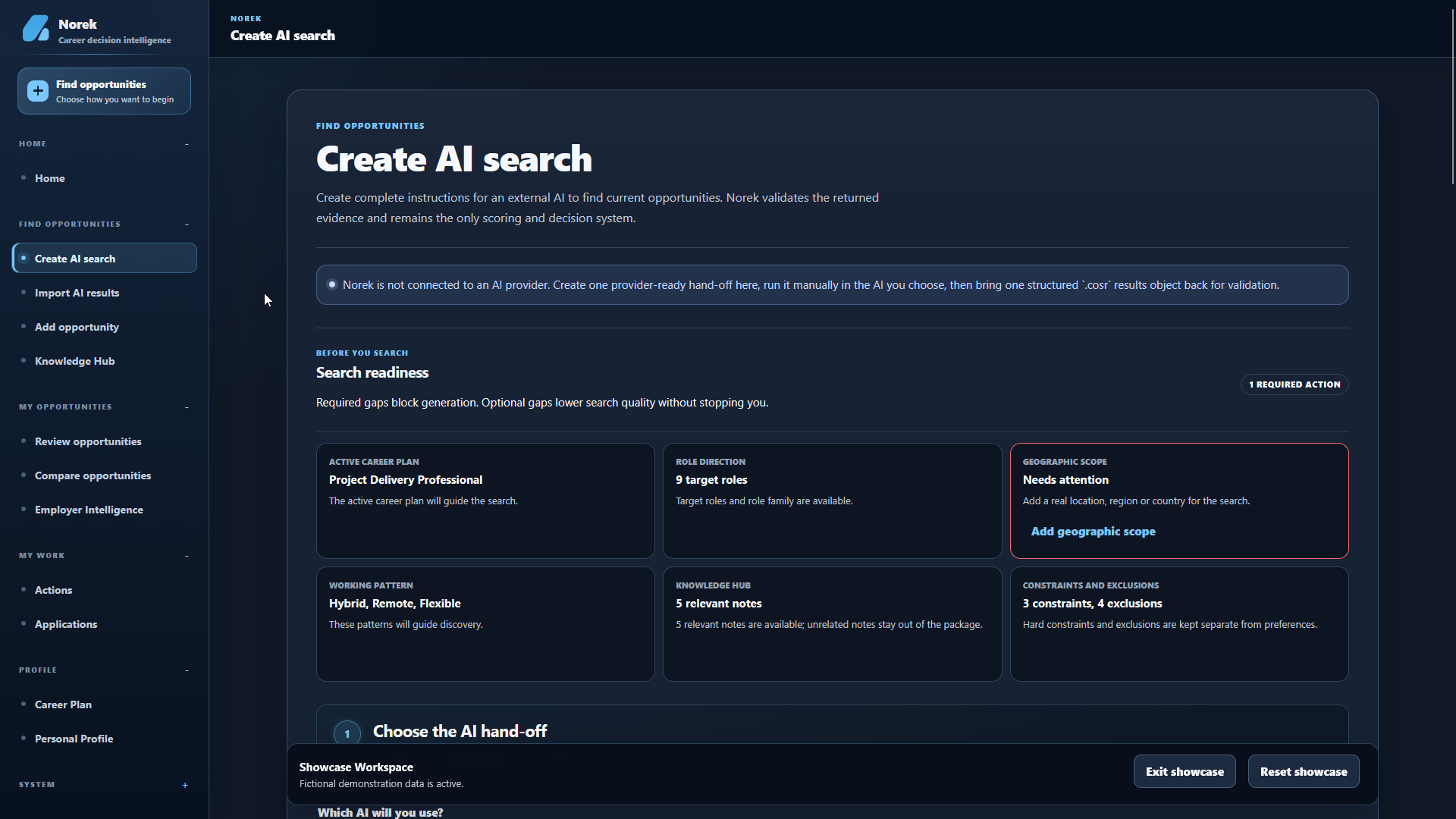
Create An AI Search
-
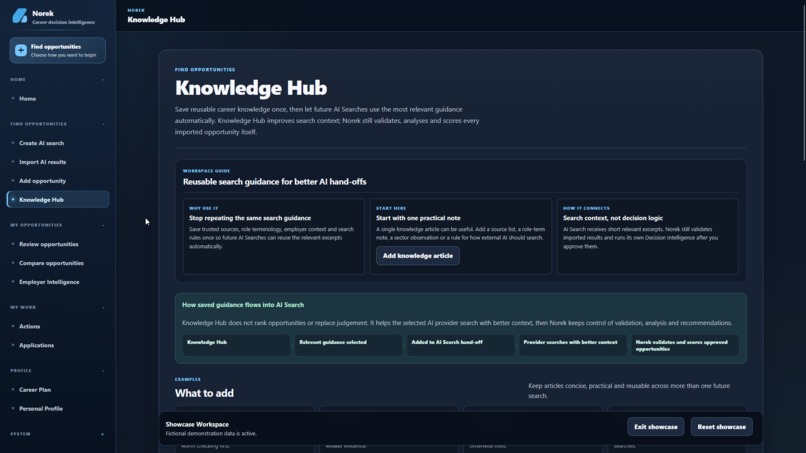
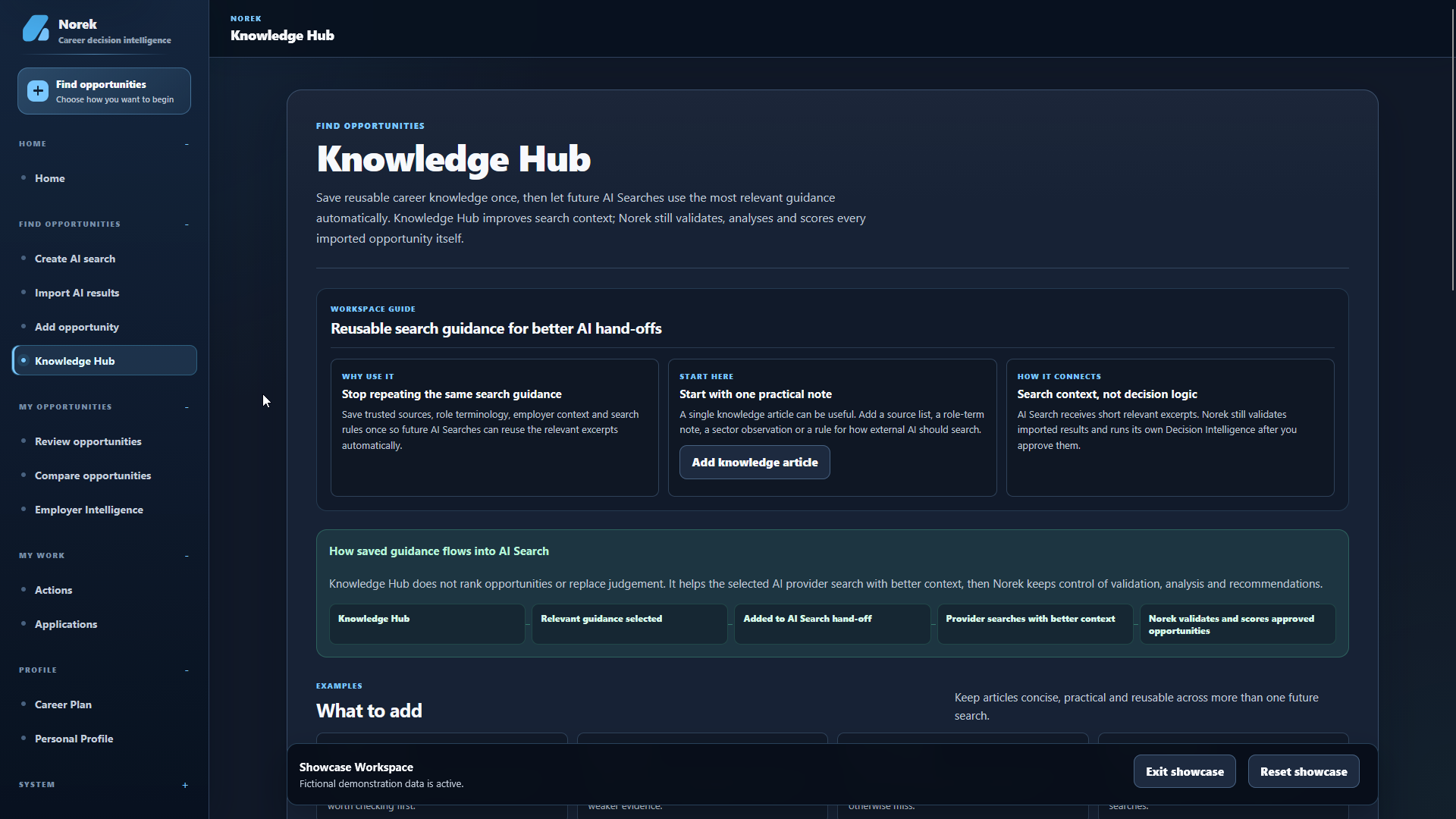
Knowledge Hub
-
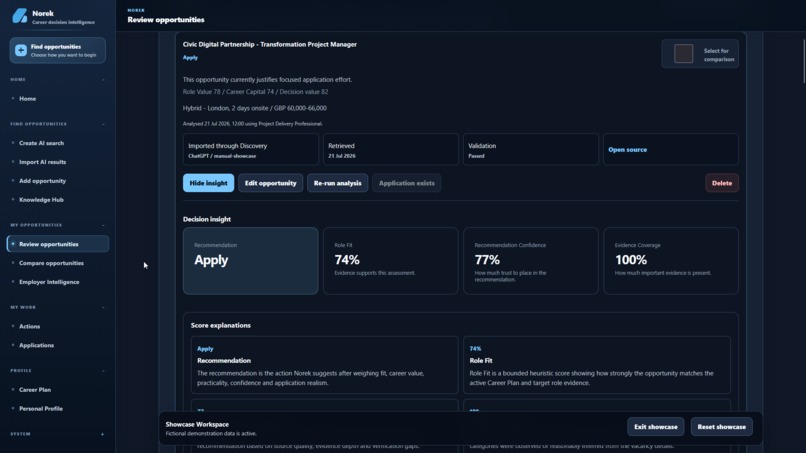
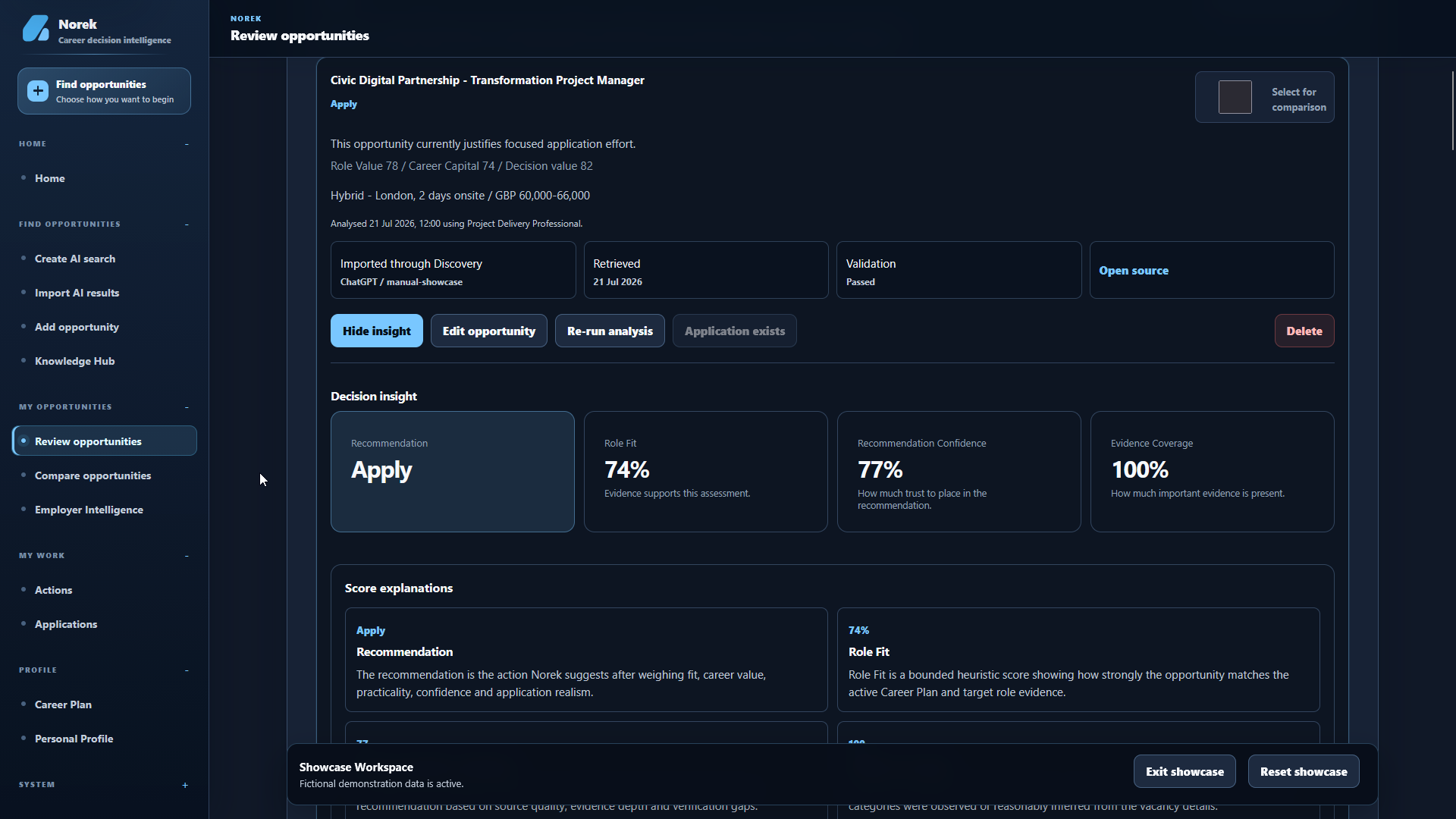
Review opportunities
-
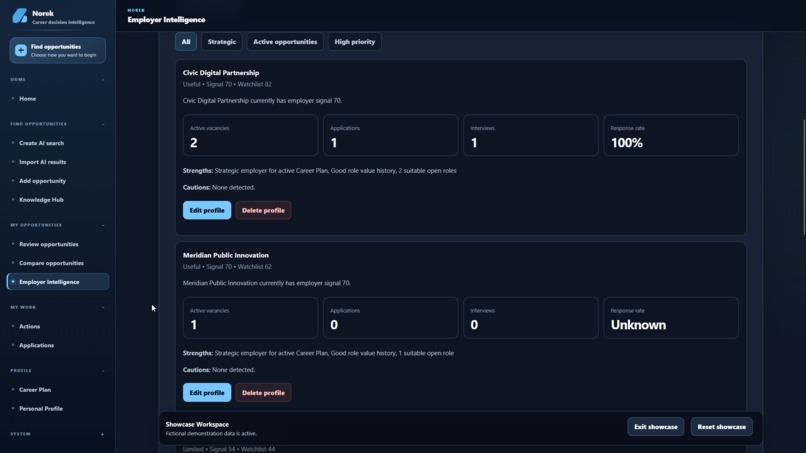
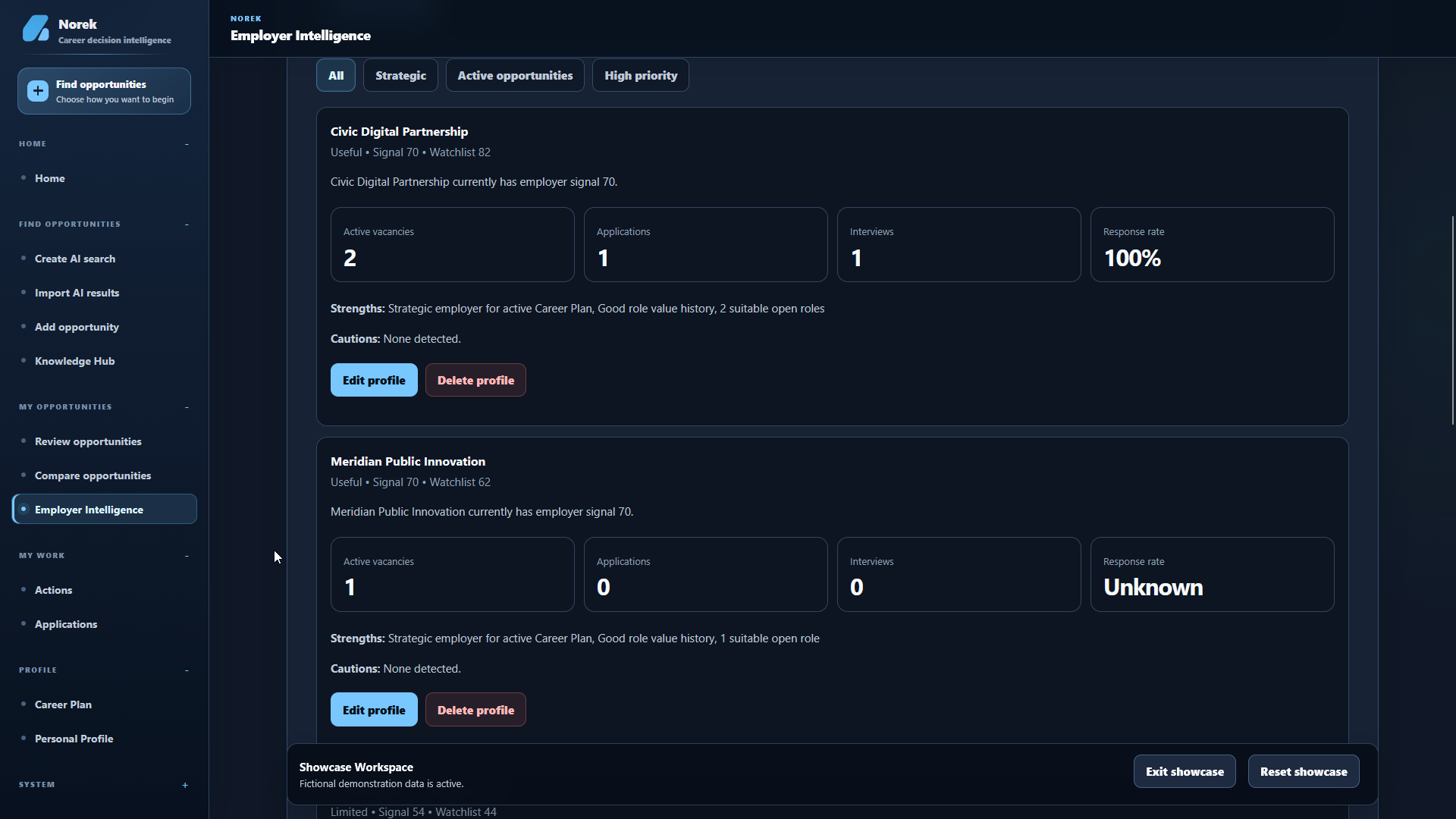
Employer Intelligence
-
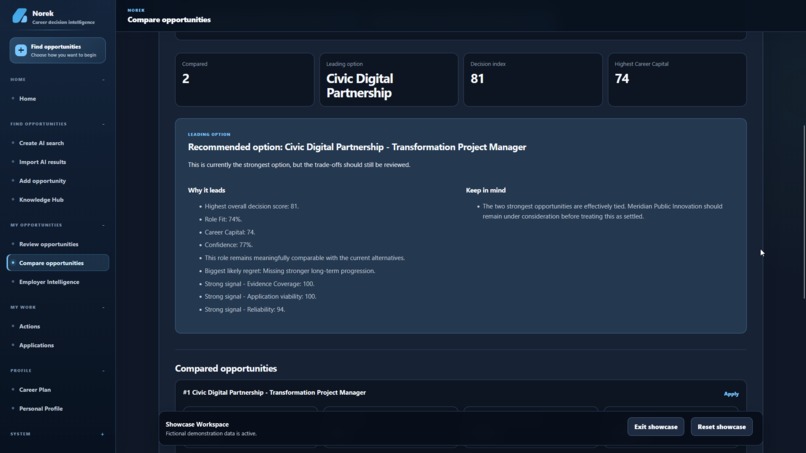
Compare opportunities
-
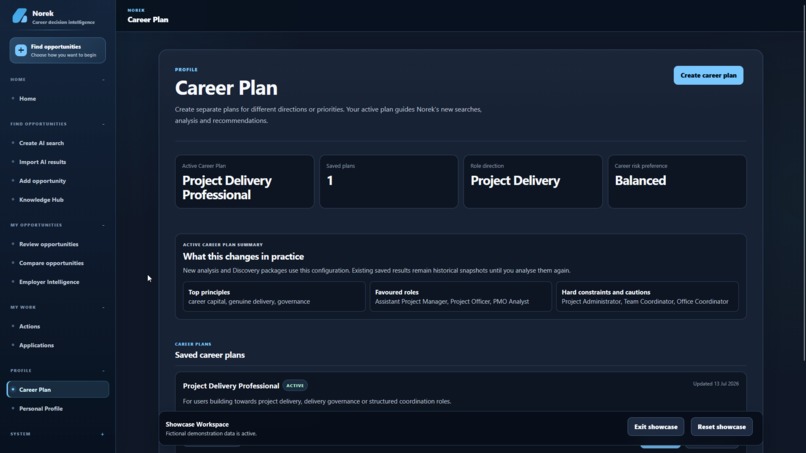
Career Plan
Inspiration
Over the last few months I've spent a lot of time looking for work. One thing I realised was that I was having two separate problems. The first is finding good opportunity. The second is deciding which of those opportunities are actually worth pursuing. There are plenty of tools that help with searching, and AI is making that easier but I wanted to build something that focused on the decision itself. I started building Norek because I wanted somewhere to bring everything together. Every time I found a role I was interested in I'd end up with loads of tabs open, notes everywhere and no real way of comparing opportunities. I'd forget why I'd liked one role and struggle to remember the trade offs and end up going back through the same job descriptions over and over again. I wanted something that would help me think through those decisions properly instead of just helping me find more vacancies.
What it does
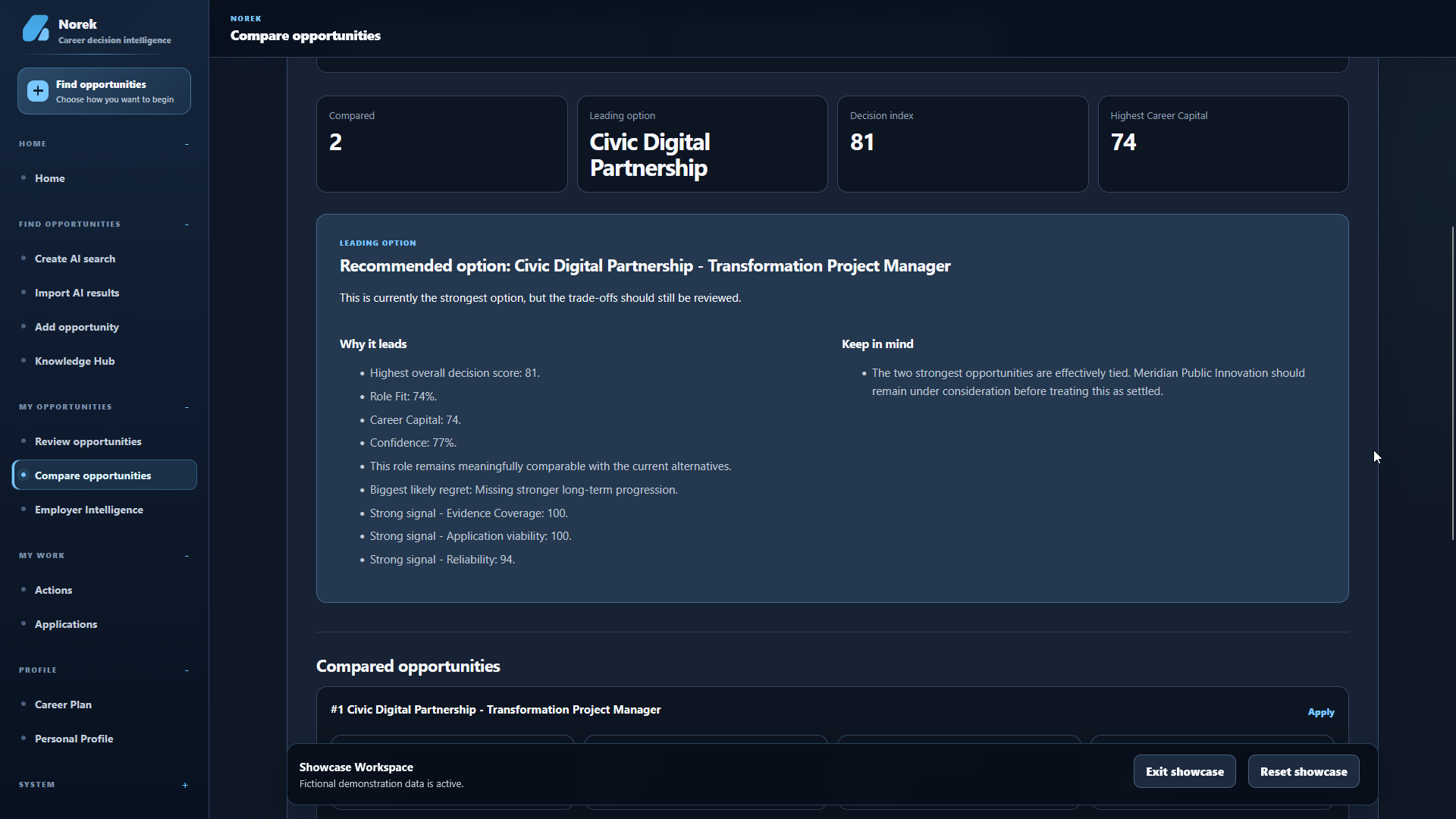
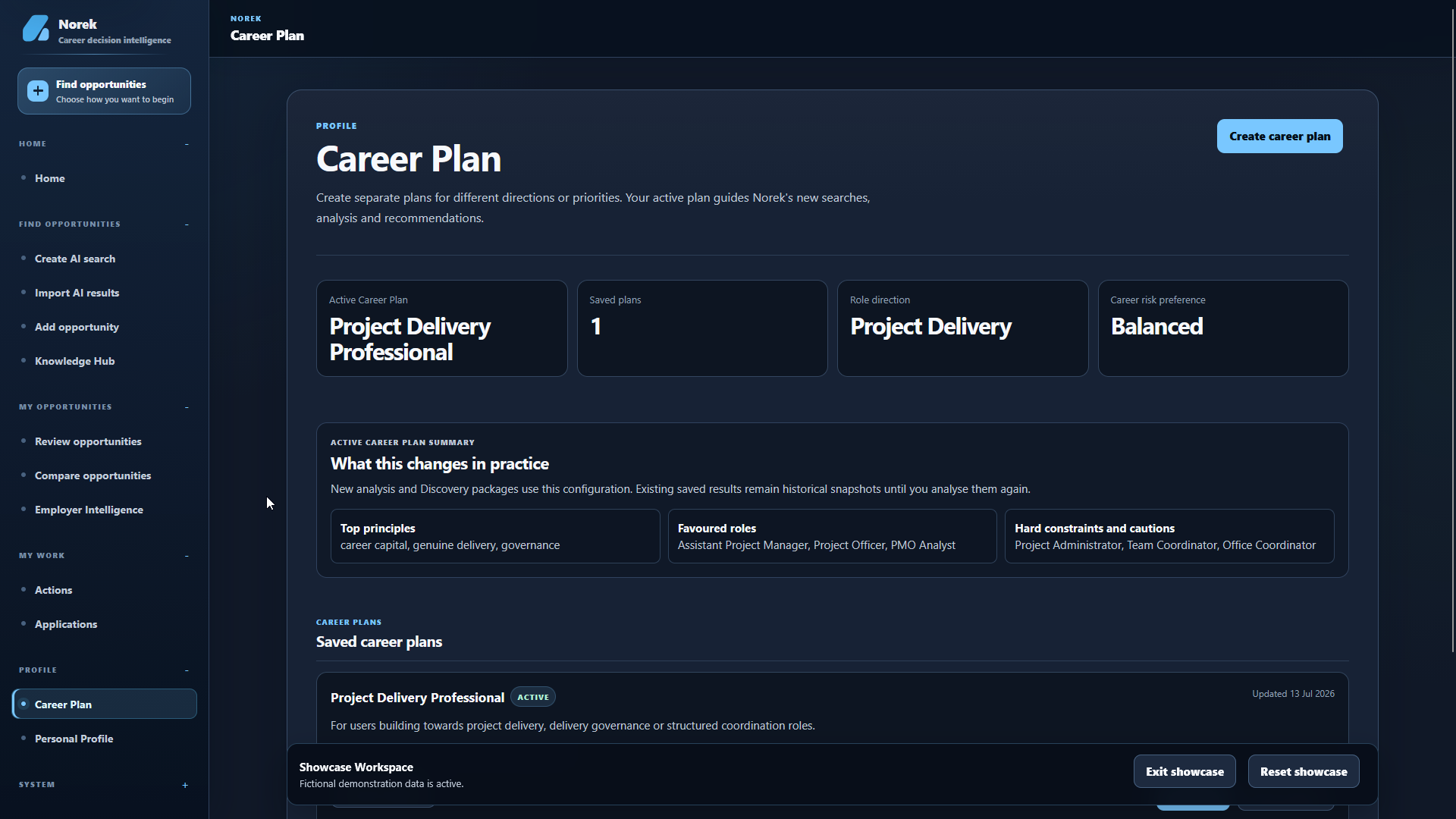
It helps people bring everything about an opportunity together in one place, compare it against what they are actually looking for and understand why one opportunity might be a better fit than another. Rather than just giving a score, Norek explains the evidence behind every recommendation, highlights uncertainty and suggests what to do next. AI helps gather information for Norek and then Norek validates that information before it becomes part of the decision making process. The final decision always stays with the user.
How I built it
I started building Norek in early July 2026 after spending a lot of time looking for work and thinking about how difficult it was. When I found out about openAI build week, I realized I want to show where Norek was at and how using GPT-5.6 and Codex made it possible.
I'm not a software engineer, so this project has been a very different experience for me. I already knew what I wanted Norek to do but I didn't know how to build it.
During OpenAI Build Week I used GPT-5.6 and Codex to help turn ideas and methods into working software. I spent most of my time thinking about how the product should behave, testing changes, writing specifications and prompts, reviewing implementations and deciding what should happen next. GPT-5.6 became a voice I could discuss ideas with, challenge decisions and refine the product. Codex then helped implement those decisions in the code. I wasn't asking AI to build a product for me. I was using it to be my development partner while I stayed responsible for the product direction and every decision that went into Norek.
Challenges
The biggest challenge was working out how to make recommendations that were understandable and explainable. I wanted people using Norek to understand why a recommendation existed, what evidence supported it and where uncertainty still remained. Another challenge was deciding where AI should stop. I wanted AI to help gather information but I didn't want it making decisions for people. Keeping those separate became part of the core design.
What I learned
This project completely changed how I think about building software. I learned that you don't need to be a professional software engineer or knowledgeable coder to build something ambitious if you're prepared to spend time thinking carefully about the product, testing ideas and continually refining them. I also learned that GPT-5.6 and Codex work best as collaborators and work best with human judgement. The better the specifications or prompt and feedback I gave them the better the results and how we worked together.
What's next
The current version of Norek is a beta. My next step is to start getting feedback from real users, continue improving the recommendation experience and expand the AI search discovery while keeping the decision making process open and explainable. My long-term goal is to build something that genuinely helps people find and choose the right type of job for them.
Built With
- codex
- gpt-5.6
- playwright
- react
- typescript
- vercel
- vite
- vitest

Log in or sign up for Devpost to join the conversation.