-
-
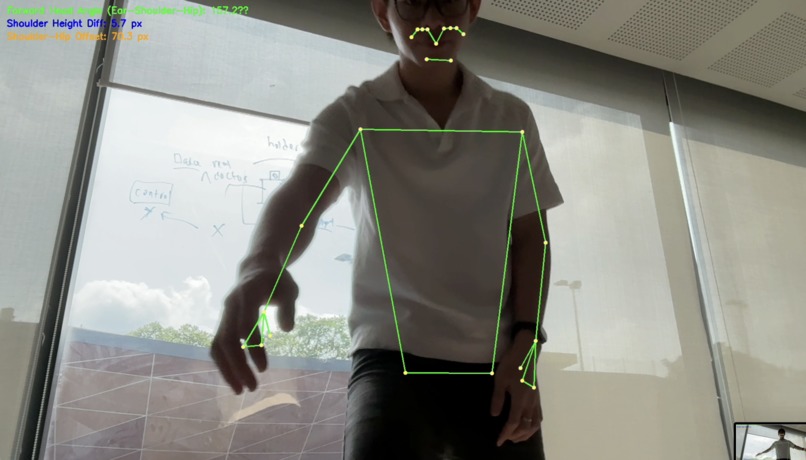
tracking body and angles
-
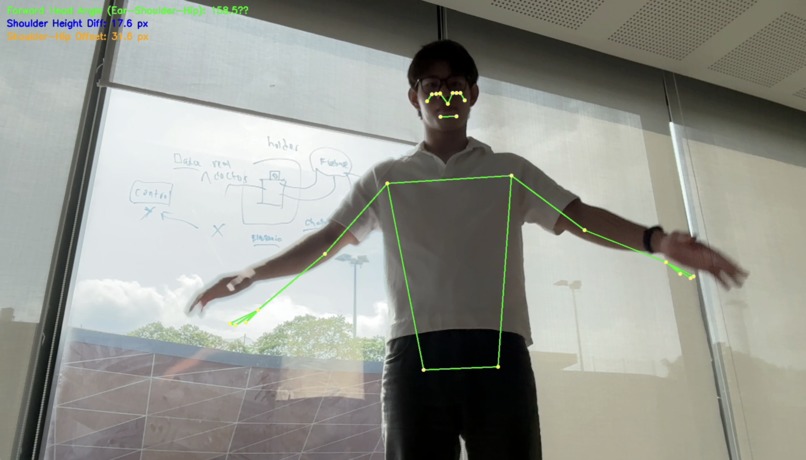
tracking body and angles
-
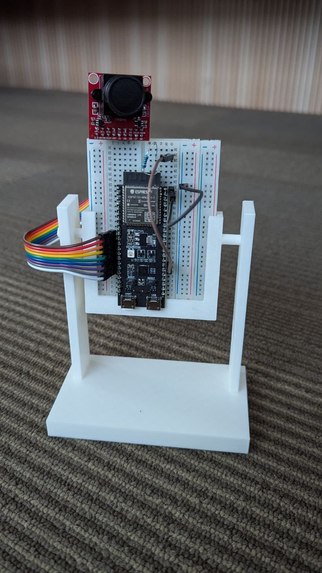
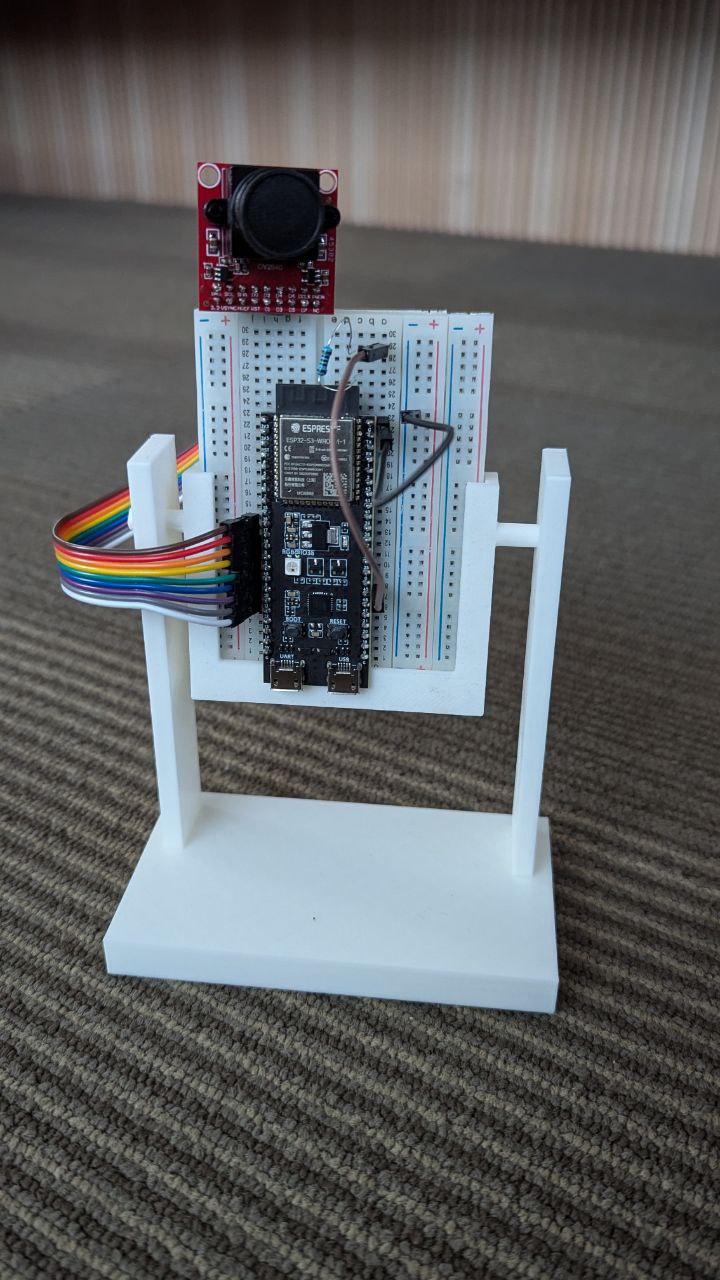
hardware

PostureVision: AI-Powered Muscle Imbalance Detector
Inspiration
Many of us spend long hours sitting at desks, staring at screens, and adopting less-than-ideal postures—leading to potential neck pain, rounded shoulders, and other musculoskeletal issues. Our team wanted to create an accessible tool that scans for potential muscle imbalances in real time, helping users become more aware of posture pitfalls and take corrective steps before bigger problems arise.
What It Does
PostureVision uses a webcam feed to:
- Capture Real-Time Video from your PC or laptop camera.
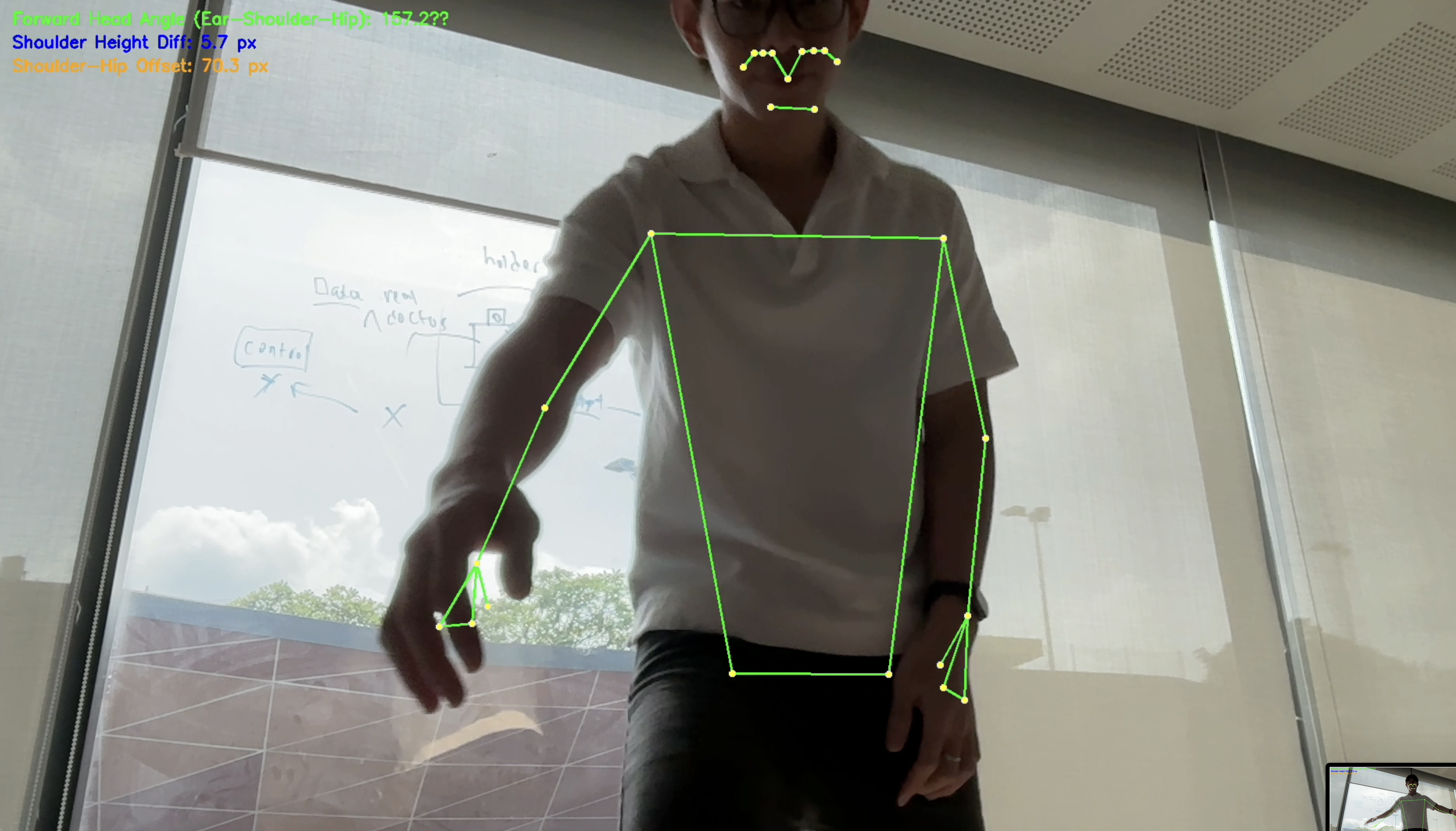
- Apply Pose Estimation (via MediaPipe Tasks) to pinpoint key landmarks: ears, shoulders, hips, etc.
- Calculate Posture Metrics:
- Forward head posture (ear–shoulder–hip angle),
- Shoulder height difference (left vs. right),
- Rounded shoulders (how far forward shoulders drift relative to hips).
- Forward head posture (ear–shoulder–hip angle),
- Provide Instant Feedback with on-screen visualizations: A skeleton overlay draws each landmark and posture metrics (angles, offsets) in real time.
- Suggest Possible Imbalances based on physiotherapy guidelines—e.g., angles below certain thresholds or large side-to-side differences.
How We Built It
- OpenCV: For live video capture and image display.
- MediaPipe Tasks (Pose Landmarker): For accurate real-time pose detection with minimal overhead.
- Python: The main glue language tying everything together, including angle calculations, measuring offsets, and rendering the final results.
- NumPy: For numerical operations, coordinate transformations, and optional data logging.
- Hackathon Collaboration: We used GitHub for version control and Slack/Discord for quick communication to coordinate sprints.
Challenges We Ran Into
- Real-Time Performance: Running pose estimation on each frame can be heavy. We tackled this by trying smaller models.
- Reliable Landmark Detection in varied conditions. We tested multiple lighting setups and vantage points.
- Defining Healthy vs. Unhealthy Ranges: Translating clinical guidelines into angles and offsets is tricky. We adopted approximate thresholds (e.g., <160° forward head angle as “at risk”) based on physiotherapy references.
Accomplishments That We’re Proud Of
- Accurate, Real-Time Posture Analysis: Even on basic hardware, the system displays postural metrics with minimal lag.
- Clean, Visual Overlay: A skeleton drawn over the user feed helps them immediately see which areas might be misaligned.
What We Learned
- Power of MediaPipe: Easy extraction of landmarks for custom calculations.
- Importance of Testing Across Different People: Everyone’s skeletal and muscular system is unique, so we tested angles/offsets on multiple participants.
- Researched Intensively: Read multiple papers on this topic
What’s Next for PostureVision
- Extended Collaborations: Work more closely with physical therapists and doctors to refine our detection methods, validate thresholds, and enhance accuracy in real-world clinical settings.
- Expanded Mobility Library: Automatically present evidence-based light exercises and stretches—personalized for each user’s posture data—to help them correct imbalances.
- User Profiles & Logging: Store session data over time, show progress graphs, and detect trends in posture improvement or regression.
- Personalized Alerts: Notify the user (via on-screen prompts or phone notifications) when posture drifts outside healthy ranges.
- Mobile or Web Integration: Wrap the tool into an Electron app or a cross-platform mobile framework for broader reach.
Built With
- mediapipe
- python

Log in or sign up for Devpost to join the conversation.