Inspiration
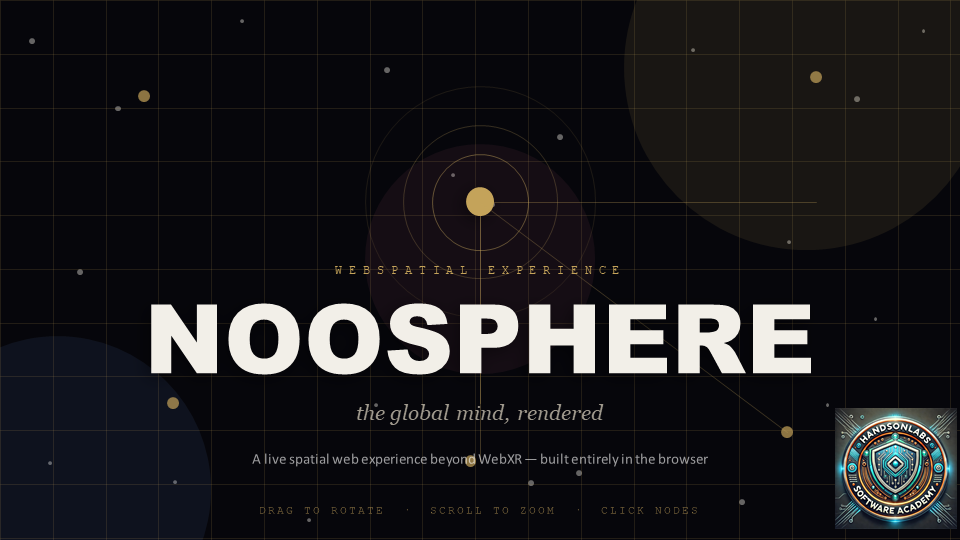
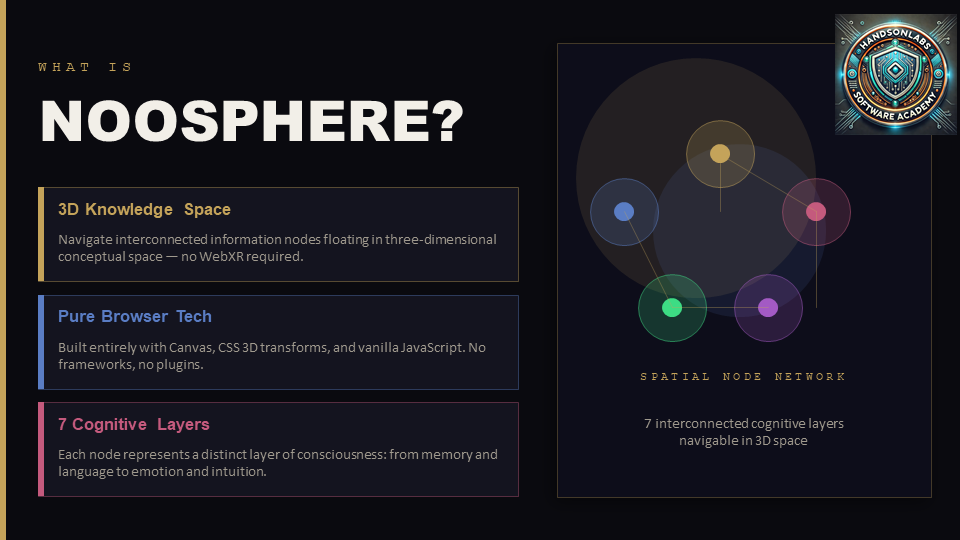
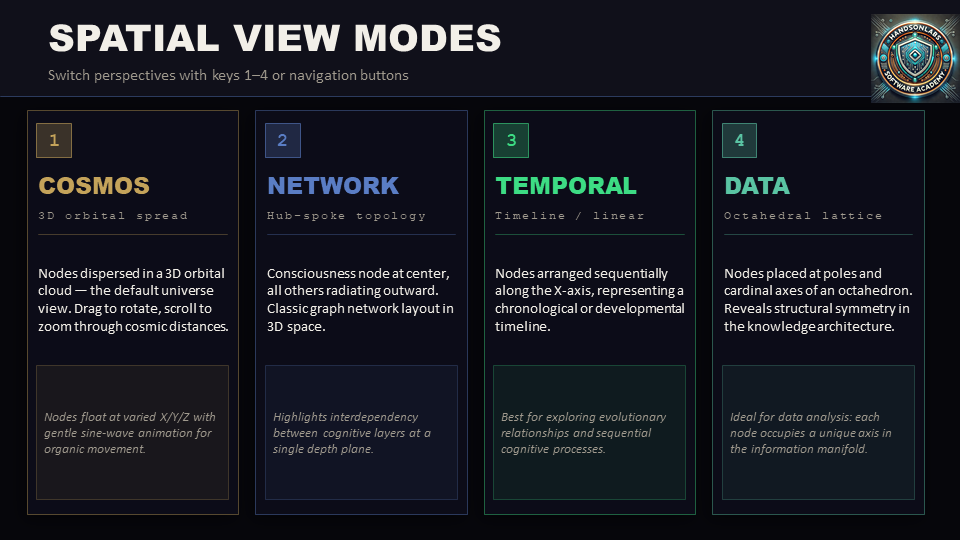
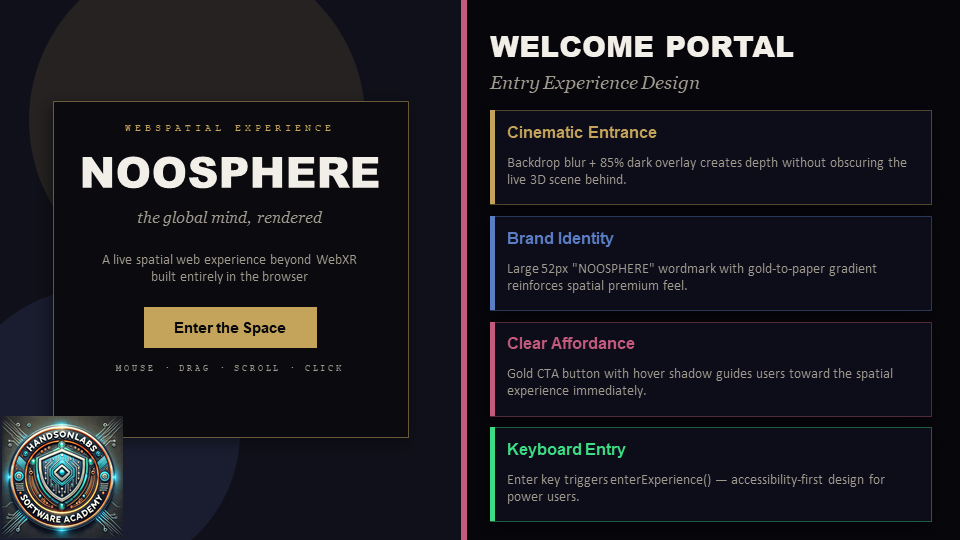
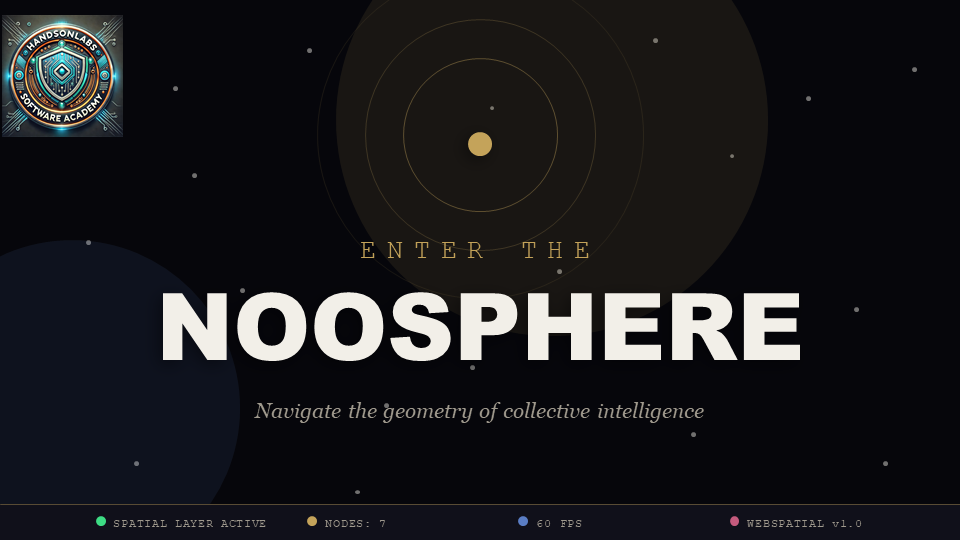
Based on the demo page, NOOSPHERE WebSpatial v2.0 is inspired by the idea of turning the web into a navigable knowledge universe rather than a flat interface. The page describes it as “the global mind, rendered,” and frames the experience as a “Cosmos Network Temporal Data Layer,” which suggests a vision of connected information that users can move through spatially instead of reading linearly.
What it does
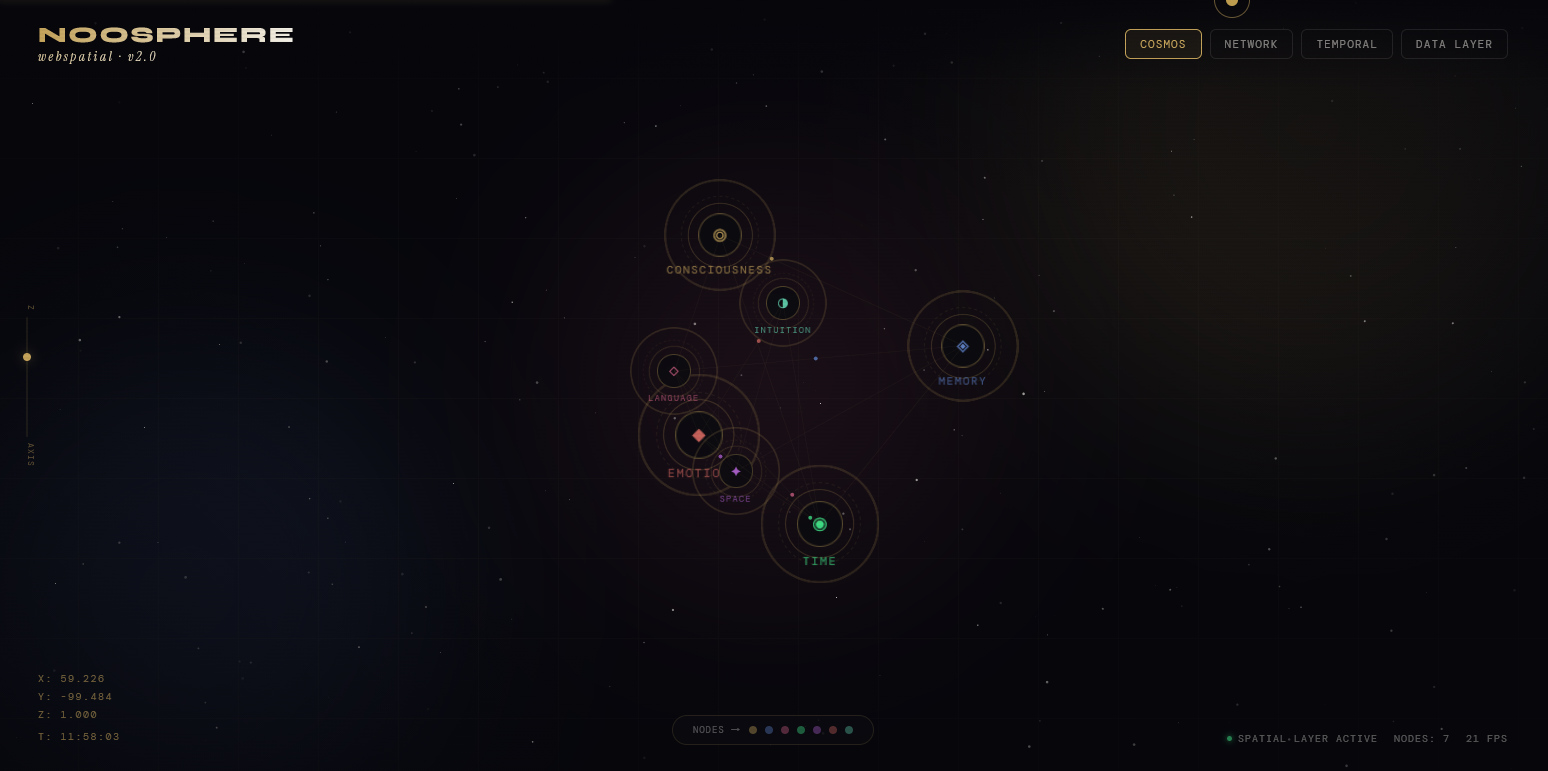
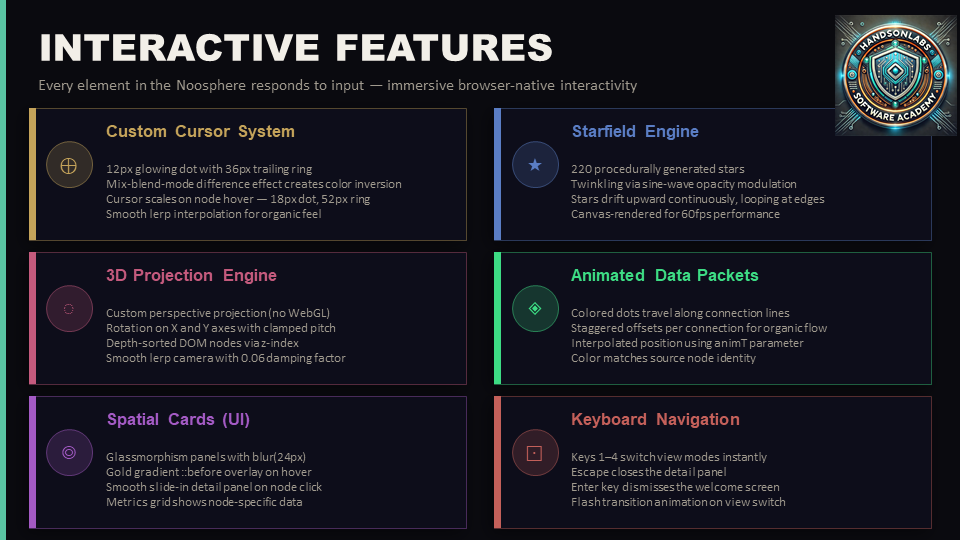
The demo presents a browser-based spatial experience where users can move through interconnected nodes in three dimensions. The interface says users can drag to rotate, scroll to zoom or traverse depth, and click nodes to explore them. It also exposes live-style HUD elements such as axis coordinates, time, node count, spatial-layer status, and frame rate, which makes the whole experience feel like an interactive data environment rather than a static webpage.
How we built it
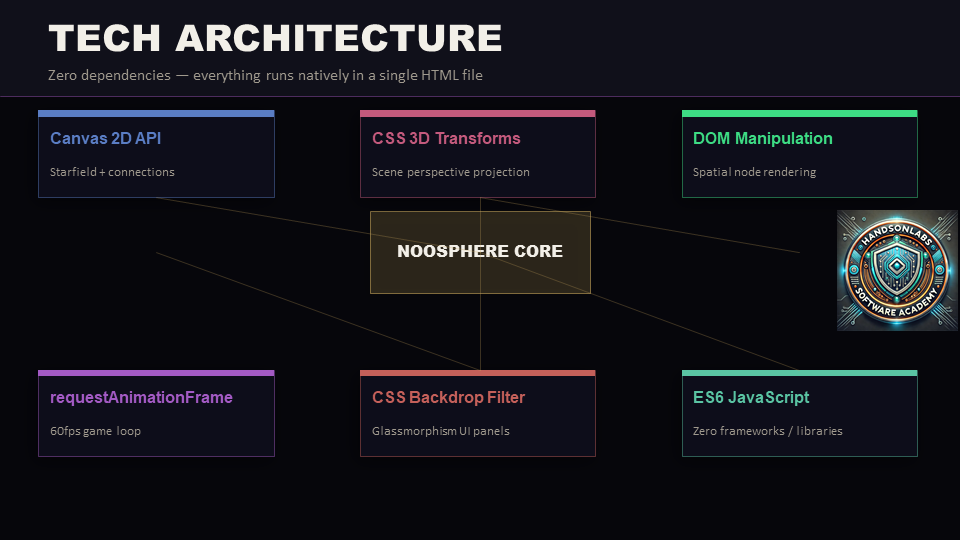
From the page itself, the strongest signal is that the experience is built entirely in the browser and positioned as “beyond WebXR,” so the implementation appears to be a web-native spatial interface rather than something dependent on a headset or external runtime. The page shows an overlaid control panel, coordinate readouts, and interactive exploration prompts, which implies a scene-driven front end with real-time rendering and node interaction. The specific stack is not exposed on the page, so anything more detailed would be inference.
Challenges we ran into
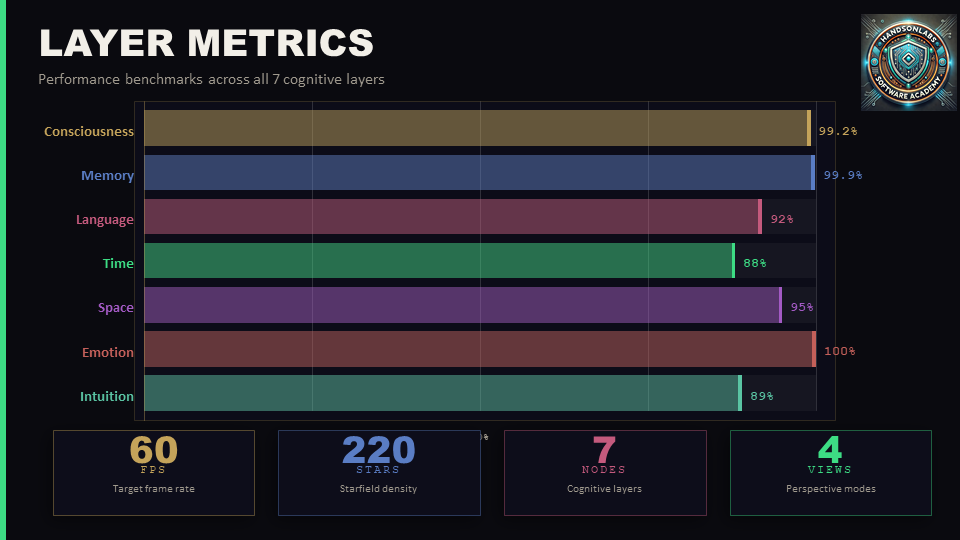
The page does not list technical setbacks directly, but the design implies a few hard problems: keeping the experience smooth at 60 FPS, making spatial navigation intuitive, and presenting enough information in the HUD without overwhelming the scene. Coordinating movement, depth traversal, and clickable entities in a browser-based 3D environment is usually where complexity shows up, so those are the likely pressure points behind the demo.
Accomplishments that we’re proud of
What stands out most is that the project successfully delivers a polished spatial-web concept entirely in the browser. The interface is visually framed as a real-time environment, not just a prototype sketch, and the presence of live metrics, navigation cues, and node-based exploration makes the experience feel coherent and intentionally designed. The fact that the page explicitly calls it a “live spatial web experience” suggests the team achieved a working proof of concept with a strong product identity.
What we learned
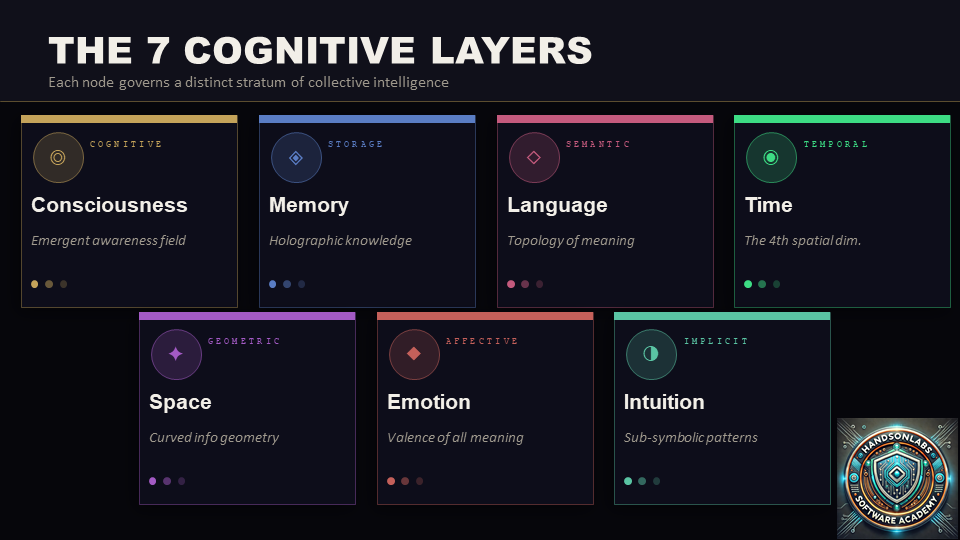
The demo suggests an important lesson: spatial interfaces can be used to communicate complex relationships in a way that feels more immersive than traditional pages. The page’s emphasis on orbiting, depth, and connected nodes points to a broader takeaway that information architecture can become experiential when layout, motion, and hierarchy are treated as part of the product itself.
What’s next for NOOSPHERE WebSpatial v2.0
A logical next step would be to expand the node system into richer data layers, add search and filtering for larger graphs, and support persistence so users can save or revisit spatial paths. Collaboration would also be a natural upgrade, since a “global mind” concept becomes more compelling when multiple people can explore or annotate the same space together. Those are proposed next steps rather than claims from the page itself, but they fit the direction implied by the demo.
Built With
- tech
- web

Log in or sign up for Devpost to join the conversation.