-
-
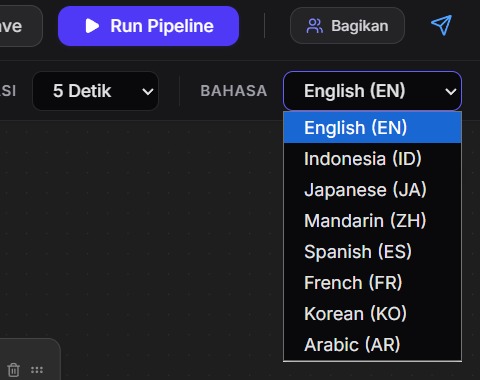
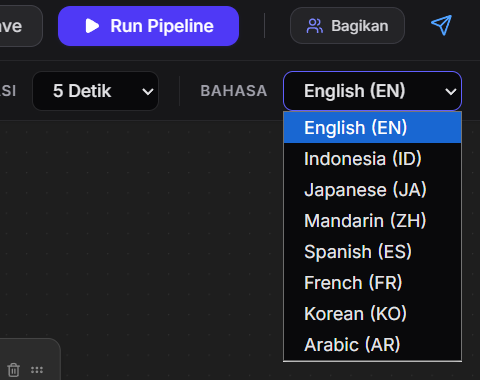
Language Setting
-
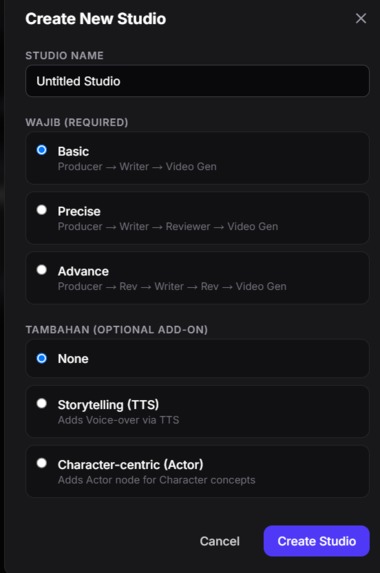
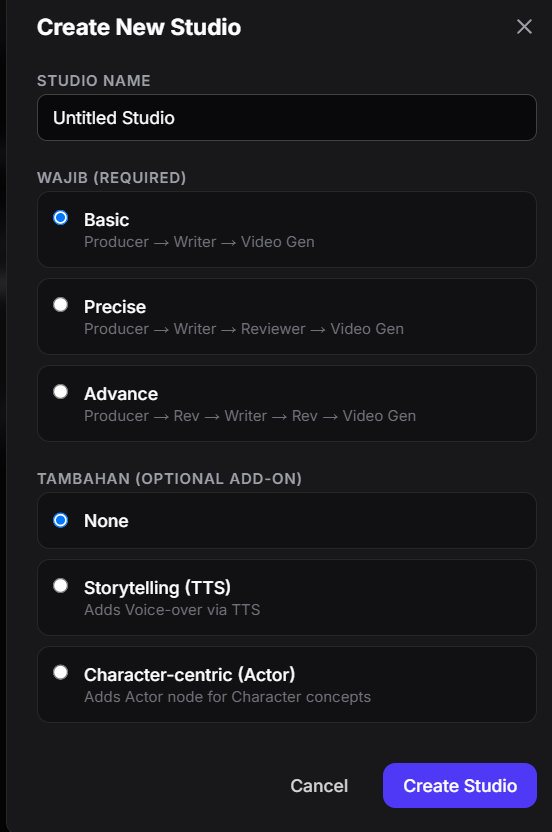
Templates Option
-
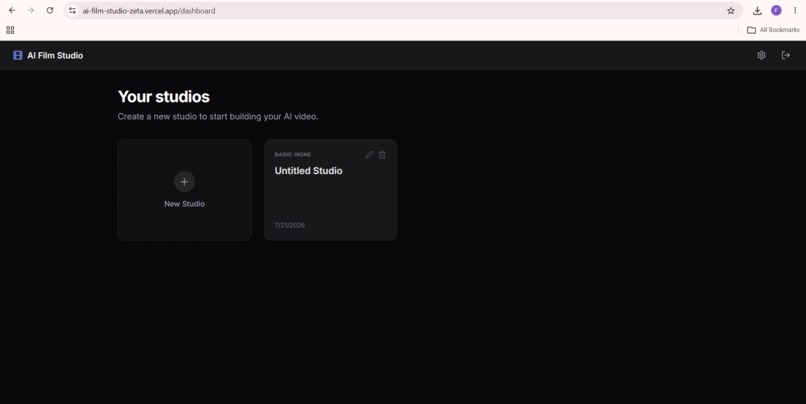
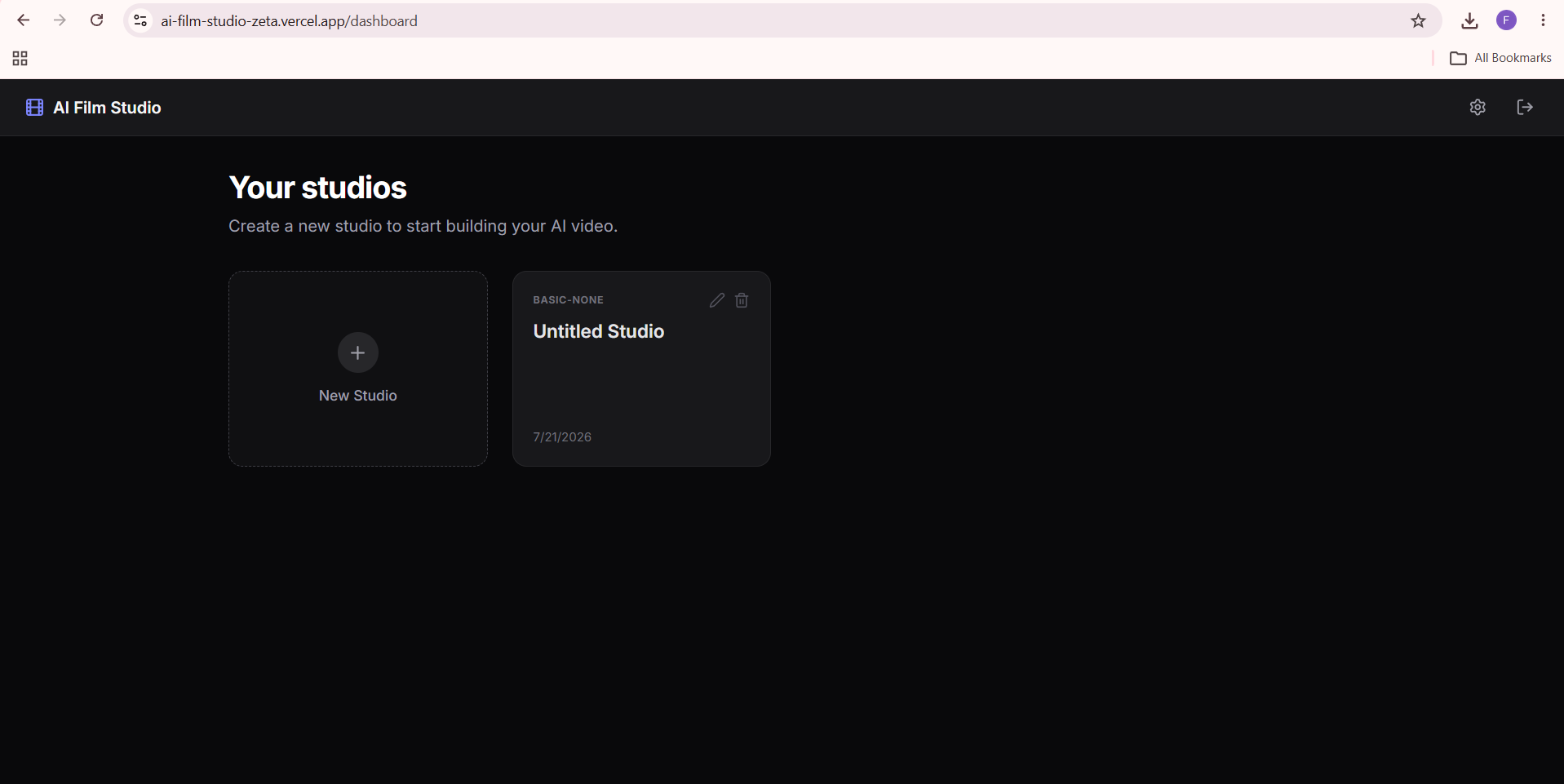
Studio's Landing Page
-
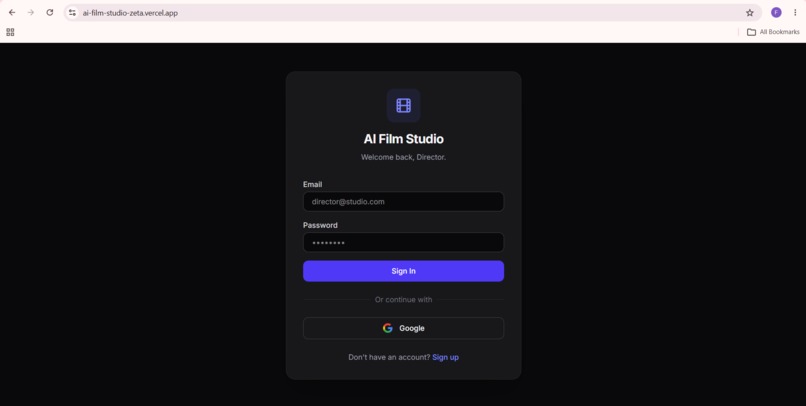
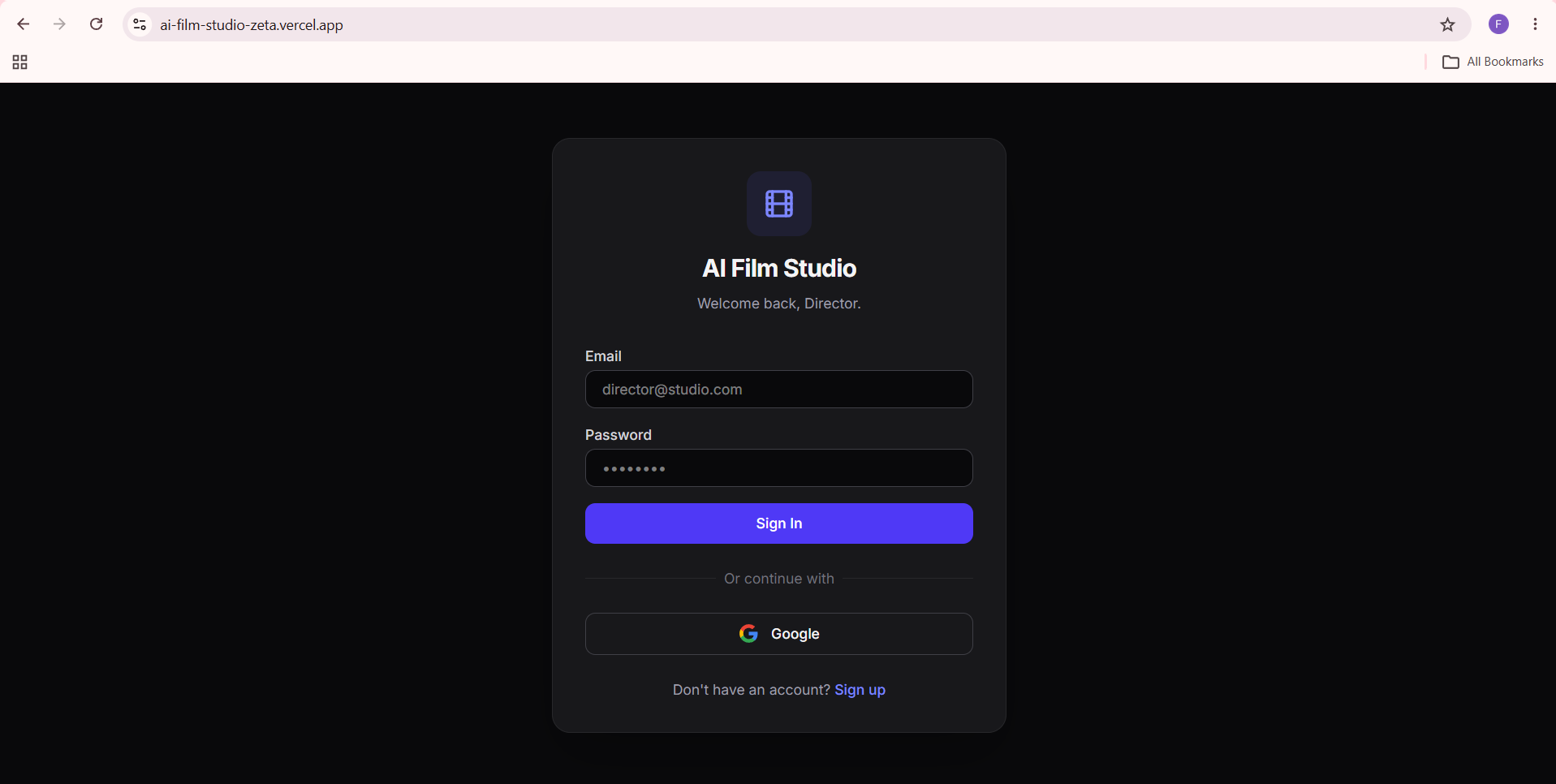
Sign Up/Sign In
-
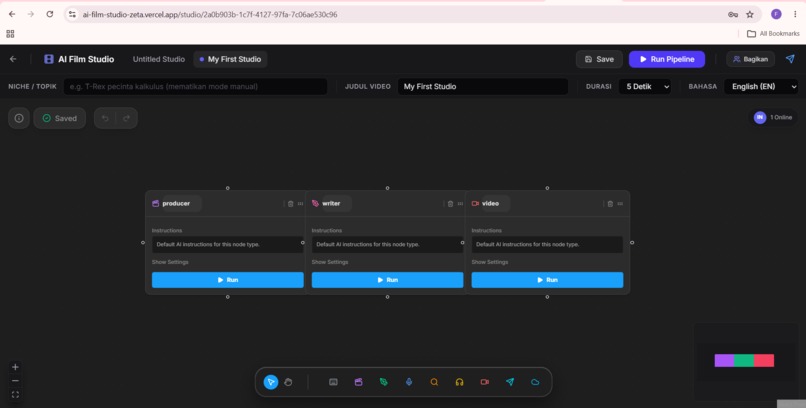
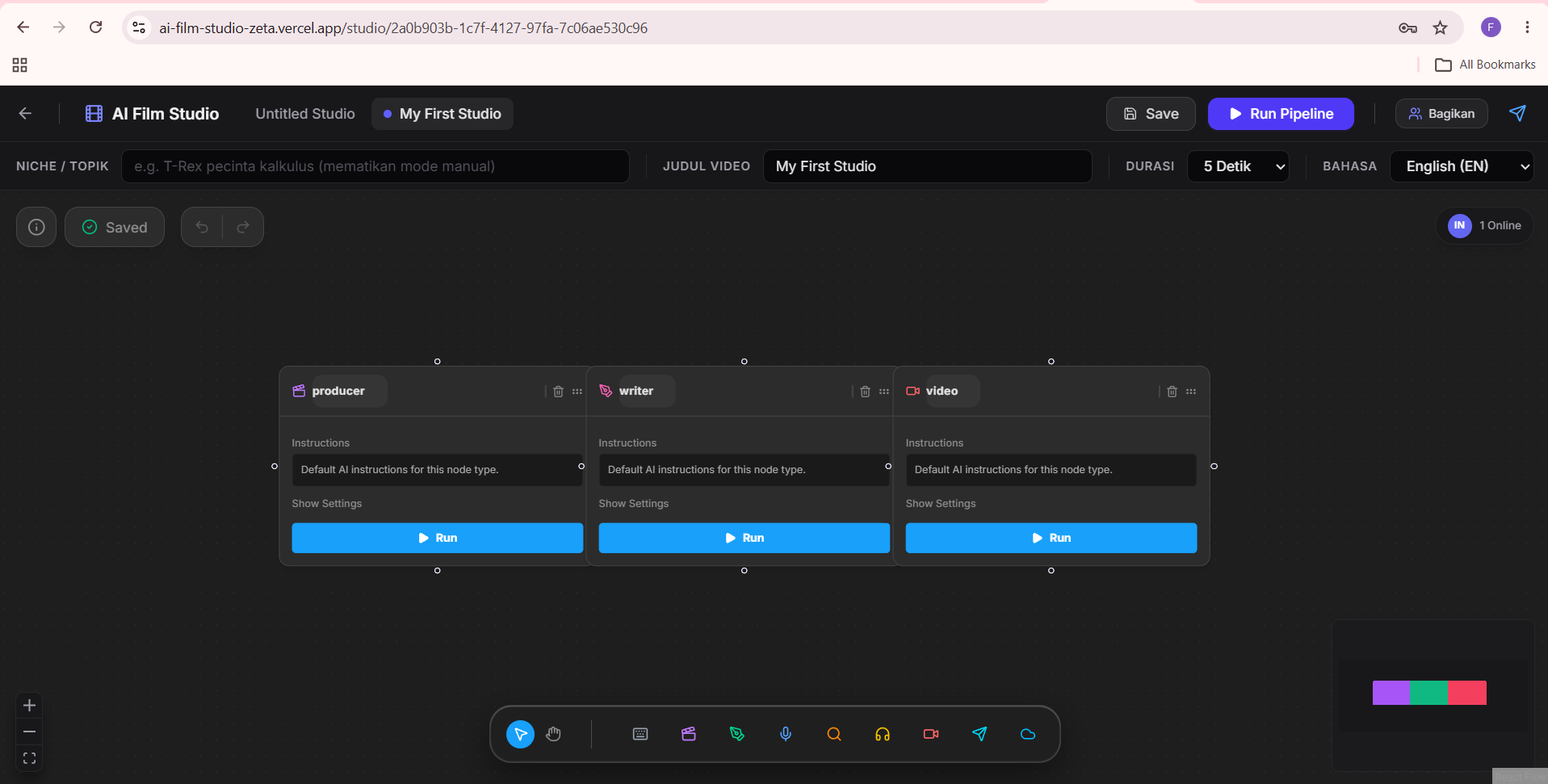
Basic Template
-
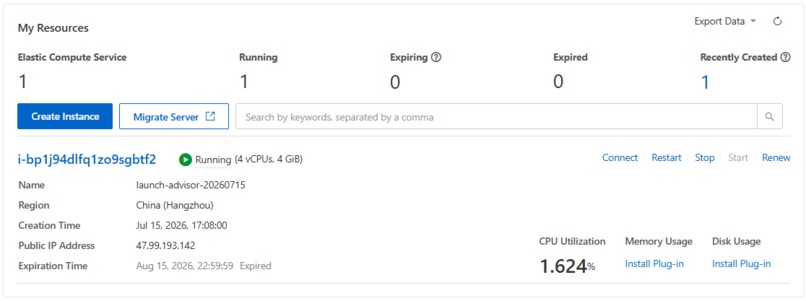
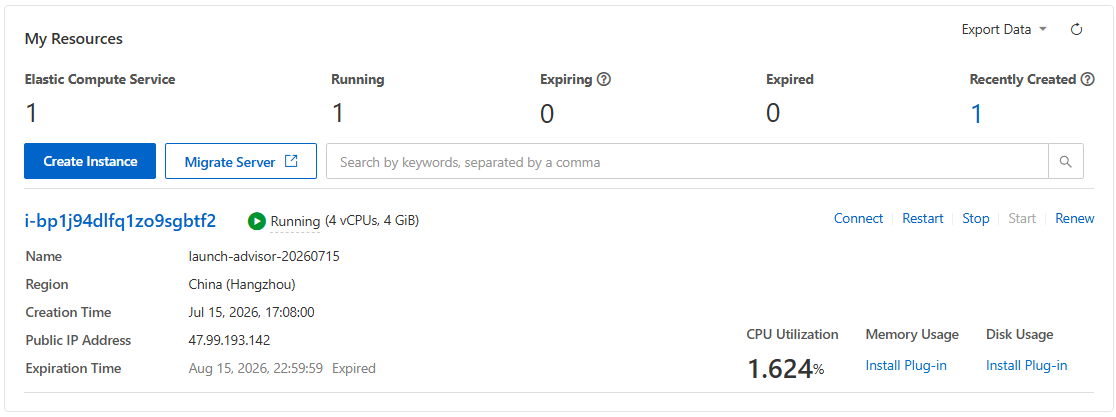
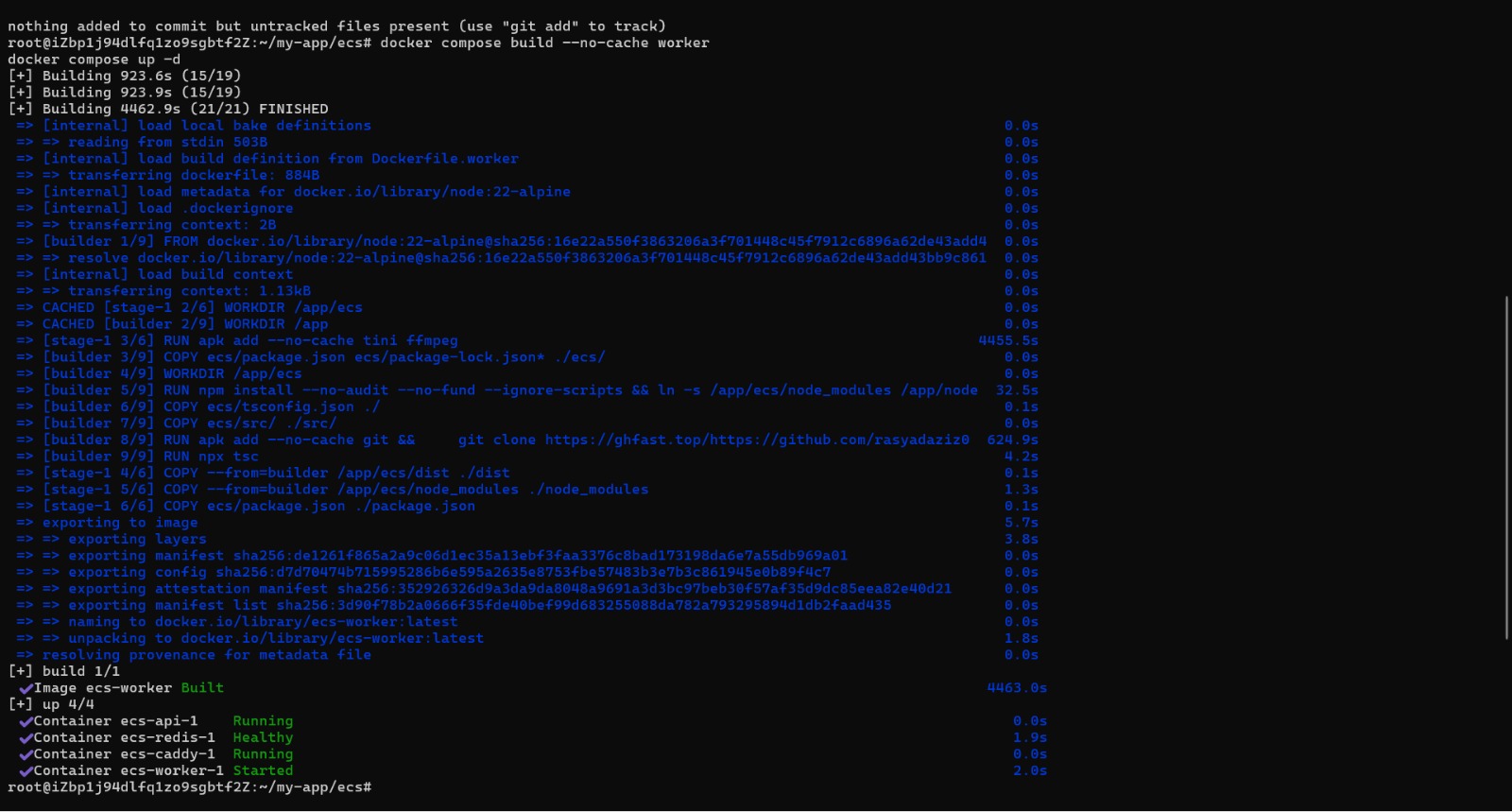
Running ECS Instance Used
-
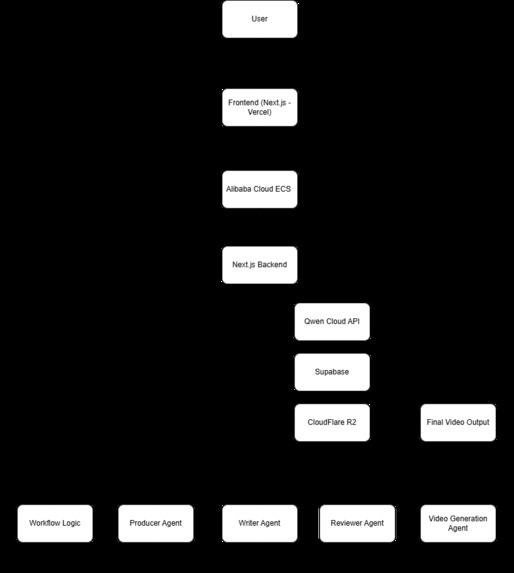
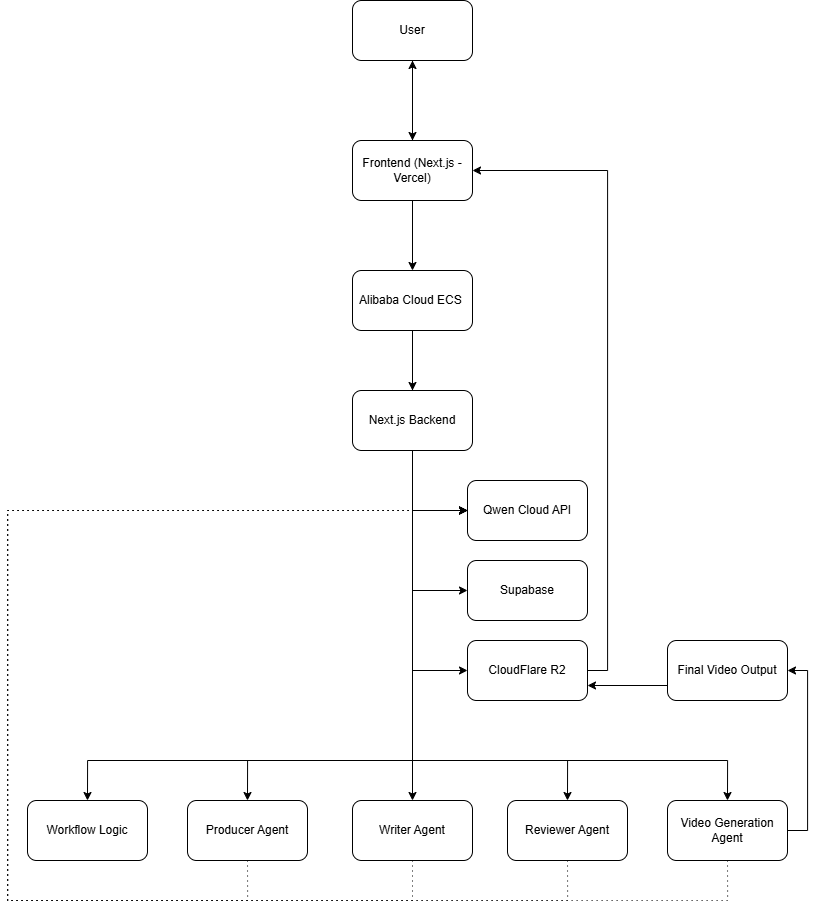
Architecture Diagram
-
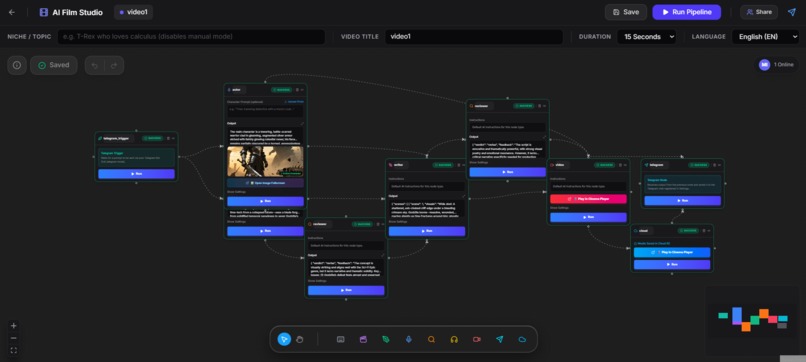
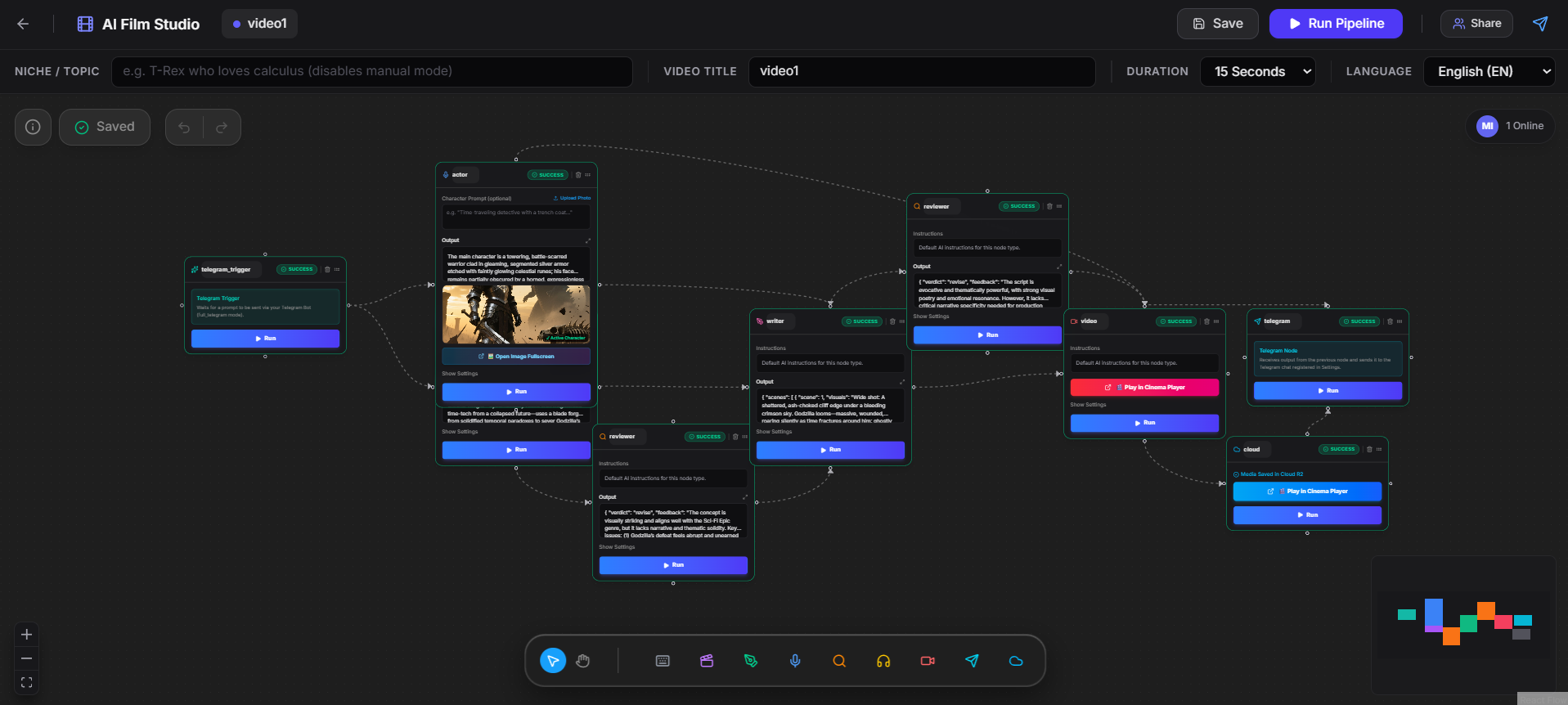
Completed Work
-
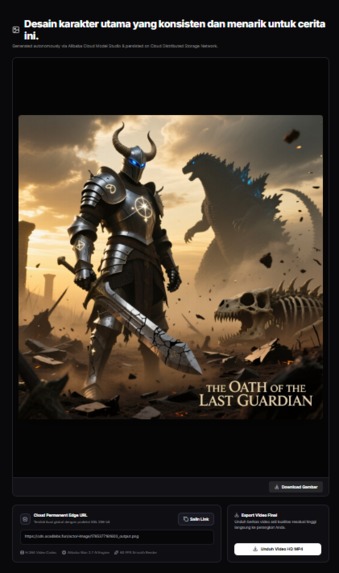
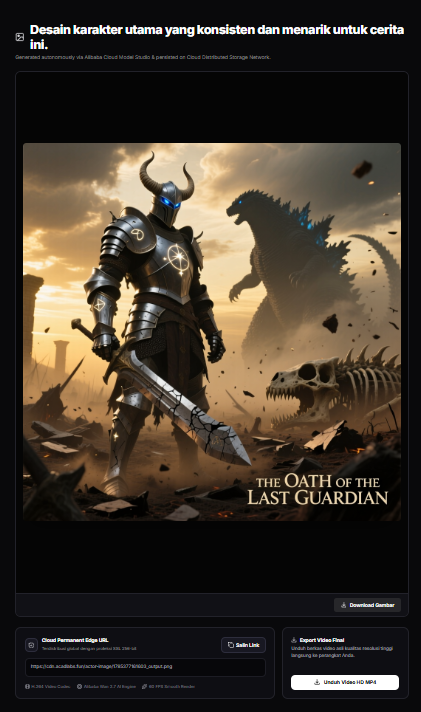
Automatically Generated Image/Character by Actor Node
-
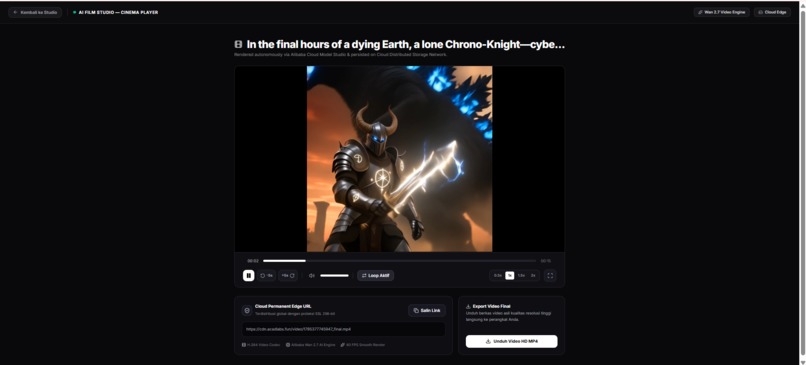
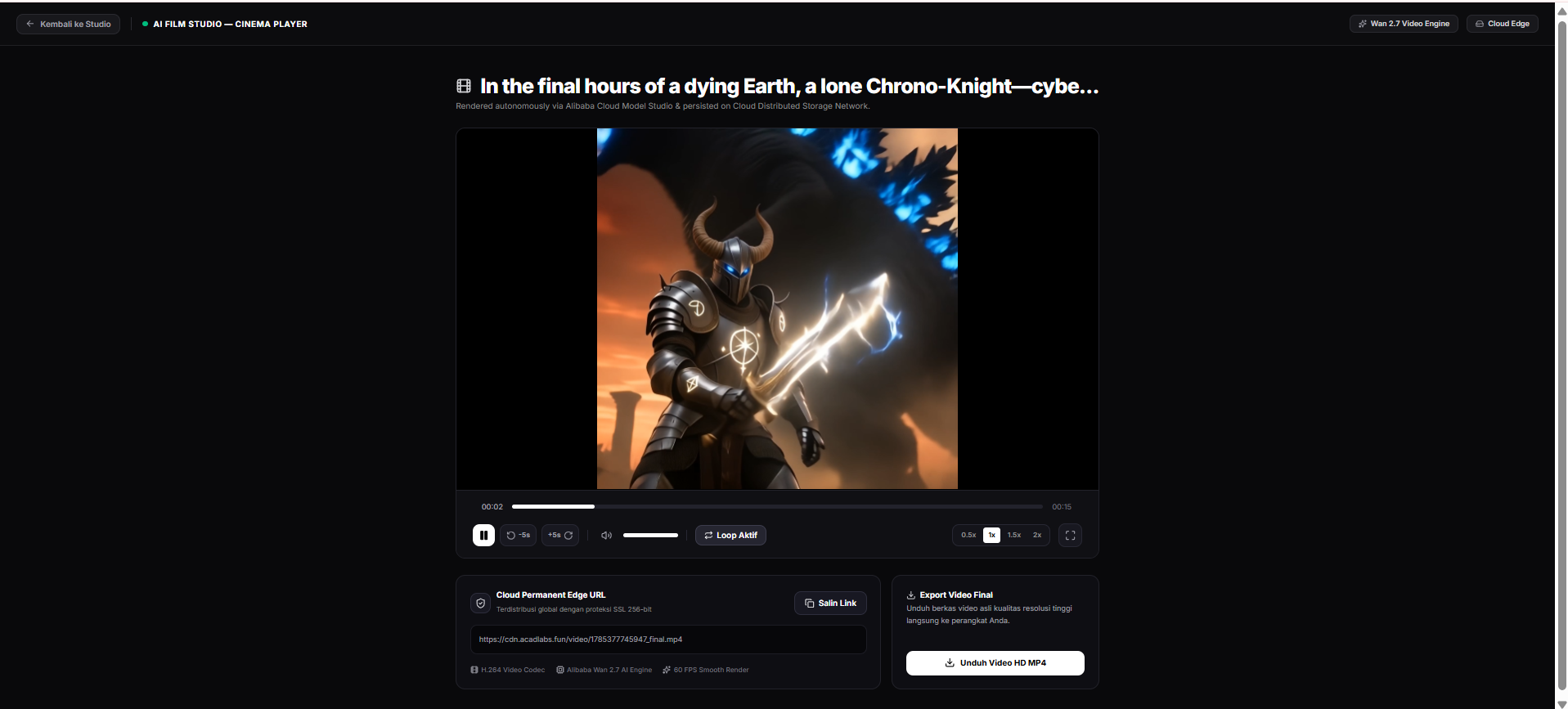
Generated Video and its Settings
-
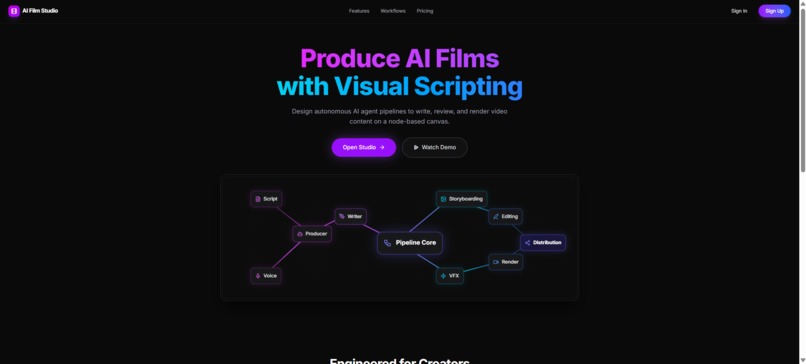
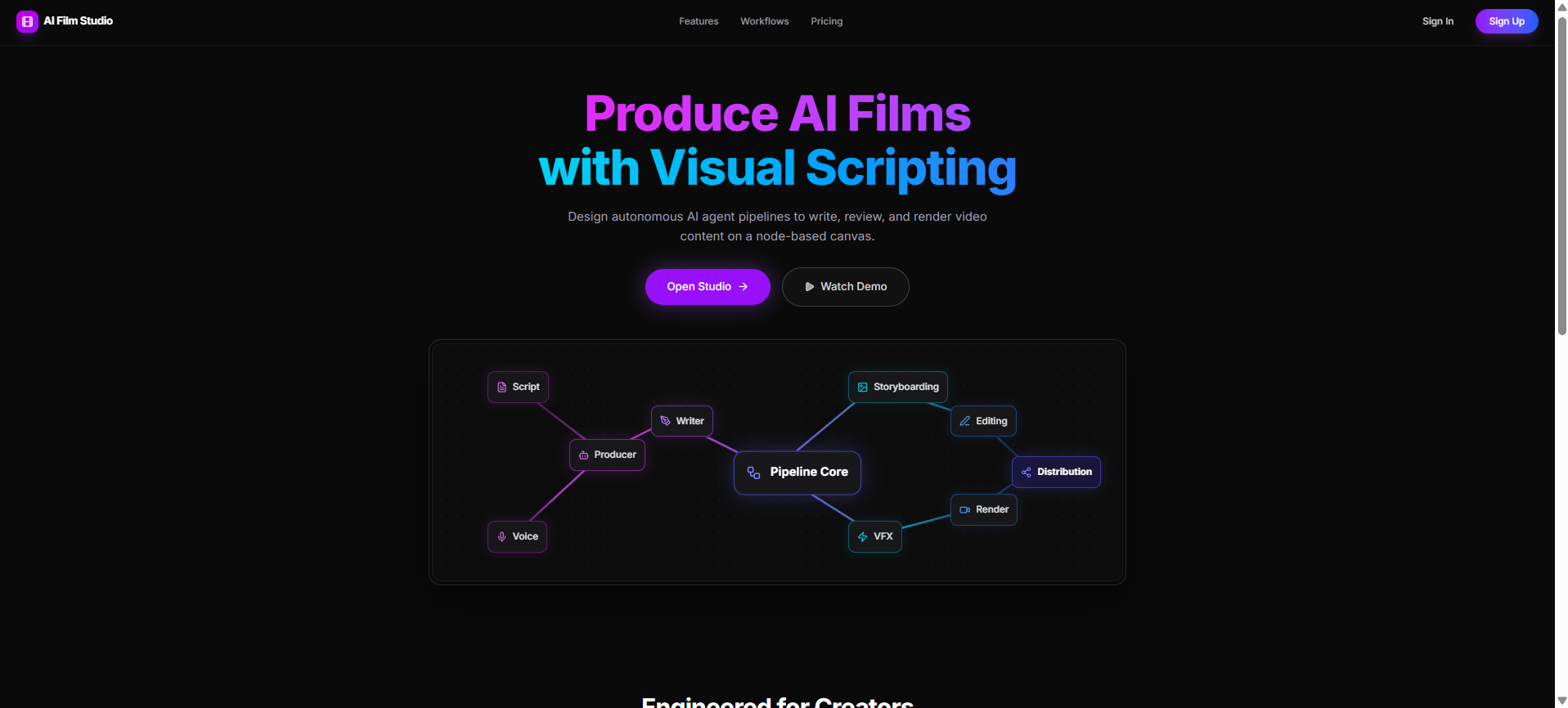
Landing Page
-
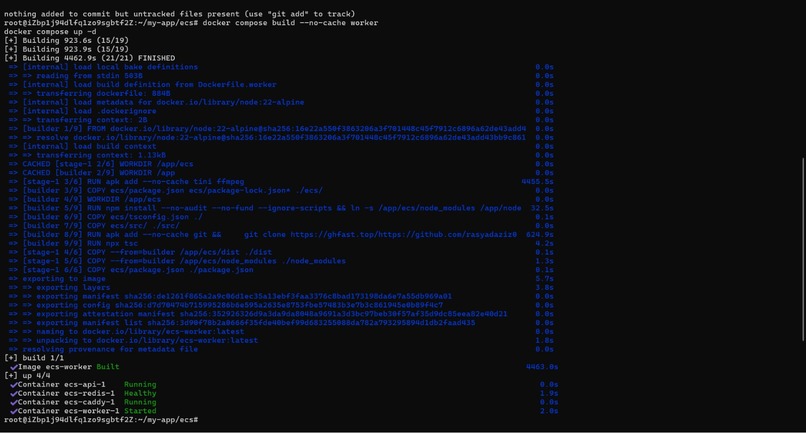
Proof of Deployment on Alibaba Cloud ECS - Link to GitHub folder (deployed to ECS) listed below on the 2nd link column
-
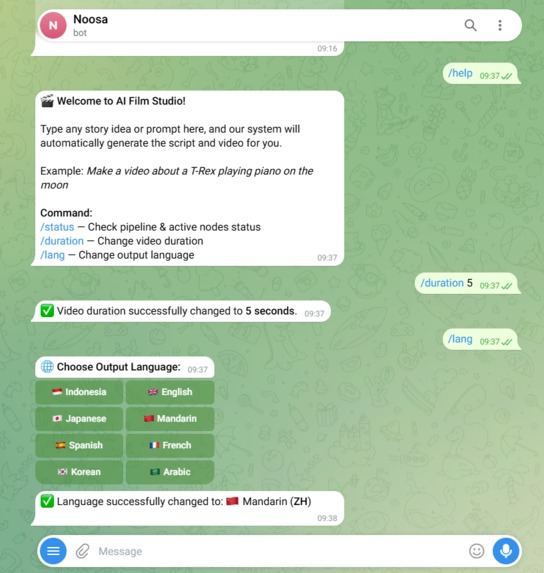
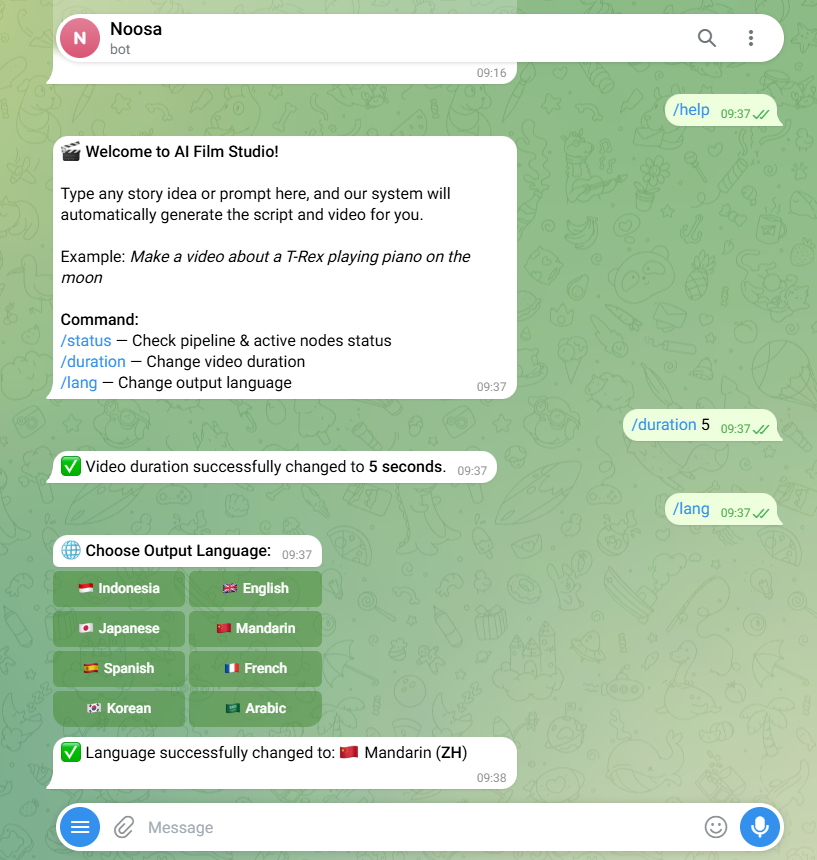
Telegram - /help and Studio/Output Adjustment
-
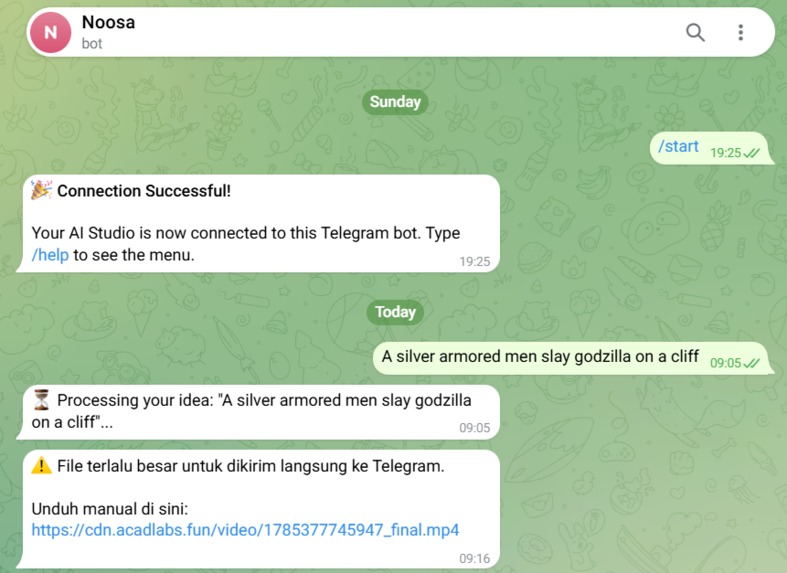
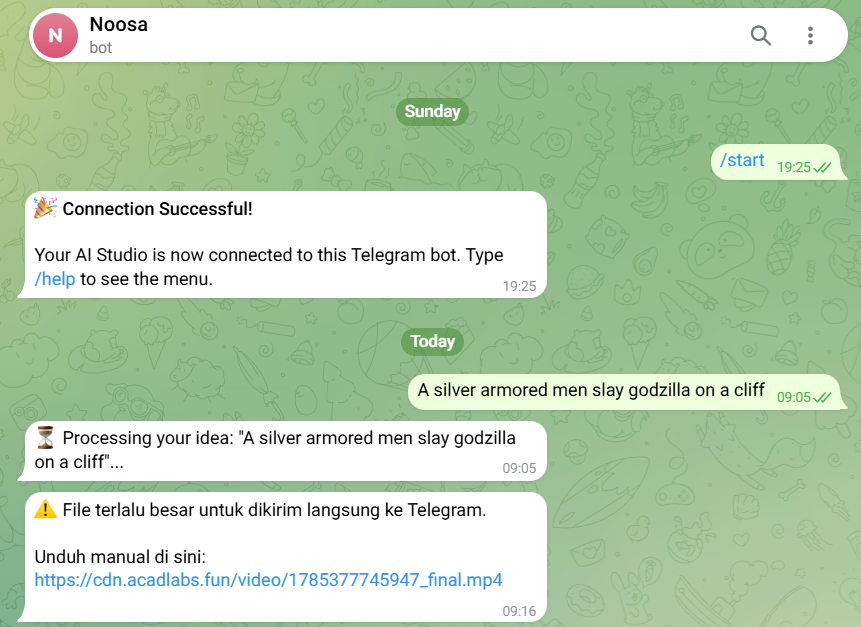
Telegram - Connection Succeed Notification, Prompting from Telegram, Receive Output in Telegram
-
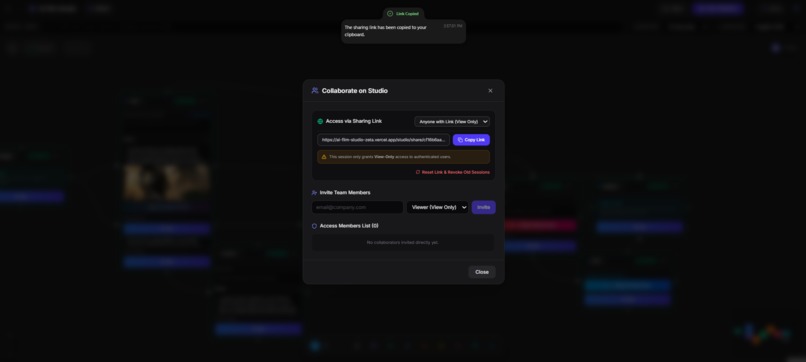
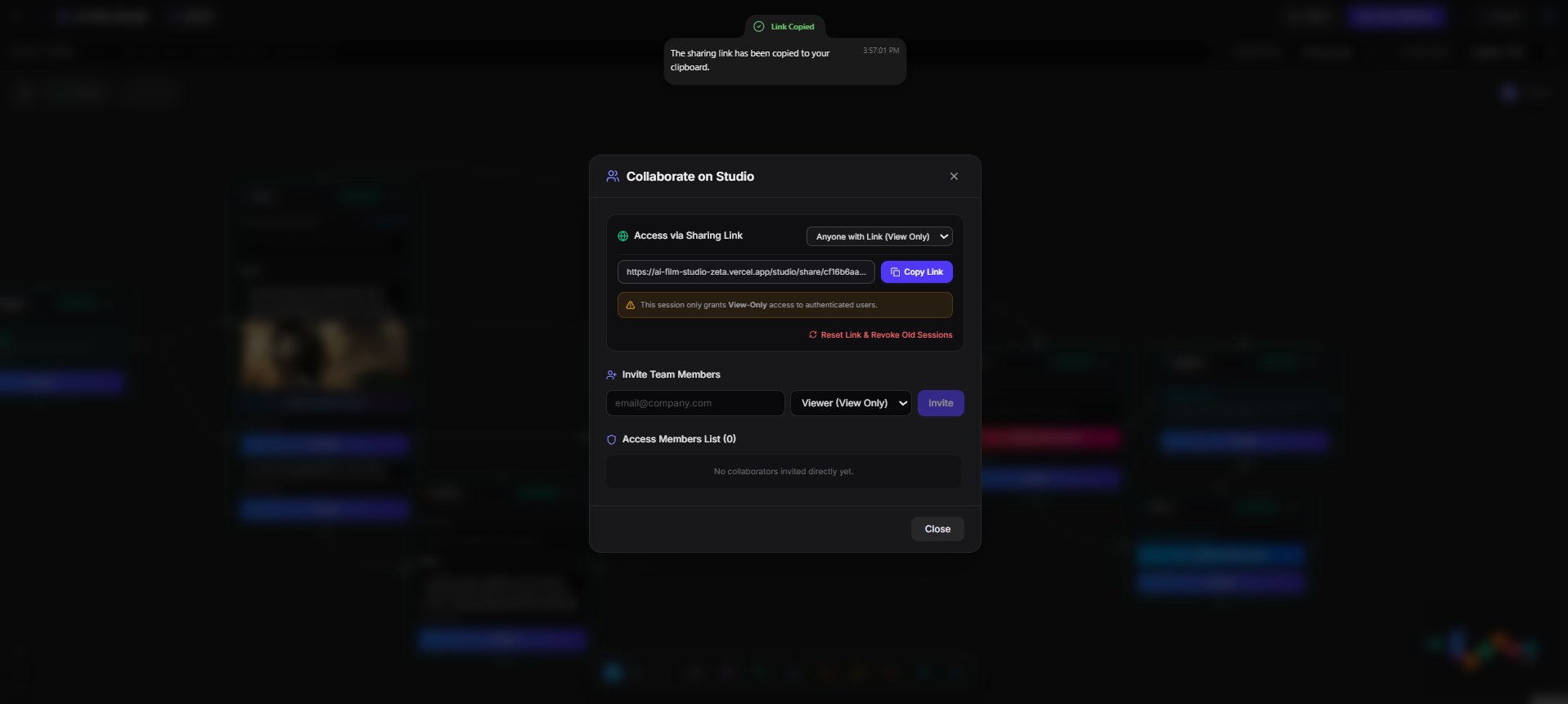
Collaboration Button
Inspiration
Short-form video creation is becoming increasingly competitive, but producing content consistently still requires a lot of manual work: developing ideas, writing scripts, maintaining characters, generating scenes, reviewing outputs, and distributing the final videos.
Most AI video tools focus primarily on generating a video from a prompt. We wanted to build something different: a complete, flexible production workflow where multiple specialized AI agents work together.
That's why we built Noosa Studio — a node-based, multi-agent AI video studio that turns an idea into a complete short-form video through a customizable production pipeline.
Our long-term vision is to go beyond AI video generation and build an AI-native content production system where creators can design a workflow once and eventually let it continuously create, schedule, and publish content for them.
What it does
Noosa Studio is a node-based AI video generation platform designed for automated and controllable content production.
Instead of interacting with a single AI model, users visually build a production workflow from specialized nodes. Each node represents a specific role in the creative pipeline, and the output of one stage becomes structured input for the next.
The current workflow includes:
- Producer Agent — develops the concept and genre based on the user's idea.
- Actor Node — manages character references. Users can upload a character, describe one using text, or let AI automatically generate a character.
- Writer Agent — transforms the concept into a detailed storyboard and scene-by-scene script.
- Reviewer Agent — evaluates generated outputs and can request regeneration when the result does not meet the required quality.
- Video Generation Node — generates the actual video using Qwen Cloud video generation models.
- Cloud Node — stores the generated video.
- Telegram Trigger — allows Telegram to act as the entry point of a workflow.
- Telegram Node — delivers the finished video directly back to the user's Telegram chat.
The Actor Node also addresses one of the biggest challenges in AI-generated video: character consistency.
When a character reference is available, Noosa passes the reference image directly to the video generation stage while a Vision model extracts the character's attributes into text that can be injected into the creative pipeline. This allows the workflow to maintain both visual and textual character information throughout production.
Noosa also supports multiple ways of interacting with a Studio. Users can run workflows directly from the visual workspace or connect a Telegram bot and send prompts entirely through Telegram, receiving the generated video back in the same conversation.
The visual workflow itself is fully editable. Users can add, remove, move, connect, disconnect, and configure nodes to create workflows suited to different production styles.
How we built it
Noosa Studio is built as a full-stack application with a distributed architecture designed to separate the interactive frontend from long-running AI workloads.
Architecture
- Frontend: Next.js
- Backend / Worker: Next.js-based services deployed on Alibaba Cloud ECS
- Database: Supabase
- Object Storage: Cloudflare R2
- Frontend Deployment: Vercel
- Worker Deployment: Alibaba Cloud Elastic Compute Service (ECS)
- AI Infrastructure: Qwen Cloud APIs
- Messaging: Telegram Bot API
The backend orchestrates the entire node-based workflow. Each agent produces structured information that is passed to downstream nodes until the final video is generated, stored, and delivered to the user.
We use specialized Qwen models according to the responsibility of each stage. Text-based agents such as the Producer, Writer, and Reviewer use Qwen LLMs, while the Actor workflow uses Qwen image and vision capabilities for character generation and attribute extraction.
For video generation, Noosa uses both Text-to-Video and Reference/Image-to-Video capabilities depending on whether the workflow contains a character reference.
The worker portion of the system runs on Alibaba Cloud ECS because AI video generation involves long-running workloads that require persistent execution and more control than a typical serverless environment provides.
Challenges we ran into
One of our biggest challenges was designing a system that balances automation, flexibility, quality, and token efficiency.
We faced several engineering challenges throughout development:
- Designing a scalable multi-agent orchestration pipeline.
- Maintaining character consistency across generated scenes.
- Managing long-running video generation workloads.
- Integrating multiple Qwen Cloud APIs into a unified production workflow.
- Connecting an external messaging interface through Telegram while keeping it synchronized with the visual Studio workflow.
Accomplishments that we're proud of
We're proud that Noosa Studio evolved beyond a traditional chatbot or single-prompt video generator into a visual, multi-agent production system.
Some of the things we're most proud of include:
- A fully interactive node-based AI Studio for designing production workflows.
- Multi-agent orchestration where each agent has a specialized responsibility.
- A Reviewer agent that can create quality-control loops within the workflow.
- An Actor system designed specifically to improve character consistency.
- Automatic adaptation between text-based and reference-based video generation.
- End-to-end short-form video generation powered by Qwen Cloud.
- The ability to trigger a complete workflow from Telegram and receive the final video back in the same conversation.
- Real-time visibility into individual node states and outputs instead of hiding the entire process behind a single generation button.
- Collaborative workflow editing through shared Studio links.
- A distributed architecture with the frontend deployed on Vercel and long-running AI workers deployed on Alibaba Cloud ECS.
- A modular node architecture that allows new agents and workflow capabilities to be added without redesigning the entire system.
What we learned
Building Noosa Studio taught us that creating an AI product is not simply about choosing the most powerful model.
We learned how to design multi-agent systems where each model has a specific responsibility, how to pass structured information between agents, and how to balance model quality with token efficiency.
We also learned how multimodal models can work together in a single workflow — for example, using image generation to create a character, Vision models to extract its attributes, and video models to turn those references into consistent video content.
On the infrastructure side, we gained experience designing long-running AI workloads and deploying workers on Alibaba Cloud ECS while keeping the interactive frontend separate.
Most importantly, we learned that workflow design can be just as important as model capability. Giving creators control over how AI agents collaborate can make an AI system more flexible, transparent, and useful than treating the model as a black box.
What's next for Noosa Studio
Our current implementation focuses on the core production workflow, but our vision is much larger.
We want Noosa Studio to evolve from a tool that helps creators generate videos into a system that can continuously operate their content production workflow.
Automated Scheduling & Publishing
A major next step is fully automated content generation.
A creator could configure a Studio with its channel niche, audience, style, and content description, then define a schedule such as every morning at 6:00 AM.
The system could automatically trigger the workflow, generate new content based on the Studio's context, and eventually publish it directly to connected social media platforms.
The goal is simple:
Configure once → let Noosa create continuously.
AI Copilot
We also plan to introduce an AI Copilot inside the Studio.
Instead of manually building every workflow, creators could describe what they want to accomplish in natural language.
For example:
"Create a workflow for a TikTok channel that posts educational dinosaur videos every morning."
The Copilot could help design the workflow, recommend appropriate agents and models, configure nodes, suggest improvements, and help creators iterate on their production pipeline.
More Workflow Templates
We plan to expand the template system with workflows for different content formats such as educational content, storytelling, product content, social media channels, and character-driven series.
AI-Powered Analytics
Eventually, Noosa could connect the production pipeline with content performance data, allowing the system to learn which topics, formats, hooks, and styles perform best and use those insights to influence future content generation.
Ultimately, we want Noosa Studio to become an AI-native content production environment where creators don't just generate individual videos.
They build a Studio once, give it a direction, and let specialized AI agents continuously handle the creative workflow — from ideation and scripting to generation, review, scheduling, and publishing.
Noosa Studio is where AI stops being just a generator and starts becoming a production team.
Built With
- alibaba
- cloud
- cloudflare
- css
- ecs
- generation
- happyhorse
- next.js
- node-based
- node.js
- qwen
- r2
- react
- supabase
- tailwind
- typescript
- vercel
- video
- vision
- workflow

Log in or sign up for Devpost to join the conversation.