Inspiration
Singapore has been growing and expanding at an exponential rate, ever since we gained our independence in 1965. This also means that there was a huge move away from the traditional agricultural and fishing industries to the office jobs we see today, with overtime and rushing work on the weekends.
With all these changes, the stress levels Singaporeans face have also increased exponentially, to the point that purportedly 92% of Singaporeans reported feeling stressed. The recent few years of the COVID-19 pandemic have definitely not helped this situation, with many working remotely from their homes, resulting in an even more blurred line between rest and work.
Unfortunately, with Singapore's conservative culture, there is still a social stigma against seeking help even when one's mental health deteriorates. Mental health is not something taken seriously here, because many subscribe to the "out of sight, out of mind" school of thought.
Mental health isn't something to be taken lightly, and we want to provide our users with a safe space to seek solace from the stress and rush of everyday life.
What it does
nook adopts a three-pronged approach for our users, in the form of Professional, Community and Individual.
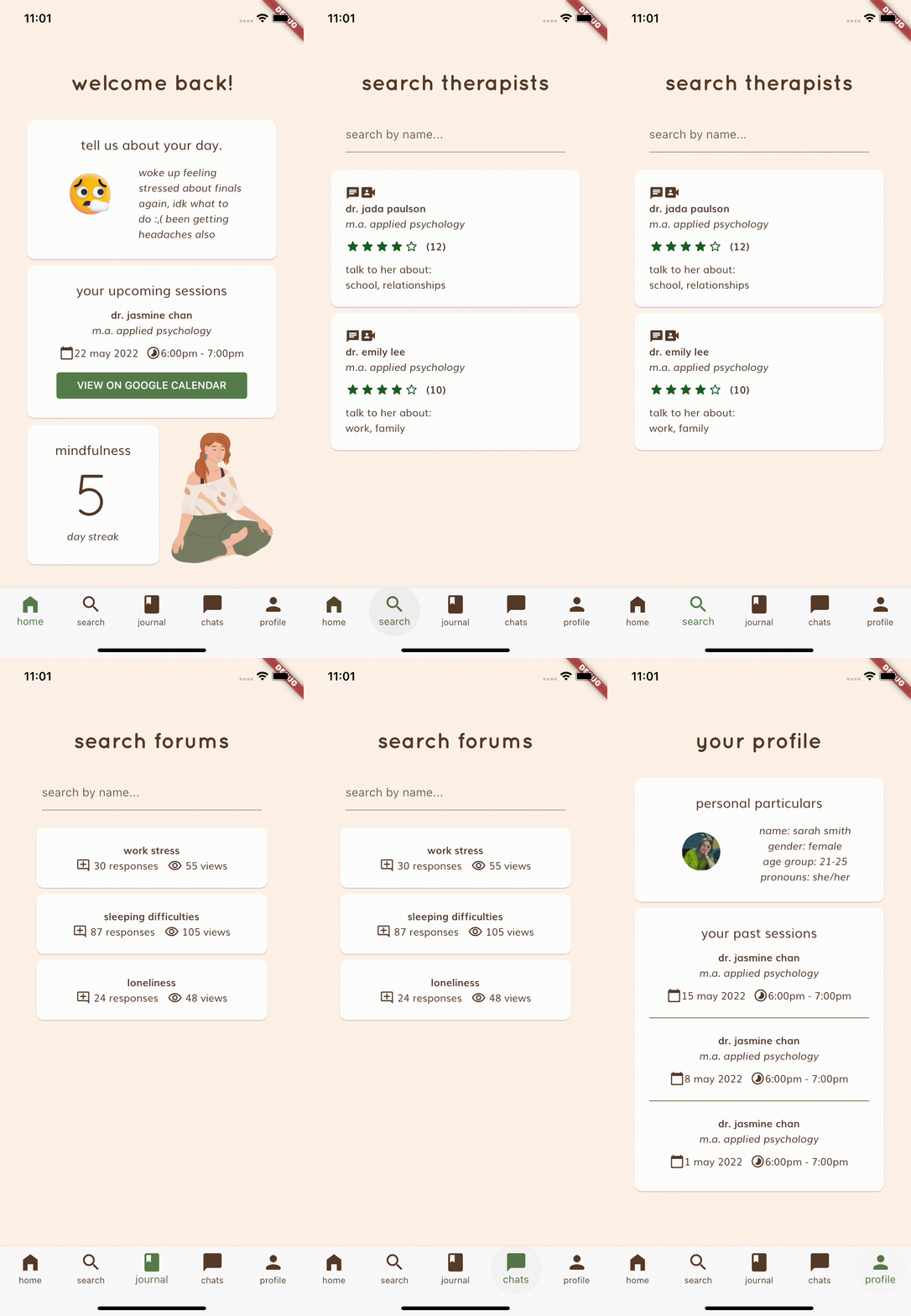
The Professional facet of nook includes web-conferencing and chat messaging functions with licensed therapists so that our users are able to seek the help and advice of professionals.
The Community facet encompasses forums and support groups with other users of _nook_so that our users know that they are not facing these difficulties alone. Our users are also able to lift each other up through these support groups, pushing each other on.
Lastly, the Individual aspect includes journalling and mood-tracking features. It is important for everyone to have some time to themselves to reflect on the events of the day, and these functions allow them to do just that. It also provides our users with an opportunity to uplift themselves.
How we built it
We first used Figma to develop a high-fidelity prototype of nook, where we confirmed the flow of each screen as well as the aesthetic display.
From there, our team split the work to develop the main screens using Flutter.
Challenges we ran into
This was the first time everyone in our team touched base with Flutter, meaning that we had to learn a new SDK in the span of a few short days. Having mostly experimented with frameworks such as Vue.js, Flutter was definitely something out of our comfort zone, and we had to spend a while familiarizing ourselves with the syntax and structure behind Flutter code.
This was also a particularly hectic week for the members of our team, with internships as well as prior commitments to other events. This meant that we were not able to meet frequently to check up on each other, and had to do up our own parts in our own time, all while figuring out the language. However, the little time we had to build this application just meant that it was all the more satisfying when we completed it.
Accomplishments that we're proud of
We learnt a new SDK in a span of a few days while balancing many other commitments. And while we strongly believe that we would be able to build an even more fleshed-out application if given more time, we are extremely proud of the submitted application and would love to continue working on it in the future.
What we learned
From this experience, we definitely learned to look at timelines more closely, learning how to arrange and optimise the limited time we have to complete the necessary tasks. However, our team wouldn't have given up this experience for anything else, because it was exhilarating and extremely satisfying to see our efforts come to fruition.
And of course, we learned how the basics behind Flutter, as well as the various topics covered by the workshops such as developing an Android application, and Firebase!
What's next for nook
Moving forward, our team is looking into developing nook further into a fully functioning application, because we truly believe that this would be a large help in helping people regulate their headspace and improving their mental health. This includes incorporating APIs such as Google Sign-In, Google Fit and Google Calendar to help increase the ease of use for our users when utilising nook.
We would also love for an opportunity to speak with professionals in the field to hear their thoughts about what else could be incorporated or changed in nook so that we are able to best help our users. Working with professionals would also help us develop personalised daily welness plans for each user, including meditation exercises and how to calm themselves down when things get too overwhelming. They could also help to provide certification for clinical diagnoses, which our users could submit to have greater convenience when navigating both their personal and professional lives. Getting the buy-in of professionals would also mean credibility for nook, which would convince more people to use our application, which will in turn help to improve their mental health!
The next step would be to expand nook beyond Singapore, to other geographical locations in the world. Partnerships with governments and various international bodies would also help us to secure funding for larger scale and more in-depth research and development. This also means that we would be able to identify the mental health issues afflicting users from different areas of the world. This would allow us to conduct trend and root cause analysis, to help us identify what is causing these issues, and develop solutions or workarounds that will help our users when facing such challenges.


Log in or sign up for Devpost to join the conversation.