-
-
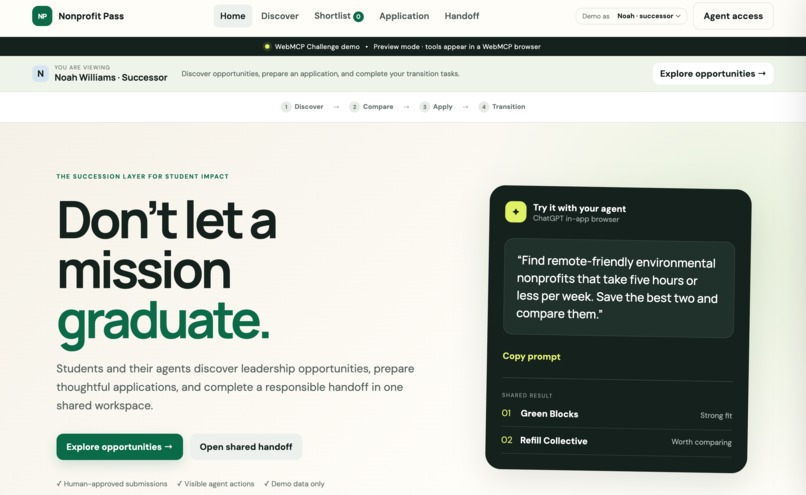
Home Page
-
-
-
-
Throughout high school, I led a nonprofit that impacted more than 20,000 people. Building the organization was one of the most meaningful experiences of my life, but when I moved to college, I could no longer give it the time and attention it deserved. I began trying to transition the organization to a new leader, only to discover how difficult nonprofit succession can be. The organization’s knowledge, relationships, documents, and responsibilities were spread across different places, and there was no simple way to prepare another student to take over.
In college, I was selected to attend one of America’s premier youth service summits. At the conference, I met other young nonprofit founders who were experiencing the same problem. They had created organizations that were making a real difference, but graduation, college, and new responsibilities made it difficult for them to continue leading. Their nonprofits were not ending because their missions were no longer important. They were at risk because they did not have an effective way to find, prepare, and support their next leaders.
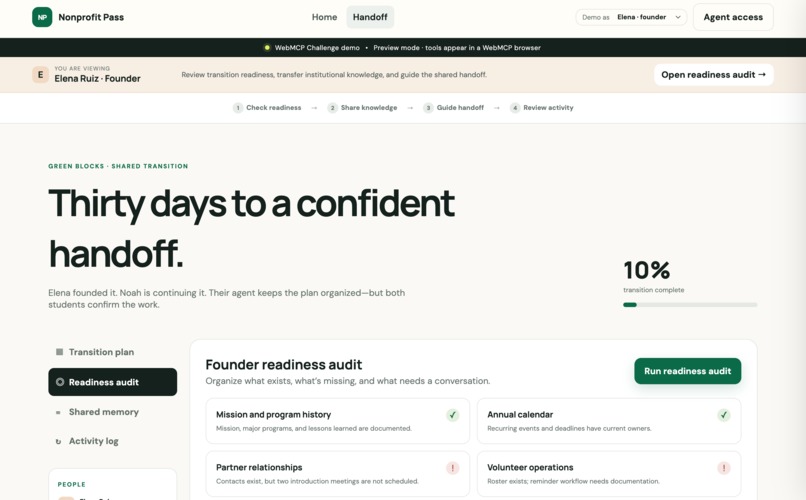
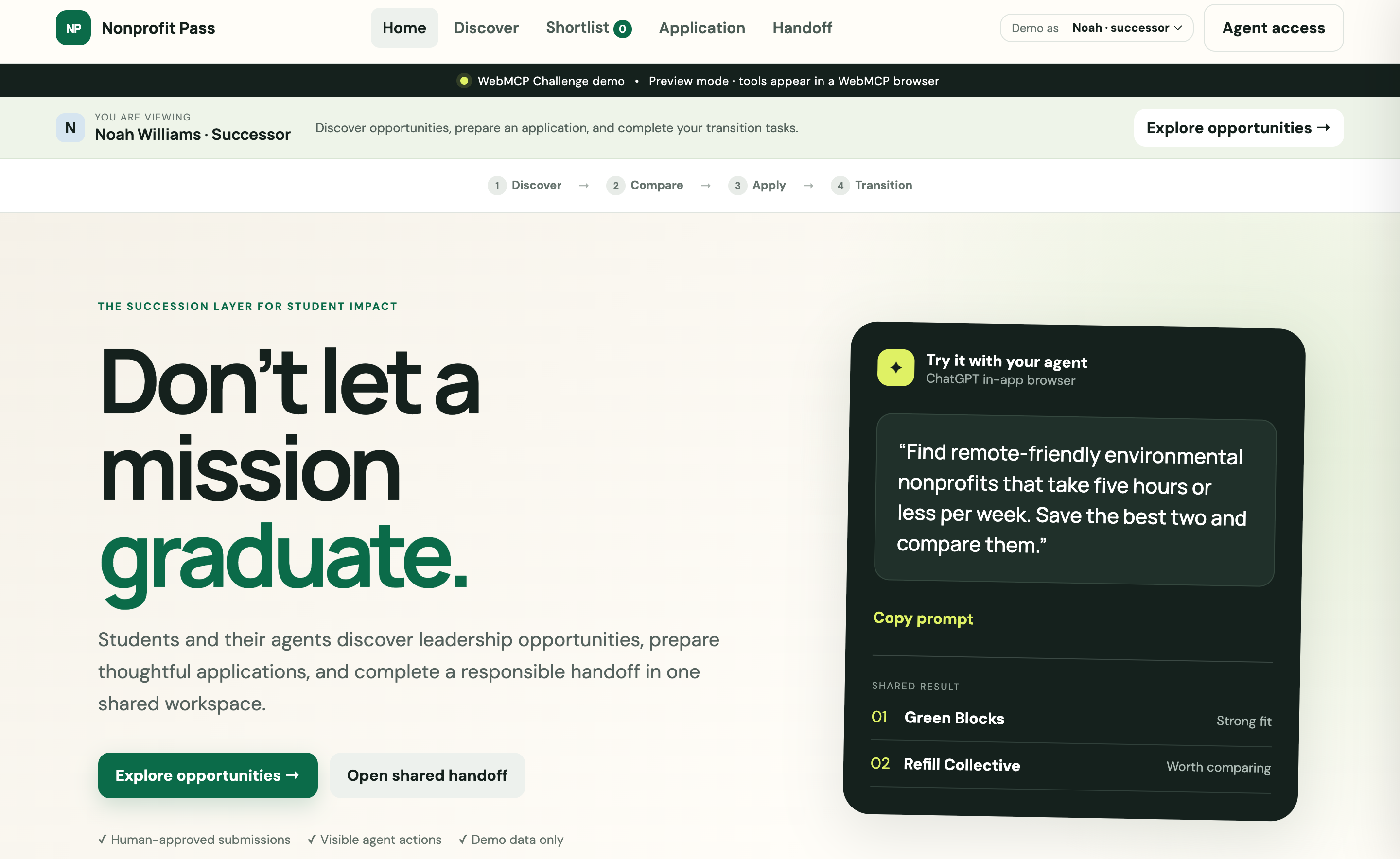
That experience inspired me to build Nonprofit Pass, a WebMCP-powered platform that helps student-led nonprofits survive leadership transitions. The platform gives founders, potential successors, and AI agents a shared space in which they can plan and complete a responsible handoff.
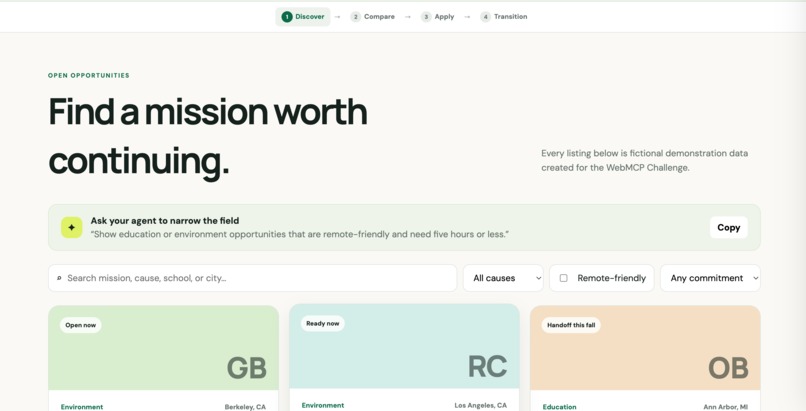
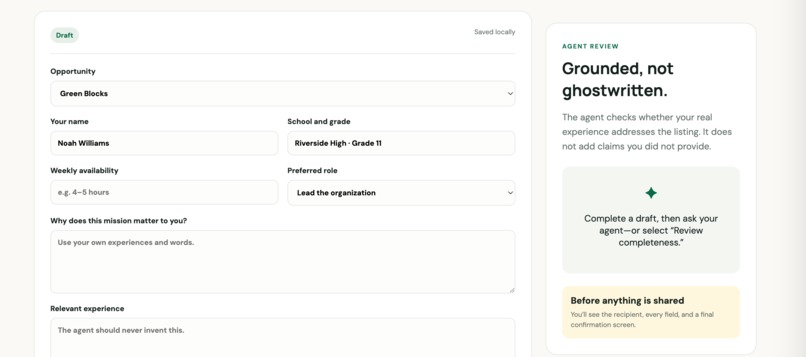
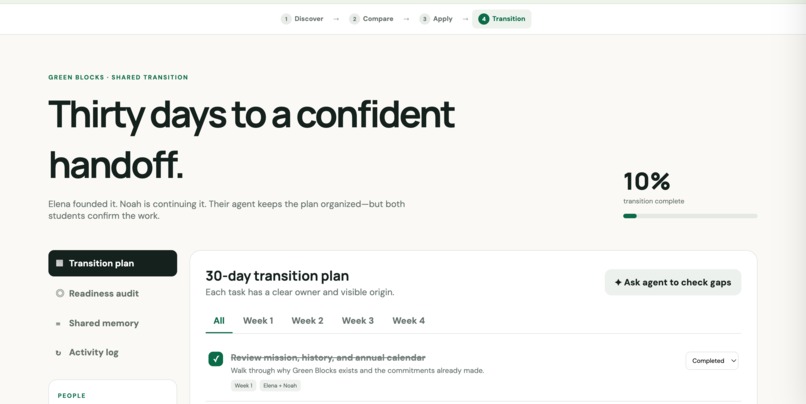
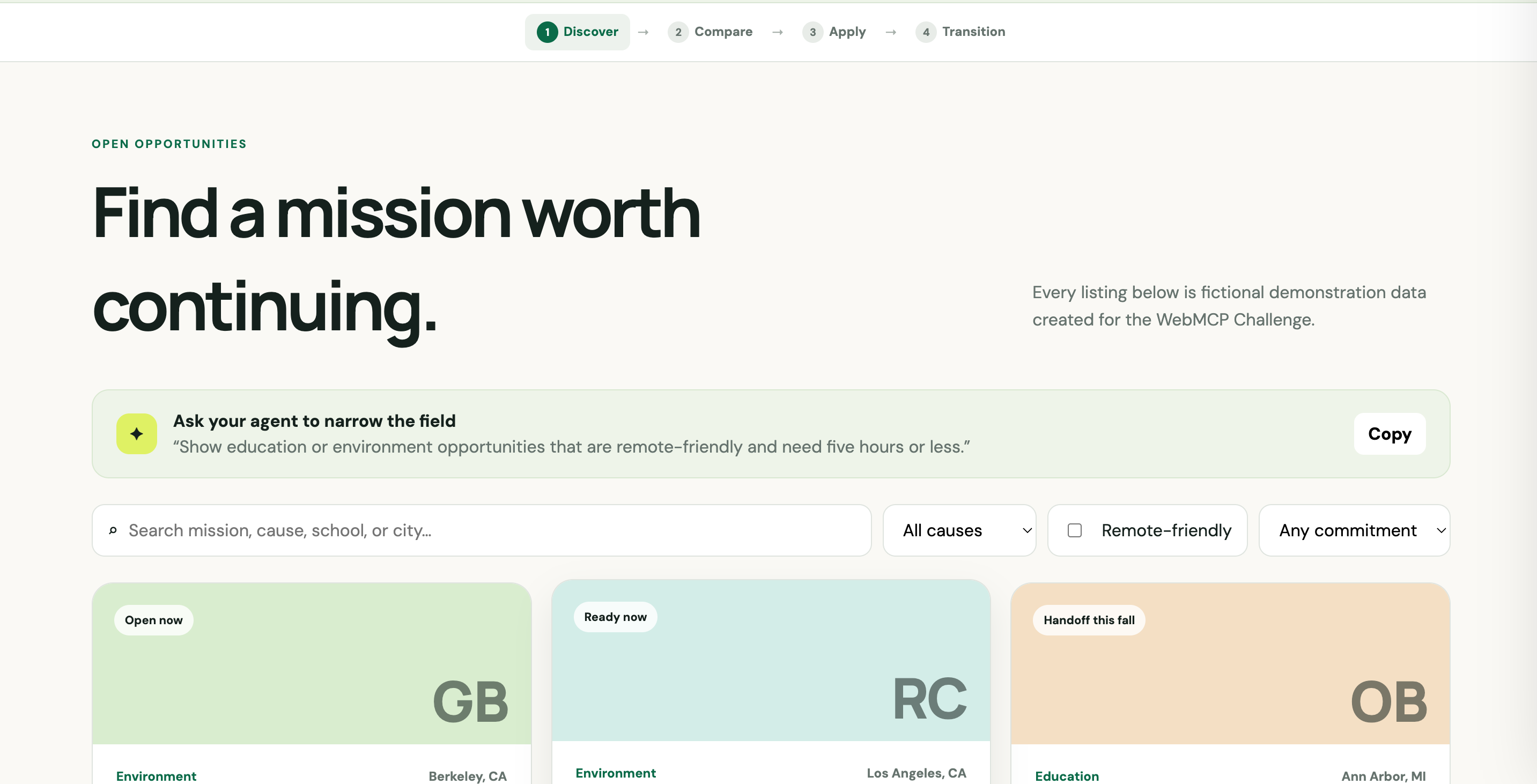
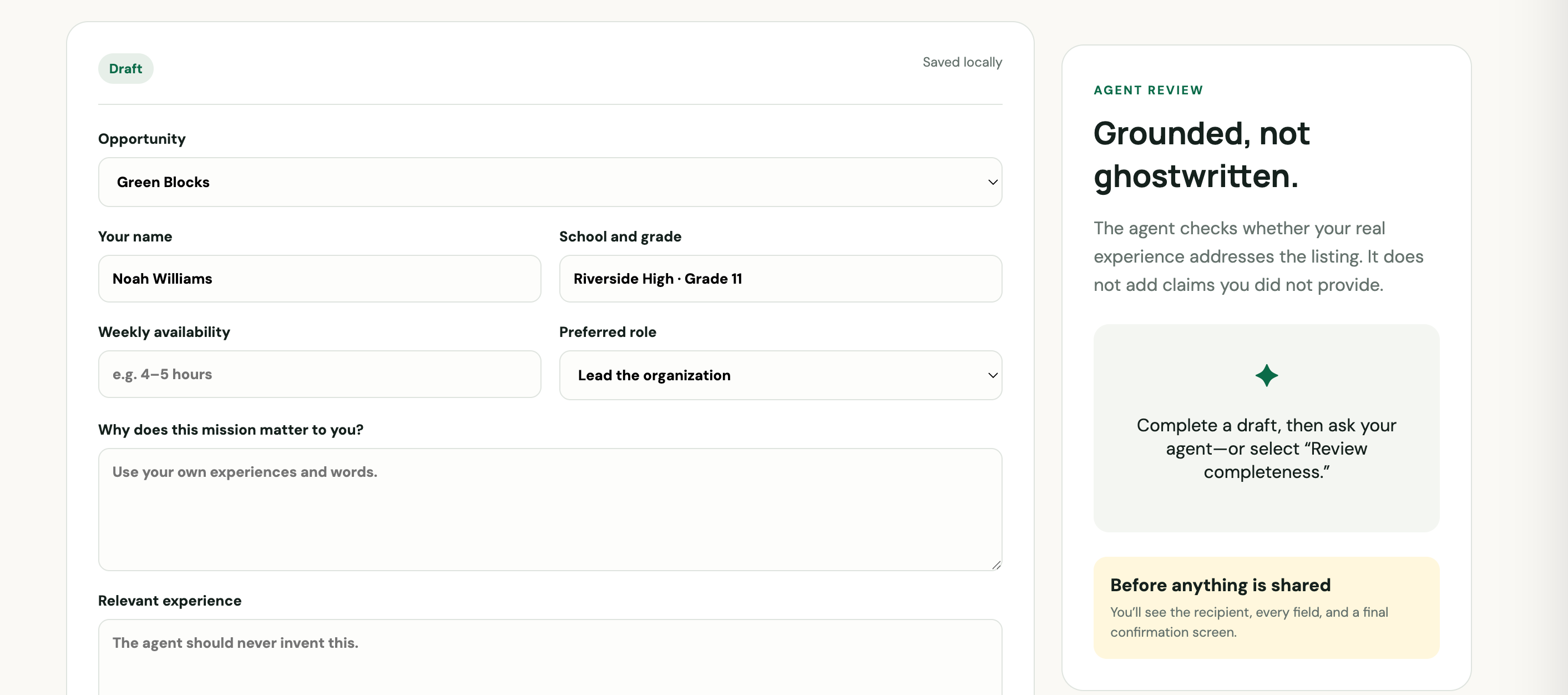
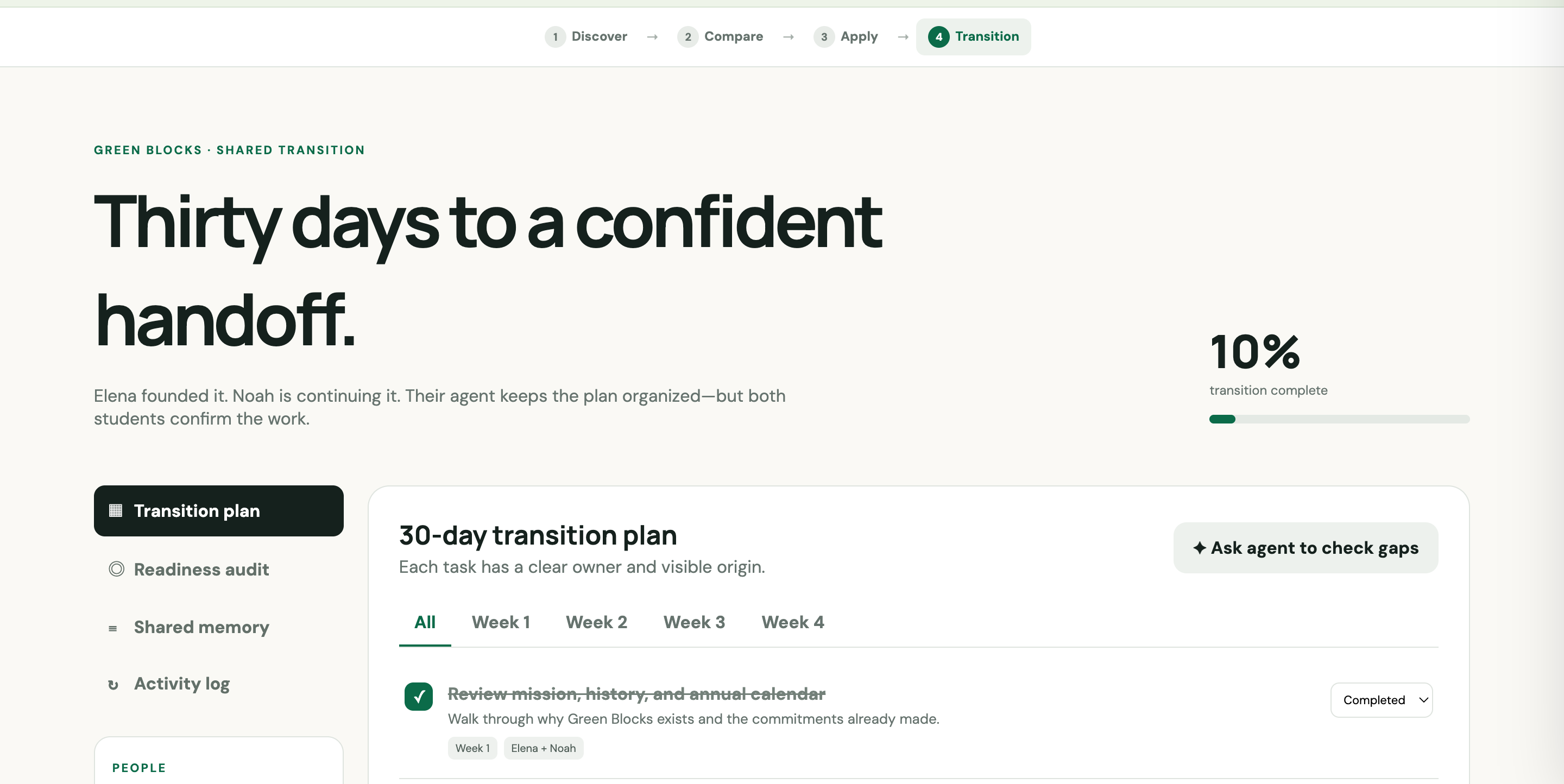
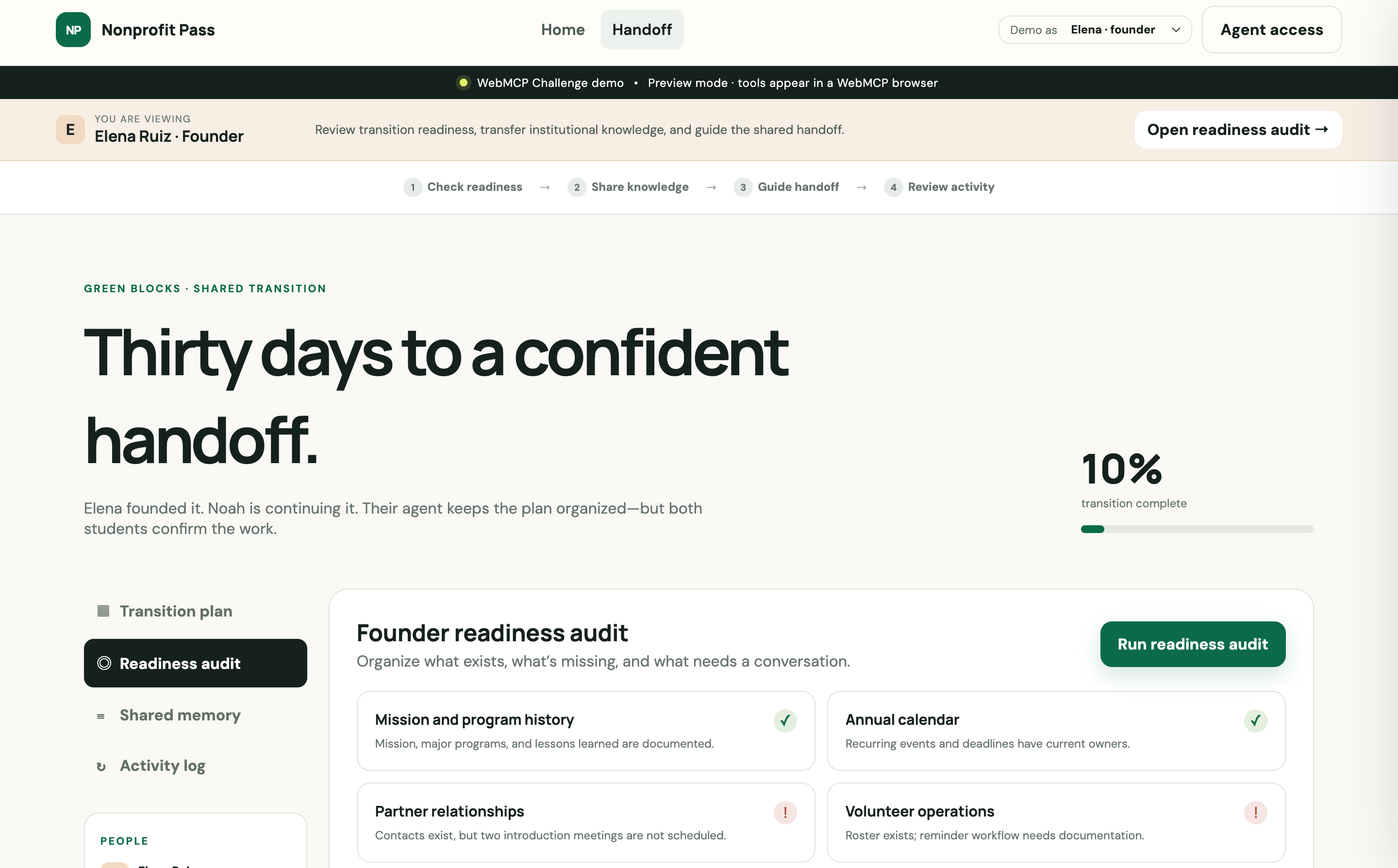
A student interested in becoming a successor can use Nonprofit Pass to discover leadership opportunities, search and filter organizations, save nonprofits to a shortlist, compare opportunities, and prepare an application. A founder can evaluate whether an organization is ready for succession, identify missing documents or institutional knowledge, create a structured 30-day transition plan, and leave important notes for the next leader. Both people can see the same transition progress, creating continuity between the person who built the organization and the person who will lead it next.
I built the project using HTML, CSS, and JavaScript, with browser-based storage to preserve user progress. I integrated WebMCP through the document.modelContext API, allowing AI agents to understand and interact with the application through structured tools. The project includes 11 WebMCP tools that can search for nonprofits, retrieve organization details, maintain a shortlist, compare opportunities, prepare and review applications, assess handoff readiness, update transition tasks, add shared notes, and summarize transition progress.
My goal was not simply to let an agent click buttons. I wanted the agent to become a useful collaborator. An AI agent can organize information, identify gaps, prepare drafts, and recommend next steps, while people remain responsible for consequential decisions. Submitting an application and approving a final leadership handoff are intentionally human-only actions. This makes the agent helpful without allowing it to make irreversible decisions on someone’s behalf.
One of the greatest challenges was determining how much authority an agent should have. Leadership succession affects real organizations and the communities they serve, so completely automating the process would be irresponsible. I addressed this challenge by separating assistance from approval. Agents can help people understand their options and prepare their work, but final decisions stay with the founder and successor.
Another challenge was designing the application for two users with very different needs. Successors need a simple way to discover and evaluate opportunities, while founders need tools for documentation, readiness assessment, and transition planning. I created role-specific experiences for each person while connecting them through a shared transition workspace. I also added visible activity tracking so users can understand which actions were completed by a human and which were assisted by an agent.
Building Nonprofit Pass taught me that an agent-native application requires much more than exposing existing interface controls to AI. It requires carefully deciding what context agents receive, which actions they may perform, how their contributions are communicated, and where human judgment must remain mandatory. I also learned that succession is not a single moment when one leader replaces another. It is an ongoing process involving trust, documentation, training, shared memory, and accountability.
In the future, I hope to connect Nonprofit Pass with real nonprofit opportunities and verified organizational accounts. The platform could eventually include document integrations, mentor verification, founder-successor introductions, transition health monitoring, and long-term impact tracking.
My goal is to ensure that a student’s graduation does not have to mean the end of an organization. Young founders create projects that address meaningful needs, and those projects deserve the opportunity to continue. By helping founders, successors, and AI agents work together, Nonprofit Pass creates a path for a nonprofit’s mission and impact to outlive its original founder.
Built With
- chatgpt
- codex
- css
- html
- javascript
- json

Log in or sign up for Devpost to join the conversation.