

🚀 Our Journey Building *NONJi*
🧠 What Inspired Us
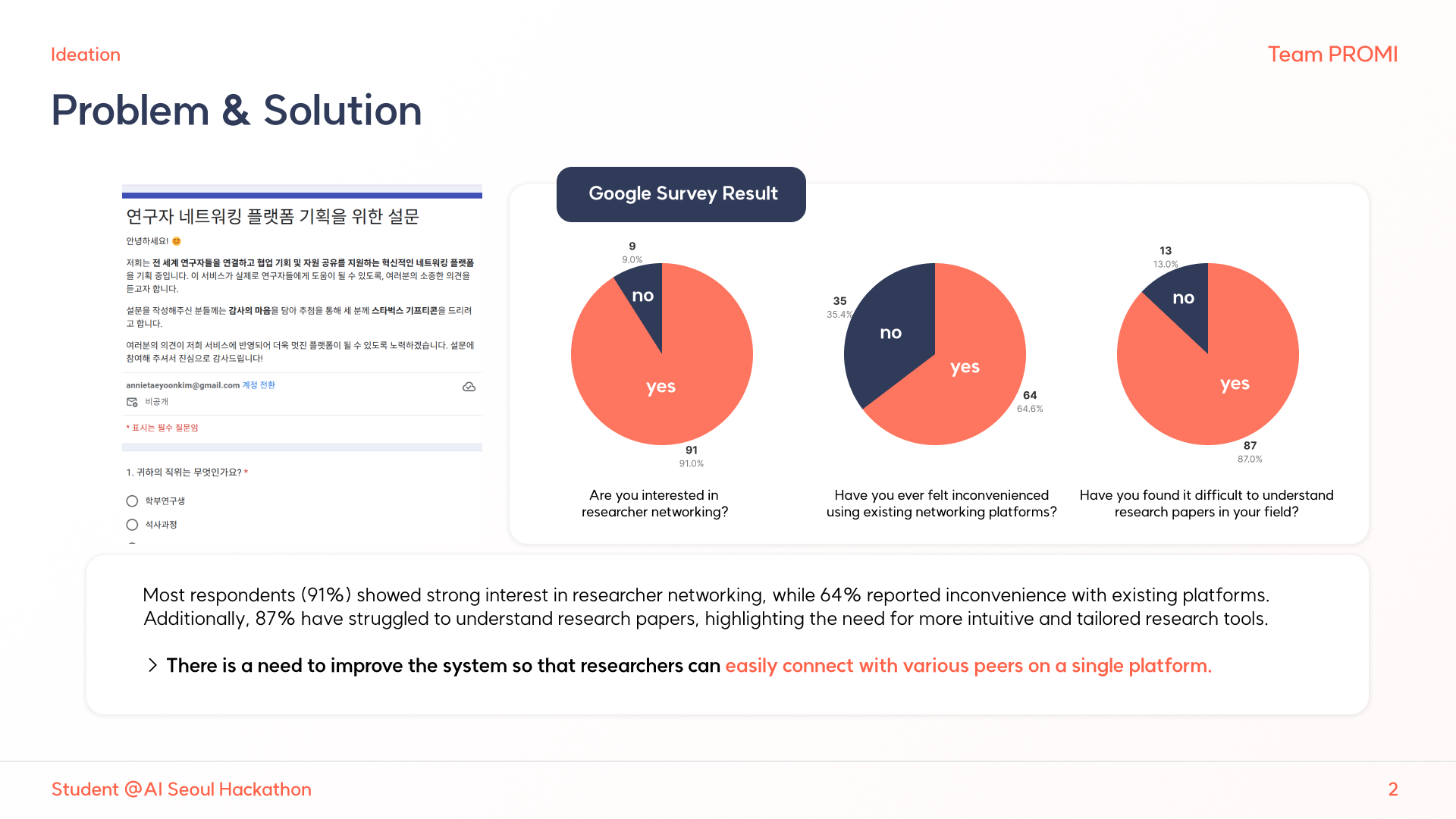
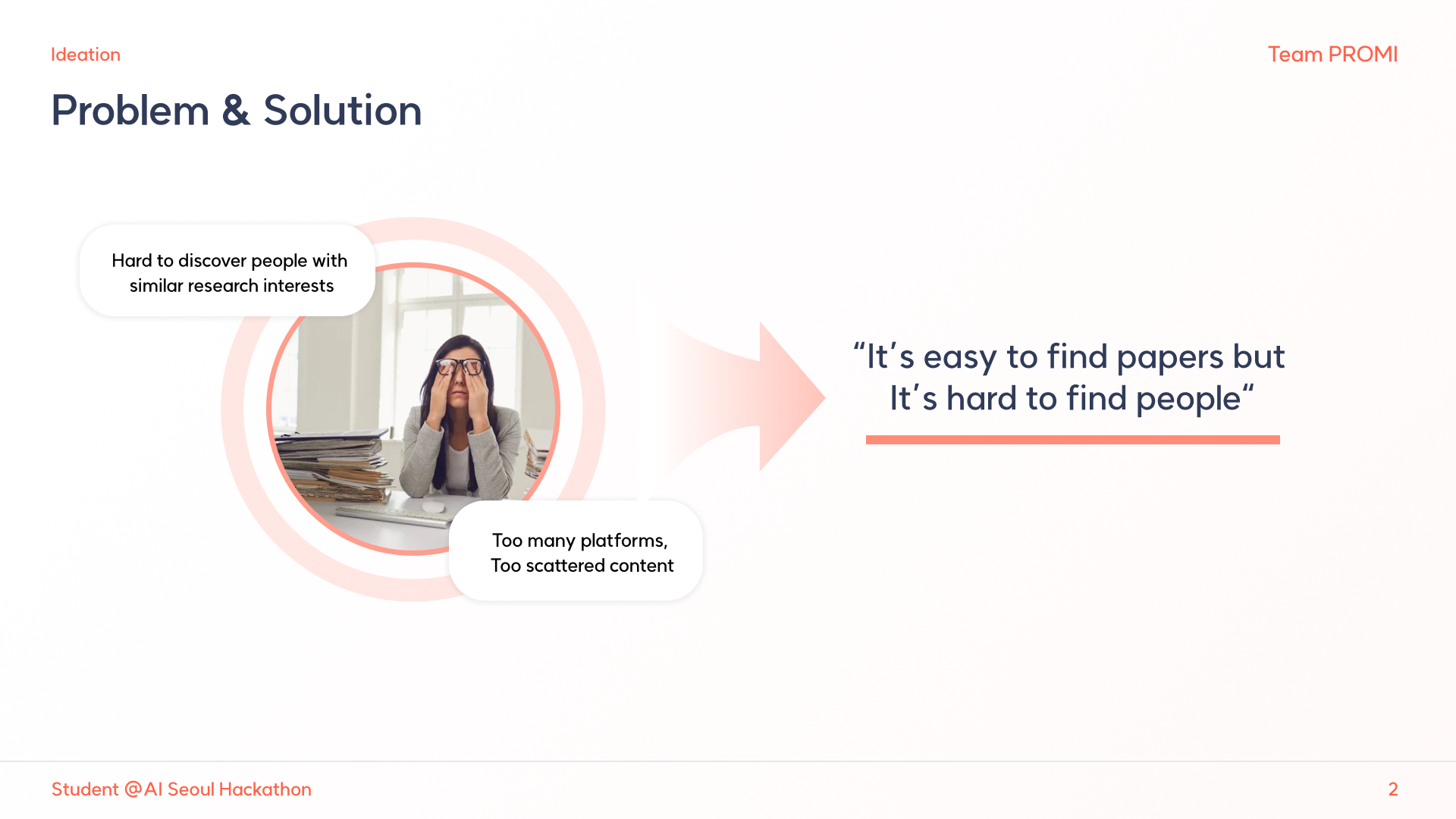
In academia, we often find ourselves asking:
- "Who else is working on this?"
- "How do I reach out to collaborate?"
- "Why is it so hard to just talk to someone with similar research interests?"
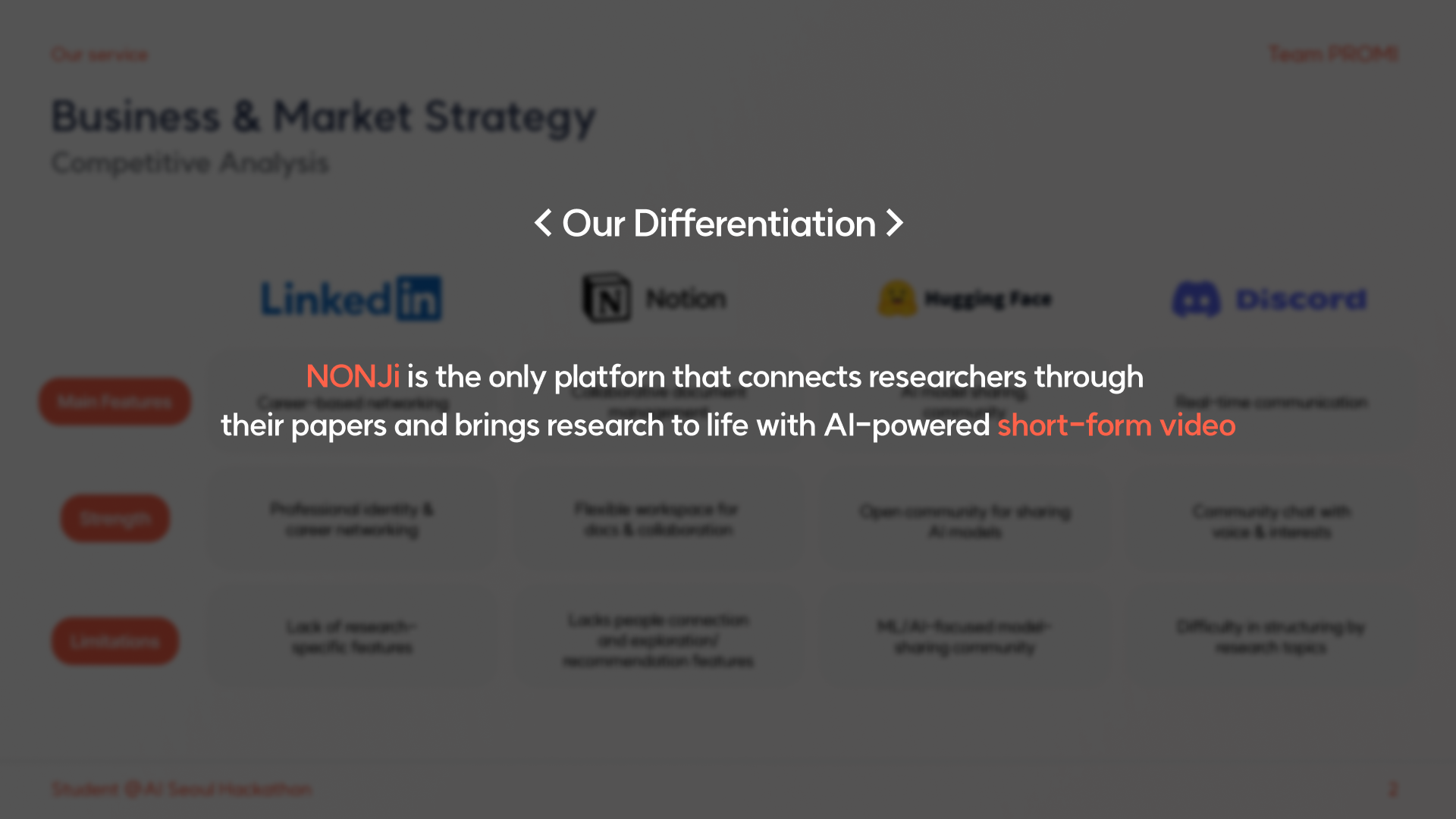
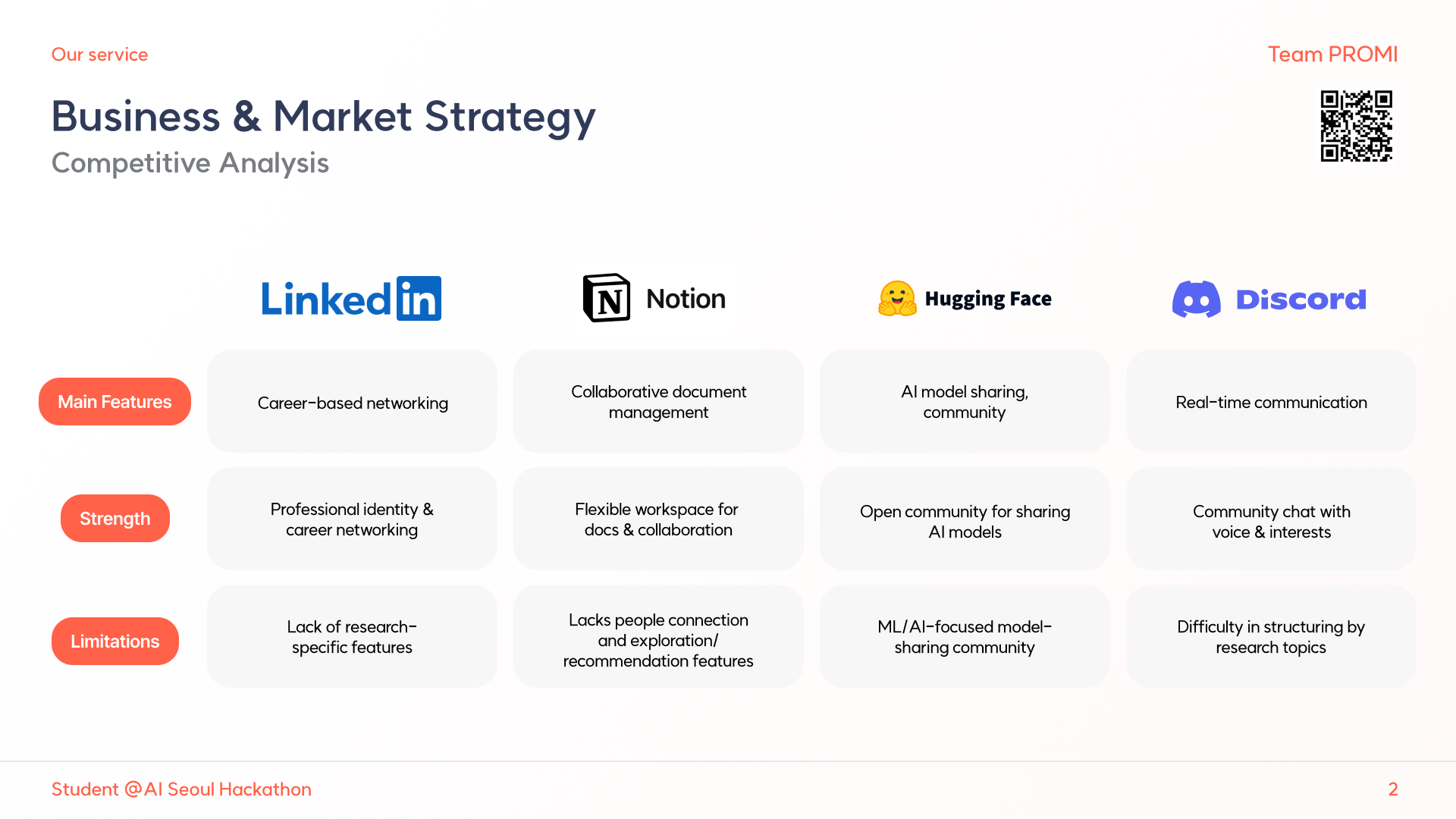
These are problems every master's or PhD student, or any other researcher faces. Existing platforms like LinkedIn, Google Scholar, and Slack serve parts of the process — but nothing connects it all into one seamless researcher experience. That’s where the idea for NONJi was born.
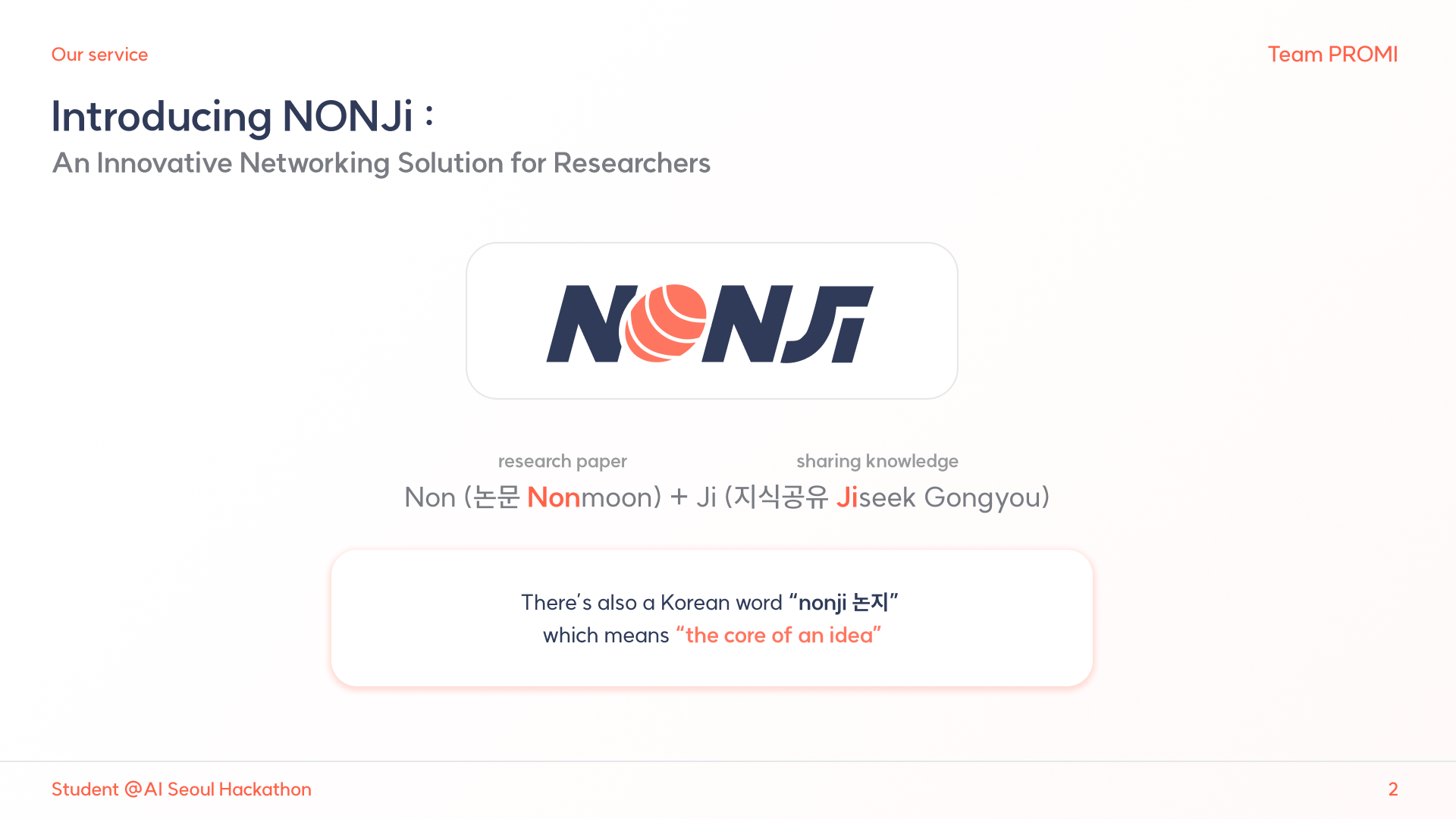
NONJi (논지) is rooted in the Korean word meaning "core idea of a paper." We imagined a space where researchers don't just share ideas, but spark connections and build collaborations.
💡 What We Learned
We dove into how researchers discover one another, share their work, and form collaborations. We found:
- Researcher networking is still manual, fragmented, and often intimidating.
- There is a huge potential in AI for both matching people and summarizing ideas.
- Short-form content can dramatically lower the barrier for engagement — especially for the new generation of researchers.
We realized:
A well-matched conversation beats a thousand emails.
A 60-second video can explain more than an abstract.
🛠️ How We Built It
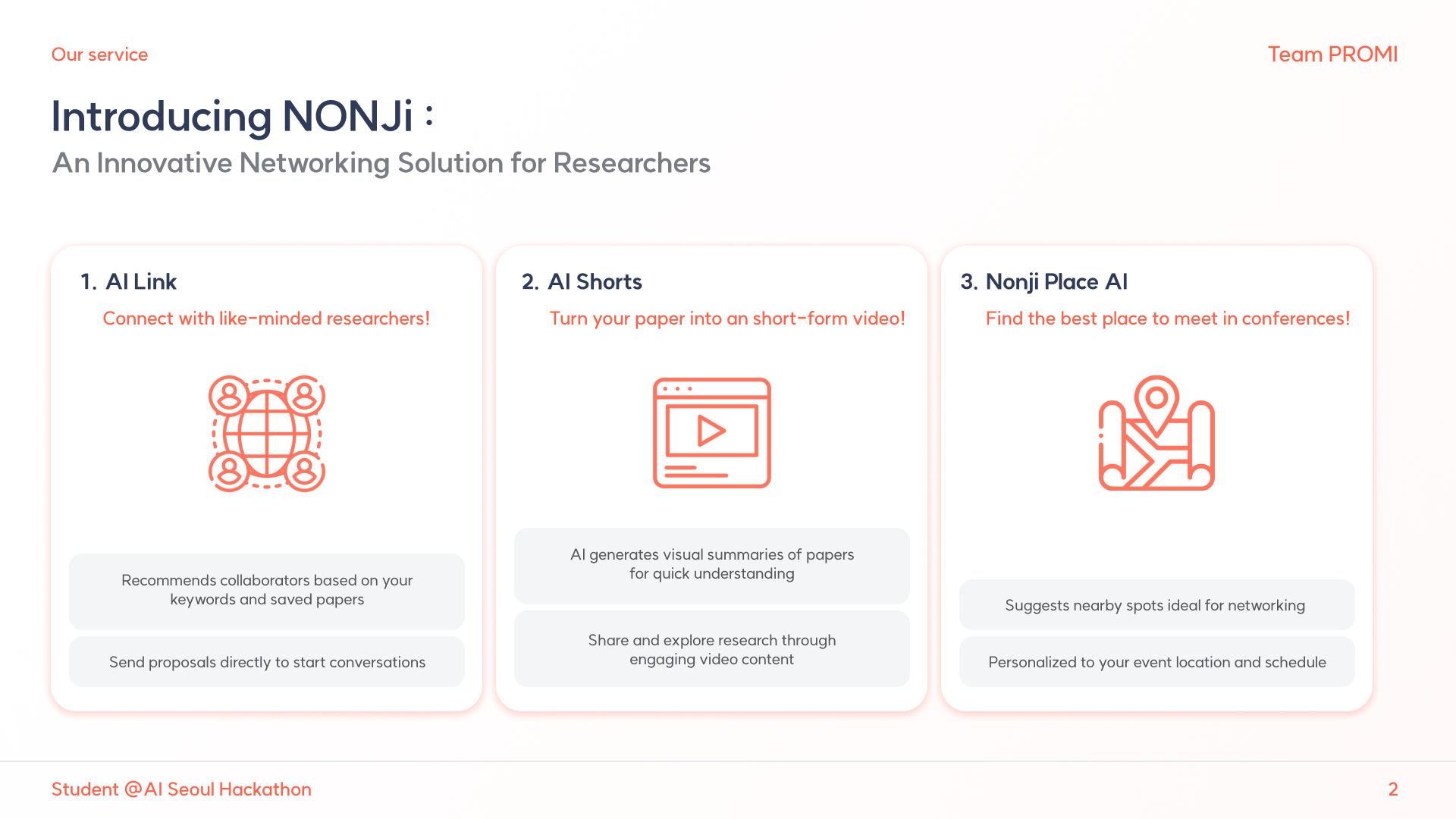
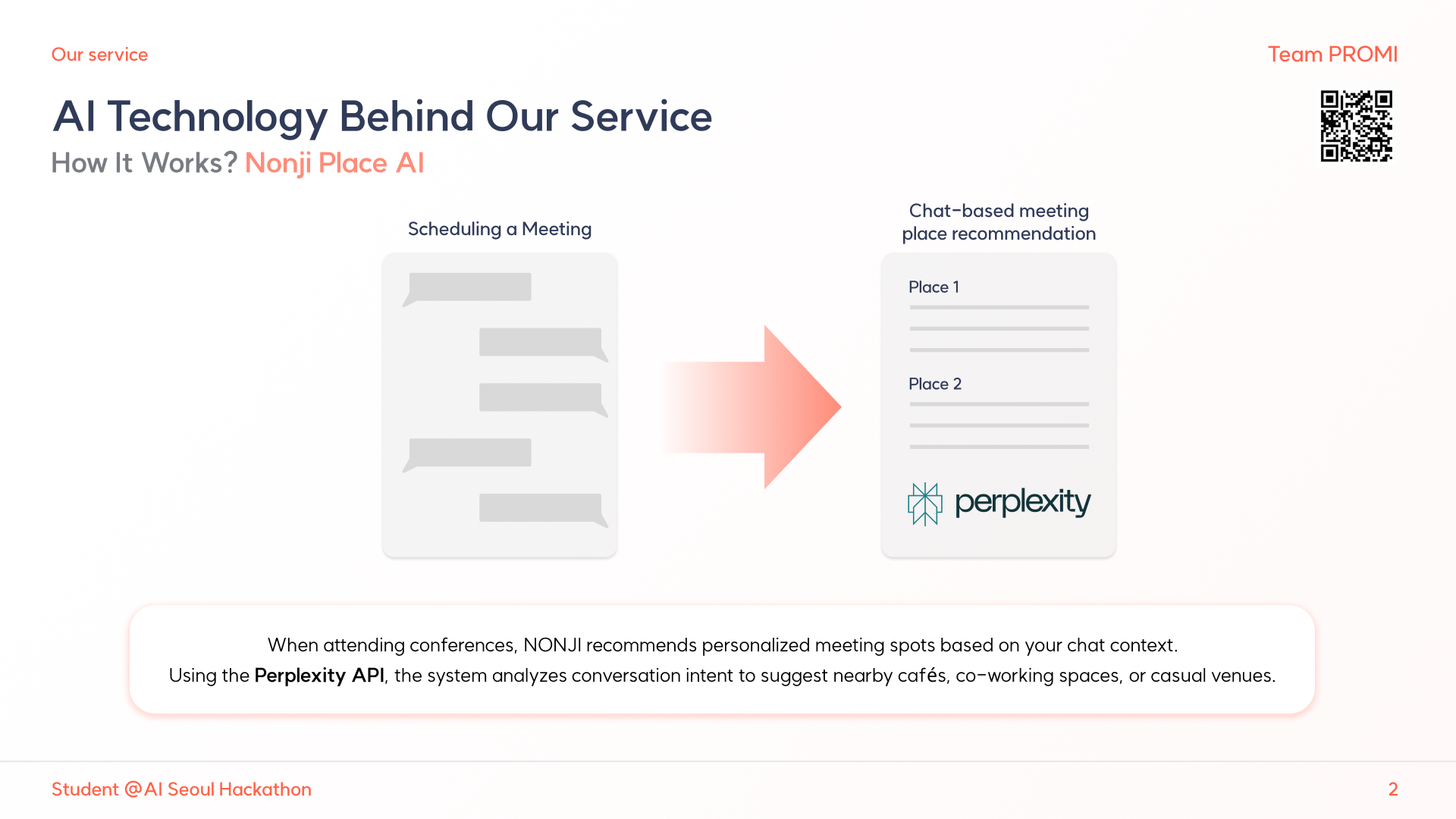
We built NONJi with the following core modules:
✅ AI Researcher Matching
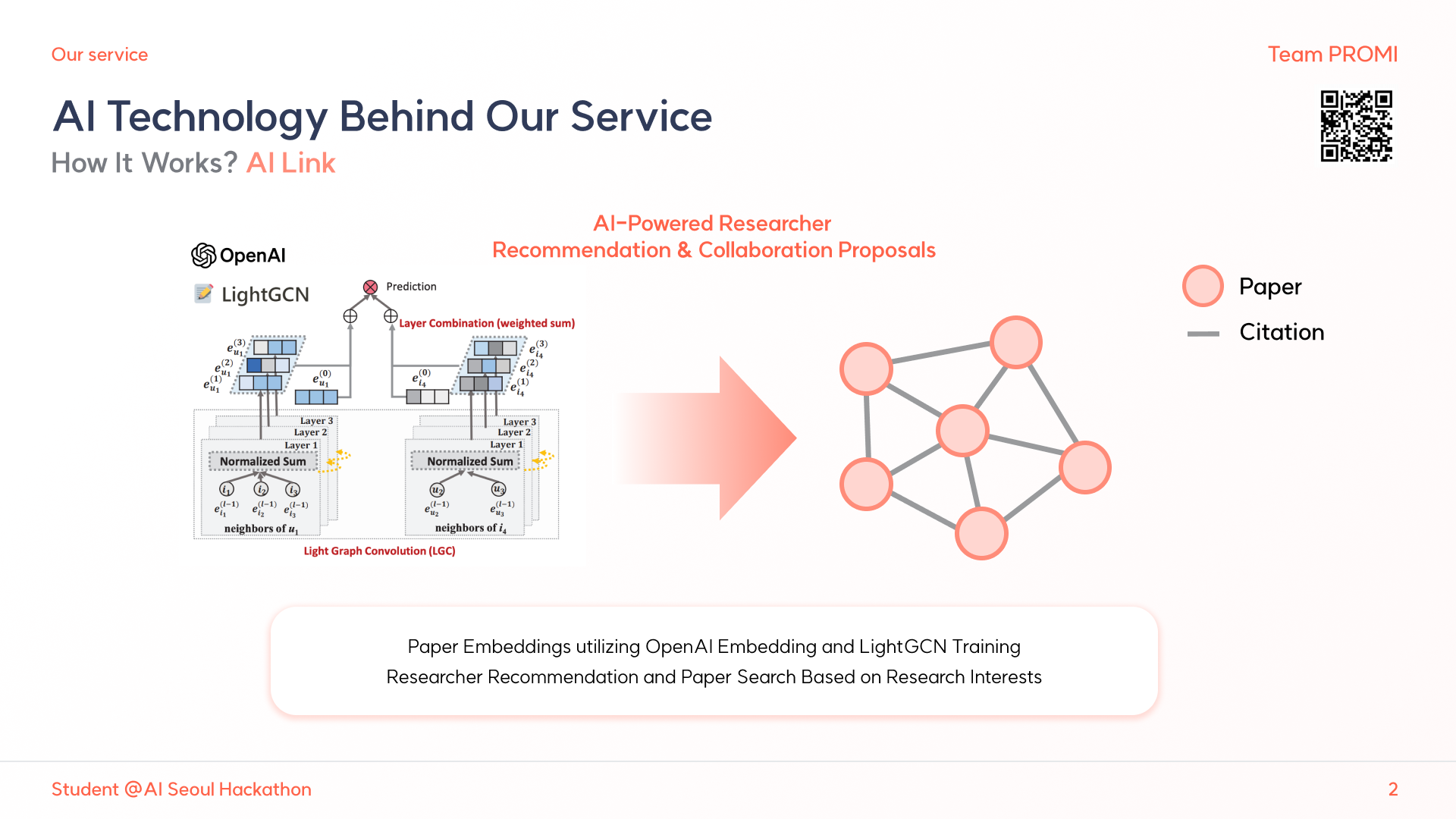
- We parsed uploaded papers and extracted embeddings using pretrained models.
- Citation data and keywords were used to match similar researchers.
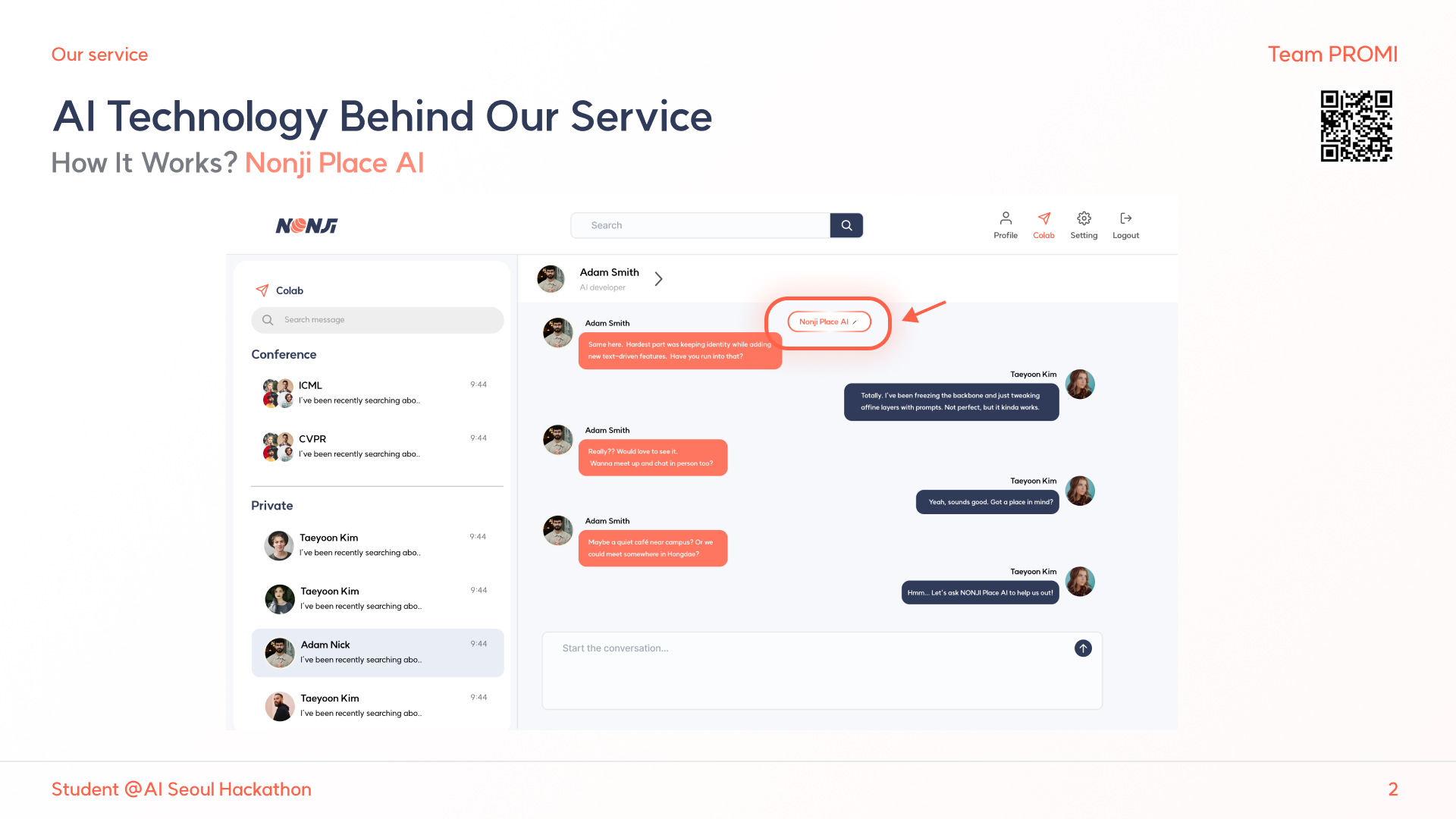
- Users could immediately start chatting in a Discord-style DM interface.
✅ Collaboration Pitch System
- Matched researchers could initiate a "Collab Proposal."
- We implemented an AI-driven proposal generator to help users pitch joint work easily.
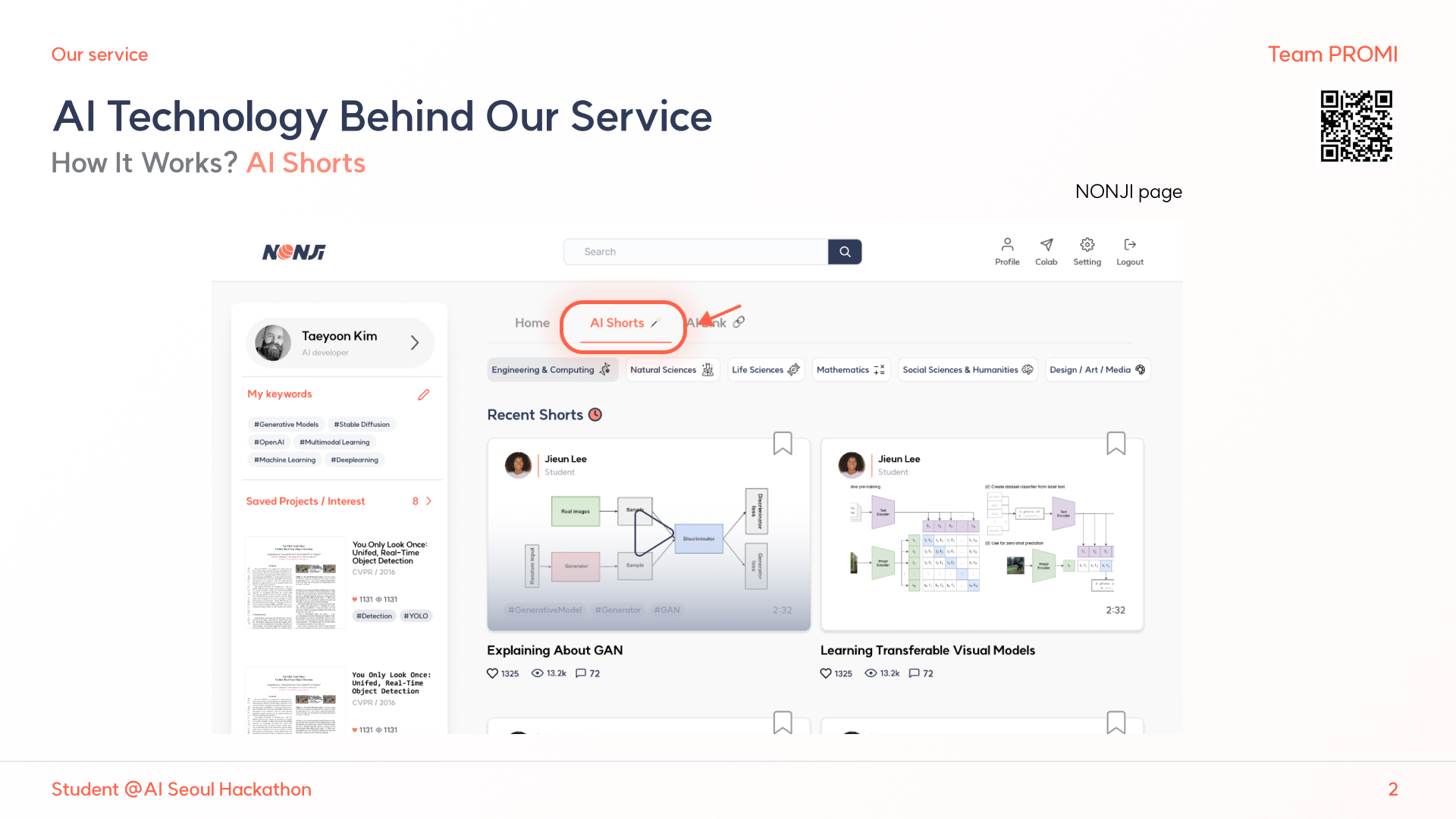
✅ 60-second Research Shorts (Taeyoon’s Idea)
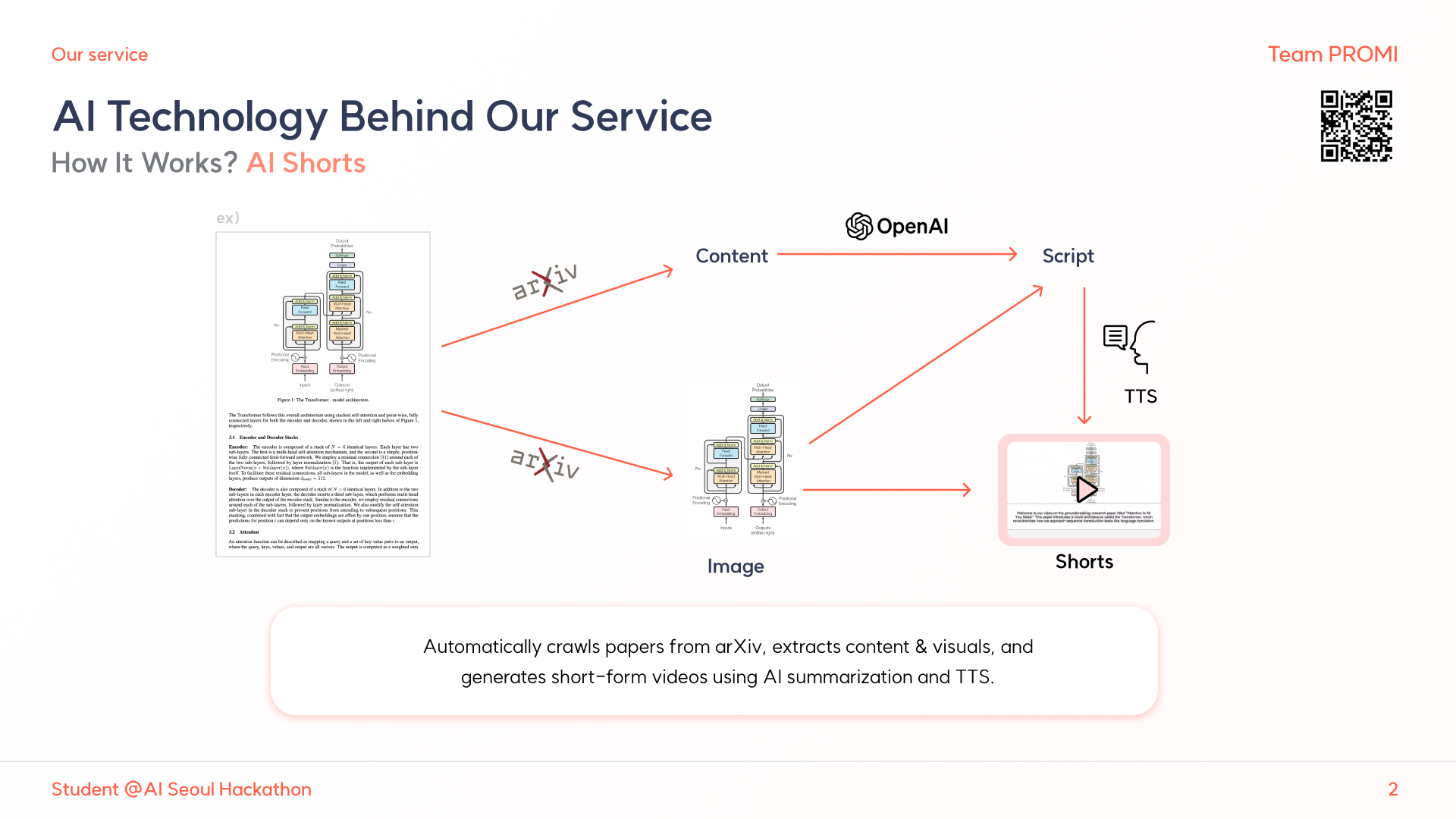
- Users recorded or uploaded concise videos explaining their research.
- These videos were auto-captioned and styled to appeal across disciplines.
✅ Conference Calendar & Research Events (Dohyun’s Idea)
- A global conference calendar was integrated with filters for interest areas.
- Users could auto-sync events to personal calendars and see “co-attendees.”
🧗♀️ The Challenge We Faced
Short-form video generation was the most technically demanding feature.
Rendering dynamic text overlays, syncing audio narration, and preserving cross-device compatibility required significant system resources. At one point, video quality dropped, and timing mismatches affected readability.
💡 How We Solved It
We optimized the video generation pipeline by:
- Implementing frame-level alignment algorithms,
- Using resource-efficient text-to-video rendering techniques, and
- Setting clear boundaries between image area and subtitle box with padding and stroke logic.
This allowed us to deliver clean, readable, and lightweight 60s research shorts.
✨ Why It's Innovative
Unlike existing platforms that focus on static profiles or paper repositories, NONJi focuses on researcher-to-researcher resonance — the moment when shared curiosity leads to connection. Here’s how we broke new ground:
- AI Matching → Real-Time Dialogue (not just profiles)
- Short-Form Research Content (a new genre of scholarly communication)
- Integrated Event-Based Networking (e.g., “connect with people attending the same conference”)
- End-to-End Collaboration Funnel, from matching → chatting → proposal
We didn’t just make another academic tool. We built the first platform where research meets relationship.
🌏 Looking Ahead
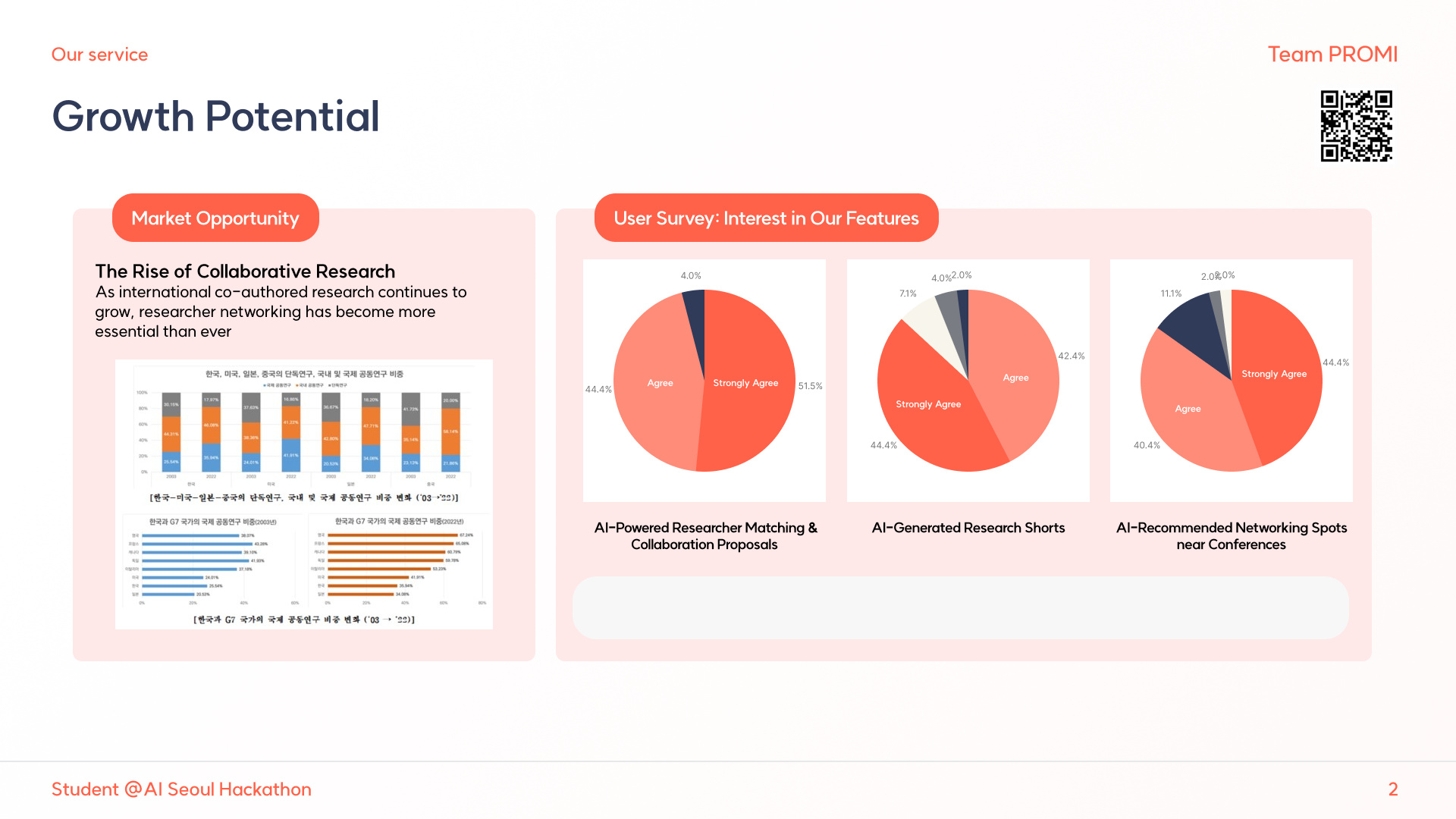
The potential is massive:
- 10M+ global researchers and rising
- Surging demand for research-driven AI collaboration tools
- New habits of content consumption (TikTok generation meets academia)
We're excited to expand NONJi to cover more disciplines, integrate with ORCID/Google Scholar, and offer video creation support with AI-assisted templates.
🧩 At the end of the day, every great paper starts with a good conversation.
And we believe NONJi is where that conversation begins.
Built With
- express.js
- flask
- graphgcn
- node.js
- openai
- perplexity
- python
- torch

Log in or sign up for Devpost to join the conversation.