-
-

Breath analyzer
-

Hardware setup with Arduino Nano, gas sensor and 3D printed mouth piece
-
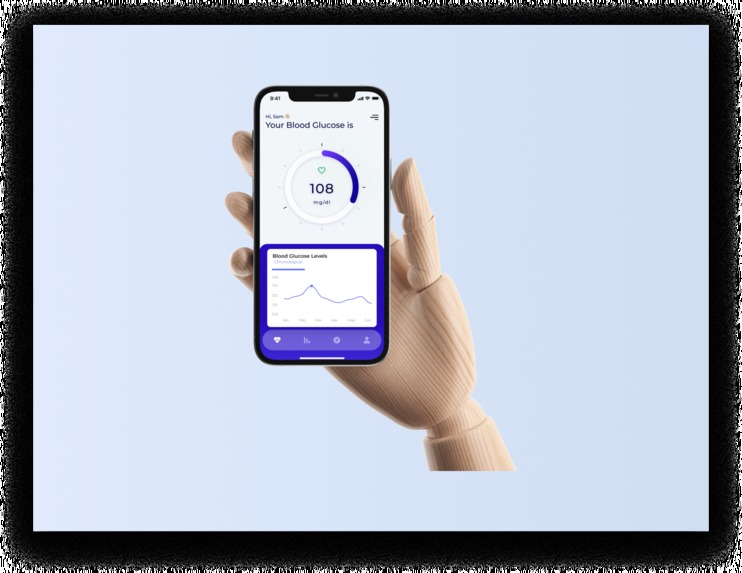
Companion app showing results from the measuring device
-

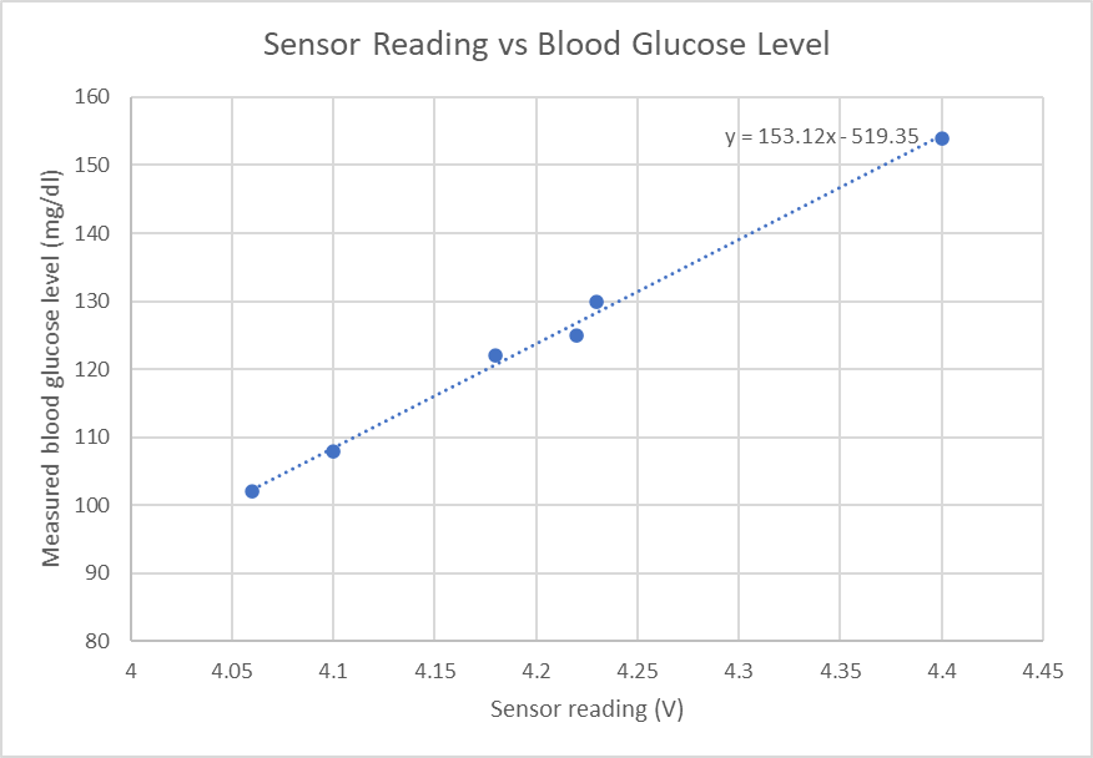
Plot showing the data from the breath analyzer vs the measured data from invasive blood glucose meter
-

Real time results from the hack read by Arduino IDE's serial monitor



Inspiration
According to CDC, 34 million Americans—just over 1 in 10—have diabetes. 88 million American adults—approximately 1 in 3—have prediabetes. Diabetes is the 7th leading cause of death in the United States (and may be underreported). Diabetes is a chronic condition and it is very important to keep monitoring your blood sugar levels to avoid health complications. Most patients use a home testing kit that requires you to prick your finger to draw a little blood and feed it to the measurement machine using single-use strips. It is not uncommon to hear patients or their family express their dissatisfaction with the testing, especially when frequent tests are required.
There is a demand and need to have a better and less painful way to test without the needles but no such affordable products are available in the market. While searching for different ways to non-invasively measure blood sugar, I found that acetone concentration in the breath is a great biomarker that has a linear relationship with the amount of blood sugar. This small concentration of acetone (~1ppm) in the breath was measured using expensive equipment in older research publications. Recent works have shown that a simple MQ-138 gas sensor that is available as an Arduino module measures Volatile Organic Compounds (VOCs). Acetone is one of the gases that it is sensitive to in the range that we are interested in. This was an inspiration to hack this gas sensor and build a device that is longed for.
What it does
This is an easy-to-use breath analyzer that gives you the blood sugar levels when you exhale into the device for about 10s. The reading is shown either on a computer or a mobile device using a companion app.
How we built it
This was built using an Arduino Nano board and MQ-138 gas sensor module. The gas sensor changes its resistance based on the amount of VOCs around it. This change in resistance is read as a change in voltage values as seen by the Arduino. The Arduino sent the recorded data to the computer where it was displayed as voltage levels. These recordings were done throughout the period of the hackathon along with the readings from the gold standard invasive blood glucose meter. These readings were plotted as a scatter plot in excel and a trendline equation was obtained. This was a simple way to achieve linear regression. The relationship between the breath analyzer values and the actual blood sugar level was linear as expected. This equation of the straight line was used to convert the voltage readings into Blood Glucose Levels and displayed on the serial monitor
The total cost of this device is approximately $30.
A companion app was designed using Figma to show the readings to the user. The device and the mobile device connect via Bluetooth.
Challenges we ran into
The original idea was to build an app using no code (or less code) methods. The app was designed but was not built as I did not have a Bluetooth module with me during the hackathon to transfer data to the phone. Therefore, the data is displayed on the serial monitor.
The gas sensor is an electrochemical sensor that needs a significant setup time. The warming up time for the sensor is somewhere between 2-5mins, depending on when it was last used. The catalyst within the sensor needs to stay at a higher temperature to effectively measure the gas and also evaporate any residual gases that stay within the sensor. We need to wait until the device is ready to get the best results. The device is said to be ready when the voltage across it stays constant and does not fluctuate.
This sensor is also sensitive to alcohol, therefore no alcohol needs to be consumed when using this device.
Accomplishments that we're proud of
A prototype device to solve a real problem that affects millions was designed and tested within the span of this hackathon. Even though it is limited at this time, with sufficient resources it can be engineered to work as a product that makes a big difference people's lives.
The cost of this device is comparable to other invasive devices that are already available in the market.
What we learned
The blood glucose levels can be measured using the acetone concentration in your breath
What's next for Non-invasive Blood Glucose Measurement
Explore other types of sensors that make the device more efficient, form a team to build a minimum viable product, and pitch the idea at competitions similar to shark tank


Log in or sign up for Devpost to join the conversation.