-
-
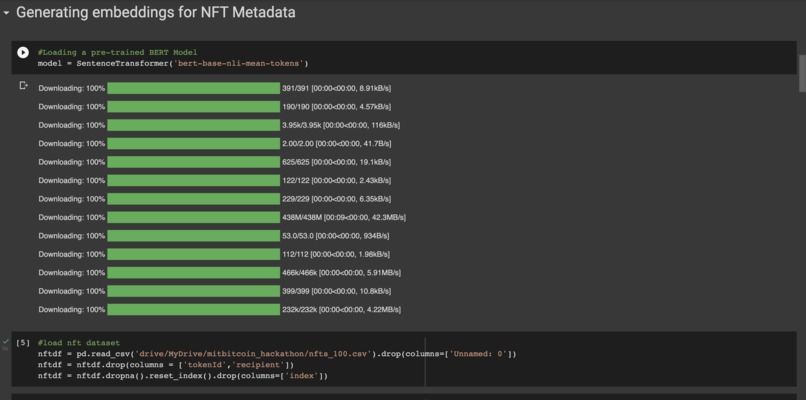
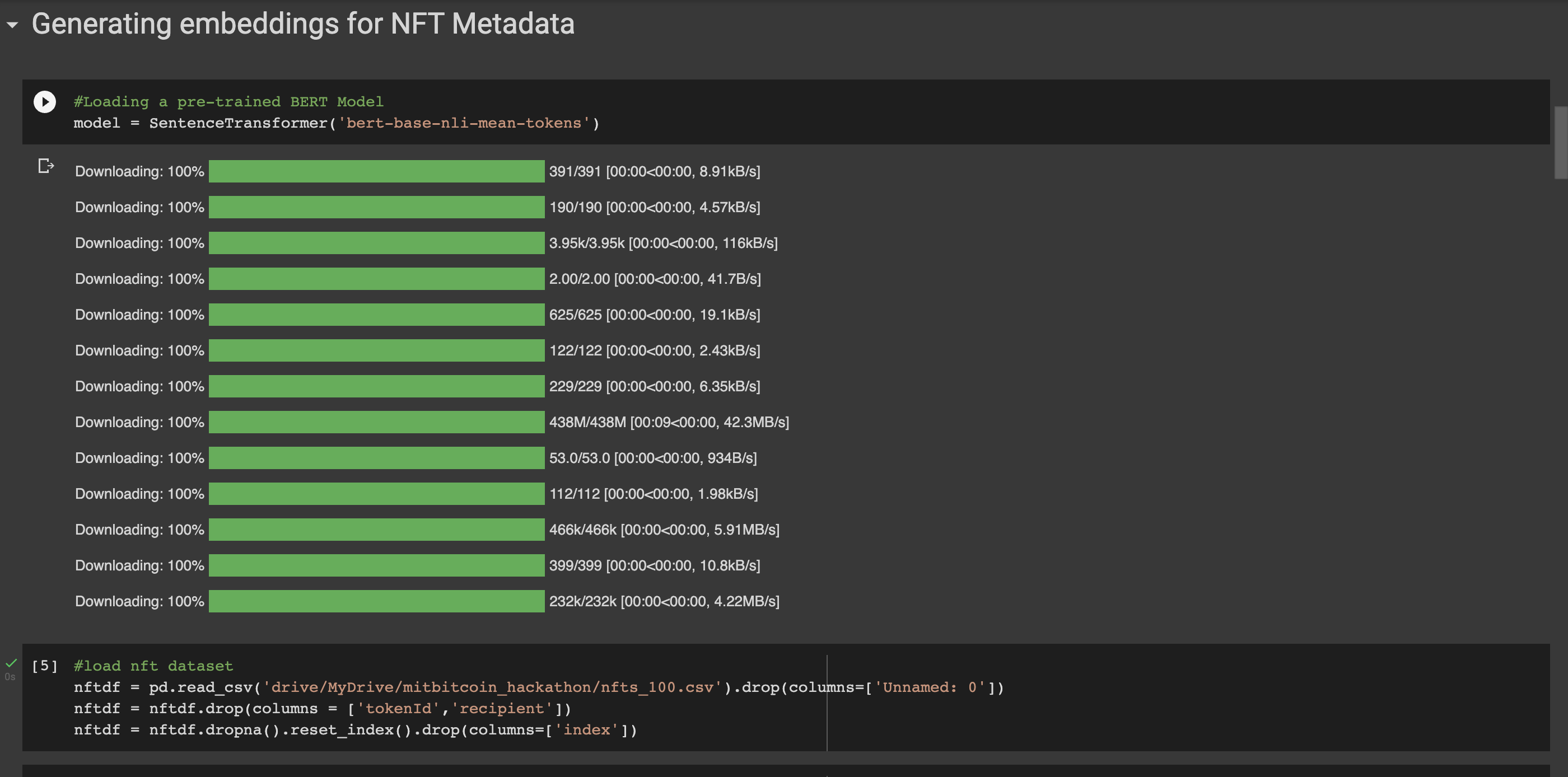
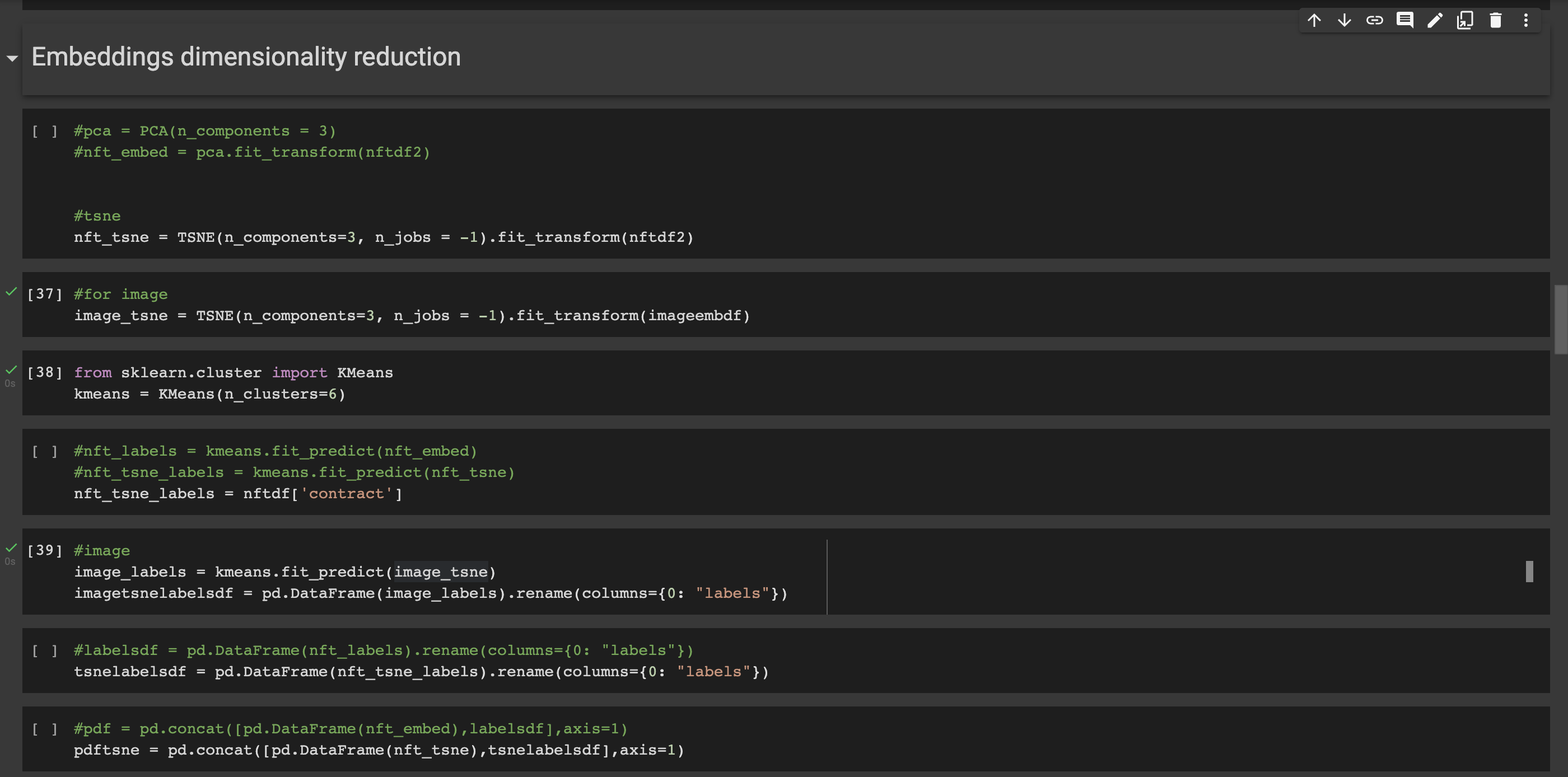
Code to generate embeddings 1
-
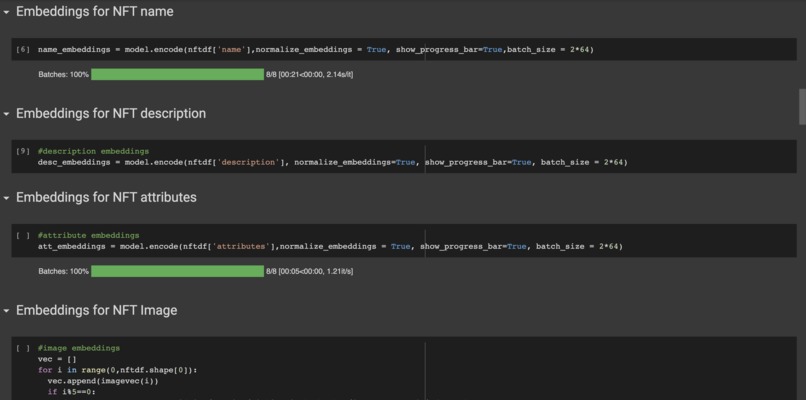
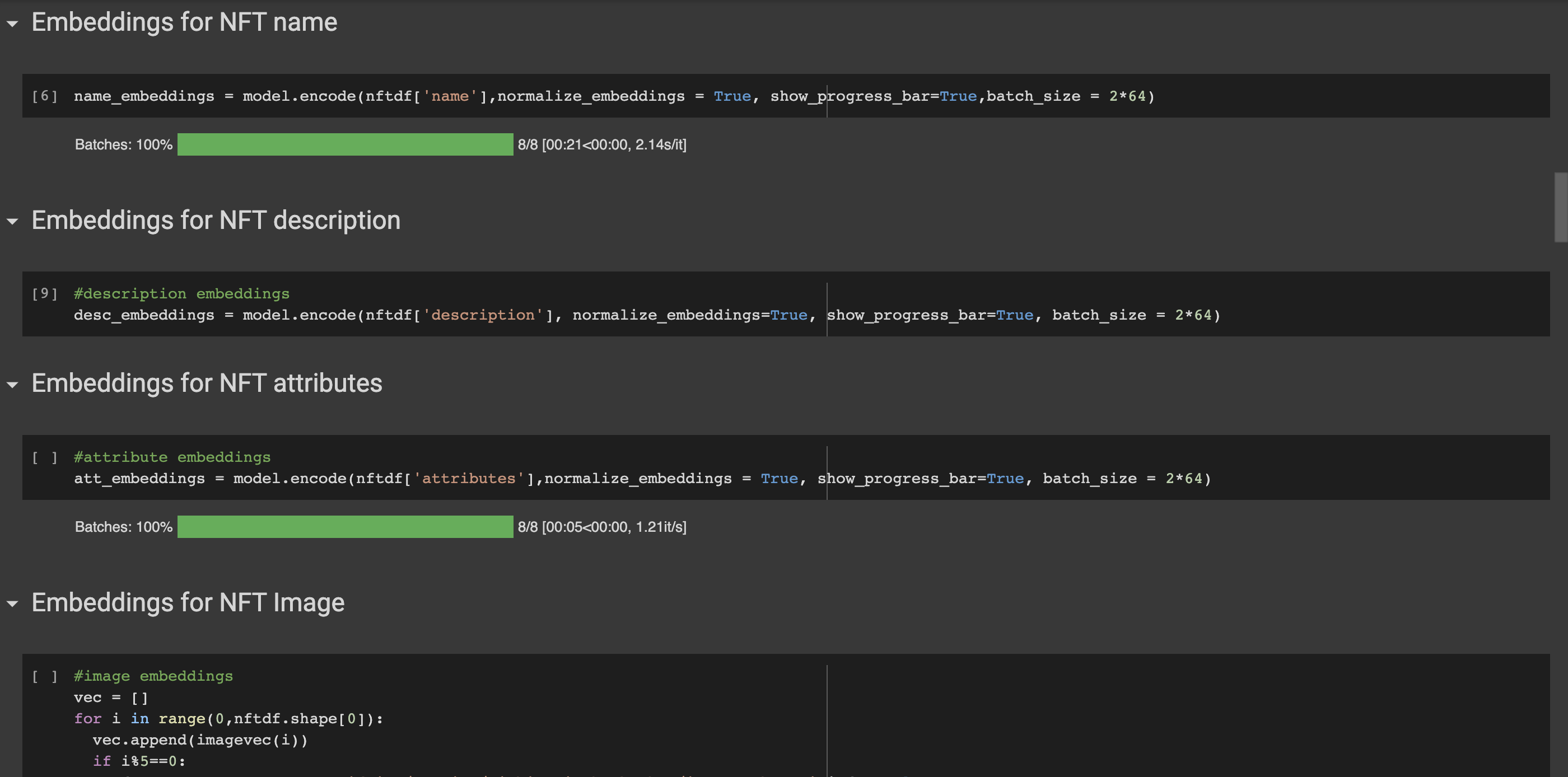
Code to generate embeddings 2
-
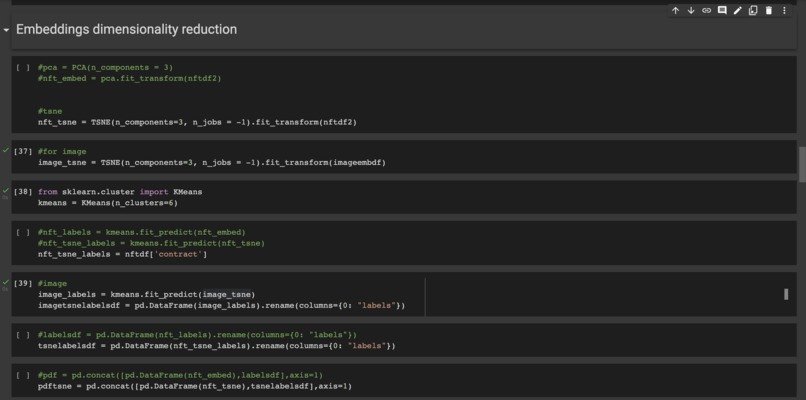
Code to generate embeddings 3
-
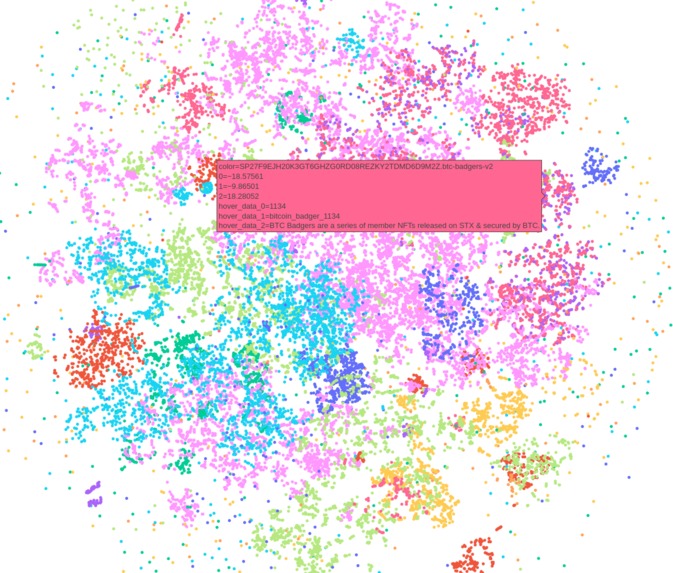
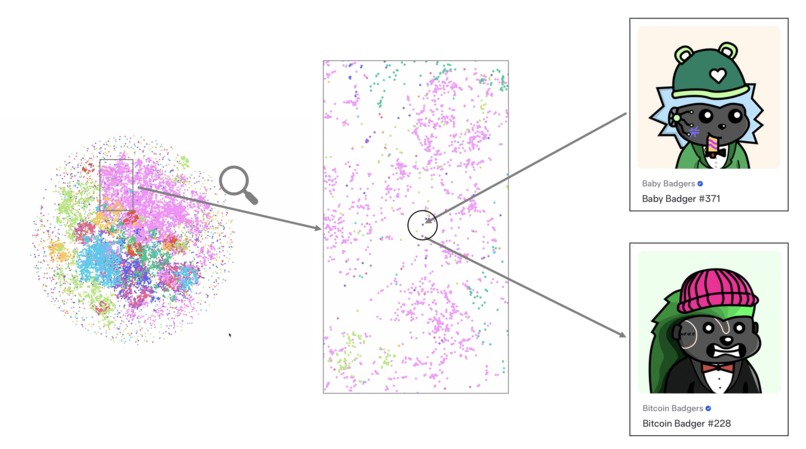
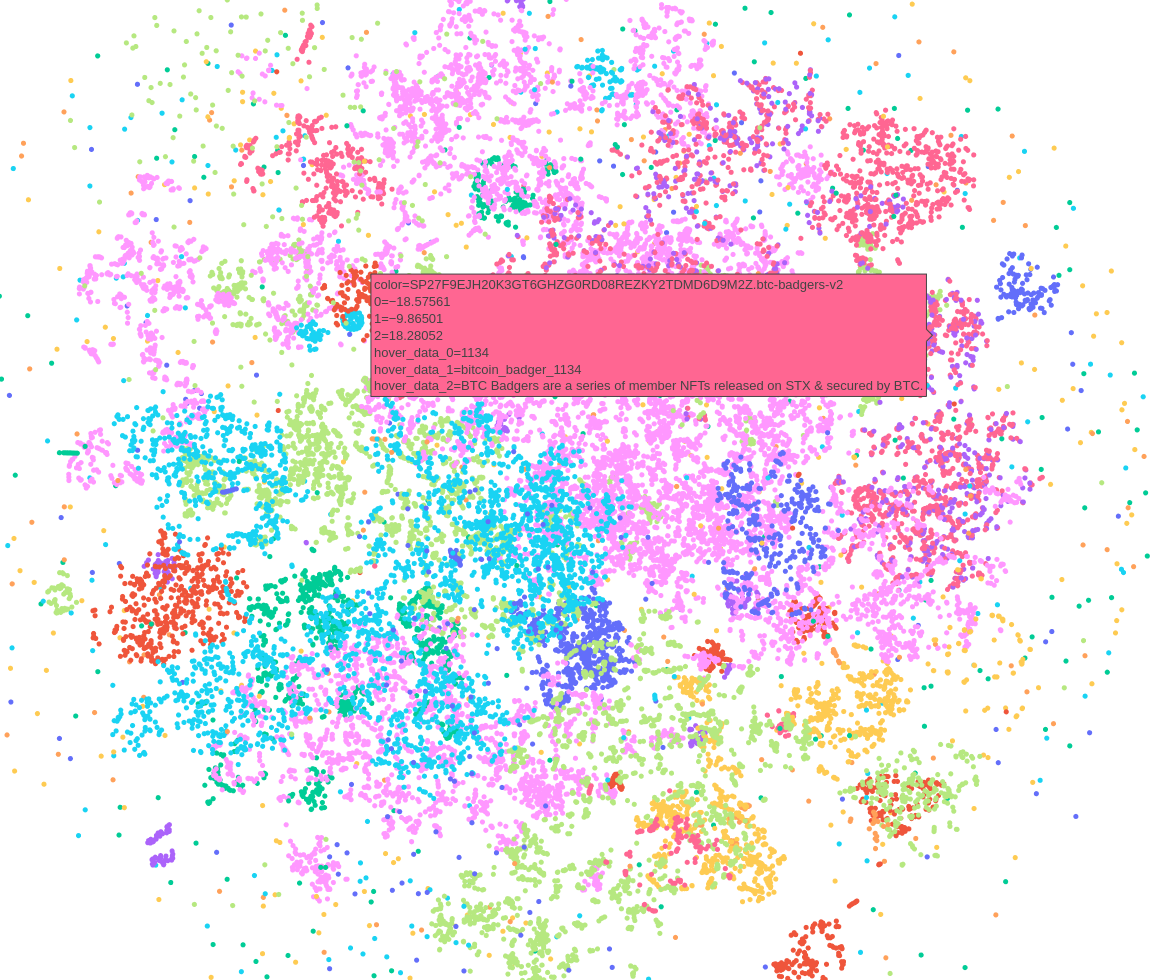
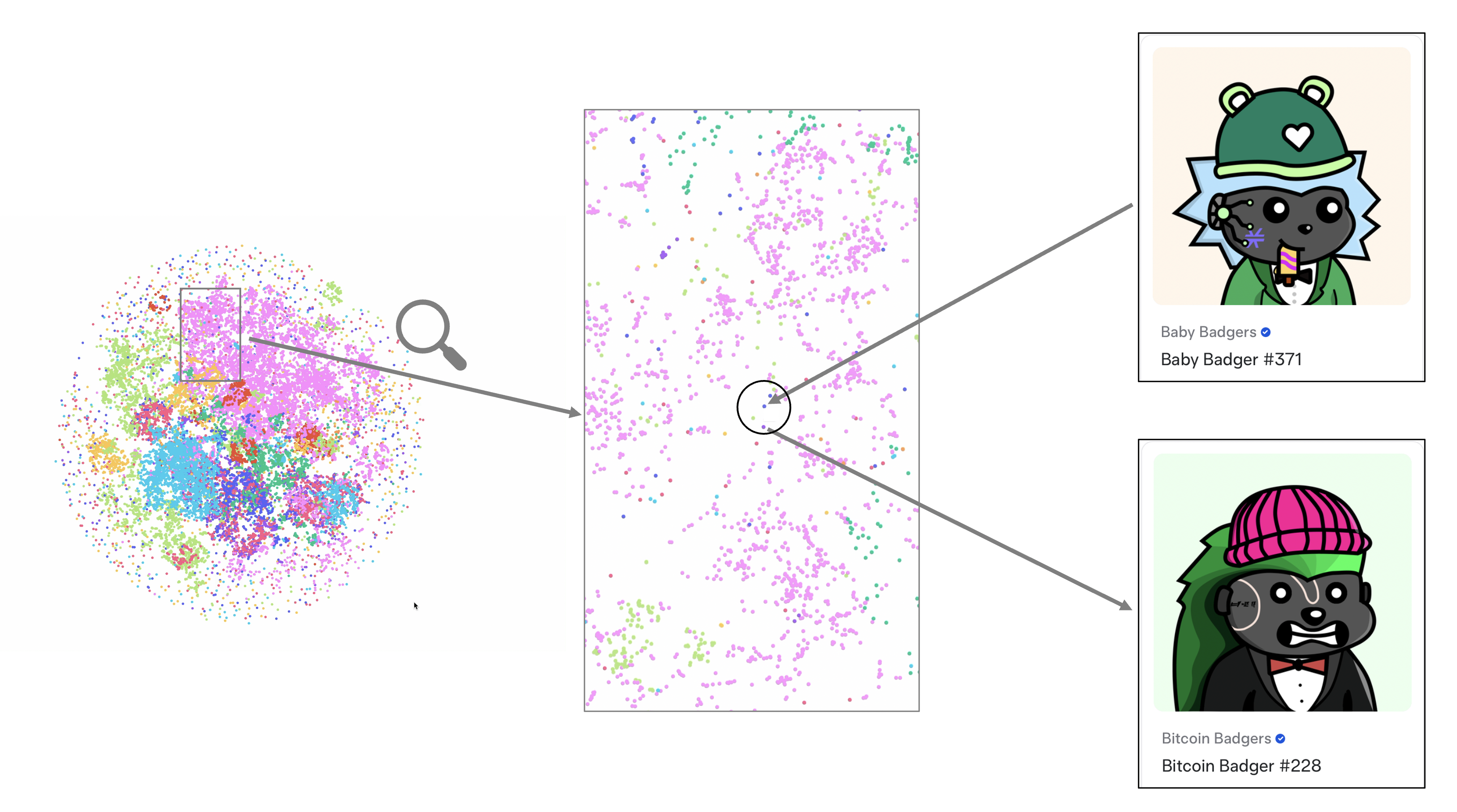
Embeddings 1
-
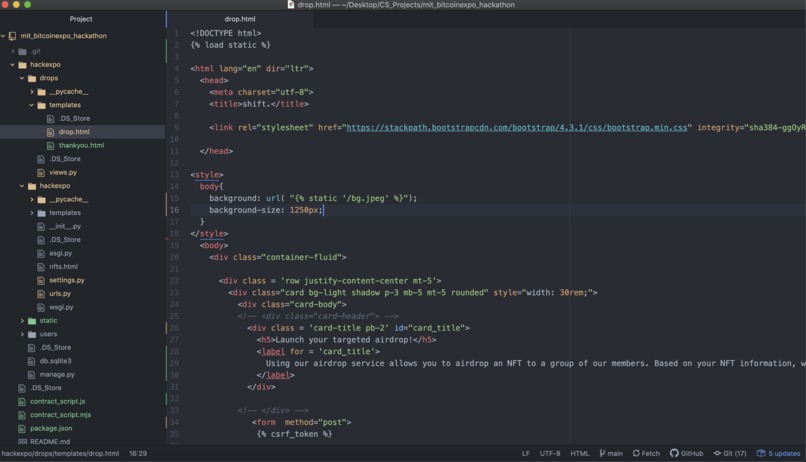
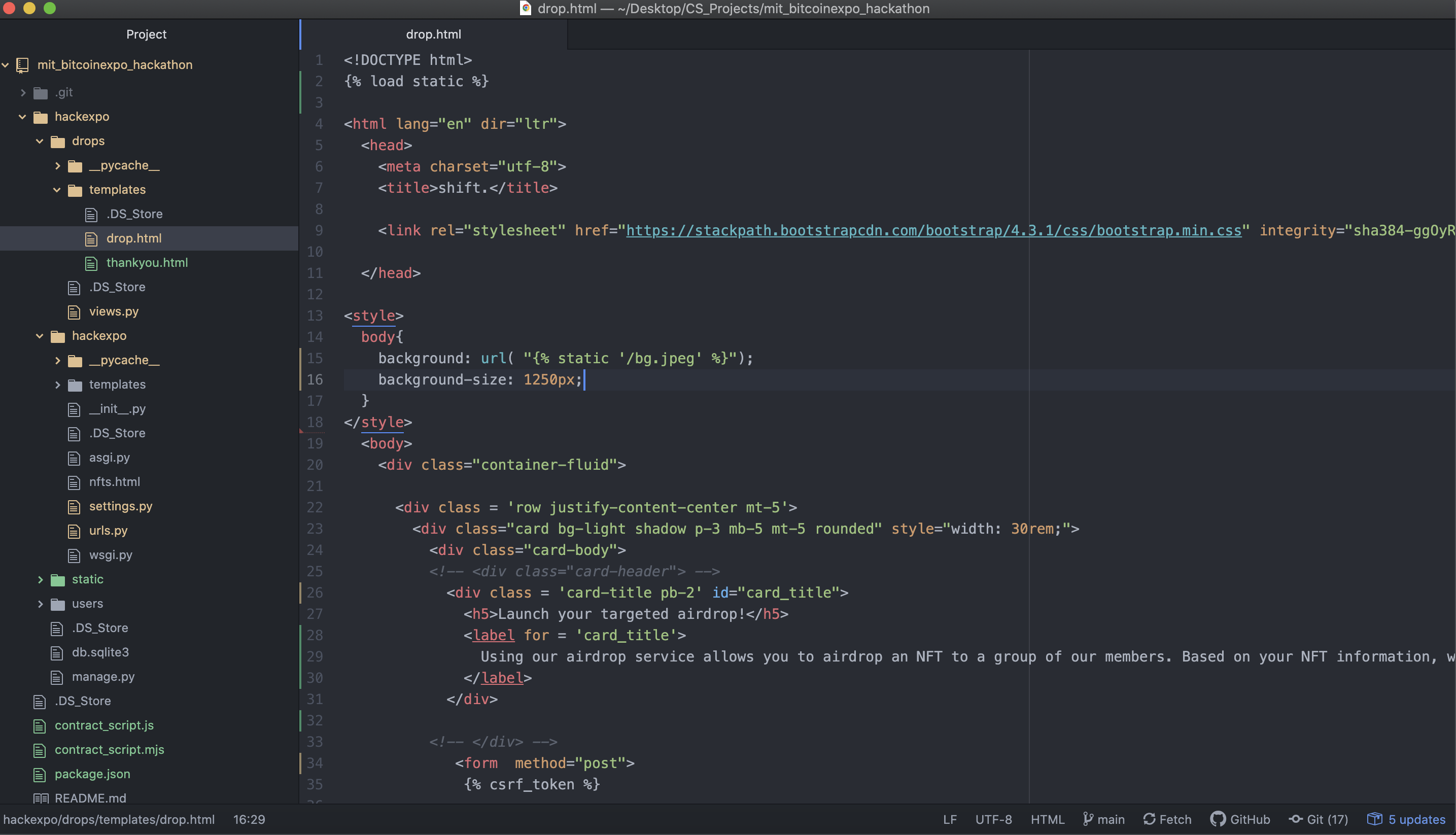
Django webapp structure
-
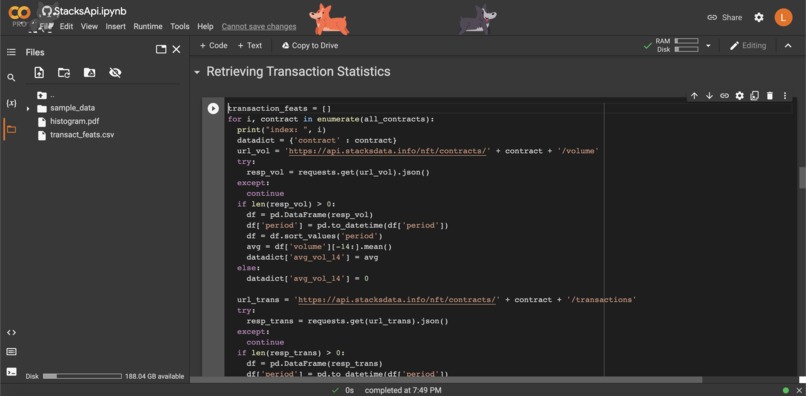
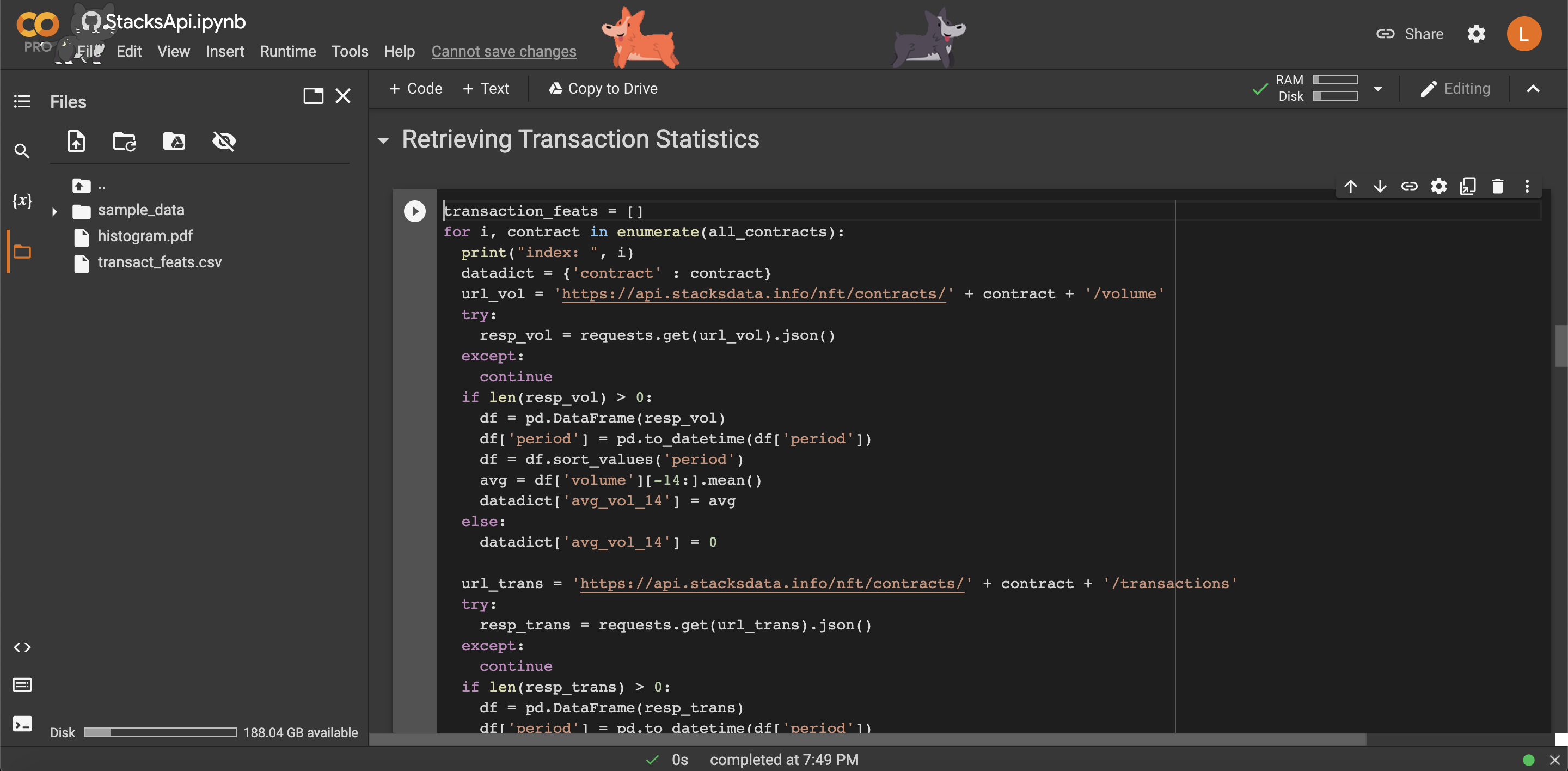
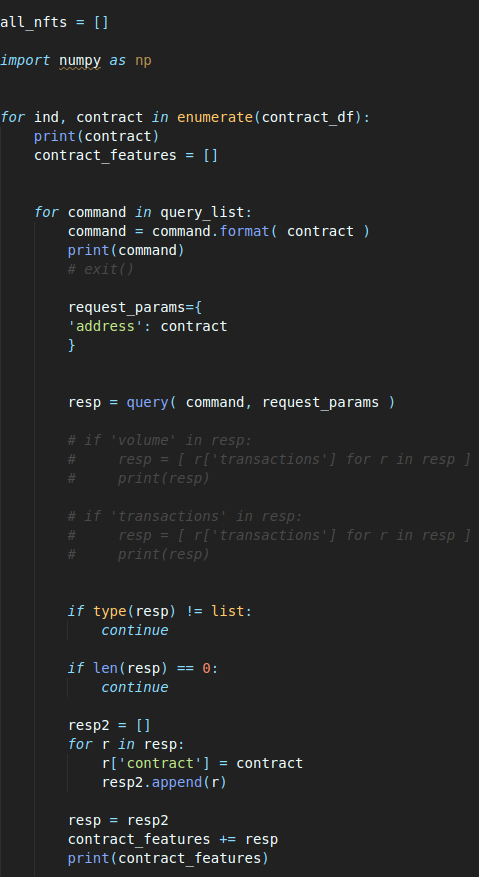
Retrieving transaction statistics using Stacks API
-
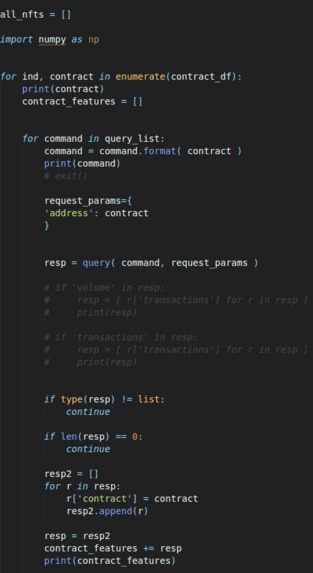
Retrieving nft data
-
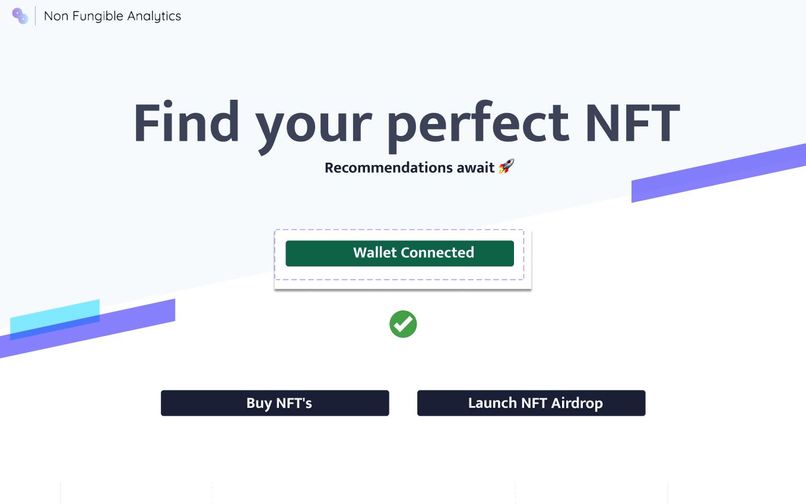
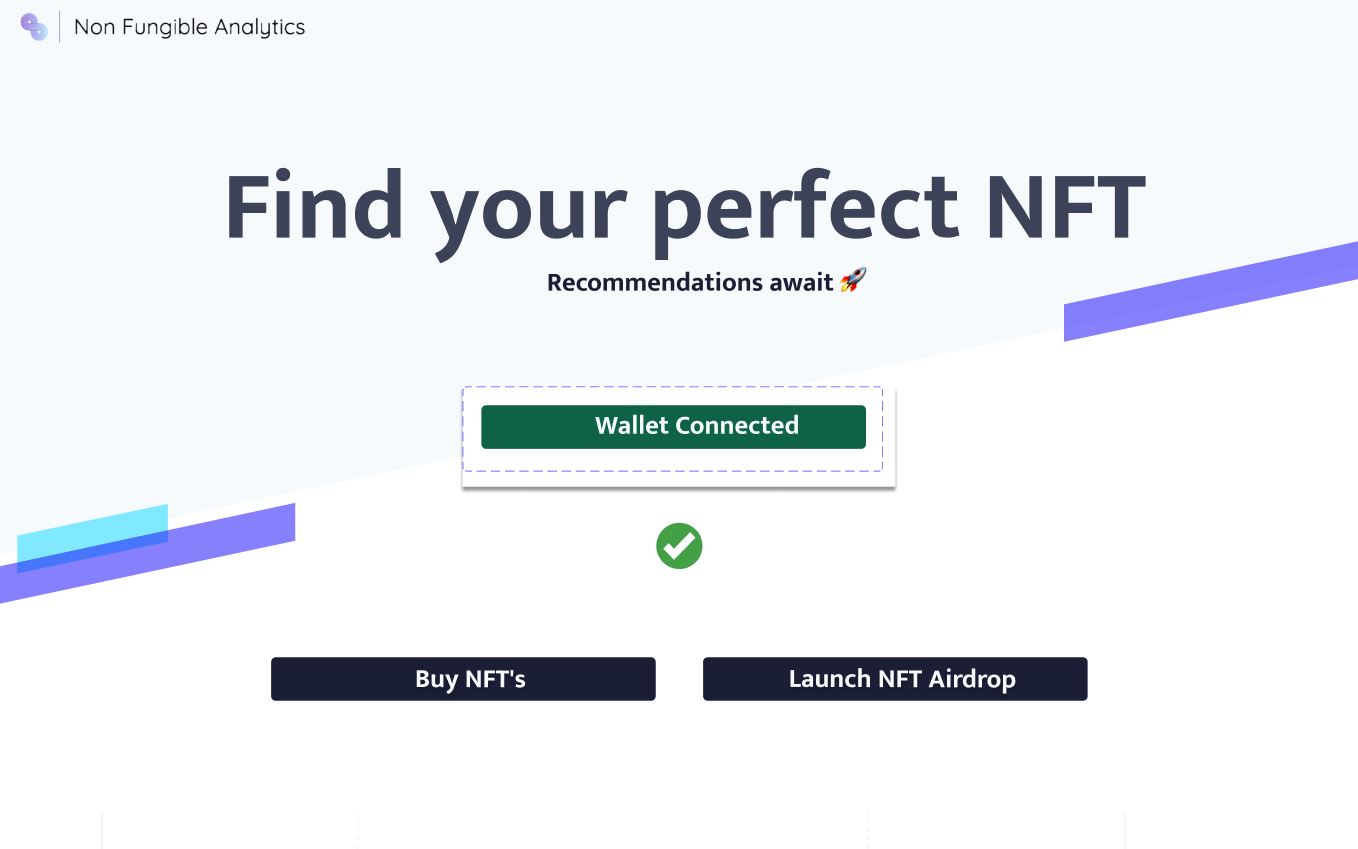
Homepage 1
-
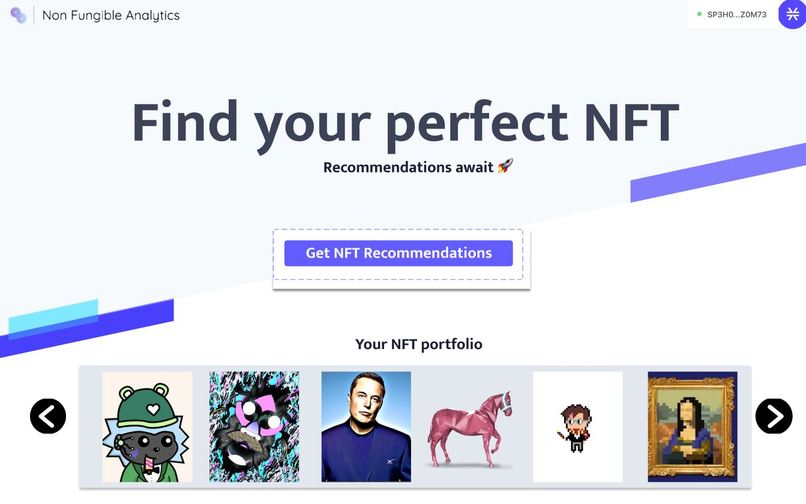
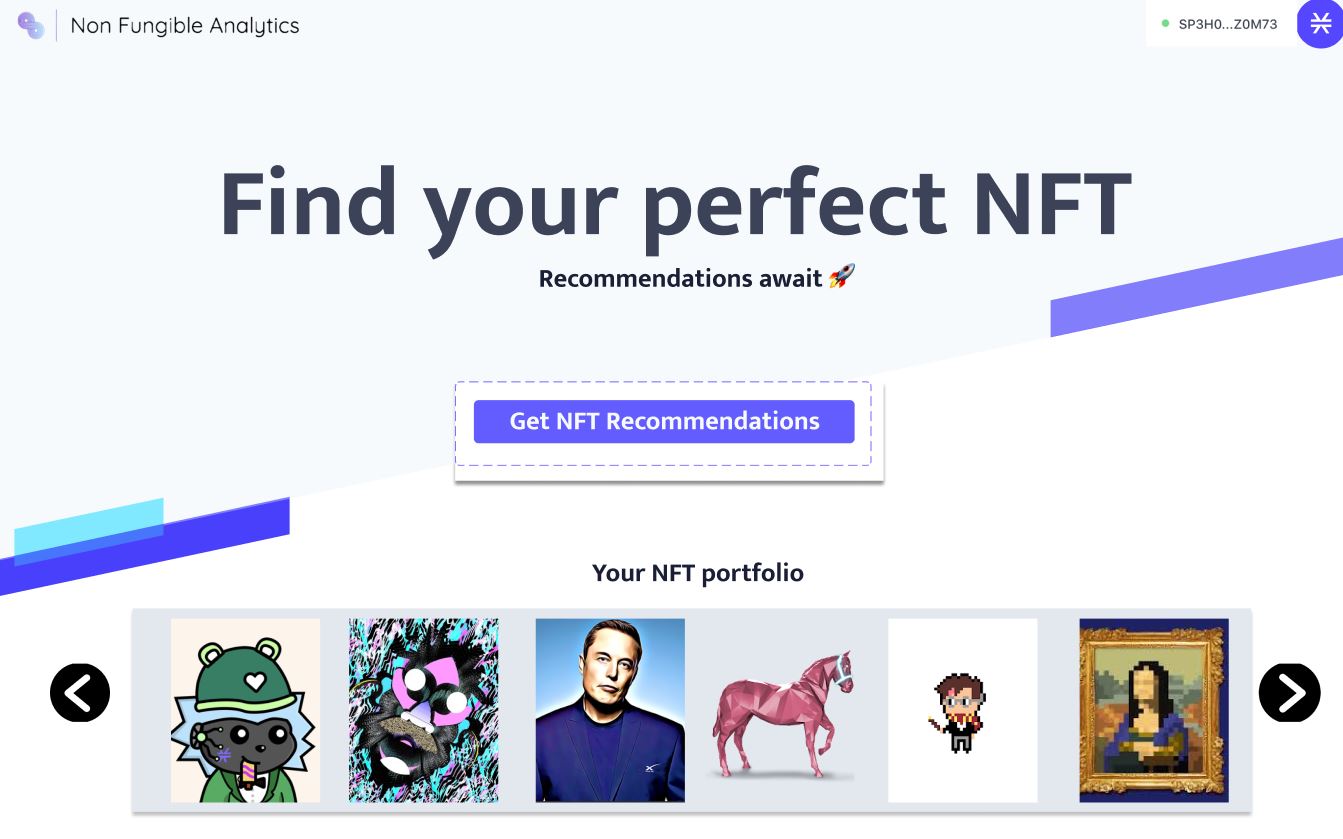
Homepage 2
-
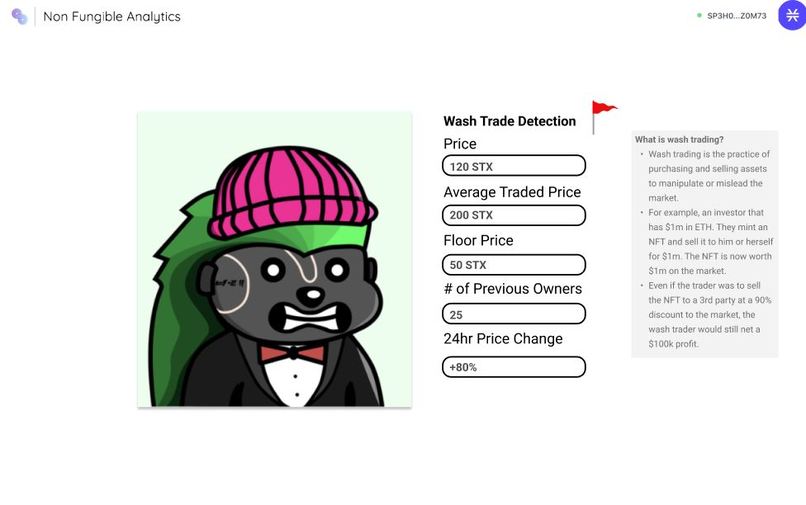
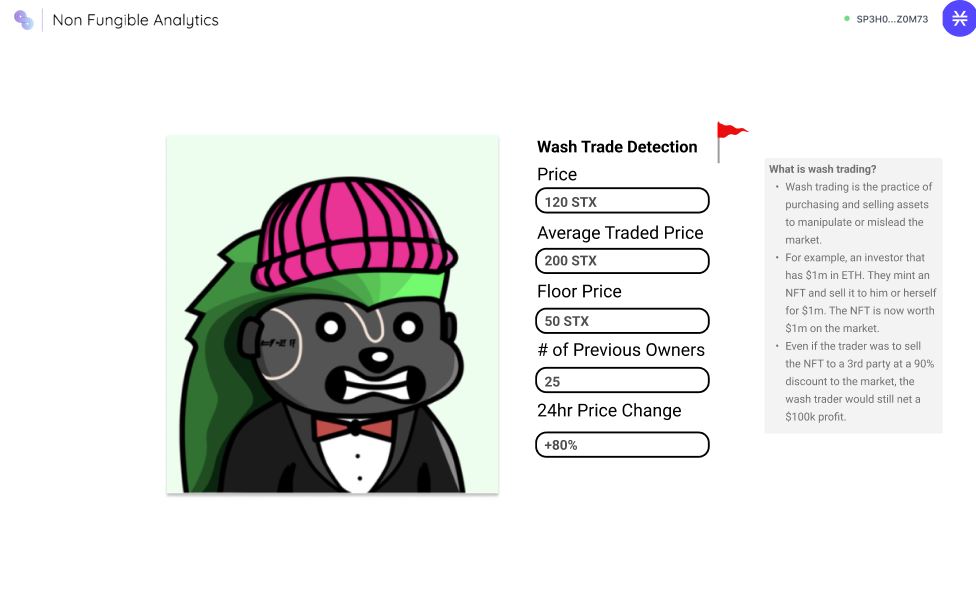
NFT Recommendation and wash-trading flag
-
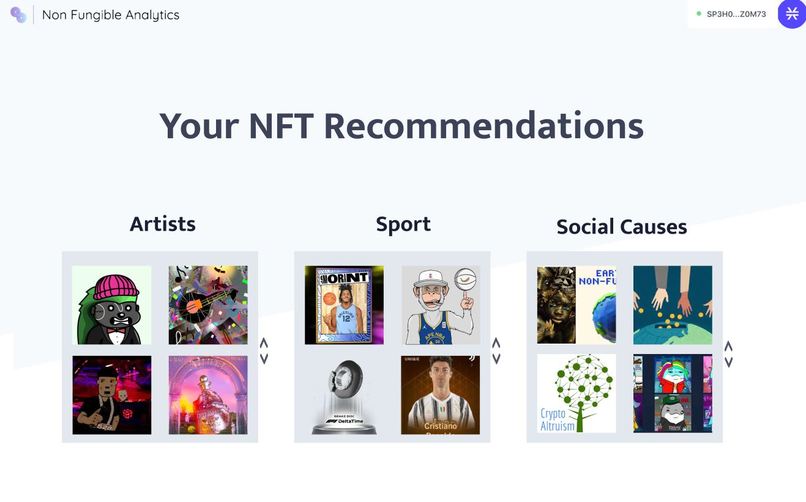
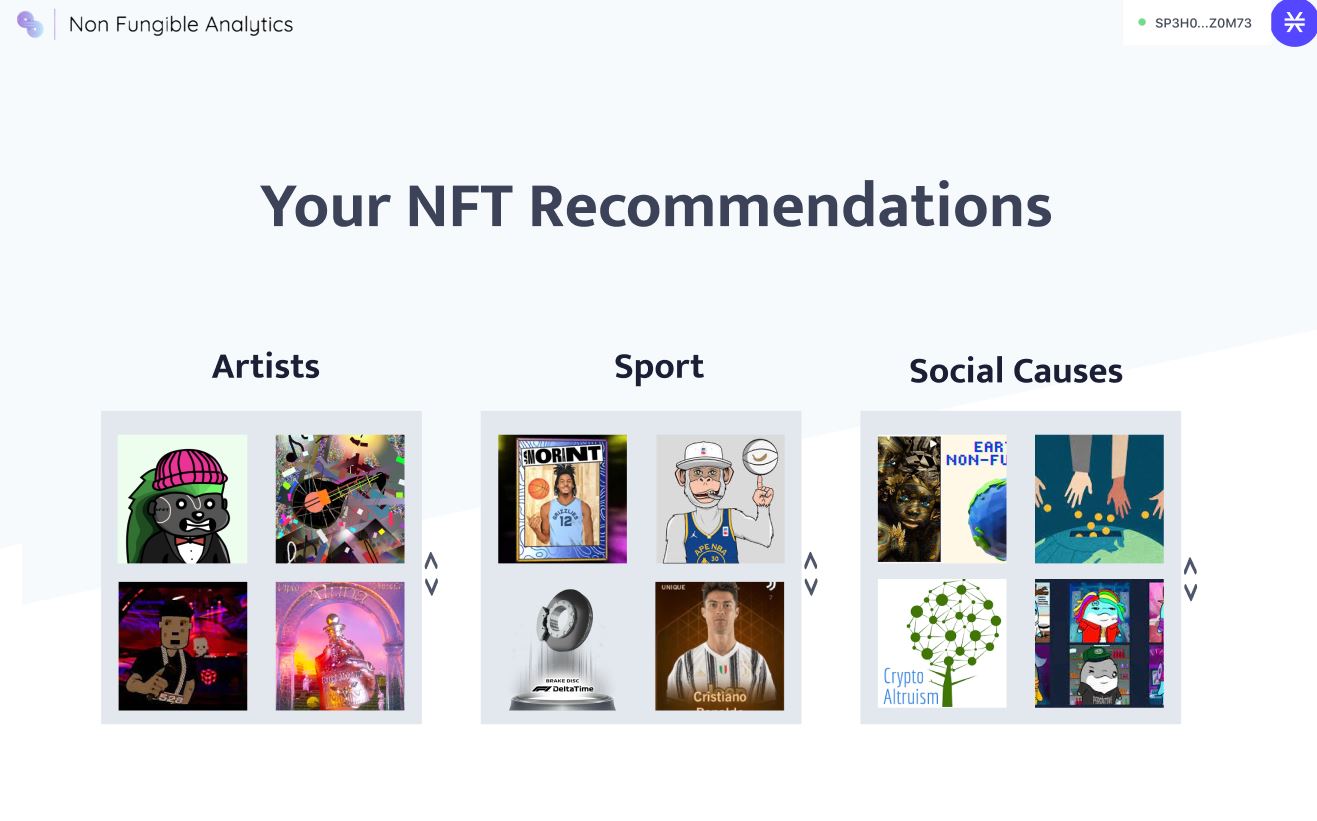
NFT Recommendations 1
-
NFT Recommendations 2
-
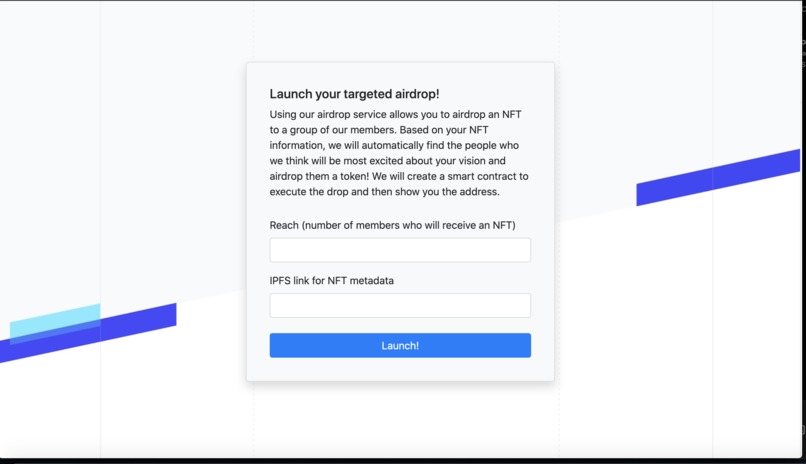
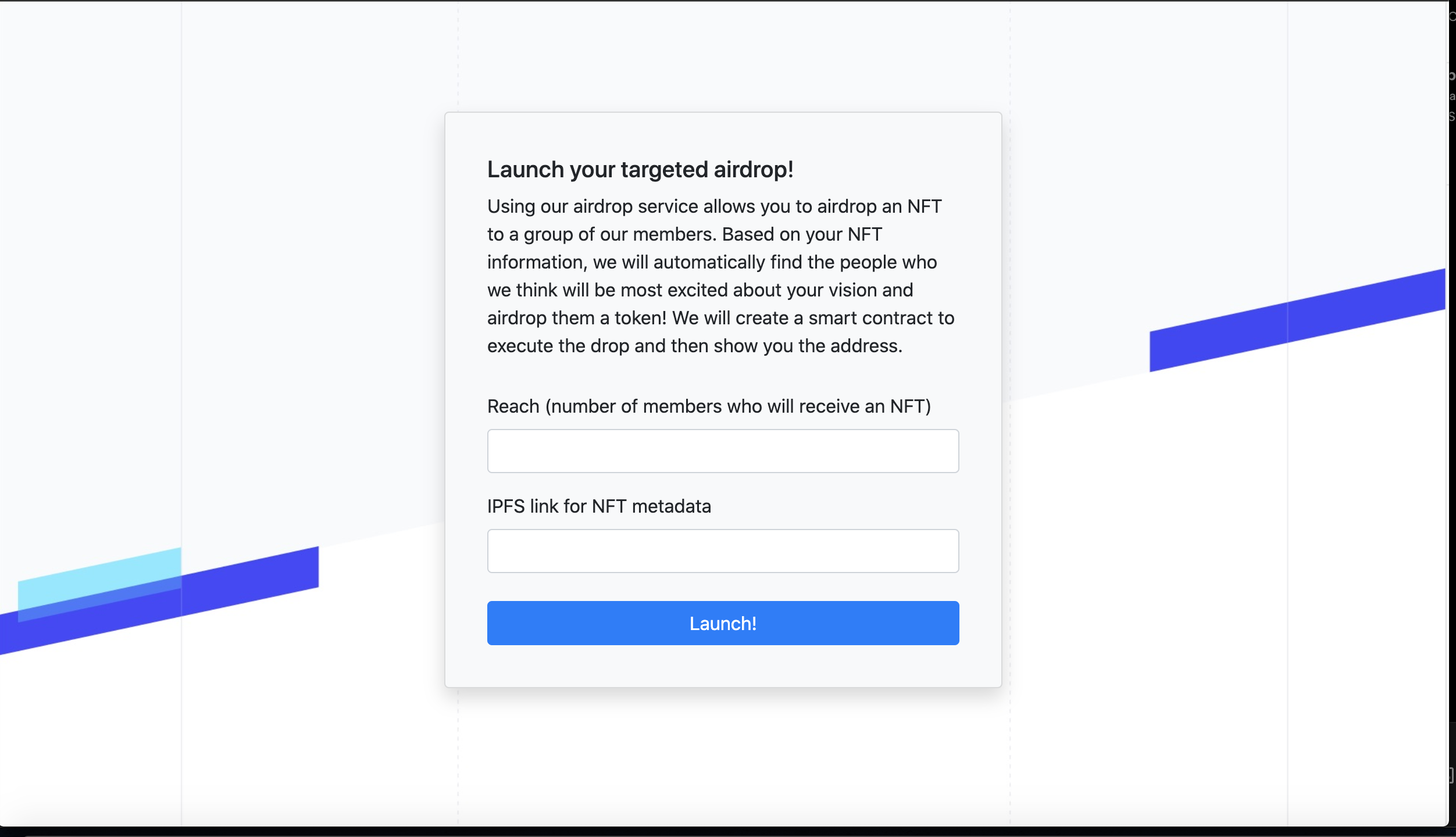
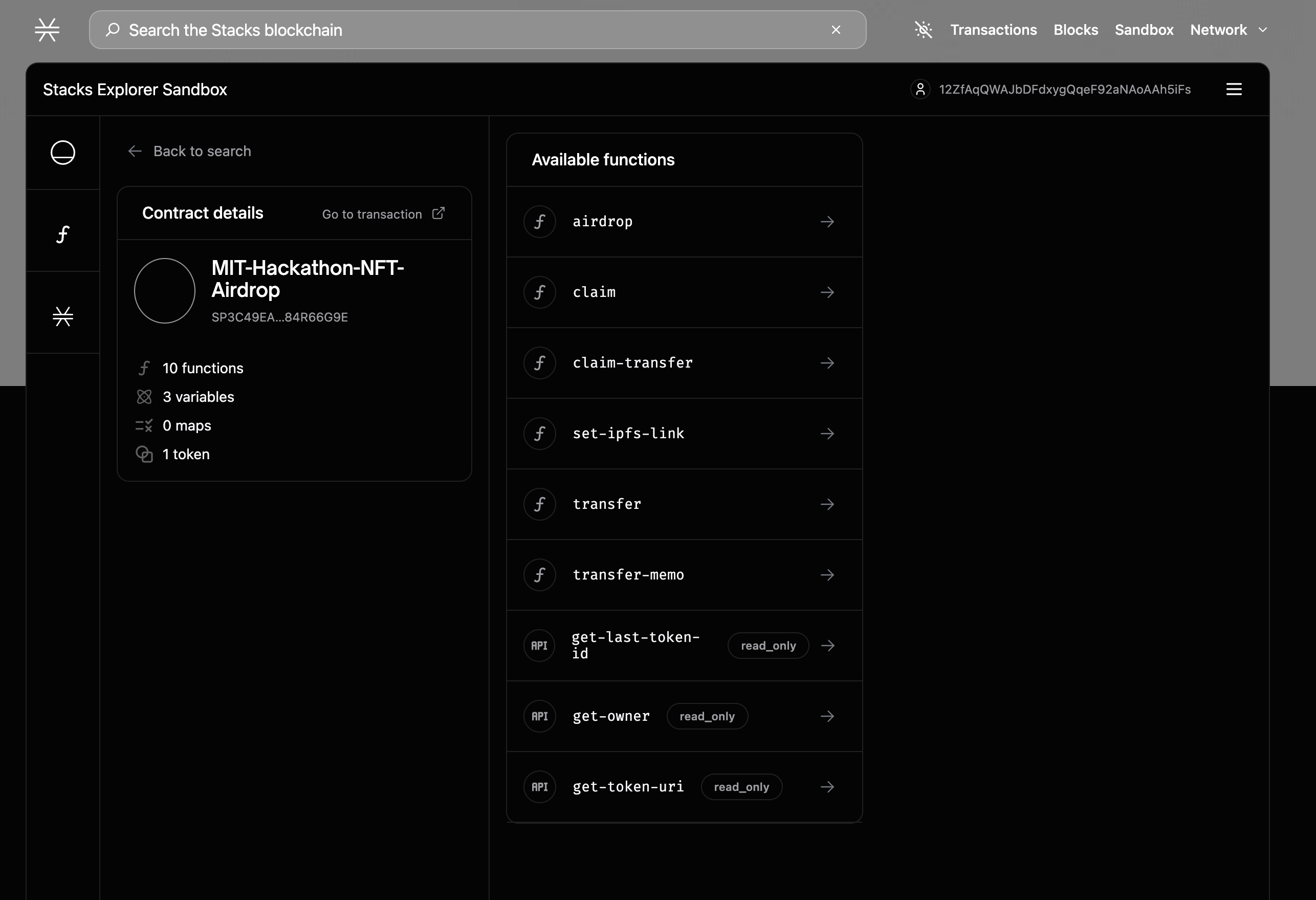
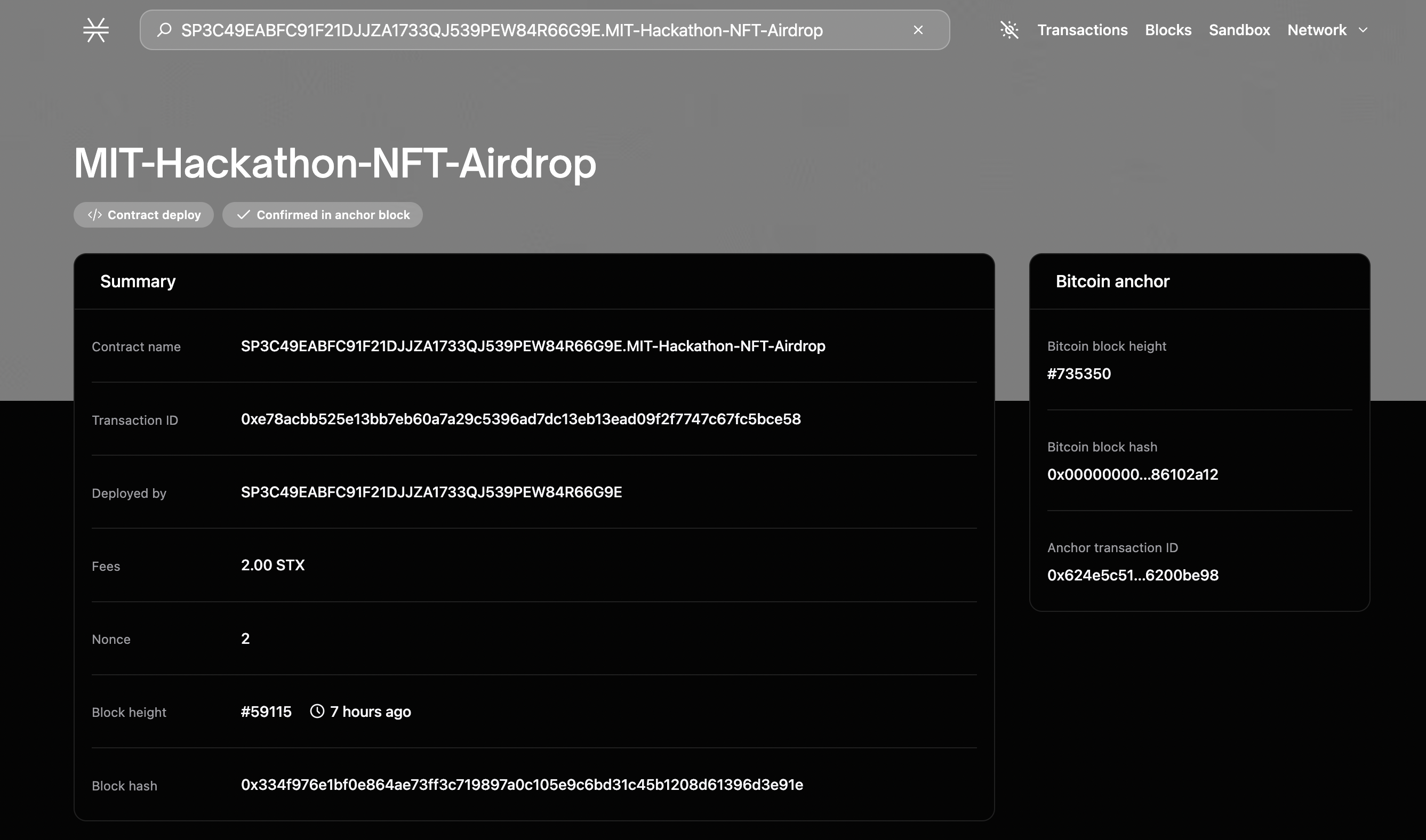
Airdrop 1
-
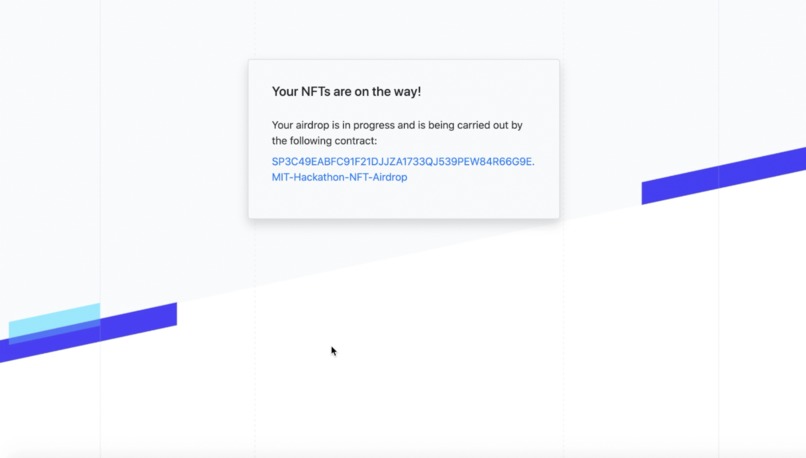
Airdrop 2
-
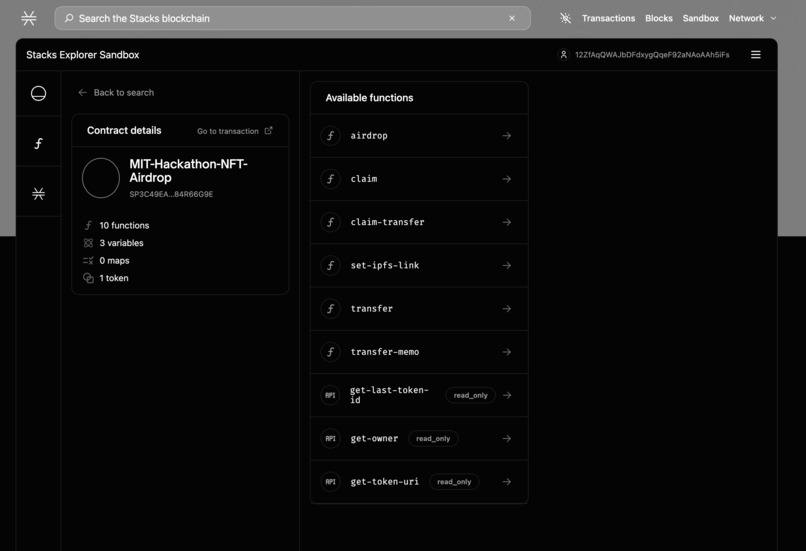
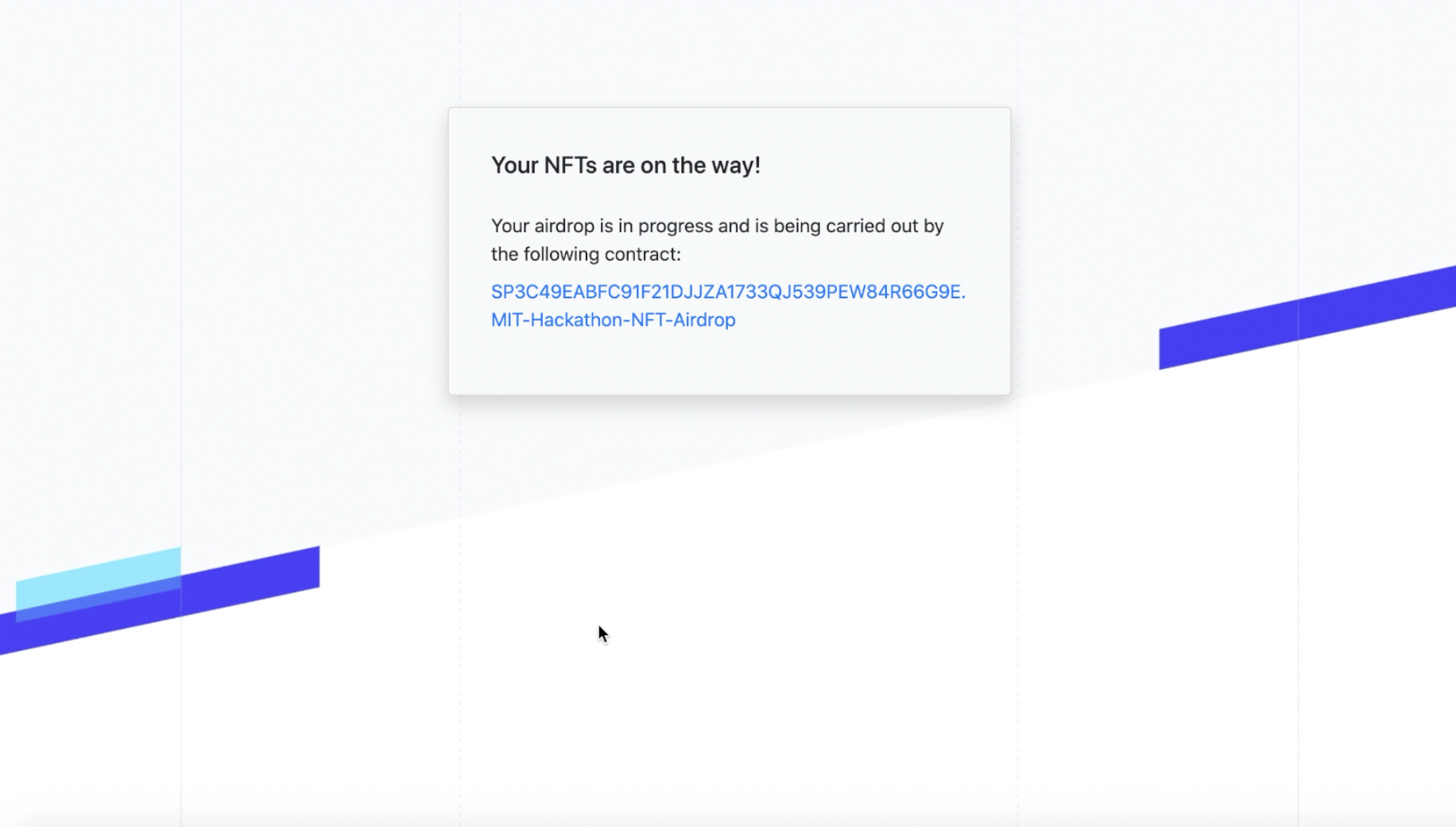
Airdrop 3
-
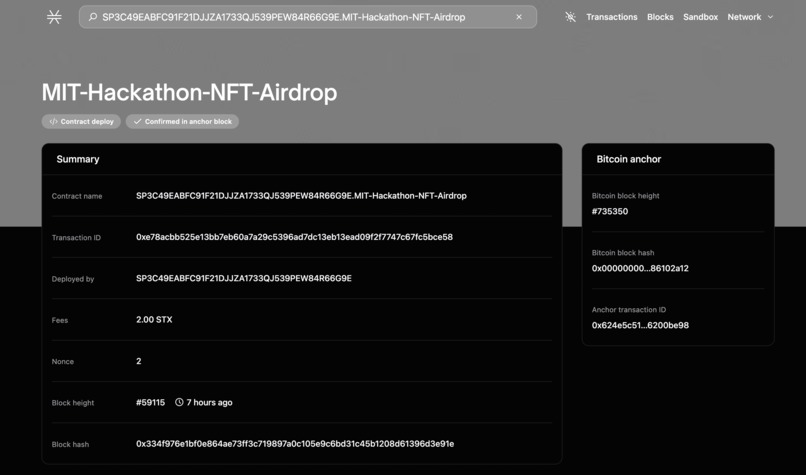
Airdrop 4
-
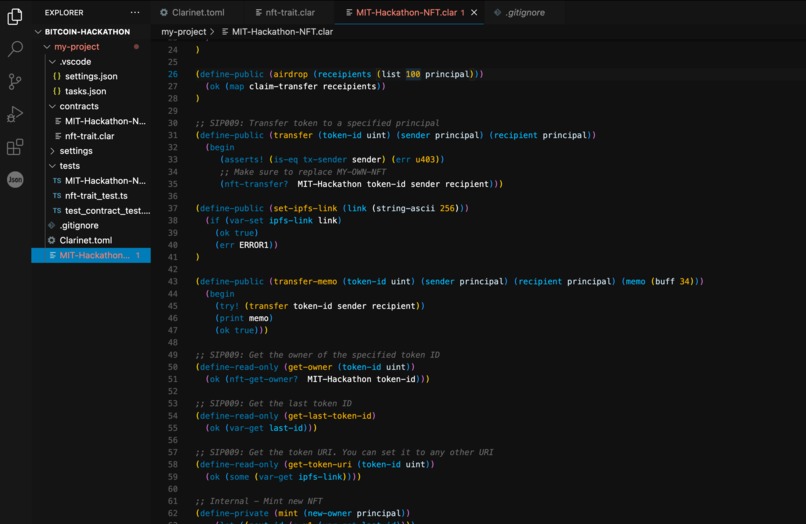
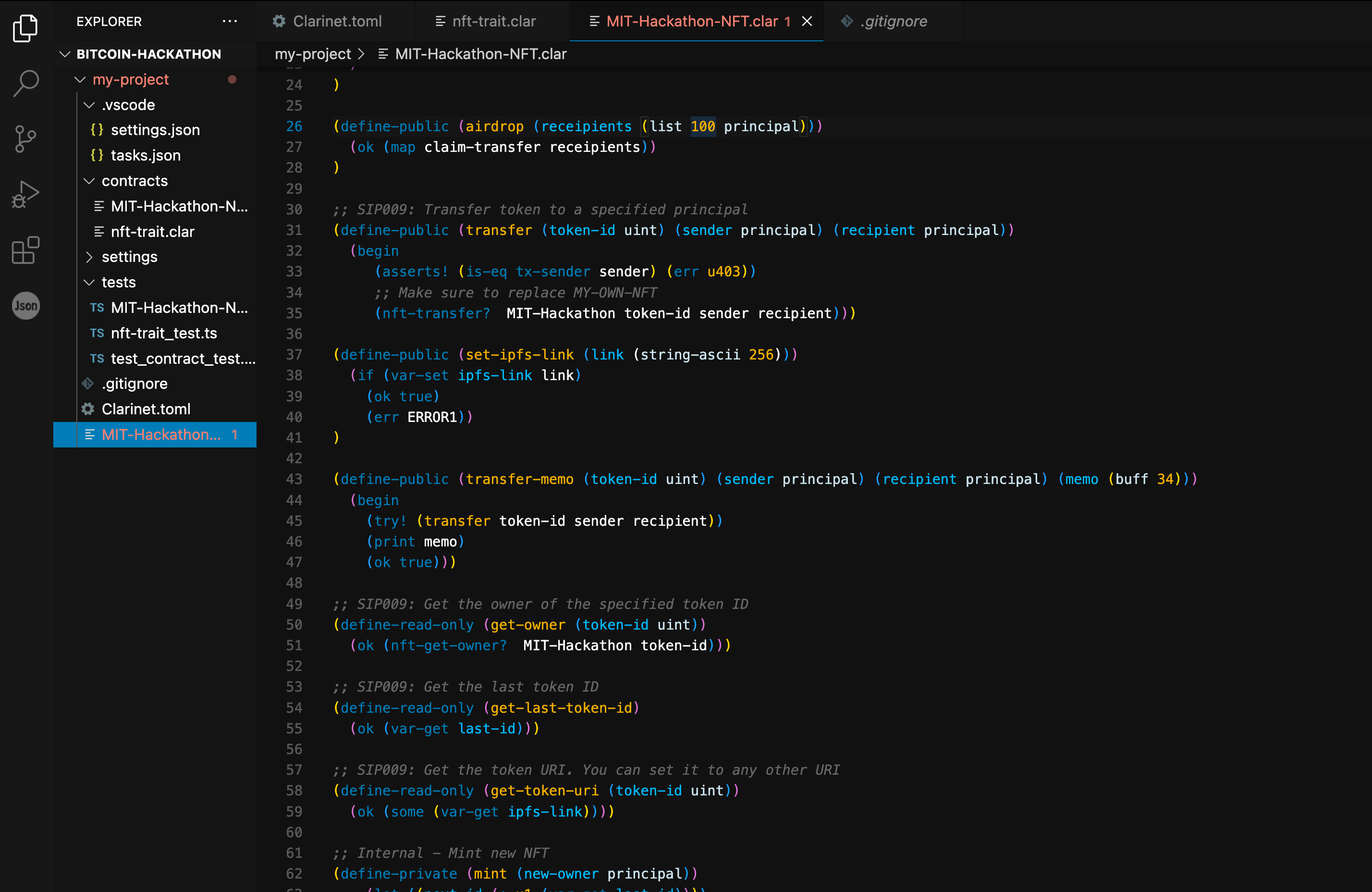
Clarity code
-
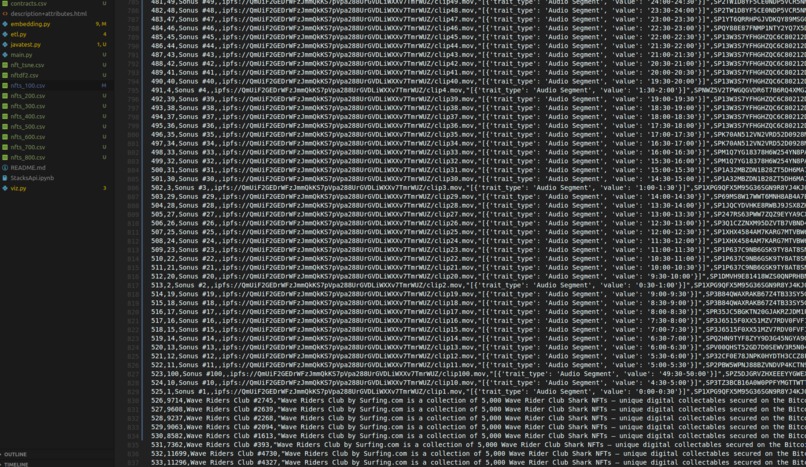
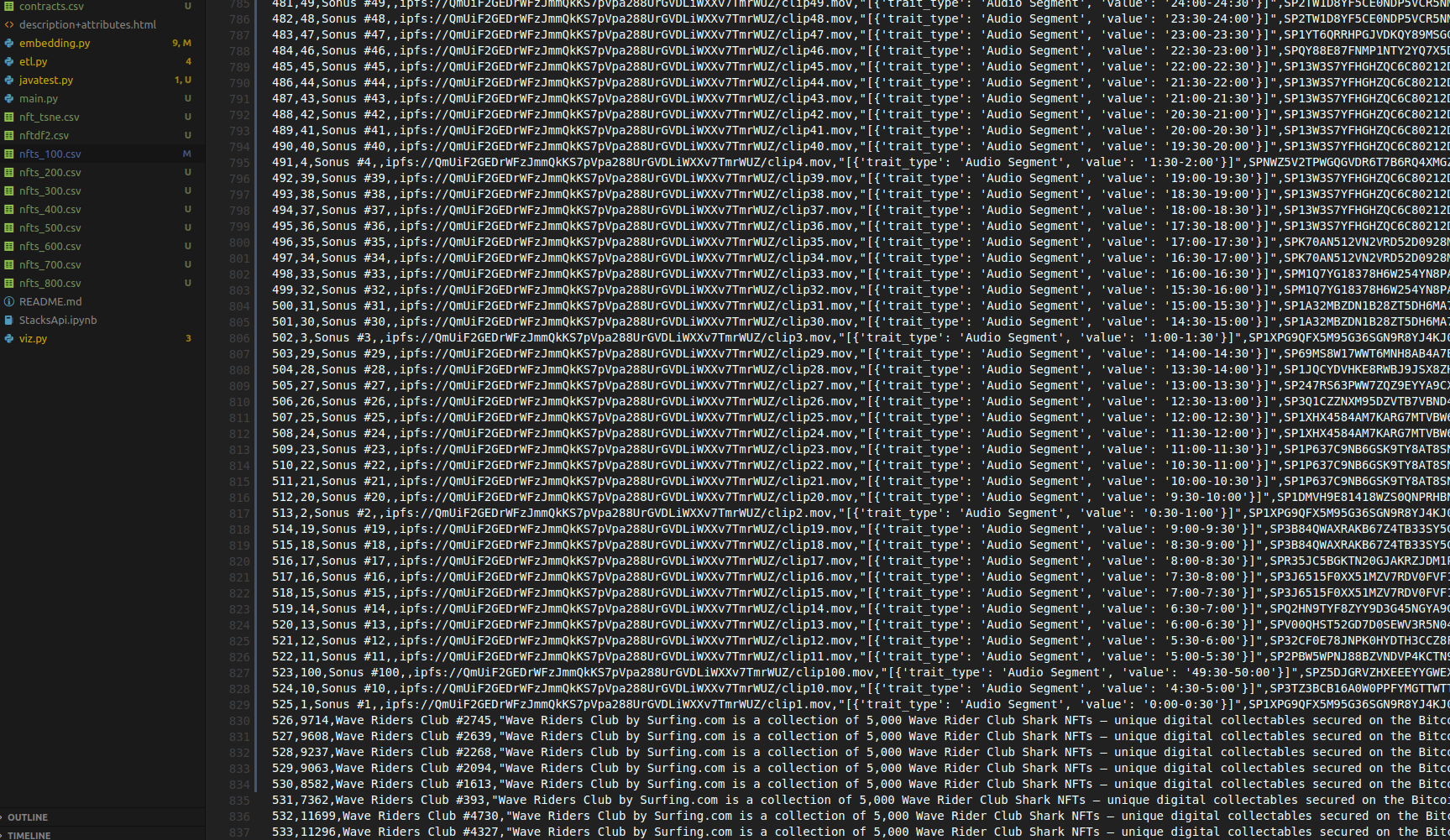
Data view
Project Story
- About the project Be sure to write what inspired you, what you learned, how you built your project, and the challenges you faced. Format your story in Markdown.
Inspiration
The NFT market is growing at an unprecedented speed with thousands of new tokens being minted and deployed daily.
We are all convinced that non-fungible, accountable, and transparent representations of ownership have the potential to enable individuals and communities to express themselves, come together and pursue their diverse interests in an efficient manner.
However, great speed comes with problems, and the NFT ecosystem currently faces several drawbacks: It is nearly impossible to have a clear overview of the market, there are numerous scammers that try to exploit other participants and NFTs are generally not yet reaching their full potential in the current state. Our mission for this hackathon was to bridge this gap by using a layer of analytics on top of the NFT ecosystem. Non Fungible Analytics is about leveraging the vast amounts of existing data to build meaningful representations, recommendations, and predictions to provide security, clarity, and value for NFT users.
What it does
Our main product is an AI-powered embedding representation for every NFT within the Stacks Blockchain. While our solution can easily be abstracted to other blockchains and for other business problems, we have focused on three initial use cases this weekend. For any given user, we provide NFT recommendations given his/her existing on-chain data. We don’t stop at highly personalized recommendations, but integrate a protective feature with a risk analysis of potential washtrading activity for the recommended NFTs. Beyond providing value to customers, our solution can also help NFT creators reach a user base with high likelihood of engagement and positive feedback for their Airdrops, using smart contract functions that we developed and deployed onto the mainnet.
How we built it
Our analytics pipeline consisted of three main steps. The first part involved data fetching and handling. We used the Stacks Blockchain APIs to retrieve every single NFT collection contract on the chain with help of a python script. We then iterated through each of these to source further information such as metadata, volume, owners, image, and price history. The accumulated data contains around 35’000 NFTs. As a second step, we then passed this NFT data into Neural Networks (e.g. BERT and Resnet) to generate high dimensional representations for each NFT, also called NFT embeddings. This set the basis for our three use cases by allowing us to inspect regions and similarities within these spaces to provide analytics solutions for end-users.
Challenges we ran into
On a technical side, we initially ran into issues with the consistency of API returns, whereby some API calls were not yet enabled on our servers and several contracts threw an error when getting queried. Furthermore, some of our custom functions taking in lists of addresses as a parameter (used for the airdrop) were not able to be processed by our deployment environment Sandbox. Thanks to amazing support from the Hiro team and several hours of debugging, we have found workarounds for all of these issues.
On the business side, we spent considerable amounts of time researching which use cases actually improve upon the status quo, generate real value, and are reasonably linked together. It was of utmost importance for us to not just build something cool, but something with a big impact. It was at times difficult to build a solution whilst simultaneously understanding the problems, as you’re solving for a moving target. We overcame this by recognizing overarching principles across different use cases and unifying them under a common framework.
Accomplishments that we're proud of
We came into this hackathon on Friday evening thinking that building a smart contract in a language unknown to all of us would be a great accomplishment. Now 30h later, we have an airdrop smart contract functionality with ipfs integration on top of an all-around NFT-analytics solution. This highlights the extent to which we were able to grow beyond ourselves as a team and develop crazy synergies that we are committed to further explore together in the future.
We arrived at a NFT-level embedding that provides structural insights into NFT creation and similarities. By proposing this as a core technology of a valuable product, we completed an entire journey from conceptualization to value generation.
What we learned
We gained our first experiences using the Stacks blockchain, handling their APIs and developing with their smart contract language Clarity. We also deepened and broadened our understanding and capabilities in all other technologies applied, from front-end development to training deep neural networks. Observing how the NFT embeddings are spread out in the space with clusters of similar NFTs, we discovered the potential AI has on blockchain data. More importantly, we discovered the immense opportunity to merge our analytical backgrounds with the vast amounts of available blockchain data in order to come up with meaningful use cases to enhance the security and adoption of web3 solutions.
What's next for Non-Fungible Analytics
The next thing will be to catch up on the sleep we missed for the past 40 hours. However, once we are fully recovered we are determined to pursue “analytics x blockchain” further and strive to generate meaningful impact beyond the scope of this hackathon.
Our minds are full of ideas that answer “so what’s next?” both in new concepts and for existing businesses. The intersection between data science and blockchain, specifically the science of blockchain-domained data, is a nascent topic that points to new engines of value generation.
Built With
- bootstrap
- clarinet
- clarity
- computer-vision
- django
- javascript
- jupyter-notebook
- keras
- natural-language-processing
- python
- pytorch
- stacks-api
- tensorflow




Log in or sign up for Devpost to join the conversation.